https://doi.org/10.36253/a_h-17465
Submitted on: 2025, 15th March; revised on: 2025, 5th December; accepted on: 2025, 8th December
Ecological aspects of Coleodactylus meridionalis (Squamata: Sphaerodactylidae) in an Atlantic rainforest fragment in Northeastern Brazil
1 Departamento de Zoologia, Centro de Biociências, Universidade Federal de Pernambuco, Pernambuco, Brazil
² Universidade Federal do Oeste do Pará, campus Monte Alegre, Monte Alegre, Pará, Brazil
³ Laboratório de Biologia e Ecologia de Animais Silvestres, Instituto de Formação de Educadores, Universidade Federal do Cariri, Ceará, Brazil
*Corresponding author. Email: sousajgg@gmail.com
Abstract. Understanding the autecology of cryptic species is fundamental for developing effective conservation strategies, particularly in threatened biomes such as the Atlantic Forest. In this study, we investigated ecological aspects of Coleodactylus meridionalis, a small terrestrial lizard with a broad distribution, in an Atlantic Forest fragment. Specifically, we analyzed the usage of microhabitats, morphological characteristics, reproductive aspects, diet, and associated endoparasites. We conducted monthly seven-day expeditions from August 2014 to July 2015 in the Campo de Instrução Marechal Newton Cavalcante, Pernambuco, Brazil. We recorded spatial use by 285 individuals, 271 (95%) of which were found in the forest interior, predominantly in leaf litter microhabitats (90.5%; N = 258). Females were significantly larger than males and had proportionally higher head heights. The diet included 22 prey categories, with Isopoda being the most frequent and voluminous and Psocoptera the most numerous prey categories found in the stomachs. The population reproduces continuously throughout the year, with fixed clutches of a single egg. The macro endoparasites found was an acanthocephalan cystacanth, with a prevalence of 13.6% and a mean infection intensity of 1.5 ± 0.74, and a Brachycoeliidae trematode, with a prevalence of 1.9% and a mean intensity of 3 ± 1.9. This is the first record of parasites for C. meridionalis, both as a paratenic host for cystacanth and as a definitive host for Brachycoeliidae.
Keywords. Diet, lizard ecology, microhabitat use, parasitism, reproductive strategy, sexual dimorphism.
Contents
Introduction
Autecological studies provide essential baseline data for understanding the ecological requirements of species and guiding targeted, science-based conservation strategies (Hortal and Lobo, 2006; Tewksbury et al., 2014). This is particularly relevant for cryptic species or data-deficient taxa inhabiting historically disturbed biomes, such as the Atlantic Forest, one of the most threatened biodiversity hotspots in the world (Pinto and Voivodic, 2021). In this context, miniature lizards specialized to live in leaf-litter, such as those of the genus Coleodactylus, present significant knowledge gaps that must be filled to improve our understanding of their basic ecology.
Coleodactylus is a genus composed of five species: Coleodactylus brachystoma, C. elizae, C. meridionalis, C. natalensis, and C. septentrionalis. Among these, C. meridionalis is one of the smallest lizards in Brazil, reaching around 25 mm snout-vent length (Freire, 1999; Silva et al., 2015). This species is an active forager with a broad distribution, occurring in leaf litter or piles of woody debris microhabitats within the arboreal Caatinga, highland forest enclaves in the Caatinga morphoclimatic domain, Atlantic Forest fragments of northeastern Brazil, and areas of Cerrado vegetation (Feitosa et al., 2022; Uchôa et al., 2022; Roseno et al., 2024.). Despite its wide range distribution, data on the natural history and ecology of C. meridionalis remain limited, with specific data from areas of Caatinga, Cerrado, Restinga and highland enclaves. These studies have explored the defensive and foraging behavior, diet, microhabitat usage, sexual dimorphism, hatching, and neonate size of C. meridionalis (Colli et al., 2002; Werneck et al., 2009; Ribeiro et al., 2013; Silva et al., 2015; Feitosa et al., 2022; Gonçalves-Sousa et al., 2023; Roseno et al., 2024 ).
In the present study, we investigated the natural history and ecology of C. meridionalis in an Atlantic Forest fragment within the Aldeia-Beberibe Environmental Protection Area, Pernambuco, Brazil. Following the Hutchinsonian ecological niche concept, defined as a hypervolume n-dimensional (Hutchinson, 1957), we aimed to estimate key axes for this lizard. Specifically, we aimed to: (i) explore the spatial (microhabitat use) and trophic (diet) dimensions of the ecological niche; (ii) estimate the population density; (iii) analyze morphology (body size and sexual dimorphism); (iv) investigate reproductive aspects; and (v) identify the macro endoparasites that infect C. meridionalis.
Materials and methods
Study area
The study was conducted at the Marechal Newton Cavalcante Instruction Camp, a fragment of Atlantic Forest located between the Metropolitan Region of Recife and Zona da Mata Norte, Pernambuco state, northeastern Brazil. The area has 7,342 ha of forest and a constructed area that is part of Aldeia-Beberibe Environmental Protection Area and other forest fragments. Sampling was conducted in the municipalities of Araçoiaba (07°49’00.8”S; 35°06’08.6”W), Paudalho (07°49’54.3”S; 35°06’53.7”W) and Abreu e Lima (07°50’12.3”S; 35°05’29.8”W). There are two distinct seasons in the region. The dry season lasts from September to February, and the wet season between March and August. Monthly average temperature ranges from 21.8°C to 29.1°C, with an average annual rainfall of 2,458 mm (World Weather Information Service, 2013).
The vegetation is classified as Ombrophilous and Seasonal Semideciduous Forest (Veloso et al., 1991). Before 1944, this area belonged to 11 sugarcane mills; following expropriation, it began to regenerate (Guimarães et al., 2012). The area is characterized by herbaceous, shrub and forest canopy strata. It has a conserved forest area as well as various roads, a weir, several streams and exotic vegetation such as “dendê” (Elaeis guineensis), olive tree (Syzygium cumini), mango (Mangifera indica), jackfruit (Artocarpus heterophyllus) and bamboo trees.
Data collection
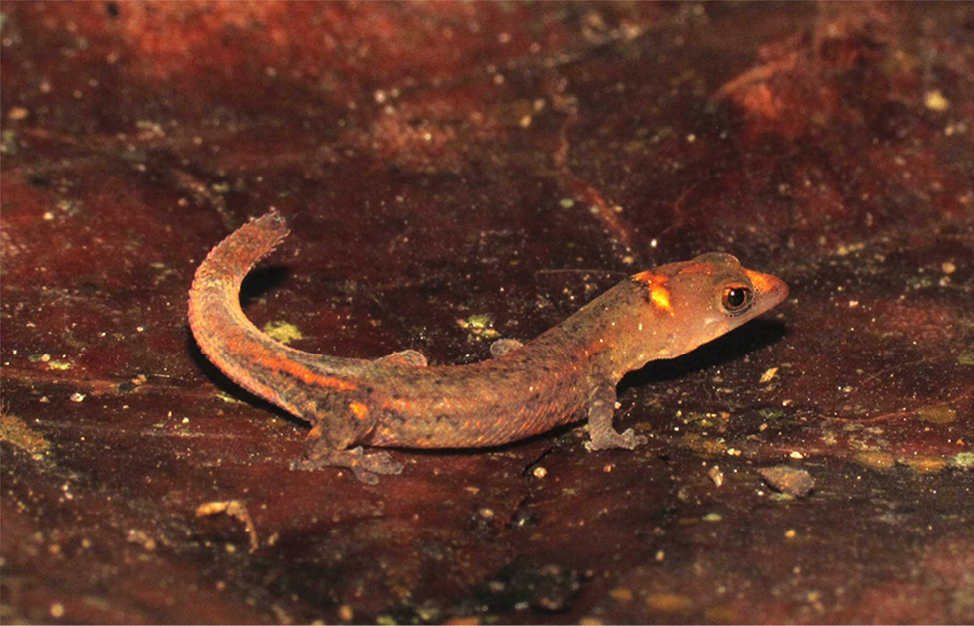
Between August 2014 and July 2015, we conducted monthly expeditions of seven days each to collect the lizards. In the sampled area, we installed 25 sets of Y-shaped pitfall traps, each containing four 20-liter buckets buried at 120° angles and interconnected by drift fences and spaced at least 15 meters apart (Cechin and Martins, 2000). We inspected these traps once a day and kept them open for six consecutive days. The accumulation of leaf litter inside the buckets simulated the adjacent microhabitats, provided shelter and maintained humidity, minimizing desiccation and predation risks for captured specimens. We also employed an active search method, in which three collectors searched in all potential microhabitats used by C. meridionalis (Fig. 1). For each active individual found, we recorded the time of activity and the microhabitat use. The active search was conducted for 6 hours daily over seven days in each expedition, divided into 3 hours in the day and 3 hours at night (19:00-22:00). To cover different activity peaks, the diurnal sampling alternated daily between a morning session (08:00-11:00) and an afternoon session (14:00-17:00). In this way, the total sampling effort of active searches was 1,512 h (504 per collector), whereas the total time the pitfall traps remained open was 43,200 h (25 pitfall sets × 24 h × 6 days × 12 months).
We euthanized the lizards with 2% lidocaine hydrochloride by peritoneal injection and used a digital caliper (0.01 mm accuracy) to measure the following variables: snout-vent length (SVL), head length (HeL), head width (HeW), head height (HeH), body width (BoW), and body height (BoH); forelimb length (FRL), hindlimb (HDL), and tail length (TL). Then, we fixed the collected lizards in 10% formalin, preserved in 70% alcohol and, subsequently, and deposited them at the Laboratory of Venomous Animals and Toxins of the Federal University of Pernambuco. All specimens were collected under federal authorization from SISBio / ICMBio (43750-1 and 43750-2).
Microhabitat use
In the field, we recorded the time of sighting, and the microhabitat used for each individual at the moment of first sight. These categories correspond to bamboo leaf litter, fallen trunk, leaf litter, and open ground. We separated the two types of leaf litter because they are visually and structurally distinct: the bamboo leaf litter is relatively homogeneous with light-colored, yellowish dry leaves, while the general leaf litter is heterogeneous and frequently dark-toned. We then used the inverse of the index of Simpson (1949) to calculate the microhabitat niche breadth and calculated the percentages of microhabitats used according to the occurrence of lizards.
Population density
To estimate the density of C. meridionalis in the studied area, we collected abundance data from 15 quadrants measuring 10 × 10 m (100 m²). The minimum distance between these quadrants was 130 meters. Inside each quadrant, three collectors conducted an exhaustive search by systematically raking and removing the entire leaf-litter layer, starting from the edges, until the entire 100 m² area was cleared to the soil to maximize detection.
The average density was calculated by dividing the total number of individuals by the 15 quadrants. This value was then multiplied by 100 to standardize the density per hectare (ind/ha). We then used the 95% confidence interval to assess the spatial variability in the abundance of the studied lizard. This interval was calculated based on the sample mean, standard deviation, and standard error of the mean, considering the Student’s t-distribution in the stats R-package (R Core Team, 2024).
Sexual dimorphism
Dimorphism analyses followed the model used by Mesquita et al. (2015), who tested dimorphism in Anolis brasiliensis. We log-transformed (base 10) the morphometric variables and selected the data for multivariate outliers with the mvoutlier R-package (Filzmoser et al., 2018). No males were considered outliers, but six females were considered outliers using a maximum limit for outlier detection of 0.001 and were not used in further analyses.
To partition total morphometric variation between size and shape variables, we defined Body Size as an isometric size variable (Rohlf and Bookstein, 1987). We calculated an isometric eigenvector defined a priori with values equal to p-0.5, where p is the number of variables (Jolicoeur, 1963). The scores derived from this eigenvector, hereafter referred to as Body Size, were obtained by post-multiplying the n x p matrix of log10-transformed data, where n is the number of observations, by the p x 1 isometric eigenvector. To remove the effects of SVL from the log-transformed variables, we applied the method of Burnaby (1966), multiplying the n x p matrix of the log10-transformed data by p x p of the symmetric matrix L, defined as: L = Ip − V(VTV)−1VT, where Ip is the p x p matrix, V is the Body Size eigenvector, and VT is the transposed V matrix (Rohlf and Bookstein, 1987). The resulting size-adjusted variables were then considered shape variables. We assessed sexual dimorphism using analysis of variance (ANOVA) on the Body Size variable and logistic regression on shape variables. To evaluate the statistical significance of the complete model based on shape variables, we compared it against a single model constant (null) using a scaled difference chi-square test (Chambers and Hastie, 1992; Faraway, 2016). The importance of each variable was determined through single-term addition modeling (Chambers and Hastie, 1992).
Reproduction
The animals were sexed through direct analysis of the gonads. The presence or absence of oviductal eggs and/or vitellogenic follicles was verified to determine the status of reproductive activity of females, considering them sexually mature if they presented either of these two evidence, while those lacking both were considered immature. Sexually mature females were evaluated for the number, length and width of eggs, as well as the volume, number, and diameter of the largest vitellogenic follicle. To assess whether body size influences egg size, we used a parametric correlation of Pearson between SVL and egg volume. The eggs and vitellogenic follicles found were used to infer the reproductive season, the number of eggs per clutch, and the frequency of oviposition per season.
The assessment of male sexual maturity relied on the presence of convoluted epididymis, identified under a stereomicroscope. We measured the testes (length and width) to estimate volume using the ellipsoid formula (Dunham, 1983): V = 4/3 π (w/2)² (l/2), where w is the prey width and l is the prey length. To evaluate the influence of body size on testes volume, we performed a simple linear regression with SVL as the predictor and testes volume as the response variable using the stats R-package (R Core Team, 2024).
Diet
In the lab, we removed the stomachs of all lizards collected and analyzed them under a stereomicroscope to identify prey items up to the Order level. Prey items were analyzed for their frequency, number (abundance), and volume. The length and width of each prey item were measured using a digital caliper (± 0.1 mm accuracy), and its volume (in mm3) was estimated using the ellipsoid formula. The importance index was calculated to determine the relative importance of each prey category within the total diet, using the formula: (F% + N% + V%)/3. Thus, we used the inverse of the index of Simpson (1949) to estimate the food niche breadth, both numerically and volumetrically.
To assess whether the size of the lizard influences the size of the prey it consumes, we used a multiple linear regression analysis with prey volume as the response variable and SVL, HeL, HeW, and HeH as predictors. To fit the volume data to a normal distribution, we applied a base-10 logarithmic transformation. Therefore, the final model was model_volume = lm (log_volume ~ SVL + HeL + HeH + HeW, data = morfo_volume), which resulted in residuals with a normal distribution (W = 0.99121, p-value = 0.4901).
Parasitism
We examined the liver, as well as the digestive, reproductive and respiratory systems in search of parasites. The parasites found were mounted on temporary slides in Hoyer medium and subsequently analyzed under light microscopy to be identified based on the specialized literature (e.g., Yamaguti, 1971; Schmidt, 1986) and by comparison with specimens deposited in the Parasitological Collection of the Regional University of Cariri.
Prevalence and mean intensity of parasite infection were calculated according to Bush et al. (1997). The index of discrepancy ranges from a minimum value of zero, indicating an equal distribution of parasites among hosts, to a maximum value of 1 (D = 1), indicating that all parasites are combined in a single host (Poulin, 1993). These indexes were calculated using Quantitative Parasitology software 3.0 (Reiczigel et al., 2019).
Results
In total, 394 C. meridionalis specimens were found: 235 by manual capture, 89 by pitfall traps and 70 by visual identification (sighted but not collected).
Microhabitat use
We recorded microhabitat use by 285 individuals of C. meridionalis, including 269 adults and 16 juveniles. The distribution across microhabitats was leaf litter (90.52%; n = 258), bamboo leaf litter (5.96%; n = 17), fallen trunk (1.76%; n = 5) and open ground (1.76%; n = 5). The niche breadth based on microhabitat use was 1.214, revealing a high degree of specialization in leaf litter (Table 1).
| Microhabitat | n (%) |
|---|---|
| Bamboo leaf litter | 17 (5.96) |
| Leaf litter | 258 (90.52) |
| Fallen trunk | 5 (1.76) |
| Open ground | 5 (1.76) |
| Total | 285 |
| Niche breadth | 1.214 |
Population density
The average density of C. meridionalis was 2.13 individuals per 100 m² quadrant, which corresponds to 213.33 individuals per hectare. The 95% confidence interval suggests that the average density per hectare may vary between 78 and 349 individuals. This density estimate (213 ind/ha) represents the local density within sampled microhabitats, which (based on our field records) were concentrated in patches of suitable leaf-litter microhabitats.
Sexual dimorphism
We analyzed the morphometric measurements of 116 C. meridionalis adult specimens, which 57 were females and 59 were males). We detected sexual dimorphism in the Body Size isometric variable (F1,109 = 19.38; P < 0.001), with females being larger than males (Table 2). However, model selection analysis showed no significant differences in individual variables between sexes (all P > 0.05).
| Characters | Range (average ± standard deviation) | |
|---|---|---|
| Females (N = 57) | Males (N = 59) | |
| SVL | 17.57 – 25.16 (22.62 ± 1.66) | 18.35 – 23.73 (21.06 ± 1.14) |
| TL | 12.23 – 21.00 (17.65 ± 2.4; N= 28) | 10.29 – 20.70 (17.20 ± 2.7; N= 33) |
| HeL | 3.11 – 6.16 (5.28 ± 0.51) | 4.08 – 5.70 (4.99 ± 0.40) |
| HeW | 2.17 – 3.99 (3.37 ± 0.36) | 2.74 – 3.98 (3.25 ± 0.27) |
| HeH | 1.06 – 3.27 (2.16 ± 0.36) | 1.57 – 2.84 (2.16 ± 0.27) |
| BoW | 2.57 – 6.21 (4.36 ± 0.74) | 3.48 – 4.96 (4.05 ± 0.35) |
| BoH | 1.79 – 4.19 (2.82 ± 0.52) | 1.76 – 3.86 (2.64 ± 0.45) |
| FRL | 4.42 – 7.59 (5.86 ± 0.64) | 4.12 – 6.48 (5.45 ± 0.57) |
| HDL | 5.38 – 9.14 (7.23 ± 0.80) | 4.98 – 8.43 (6.99 ± 0.74) |
Reproduction
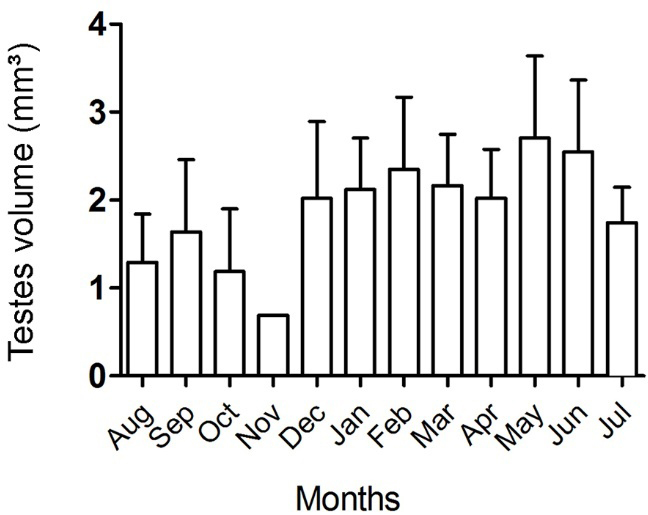
We analyzed reproductive data of 192 C. meridionalis lizards (87 females, 78 males, and 27 juveniles), of which 153 (75 were females, 72 males and six juveniles) were collected. The smallest reproductively mature male measured 18.35 mm. Testes volume was significantly influenced by the SVL (F = 13.244; adjusted R² = 0.1719; p = 0.0006), with decreased volume between July and November (Fig. 2).
Coledactylus meridionalis presented a fixed clutch size of one egg. Females showed continuous reproduction throughout the year. However, no reproductively mature females were found in either April, or from August to October, possibly due to the low number of individuals collected during this period. The smallest reproductively mature female had an SVL of 17.57 mm. There was no significant correlation between egg volume and female SVL (t = -1.549, df = 11, p = 0.1496).
Three eggs of C. meridionalis were found at different times under leaf-litter, situated at the tree base. These eggs were collected with a portion of the substrate and stored at environmental temperature. One egg (length: 5.15 mm, width: 4.22 mm, weight: 0.051 g), collected in June, did not hatch. The remaining two eggs (length: 5.20 mm, width: 4.40 mm, weight: 0.53 g; length: 5.46 mm, width: 4.35 mm, weight: 0.57 g), found together in July, successfully hatched after 53 days. Post-hatching, the neonates measured: 1) SVL = 11.88 mm, TL = 8.50 mm, weight = 0.036 g; 2) SVL = 11.16 mm, TL = 9.20 mm, weight = 0.034 g). Juveniles were found throughout the year, except for April and November, with the highest numbers recorded in January (N = 5) and June (N = 7).
Diet
We analyzed the diet of all 154 C. meridionalis collected. Of these, ten specimens had empty stomachs and intestines, while seven presented unidentifiable content. We identified a total of 22 food categories, with an average of two prey categories per stomach (RANGE: 1-5).
The diet of C. meridionalis exhibited predominance in frequency with Isopoda (16.8%), Araneae (14.9%), and Collembola (10.2%); in number with Psocoptera (20.6%), Isoptera (18.97%), and Collembola (17.53%); and in volume with Isopoda (36.5%). According to the importance index, the most significant prey category was Isopoda (21.4%), followed by Psocoptera (12.1%) and Isoptera (11.5%) (Table 3). Among the six juvenile specimens examined, one had an empty digestive tract, one had unidentifiable content, and four contained Diptera (n = 1) and Psocoptera (n = 2, n = 2, n = 16).
| Prey category | F | F% | N | N% | V | V% | I |
|---|---|---|---|---|---|---|---|
| Acari | 6 | 2.80 | 7 | 1.42 | 0.56 | 0.09 | 1.44 |
| Araneae | 32 | 14.9 | 45 | 9.18 | 41.2 | 6.67 | 10.2 |
| Blattodea | |||||||
| Blattaria | 4 | 1.80 | 4 | 0.81 | 64.4 | 10.4 | 4.37 |
| Isoptera | 18 | 8.40 | 93 | 18.97 | 45.4 | 7.35 | 11.5 |
| Coleoptera | 3 | 1.40 | 10 | 2.04 | 2.90 | 0.46 | 1.30 |
| Collembola | 22 | 10.2 | 86 | 17.5 | 15.2 | 2.46 | 10.0 |
| Dermaptera | 2 | 0.93 | 2 | 0.40 | 11.0 | 1.78 | 1.04 |
| Diptera | 7 | 3.27 | 10 | 2.04 | 9.66 | 1.56 | 2.29 |
| Lizard shed skin | 4 | 1.86 | 4 | 0.81 | - | - | 0.89 |
| Gastropoda | 2 | 0.93 | 2 | 0.40 | 18.8 | 3.05 | 1.46 |
| Hemiptera | |||||||
| Auchenorrhyncha | 3 | 1.40 | 3 | 0.61 | 1.87 | 0.30 | 0.77 |
| Heteroptera | 1 | 0.46 | 1 | 0.20 | 0.25 | 0.04 | 0.23 |
| Others | 1 | 0.46 | 1 | 0.20 | 1.32 | 0.21 | 0.29 |
| Hymenoptera | |||||||
| Formicidae | 6 | 2.80 | 10 | 2.04 | 5.16 | 0.83 | 1.89 |
| Others | 3 | 1.40 | 3 | 0.61 | 17.7 | 2.87 | 1.63 |
| Isopoda | 36 | 16.8 | 54 | 11.0 | 225.9 | 36.5 | 21.4 |
| Insect eggs | 4 | 1.80 | 5 | 1.02 | 1.22 | 0.19 | 1.02 |
| Insect larvae | 21 | 9.80 | 30 | 6.12 | 42.9 | 6.94 | 7.62 |
| Insect pupa | 2 | 0.93 | 2 | 0.40 | 33.1 | 5.36 | 2.23 |
| Orthoptera | 10 | 4.60 | 10 | 2.04 | 39.0 | 6.31 | 4.34 |
| Pseudoscorpiones | 6 | 2.80 | 7 | 1.42 | 2.45 | 0.39 | 1.54 |
| Psocoptera | 21 | 9.80 | 101 | 20.6 | 37.3 | 6.04 | 12.1 |
| Trophic niche breadth | 7.348 | 3.641 |
The diet of C. meridionalis was generalist, with a numerical food niche breadth of 7.348 and volumetric breadth of 3.641. No significant difference in the diet composition was found between adult males and females, either in number (ANOSIM, R = 0.0202; p = 0.055) or in volume (ANOSIM, R = 0.0078; p = 0.265). The multiple linear regression revealed that the size of the lizards influences the volume of prey ingested (F = 5.001; adjusted R² = 0.0982; p = 0.001). The two individual variables that showed statistical significance were head width (HeW: F = 8.472; p = 0.004) and head length (HeL: F = 5.411; p = 0.021).
Parasitism
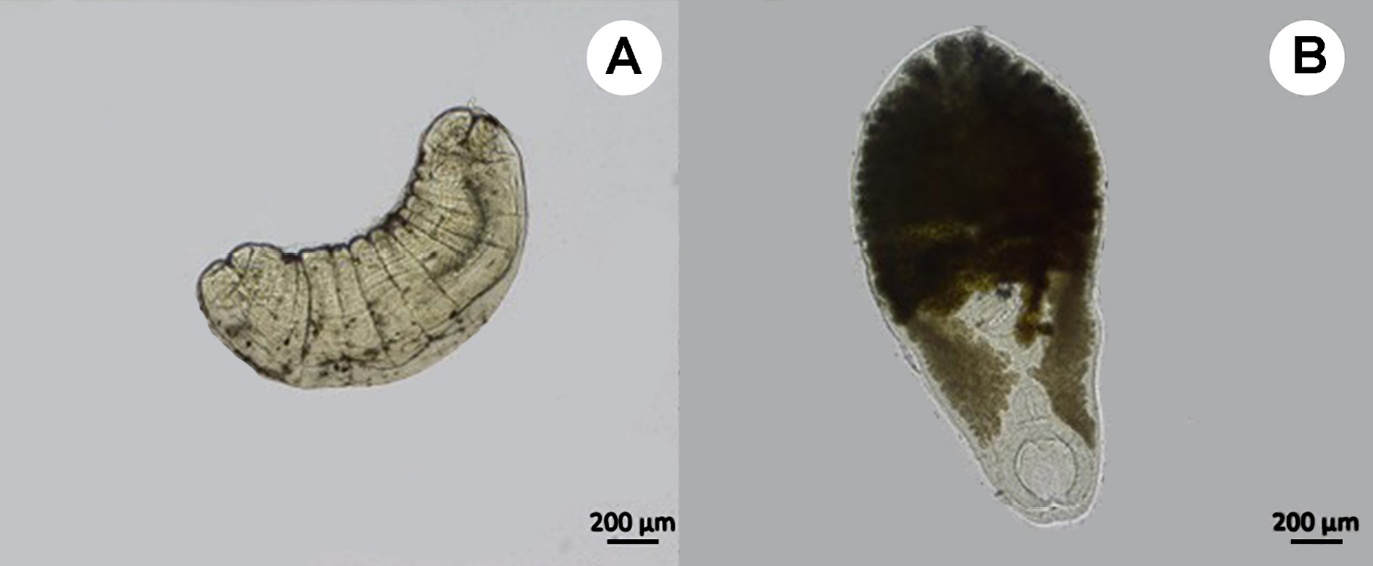
Out of 154 specimens of C. meridionalis (75 females, 73 males and six juveniles), 21 specimens (16 females and five males) were infected by at least one parasite species (total prevalence of 13.6%). Twenty specimens were infected with cystacanth (Acanthocephala larvae) (N = 30) (Fig. 3A), with a prevalence of 13% and a mean infection intensity of 1.5 ± 0.74 (range 1 – 3). These cystacanths were found in seven infection sites: loosely in the body cavity (N = 9), adhered to the body wall (N = 7), adhered to the stomach (N = 7), adhered to the liver (N = 5), adhered to the testes (N = 2), adhered to follicles (N = 4), and subcutaneously (N = 1) (Table 4). Acanthocephala larvae adhered to the liver and stomach caused visible damage to host tissue due to their extreme adherence.
| Host species | P (in %) | MII ± SE | Infection site | Source | |
|---|---|---|---|---|---|
| Cistacanth (Acanthocephala larvae) | Ameiva ameiva | 35.70 | 1 | - | Smales, 2007 |
| Ameiva ameiva | 60 | - | 1 | Macedo et al., 20016 | |
| Anolis cristatellus | 67 | - | 2 | Nickol et al., 2006 | |
| Coleodactylus meridionalis | 13.6 | 1.5 ± 0.74 | 1:7 | Present study | |
| Hemidactylus agrius | - | - | 1 | Anjos et al., 2011 | |
| Hemidactylus mabouia | 33.70 | 4.2 ± 7 | 3, 5, 8 | Anjos et al., 2005 | |
| Brasiliscincus agilis | 90.90 | 15 ± 10.7 | 1, 3:5, 8-9 | Vrcibradic et al., 2002 | |
| Brasiliscincus agilis | 57.10 | 6.3 ± 10.7 | 1, 3:5, 8-9 | Vrcibradic et al., 2002 | |
| Psychosaura macrorhyncha | 90.90 | 35.5 ± 45.8 | 1, 3:5, 8-9 | Vrcibradic et al., 2002 | |
| Psychosaura macrorhyncha | 7.10 | 3 | - | Vrcibradic et al., 2002 | |
| Anolis fuscoauratus | 37.50 | 2.15 ± 2.2 | 1, 3:5, 7-8 | Campos et al., 2016 | |
| Tropidurus hispidus | 3.50 | - | - | Brito et al., 2014a | |
| Tropidurus hispidus | 0.69 | 3.5 | - | Brito et al., 2014b | |
| Tropidurus semitaeniatus | 0.51 | 1 | - | Brito et al., 2014b | |
| Tupinambis teguixin | 14.30 | 1 | - | Smales, 2007 | |
| Brachycoeliidae (Trematoda: Digenea) | Anolis sagrei | 3 | 1 | C | Goldberg & Bursey, 2000 |
| Cercosaura eigenmanni | 7 | 1 | C | Bursey & Goldberg, 2004 | |
| Coleodactylus meridionalis | 1.90 | 3 ± 1.9 | A, B | Present study | |
| Diploglossus lessonae | - | - | C | Ávila & Silva, 2010 | |
| Lepidophyma flavimaculatum | 80 | 2.4 ± 1.8 | - | Bursey et al., 2006 | |
| Trachylepis atlantica | 4 | 3 | C | Ramalho et al., 2009 | |
| Tropidurus torquatus | 33.30 | - | C | Rodrigues et al., 1990 |
Additionally, three C. meridionalis were infected by nine adult Brachycoeliidae worms (Trematoda: Digenea) (Fig. 3B) found in the esophagus (N = 1) and stomach (N = 8), with a prevalence of 1.9% and a mean intensity of infection of 3 ± 1.9 (range 1 – 7) (Table 4). Only two lizards were infected by both parasites simultaneously. The discrepancy index for cystacanth was 0.895 and for Brachycoeliidae was 0.983. There was no significant difference in abundance observed between sexes (Z = 0.596; P = 0.116), between dry and wet seasons (Z = 839; P = 0.401) or when considering both sex and season (Z = 0.138; P = 0.891).
Discussion
Coleodactylus meridionalis is a microhabitat specialist, predominantly and almost exclusively using leaf litter. Similar results have been found in other C. meridionalis populations (Silva et al., 2015; Gonçalves-Sousa et al., 2023) and congenerics such as C. septentrionalis, C. brachystoma and C. natalensis (Colli et al., 2002; Vitt et al., 2005; Sousa and Freire, 2011; Lisboa and Freire, 2012), suggesting phylogenetic conservatism in the microhabitat use. In a Cerrado area, C. meridionalis used the same number of microhabitat categories found by us, but with a more even distribution across two microhabitats (spatial niche breadth = 2.57).
The spatial niche specialization of C. meridionalis, with its preference for leaf litter, can be interpreted through the lens of microevolutionary optimization, particularly regarding fine-scale crypsis (Hendry and Kinnison, 2001). Coleodactylus spp. are known for using a low range of microhabitats (Present study; Vitt et al., 2005; Lisboa and Freire, 2012; Gonçalves-Sousa et al., 2023). The cryptic, coppery coloration of C. meridionalis (Vanzolini, 1957) favors camouflage within dark leaf litter, its preferred microhabitat (90.52% of individuals recorded in this study). However, in bamboo leaf litter, characterized by light-colored, yellowish dry leaves, C. meridionalis was less frequent (5.96%) and displayed intraspecific variation, exhibiting lighter, orange-toned coloration. This change improves camouflage in this lighter microhabitat, thereby reducing predation risk. This phenotypic alignment with the substrate underscores the role of selective pressures on coloration, where this crypsis enhances fitness and shapes the spatial distribution of the species at local spatial scales.
Although no single variable showed a significant difference when tested individually, the Body Size isometric variable was significant, with females larger than males. In contrast, Silva et al. (2015) found that males had significantly higher SVL than females in another population of C. meridionalis in a Humid Forest enclave within the Caatinga domain in northeastern Brazil. These characteristics may vary between different populations, although our data present a larger sample, which may better explain the morphological pattern of these lizards. Moreover, in other studies, mean SVL in Coleodactylus species was higher in females, including C. meridionalis, C. elizae and C. natalensis (Freire, 1999; Goncalves et al., 2012). These findings suggest that sexual dimorphism in C. meridionalis is a labile functional trait shaped by different local selective pressures across biomes.
Sexual dimorphism in lizards typically results from fecundity or sexual selective pressures, whose effects appear to geographically change across C. meridionalis populations. The females larger than males found in our study is often linked to fecundity selection (e.g., Andersson, 1994; Olsson et al., 2002), but the mechanism for this selection seems multifactorial in this miniaturized species. Coleodactylus meridionalis has a one-egg fixed clutch size, and our analysis found no significant correlation between egg volume and female SVL. This finding suggests that the advantage of larger female size is probably not associated with bigger offspring, but rather to improve energy storage, as in larger fat bodies. Greater energy reserves would be advantageous for sustaining the continuous reproductive effort observed throughout the year. On the other hand, C. meridionalis males larger than females found by Silva et al. (2015) suggests that sexual selection (Colli et al., 2003; Mesquita and Colli, 2003) may be dominant in that Caatinga population.
The diet of C. meridionalis consisted exclusively of arthropods, exhibiting a generalist feeding pattern that is best explained by high opportunistic food plasticity. In our study, the broad food niche dimension is similar to findings from two populations of Atlantic Forest (Teixeira et al., 2021), Cerrado (Werneck et al., 2009), and a population from Humid Forest enclave within the Caatinga domain (Silva et al., 2015), but contrasts with the specialist feeding habits reported in two other Atlantic Forest and Caatinga vegetation areas (Supporting Information S3 in Gonçalves-Sousa et al., 2023). This shifts across areas in the diet of C. meridionalis, even within the same biome or among close areas, reveals strong evidence of plasticity in prey selection. For example, the Order Isopoda was the main food category ingested in our study (importance index 21.4%) and in two other populations (35.71% and 34.1%; Teixeira et al., 2021) of the Atlantic Forest, and in a population from a semideciduous seasonal forest area (48.1% in frequency; Silva et al. 2015). On the other hand, Formicidae (44.1%) and Insect larvae (35.15%) were the main categories in other populations from the Atlantic Forest (Teixeira et al., 2021), whereas Isoptera (51%) and Siphonaptera (44.8%) were predominant in a Caatinga population from Cuité, Paraíba (Gonçalves-Sousa et al., 2023), and Araneae (80.8%) in another Caatinga population from Palmas de Monte Alto, Bahia (Gonçalves-Sousa et al., 2023). Additionally, in a Cerrado enclave in São Domingos, Goiás, Isoptera was the most important prey category (36.87%; Werneck et al., 2009). Therefore, it is plausible to infer that the diet of C. meridionalis is strongly influenced by local ecological factors, such as resource availability, with the availability of suitable sized food resources for this small lizard in each area determining the most significant categories in the diet composition.
We found that the size of the lizards, specifically head width and head length, significantly influenced the volume of prey ingested, with larger lizards consuming larger prey. This finding aligns with similar results found in some lizard species of the families Sphaerodactylidae, Teiidae and Tropiduridae (Van Sluys et al., 2004; Vitt et al., 2005; Sales et al., 2011). In some lizard species, such as the leiosaurid Enyalius brasiliensis, both SVL and head width strongly influence diet, as larger measurements correlate with a greater volume of prey consumed (Dorigo et al., 2014). In contrast, there are lizards that do not exhibit a significant correlation between body or head size with prey size. For instance, medium to large-sized lizards like the tropidurid Plica plica and the teiid Ameivula ocellifera have a generalist diet composition, but small prey items, such as ants and termites, plays a significant role in their diet (Vitt, 1991; Mesquita and Colli, 2003).
Lizards are susceptible to several macro endoparasites, such as Acanthocephala, Cestoda, Nematoda, Pentastomida, and Trematoda (e.g., Ávila and Silva, 2010; Ribeiro et al., 2012; Sousa et al., 2014). In the present study, we detected infections in C. meridionalis caused by a cystacanth of Acanthocephala and by a trematode from the Brachycoeliidae family. Acanthocephala can use lizards as paratenic or definitive hosts (Nickol et al., 2006; Smales, 2007).
Infection by cystacanths can occur through feeding organisms such as termites, which have been identified as intermediate hosts for Acanthocephala (Nickol et al., 2006; Amato et al., 2014) and are also part of the diet of C. meridionalis in the studied population. In C. meridionalis, cystacanth parasites showed low prevalence (13.6%). Nonetheless, this rate is still higher than those found in another population of C. meridionalis (6.2%), as well as in Psychosaura macrorhyncha (7.1%), Tropidurus hispidus (3.5% and 0.69%) and T. semitaeniatus (0.51%) (Vrcibradic et al., 2002; Brito et al., 2014a; 2014b; Teixeira et al., 2021). Six out of seven identified infection sites of cystacanth in C. meridionalis align with registers in other host species (Vrcibradic et al., 2002; Nickol et al., 2006; Macedo et al., 2016; Campos et al., 2021), except for attachment to the testes. The sites with highest infection rates were those attached to the stomach and to the body wall (both dorsal and ventral), a pattern commonly observed in other lizards (Vrcibradic et al., 2002; Anjos et al., 2005; Campos et al., 2021). Subcutaneous infection by Acanthocephala was rare, registered only once in our study and once for Anolis cristatellus (Nickol et al., 2006). Cystacanths were also found parasitizing Anolis fuscoauratus in the same sampled area of this study (Campos et al., 2021). Although we only encountered the larval stage, this finding highlights the high plasticity of this parasite, as it can infect lizards adapted to a wide range of microhabitats, including leaf litter and tree branches.
This is the first report of a trematode from the Brachycoeliidae family parasitizing C. meridionalis. This finding also represents the third record of parasitism in Sphaerodactylidae lizards within South America (Ávila and Silva, 2010). In Brazil, the family Brachycoeliidae (Trematoda) is reported as a Squamata parasite, mostly in lizards living in Caatinga regions and in the Archipelago of Fernando de Noronha (Ramalho et al., 2009; Ávila and Silva, 2010); in the Amazonia Forest region (Bursey and Goldberg, 2004); and in the southeastern Restinga area (Rodrigues et al., 1990). The prevalence of Brachycoeliidae infection was low in C. meridionalis (1.9%). A low prevalence of trematodes in lizards appears to be a common pattern, as several studied have found prevalences between 3% and 7% (Goldberg and Bursey, 2000; Ramalho et al., 2009; Teixeira et al., 2021). Contrarily, the Central America lizard Lepidophyma flavimaculatum showed prevalence of 80% (8/10 individuals), but with low infection intensity (2.4 ± 1.8; Bursey et al., 2006). Unlike L. flavimaculatum, where trematodes were almost uniformly, the discrepancy index (0.993) indicated that these parasites occur clustered in C. meridionalis. This finding is mainly due to the fact that 7 out of the 10 collected trematodes were found in just one host individual, suggesting that this parasite infection may occur casually or even accidentally in the studied area.
According to our revision, the most frequent Brachycoeliidae infection site is the intestine, aligning with preferred infection sites reported for other families of the Digenea subclass parasitizing lizards (Ávila and Silva, 2010). However, it is noteworthy that within this subclass, parasites from the same family can infect different sites, such as gallbladder, liver and intestines, with stomach as a potential infection site (Ávila and Silva, 2010). Considering that Brachycoeliidae was found inside the stomach and esophagus of C. meridionalis, the potential parasitic sites for this family extend beyond the intestine.
We concluded that C. meridionalis is a sexually dimorphic lizard that typically inhabit forested environments, mainly using leaf litter as its microhabitat. This microhabitat preference indicates phylogenetic conservatism. Contrarily, this lizard showed a generalist and opportunistic feeding habit, suggesting high food plasticity and adaptability according to the food resource availability in each area. Lastly, C. meridionalis is a paratenic host for cystacanth and a definitive host Brachycoeliidae species.
Acknowledgments
We thank the Pró-Reitoria de Pesquisa e Inovação from Pernambuco Federal University and Conselho Nacional de Desenvolvimento Científico e Tecnológico (CNPq) for a master’s scholarship awarded to CNO, the Fundação Cearense de Apoio ao Desenvolvimento Científico e Tecnológico (FUNCAP) and CNPq for a postdoc fellowship granted to JGGS (FC3-0198-00136.01.00/22; 150110/2023-5), and FUNCAP for a research productivity grant awarded to SCR (BP5-0197-00161.01.00/22).
References
Amato, J.F.R., Cancello, E.M., Carrijo, T.F. (2014): Cistacantos de Gigantorhynchus echinodiscus (Acanthocephala, Gigantorhynchidae), en termitas neotropicales (Isoptera, Termitidae). Neotrop. Helminthol. 8: 325-338.
Anderson, R.A., Vitt, L.J. (1990): Sexual selection versus alternative causes of sexual dimorphism in teiid lizards. Oecologia 84: 145-157.
Andersson, M.B. (1994): Sexual selection. Princeton University Press.
Anjos, L.A., Rocha, C.F.D., Vrcibradic, D., Vicente, J.J. (2005): Helminths of the exotic lizard Hemidactylus mabouia from a rock outcrop area in southeastern Brazil. J. Helminthol. 79: 307-313.
Ávila, R.W., Silva, R.J. (2010): Checklist of helminths from lizards and amphisbaenians (Reptilia, Squamata) of South America. J. Venom. Anim. Toxins Incl. Trop. Dis 16: 543-572.
Brito, S.V., Corso, G., Almeida, A.M., Ferreira, F.S., Almeida, W.O., Anjos, L.A., Mesquita, D.O., Vasconcellos, A. (2014a): Phylogeny and micro-habitats utilized by lizards determine the composition of their endoparasites in the semiarid Caatinga of Northeast Brazil. Parasitol. Res. 113: 3963-3972.
Brito, S.V., Ferreira, F.S., Ribeiro, S.C., Anjos, L.A., Almeida, W.O., Mesquita, D.O., Vasconcellos, A. (2014b): Spatial-temporal variation of parasites in Cnemidophorus ocellifer (Teiidae) and Tropidurus hispidus and Tropidurus semitaeniatus (Tropiduridae) from Caatinga areas in northeastern Brazil. Parasitol. Res. 113: 1163-1169.
Burnaby, T. (1966): Growth-invariant discriminant functions and generalized distances. Biometrics 22: 96-110.
Bursey, C.R., Goldberg, S.R. (2004): Cosmocerca vrcibradici n. sp.(Ascaridida: Cosmocercidae), Oswaldocruzia vitti n. sp.(Strongylida: Molineoidae), and other helminths from Prionodactylus eigenmanni and Prionodactylus oshaughnessyi (Sauria: Gymnophthalmidae) from Brazil and Ecuador. J. Parasitol. 90: 140-145.
Bush, A.O., Lafferty, K.D., Lotz, J.M., Shostak, A.W. (1997): Parasitology meets ecology on its own terms: Margolis et al. revisited. J. Parasitol. 83: 575-583.
Campos, I.H.M.P., Oliveira, C.N., Araújo-Neto, J.V., Brito, S.V., Guarnieri, M.C., Ribeiro, S.C. (2021): Helminth fauna of Norops fuscoauratus (D’Orbigny, 1837) (Squamata: Dactyloidae) in the Atlantic Forest, northeastern Brazil. Braz. J. Biol. 82: e241819.
Cechin, S.Z., Martins, M. (2000): Eficiência de armadilhas de queda (pitfall traps) em amostragens de anfíbios e répteis no Brasil. Rev. Bras. Zool. 17: 729-740.
Chambers, J.M., Hastie, T.J. (1992): Statistical models in S, pp. 624. New York, Routledge.
Colli, G.R., Bastos, R.P., Araujo, A.F.B. (2002): The character and dynamics of the Cerrado herpetofauna. In: The Cerrados of Brazil: Ecology and natural history of a Neotropical savanna, pp. 223-241. Oliveira, P.S., Marquis, R.J., Eds, New York, Columbia University Press.
Colli, G.R., Mesquita, D.O., Rodrigues, P.V.V., Kitayama, K. (2003): Ecology of the gecko Gymnodactylus geckoides amarali in a Neotropical savanna. J. Herpetol. 37: 694-706.
Dias, E.J.R., Vargem, M.M.F., Rocha, C.F.D. (2003): Coleodactylus meridionalis (NCN). Diet. Herpetol. Rev. 34: 142.
Dorigo, T.A., Maia-Carneiro, T., Almeida-Gomes, M., Siqueira, C.C., Vrcibradic, D., Van Sluys, M., Rocha, C.F.D. (2014): Diet and helminths of Enyalius brasiliensis (Lacertilia, Iguania, Leiosauridae) in an Atlantic Rainforest remnant in southeastern Brazil. Braz. J. Biol. 74: 199-204.
Dunham, A.E. (1983): Realized niche overlap, resource abundance, and intensity of interspecific competition. In: Lizard ecology: Studies of a model organism, pp. 261-280. Huey, R.B., Pianka, E.R., Schoener, T.W., Eds, Cambridge, Harvard University Press.
Faraway, J.J. (2016): Extending the linear model with R: Generalized linear, mixed effects and nonparametric regression models, pp. 413. New York, Chapman and Hall/CRC.
Feitosa, M.L.B., Silva-Júnior, A.O.D., Ximenes, R.E.D.J., Lins, A.H.A., Moura, G.J.B., Lira, A.F.A. (2022): Scorpion mimicry behavior in Coleodactylus meridionalis (Squamata: Sphaerodactylidae) in the northeastern Atlantic Forest. Herpetol. Notes 15: 829-831.
Filzmoser, P., Gschwandtner, M., Filzmoser, M.P., Lazydata, T. (2018): Package ‘mvoutlier’. Multivariate outlier detection based on robust methods, R Package Version 2.
Freire, E.M.X. (1999): Espécie nova de Coleodactylus Parker, 1926 das dunas de Natal, Rio Grande do Norte, Brasil, com notas sobre suas relações e dicromatismo sexual no gênero (Squamata, Gekkonidae). Bol. Mus. Nac. 399: 1-14.
Goldberg, S.R., Bursey, C.R. (2000): Transport of helminths to Hawaii via the brown anole, Anolis sagrei (Polychrotidae). J. Parasitol. 86: 750-755.
Gonçalves-Sousa, J.G., Cavalcante, L.A., Mesquita, D.O., Ávila, R.W. (2023): Determinants of resource use in lizard assemblages from the semiarid Caatinga, Brazil. Biotropica 55: 185-196.
Gonçalves-Sousa, J.G., Oliveira, H.F., Ávila, R.W. (2024): Autecology of the gecko Phyllopezus periosus (Squamata: Phyllodactylidae) inhabiting rock cliffs of a waterfall canyon from the semi-arid region of northeastern Brazil. Acta Herpetol. 19: 41-55.
Goncalves, U., Torquato, S., Skuk, G., Sena, G.A. (2012): A new species of Coleodactylus Parker, 1926 (Squamata: Sphaerodactylidae) from the Atlantic Forest of northeast Brazil. Zootaxa 3204: 20-30.
Guimarães, H.D.B., Braga, R.A., De Oliveira, T.H. (2012): Evolução da condição ambiental em fragmentos de mata atlântica na região metropolitana do Recife-PE. Rev. Bras. Ciênc. Agrár. 7: 306-314.
Hendry, A.P., Kinnison, M.T. (2001): An introduction to microevolution: Rate, pattern, process. Genetica 112: 1-8.
Hortal, J., Lobo, J.M. (2006): A synecological framework for systematic conservation planning. Biodivers. Inform. 3: 16-45.
Hutchinson, G.E. (1957). Concluding remarks. Cold Spring Harb. Symp. Quant. Biol. 22: 415-427.
Jolicoeur, P. (1963): The multivariate generalization of the allometry equation. Biometrics 19, 497-499.
Lisboa, C.M.C.A., Freire, E.M.X. (2012): Population density, habitat selection and conservation of Coleodactylus natalensis (Squamata: Sphaerodactylidae) in an urban fragment of Atlantic Forest in northeastern Brazil. S. Am. J. Herpetol. 7: 181-190.
Macedo, L.C., Melo, F.T.V., Ávila-Pires, T.C.S., Giese, E.G., Santos, J.N. (2016): Acanthocephala Larvae parasitizing Ameiva ameiva ameiva (Linnaeus, 1758)(Squamata: Teiidae). Rev. Bras. Parasitol. Vet. 25: 119-123.
Mesquita, D.O., Colli, G.R. (2003): The ecology of Cnemidophorus ocellifer (Squamata, Teiidae) in a neotropical savanna. J. Herpetol. 37: 498-509.
Mesquita, D.O., Costa, G.C., Figueredo, A.S., Franca, F.G.R., Garda, A.A., Bello Soares, A.H., Tavares-Bastos, L., Vasconcellos, M.M., Vieira, G.H.C., Vitt, L.J., Werneck, F.P., Wiederhecker, H.C., Colli, G.R. (2015): The autecology of Anolis brasiliensis (Squamata, Dactyloidae) in a Neotropical savanna. Herpetol. J. 25: 233-244.
Nickol, B.B., Fuller, C.A., Rock, P. (2006): Cystacanths of Oncicola venezuelensis (Acanthocephala: Oligacanthorhynchidae) in Caribbean termites and various paratenic hosts in the US Virgin Islands. J. Parasitol. 92: 539-542.
Olsson, M., Shine, R., Wapstra, E., Ujvari, B., Madsen, T. (2002): Sexual dimorphism in lizard body shape: The roles of sexual selection and fecundity selection. Evolution 56: 1538-1542.
Pinto, L.F.G., Voivodic, M. (2021): Reverse the tipping point of the Atlantic Forest for mitigation. Nat. Clim. Change 11: 364-365.
Poulin, R. (1993): The disparity between observed and uniform distributions: A new look at parasite aggregation. Int. J. Parasitol. 23: 937-944.
Ramalho, A.C.O., Silva, R.J., Schwartz, H.O., Péres Jr, A.K. (2009): Helminths from an introduced species (Tupinambis merianae), and two endemic species (Trachylepis atlantica and Amphisbaena ridleyi) from Fernando de Noronha Archipelago, Brazil. J. Parasitol. 95: 1026-1028.
Reiczigel, J., Marozzi, M., Fábián, I., Rózsa, L. (2019): Biostatistics for parasitologists–a primer to quantitative parasitology. Trends Parasitol. 35: 277-281.
Ribeiro, L.B., Gogliath, M., Rodrigues, R.G., Barreto, R.M.F., Freire, E.M.X. (2013): Two new records of Coleodactylus meridionalis (Boulenger, 1888) (Squamata, Sphaerodactylidae) in north-eastern Brazil, including a map and comments regarding its geographical distribution. Herpetol. Notes 6, 23-27.
Ribeiro, S.C., Ferreira, F.S., Brito, S.V., Teles, D.A., Ávila, R.W., Almeida, W.O., Anjos, L.A., Guarnieri, M.C. (2012): Pulmonary infection in two sympatric lizards, Mabuya arajara (Scincidae) and Anolis brasiliensis (Polychrotidae) from a cloud forest in Chapada do Araripe, Ceará, Northeastern Brazil. Braz. J. Biol. 72: 929-933.
Rodrigues, H., Rodrigues, S.S., Faria, Z. (1990): Contribution to the knowledge of the helminthological fauna of vertebrates of Maricá, Rio de Janeiro State, Brazil. Mem. Inst. Oswaldo Cruz 85: 115-116.
Schmidt, G.D. (1986): CRC Handbook of tapeworm identification. Florida, CRC Press.
Rohlf, F.J., Bookstein, F.L. (1987): A comment on shearing as a method for “size correction”. Syst. Zool. 36: 356-367.
Roseno, R.S., Pareja-Mejia, D., Santos, L.S.D., Diele-Viegas, L.M., Carilo Filho, L.M., Nascimento, P.R., Eidenberger, G.G., Solé, M. (2024): Tracking the little ones: use of fluorescent powder to follow a leaf litter lizard (Coleodactylus meridionalis, Squamata: Sphaerodactylidae) in the Atlantic Forest of southern Bahia, Brazil. An. Acad. Bras. Ciênc. 96: e20230728.
Sales, R.F.D., Ribeiro, L.B., Freire, E.M.X. (2011): Feeding ecology of Ameiva ameiva in a caatinga area of northeastern Brazil. Herpetol. J. 21: 199-207.
Service, W.W.I. (2013): Climatological Information. Available at: <http://www.wmo.int/pages/index_en.html>.
Silva, E.A., Melo Junior, M., Santos, E.M. (2015): Ocupação, comportamento e hábito alimentar de Coleodactylus meridionalis (Boulenger, 1888) (Squamata: Sphaerodactylidae) em uma floresta serrana, sertão do Pajeú, PE. Rev. Ouricuri 5: 39-52.
Simpson, E.H. (1949): Measurement of diversity. Nature 163: 688.
Smales, L.R. (2007): Acanthocephala in amphibians (Anura) and reptiles (Squamata) from Brazil and Paraguay with description of a new species. J. Parasitol. 93: 392-398.
Sousa, J.G.G., Brito, S.V., Ávila, R.W., Teles, D.A., Araujo-Filho, J.A., Teixeira, A.a.M., Anjos, L.A., Almeida, W.O. (2014): Helminths and pentastomida of two synanthropic gecko lizards, Hemidactylus mabouia and Phyllopezus pollicaris, in an urban area in Northeastern Brazil. Braz. J. Biol. 74: 943-948.
Sousa, P.a.G., Freire, E.M.X. (2011): Thermal ecology and thermoregulatory behavior of Coleodactylus natalensis (Squamata: Sphaerodactylidae), in a fragment of the Atlantic Forest of Northeastern, Brazil. Zoologia (Curitiba) 28: 693-700.
Team, R.C. (2024): R: A Language and Environment for Statistical Computing_. R Foundation for Statistical Computing, Vienna, Austria.
Teixeira, A.a.M., Sampaio, N.K.S., Araujo-Filho, J.A., Teles, D.A., Almeida, W.O., Mesquita, D.O., Brito, S.V. (2021): Parasitic infection patterns in Coleodactylus meridionalis (Squamata: Sphaerodactylidae) from Atlantic Forest fragments, northeast of the Neotropical Region. Helminthologia 58: 356.
Tewksbury, J.J., Anderson, J.G.T., Bakker, J.D., Billo, T.J., Dunwiddie, P.W., Groom, M.J., Hampton, S.E., Herman, S.G., Levey, D.J., Machnicki, N.J. (2014): Natural history’s place in science and society. BioScience 64: 300-310.
Uchôa, L.R., Delfim, F.R., Mesquita, D.O., Colli, G.R., Garda, A.A., Guedes, T.B. (2022): Lizards (Reptilia: Squamata) from the Caatinga, northeastern Brazil: Detailed and updated overview. Vertebr. Zool. 72: 599-659.
Van Sluys, M., Rocha, C.F.D., Vrcibradic, D., Galdino, C.a.B., Fontes, A.F. (2004): Diet, activity, and microhabitat use of two syntopic Tropidurus species (Lacertilia: Tropiduridae) in Minas Gerais, Brazil. J. Herpetol. 38,: 606-611.
Vanzolini, P. (1957): O gênero Coleodactylus (Sauria, Gekkonidae). Pap. Avulsos Zool. 13: 1-17.
Veloso, H.P., Rangel-Filho, A.L.R., Lima, J.C.A. (1991): Classificação da vegetação brasileira, adaptada a um sistema universal. Rio de Janeiro, Ibge.
Vitt, L.J. (1991): Ecology and life history of the scansorial arboreal lizard Plica plica (Iguanidae) in Amazonian Brazil. Can. J. Zool. 69: 504-511.
Vitt, L.J., Sartorius, S.S., Avila-Pires, T.C.S., Zani, P.A., Espósito, M.C. (2005): Small in a big world: Ecology of leaf-litter geckos in new world tropical forests. Herpetol. Monogr. 19: 137-152.
Vrcibradic, D., Rocha, C.F.D., Bursey, C.R., Vicente, J.J. (2002): Helminth communities of two sympatric skinks (Mabuya agilis and Mabuya macrorhyncha) from two ‘restinga’ habitats in southeastern Brazil. J. Helminthol 76: 355-361.
Werneck, F.P., Colli, G.R., Vitt, L.J. (2009): Determinants of assemblage structure in Neotropical dry forest lizards. Austral Ecol. 34: 97-115.
Yamaguti, S. (1971): Synopsis of digenetic trematodes of vertebrates. Vols I and II, pp. 1074. Tokyo, Keigaku Publishing Co.