https://doi.org/10.36253/a_h-18063
Submitted on: 2025, 19th June; revised on: 2025, 9th December; accepted on: 2025, 10th December.
First record of biogenic silica in the stomach contents of South American freshwater turtles
1 State University of Maringá (UEM), Maringá, Brazil
2 State University of Paraná (UNESPAR), campus Campo Mourão, Campo Mourão, Brazil
*Corresponding author. Email: luan-m@live.com
Abstract. Sponges of the phylum Porifera, especially those in the class Demospongiae, produce siliceous spicules, while plants form phytoliths, both of which are sources of biogenic silica in aquatic environments. Marine and freshwater turtles have diets that vary throughout their life stages and may consume these organisms. However, there are still few studies investigating the ingestion of biogenic silica by freshwater turtles. This study aimed to analyze the diversity of biogenic silica bodies in the stomachs of Phrynops geoffroanus. Specimens were captured in Iguaçu National Park (PNI), Paraná, a vital remnant of the Atlantic Forest. Individuals underwent biometric measurements, photographic documentation, and euthanasia using Thiopental (93 mg/kg), following strict ethical protocols. Biological material was sent to the State University of Maringá, where stomachs were extracted. Stomach contents were processed at the Laboratory of Paleoenvironmental Studies (LEPAFE) at the State University of Paraná (UNESPAR), treated with HNO₃ on a heating plate, and the resulting material was mounted on slides for analysis. Three specimens of Phrynops geoffroanus at different ontogenetic stages were examined. Stomach analysis revealed the presence of biogenic silica, including phytoliths, diatom frustules, and sponge spicules, with the highest concentration found in young individuals and the lowest in juveniles. The predominant phytolith types suggest interactions with grasses and Podostemaceae. Gemmuloscleres of Oncosclera navicella were identified in young and adult individuals, confirming predation on freshwater sponges. This study highlights the interaction between Phrynops geoffroanus and organisms that produce biogenic silica.
Keywords. Biomineralization, phytoliths, sponge spicules, freshwater sponge, turtles.
Contents
Introduction
Marine and freshwater turtles have a diverse diet that varies according to ontogenetic stage. Juveniles tend to be predominantly carnivorous, young individuals display benthic feeding behavior, and adults are primarily herbivorous. However, most species are considered omnivorous, feeding on sponges, fish, crustaceans, medusae, and gastropods (Márquez, 1990). In marine environments, these animals have been documented preying on biogenic silica-producing organisms such as sponges (León Bjorndal, 2002), while in freshwater habitats, they consume plants (Esteves et al., 2021). Nevertheless, research on the presence of biogenic silica in the stomachs of freshwater animals has not yet been conducted.
Sponges belong to the phylum Porifera and produce body structures composed of silica and calcium carbonate, known as spicules (Volkmer-Ribeiro and Parolin, 2010). Species in the class Demospongiae occur in both marine and freshwater environments, producing exclusively siliceous spicules, which are considered biogenic silica. These structures are bound by organic collagen filaments and are categorized into three types: megascleres (the most prominent spicules forming the skeletal structure), microscleres (smaller spicules found in the outer surface or pinacoderm of the sponge), and gemmuloscleres (the smallest spicules derived from gemmules, with taxonomic value allowing identification at the family, genus, or species level) (Kalinovsk et al., 2016). Sponges exhibit high biodiversity and can be found in both lotic and lentic environments, attached to rocks, tree roots, and other substrates (Volkmer-Ribeiro and Machado, 2017).
Biogenic silica can also be produced by certain plant species in the form of phytoliths. Phytoliths are microscopic bodies formed by plants from silica absorbed from the soil and deposited in plant tissues such as the lumen, intercellular spaces, and cell walls (Piperno, 2006). This deposition process creates isometric molds of the original plant cells, which can sometimes be taxonomically identifiable (ICPT et al., 2019; de Oliveira et al. 2023, 2024, 2025). Aerial structures such as leaves, bracts, and fruits have the greatest affinity for phytolith production (Piperno, 1991).
Phrynops geoffroanus (SCHWEIGGER, 1812) exhibits the widest geographic distribution among Chelidae turtles, occurring throughout most of Brazil, except in the states of Roraima, Amapá, and Sergipe (Costa et al., 2022). Studies in recent decades indicate a wide distribution of P. geoffroanus in South America, encompassing diverse environments and biomes (Schneider et al., 2011; de Carvalho et al., 2017; Friol, 2019). Species of this genus of freshwater turtles have a shovel-shaped jaw, a feature that allows them to feed on items deposited on the bottoms of aquatic bodies (Rhodin and Mittermeier 1983). In contrast, P. geoffroanus exhibits a more specialized feeding pattern, consuming exclusively plant fruits during the rainy season (Fachín-Terán et al., 1995; Souza, 2004).
Some aquatic species such as fish and freshwater turtles rely on sponges and plants as sources of energy, being classified as spongivorous and herbivorous (León and Bjorndal, 2002; Esteves et al., 2021). These food resources contain silica incorporated into their body structures (Piperno, 1988; Kalinovsk et al., 2016). The quantification of biogenic silica in the digestive tract of freshwater turtles will advance the understanding of their ecological role in aquatic ecosystems. Furthermore, the characterization and specific identification of freshwater sponges through their spicules, also present in the digestive tract of these turtles, allows for an indirect assessment of the distribution of freshwater sponges. In this context, this study aimed to analyze the presence of biogenic silica (sponge spicules, phytoliths, and diatom frustules) in the stomachs of Phrynops geoffroanus (Schweigger, 1812), a turtle species widely distributed in Brazil. This is the first study to investigate biogenic silica in the stomach contents of freshwater turtles in South America and provides evidence of predation on freshwater plants and sponges by the native species P. geoffroanus.
Materials and methods
Study area
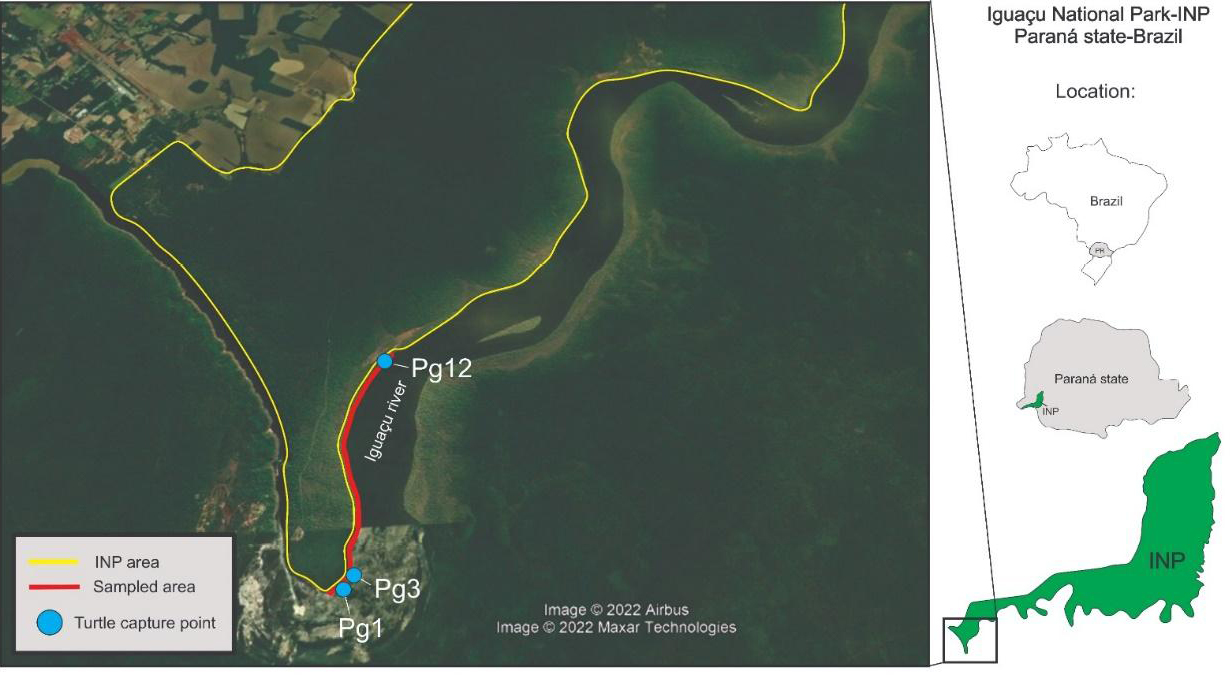
The sampling area is located within the boundaries of Iguaçu National Park (PNI), in the southwestern region of the state of Paraná, Brazil (25°05’ to 25°41’S, 53°40’ to 54°38’W). The park covers a total area of 185,262.5 hectares and represents one of the largest and most ecologically significant remnants of the Atlantic Forest biome in southern Brazil. The region is characterized by a predominantly subtropical climate and comprises two main forest types: Seasonal Semi-deciduous Forest and Ombrophilous Forest. These forest types are differentiated based on the phytogeographic characteristics of the region, including floristic composition, structure, and species distribution (Vogliotti, 2008; Alvares et al., 2013; Brocardo et al., 2019).
Several specimens of the freshwater turtle Phrynops geoffroanus were captured, marked, and subsequently released as part of a parallel study aimed at monitoring the species’ population in the lower Iguaçu River. For specific analyses in this study, individuals Pg1, Pg3, and Pg12 were selected for euthanasia, in accordance with current ethical protocols. The captures were conducted in areas designated for public use and ecological restoration, as established in the Management Plan of Iguaçu National Park (IBDF, 1981) (Fig. 1).
Field procedures
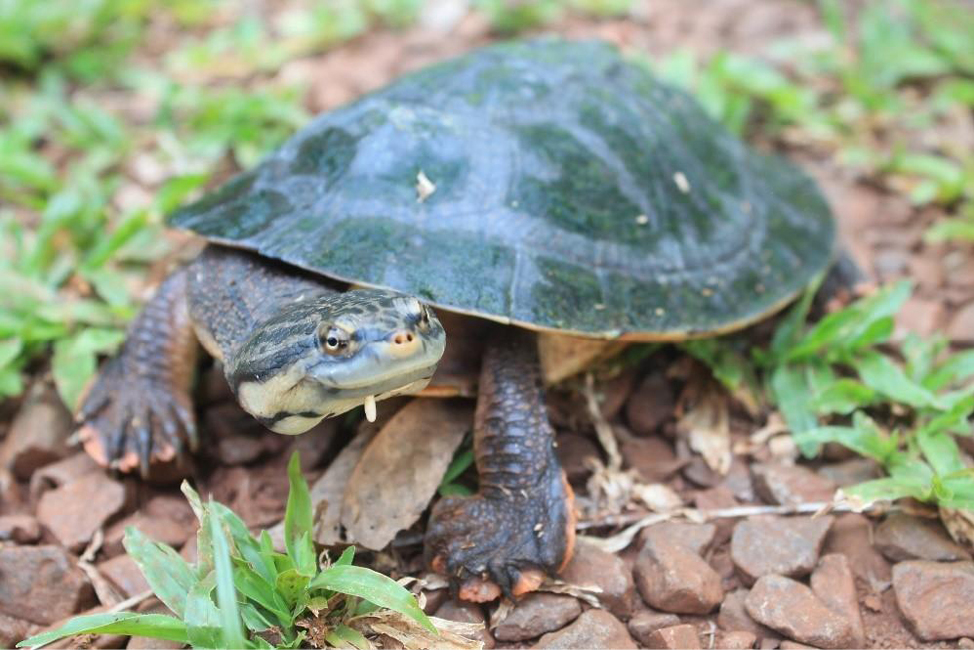
Morphological data (biometrics) and photographic records of the captured P. geoffroanus individuals were collected (Fig. 2). The animals were then euthanized. Euthanasia was conducted in the field using injectable agents (barbiturates), following the guidelines recommended by CONCEA (2013). The drug used was Thiopental (diluted according to the Euthanasia Guide for Animals Used in Teaching and Research), administered intravenously at a lethal dose of 93 mg/kg. Biological specimens were sent to the State University of Maringá (UEM) for processing and final preparation for deposition in the herpetological collection of the Capão da Imbuia Natural History Museum (MHNCI).
Animal analysis
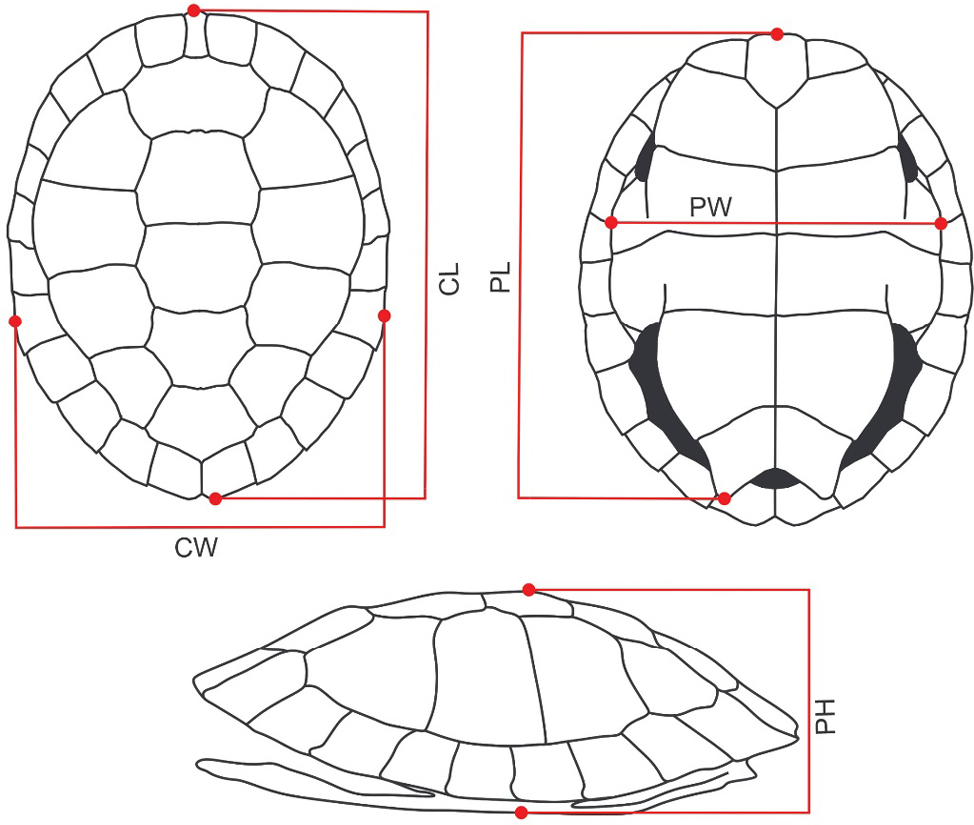
Three specimens of Phrynops geoffroanus (SCHWEIGGER, 1812) were analyzed at different ontogenetic stages (Table 1). Sex determination was based on observations of shell body plan (carapace height and plastron shape), tail length, and the position of the cloacal opening relative to the distal portion of the tail (Molina, 1998; Almonacid et al., 2007). The gonadal assessment could not be performed due to limited technical expertise (Fig. 3).
| Species | ID | Sex | OE | WBM | SC | CL | CW | PL | PW | PH |
|---|---|---|---|---|---|---|---|---|---|---|
| Phrynops geoffroanus | Pg1 | Undermined | Juvenile | 13 | 4.9 | 49.4 | 43 | 42.5 | 32.5 | 17 |
| Phrynops geoffroanus | Pg3 | Female | Young | 455 | 16.9 | 162.7 | 128.7 | 147.7 | 105.2 | 58.7 |
| Phrynops geoffroanus | Pg12 | Female | Adult | 1,298.3 | 33.4 | 334.5 | 147.5 | 298.9 | 210.1 | 98.3 |
Laboratory procedures
Only the stomachs and intestines of the turtles were selected, which were processed as follows: 1) treatment with HNO₃ (65%) + H₂O₂ (v. 130) on a heating plate for 60 minutes at 100°C; 2) washing of the resulting material by centrifugation with distilled water (1000 rpm/3 min); 3) the resulting material, consisting of inorganic mineral residues and biomineralization, was collected using a 50 µL mechanical pipette, deposited on microscope slides, the slides were placed on a heated plate (~50°C) until dry and then covered with Entellan® and coverslipped. The prepared slides were stored at the Laboratory of Paleoenvironmental Studies (LEPAFE) of the State University of Paraná, UNESPAR – Campo Mourão Campus.
Slide analysis
Slides were analyzed under a biologic microscope, and images were captured using a 50-megapixel camera. The analysis involved counting and identifying biogenic silica bodies along four randomly selected transects within the diameter of the optical field, evaluating from the base to the top of the slide. Phytoliths were classified based on morphological description, following the International Code for Phytolith Nomenclature (ICPN 2.0) (ICPT et al., 2019) (Table 2), while freshwater sponge spicules were described according to the existing literature.
| Morphotype | Code | Morphology |
|---|---|---|
| Acute bulbosus | ACU_BUL | Elongated and pointed |
| Bulliform flabellate | BUL_FLA | Elongated in a fan shape. |
| Elongate entire | ELO_ENT | Elongated with smooth margins and surface |
| Elongate dentate | ELO_DEN | Elongated with pointed margins |
| Elongate irregular | ELO_IRR | Irregularly elongated |
| Blocky | BLO | Form parallelepipeds similar to those typically found in Poaceae |
| Blocky psilate | BLO_PSI | Smooth-surfaced blocky |
| Rectangular rough | REC_ROU | Rectangular with wrinkled surface |
| Rectangular sinuate | REC_SIN | Rectangular with sinuous margins |
| Saddle | SAD | Saddle-shaped |
| Spheroid ornate | SPH_ORN | Spheroidal with a rough and warty surface |
| Polyehdral | POL | Polyhedral form |
Results
Biogenic silica
Stomach content analysis of Phrynops geoffroanus turtles revealed the presence of biogenic silica bodies. These microremains were identified in all three individuals at different ontogenetic stages (juvenile, young, and adult). In addition, diatom frustules were observed in all analyzed specimens.
Phytolith analysis
The analysis of the stomach contents of the three specimens revealed 94 phytoliths distributed across 12 distinct morphotypes. The juvenile individual presented three morphotypes and 3 phytoliths (3.1% of the total), the young individual presented 6 morphotypes and 60 phytoliths (63.8%), and the adult presented 12 morphotypes and 31 phytoliths (31.9%) (Table 3).
| Animal | Total phytoliths | Diversity and quantity of phytoliths |
|---|---|---|
| Juvenile | 3 | ELO_ENT (33.3%, n=1), BLO_PSI (33.3%, n=1), ACU_BUL (33.3%, n=1). |
| Young | 60 | POD (80%, n= 60), ACU_BUL (33.3, n=2), BLO_PSI (6.6%, n=4), SAD (5%, n=3), BUL_FLA (1.6%, n=1), ELO_ENT (1.6%, n=1) and REC_SIN (1.6%, n=1). |
| Adult | 31 | BLO (38.7%, n=12), REC_ROU (12.9%, n=4), SAD (12.9%, n=4), REC_PSI (9.6%, n=3), ELO_ENT (9.6%, n=3), SPH_ORN (6.4%, n=), BUL_FLA (6.4%, n=2), SPH_ORN (6.4%, n=2) and POL (3.2%, n=1). |
The juvenile contained only three phytolith morphotypes: elongate entire (ELO_ENT) (33.3%, n=1), blocky psilate (BLO_PSI) (33.3%, n=1) and acute bulbous (ACU_BUL) (33.3%, n=1).
In the young individual, seven distinct morphotypes were identified. Phytoliths from the family Podostemaceae accounted for 48 out of 60 phytoliths (80%). The following morphotypes were also observed: ELO_ENT, bulliform flabellate (BUL_FLA), blocky psilate (BLO_PSI), ACU_BUL and rectangular sinuate (REC_SIN).
The adult individual exhibited the highest diversity of phytoliths, with 12 distinct morphotypes found in the stomach content: BLO, rectangular rough (REC_ROU), saddle (SAD), rectangular psilate (REC_PSI), ELO_ENT, spheroid ornate (SPH_ORN), BUL_FLA and polyhedral (POL).
Sponge spicules
Spicules of the megasclere and gemmulosclere types were identified in the stomach contents of the young and adult specimens but were absent in the juvenile. Three oxeas-type megascleres were found in the young individual and five in the adult, along with two gemmuloscleres attributed to the freshwater sponge species Oncosclera navicella (Carter, 1881), present in both individuals.
Discussion
The stomach content analysis of three Phrynops geoffroanus individuals revealed the presence of preserved sponge spicules in both juvenile and adult specimens, as well as phytoliths and diatom frustules in all individuals, at different ontogenetic stages. This study constitutes the first record of Oncosclera navicella in the Iguaçu River which had only previously been recorded in lotic environments of the Piquiri River, Paraná, Brazil, as well as in lentic habitats in Venezuela (Ribeiro and Pauls, 2000; Volkmer-Ribeiro and Parolin, 2005).
The stomach contents of the analyzed individuals showed varying amounts of phytoliths across the different ontogenetic stages. The highest concentration was recorded in the young individual, followed by the adult, while the juvenile exhibited the lowest amount. This pattern indicates age-related differences in diet, feeding behavior, or resource selectivity, suggesting that young individuals may consume food items with a higher proportion of plant material. This diet shift according to the ontogenetic stage also occurs in the marine turtle Caretta caretta, while the juveniles feed on zooplankton, adults consume predominantly pelagic tunicates, bivalves, gastropods, and fish (Cardona et al., 2024). Thus, more studies are needed to verify whether this pattern can be explained by specimen size and ability to forage.
The stomach material of the juvenile, young and adult individuals contained the ELO_ENT morphotype, which is considered problematic in phytolith analysis. This phytolith type has low taxonomic value, as it can be produced by numerous monocotyledonous and eudicotyledonous species with different growth habits (Albert et al., 2018; de Oliveira et al., 2024, 2025).
The stomach contents of the young individual revealed phytolith morphotypes characteristic of the Podostemaceae family (da Costa et al., 2011; da Costa et al., 2021), indicating that the young turtle consumed vegetation from this group. Podostemaceae species are riparian plants adapted to anchor onto rocks and other solid substrates in fast-flowing freshwater environments, such as rapids and waterfalls (Ruhfel et al., 2024). The presence of these phytoliths in the stomach material therefore suggests that the young individual foraged in areas associated with these habitats. The ACU_BUL type identified displayed two distinct morphologies; the elongated and pointed variant resembled forms found in several eudicot families (Cannabaceae, Boraginaceae, Ulmaceae, Moraceae), commonly referred to as “Hair” (Wu et al., 2017; de Oliveira et al., 2024), and the short, pointed variant resembled the “Prickle” morphotype commonly found in monocot grasses (Fig. 4 a2) (Tripathi et al., 2014; Wroth et al., 2019).
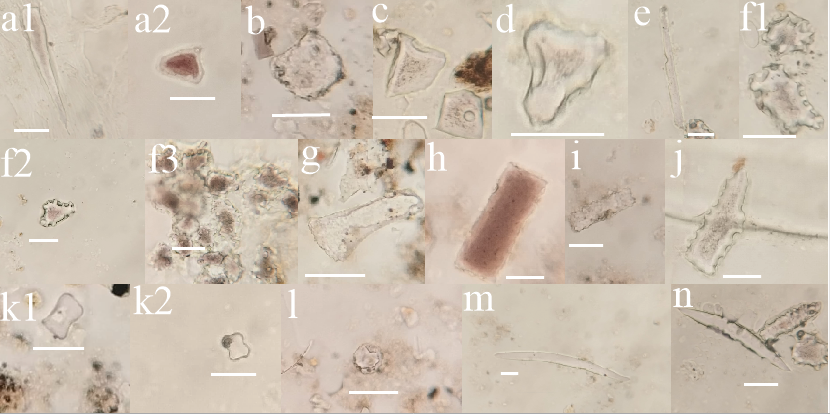
The stomach contents of the adult individual showed the greatest diversity of phytoliths (ICPT, 2019; Qader et al., 2024). The BUL_FLA morphotype is a significant taxonomic marker, often associated with Poaceae species under water stress (Kondo et al., 1994). The SAD morphotype is widely distributed in the Chloridoideae, Bambusoideae, and Arundinoideae subfamilies (Lu and Liu, 2003). Woody species morphotypes were also identified in the adult turtle’s stomach content. The SPH_ORN morphotype is commonly found in leaf tissues of eudicots (de Oliveira et al., 2024, 2025). When present in stems or trunks, this morphotype can serve as a diagnostic marker for tree species (Bremond et al., 2008). The POL morphotype observed in this specimen’s stomach content resembles those found in the leaves of woody species from Norway (Lisztes-Szabó et al., 2019). The large number of phytolith morphotypes derived from grasses and riparian plants confirms the selective use of these plant resources by freshwater turtles. This phytolithic interpretation is consistent with studies conducted in Australia, where similar plants were also recorded in the stomach and fecal contents of freshwater turtles (Kennett et al., 1996; Armstrong et al., 2005).
Another type of biogenic silica identified in the stomach content of P. geoffroanus consisted of freshwater sponge spicules. These structures were observed as megascleres, which lack taxonomic value, and gemmuloscleres, which originate from gemmules and have taxonomic significance, allowing species-level identification (Kalinovsk et al., 2016). The gemmuloscleres found in the young and adult individuals were confirmed to be from O. navicella.
Predation of freshwater sponges by freshwater turtles has previously been documented in different regions of the world, including the Burnett River basin in Australia (Armstrong et al., 2005), seasonally ephemeral freshwater pools on coastal floodplains of the wet–dry tropics of northern Australia (Kennett et al., 1996), and the Kawai Nui wetlands in Hawaii, USA (Works et al., 2018). Furthermore, the detection of gemmuloscleres in the stomach contents of young and adult freshwater turtles, and their absence in juveniles has not previously been observed, with other studies even describing an exclusively spongivorous diet for juveniles (León and Bjorndal, 2002). This highlights a similarity in predation patterns between freshwater and marine turtle species. The marine turtle Eretmochelys imbricata, for example, feeds almost exclusively on sponges, including toxic ones, and its diet is geographically uniform (Meylan, 1988). Thus, further studies with Phrynops geoffroanus could investigate whether its diet is geographically uniform and whether juveniles could be less resistant to toxic components than young and adults, thus elucidating the absence of sponges in juveniles. However, the diet of Caretta caretta juveniles differ from adults (Cardona et al., 2024), hence, the reasons for this shift should be studied for Phrynops geoffroanus.
Conclusion
The results of this study confirmed the ingestion of phytoliths by Phrynops geoffroanus, with differences in abundance and diversity across ontogenetic stages. The young individual presented the highest concentration of phytoliths, while the juvenile had the lowest. The predominance of morphotypes characteristic of grasses and Podostemaceae suggests a strong feeding interaction with aquatic and riparian environments. Furthermore, the identification of gemmuloscleres of O. navicella in young and adult specimens indicates that this turtle species consumes freshwater sponges. Thus, the record of O. navicella presented in this study for the Iguaçu River reinforces previously documented evidence of the species’ occurrence in both lotic and lentic environments in South America.
Acknowledgments
The authors thank the Comparative Biology Graduate Program (PGB-UEM), the Conselho Nacional de Desenvolvimento Científico e Tecnológico (CNPq) for the grant 308093/2023-2 to M.P. and C.E.V.G., 141691/2020-4 to M.M.R.S., 308522/2021-4 to E.B.; the Coordenação de Aperfeiçoamento de Pessoal de Nível Superior (CAPES) for the grant 88887.905477/2023-00 to L.M.O.
Authorizations
The study was approved by the Ethics Committee on Animal Use (CEUA), protocol 9251160223, and authorized by the Instituto Chico Mendes de Conservação da Biodiversidade (ICMBio) under license 86706-4.
References
Albert, R.M., Bamford, M.K., Stanistreet, I.G., Stollhofen, H., Rivera-Rondón, C.A., Njau, J.K., Blumenschine, R.J. (2018): River-fed wetland palaeovegetation and palaeoecology at the HWK W site, Bed I, Olduvai Gorge. Rev. Palaeobot. Palynol. 259: 223-241.
Almonacid, J.V.R., Mittermeier, C., Carr, J.L., Mittermeier, R.A., Malecha, J.V.R., Mast, R., Rueda, J.N. (2007): Las tortugas y los cocodrilianos de los países andinos del trópico. Bogotà, D. C. - Colombia, Conservación Internacional..
Alvares, C.A., Stape, J.L., Sentelhas, P.C., Gonçalves, J.D.M., Sparovek, G. (2013): Köppen’s climate classification map for Brazil. Meteorol. Z. 22: 711-728.
Armstrong, G., Booth, D.T. (2005): Dietary ecology of the Australian freshwater turtle (Elseya sp.: Chelonia: Chelidae) in the Burnett River, Queensland. Wildl. Res. 32: 349-353.
Brasil. Decreto n° 86.676, de 1° de dezembro de 1981 (1981): Dispõe sobre a proteção de espécies da fauna silvestre e dá outras providências. Diário Oficial da União: seção 1, Brasília, DF, 2 dez.
Bremond, L., Alexandre, A., Hély, C., Guiot, J. (2005): A phytolith index as a proxy of tree cover density in tropical areas: calibration with Leaf Area Index along a forest–savanna transect in southeastern Cameroon. Glob. Planet. Change. 45: 277-293.
Brocardo, C.R., da Silva, M.X., Ferracioli, P., Cândido Jr, J.F., Bianconi, G.V., Moraes, M.F.D., Crawshaw Jr, P. (2019): Mamíferos do Parque Nacional do Iguaçu. Oecol. Aust. 23: 165-190.
Cardona, L., Aznar, F.J., Bas, M., Tomás, J. (2024): The contribution of fish to the diet of loggerhead sea turtles in the western Mediterranean revisited. Mar. Biol. 171: 215.
Costa, F.G.C.M.D., Bove, C.P., Arruda, R.D.C.O., Philbrick, C.T. (2011): Silica bodies and their systematic implications at the subfamily level in Podostemaceae. Rodriguésia. 62: 937-942.
da Costa, F.G.C.M, Pellegrini, M.O.O, Bove, C.P. (2021): Diversidade de corpos de sílica em MoureraAublet (Podostemaceae) e suas aplicações filogenéticas, paleobotânicas e taxonômicas. Rev. Palaeobot. Palynol. 295: 104509.
da Costa, H.C., Guedes, T.B., Bérnils, R.S. (2022): Lista de répteis do Brasil: padrões e tendências. Herpetol. Bras. 10: 110-279.
de Carvalho, V.T., Martínez, J.G., Hernández-Rangel, S. M., Astolfi-Filho, S., Vogt, R.C., Farias, I.P., Hrbek, T. (2017): Giving IDs to turtles: SNP markers for assignment of individuals to lineages of the geographically structured Phrynopsgeoffroanus (Chelidae: Testudines). Conserv. Genet. Resour. 9: 157-163.
de Oliveira, L.M., Parolin, M., dos Santos, J.C.A., Caxambu, M.G. (2023): Fitólitos de Andropogon bicornis L. e Andropogon leucostachyus Kunth in Humb., Bonpl. & Kunth.(Poaceae). Observatorio 21: 7880-7890.
de Oliveira, L.M., Calegari, M.R., Leli, I.T., Romagnolo, M.B. (2024): Production of phytoliths in woody plants of the Atlantic Forest in islands of the Paraná River, Brazil. Quat. Int. 681: 24-32.
de Oliveira, L.M., Leli, I.T., Ferrreira, M.L., Romagnolo, M.B., Calegari, M.R. (2025): Phytolith production in non-woody plants from the Atlantic Forest on islands of the Paraná River, Brazil. Quat. Int. 738: 109858.
Esteves, K.E., Aranha, J.M.R., Albrecht, M.P. (2021): Ecologia trófica de peixes de riacho: uma releitura 20 anos depois. Oecol. Aust. 25: 282-282.
Fachín-Terán, A., Vogt, R.C., Gomez, M.F.S. (1995): Food habits of an assemblage of five species of turtles in the Rio Guaporé, Rondônia, Brazil. J. Herpetol. 29: 536-547.
Friol, N.R. (2019): Revisão taxonômica e filogenia das espécies sul-americanas de Chelidae (Testudines, Pleurodira). Unpublished doctoral dissertation. Universidade de São Paulo.
International committee for phytolith taxonomy (ICPT), Neumann, K., Strömberg, C.A.E., Ball, T., Albert, R.A., Vrydaghs, L., Cummings, L.S. (2019): International code for phytolith nomenclature (ICPN) 2.0. Ann. Bot. 124: 189-199.
Kalinovsk, E.C.Z., Parolin, M., Souza Filho, E.E. (2016): Esponjas de água doce na América do Sul: O estado da arte da produção científica no Brasil. Terrae didat. 12: 4-18.
Kennett, R., Tory, O. (1996): Diet of two freshwater turtles, Chelodina rugosa and Elseya dentata (Testudines: Chelidae) from the wet-dry tropics of northern Australia. Copeia 1996: 409-419.
Kondo, R., Childs, C.W., Atkinson, I.A.E. (1994): Opal Phytoliths of New Zealand. Manaaki Whenua Press, Lincoln.
León Y, Bjorndal, K. (2002): Selective feeding in the hawksbill turtle, an important predator in coral reef ecosystems. Mar. Ecol. Prog. Ser. 245: 249-258.
Lisztes-Szabó, Z., Braun, M., Csík, A., Pető, Á. (2019): Phytoliths of six woody species important in the Carpathians: Characteristic phytoliths in Norway spruce needles. Veg. Hist. Archaeobotany. 28: 649-662.
Lu, H., Liu, K.B. (2003): Phytoliths of common grasses in the coastal environments of southeastern USA. Estuar. Coast. Shelf Sci. 58: 587-600.
Márquez, R.M. (1990): FAO species catalogue. Vol. 11: Sea turtles of the world. An annotated and illustrated catalogue of sea turtle species known to date. Roma FAO.
Meylan A. (1988): Spongivory in hawksbill turtles: A diet of glass. Science 239: 393-395.
Molina, F.B. (1998): Comportamento e biologia reprodutiva dos cágados Phrynopsgeoffroanus, Acanthochelysradiolata e Acanthochelysspixii (Testudines, Chelidae) em cativeiro. Rev. Etol. 1998: 25-40.
Piperno, D.R. (1988): Phytolith analysis. An archaeological and geological perspective. San Diego, Academic Press.
Piperno, D.R. (1991): The status of phytolith analysis in the American tropics. J. World Prehist. 5: 155-191.
Piperno, D.R. (2006): Phytoliths: a comprehensive guide for archaeologists and paleoecologists. Rowman Altamira.
Qader, W., Dar, R.A., Rehman, I.U., Rashid, I., Sheikh, S.H. (2024): Assessing phytolith preservation in a Late Quaternary loess-paleosol sequence from the Kashmir Valley, Northwest Himalaya, India. Quat. Sci. Adv. 16: 100238.
Ribeiro, C.V., Pauls, S.M. (2000): Esponjas de agua dulce (Porifera, Demospongiae) de Venezuela. Acta Biol. Venez. 20: 1-28.
Rhodin, A.G.J., Mittermeier, R.A. (1983): Description of Phrynops williamsi, a new species of chelid turtle of the South American P. geoffroanus complex. In: Advances in herpetology and evolutionary biology. Essays in honor of Ernest E. Williams, pp. 58-73. Rhodin, A., Miyata, K., Eds, Cambridge, Massachusetts: Museum of Comparative Zoology.
Ruhfel, B.R., Larson, D.A., Koenig, N., Rutishauser, R., Bove, C.P., Philbrick, C.T. (2024): Plastid Phylogenomic analysis of podostemaceae with an emphasis on Neotropical Podostemoideae. Syst. Bot. 49: 580-616.
Souza, F.L. (2004): Uma revisão sobre padrões de atividade, reprodução e alimentação de cágados brasileiros (Testudines, Chelidae). Phyllomedusa 3: 15-27.
Schneider, L., Ferrara, C.R., Vogt, R.C., Guilhon, A.V. (2011): Nesting ecology and nest predation of Phrynopsgeoffroanus (Testudines, Chelidae) in the Guaporé River of the Brazilian and Bolivian Amazon. Chelonian Conserv. Biol. 10: 206-212.
Souza, F.L. (2004): Uma revisão sobre padrões de atividade, reprodução e alimentação de cágados brasileiros (Testudines, Chelidae). Phyllomedusa 3: 15-27.
Tripathi, D.K., Prasad, R. Chauhan, D.K. (2014): An overview of biogenic silica production pattern in the leaves of Hordeum vulgare L. Indian J. Plant Sci. 3: 167-177.
Vogliotti, A. (2008): Partição de habitats entre os cervídeos do Parque Nacional do Iguaçu. Unpublished doctoral dissertation. Universidade de São Paulo.
Volkmer-Ribeiro, C. Machado, V.D.S. (2017): Checklist das esponjas do Estado do Mato Grosso do Sul, Brasil. Iheringia Ser. Zool. 107: e2017102.
Volkmer-Ribeiro, C., Parolin, M (2010): As esponjas. In: Abordagem ambiental em bacias hidrográficas no Estado do Paraná, pp. 105-130. Parolin, M., Volkmer-Ribeiro, C., Leandrini, J.A. (Org.), Eds, Campo Mourão, Fecilcam.
Volkmer-Ribeiro, C., Parolin, M. (2005): Segundo registro de Sterrastrolepis brasiliensis Volkmer-Ribeiro e de Rosa-Barbosa (Demospongiae, Potamolepidae) com descrição do habitat e de assembléia, Bacia do Rio Paraná, Brasil. Rev. Bras. Zool. 22: 1003-1013.
Works, A.J., Olson, D.H. (2018): Diets of two nonnative freshwater turtle species (Trachemys scripta and Pelodiscus sinensis) in Kawai Nui Marsh, Hawaii. J. Herpetol. 52: 444-452.
Wroth, K., Cabanes, D., Marston, J.M., Aldeias, V., Sandgathe, D., Turq, A., Dibble, H.L. (2019): Neanderthal plant use and pyrotechnology: Phytolith analysis from Roc de Marsal, France. Archaeol. Anthropol. Sci. 11: 4325-4346.
Wu, Y., Guo, X., Wang, W., Chen, X., Zhao, Z., Xia, X., Yang, Y. (2017): Red pigments and Boraginaceae leaves in mortuary ritual of late Neolithic China: A case study of Shengedaliang site. Microsc. Res. Tech. 80: 231-238.