https://doi.org/10.36253/a_h-18279
Submitted on: 2025, 22nd July; revised on: 2026, 16th January; accepted on: 2026, 16th January
Herpetofaunal diversity in the Upper Guinean rainforest: a baseline survey from the Dugbe region, Liberia
1 Flora Fauna & Man, Ecological Services Ltd, Trident Chambers, P.O Box 146, Road Town, 1110 – Tortola, British Virgin Islands
2 African Amphibian Conservation Research Group, Unit for Environmental Sciences and Management, North-West University, 2520 – Potchefstroom, South Africa
3 Museum für Naturkunde – Leibniz Institute for Evolution and Biodiversity Science, Invalidenstrasse 43, 10115 Berlin, Germany
4 Forestry Development Authority, When Town, Mont. Barclay P. O. Box 10-3010 – Monrovia, Liberia
*Corresponding author. Email: rv.huyssteen@florafaunaman.com
Abstract. The Upper Guinean rainforest biome is a poorly studied, yet hyper-biodiverse region facing severe fragmentation due to ongoing habitat transformation. We conducted a herpetological baseline survey in the Dugbe region during 2021 using passive trapping and active searching. Our survey resulted in 1,145 herpetofauna observations, representing 71 taxa (38 amphibians and 33 reptiles), with active searching yielding 47.8% of the species richness. Nearly half (54.9%) of the documented species are West African endemics. Rarefaction/extrapolation sampling curves indicated incomplete overall sampling of herpetofauna diversity, though amphibian sampling completeness was high. Reptile diversity metrics revealed significant sampling deficiencies, largely explained by the high proportion of singleton observations (60.6% of reptile records). When compared to the IUCN predictive distribution maps, our survey documented 51.2% of the 123 species predicted for the region, with moderate overall Jaccard similarity (48.09%). Taxonomic groups showed varied patterns of congruence: amphibians displayed relatively high Jaccard similarity (59.26%), while reptiles showed lower similarity (40.26%). Notably, our survey documented substantially higher herpetofauna species richness than benchmark surveys from nearby areas, particularly for reptiles (33 species compared to 14 and 5 species in Krahn-Bassa proposed protected area and Grebo National Forest surveys, respectively). Several amphibian observations were not assignable to species using morphological characteristics alone, highlighting the need for further taxonomic research on West African herpetofauna.
Keywords. Reptiles, amphibians, West Africa, field survey, herpetology, tropical forest ecology.
Contents
Introduction
The Upper Guinean forests of West Africa are a global biodiversity hotspot with high faunal and floral diversity and endemism (Myers et al., 2000; Lewin et al., 2016; De Sousa et al., 2023; Ernst et al., 2025). These forests are important for amphibians, with high species richness and taxonomic diversity (Penner et al., 2011, 2019; Nneji et al., 2023). The region’s reptiles are less well studied than amphibians, and there are significant gaps in our understanding of their diversity and distribution (Tolley et al., 2016); this is a globally observed pattern in the context of tropical forest herpetofauna (Deikumah et al., 2014; Tolley et al., 2016). The Upper Guinean forests which once spanned continuously across West Africa have been fragmented by deforestation, agricultural expansion, and mining (Sodhi et al., 2008, Hepner, 2025). Liberia still holds some of the largest remaining tracts of these forests, but habitat fragmentation and degradation have intensified in the last twenty years (De Sousa et al., 2023). This loss of habitat threatens the region’s herpetofauna (Rödel et al., 2021) and baseline surveys are needed to document amphibian and reptile biodiversity, as loss or extinctions may be occurring without our knowledge.
Although there have been numerous studies on Liberian herpetofauna (e.g., Barbour and Loveridge, 1927; Loveridge, 1941; Angel, 1943a; Guibé and Lamotte, 1958), particularly in the Mount Nimba region (e.g., Xavier, 1978; Lamotte, 1998; Ineich, 2003; Rödel et al., 2009; Sandberger et al., 2010), large portions of the country remain poorly surveyed. Our understanding of herpetological species distributions is based on local surveys, species descriptions, and taxonomic revisions (e.g., Trape and Mané, 2006; Hillers and Rödel, 2007; Blackburn et al., 2008; Allen et al., 2019; Rödel and Glos, 2019). Comprehensive baseline surveys from understudied regions can address these knowledge gaps, and guide conservation efforts in response to ongoing habitat loss.
This study provides the first herpetological species inventory for the Dugbe region, located in southern Liberia (Fig. 1). The survey was conducted in 2021 by Flora Fauna and Man, Ecological Services Ltd. (FFMES) and the aim was to establish a baseline of herpetological diversity, identify species of conservation concern, and find potential novel or endemic species. To contextualise our findings, we compare them with surveys conducted approximately 100 km away in Grebo National Forest (Hillers and Rödel, 2007) and the proposed Krahn-Bassa proposed protected area (KBPPA) (Rödel and Glos, 2019). Both areas have similar ecological and biogeographical features to the Dugbe study area and our comparisons focus on species richness to provide an overview of the regional species diversity for this poorly studied area.
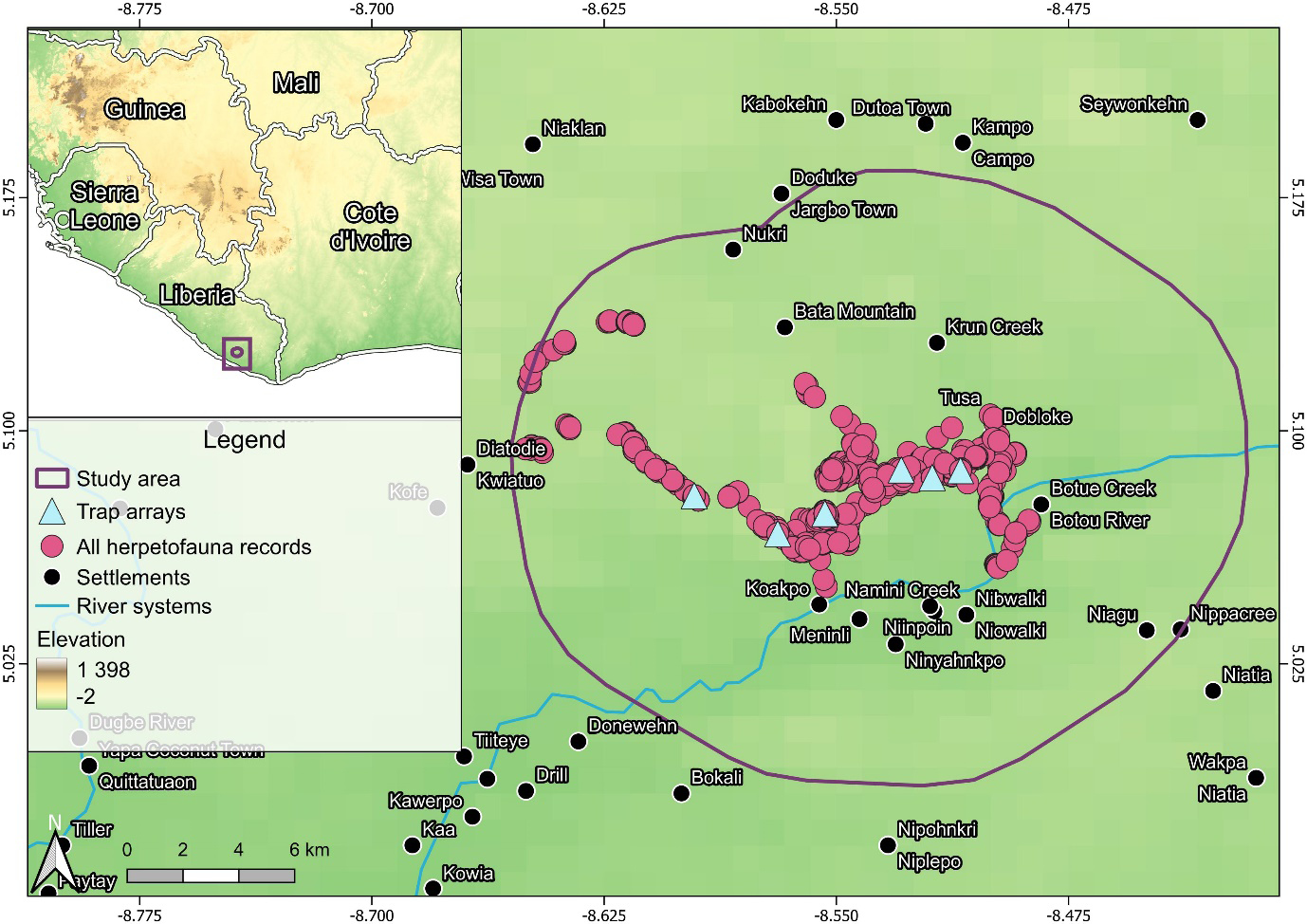
The Dugbe study area is located within the Upper Guinean Rainforest biome, near to Sapo National Park and the Grand Kru–River Gee proposed protected area. Historically the landscape was dominated by primary closed-canopy rainforest (Cushing et al., 2016; Ernst et al., 2025). The landscape has high conservation significance and is currently characterised by a mosaic of natural and transformed habitat types with most of the forested areas in various stages of secondary succession. Over 14% of mature forest cover was lost between 2000 and 2018 due to ongoing habitat transformation and resource exploitation (De Sousa et al., 2023). Several villages are present within the study area and there is a high reliance on subsistence agriculture and artisanal mining. The study area consists of low hills with some rocky areas, and the elevation ranges between 10–170 m above sea level. The region is drained by three major rivers: the Bouto, Dugbe, and Geebo, as well as smaller streams.
Methods
Field surveys
Surveys were conducted over two periods: an initial five-day scoping visit from 8-13 May 2021 during the wet season, and a follow-up 16-day survey from 20 October to 4 November 2021, during the transitional period between the wet and dry seasons. The first survey was undertaken by a single herpetologist (Marius Burger) and involved diurnal and nocturnal active searches to explore the terrain in preparation for a more detailed survey. The second survey was conducted by two herpetologists (Marius Burger and Ryan van Huyssteen) and included diurnal and nocturnal active searching and the use of passive trapping methods. Although the second season was planned for the transitional period between the wet and dry seasons, there was heavy rainfall for most of the survey period.
The sampling strategy followed a multistage stratified semi-random sampling (MSSRS) approach (Bourgeron et al., 2001, Mottram et al., 2025). The study area was divided into 576 grid cells of 1 km² each. Within each grid cell, the MSSRS approach was used to semi-randomly identify specific sampling sites through consideration of physiognomic and physiographic elements (Mottram et al., 2025). In addition to predefined points, opportunistic searches were conducted in microhabitats that are known to be ecological relevant for particular species (e.g., ponds, streams, rocky outcrops). In total we investigated 64 grid cells and sampled 133 sample points within those. Active searching involved looking for resting and active herpetofauna, investigating likely hiding places (holes, under logs and other cover, raking through leaf litter, etc.), and listening for vocalising frogs.
Acoustically detected amphibians were recorded as presence/absence data (i.e., single presence per calling event regardless of the number of individuals estimated to be calling). This was a methodological decision implemented to prevent potential bias in species accumulation analyses when pooling acoustic-detected species and visual-detected species. However, for all amphibians and reptiles directly observed during surveys, we maintained accurate count data reflecting the true number of individuals encountered.
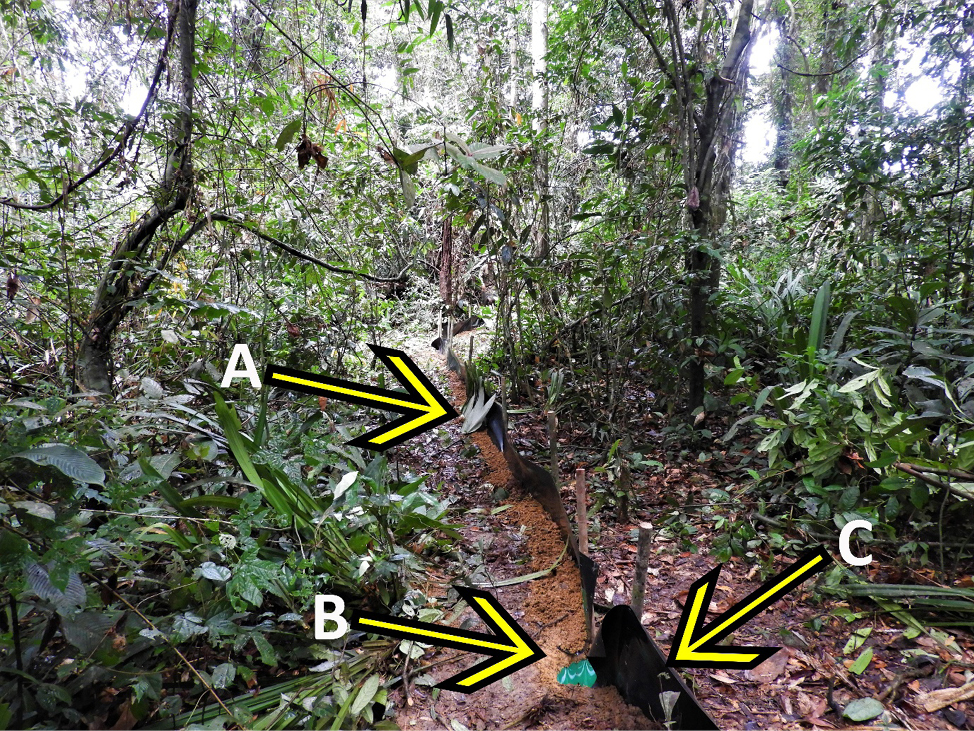
The trapping effort consisted of six trap arrays that each had four 25-litre bucket pitfall traps and six double-ended funnel traps connected by drift fences assembled in a linear configuration (Fig. 2). Traps arrays were operational for 13 nights (78 trap array nights/780 trap nights), trapped specimens were recorded and removed daily.
Incidental observations, including photographs and specimens recorded by researchers of other taxonomic groups and mining personnel during the survey period were also included and documented. Most observations had a GPS accuracy of 5 m; however, several incidental records had a lower resolution of 5000 m.
Reptiles and amphibians were identified based on the keys provided by Chippaux (2006), Trape et al. (2012), Schiøtz (1999) and descriptions in Channing and Rödel (2019). In some instances, specialists were consulted for advice on identifications (see acknowledgements). Where possible observations were supported by photographic or sound-clip evidence and these were deposited as digital vouchers onto iNaturalist.org (Supplementary material 1). Voucher specimens and genetic samples were collected for most species encountered and deposited at the American Museum of Natural History (AMNH) (Supplementary material 1). Amphibian taxonomy follows Frost (2025), and common names follow Channing and Rödel (2019), while reptile taxonomy is based on Uetz et al. (2025).
Survey evaluation
We used three methods to evaluate our survey effort: firstly, we used rarefaction/extrapolation (r/e) curves, secondly, we compared our survey to the IUCN (International Union for Conservation of Nature) predictive species lists for the study area which are based on expert-derived range maps, and finally we compared our survey species richness to two benchmark surveys that were conducted within 100 km of our study area. All herpetofauna observations made during the surveys, including incidental records, were included in our analyses. Amphibian taxa that were identified as recognisable taxonomic units, but not confidently assignable to currently known species, were also included in the sampling curves, diversity estimates, and similarity analyses.
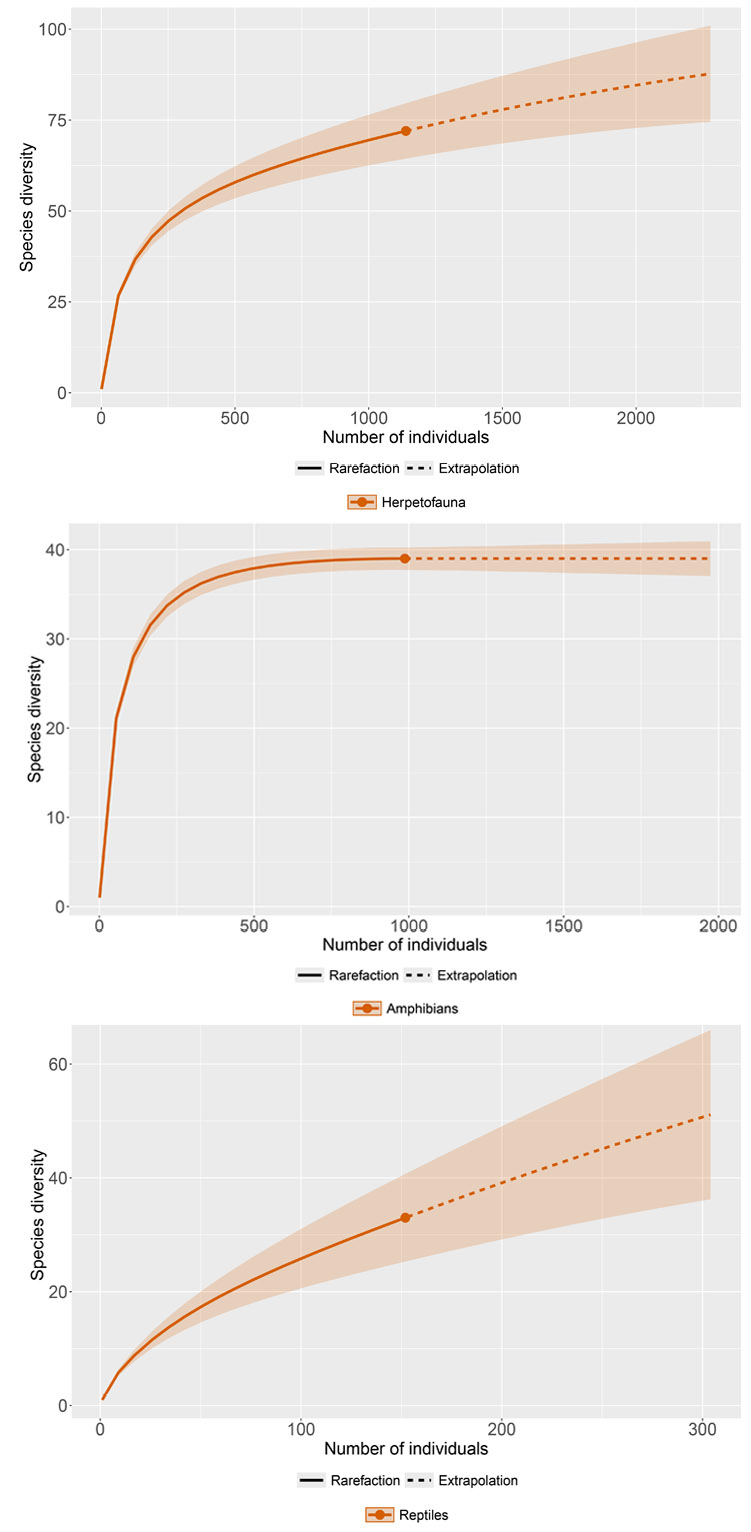
Sampling curves. To evaluate survey effort in the Dugbe area, r/e curves were generated using the iNEXT package (Hsieh et al., 2016) in R (R Core Team, 2022) via the RStudio console (RStudio Team, 2022). The curves were plotted and extrapolated to twice the original survey effort, with observation sequences randomised 100 times using bootstrap resampling. Estimated species richness, along with standard error and 95% confidence intervals were calculated along with diversity indices (Species Richness, Shannon Diversity, and Simpson Diversity) for all herpetofauna, as well as amphibians, and reptiles independently.
IUCN predictive species lists. To compare our observed local diversity based on the field surveys, with the expected regional diversity, we extracted spatial distribution data for all amphibian and reptile species with ranges overlapping our study site using the IUCN Red List spatial database (IUCN, 2025). This predictive distribution list serves as a theoretical baseline of expected species richness in the region, enabling the evaluation of our field surveys performance, identifying potential sampling gaps, and contextualising our findings within the broader regional herpetofaunal assemblage.
To assess the similarity between our field survey results and the IUCN predicted species distribution, we calculated the Jaccard similarity index (J). This metric is based on presence/absence and measures the proportion of shared species compared to the total species pool (Magurran, 2004). The Jaccard index was calculated as J = C/(A+B−C), where A is the number of species observed through our surveys, B is the number of species from the IUCN predicted distribution for the study area, and C is the number of species common to both lists. The index ranges from 0, (no overlap) to 1 (complete similarity) and was used to quantify the taxonomic overlap between our survey results and the predicted regional species assemblage based on IUCN distribution maps. For clarity, we report both the proportion of IUCN-predicted species we recorded in total (A/B) and the proportion of species our survey shared with IUCN predictions (C/B), which is the numerator of the Jaccard index.
Comparison to benchmark surveys. To ground our findings within the broader context of Liberian herpetofaunal research, we compared our survey results from the Dugbe study area with two benchmark surveys conducted in southeastern Liberia: KBPPA by Rödel and Glos (2019) and the Grebo National Forest survey by Hillers and Rödel (2007). These study sites offer appropriate benchmarks for comparison based on their proximity (both located within 100 km of our Dugbe) and similar habitat types. For each survey, we compared species richness for all herpetofauna, as well as amphibians and reptiles separately. As the focus and survey methods of Rödel and Glos (2019) and Hillers and Rödel (2007) studies differed from ours, the comparisons were restricted to species richness, providing an evaluation of our sampling effort and general insight into the regional herpetofaunal assemblage.
Results
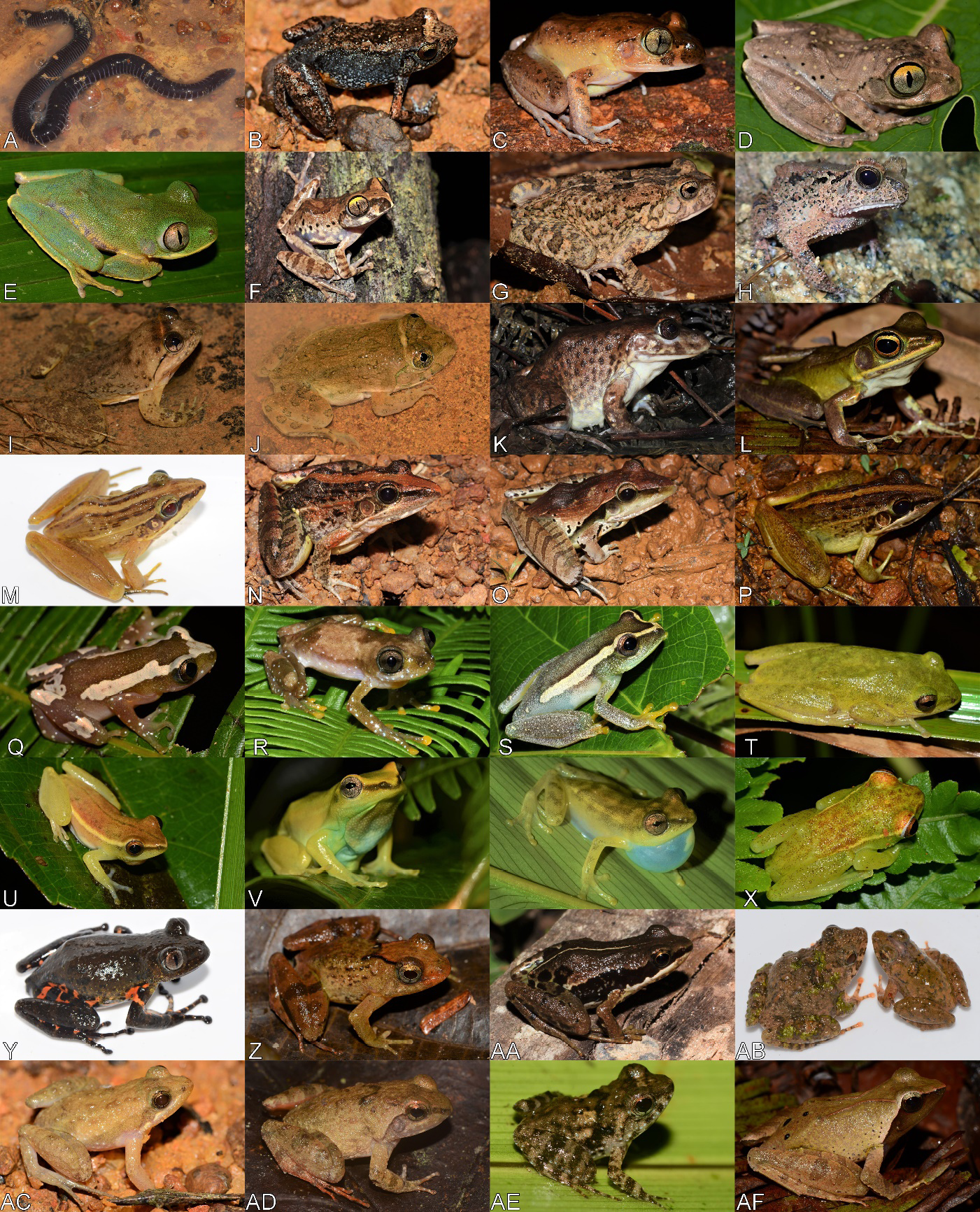
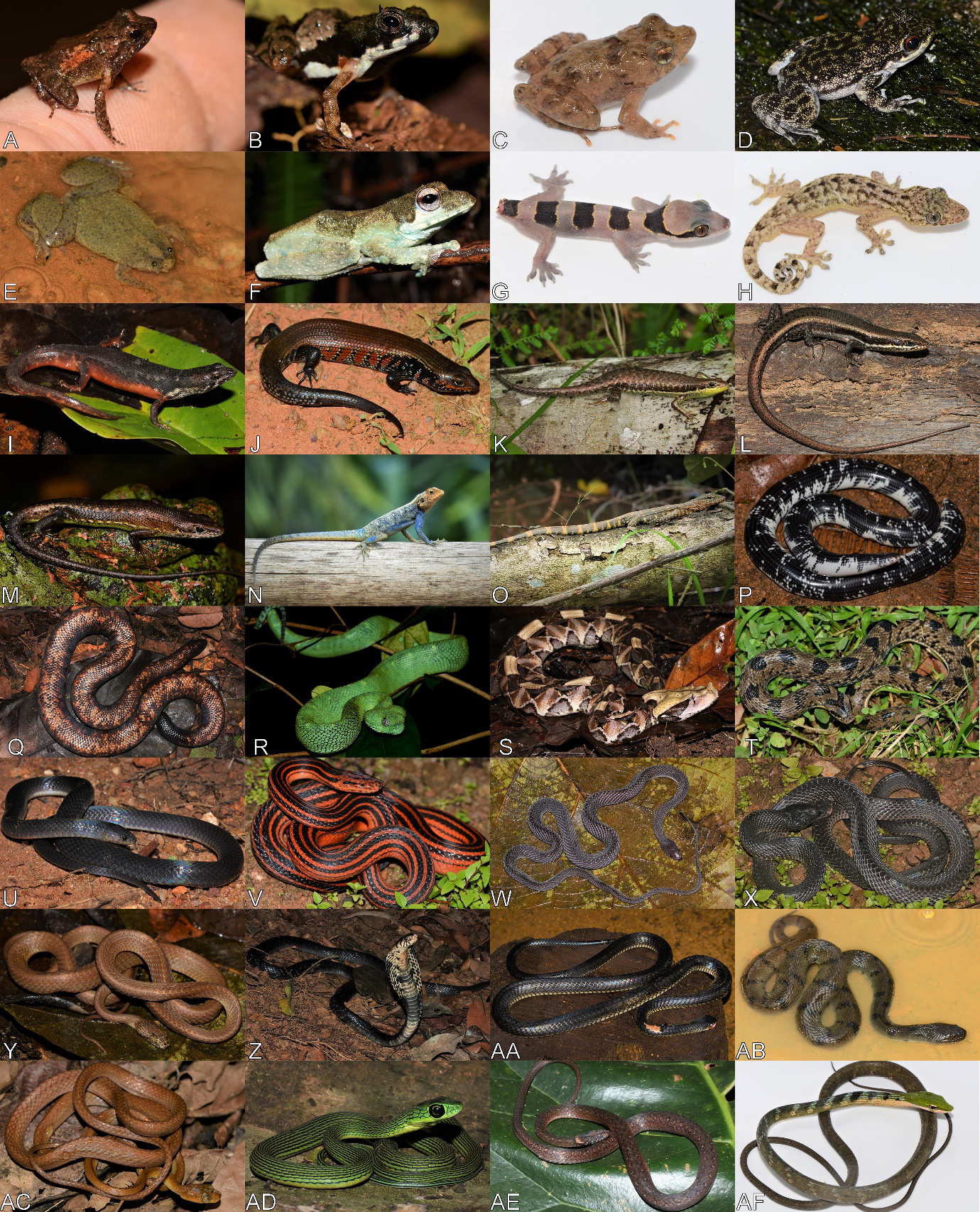
During the Dugbe survey, we documented 1145 individual amphibians and reptiles representing 71 distinct taxa (Table 1-2, Supplementary material 1). The assemblage comprised 38 amphibian species (982 individual observations) and 33 reptile species (156 individual observations). A comprehensive species inventory for the Dugbe study area is presented in Table 1 and Table 2, detailing amphibians and reptiles respectively, including common names, IUCN conservation status, observation frequencies, and West African endemism status. A selection of photos of recorded species is presented in Fig. 3-4.
| Taxon | Common name | IUCN | Observations | West African Endemic |
|---|---|---|---|---|
| Class: Amphibia | ||||
| Order: Anura | ||||
| Family: Arthroleptidae | ||||
| Arthroleptis poecilonotus complex | Mottled Squeaker complex | – | 90 | – |
| Astylosternus occidentalis | Western Night Frog | LC | 8 | Yes |
| Leptopelis macrotis | Large-eared Tree Frog | NT | 2 | Yes |
| Leptopelis occidentalis | Western Tree Frog | NT | 2 | Yes |
| Leptopelis spiritusnoctis | Ghostly Tree Frog | LC | 4 | Yes |
| Family: Bufonidae | ||||
| Sclerophrys maculata | Northern Flat-backed Toad | LC | 50 | No |
| Sclerophrys togoensis | Togo Toad | LC | 4 | Yes |
| Family: Conrauidae | ||||
| Conraua alleni | Allen’s Giant Frog | LC | 4 | Yes |
| Family: Dicroglossidae | ||||
| Hoplobatrachus occipitalis | African Tiger Frog | LC | 10 | No |
| Family: Hyperoliidae | ||||
| Afrixalus dorsalis | Striped Spiny Reed Frog | LC | 20 | No |
| Afrixalus nigeriensis | Nigerian Spiny Reed Frog | LC | 24 | Yes |
| Hylambates boulengeri | Boulenger’s Wot-wot | LC | 20 | Yes |
| Hyperolius chlorosteus | Large Green Reed Frog | LC | 24 | Yes |
| Hyperolius concolor | Uniform Reed Frog | LC | 21 | Yes |
| Hyperolius fusciventris | Dark-bellied Reed Frog | LC | 45 | Yes |
| Hyperolius guttulatus | Dotted Reed Frog | LC | 12 | No |
| Hyperolius picturatus | Variable Montane Reed Frog | LC | 9 | Yes |
| Hyperolius soror | Soror Reed Frog | LC | 28 | Yes |
| Family: Odontobatrachidae | ||||
| Odontobatrachus natator | Common Toothed Frog | LC | 15 | Yes |
| Family: Phrynobatrachidae | ||||
| Phrynobatrachus alleni complex | Allen’s Puddle Frog complex | – | 45 | Yes |
| Phrynobatrachus fraterculus | Brother’s Puddle Frog | LC | 5 | Yes |
| Phrynobatrachus guineensis | Guinea Puddle Frog | LC | 10 | Yes |
| Phrynobatrachus gutturosus | Guttural Puddle Frog | LC | 7 | Yes |
| Phrynobatrachus latifrons | Savanna Puddle Frog | LC | 14 | Yes |
| Phrynobatrachus liberiensis | Liberian Puddle Frog | LC | 43 | Yes |
| Phrynobatrachus phyllophilus | Leaf-loving Puddle Frog | LC | 9 | Yes |
| Phrynobatrachus plicatus | Ridged Puddle Frog | LC | 7 | Yes |
| Phrynobatrachus tokba | Tokba Puddle Frog | LC | 221 | Yes |
| Phrynobatrachus villiersi | Villiers’ Puddle Frog | LC | 9 | Yes |
| Family: Pipidae | ||||
| Xenopus tropicalis | Tropical Clawed Frog | LC | 88 | Yes |
| Family: Ptychadenidae | ||||
| Ptychadena arnei | Schiøtz’s Grass Frog | DD | 5 | Yes |
| Ptychadena cf. bibroni | Bibron’s Grass Frog | LC | 44 | No |
| Ptychadena longirostris | Snouted Grass Frog | LC | 23 | Yes |
| Ptychadena pumilo | Western Dwarf Grass Frog | LC | 13 | No |
| Family: Pyxicephalidae | ||||
| Aubria subsigillata | Brown Fishing Frog | LC | 4 | No |
| Family: Ranidae | ||||
| Amnirana parva | Lesser White-lipped Frog | – | 7 | Yes |
| Family: Rhacophoridae | ||||
| Chiromantis rufescens | Western Foam-nest Frog | LC | 24 | No |
| Order: Gymnophiona | ||||
| Family: Dermophiidae | ||||
| Geotrypetes seraphini | Seraphin’s Caecilian | LC | 12 | No |
| Taxon | Common name | IUCN | Observations | West African Endemic | |
|---|---|---|---|---|---|
| Class: Reptilia | |||||
| Order: Testudines | |||||
| Family: Testudinidae | |||||
| Kinixys erosa | Forest Hinge-back Tortoise | DD | 1 | No | |
| Order: Squamata | |||||
| Family: Agamidae | |||||
| Agama africana | West African Agama | LC | 50 | Yes | |
| Family: Atractaspididae | |||||
| Aparallactus modestus | Western Forest Centipede-eater | LC | 1 | No | |
| Family: Boidae | |||||
| Calabaria reinhardtii | Calabar Ground Python | LC | 1 | No | |
| Family: Chamaeleonidae | |||||
| Chamaeleo gracilis | Slender Chameleon | LC | 1 | No | |
| Family: Colubridae | |||||
| Afronatrix anoscopus | African Brown Water Snake | LC | 8 | Yes | |
| Dipsadoboa brevirostris | Short-headed Tree Snake | LC | 1 | Yes | |
| Dipsadoboa underwoodi | Underwood’s Tree Snake | LC | 1 | No | |
| Hapsidophrys lineata | Black-lined Green Snake | LC | 1 | No | |
| Hapsidophrys smaragdina | Emerald Snake | LC | 1 | No | |
| Natriciteres variegata | Variable Marsh Snake | LC | 1 | No | |
| Thelotornis kirtlandii | Forest Vine Snake | LC | 2 | No | |
| Rhamnophis aethiopissa | Large-eyed Green Tree Snake | LC | 1 | No | |
| Family: Elapidae | |||||
| Naja guineensis | Black Forest Cobra | NE | 4 | Yes | |
| Pseudohaje nigra | Black Tree Cobra | LC | 1 | Yes | |
| Family: Gekkonidae | |||||
| Hemidactylus fasciatus | Banded Leaf-toed Gecko | LC | 3 | No | |
| Hemidactylus muriceus | Guinea Leaf-toed Gecko | LC | 1 | No | |
| Family: Grayiidae | |||||
| Grayia smithii | Smith’s African Water Snake | LC | 2 | No | |
| Family: Lamprophiidae | |||||
| Bothrophthalmus lineatus | Red-black Striped Snake | LC | 1 | No | |
| Gonionotophis klingi | Kling’s File Snake | LC | 1 | Yes | |
| Hormonotus modestus | Yellow Forest Snake | LC | 1 | No | |
| Mehelya poensis | Equatorial File Snake | LC | 1 | No | |
| Family: Scincidae | |||||
| Cophoscincopus durus | Keeled Water Skink | LC | 9 | Yes | |
| Mochlus fernandi | Fernand’s Fire Skink | LC | 7 | No | |
| Trachylepis affinis | Senegal Skink | LC | 29 | No | |
| Trachylepis maculilabris | Speckle-lipped Skink | LC | 7 | No | |
| Trachylepis paucisquamis | Tropical Skink | LC | 4 | Yes | |
| Family: Typhlopidae | |||||
| Afrotyphlops liberiensis | Guinea Blind Snake | NE | 1 | Yes | |
| Family: Varanidae | |||||
| Varanus niloticus | Nile Monitor | LC | 6 | No | |
| Family: Viperidae | |||||
| Atheris chlorechis | Green Bush Viper | LC | 3 | Yes | |
| Bitis nasicornis | Rhinoceros Viper | NE | 1 | No | |
| Bitis rhinoceros | West African Gaboon Viper | LC | 1 | Yes | |
| Causus maculatus | Spotted Night Adder | LC | 3 | No | |
Active searching proved the most productive survey method, contributing 985 observations (86%) and 34 unique species (47.8% of total richness). Trapping methods contributed 122 observations (10.6%) and four unique species (5.6%). Incidental records accounted for 38 observations (3.3%), including nine unique species (12.6%). Notably, 39 species (54.9%) documented in the Dugbe study area are West African endemics. The regional distinctiveness is particularly pronounced among amphibians (28 species, 73.6% are endemic) compared to reptiles (11 species, 33.3%).
Sampling curves
The r/e curves (Fig. 5; Table 3) reveal incomplete sampling of overall herpetofauna diversity across the Dugbe study area. For combined herpetofauna, the model estimated total species richness at 116.09 (upper confidence limit: 160.53) compared to the 71 observed. Shannon diversity was 28.34 and predicted to be 29.78, while Simpson diversity was 15.30 and estimated to be 15.49. For amphibians, sampling completeness was high. The observed species richness of 38 and the estimated richness match (upper confidence limit: 40.61). This indicates that the amphibian diversity was adequately sampled. Shannon diversity was 20.26 and closely matched the estimated 20.66 and Simpson diversity was 11.91 and estimated to be 12.05 (Fig. 5; Table 3). In contrast, the species richness for reptiles of 33 was far less than the predicted species richness of 122.67 (confidence intervals: 33–256.05), indicating a significant sampling deficiency. The Shannon diversity of 12.69 was predicted to be 16.97, while Simpson diversity of 6.57 was estimated to be 6.81. There were a high proportion of reptile species being recorded only once, i.e. singletons (19 species; 57.57% of reptile records) (Fig. 5; Table 3).
| Assemblage | Diversity | Observed | Estimator | s.e. | LCL | UCL |
|---|---|---|---|---|---|---|
| Herpetofauna | Species richness | 71.00 | 116.09 | 22.68 | 71.64 | 160.53 |
| Shannon diversity | 28.34 | 29.78 | 1.35 | 27.13 | 32.43 | |
| Simpson diversity | 15.30 | 15.49 | 1.07 | 13.38 | 17.60 | |
| Amphibians | Species richness | 38.00 | 38.00 | 1.33 | 38.00 | 40.61 |
| Shannon diversity | 20.26 | 20.66 | 0.74 | 19.21 | 22.11 | |
| Simpson diversity | 11.91 | 12.05 | 0.82 | 10.44 | 13.65 | |
| Reptiles | Species richness | 33.00 | 122.67 | 68.05 | 33.00 | 256.05 |
| Shannon diversity | 12.69 | 16.97 | 3.25 | 10.61 | 23.34 | |
| Simpson diversity | 6.57 | 6.81 | 1.11 | 4.64 | 8.98 |
IUCN species list comparison
When comparing the results of our Dugbe herpetofauna survey with the IUCN predictive distribution maps, we found notable discrepancies. Our survey documented 71 species, 63 of these were predicted by the IUCN predictive distribution maps. This represents 51.2% of the 123 species predicted by IUCN range maps for the region. Four species (Afrixalus nigeriensis Schiøtz, 1963; Amnirana parva (Griesbaum et al., 2023); Hyperolius soror (Chabanaud, 1921); Leptopelis occidentalis Schiøtz, 1967; and Phrynobatrachus gutturosus (Chabanaud, 1921)) are not predicted to occur in the study area by the IUCN, however they are predicted to occur nearby based on Channing and Rödel (2019) . Two reptile species (Kinixys erosa (Schweigger, 1812); and Naja guineensis Broadley et al., 2018) are not mapped by the IUCN. Considering our survey results in relation to the IUCN predicted list, we found a a moderate overall Jaccard similarity (48.09%) (Table 4).
| Metric | Herpetofauna | Amphibians | Reptiles |
|---|---|---|---|
| Dugbe SR | 71 | 38 | 33 |
| IUCN SR | 123 | 48 | 75 |
| Species in Common | 63 | 32 | 31 |
| Jaccard Similarity Index | 0.48 | 0.59 | 0.40 |
Taxonomic groups showed differential patterns of congruence. For amphibians, 32 of the 38 observed species were predicted by IUCN (66.7% of 48 expected species). Amphibians showed a relatively high Jaccard Similarity Index (59.26%). In contrast, 31 of the 33 observed reptile species were predicted by the IUCN, representing just 41.3% of the 75 reptile species predicted by IUCN maps, with a correspondingly lower Jaccard similarity (40.26%) (Table 4).
Comparison to benchmark
Our survey of the Dugbe region documented higher total herpetofauna species richness (71 species) compared to the KBPPA survey (48 species) and the Grebo National Forest survey (34 species). It is important to note that the two benchmark surveys employed different methods to our survey, lasted less days, and were both focused on amphibians rather than all herpetofauna. For amphibians, our survey recorded 38 species, compared to 34 species in the KBPPA survey and 29 species in the Grebo National Forest survey. Reptiles were recorded opportunistically by the benchmark studies, and therefore a pronounced difference can be observed in reptile diversity, where our survey documented 33 species, while the KBPPA and Grebo National Forest surveys recorded 14 and 5 species, respectively (Table 5).
| Survey | Herps | Amphibians | Reptiles |
|---|---|---|---|
| Dugbe survey | 71 | 38 | 33 |
| Rödel & Glos 2019 (KBPPA) | 48 | 34 | 14 |
| Hillers & Rödel 2007 (Grebo NF) | 34 | 29 | 5 |
Of the 48 species recorded in the KBPPA, 37 of these were also identified during our Dugbe survey, while there was overlap between 27 species found in Grebo. Together, the KBPPA and Grebo surveys documented 14 taxa which were not detected during our survey, including Trionyx triunguis (Forskål, 1775) and Osteolaemus tetraspis (Cope, 1861).
The comparisons between the benchmark studies are restricted to species richness as the focus and methods were different to ours. A comparative overview with the benchmark sites, KBPPA (Rödel and Glos, 2019) and Grebo National Forest (Hillers and Rödel, 2007), is available as a supplement which additionally serves as an evidence-based species list for the greater area (Supplementary material 2).
Discussion
Our survey provides 1,145 herpetofauna observations comprising 71 species (38 amphibians and 33 reptiles) from a previously understudied region of Liberia. For all herpetofauna, 39 (54.9%) of the species recorded are endemic to West Africa. For frogs this endemism was 73.6% and for reptiles 33.33%. One of the most notable species in terms of endemism is Odontobatrachus natator (Boulenger, 1905) which belongs to West Africa’s only endemic vertebrate family, the Odontobatrachidae (Barej et al., 2014). This high degree of endemism highlights the herpetological value of the study area, and the Upper Guinean forests in general (Myers et al., 2000; Ernst et al., 2025). Regional comparisons with nearby surveys (KBPPA and Grebo National Forest) contextualise our findings within the broader Upper Guinean forest landscape.
Four species of conservation concern were recorded: Leptopelis macrotis Schiøtz, 1967 (Near Threatened (NT)), L. occidentalis Schiøtz, 1967 (NT), Bitis nasicornis (Shaw & Nodder, 1792) (Vulnerable (VU)), and Kinixys erosa (Data Deficient (DD)). The Leptopelis species rely on primary forests and are threatened by human activities such as artisanal mining. Bitis nasicornis is affected by habitat loss and hunting pressure (Penner et al., 2021). It is important to note that the current conservation assessment for K. erosa is outdated, and preliminary assessments suggest it could be categorised as Endangered (EN) due to the impacts of deforestation and hunting (Luiselli and Diagne, 2014).
While sampling completeness metrics indicate comprehensive sampling for amphibians, reptile sampling was likely incomplete, with r/e curves skewed by a high proportion of singletons (60%). This difference in sampling success between amphibians and reptiles can be attributed to several factors: our surveys coincided with the wet season when amphibian breeding activity is at its peak. Amphibians are highly vocal during the breeding season and tend to aggregate at breeding sites, increasing encounter probability (Rödel and Ernst, 2004; Heyer et al., 2014). In terms of reptiles, while certain genera such as Agama and Trachylepis include relatively conspicuous species, reptiles are generally secretive, cryptic, and difficult to detect, particularly snakes (Durso and Seigel, 2015; Jordaan et al., 2021). For example, many reptile species exhibit secretive lifestyles (i.e., nocturnal, fossorial), shy behaviour, cryptic coloration, and are often sensitive to disturbances, all of which reduce detection probability during surveys. Additionally, high rainfall has been found to negatively correlate with reptile detectability in several studies (e.g., Eskew and Todd, 2017; Falaschi, 2021). The persistent heavy rainfall during our surveys likely contributed to the under sampling of reptiles in our study.
Based on morphology, species level identifications were problematic for some amphibian taxa, namely those in the Arthroleptis poecilonotus complex Peters, 1863, Phrynobatrachus alleni complex Parker, 1936, and several Ptychadena specimens remained unidentified. New taxa have been identified in these groups and are currently in the process of being described in the study area (Rödel et al., in prep.). Currently, without a clear taxonomic framework, undescribed species cannot be accurately classified under threat categories, impacting conservation efforts. There is a need for additional taxonomic studies on West African herpetofauna (Luiselli et al., 2019), particularly given the Upper Guinean forests’ importance for amphibian diversification and the increasing anthropogenic pressures on these ecosystems (Penner et al., 2011, Rödel et al., 2021).
Our field survey documented fewer species than predicted by IUCN range maps, particularly for reptiles (33 observed vs. 75 predicted), compared to amphibians (39 observed vs. 48 predicted). Considering the limited survey duration, it is likely that many of the additional species predicted by the IUCN are present in the study area and were undetected. However, while IUCN interpreted distributions provide valuable tools for conservation planners and researchers, their accuracy varies significantly by region. In well-studied areas like South Africa (Tolley et al. 2016), species ranges are well understood, resulting in highly reliable distribution data (Tolley et al., 2023). However, knowledge of herpetofauna distributions in Liberia remains largely in development. Therefore, it is possible that some of the IUCN distribution maps are inaccurate. Baseline surveys, such as ours, are required to inform and refine understanding of species distributions to improve the accuracy of future distribution maps.
Active searching yielded the most records (>80%) and approximately half of the unique species documented (47.8%). Passive trapping and incidental observations, accounted for only approximately 10% and 3% of records respectively, however, they contributed significantly to overall species richness by adding 5% and 11.5% of unique species. This highlights the importance of diversifying survey techniques to maximise detection during baseline surveys (Ribeiro-Júnior et al., 2008; McDiarmid et al., 2012).
The primary limitations of our survey were the climatic conditions and the challenges presented by taxonomic resolution. We recommend that additional future surveys in the region take place at the end of or at the start of the rain season, as that is when amphibian and reptile activity is at its greatest. To overcome taxonomic uncertainties, researchers should maintain collaborations with taxonomists specialising in West African herpetofauna, as this will improve future species inventories and our understanding of the region’s herpetofaunal diversity.
Acknowledgements
We thank Llyod Kirtley, the Dugbe camp manager. For their contributions in the field thanks to: Marco Alexandre, Jean-Michel Blake, Phoebe Mottram, Edmond Miabangana, Lukas Niemand, Ben Orban, Gina Walsh, and Graeme Wolfaard. For assistance with species identification, we thank Kaitlin Allen, Uwe Fritz, Flora Ihlow, Olivier Pauwels, Johannes Penner, Alexander Rebelo, Colin Tilbury, Krystal Tolley, and Jean-Francois Trappe. Permits to conduct the study were granted by Forestry Development Authority (FDA), permit number FDA/DMDA11/703/202 and FDA/DMDA/11/704/202. We thank Tường Định and an anonymous reviewer for the constructive comments and suggestions which greatly enhanced the manuscript.
Supplementary material
Supplementary material associated with this article can be found at https://oaj.fupress.net/index.php/ah/article/view/18279/15291.
References
Allen, K.E., Greenbaum, E., Welton, L.J., Bauer, A.M. (2019): High levels of hidden phylogenetic structure within Central and West African Trachylepis skinks. Salamandra 55: 231-241.
Angel, F. (1943): Description d’un nouvel Anoure ovovivipare de la Haute Guinée français. Bull. Mus. Paris 15: 167-169.
Barbour, T., Loveridge, A. (1927): Some undescribed frogs and a new gecko from Liberia. Proc. New England Zool. Club 10: 13-18.
Barej, M.F., Schmitz, A., Günther, R., Loader, S.P., Mahlow, K., Rödel, M.-O. (2014): The first endemic West African vertebrate family–a new anuran family highlighting the uniqueness of the Upper Guinean biodiversity hotspot. Front. Zool. 11: 1-11.
Blackburn, D.C., Kosuch, J., Schmitz, A., Burger, M., Wagner, P., Gonwouo, N.L., Hillers, A., Rödel, M.-O. (2008): A new species of Cardioglossa (Anura: Arthroleptidae) from the Upper Guinean forests of West Africa. Copeia 2008: 603-612.
Boulenger, G.A. (1905): Descriptions of new West-African frogs of the genera Petropedetes and Bulua. Ann. Mag. Nat. Hist. 15: 281-283.
Bourgeron, P.S., Humphries, H.C., Jensen, M.E. (2001): Representativeness assessments. In: A guidebook for integrated ecological assessment, pp. 292-306. Jensen, M.E., Bourgeron, P.S., Eds, New York, Springer-Verlag.
Chabanaud, P. (1921): Contributions a l’etude de la faune herpetologique de l’Afrique occidentale. II. Deuxième note. Bull. Comité Études Hist. Sci. Afr. Occid. Fr. 1921: 445-472.
Channing, A., Rödel, M.-O. (2019): Field guide to the frogs & other amphibians of Africa. Cape Town, Penguin Random House South Africa.
Chippaux, J.P. (2006): Les serpents d’Afrique occidentale et centrale. Paris, IRD éditions.
Cope, E.D. (1861): List of the recent species of emydosaurian reptiles in the Museum of the Academy of Natural Sciences. Proc. Acad. Nat. Sci. Phila. 12: 549-550.
Cushing, W.M., Cotillon, S.E., Hutchinson, J.A., Pengra, B., Alfari, I., Botoni, E., Soulé, A., Herrmann, S.M., Tappan, G.G. (2016): Landscapes of West Africa: A window on a changing world. Garretson, United States Geological Survey.
de Sousa, C., Fatoyinbo, L., Honzák, M., Wright, T.M., Murillo Sandoval, P.J., Whapoe, Z.E., Yonmah, J., Olatunji, E.T., Garteh, J., Stovall, A., Neigh, C.S., Portela, R., Gaddis, K.D., Larsen, T., Juhn, D. (2023): Two decades of land cover change and forest fragmentation in Liberia: Consequences for the contribution of nature to people. Conserv. Sci. Pract. 5: e12933.
Deikumah, J.P., McAlpine, C.A., Maron, M. (2014): Biogeographical and taxonomic biases in tropical forest fragmentation research. Conserv. Biol. 28: 1522-1531.
Durso, A.M., Seigel, R.A. (2015): A snake in the hand is worth 10,000 in the bush. J. Herpetol. 49: 503-506.
Ernst, M., Rödel, M.-O., Blom, M.P. (2025): Towards a comprehensive view on evolutionary refugia in West African rainforests. Front. Biogeogr. 18: e139537.
Eskew, E.A., Todd, B.D. (2017): Too cold, too wet, too bright, or just right? Environmental predictors of snake movement and activity. Copeia 105: 584-591.
Falaschi, M. (2021): Phenology and temperature are the main drivers shaping the detection probability of the common wall lizard. Amphib.-Reptil. 42: 297-303.
Forskål, P. (1775): Descriptiones animalium, avium, amphibiorum, piscium, insectorum, vermium: Quae in itinere orientali observavit. Copenhagen, ex officina Mölleri.
Frost, D.R. (2025): Amphibian species of the World: an online reference. Version 6.2. American Museum of Natural History, New York. https://amphibiansoftheworld.amnh.org/index.php [Accessed 15 October 2025].
Griesbaum, F., Jongsma, G.F., Penner, J., Kouamé, N.G.G., Doumbia, J., Gonwouo, N.L., Hillers, A., Glos, J., Blackburn, D.C., Rödel, M.-O. (2023): The smallest of its kind: Description of a new cryptic Amnirana species (Amphibia, Anura, Ranidae) from West African rainforests. Zootaxa 5254: 301-339.
Guibé, J., Lamotte, M. (1958): Une espèce nouvelle de batracien du Mont Nimba (Guinée Française) appartenant au genre Phrynobatrachus: Ph. maculiventris n. sp. Bull. Mus. Natl. Hist. Nat., 2e Sér. 30: 255-257.
Hepner, S., Agonvonon, G.A., Ehbrecht, M., Iheaturu, C., Azihou, A.F., Ifejika Speranza, C. (2025): Degradation and fragmentation effects on structural complexity in West‐African forest patches. Biotropica 57: e70012.
Hillers, A., Rödel, M.-O. (2007): Rapid survey of amphibians and reptiles of North Lorma, Gola and Grebo National Forests. In: A rapid biological assessment of North Lorma, Gola and Grebo National Forests, Liberia, pp. 29–33. Hoke, P., Demey, R., Peal, A., Eds, Arlington, Conservation International, Center for Applied Biodiversity Science.
Hoke, P., Demey, R., Peal, A. (2007): A rapid biological assessment of north Lorma, Gola and Grebo national forests, Liberia. Arlington, Conservation International, Center for Applied Biodiversity Science.
Ineich, I. (2003): Contribution à la connaissance de la biodiversité des régions afro‐montagnardes: Les Reptiles du Mont Nimba. In: Le peuplement animal du Mont Nimba (Guinée, Côte d’Ivoire, Liberia). Mém. Mus. nat. Hist. Nat. 190: 597-637. Lamotte, M., Roy, R., Eds, Paris, Muséum national d’Histoire naturelle.
IUCN (2024): The IUCN Red List of Threatened Species. Version 2024-2. [Accessed 05 February 2025].
IUCN SSC Amphibian Specialist Group (2013): Phrynobatrachus tokba. The IUCN Red List of Threatened Species 2013: e.T58145A18396312.
IUCN SSC Amphibian Specialist Group (2014a): Leptopelis macrotis. The IUCN Red List of Threatened Species 2014: e.T56263A16925323.
IUCN SSC Amphibian Specialist Group (2014b): Leptopelis occidentalis. The IUCN Red List of Threatened Species 2014: e.T56271A16925453.
Jensen, M.E., Bourgeron, P.S., Eds (2012): A guidebook for integrated ecological assessments. New York, Springer Science & Business Media.
Jordaan, A., Heideman, N.J., Buschke, F.T. (2021): Topography‐derived variables provide insight into habitat occupancy of a cryptic snake, Bitis atropos. Austral Ecol. 46(8): 1287-1297.
Lamotte, M. (1998): Panorama d’une fauna ouest africaine d’amphibiens: Le peuplement du Mont Nimba. Bull. Soc. Herp. Fr. 87–88: 5-23.
Lewin, A., Feldman, A., Bauer, A.M., Belmaker, J., Broadley, D.G., Chirio, L., Itescu, Y., LeBreton, M., Maza, E., Meirte, D., Meiri, S. (2016): Patterns of species richness, endemism and environmental gradients of African reptiles. J. Biogeogr. 43: 2380-2390.
Loveridge, A. (1941): Report on the Smithsonian-Firestone expedition’s collection of reptiles and amphibians from Liberia. Proc. U.S. Natl. Mus. 91: 113-140.
Luiselli, L., Diagne, T. (2014): Kinixys erosa (Schweigger 1812)–forest hinge-back tortoise, serrated hinge-back tortoise, serrated hinged tortoise. Chelonian Res. Monogr. 5: 1-13.
Luiselli, L., Dendi, D., Eniang, E.A., Fakae, B.B., Akani, G.C., Fa, J.E. (2019): State of knowledge of research in the Guinean forests of West Africa region. Acta Oecol. 94: 3-11.
Magurran, A.E. (2004): Measuring biological diversity. Oxford, John Wiley & Sons.
Mendes, D.M., de Freitas Leão, R., Toledo, L.F. (2015): Drift fences in traps: theoretical evidence of effectiveness of the two most common arrays applied to terrestrial tetrapods. Nat. Conserv. 13: 60-66.
Mottram, P., van Huyssteen, R., Okoue, E.A., Petford, M., Gaugris, J. (2025): Mammal diversity in southern Gabon: Grid-based vs. semi-random camera trapping. Afr. J. Wildl. Res. 55: 258-265.
Myers, N., Mittermeier, R.A., Mittermeier, C.G., Da Fonseca, G.A., Kent, J. (2000): Biodiversity hotspots for conservation priorities. Nature 403: 853-858.
Nneji, L.M., Azevedo, J.A., Oyebanji, O.O., Ma, L., Elsen, P.R., Oladipo, S.O., Salako, G., Puschendorf, R., Pringle, R.M. (2023): Patterns of species richness and turnover in endemic amphibians of the Guineo‐Congolian rain forest. Divers. Distrib. 29: 1035-1051.
Penner, J., Augustin, M., Rödel, M.-O. (2019): Modelling the spatial baseline for amphibian conservation in West Africa. Acta Oecol. 94: 31-40.
Penner, J., Rödel, M.-O., Luiselli, L., Trape, J.-F., Spawls, S., Malonza, P.K., Beraduccii, J., Chippaux, J.-P., LeBreton, M., Kusamba, C., Gonwouo, N.L. (2021): Bitis nasicornis. The IUCN Red List of Threatened Species 2021: e.T13300910A13300919.
Penner, J., Wegmann, M., Hillers, A., Schmidt, M., Rödel, M.-O. (2011): A hotspot revisited–a biogeographical analysis of West African amphibians. Divers. Distrib. 17: 1077-1088.
Rödel, M.-O., Doumbia, J., Johnson, A.T., Hillers, A. (2009): A new small Arthroleptis (Amphibia: Anura: Arthroleptidae) from the Liberian part of Mount Nimba, West Africa. Zootaxa 2302: 19-30.
Rödel, M.-O., Ernst, R. (2002): A new reproductive mode for the genus Phrynobatrachus: Phrynobatrachus alticola has nonfeeding, nonhatching tadpoles. J. Herpetol. 36: 121-125.
Rödel, M.-O., Glos, J. (2019): Herpetological surveys in two proposed protected areas in Liberia, West Africa. Zoosyst. Evol. 95: 15-35.
Rödel, M.-O., Adum, G.B., Aruna, E., Assemian, N.E., Barej, M.F., Bell, R.C., Burger, M., Demare, G., Doherty-Bone, T., Doumbia, J., Ernst, R., Gonwouo, N.L., Hillers, A., Hirschfeld, M., Jongsma, G.F.M., Kouamé, N.G., Kpan, T.F., Mohneke, M., Nago, S.G.A., Ofori-Boateng, C., Onadeko, A., Pauwels, O.S.G., Sandberger-Loua, L., Segniagbeto, G.H., Tchassem Fokoua, A.M., Tobi, E., Tohé, B., Zimkus, B.M., Penner, J. (2021): Diversity, threats and conservation of western and central African amphibians (Senegal, The Gambia, Guinea Bissau, Mali, Guinea, Sierra Leone, Liberia, Ivory Coast, Burkina Faso, Ghana, Togo, Benin, Nigeria, Niger, Cameroon, Gabon, São Tome & Principe, Equatorial Guinea, Central African Republic, Chad, Republic of the Congo, Democratic Republic of the Congo, northern Angola). In: Status and threats of Afrotropical Amphibians – Sub-Saharan Africa, Madagascar, Western Indian Ocean Islands. Amphibian Biology, Volume 11, Part 7, pp. 11–101. Heatwole, H., Rödel, M.-O., Eds, Frankfurt am Main, Edition Chimaira.
Sandberger, L., Hillers, A., Doumbia, J., Loua, N.S., Brede, C., Rödel, M.-O. (2010): Rediscovery of the Liberian Nimba toad, Nimbaphrynoides liberiensis (Xavier, 1978) (Amphibia: Anura: Bufonidae), and reassessment of its taxonomic status. Zootaxa 2355: 56-68.
Schiøtz, A. (1963): The amphibians of Nigeria. Vidensk. Medd. Dansk Naturhist. Foren. Kjøbenh. 125: 1-92.
Schiøtz, A. (1967): The treefrogs (Rhacophoridae) of West Africa. Spolia Zool. Mus. Haun. 25: 1-346.
Schiøtz, A. (1999): The treefrogs of Africa. Frankfurt am Main, Edition Chimaira.
Schweigger, A.F. (1812): Prodromus monographia Cheloniorum auctore Schweigger. Königsberg. Arch. Naturwiss. Mathem. 1: 271-368, 406-458.
Tolley, K., Conradie, W., Pietersen, D., Weeber, J., Burger, M., Alexander, G.J., Eds (2023): Conservation status of the reptiles of South Africa, Eswatini and Lesotho. Pretoria, South African National Biodiversity Institute.
Tolley, K.A., Alexander, G.J., Branch, W.R., Bowles, P., Maritz, B. (2016): Conservation status and threats for African reptiles. Biol. Conserv. 204: 63-71.
Tortoise & Freshwater Turtle Specialist Group (1996): Kinixys erosa. The IUCN Red List of Threatened Species 1996: e.T11002A3238083.
Trape, J.F., Mané, Y. (2006): Le genre Dasypeltis Wagler (Serpentes: Colubridae) en Afrique de l’Ouest: description de trois espèces et d’une sous-espèce nouvelles. Bull. Soc. Herpetol. Fr. 119: 27-56.
Trape, J.F., Trape, S., Chirio, L. (2012): Lézards, crocodiles et tortues d’Afrique occidentale et du Sahara. Paris, IRD éditions.
Uetz, P. (2025): The Reptile Database. http://www.reptile-database.org [Accessed 23 May 2025].
Wüster, W., Chirio, L., Trape, J.F., Ineich, I., Jackson, K., Greenbaum, E., Barron, C., Kusamba, C., Nagy, Z.T., Storey, R., Hall, C. (2018): Integration of nuclear and mitochondrial gene sequences and morphology reveals unexpected diversity in the forest cobra (Naja melanoleuca) species complex in Central and West Africa (Serpentes: Elapidae). Zootaxa 4455: 68-98.
Xavier, F. (1978): Une espéce nouvelle de Nectophrynoides (Anoure, Bufonidae) des Monts Nimba, N. liberiensis. 1.‐ Description de l’espéce. Bull. Soc. Zool. France 103: 431-441.