https://doi.org/10.36253/a_h-18320
Submitted on: 2025, 25th July; revised on: 2025, 4th December; accepted on: 2025, 4th December.
Sexual dimorphism, feeding ecology, and reproductive traits in the grass snake (Natrix natrix) from the Ramsar site “Bardača Wetland” (Republic of Srpska, Bosnia and Herzegovina)
1 University of Banja Luka, Faculty of Natural Sciences and Mathematics, Mladena Stojanovića 2, 78000 Banja Luka, Republic of Srpska, Bosnia and Herzegovina
2 University of Belgrade, Faculty of Biology, Institute of Zoology, Studentski trg 16, 11000 Belgrade, Serbia
*Corresponding author. Email: goran.sukalo@pmf.unibl.org
Abstract. Through a capture-mark-recapture study, between 2011 and 2014, the first long-term investigations of the grass snake (Natrix natrix) were commenced in Bosnia and Herzegovina. A hundred-and-seventy-two adult individuals (96 ♀ : 76 ♂) have been captured and processed. Females reached larger overall body dimensions than males and had longer jaws than males of the same body length. On the other hand, tails were relatively longer in males compared to females. These results illustrate the typical sexual dimorphism in this species. Diet analysis revealed natural yearly variation in the qualitative composition of prey, which confirmed intra-population plasticity in the grass snake’s diet. Also, their diet was strongly influenced by the drying of ponds. We found differences in the direction of prey swallowing depending on the prey type (frog or fish), which was conditioned by prey morphology. We also found intersexual differences in prey type: females consumed more diverse prey and ate green frogs (Pelophylax sp.) significantly more often. This finding results from sexual differences in head dimensions and illustrates differences in the energetic contents of different prey types. Clutch sizes ranged between eight and 28 eggs, and the correlation between female body size and clutch size was positive. These results are within the ranges of previously published findings. Semi-aquatic snakes are important elements of wetland ecosystems, and can indicate their condition. Long-term population studies of these animals can provide warning signals of wetland ecosystem disturbance and the need for immediate conservation actions.
Keywords. CMR study, morphometry, feeding frequency, prey type, clutch size, Bardača.
Contents
Introduction
Thanks to their high phenotypic plasticity (Madsen and Shine, 1993a) and population density (Ajtić et al., 2013), significant geographic variations in diet (Luiselli et al., 2005, 2007; Weiperth et al., 2014), and the specific reproductive biology (Madsen, 1983; Luiselli, 1996; Luiselli et al., 1997), snakes belonging to the genus Natrix are highly suitable for investigations of morphology and population ecology. Some natricine snakes were shown to be capable of adapting to human-modified landscapes, which can even positively influence these animals’ abundance and certain aspects of morphology, but have adverse effects on others (Mészáros et al., 2023, 2024). Therefore, the significance of the studies of aquatic snakes is manifold.
Being gape-limited predators (unable to tear and chew their prey), snakes’ bodily dimensions often strongly influence their diet (Arnold, 1993; Forsman, 1996). In numerous snake species, intersexual differences were found in the type and/or size of the consumed prey (Houston and Shine, 1993; Santos et al., 2000; Shetty and Shine, 2002), that are most often related to sexual body size dimorphism, SSD (Madsen, 1983; Shine, 1991a; Santos et al., 2000) and/or intersexual niche divergence (Houston and Shine, 1993). On the other hand, geographic differences in the type of consumed prey were most often explained by the differences in the availability of potential prey among different habitats/localities (Luiselli et al., 2005, 2007; Weiperth et al., 2014). Previous investigations related to Natrix species documented differences in the type and/or size of the consumed prey among the sexes, among age categories, and different populations (Filippi et al., 1996; Luiselli et al., 1997; 2005, 2007; Santos et al., 2000; Weiperth et al., 2014; Šukalo et al., 2014), but also intensive feeding on introduced prey species (Gregory and Isaac, 2004; Acipinar et al., 2006; Šukalo et al., 2014). Snakes belonging to the genus Natrix can persist in areas where the availability of their usual prey type drops, by switching to alternative prey, namely invasive fish, lizards or mammals (Luiselli et al., 2005; Šukalo et al., 2014). The ever-increasing anthropogenic influences were also shown to affect SSD in N. natrix, through the reduction of female body size (Bury and Zając, 2020). However, it is not completely clear how and how quickly the intra-population level changes occur: to determine this, long-term investigations are necessary.
According to Smith and Fretwell (1974), females can allocate the energy available for reproduction either to fewer, larger offspring or to more smaller offspring (Shine, 1988). In Natrix sp., the positive correlation between body size and clutch size was proven (Luiselli et al., 1997; Luiselli and Rugiero, 2005). However, this relationship is not straightforward, i.e., trade-offs between growth rate and reproduction output must be considered, under different/varying climatic conditions and prey (energy) availability (Shine, 1988; Luiselli et al., 1997). Clutch/offspring size is influenced by various factors, such as female body condition during ovulation (King, 1993), precipitation, prey availability (Bonnet et al., 2001), and genetic factors (Gregory and Larsen, 1993). Since reproductive success depends on environmental conditions, its variation at intra- and inter-population levels is expected. Also, because lifetime, not instantaneous, reproductive success is what matters in the evolution of various life-history traits (Shine, 1988), prolonged/permanent environmental disturbance should be considered in wildlife monitoring.
The grass snake is widely distributed in Europe (Arnold and Ovenden, 2002). It is often found in standing water habitats such as ponds and lakes, but also inhabits streams, rivers and meadows (Radovanović, 1951), and it can be found in forests far from water (Arnold and Ovenden, 2002). Sexual dimorphism in body size is female-biased (Madsen, 1983; Luiselli et al., 1997). Regarding diet, this species is an adaptable generalist preferring amphibians but consuming other vertebrates as well (Radovanović, 1951; Luiselli et al., 1997; Luiselli et al., 2005). This species’ seasonal activity starts in March or April. Breeding usually occurs during April or May (Luiselli et al., 1997), when “mating balls” form in which one female mates with several males (Luiselli, 1996). Eggs are laid at the end of July, and the young hatch between late August and early September (Luiselli et al., 1997).
Various aspects of diet and reproductive biology of the grass snake (Natrix natrix) were thoroughly investigated in Italy (Luiselli and Rugiero, 1991; Filippi et al., 1996; Capula and Luiselli, 1997; Luiselli et al., 1997) and Sweden (Madsen, 1983, 1984, 1987; Madsen and Shine, 1993a, 1993b), but also in England (Gregory and Isaac, 2004) and the Middle East (Ahmadzadeh et al., 2011). Although the grass snake is considered the most common and widely distributed snake species in former Yugoslavia (Radovanović, 1951), investigations providing quantitative data on various aspects of its biology and ecology are scarce in ex-Yugoslavia and the entire Balkan Peninsula (Janev Hutinec and Mebert, 2011; Šukalo et al., 2014). This paper aimed to present the results of the first multi-year investigations into sexual dimorphism, diet, and reproductive biology of grass snakes in Bosnia and Herzegovina.
Materials and methods
Study sites
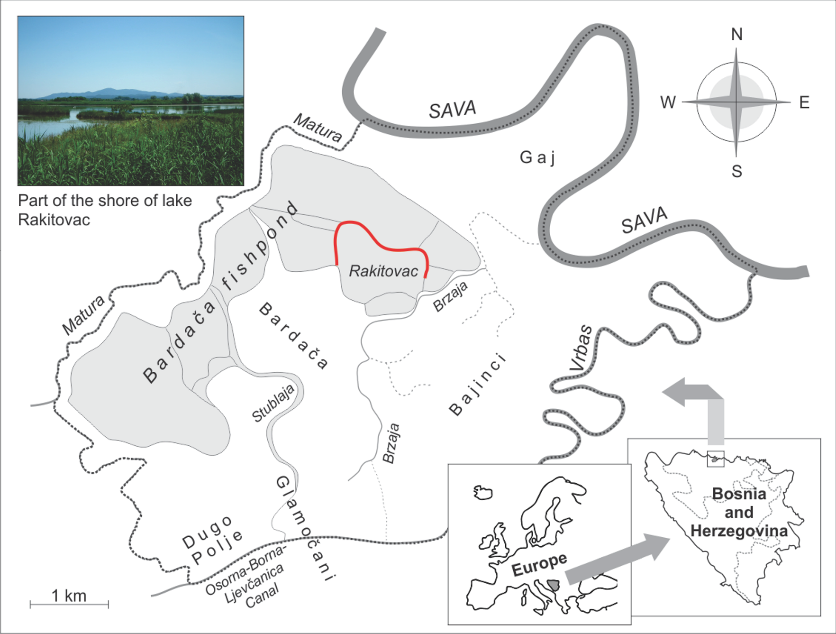
The Ramsar site “Bardača Wetland” is located in the north of Bosnia and Herzegovina, at the confluence of the Vrbas and Sava rivers. The total surface of the area is 3,500 ha, and it includes fishponds, flood meadows and forests, arable land and inhabited areas (Fig. 1). An integral part of the complex is the pond system “Bardača”, comprising 11 lakes, with an area of 675 ha, located between 17°24′08″ and 17°28′11″ E, and between 45°05′16″ and 45°06′38″ N, with an altitude between 91.0 m and 93.8 m above sea level (Gašić and Dujaković, 2009). Already in 1969, thanks to the high diversity of wetland birds, Bardača was designated as an Important Bird Area (IBA) in Bosnia and Herzegovina, and in 2007, the Ramsar Secretariat designated it an internationally important wetland area (Panić and Nagradić, 2019). However, regardless of the above, at the beginning of 2012, eight of 11 lakes were completely dried up, which significantly degraded this ecosystem (Šukalo et al., 2014). In the last several years, only one or two lakes have been filled with water (Šukalo and Dmitrović, 2023). The ichthyofauna of the Bardača complex and natural watercourses (rivers Brzaja, Matura and Stublaja) is represented by 20 autochthonous and six allochthonous species (Radević, 2000; Vuković et al., 2008), among which two allochthonous species (Ameiurus nebulosus and Carassius gibelio) are the dominant fish in the natural watercourses (Vuković et al., 2008). The batrachofauna of “Bardača Wetland” is represented by nine species of amphibians, among which green frogs (Pelophylax sp.) are the most common and numerous amphibians in this area (Šukalo and Dmitrović, 2023).
Field procedure
Field investigations were undertaken between March 2011 and September 2014, along the part of the Rakitovac Lake shore (red line in Fig. 1). One to three persons spent 39 days working in the field, with an estimated sampling effort of approximately 208 hours per sampler. Annual distribution of fieldwork sessions was as follows: eight days in 2011 and 2012 each, 12 days in 2013, and 11 days in 2014. The research was conducted during spring (six days in March, 10 in April, and seven in May) and summer (11 days in June/July and five in September/October). The snakes were captured by hand or with a hand net attached to a long stick and kept in cotton bags until processing. Their gender was determined based on their external tail morphology (Feriche et al., 1993) and, when necessary, by squeezing out the hemipenes. Only adult individuals were analysed. The minimum body size at maturity for males was determined according to the smallest male found copulating; for females, the threshold was the length of the body of the smallest female in which growing follicles/eggs were manually palpated. Body mass (BM) was measured with a digital scale (precision 1 g). Standard body length (snout-vent length, SVL) and tail length (TL) were measured with a tape meter (precision 1 mm), while head dimensions were measured with a calliper (precision 0.02 mm). Cranium length (CL) was measured from the tip of the snout to the posterior cranium edge. Interocular distance (IO) was measured between the outer edges of supraocular plates; post-parietal length (PPL) is the distance between the tip of the snout and the junction point of parietal plates with the frontal scale. Jaw length (JL) was measured from the tip of the snout to the posterior end of the upper jaw (Thorpe, 1975; King et al., 1999).
Every captured individual was manually palpated for the presence of food in its digestive system. Manual palpation was proven to be efficient in determining snakes’ gut contents (Cruz, 2013). In addition, spontaneous regurgitation provided details regarding the qualitative composition of food and the direction of prey swallowing.
Amphibian prey items (green frogs) were determined to the genus level, but fishes were identifiable to the species level. We distinguished among “intact”, “half-digested”, and “digested” prey. “Intact” were the recently consumed prey items, with no or just minor signs of digestion. These were recognizable (fish or anuran) already at palpation, as was the direction of the ingestion. “Half-digested” were those partly processed by stomach enzymes (still palpable), and “digested” prey related to pulpy remains of food in the animals’ digestive systems, which were not palpable. All three categories were included in the feeding frequency analysis.
The data regarding fecundity were obtained through abdominal palpation, i.e. palpating and counting the growing follicles/eggs through the females’ body wall. During our field investigations, we found a communal nest with approximately 70 eggs of N. natrix in several clusters, which is quite common (Aubret et al., 2015). We randomly selected 11 eggs and measured their length, width, and weight, while the remaining eggs were left in the nest undamaged, so the incubation and hatching could be monitored. At the assessed hatching time, we caught eight hatchlings and measured their standard body length, tail length, and body mass.
To avoid the effects of pseudoreplication in the analyses of sex ratio, sexual dimorphism, and fecundity (within the same year), all individuals were marked by ventral scale clipping (Winne et al., 2006) and released at the places of capture. Regarding reproductive data, if a female was recaptured within the same reproductive season, only the first recorded value was included in the analysis to avoid pseudoreplication. However, if the same female was recaptured in two different reproductive seasons, both records were included because they represent independent reproductive events. Marking also prevented repeated morphometric measurements on the same individuals within a year. Diet data were treated as independent samples, regardless of marking. All measurements and data collection were performed on live individuals in the field within 1–2 hours following capture, i.e., the animals were not taken to the laboratory or otherwise removed from their habitat.
Statistical analyses
Statistical analyses were performed in Statistica 7.0 (StatSoft, 2004). For the basic presentation of variability, we used descriptive statistics. Values of P ˂ 0.05 were set as a threshold for statistical significance. We checked the differences between the genders in morphometric traits with the analysis of variance (ANOVA), and to remove the influence of overall body size on its specific parts, we applied the analysis of covariance (ANCOVA). Pearson linear correlation and simple linear regression were used to determine the relationship between tail length and SVL, jaw length and SVL, and between egg number and SVL of gravid females. To estimate the relationship between prey weight and snake SVL, simple linear regression on log-transformed values was used. For the analysis of frequencies, χ2 test and contingency tables were used.
Results
Sexual dimorphism
In 4 years, we captured 172 adult individuals. Sex ratio among them was slightly skewed towards females: 96 ♀ vs. 76 ♂ (χ2 = 1.17, df = 1, n.s.). The analysis of variance found statistically highly significant (P < 0,001) higher values in females for all analysed morphological traits (Table 1).
| Trait | Females | Males | ANOVA | |||||
|---|---|---|---|---|---|---|---|---|
| N | mean ± SD | min – max | N | mean ± SD | min – max | F | p | |
| SVL | 96 | 733.0 ± 7.08 | 626.0 – 994.0 | 76 | 541.0 ± 3.67 | 485.0 – 640.0 | 353.43 | 0.000 |
| TL | 76 | 175.0 ± 1.64 | 133.0 – 221.0 | 61 | 156.0 ± 1.13 | 130.0 – 193.0 | 56.86 | 0.000 |
| CL | 95 | 22.1 ± 1.86 | 19.1 – 28.2 | 76 | 17.6 ± 0.96 | 15.8 – 20.0 | 247.39 | 0.000 |
| PPS | 94 | 19.5 ± 1.60 | 16.6 – 25.0 | 76 | 15.5 ± 0.86 | 13.9 – 17.9 | 284.91 | 0.000 |
| IO | 94 | 8.4 ± 0.68 | 7.0 – 10.8 | 76 | 6.8 ± 0.44 | 5.8 – 8.0 | 194.08 | 0.000 |
| J | 95 | 30.8 ± 2.95 | 26.0 – 41.8 | 76 | 21.9 ± 1.25 | 20.0 – 25.0 | 441.16 | 0.000 |
| BM | 93 | 147.1 ± 46.84 | 65.0 – 305.0 | 73 | 54.2 ± 12.49 | 38.0 – 84.0 | 222.45 | 0.000 |
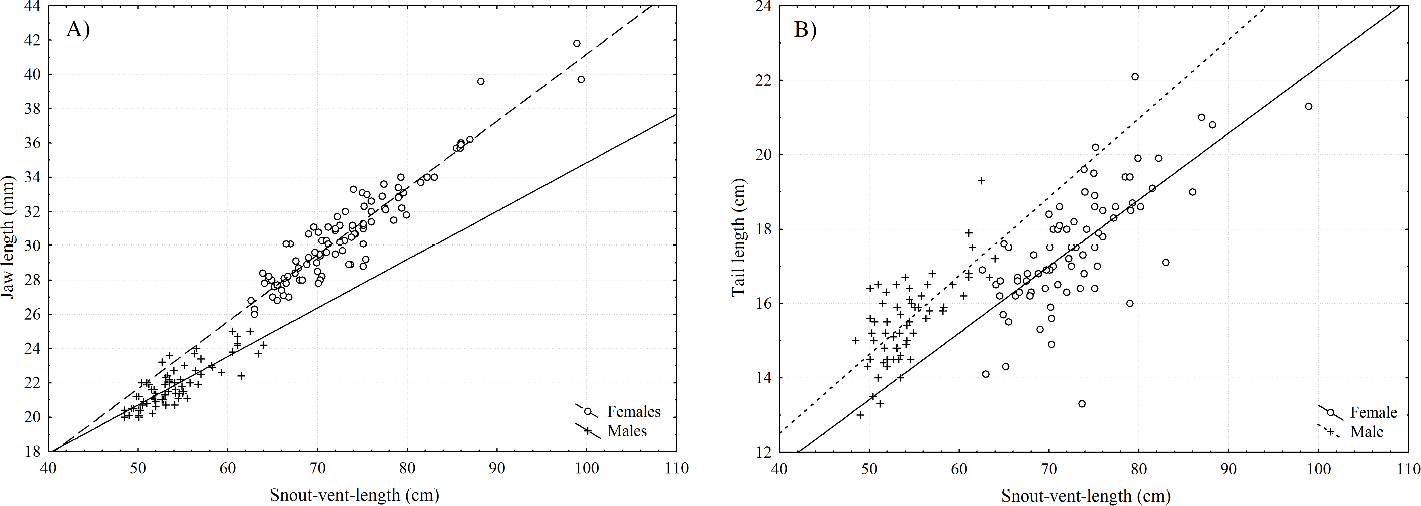
The Analysis of Covariance (ANCOVA), with the standard body length (SVL) as a covariate, revealed statistically significant differences between the sexes only for the tail length, TL (F = 17,3; P < 0,001, longer in males) and jaw length, J (F = 25,8; P < 0,001, longer in females).
Fig. 2 shows the relationship between jaw length (J) and standard body length (SVL) of adult males and females (A), and the relationship between tail length (TL) and SVL (B).
Diet
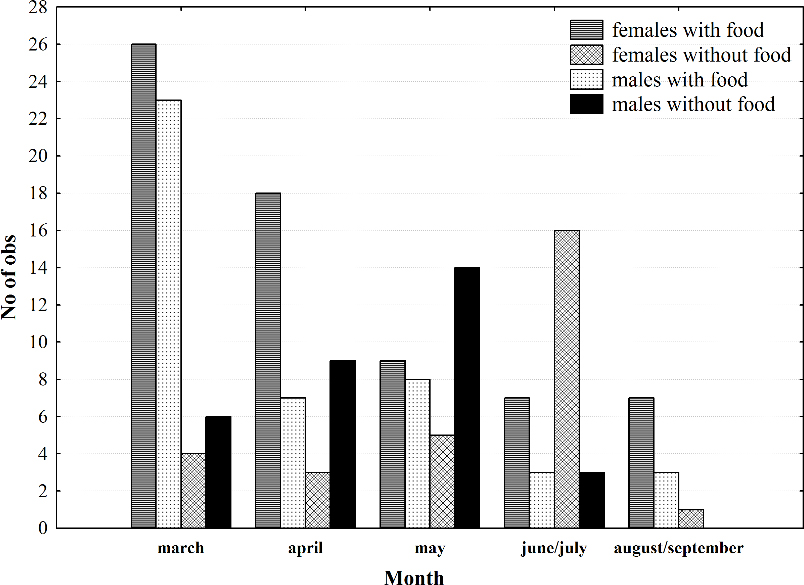
Of the 172 processed individuals, 111 (64.5%) had food in their digestive tracts. Of these, 39 individuals contained intact prey, 23 had half-digested prey, and 49 had fully digested prey. Feeding frequency did not differ between sexes, with 57.9% of males and 69.8% of females containing food in their digestive tract (χ2 = 2.62; df = 1; P = 0.105). Differences in feeding frequency among months when the snakes were collected were statistically significant for the complete sample (contingency table: χ2 = 28.8; df = 4; P < 0.001), and for the two sexes separately (females: χ2 = 25.4; df = 4; P < 0.001, and males: χ2 = 12.8; df = 4; P = 0.012). Females fed more frequently than males in all periods except June-July, when their feeding frequency was the lowest. On the other hand, the lowest feeding frequency in males was found in April and May (Fig. 3).
Identification of consumed prey was possible for 44 food items, while the remaining prey was too digested to be identified. In Bardača, the prey of adult grass snakes comprised six taxa – five fish species and green frogs from the genus Pelophylax (Table 2). Statistically significant differences were found in the type of consumed prey (frogs vs. fish) during the four years of analyses (contingency table: χ2 = 11.6; df = 3; P = 0.011). The prevailing prey during 2011, 2013, and 2014 were green frogs (Pelophylax sp.), while during 2012, the allochthonous invasive fish species (Ameiurus nebulosus) dominated the snakes’ diet. Considering fishes, grass snakes significantly more often (χ2 = 8.3; df = 1; P = 0.004) consumed allochthonous species (Carassius gibelio, Ameiurus nebulosus, and Pseudorasbora parva) compared to autochthonous (Cyprinus carpio and Silurus glanis). Also, females consumed Pelophylax sp. frogs significantly more often than males (χ2 = 3.97; df = 1; P = 0.046). In general, the diet of females was more diverse regarding types of prey (Table 2).
| Taxon | Year | Sex | ||||
|---|---|---|---|---|---|---|
| 2011 | 2012 | 2013 | 2014 | Females | Males | |
| Pelophylax sp. | 5 (83%) | - | 4 (50%) | 6 (55%) | 14 | 1 |
| Carassius gibelio | - | 2 (11%) | 2 (25%) | - | 4 | - |
| Ameiurus nebulosus | - | 17 (89%) | - | - | 12 | 5 |
| Cyprinus carpio | - | - | 2 (25%) | - | 2 | - |
| Silurus glanis | - | - | - | 1 (9%) | 1 | - |
| Pseudorasbora parva | 1 (17%) | - | - | 4 (36%) | 0 | 5 |
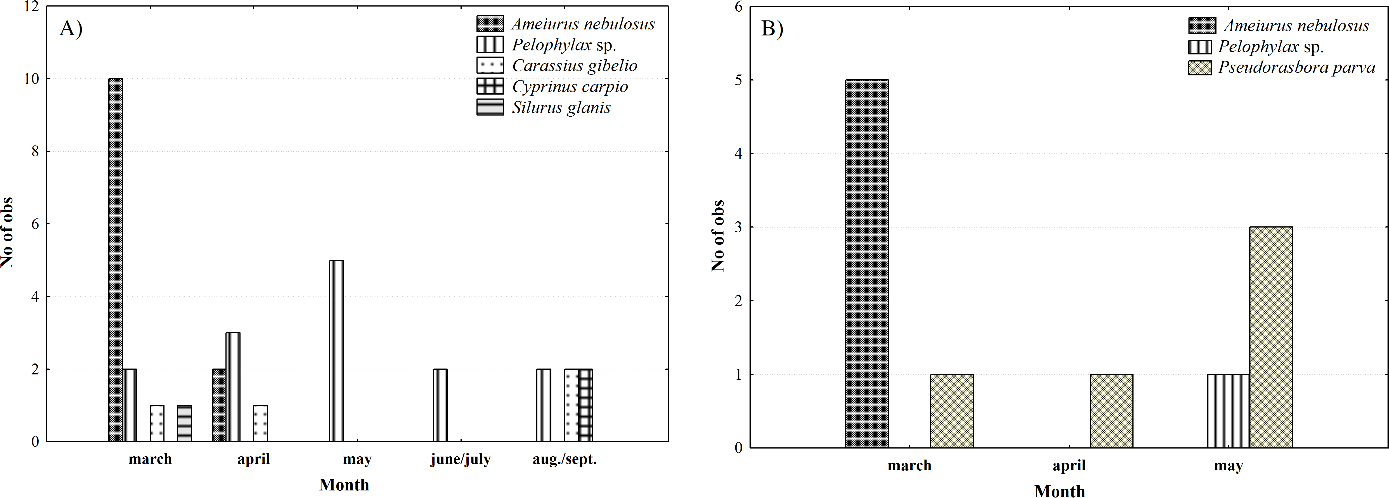
Seasonal (by month) diet analysis showed that females most often consumed green frogs during May, while males fed mostly on topmouth gudgeon (Pseudorasbora parva) (Fig. 4).
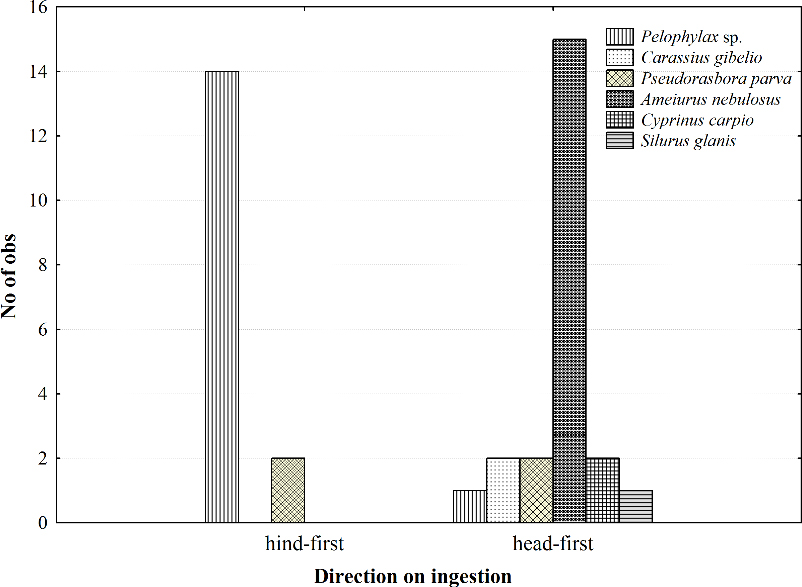
All individuals with intact prey (N = 39) regurgitated their stomach contents either before or during their processing in the field. Depending on the type of prey (frog vs. fish), swallowing direction differed significantly (χ2 = 24.2; df = 1; p < 0.001): frogs were significantly more often swallowed hind-first (χ2 = 4.26; df = 1; P = 0.039), and fish head-first (χ2 = 8.17; df = 1; P = 0.004) (Fig. 5).
On several occasions, we observed grass snakes actively searching for prey, either frogs or fish.
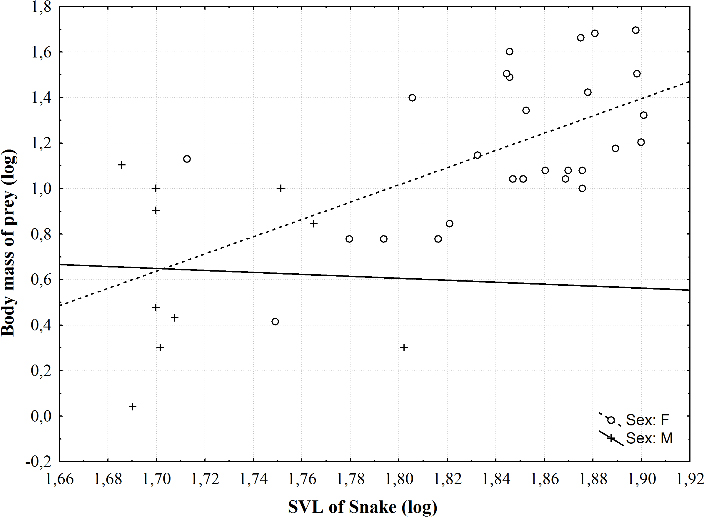
In female grass snakes, a moderately strong linear correlation was found between their SVL and mass of the swallowed prey (r = 0.55; P = 0.003), while in males, a weak negative linear correlation was found between these two variables (r = -0.045; P = 0.902) (Fig. 6).
Reproductive biology
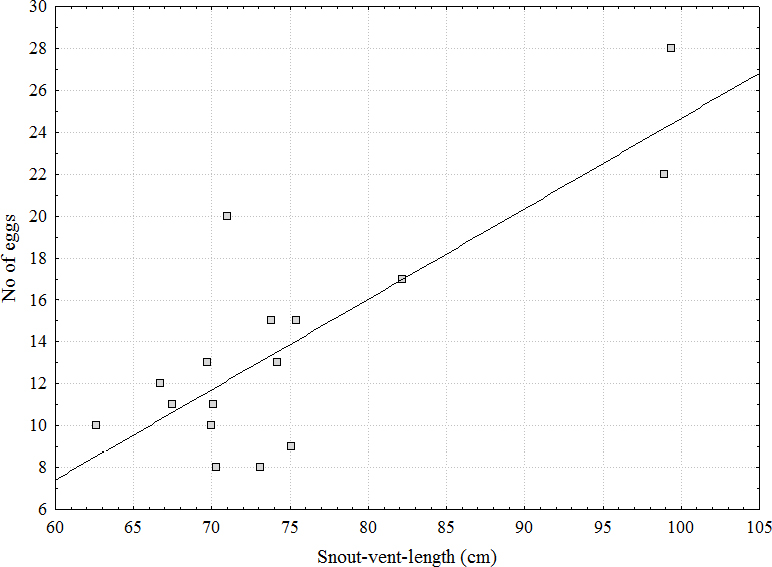
The standard body length of gravid females ranged from 62.6 cm to 99.4 cm (average 75.0 ± 10.4 cm). Clutch sizes varied between eight and 28 eggs (average 13.9 ± 5.54), and the correlation between female SVL and clutch size was strong (r = 0,809; P < 0,001) (Fig. 7).
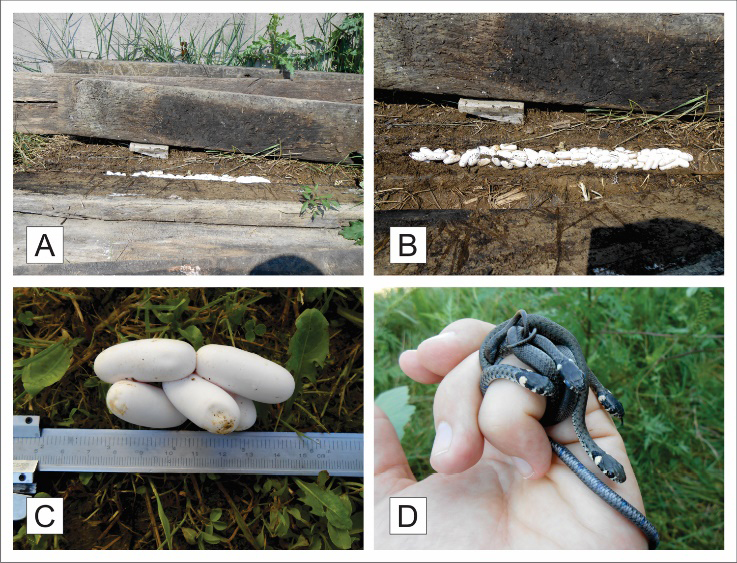
Grass snake females in the gestational period were captured during 2013 and 2014, with no statistically significant differences in the frequency of reproduction between the two years (χ2 = 0.12; df = 1; P = 0.729). In the given two years, 22 adult females were caught, 19 of which were gravid (86,4%). Among these, abdominal palpation revealed the presence of growing follicles/eggs in 16 individuals, while in three individuals, lateral skin folds were observed that indicated recent oviposition. In 2013, skin folds were observed in two females on July 13; this means that egg laying took place during the first half of July. In 2014, one female was captured on July 26 while laying her eggs in the communal nest (Fig. 8 A, B). This nest was under a pile of planks at a place where the previous year a pile of manure was placed. We counted more than 70 recently laid eggs. The average egg length was 32.7 ± 2.15 mm, average width 14.4 ± 0.31 mm (Fig. 8 C), and average weight 4.3 ± 0.43 g. We visited the nest several more times, and at the end of August, we found recently hatched snakes (Fig. 8 D). The average hatchlings’ SVL was 16.1 ± 0.90 cm, total body length 20.2 ± 0.96 cm, and body weight 2.3 ± 0.35 g.
Discussion
Sexual dimorphism
Descriptive statistics and ANOVA showed that grass snake females had significantly higher values of all analysed morphometric characters. This is in accord with the findings of Shine (1978, 1994), who argued that in most snake species with no male combat, females grow larger than males. Also, Capula and Luiselli (1997) found that in all three Natrix species (N. natrix, N. tessellata and N. maura), females were the larger sex. The results of ANCOVA showed sexual dimorphism among adults in tail length (TL) and jaw length (J). The relative tail length in males from Bardača was 22.3% of the total body length, and in females, 19.4%. The greater relative tail length in males is probably directly correlated with their reproductive anatomy, i.e. the need for additional space for hemipenes and the related muscles at the base of their tails (King, 1989; Borczyk, 2007); relatively shorter tails in females most probably resulted from selection for larger body capacity (King, 1989) i.e. selection for fecundity (Shine, 1993, 1994). This type of sexual dimorphism in tail length is in accord with previous investigations into sexual dimorphism in the Natrix genus (Hailey and Davies, 1987; Feriche et al., 1993; Borczyk, 2007; Mebert, 2011). On the other hand, females had higher absolute and relative values of jaw length compared to males. This is in agreement with the results given by Shine (1991a), which indicated that in most analysed species of snakes for which sexual dimorphism in head size has been established, females are the sex with the larger head and longer jaws. Sexual dimorphism in trophic structures is often used as support to the hypothesis of “ecological divergence” between the sexes (Shine, 1989, 1991a). Since snakes are gape-limited predators, differences between the sexes in head dimensions can lower the intersexual food competition (Houston and Shine, 1993; Shetty and Shine, 2002). Also, since female snakes invest proportionately more into reproduction (Capula et al., 2011), their longer jaws can be explained by the “reproductive role” hypothesis. Longer jaws enable females the consumption of larger prey (Shine, 1991b) which enables increased input of energy which can be allocated to reproduction. For certain snake species, it was found that females can consume larger prey than males of the same size, i.e. that “despite ontogenetic constancy in head dimorphism, sex differences in maximum prey size are expected to increase in magnitude with increasing snake size” (King, 2002). Our results showed that females consume larger, but also more diverse prey than males, which is all in agreement with the above.
Diet
The frequency of food in the stomach for the entire sample from Bardača is notably higher (≈65%) compared to previous investigations of grass snakes’ diet: in Italy, this was ≈ 42% (Filippi et al., 1996; Luiselli et al., 2005), while in England it was only ≈ 35% (Reading and Davies, 1996; Gregory and Isaac, 2004). These differences could have resulted from different methodologies, not the genuine ecological differences between the studied populations. Namely, in the population from England, the prey frequency analysis was done exclusively based on the prey obtained by forced regurgitation (Gregory and Isaac, 2004), while in Italy, in addition to regurgitation, the analysis of feeding frequency included dissections of individuals found dead in the field (Luiselli et al., 2005).
The analysis of seasonal feeding frequency showed that grass snakes in Bardača had two feeding peaks – in spring and during the second half of summer, while during the first half of summer (June–July), a notable drop was found in the presence of food in the stomach. The increased frequency of feeding during spring (March and April) could result from increased prey availability or increased need for more intense feeding after hibernation (Luiselli et al., 2005), while intense feeding during the second half of summer is most probably related to accumulating fat reserves necessary for hibernation. Findings in England (Gregory and Isaac, 2004) were similar to what we have found, while grass snakes in Italy (Luiselli et al., 2005) showed a similar pattern of increased feeding during summer and a drop in the first half of spring; contrary to what was found in Bardača and England, Italian grass snakes did not show an increase in feeding towards the end of summer. On the other hand, the opposite was found in some other investigations (Filippi et al., 1996; Reading and Davies, 1996), where the lowest feeding frequencies were found in early spring and the second half of summer. This was probably caused by different climatic characteristics that determine different prey availability in the given seasons (Luiselli et al., 2005). The lowest feeding frequency of adult grass snake females during June and July can be related to vitellogenesis. The previous investigations within the Natricinae subfamily showed that gravid females feed less frequently than non-gravid ones, i.e. snakes are traditionally considered anorexic during gestation (Gregory et al., 1999; Gregory and Isaac, 2004, but see Aldridge and Bufalino, 2003). Gestational anorexia can result from more frequent basking (precise thermoregulation is crucial for embryonal development) or physical restrictions – the development of eggs/embryos reduces the available space in the abdominal cavity and stomach (Gregory et al., 1999; Tuttle and Gregory, 2009). Also, given that pregnancy can impair snakes’ mobility due to the weight of embryos/eggs (Shine, 1980), anorexia could result from difficulties in prey capturing. Regardless of the cause of gestational anorexia, feeding frequency increases after oviposition/parturition (Gregory et al., 1999; our results). On the other hand, our results indicated that males, like females, feed more frequently after hibernation (before mating). This contrasts with the results of investigations of seasonal feeding in Thamnophis sirtalis parietalis males that indicate less frequent feeding after hibernation when they direct time and energy into an active search for females (O’Donnell et al., 2004). Increased feeding frequency of grass snake males in Bardača after hibernation could be a consequence of the draining of numerous lakes (Šukalo et al., 2014), which probably led to the gathering of snakes of both sexes around several remaining lakes, so males did not have to search for females anymore. Also, since it was proven that in male grass snakes body size increases reproductive success during the so-called ‘pseudofights’ (Capula and Luiselli, 1997), increased feeding after hibernation and allocation of energy into growth can lead to increases in individual reproductive success. The lowest feeding frequency in adult males was found during May, which can be related to the mating period: mating was observed twice at the beginning of May.
The observed differences in qualitative composition of grass snakes’ diet during the four years of research provide proof of intra-population differences in feeding and confirm this species’ feeding plasticity and ability to switch to alternative prey in a very short time. Namely, the original feeding on green frogs Pelophylax sp. (≈ 85%) during 2011 was completely replaced by feeding on allochthonous fishes (Ameiurus nebulosus and Carassius gibelio) in 2012 (after the lakes were drained up during the 2011/2012 winter – Šukalo et al., 2014). However, during 2013 and 2014, green frogs became the dominant prey again (≈ 50%), and the brown bullhead was excluded from the snakes’ diet. In natural aquatic ecosystems, the grass snakes’ impact on allochthonous fishes is limited (Jones et al., 2009), but we assume it can be significant. Although we do not possess quantitative data regarding variations in prey abundance in Bardača during our investigation, some other snake studies did report increased consumption of invasive fish species. For example, Carassius gibelio accounted for more than 97% of prey biomass in Natrix tessellata (Acipinar et al., 2006), while the invasive round goby (Neogobius melanostomus) became the dominant prey (> 92%) in Nerodia sipedon insularum (King et al., 2006), which positively influenced growth and reproduction in these species. These findings indicate that invasive fish species can become dominant and energetically profitable prey for aquatic snakes. On the other hand, more frequent consumption of allochthonous fishes compared to autochthonous species suggests that grass snakes can benefit fisheries because they often consume “fish weed”.
Our swallowing-direction analysis found significant differences depending on the type of prey (frogs vs. fish). Fish were significantly more often swallowed head-first, while frogs were consumed starting with their rear legs. Head-first ingestion of fish was previously shown in dice snakes, Natrix tessellata (Ghira et al., 2009; Metzger et al., 2011). The reason for this is probably the fact that bony rays in fish fins are oriented from head towards tail, hence if a snake would start swallowing a fish tail-first, fin rays would damage the snake’s digestive tract during ingestion (Ghira et al., 2009; Metzger et al., 2011) and if a fin is erected, it can pose additional resistance and make the act of swallowing more difficult. On the other hand, a fish’s possibility to escape is lower if it is swallowed head-first, which is significant in swallowing larger individuals (Metzger et al., 2011). Also, the duration of ingestion is shorter if the fish is swallowed head-first (Ghira et al., 2009), thus, the snake’s exposure to potential predators is shorter. The results provided by Mori (2005) indicate that the direction of prey swallowing depends on the place of the first bite, i.e., if the first bite to the prey was inflicted on its anterior part of the body, it is swallowed head-first. The place of the first bite can be correlated to the strategy a snake employs during capture (Ananjeva and Orlov, 1982; Metzger et al., 2011). Since grass snakes are actively foraging for prey (Ananjeva and Orlov, 1982; Janev Hutinec and Mebert, 2011; personal observations), they approach frogs from behind (both in the water and on land), hence the first bite and swallowing are from the rear body end. Another advantage of swallowing frogs from their rear end is their handling and immobilisation. Namely, when the frogs are caught by the head, they resist by hitting the ground with their hind limbs, and the ingestion, especially of larger frogs, from their hind limbs can help the snake to overcome the defensive movements of the frogs and reduce the risk of the prey escaping (Mori, 2005). Also, there is a possibility that snakes, by swallowing their prey from its larger end (fish from their head, frogs from the rear end), “estimate” its size and the possibility of ingestion thus saving energy they would potentially lose to regurgitate half-ingested prey. The energy-saving hypothesis in feeding is supported by laboratory investigations in two Nerodia species that showed that larger individuals spend more energy during ingestion of smaller prey (Hampton, 2018). On the other hand, laboratory studies of the dice (Natrix tessellata) showed that all analyzed individuals, regardless of body size, more effectively caught smaller fish (Bilcke et al., 2007). Therefore, future investigations should focus on these questions.
Our investigation indicated that grass snake females consume green frogs significantly more often than do males. This could result from physical constraints (Shine, 1991a; Forsman and Lindell, 1993), i.e. since snakes are gape-limited predators, and their head size determines the maximum size of prey they can ingest. Given that in grass snakes, female-biased sexual size dimorphism is present, males cannot swallow larger prey (such as green frogs) due to their smaller body and jaw sizes compared to females. On the other hand, active selection of larger prey items by adult females could result from higher energy demands (Shine, 1991a; Luiselli et al., 1997; Santos et al., 2000). The fact that female grass snakes more often consumed frogs during spring indicates the possibility that by actively choosing frogs, females provided additional energy necessary for vitellogenesis. This is supported by the fact that frogs consumed during spring were females full of eggs (approximately 64%), which are richer in energy per unit mass (Cummins and Wuycheck, 1971), and also less agile and easier to catch. Active choice of frogs by adult females during spring was recorded for the congener, Natrix maura (Santos et al., 2000). Also, in the field, females were more often observed basking on the shore, but were also more often caught far from water, while males were more often observed and caught in water. However, to discuss intersexual differences in the choice of habitat as a cause of sexual differences in feeding (Shetty and Shine, 2002), more thorough investigations are needed in the future.
Reproductive biology
Our investigations showed that the grass snakes in “Bardača” reproduce annually, like in populations in Italy (Luiselli et al., 1997) and Sweden (Madsen, 1983). Mating was observed on May 1, 2014. In one case, one female was surrounded by three males and in another by four – also in accord with findings from Italy and Sweden (Luiselli et al., 1997; Madsen, 1983). We found that in 2014, oviposition started on average 14 days later compared to 2013. Intra-population variations in the time of reproduction can be influenced by the variations in the end of hibernation (Rossman et al., 1996). Also, the beginning of vitellogenesis in numerous snake species is conditioned by attaining the minimum bodily reserves threshold (Bonnet et al., 2002), i.e. food availability was shown to directly influence the onset of vitellogenesis (Santos et al., 2005). Lower average air temperatures, but also significantly higher precipitation (floods) that occurred during May of 2014 (https://rhmzrs.com/) probably caused the delay of vitellogenesis and, consequently, later oviposition. In Bardača, grass snakes reach sexual maturity at significantly larger total body lengths compared to other localities (Table 3). Predation pressure could be the possible cause of later sexual maturity here (numerous birds of prey – Gašić and Dujaković, 2009), which is confirmed by higher frequency of tail damages in adult individuals (18.8%) compared to subadults (5,3%; unpublished). Santos et al. (2011) considered the ontogenetic increase of tail damage a good indicator of predation pressure in the congeneric Natrix maura. In this way, delayed reproduction (lower immediate costs of reproduction) will be favoured in cases when high costs of reproduction reduce the chance of survival, and thus the possibility of subsequent reproduction (Madsen, 1987). Since the body size of grass snakes is positively correlated with the number of produced eggs (Madsen, 1983; Luiselli et al., 1997), which is confirmed by our results, allocation of energy into growth and delay of reproduction probably is an advantage in a habitat with pronounced predation pressure, like Bardača. Also, for snakes, it has been proven that improved nutrition – either directly or indirectly (longer seasonal activity) – can lead to faster growth and greater adult body length (Luiselli et al., 1997; Bronikowski and Arnold, 1999). Given our results, that show that grass snakes in Bardača actively feed since the second half of March until the end of September, which is longer compared to populations in Sweden and Italy (Madsen, 1983; Luiselli et al., 1997), longer feeding period could be one of the factors that influence the observed inter-population differences in the body length at maturity in females.
| Reproductive trait | Bardača (this study) | Luiselli et al., 1997 (Italy) | Madsen, 1983 (Sweden) |
|---|---|---|---|
| Sexual maturity (total length) | 79.5 cm | 70.2 cm | 68.0 cm |
| Number of eggs (mean value ± SD) | 13.9 ± 5.4 | 9.2 ± 5.43 | 11.3 ± 4.96 |
| Number of eggs (maximum) | 28 | 24 | 24 |
| Average body length of hatchlings | 20.2 cm | 20.4 cm | 19.5 cm |
| Average body weight of hatchlings | 2.3 g | 3.4 g | 3.0 g |
Our data also indicated inter-population differences in clutch size, i.e. higher average and maximum values in Bardača compared to populations in Italy and Sweden (Table 3). However, the analysis of covariance (with clutch size as a dependent variable, locality as factor and total body length as an independent variable), did not reveal statistically significant differences in numbers of eggs of grass snake populations from Bardača compared to those from Italy (F1,32 = 0.61; P = 0.439) and Sweden (F1,29 = 3.33; P = 0.080). On the other hand, the body weight of hatchlings in Bardača was noticeably lower compared to those from Italy and Sweden (Table 3). The results provided by King (1993) indicate the existence of a trade-off between the number and size of offspring but also that larger females and those in better condition produce smaller offspring in poorer condition, which corresponds with our results (Table 3). For successful eggs incubation snakes need warm and moist microhabitat that can be natural (Luiselli et al., 1997) or anthropogenic (Beebee and Griffiths, 2000). As natural grass snake nests, Luiselli et al. (1997) listed places under large rocks, moist mosses and rotting logs, and as anthropogenic manure piles, that were proven better for incubation than e.g. compost (Löwenborg et al., 2010). In Great Britain, most places where grass snakes laid their eggs were human-made habitats, i.e. compost, manure, haystacks, piles of sawdust, and bricks (Beebee and Griffiths, 2000) but they can be of half-natural origin, like rotting logs remaining after wood cutting (Baker, 2011). Therefore, where we found a communal grass snakes’ nest in Bardača (under a pile of planks) presents a new type of human-made microhabitat that enables successful egg incubation.
Conclusion
Our investigation of the biology and ecology of grass snakes in Bardača is the first of its kind in Bosnia and Herzegovina. Being among the top predators in various ecosystems, snakes can be reliable indicators of the state of those ecosystems. Habitat fragmentation and destruction threaten all life (including humans) and have to be minimized by the education of all stakeholders and decision makers, among other things. On the other hand, snakes have learned to live close to people: we should learn to accept snakes as natural and beneficial components of ecosystems. Sadly, they are under more threats and pressure than investigation. Our team intends to change that by improving and spreading the knowledge about these animals. Also, wetlands as such must be appreciated and effectively protected: while occupying only 6% of the Earth’s land surface, wetlands support 40% of known plants and animals and provide numerous ecological services, but are declining at alarming rates, with more than one-fifth of the assessed wetlands being in a poor state (Convention on Wetlands, 2025). In that sense, investigations related to various components of wetland ecosystems should be continued. Our findings on snakes as predators and their prey should be properly disseminated and applied in future conservation plans.
Acknowledgements
In the period when this research was conducted, a list of protected reptile species did not exist in Bosnia and Herzegovina; therefore, we didn’t need to obtain any permit for population studies of Natrix natrix. Researchers from Serbia participated in part of the research that was supported through Contract No. 451-03-136/2025-03/ 200178 (SN) and Contract No. 451-03-137/2025-03/ 200178 (LT) between the University of Belgrade, Faculty of Biology and the Ministry of Science, Technological Development and Innovation of Serbia.
References
Acipinar, H., Gaygusuz, O., Tarkan, A.S., Gursoy, C., Al, Z. (2006): Presence of invasive fish species, Carassius gibelio (Bloch, 1782) in the diet of the dice snake, Natrix tessellata (Laurenti, 1768). J. Fish. Aquat. Sci. 1: 213-217.
Ahmadzadeh, F., Carretero, A.M., Mebert, K., Faghiri, A., Ataei, S., Hamidi, S., Böhme, W. (2011): Preliminary results on biological aspects of the grass snake, Natrix natrix in the southern coastal area of the Caspian Sea. Acta Herpetol. 6: 209-221.
Ajtić, R., Tomović, Lj., Sterijovski, B., Crnobrnja Isailović, J., Djordjević, S., Djurakić, M., Golubović, A., Simović, A., Arsovski, D., Andjelković, M., Krstić, M., Šukalo, G., Gvozdenović, S., Aïdam, A., Michel, C., Ballouard, J.M., Bonnet, X. (2013): Unexpected life history traits in a very dense population of dice snakes. Zool. Anz. 252: 350-358.
Aldridge, R.D., Bufalino, A.P. (2003): Reproductive female common water snakes (Nerodia sipedon sipedon) are not anorexic in the wild. J. Herpetol. 37: 416-419.
Ananjeva, N.B., Orlov, N.L. (1982): Feeding behaviour of snakes. Vert. Hung. XXI: 25-31.
Arnold, E.N., Ovenden, D. (2002): A field guide to the reptiles and amphibians of Britain and Europe. London, Collins.
Arnold, S.J. (1993): Foraging theory and prey-size – predator-size relations in snakes. In: Snakes: Ecology and behavior, pp. 87-115. Seigel, A.R., Collins, T.J., Eds, McGraw-Hill, New York, Blackburn.
Aubret, F., Blanvillain, G., Kok, P.J.R. (2015): Myth busting? Effects of embryo positioning and egg turning on hatching success in the water snake Natrix maura. Sci. Rep. 5:13385.
Baker, J. (2011): Natrix natrix (grass snake): Egg-laying sites. Herpetol. Bull. 116: 34-35.
Beebee, T.J.C., Griffiths, R.A. (2000): Amphibians and reptiles: A natural history of the british herpetofauna. London, Harper Collins Publishers.
Bilcke, J., Herrel, A., Aerts, P. (2007): Effect of prey- and predator size on the capture success of an aquatic snake. Belg. J. Zool. 137: 191-195.
Bonnet, X., Lourdais, O., Shine, R., Naulleau, G. (2002): Reproduction in a typical capital breeder: Costs, currencies, and complications in the aspic viper. Ecology 83: 2124-2135.
Bonnet, X., Naulleau, G., Shine, R., Lourdais, O. (2001): Short-term versus long-term effects of intake on reproductive output in a viviparous snake, Vipera aspis. Oikos 89: 509-518.
Borczyk, B. (2007): The causes of intraspecific variation in sexual dimorphism in the common grass snake populations, Natrix natrix Linnaeus, 1758 (Serpentes, Colubridae): Data from southwestern Poland. Acta Zool. Cracov. 50: 9-13.
Bronikowski, A.M., Arnold, S.J. (1999): The evolutionary ecology of life history variation in the garter snake Thamnophis elegans. Ecology 80: 2314-2325.
Bury, S., Zając, B. (2020): The loss of sexual size dimorphism in urban populations of a widespread reptile, the European grass snake Natrix natrix. Curr. Zool. 66: 217-218.
Capula, M., Luiselli, L. (1997): A tentative review of sexual behavior and alternative reproductive strategies of the Italian colubrid snakes. Herpetozoa 10: 107-119.
Capula, M., Filippi, E., Rugiero, L., Luiselli, L. (2011): Dietary, thermal and reproductive ecology of Natrix tessellata in Central Italy: A synthesis. Mertensiella 18: 147-153.
Convention on Wetlands (2025): Global Wetland Outlook 2025: Valuing, conserving, restoring and financing wetlands. Gland, Switzerland: Secretariat of the Convention on Wetlands.
Cruz, M.A. (2013): Effectiveness of manual palpation in the Northern water snake, Nerodia sipedon sipedon, as a method to extract gut contents for dietary studies. Theses, Dissertations and Capstones. Marshall University, Marshall Digital Scholar.
Cummins, K.W., Wuycheck, J.C. (1971): Caloric equivalents for investigations in ecological energetics. Mitt. lnternat. Verein. Limnol. 18: 1-147.
Feriche, M., Pleguezuelos, J.M., Cerro, A. (1993): Sexual dimorphism and sexing of Mediterranean colubrids based on external characteristics. J. Herpetol. 27: 357-362.
Filippi, E., Capula, M., Luiselli, L., Agrimi, U. (1996): The prey spectrum of Natrix natrix (Linnaeus, 1758) and Natrix tessellata (Laurenti, 1768) in sympatric populations (Squamata: Serpentes: Colubridae). Herpetozoa 8: 155-164.
Forsman, A. (1996): Body size and net energy gain in gape-limited predators: A model. J. Herpetol. 30: 307-319.
Forsman, A., Lindell, L.E. (1993): The advantage of a big head: Swallowing performance in adders, Vipera berus. Funct. Ecol. 7: 183-189.
Gašić, B., Dujaković, G. (2009): Ptice Bardače. Republički zavod za zaštitu kulturno istorijskog i prirodnog nasljeđa, Banja Luka.
Ghira, I., Butănescu, D., Marosi, B. (2009): Feeding behavior of the dice snake (Natrix tessellata). Herpetol. Rom. 3: 1-7.
Gregory, P.T., Crampton L.H., Skebo, K.M. (1999): Conflicts and interactions among reproduction, thermoregulation and feeding in viviparous reptiles: are gravid snakes anorexic? J. Zool. 248: 231-241.
Gregory, P.T., Isaac, A.L. (2004): Food habits of the grass snake in southeastern England: Is Natrix natrix a generalist predator? J. Herpetol. 38: 88-95.
Gregory, P.T., Larsen, K.W. (1993): Geographic variation in reproductive characteristics among Canadian populations of the common garter snake (Thamnophis sirtalis). Copeia 4: 946-958.
Hailey, A., Davies, P.M.C. (1987): Maturity, mating and age-specific reproductive effort of the snake Natrix maura. J. Zool. 211: 573-587.
Hampton, P.M. (2018): Ontogenetic prey size selection in snakes: Predator size and functional limitations to handling minimum prey sizes. Zoology 126: 103-109.
Houston, D., Shine, R. (1993): Sexual dimorphism and niche divergence: Feeding habits of the arafura filesnake. J. Anim. Ecol. 62: 737-748.
Janev Hutinec, B., Mebert, K. (2011): Ecological partitioning between dice snakes (Natrix tessellata) and grass snakes (Natrix natrix) in Southern Croatia. Mertensiella 18: 225-233.
Jones, P.C., King, R.B., Stanford, K.M., Lawson, T.D., Thomas, M. (2009): Frequent consumption and rapid digestion of prey by the Lake Erie water snake with implications for an invasive prey species. Copeia 3: 437-445.
King, R.B. (1989): Sexual dimorphism in snake tail length: Sexual selection, natural selection, or morphological constraint? Biol. J. Linn. Soc. Lond. 38: 133-154.
King, R.B. (1993): Determinants of offspring number and size in the brown snake, Storeria dekayi. J. Herpetol. 27: 175-185.
King, R.B. (2002): Predicted and observed maximum prey size – snake size allometry. Funct. Ecol. 16: 766-772.
King. R.B., Bittner, T.D., Queral-Regil, A., Cline, J.H. (1999): Sexual dimorphism in neonate and adult snakes. J. Zool. Lond. 247: 19-28.
King, R.B., Ray, J.M., Stanford, K.M. (2006): Gorging on gobies: Beneficial effects of alien prey on a threatened vertebrate. Can. J. Zool. 84: 108-115.
Löwenborg, K., Shine, R., Kärvemo, S., Hagman, M. (2010): Grass snakes exploit anthropogenic heat sources to overcome distributional limits imposed by oviparity. Funct. Ecol. 24: 1095-1102.
Luiselli, L. (1996): Individual success in mating balls of the grass snake, Natrix natrix: Size is important. J. Zool. 239: 731-740.
Luiselli, L., Capizzi, D., Filippi, E., Anibaldi, C., Rugiero, L., Capula, M. (2007): Comparative diets of three populations of an aquatic snake (Natrix tessellata, Colubridae) from Mediterranean streams with different hydric regimes. Copeia 2: 426-435.
Luiselli, L., Capula, M., Shine, R. (1997): Food habits, growth rates, and reproductive biology of grass snakes, Natrix natrix (Colubridae) in the Italian Alps. J. Zool. 241: 371-380.
Luiselli, L., Filippi, E., Capula, M. (2005): Geographic variation in diet composition of the grass snake (Natrix natrix) along the mainland and an island of Italy: The effects of habitat type and interference with potential competitors. Herpetol. J. 15: 221-230.
Luiselli, L., Rugiero, L. (1991): Food niche partitioning by water snakes (genus Natrix) at a freshwater environment in central Italy. J. Freshw. Ecol. 6: 439-444.
Luiselli, L., Rugiero, L. (2005): Individual reproductive success and clutch size of a population of the semi-aquatic snake Natrix tessellata from central Italy: Are smaller males and larger females advantaged? Rev. Ecol. (Terre Vie) 60: 77-81.
Madsen, T. (1983): Growth rates, maturation and sexual size dimorphism in a population of grass snakes, Natrix natrix, in Southern Sweden. Oikos 40: 277-282.
Madsen, T. (1984): Movements, home range size and habitat use of radio-tracked grass snakes (Natrix natrix) in Southern Sweden. Copeia 3: 707-713.
Madsen, T. (1987): Cost of reproduction and female life-history tactics in a population of grass snakes, Natrix natrix, in Southern Sweden. Oikos 49: 129-132.
Madsen, T., Shine, R. (1993a): Phenotypic plasticity in body sizes and sexual size dimorphism in European grass snakes. Evol. 47: 321-325.
Madsen, T., Shine, R. (1993b): Male mating success and body size in European grass snakes. Copeia 2: 561-564.
Mebert, K. (2011): Sexual dimorphism in the dice snake (Natrix tessellata) from the Central Alps. Martensiella 18: 94-99.
Mészáros, B., Bürgés, J., Tamás, M., Gál, B., Bohus, A., Schmera, D. (2023): Effects of the urban environment on the developmental stability, size and body condition of dice snakes (Natrix tessellata) living in artificial lakeside habitats. Ecol. Indic. 156: 111117.
Mészáros, B., Bürgés, J., Tamás, M., Gál, B., Schmera, D., Hamer, A.J. (2024): Urban oasis? Abundant dice snake (Natrix tessellata) populations along artificial lakeside habitats in urban landscapes. Landsc. Ecol. 39: 124.
Metzger, C., Christe, P., Ursenbacher, S. (2011): Diet variability of two convergent natricine colubrids in an invasive-native interaction. Mertensiella 18: 86-93.
Mori, A. (2005): Is headfirst ingestion essential in gape-limited predators? Prey-handling behavior of the anurophagous snake Rhabdophis tigrinus (Colubridae). Can. J. Zool. 84: 954-963.
O’Donnell, P.R., Shine, R., Mason, T.R. (2004): Seasonal anorexia in the male red-sided garter snake, Thamnophis sirtalis parietalis. Behav. Ecol. Sociobiol. 56: 413-419.
Panić, G., Nagradić, S. (2019): Zaštita prirodnog nasljeđa u Republici Srpskoj. Republički zavod za zaštitu kulturno-istorijskog i prirodnog nasljeđa Republike Srpske, Banja Luka.
Radević, M. (2000): Ekološki i cenotički odnosi faune riba u srednjem i donjem toku Vrbasa i ribnjaku Bardači. Prirodno-matematički fakultet, Banja Luka.
Radovanović, M. (1951): Vodozemci i gmizavci naše zemlje [Amphibians and Reptiles of our Country]. Beograd, Naučna knjiga .
Reading, C.J., Davies, J.L. (1996): Predation by grass snakes (Natrix natrix) at a site in southern England. J. Zool. 239: 73-82.
Rossman, A.D., Ford, B.N., Seigel, A.R. (1996): The garter snakes: Evolution and ecology. University of Oklahoma Press, London.
Santos, X., Feriche, M., Leon, R., Filippakopoulou, A., Vidal-Garcia, M., Llorente, A.G., Pleguezuelos, M.J. (2011): Tail breaking frequency as an indicator of predation risk for the aquatic snake Natrix maura. Amphib.-Reptil. 32: 375-383.
Santos, X., González-Solís, J., Llorente, A.G. (2000): Variation in the diet of the viperine snake Natrix maura in relation to prey availability. Ecography 23: 185-192.
Santos, X., Llorente, G.A., Feriche, M., Pleguezuelos, J.M., Casals, F., de Sostoa, A. (2005): Food availability induces geographic variation in reproductive timing of an aquatic oviparous snake (Natrix maura). Amphib.-Reptil. 26: 183-191.
Shetty, S., Shine, R. (2002): Sexual divergence in diets and morphology in Fijian sea snakes Laticauda colubrina (Laticaudinae). Austral Ecol. 27: 77-84.
Shine, R. (1978): Sexual size dimorphism and male combat in snakes. Oecologia 33: 269-277.
Shine, R. (1980): “Costs” of reproduction in Reptiles. Oecologia 46: 92-100.
Shine, R. (1988): The evolution of large body size in females: A critique of Darwin’s “Fecundity advantage” model. Am. Nat. 131: 124-131.
Shine, R. (1989): Ecological causes for the evolution of sexual dimorphism: A review of the evidence. Q. Rev. Biol. 64: 419-461.
Shine, R. (1991a): Why do larger snakes eat larger prey items? Funct. Ecol. 5: 493-502.
Shine, R. (1991b): Intersexual dietary divergence and the evolution of sexual dimorphism in snakes. Am. Nat. 138: 103-122.
Shine, R. (1993): Sexual dimorphism in snakes. In: Snakes: Ecology and behavior, pp. 49-86. Seigel, A.R., Collins, T.J., Eds, New York, McGraw-Hill.
Shine, R. (1994): Sexual size dimorphism in snakes revisited. Copeia 2: 326-346.
Smith, C.C., Fretwell, S.D. (1974): The optimal balance between size and number of offspring. Am. Nat. 108: 499-506.
StatSoft Inc. (2004): “Statistica” data analysis software system, version 7.
Šukalo, G., Dmitrović, D. (2023): Amphibians of Ramsar site “Bardača Wetland” – a checklist with ecological notes. Acta Sc. Balcanica 4: 15-24.
Šukalo, G., Đorđević, S., Gvozdenović, S., Simović, A., Anđelković, M., Blagojević V., Tomović, Lj. (2014): Intra- and inter-population variability of food preferences of two Natrix species on the Balkan Peninsula. Herpetol. Conserv. Biol. 9: 123-136.
Thorpe, R.S. (1975): Quantitative handling of characters useful in snake systematics with particular reference to intraspecific variation in the ringed snake Natrix natrix (L.). Biol. J. Linn. Soc. 7: 27-43.
Tuttle, K.N., Gregory, P.T. (2009): Food habits of the plains garter snake (Thamnophis radix) at the northern limit of its range. J. Herpetol. 43: 65-73.
Vuković, D., Tursi, A., Carlucci, R., Dekić, R. (2008): Ichthyofauna of the wetland ecosystem in the Bardača area (Bosnia and Herzegovina). Ribarstvo 66: 89-103
Weiperth, A., Gaebele, T., Potyó, I., Puky, M. (2014): A global overview on the diet of the dice snake (Natrix tessellata) from a geographical perspective: Foraging in atypical habitats and feeding spectrum widening helps colonization and survival under suboptimal conditions for a piscivorous snake. Zool. Stud. 53: 42.
Winne, T.C., Willson, D.J., Andrews, M.K., Reed, N.R. (2006): Efficacy of marking snakes with disposable medical cautery units. Herpetol. Rev. 37: 52-54.