Received: July 29, 2024; Accepted: May 7, 2025; Published: July 5, 2026
The social and economic determinants of farm succession in Ireland
1 Currently freelance. Former affiliate: Agricultural Economics and Farm Surveys Department, Teagasc Rural Economy and Development Programme, Teagasc, Athenry, Co. Galway, Ireland
2 Agricultural Economics and Farm Surveys Department, Teagasc Rural Economy and Development Programme, Teagasc, Athenry, Co. Galway, Ireland
*Corresponding author. Email: wkmtmk0127@gmail.com
Abstract. This study explores the multifaceted factors influencing farm succession in Ireland, emphasising the interaction among economic, social, and environmental aspects. With an ageing farm population, the need for effective succession strategies is critical to ensuring sustainable agricultural practices. We analyse the impact of drivers and barriers to succession, highlighting the importance of considering social factors along with economic factors using a probit model to examine these relationships. Our findings reveal that while farm size and dairy farming status show complex relationships with the likelihood of presence of a successor, social factors such as excessive workload impact decision-making. Our findings confirm expected relationships while offering new insights into farm succession and the farmer’s life cycle. Beyond profitability, social factors – such as workload and its perception by the next generation – play a crucial role in successor identification. Highlighting these dynamics, our study underscores the importance of social sustainability in securing farming’s future.
Keywords: farm succession, social factors, farmer ageing, probit model, endogenous succession cycle.
Index
Improving the sustainability of agriculture, across economic, environmental, and social dimensions, is recognised as central to delivering the key objectives of the Common Agricultural Policy (CAP). One such objective is to support generational renewal. An ageing of the farm population is evident in Ireland (Meredith and Crowley, 2018) and across Europe (Bertolozzi-Caredio et al., 2020; May et al., 2019). The share of farm holders aged 65 or over is now almost one-third in Ireland compared to one-fifth in 1991 (CSO, 2021), underlining the extent of the challenge in the Irish context. Farm succession, the transfer of managerial control of the farm, is critical to continued farm sustainability (Leonard et al., 2017a,b; Russell, et al., 2020) with previous literature highlighting its importance from both the farm household and rural community perspectives. Farm succession is significant for the uptake of innovation, efficient and effective farm management (Nuthall and Old, 2017). Most farms in Ireland are family-owned, and entry into farming sector is primarily through inheritance (Hennessy and Rehman 2006; Deming et al 2019).
The complex nature of farmer decision making around succession and inheritance is multifaceted, with a broad range of economic, personal and social factors at play (Conway et al., 2016, 2021, 2022; Leonard, et al., 2017a, b; Góngora et al., 2019). These factors can be classified as drivers and barriers to succession. Previous research has highlighted the significance of individual farm circumstances (Conway et al., 2016; Eistrup et al., 2019; Schlesser 2021; Rech et al., 2021). Conway et al. (2021, 2022) also highlight the limited capacity of financial incentives alone in facilitating generational renewal and land mobility and contend that policy also needs to address the emotional and social wellbeing of older farmers, as well as their sense of purpose in later life. An improved understanding of these influential factors is vital for the design of effective policy to support generational renewal in the context of the new CAP.
To secure the farm for the next generation, it is also important to consider the environmental performance, which is increasingly recognised as being integral to the sustainability of agriculture (Barral and Detang-Dessendre 2023). Much recent research points that younger farmers in Europe are more aware of environmental issues, quicker to adopt eco-friendly technologies, and more adaptable to policy changes (Perez et al., 2020; Läpple and Kelley, 2015). Despite the significant role of younger farmers in sustainability, studies indicate that there remain barriers to new entrants taking over a farm (Hartarska et al., 2021; Schlesser et al., 2021; Zagata et al., 2017).
Regarding the relationship between succession and sustainability, Potter and Lobley (1996) coined the term ‘succession, successor and retirement effects’ to describe the processes whereby an identified successor or lack thereof, can significantly influence the farm holder’s level of interest and investment in the farm when approaching what should be their own retirement from farming. Thus, the sustainability of the farm business is influenced by the presence of successors. Furthermore, Leonard et al. (2017) emphasises economic concerns, whether a farm can generate enough income to support both the farmer and their successor, as well as the farmer’s residual income if they transfer the farm prior to death. Transfer decisions and procedures are often difficult and stressful and may relate to the valuation of the farm as retiring farmers seek to sell farmland at the highest possible price (Jeanneaux et al 2022).
Despite widespread recognition of the connection between socio-economic factors and farm succession, there is considerable space in the academic literature for further exploration of the potential association between social aspects and farm succession. Previous research acknowledges the limited capacity of financial incentives alone in facilitating generational renewal. Through this study, we expect to make recommendations to policy makers on how social aspects should be considered in the design of future generational renewal policies. This paper identifies the endogenous nature of farm succession and examines the relationship between farm-level economic and social factors and the identification of a successor. The factors are intricately intertwined, making it challenging to consider these intertwined factors and the presence of a successor. This paper is innovative in that it conceptualises farm succession within the framework of the farm life cycle, elucidating the endogenous factors. The significance lies not in listing barriers and drivers, but in analysing the relationship between these factors within the farm life cycle and the presence or absence of a successor. The objective of our study is to explore some of the drivers and barriers to farm succession in the Irish context, with a particular emphasis on relevant social and economic factors.
The next section discusses potential drivers and barriers to farm succession based on the literature. Section 3 provides an overview of the data and methods used in this paper. Section 4 contains the results of the data analyis, section 5 provides some discussion and conclusions.
The general process of farm inter-generational transfer is well described in the existing literature, which distinguishes between three distinct but inter-related concepts. Inheritance, the legal transfer of ownership of farm business assets including land; retirement, the withdrawal of the existing manager from active managerial control and/or involvement in manual work on the farm and: succession, the transfer of managerial control over the use of these assets (Errington, 2002).
There exists particular policy instruments and financial incentives to encourage early-stage inter-generational farm transfer, however, delayed succession remains a concern throughout the world (Lobley et al 2010). The literature identifies barriers to land transfer to non-family members relating to the value that farmers place on identity, occupation, control, and status in the community (Duesberg et al. 2017). Schlesser et al. (2021) investigate social and economic factors affecting farm succession using focus groups, highlighting the complex challenges for both the older generation and successors. Understanding these obstacles is crucial for our study to improve insights into the issue.
Farm succession may be anticipated by current farmers’ behaviour in making additional investment to expand their farm business (Calus et al., 2008). Farmers with identified successors are more likely to invest or expand in anticipation of a takeover of the farm by a son or daughter than those who do not have a successor, which is known as the succession effect. The prospect of a successor often leads incumbent farmers to make management decisions they might not otherwise make, resulting in substantial improvements to the farm’s productivity and sustainability (Leonard et al., 2017; Lobley et al., 2010; Uchiyama et al., 2008). On the other hand, they describe the ‘retirement effect’, which generally has a negative impact on farms such that the farmer who has not identified a successor attempts no additional investment and scales down the farm business. Similarly, Carreira and Teixeira (2011) investigate that firms that exit the market appear to exhibit a noticeable productivity disadvantage compared to those that survive, not only in the year preceding exit but also for a significant number of years leading up to the exit. This means that farmers who do not secure a successor will not engage in investment activities for several years before the actual retirement. Much economic research has dealt with the question of farm succession and non-succession by highlighting important explanatory factors at the farm level such as farm holder’s age, off-farm employment, farm size, economic viability, farmer’s education and household composition (Kimhi and López, 1999; Stiglbauer and Weiss, 2000; Glauben et al., 2006).
The economic viability of the farm is well documented as playing a central role in the succession process (Glauben et al., 2009; Hennessy and Rehman 2007; Zagata and Sutherland, 2015). Farm size is found to have a positive stable effect on farm succession in the case of farming in Italy (Bertoni and Cavicchioli, 2016; Cavicchioli et al., 2018). Successors on larger family farm (both in physical (area) and economic size) are more likely to enter the farm as full-time.
Farmland ownership is also discussed as influencing the farm succession process. Ireland has low land mobility as older farmers accumulate capital to secure their future financial situation and are unwilling to transfer their farm assets (Leonard et al. 2017). The major farm transfers occur with non-market arrangements, usually inheritance. Irish farmers influence agricultural land markets as most farm transfers occur within the family and this is attributed to the strong emotional attachment to land in Ireland (Bradfield et al., 2023). Rented land (both conacre, the short-term, 11-month land leasing and long-term leasing) accounts for only 18% of Utilised Agricultural Area (UAA) in Ireland, that is the second lowest in EU (European Commission 2021). Policy measures to facilitate land transfer to younger generations have had limited success (Bika, 2007; Geoghegan and O’Donoghue, 2018; Geoghegan et al., 2021).
In addition to economic factors, the absence of successors is associated with older farmers’ unwillingness to retire, which stems from emotional attachment to the farm (Conway et al. 2022). Farming is a way of life for many older farmers throughout the world and retirement from their daily routines and social circles in the farming community may affect their emotion negatively. Studies show that existing retirement incentives bring limited success in encouraging farmers to retire at or before pension age and seem not to change the traditional family farm transfer (Gilmore 1999; Contzen et al., 2017). Bika (2007) writes that in addition to financial reasons, Irish farmers’ reticence in using the early retirement scheme1 could have been due to ‘sentimental bonds with the land’. Indeed, policy around generational renewal can often involve strategies to encourage older farmers to ‘step aside’ to facilitate new entrants while farmers often wish to remain ‘rooted in place’ on the farm (Conway et al., 2022) and work for as long as possible (Uchiyama et al. 2008). This farmers’ ‘never retire’ attitude is associated with reduced likelihood of a successor being identified in several countries (Lobley et al., 2010). Thus, retirement in farming is not only influenced by economic factors, but also emotional and social status.
One such consideration is the desire for social inclusion and the avoidance of isolation. Social inclusion, driven by the concept of social capital, plays a crucial role in farmers’ decision-making processes (Shortall 2008). This social capital is composed of resources from networks of relationships based on social structure and acknowledged as important component in farmers’ decision-making (Arnott et al.2021; Cofré-Bravo et al. 2019). This facilitates discussions and the designation of a successor on the farm (Abdala et al. 2022)2. By maintaining these positive relationships, older farmers can navigate the complexities of succession planning more effectively, ensuring the continuity of their agricultural operations.
Social factors such as stress or anxiety, and excessive workload are also among the factors that can be considered as barriers to farm succession. Due to the rapid expansion of the dairy sector following the removal of EU milk quotas in 2015, dairy farmers experience an increase in labour intensity in Ireland. Brennan et al. (2021) state that workload related stress was the second highest source of stress among farmers in Ireland, next to poor weather. This stress not only affects the mental well-being of older farmers but also influences the perspectives of potential successors, deterring them from considering a future on the family farm (Brennan et al. 2022). Conversely, strategies such as increasing human capital through workload and information sharing among family members and neighbours can help alleviate this problem, incentivizing potential successors to remain in the agricultural sector (Bertoni and Cavicchioli, 2016).
Human capital here is considered according to the OECD definition as the productive wealth embodied in labour, skills and knowledge (Tan, 2014) or any stock of knowledge or the innate/acquired characteristics a person has that contributes to his or her economic productivity (Garibaldi, 2006). Given the increasing focus on quality of life issues (Contzen and Häberli, 2021), there is a strong case for more emphasis on collaborations that enable a more sustainable farm workload.
Although a wider range of social factors have emerged in the discussion of generational renewal (Brennan et al., 2021; 2022), there are very few recent studies explicitly accounting for social capital and farm succession, except for Abdala et al. (2022), which identifies some relationships between farm succession and social factors in the case of Brazil. Abdala et al. (2022) found that farmers with social capital, such as access to information or networks with customers and suppliers, are more likely to identify a successor. Such social capital includes agricultural education, which can enhance farmers’ ability to manage a farm more effectively (Läpple et al., 2015).
Engaging with farm advisory services through formal advisory contracts is another form of social capital, as it involves leveraging networks to acquire knowledge and information (Cofré-Bravo et al., 2019). However, despite recognition of the importance of social aspects, studies addressing these factors remain insufficient.
The pursuit of better agricultural knowledge can be an indicator of a higher possibility of farm succession as it may indicate willingness to improve and continue the farm business.
Agri-environmental scheme (AES) participation is recognised as one of the strategies for pursuing sustainable agriculture and these types of strategies may be translated into a more sustainable agricultural business for future generations. Farmers with a sustainable strategy tend to participate in AES. Various factors contribute to the decision to participate in AES, including economic concerns, the educational level of farmers, and the environmental features on farms. According to Cullen et al. (2020), farmers who are having a “forward-looking” self-identity are more likely to participate in AES. This type of identity influences AES participation, aligning with research that AES participation is favoured as one possible survival strategy when foreseeing the sustainability of agriculture (Ingram et al., 2013; Cullen et al., 2021). In this sense, motivations to join AES are shaped by the desire to continue the farm, which may be associated with the presence of a successor. In other words, the lack of a successor can be a reason not to enter AES due to a winding down and poor availability of labour with an inability to meet the AES management requirements (Riley, 2006).
The above mentioned drivers and barriers to succession are intertwined and emerge under different conditions at the farm level. Understanding this complexity can be facilitated by conceptualizing farm succession within a farm life cycle approach. Succession processes in family farming must be appreciated for their long duration (Fischer and Burton, 2014). In Ireland, where most new entrants inherit farms, the identity of successors fostered during the life cycle shapes the structure of farming. Potential successors develop their farm business skills by gradually getting involved in farming, influencing the current farm manager’s behavior towards succession, such as making additional investments. This life-cycle approach shows that succession is an endogenous process, where practical involvement on the farm increases successor identification and vice versa (Fischer and Burton, 2014). Negative experiences can deter potential successors even if the farm is viable.
Socio-economic studies suggest that factors such as the presence of a male heir and the number of children influence farm transfer decisions (O’Gráda, 1980; Banovic et al., 2015; Kennedy, 1991). In Northern Ireland, Jack et al. (2019) found that succession decisions are shaped by the gender of children, with a preference for male farm employees. Econometric studies from various countries further indicate that a larger number of children increases the likelihood of farm transfer while also delaying farm closure (Väre, 2006; Banovic et al., 2015). Additionally, having more family members present on the farm enhances the probability of family succession (Stiglbauer and Weiss, 2000). However, regional differences exist, as Cavicchioli et al. (2015; 2018) found both weak positive and negative associations between the number of children and farm succession.
From these studies, we hypothesize that farmers with large land ownership and capital assets are more likely to identify successors; those with less social interaction are less likely; AES participation is associated with a higher likelihood of identifying successors; and farmers with identified successors are more likely to invest in their farm in anticipation of succession.
The main dataset for this research is the Teagasc National Farm Survey (NFS) data from 20183. This dataset contains detailed information about farms in terms of their economic, social and environmental performance in Ireland. The choice of time period is based on data availability as the 2018 data includes information about farm succession and whether or not farm holders have identified a successor. The agricultural sector in 2018 was affected by unusual weather with abnormal rainfall levels in spring and drought in the summer. The drought had a more significant impact on the south and east NUTS34 region relative to the Border, Midlands and West region (Falzoi et al., 2019). Some of the survey responses may reflect the difficult conditions of this year (particularly regarding incidence of farm related stress).
In the Teagasc NFS, a farm accounts book is recorded for each year for a nationally representative survey of farms throughout Ireland, selected on the basis of a stratified random sample using information provided by the Central Statistics Office. The sample size is approximately 900 farms in recent years. This sample of farms is randomly sampled each year to represent approximately 90,000 farms in Ireland. Each farm is assigned a weighting factor based on the farm system and farm size so that the results of the survey are representative of the national population of farms. The analysis focuses on farms with holders over 50 years old, a critical age for succession decisions. Farmers are actively shaping the future trajectory of their farms. This approach allowed us to examine the factors influencing farm succession decisions while accounting for the gradual and nuanced nature of the succession process. For instance, the decision-making process for farm succession can begin several years before the actual succession event takes place (Calus et al. 2008). Moreover, even at an earlier stage, forward-looking farmers may undertake new investments to keep a fragile business afloat if they pursue farm transfer to a known successor, while others may prefer to sell the business. Such farmer’s behaviour is observed and influenced by various factors even before retirement age (Paroissien et al. 2021). Examining this age group allows for a larger and more representative sample for robust econometric analysis. This provides a sample of 538 farmers representing approximately 58,000 farms nationally.
Succession decisions are made with factors influencing over a long-time frame (Lobley et al., 2010). Teagasc NFS data from 2013 is used in our model to provide a lagged value for the presence of young people in farm households. This variable is included to examine the importance of family networks, which affect the number of farmers who choose successors as of 2018. Young adults (aged 20 to 44 years) in the farm household may move out of the farm household to enter third-level education or employment elsewhere, but they may still be part of a family network and interested in contributing to the farm. Thus, the presence of young adults in 2013 might be related to the status of successor identification in 2018. Attrition is present in the Teagasc NFS data but most farms participating in the 2018 survey provided data as part of the 2013 survey. The year 2013 is chosen as important changes in household composition can take place in a five-year period and the choice of this year limits the amount of attrition. In the 2018 dataset, 538 farms were available for analysis. To construct the lagged variable for the presence of a young adult in the household, we used data from 2013. Among these, 371 farms could be matched across both years and had relevant information on young adults. In addition, due to missing values – particularly arising from the creation of interaction variables – the final sample size for Model 2 was reduced to 349. For Model 1, which does not include the lagged variable but includes interaction terms, the sample size was reduced to 501. This reduction is likely due to listwise deletion in cases with missing values introduced by the interaction variables.
In order to analyse the drivers and barriers of farm succession, we use a probit model with the dependent variable being the presence of a chosen successor as a binary variable where successor =1, otherwise=0.
i) Econometric model
The probit model is used to test the potential relationship between a number of farm, farmer and farm household characteristics (economic and social) with the presence of a chosen successor. Note that due to the absence of adequate long-term survey data to conclusively verify whether the farmer in NFS has indeed undergone farm succession, the identification a successor is employed as a dependent variable for the analysis. The choice of explanatory variables is based on the need to account for particular farm, family and social factors. Farmer age, land quality, and an interaction between the presence of a dairy enterprise and the size of land ownership are included because much research indicates a positive relationship between farm size and farm succession (Uchiyama et al., 2008; Glauben et al., 2009; Wheeler et al., 2012). Average dairy farm income is higher than the income of other systems in Ireland (Donnellan et al., 2020). We therefore expect that higher farm income attracts more successors and thus we use the presence of a specialist dairy farm as an independent variable in this model.
A variable representing investment is included among the independent variables since investment indicates a willingness of the farm holder to further develop the farm. At the same time, investment is another factor that increases a potential successor’s willingness to take over the farm business (Calus et al., 2008). The investment variable is based on Net New Investment, which is defined as all capital expenditure during the year less capital sales and grants. The cost of major repairs to farm buildings, plant and machinery as well as land improvements is also included. It does not include investments in land purchases (Dillon et al., 2021, p.89).
Many of the independent variables tend not to vary much in value over time and this reduces the likelihood of reverse causality. We attempt to account for the influence of past household composition by the inclusion of a lagged independent variable using data from the 2013 Teagasc NFS survey. We create a lagged variable indicating the presence of young adults aged 20 to 44 years old in the household in 2013. The NFS 2018 data provides information about social factors including isolation (defined as those farmers living alone) and the presence of workload stress/pressure5. These variables were ascertained as part of an additional special survey of Teagasc NFS farms in autumn 2018. These social variables are likely to be endogenous but are an important consideration given that they are likely to be closely linked to the construction of successor availability and identification. However, to avoid unnecessary sample loss and preserve statistical power, we presented Model 1, which focuses on the full 2018 dataset.
Farm income and farm viability (defined as the farm receiving at least the minimum wage for family labour and a 5% return on non-land assets) are likely to be associated with farm succession (Leonard et al., 2017). Both income and viability variables are likely to be highly endogenous in terms of their relationship with farm succession. Potential successors may play a very important role in influencing the current farm income and viability due to the labour provided on the farm. At the same time, higher farm income and farm viability may incentivise potential successors to seek to take over the farm business at some point in the future. Farm income has a number of components that are exogenous or weakly endogenous including soil quality, land ownership and agricultural training. In the econometric analysis, we therefore include these variables rather than the farm income or farm viability variables individually.
A binary variable representing whether farmers have formal advisory (extension) service contract is included since it could be an indicator of the willingness to improve farming practices, thus, continuation of the farm business.
Participation in an Agri-Environment Scheme (AES) is included since the motivations for participating in AES could be tied to the presence of a potential successor. Conversely, the absence of a successor can be associated with less likelihood of AES participation, as it may indicate a winding-down of the farm business operations, limited availability of labour, and an inability to meet the management requirements set by AES.
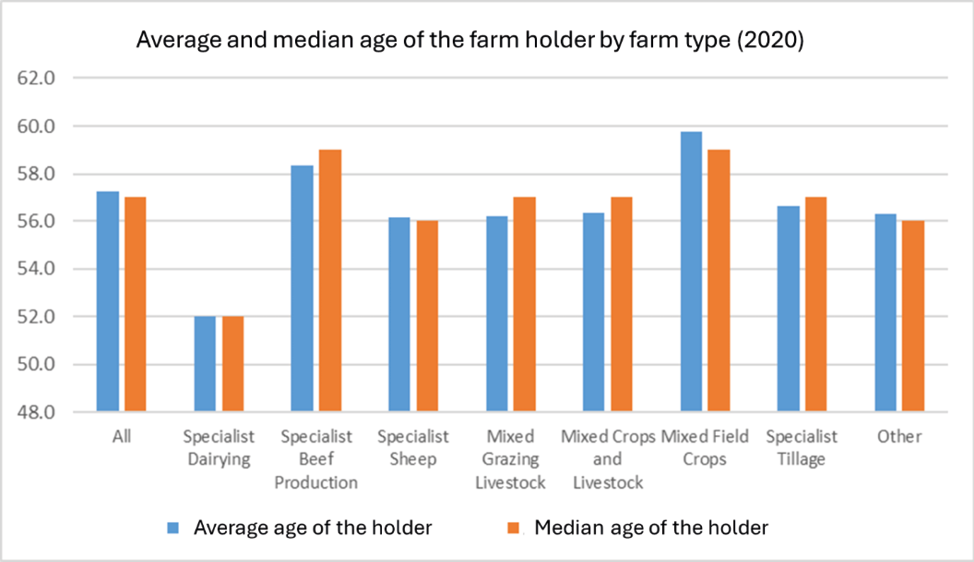
Figure 1 shows the average and median age of the farm holder by farm type in Ireland. It indicates that certain farm system faces more severe aging problem than others.
We describe the summary statistics for the variables used in the econometric analysis. Using the Teagasc NFS 2018 sample of farmers of at least 50 years old, the statistics show that 57 per cent of farmers have identified a successor at that point in time (Table 1). Among them, 34% were dairy farmers. The proportion with a successor varies between farming systems with 53.8 per cent in the case of sheep farms and 58.6 per cent for dairy farms. For the purposes of the econometric modelling and due to the limited sample size, we concentrate the succession analysis on farm holders aged over 50 years.
| Farm System | Share of successor farms in each system (%) | ||||||||||||||||||
|---|---|---|---|---|---|---|---|---|---|---|---|---|---|---|---|---|---|---|---|
| Dairy | 58.6 | ||||||||||||||||||
| Cattle rearing | 55.7 | ||||||||||||||||||
| Cattle other | 57.2 | ||||||||||||||||||
| Sheep | 53.8 | ||||||||||||||||||
| Tillage | 54.3 | ||||||||||||||||||
| Total | 56.7 | ||||||||||||||||||
| Source: Teagasc National Farm Survey 2018. | |||||||||||||||||||
The descriptive statistics are provided in Table A1 in Supplementary materials. For this particular sample, the average age is 63 years old. The average age of farm holders with a chosen successor is 65 years old and without a successor is 60.4 years old. Dairy farms are similarly represented in both succession and non-succession groups. Dairy farms account for 16 per cent of the farms with a successor and 17 per cent of the farms without a successor. As expected, the proportion of farms in the best soil quality category is higher for those with a successor (32 per cent) relative to those without a successor (26 per cent).
The average Net New Investment is higher on farms with a chosen successor relative to those farms without a successor (€8,085 per annum versus €5,777 per annum). This suggests that investment is associated with the probability of farm succession although the direction of causality may not be clear. The presence of an excessive workload or evidence of farm related stress (as reported by the farm holder) is more common on farms without a successor (35 per cent) relative to farms with a successor (24 per cent). There is a notable difference between the two groups in terms of the share of farm holders living alone. Table A1 in Supplementary materials shows that 32 per cent of farm holdings without a chosen successor are living alone. This is much lower at 15 per cent for holdings where a successor is chosen.
In this section, we show the results of the probit model in Table 2 and Table A2 in Supplementary materials. The lagged variable representing the presence of a young adult within the household is available only for 371 observations. This is because the creation of the lagged variable relied on 2013 data, and the number of farms that existed in both 2013 and 2018 was smaller than those present only in 2018, leading to a reduced sample size in Model 2 compared to the full sample. However, this remains an important variable for examining the potential role of household composition in influencing succession. We therefore present the results of the probit model both excluding and including the lagged variable (shown as Model 1 and Model 2, respectively). This way allows us for greater statistical power in estimating the core relationships. Marginal effects are calculated to show the change in the probability of succession due to a change in the value of the independent variables.
| Variables | Model 1 | Model 2 | |||||||||||||||||
|---|---|---|---|---|---|---|---|---|---|---|---|---|---|---|---|---|---|---|---|
| Coef. | sig | Marginal effect | Coef. | sig | Marginal effect | ||||||||||||||
| Interaction of Dairy Farm and Land Ownership | 0.0095 | ** | 0.0092 | * | |||||||||||||||
| Farmer Age | 0.0535 | *** | 0.02 | 0.0585 | *** | 0.02 | |||||||||||||
| Best Soil Category | 0.2139 | * | 0.08 | 0.198 | 0.07 | ||||||||||||||
| Excessive Workload | -0.262 | ** | -0.09 | -0.160 | -0.06 | ||||||||||||||
| Isolation of Living Alone | -0.13 | - 0.05 | -0.109 | -0.04 | |||||||||||||||
| Net New Investment (€) | 0.004 | 0.001 | 0.002 | 0.0009 | |||||||||||||||
| Formal Advisory Contract | 0.0170 | 0.006 | 0.025 | 0.009 | |||||||||||||||
| Participation in AES | 0.317 | ** | 0.11 | 0.226 | 0.08 | ||||||||||||||
| Number of Household Members Age 20 to 44 in 2013** | - | - | 0.0003 | 0.0001 | |||||||||||||||
| Constant | -3.318 | *** | -3.645 | *** | |||||||||||||||
| Observations | 501 | 349 | |||||||||||||||||
| *** p<0.01, ** p<0.05, * p<0.1. | |||||||||||||||||||
Farm income has components that are exogenous or weakly endogenous including soil quality, land ownership and agricultural training. In addition, land ownership is included since Irish farm succession mostly occurs via inheritance. The area of owned land could be associated positively with identification of a successor. In this model, we use these variables rather than the reported farm income.
We analyse whether the presence of a dairy farm or the farm size influences the likelihood of succession. We expected that the presence of a dairy farm would increase the likelihood of succession due to the relatively higher farm income on dairy farms relative to non-dairy farms (Donnellan et al., 2020). However, our model finds land ownership (as opposed to rent) is not statistically significant as shown in Table A2 in Supplementary materials, even though these factors are considered positive indicators for identifying a successor. This is not consistent with previous studies showing a positive relationship between farm size and the probability of farm succession (Kimhi and Bollman, 1999; Breustedt and Glauben, 2007; Morais et al., 2018).
The absence of a significant relationship between land ownership size and succession and between dairy farming and succession motivated us to explore the possible interaction of dairy farming and (owned) farm size. We therefore add an interaction variable for the presence of a dairy farm with land ownership (hectares). As a result of this interaction, farm size is not significant for non-dairy but is significant for dairy farms. This indicates that only larger dairy farms are associated with a higher probability of farm succession. These results are presented in Table 2, which we regard as our main results because the model better captures system-specific succession dynamics and reveals patterns that were not evident in the initial specification shown in Table 4. The results from the 2020 CSO Census of Agriculture point to an increase in the average size of dairy farms with a reduction in the number of farms classified as specialist dairy. This indicates a rising concentration within dairy farming. The inclusion of the interaction term in Table 2 provides greater explanatory power and offers a more nuanced understanding of the conditions under which farm size matters. For this reason, we present Table 2 as our main model.
The age of the farm holder is positive and statistically significant. This is expected given that older farmers are more likely to have reached the point of identifying a successor (May et al., 2019). The marginal effect indicates that the probability of having a successor increases by approximately 2 per cent per year. Stiglbauer and Weiss (2000) also found a positive relation between the age of the farm holder and farm succession.
The soil quality variable is positive and statistically significant in the farm succession decision. It indicates that better soil quality brings higher productivity, that provide sufficient income to support two generations during succession process.
The results in Table 2 point to the importance of social factors, including excessive workload. Farmers who report excessive workload and related stress are less likely to have identified a successor. While this may seem intuitive, its importance lies in the broader context of succession as a long-term, endogenous process. May et al. (2019) found that farmers experiencing hardship may be reluctant to encourage their children to pursue farming, reinforcing the idea that such stress has cumulative intergenerational effects. Succession is a gradual process shaped by accumulated experiences, evolving identities, and intergenerational interactions (Fischer and Burton, 2014). Continuous exposure to workload stress as observed by the next generation, can alter perceptions of farming as a viable or desirable career. Such social aspects therefore warrant consideration alongside economic drivers to inform more holistic policy and advisory strategies.
Isolation is not statistically significant in both model (with/without lagged variable) and has a negative coefficient as expected. It is noteworthy that a substantial proportion of the sampled farmers, approximately 23%, live alone, and these farmers tend to be less likely to identify successors. The marginal effect of isolation is relatively substantial at -5%, compared to other binary variables. While this finding does not reach statistical significance, it aligns with previous research by Dudek (2016), which emphasises the importance of household composition in farm succession based on panel data from Poland. One possible reason for the lack of significance in our case could be sample size limitations. Nonetheless, the results suggest that social factors, particularly household structure, may play an important role in farm succession decisions. Therefore, incorporating social dynamics into succession models remains a relevant avenue for further research.
Investment was expected to have a strong association with the probability of succession as reported in a previous study in Belgium (Calus et al., 2008). Here it is found to be positive and not significant. Investment could be potentially endogenous given that the presence of a successor could motivate the current holder to invest more. However, we include investment in our model considering its importance, and the fact that farm succession itself has been verified as an endogenous cycle (Fischer and Burton, 2014). Although the investment was not statistically significant in our results, previous research has established it as a key indicator of farm succession. For instance, Calus et al. (2008) found that succession intentions begin influencing farm investment decisions up to ten years before the actual transfer. This suggests that even if this variable does not appear significant in our model, it remains a crucial factor in succession planning, reinforcing the need for early successor identification to ensure farm continuity. The lack of statistical significance in our findings may be partly attributed to sample size limitations. Further research with larger datasets would be beneficial to fully capture the role of investment in farm succession dynamics.
We expected that formal advisory (extension) contract could be an indicator of a higher possibility of farm succession since it may indicate openness or willingness to improve farming activities. While it is not statistically significant, it showed a positive coefficient. Including this variable is valuable, as research on farm succession has often placed less emphasis on social factors. Access to advisory services can be seen as a form of social capital, potentially influencing farm succession decisions by providing guidance and strategic planning support as Abdala et al., (2022) investigated. The lack of statistical significance in our model could be due to heterogeneity in how advisory services are utilised, such as the timing of advisory service use may vary, with some farmers engaging with advisors too early or too late in the succession process for measurable effects to be captured within our dataset.
Farmer participation in an AES is found to be positive and statistically significant in model 1. This supports the conclusion of Cullen et al. (2020) that participation in such schemes has a positive association with the willingness to continue farming. Participation in environmental schemes can also provide economic incentives to younger farmers.
Finally, the lagged independent variable for the presence of young adults in the farm household is positive and not significant, which is only included in model 2. Although this lagged variable is not statistically significant, it is retained in Model 2 due to its conceptual importance in succession literature and to test robustness. While this result does not provide strong evidence in our model, the presence of young adults is often considered a key factor in succession decisions. The use of this lagged variable allows us to capture long-term household dynamics that may influence successor availability. The lack of significance in our results could be due to sample size, timing differences in succession planning, or unobserved factors influencing young adults’ career choices around the age categories. Nevertheless, as previous research of Fischer and Burton (2014) suggests, early exposure to farm life and involvement in decision-making processes play a crucial role in the eventual transfer of farm management.
In this study, we use econometric methods to explore the drivers and barriers to farm succession, incorporating both social and economic factors. While profitability and land ownership are often key drivers of succession decisions (Pitson et al., 2020), our findings indicate that social factors, such as workload stress and participation in agri-environmental schemes (AES), also play a significant role in shaping succession outcomes. These insights suggest the importance of considering social sustainability alongside economic factors in the farm succession process.
Our results reveal that economic characteristics, particularly land ownership size and soil quality, are key determinants in identifying successors associated with greater successor potential. However, social factors also influence succession decisions by shaping both the current farmer’s management practices and the potential successors’ perceptions of the farm’s long-term viability. For example, workload stress can affect how farmers operate day-to-day, while participation in AES may reflect a more future-oriented outlook, which may appeal to younger generations.
Succession should not be viewed as a one-time decision but as a continuous process, influenced by ongoing actions and experiences. The decisions of the current farm manager, such as improving soil quality or expanding land, directly affect how potential successors view the farm’s future and their potential role. These accumulated experiences contribute to the successor’s identity formation and long-term engagement with the farm.
In line with Calus (2009), our findings challenge the traditional view that succession is driven solely by economic incentives. Instead, we show that succession unfolds gradually, shaped by evolving social and familial dynamics. Social and economic elements interact over time, making succession a dynamic process rather than a fixed event. Supporting this view, findings from a cluster analysis of Irish farm types further confirm that succession decisions are nuanced and shaped by farm-specific economic viability and household or workload-related social conditions (Loughrey et al., 2025).
Notably, our study contributes to the growing body of literature by quantitatively examining social factors (Abdala et al., 2022; Špička and Berg, 2022) and providing unique insights into their role in farm succession dynamics. High work intensity, especially in demanding systems like dairy farming, can contribute to farm exits (Ferjani et al., 2015), further influencing succession dynamics. In addition, succession decisions evolve gradually, shaped by long-term experiences rather than isolated events (Lobley, 2010). The long-term impact of witnessing parental stress from farming can influence the decisions of potential successors, underlining the importance of resilience across both social and material dimensions (Darnhofer, 2020).
Further supporting this perspective, Bertolozzi-Caredio (2024) confirms that the presence of a successor influences the behaviour of incumbent farmers, reinforcing the idea that farm succession is a dynamic and mutual process. To facilitate smoother transitions, targeted strategies are needed to support both successors and incumbents. One such approach includes fostering farmer partnership agreements or hiring additional labour that have proven beneficial but remain underutilized (Conway et al., 2017; Garcia et al., 2023; Shin et al., 2023). These measures not only alleviate excessive workloads but also enhance the attractiveness of farming as a viable career path for the next generation.
Farms with lower incomes can seek to improve farm viability through participation in AES schemes for example as an economic incentive, particularly on less intensive farms, to stabilise farms. Cullen et al. (2020) notes that a forward-looking self-identity is linked to greater AES participation, ensuring farm continuity for future generations. Furthermore, innovative environmental practices, such as organic farming, may attract younger farmers with new financial incentives through the CAP (Farrell et al., 2022).
Policy should broaden its focus to enable succession not only within families but also through hired labour or non-relatives. Our findings imply that policies should address the pathways for both new entrants and incumbents, potentially facilitating partnerships to share workload, knowledge, and profits, thereby ensuring the sustainable continuation of farming enterprises.
A limitation of this study is that that it relies on farmers’ self-reports about whether they have identified a successor, rather than tracking actual succession events. In addition, capturing farm succession over a longer period would be beneficial. The endogenous cycle of farm succession highlights the link between farmers’ identity development and the farm business ladder, which could be better understood using a panel data framework, as in Dudek and Pawłowska (2022). This would help establish the cause-and-effect relationship over time and provide more evidence on the impact of succession on farm continuity, productivity, and sustainability.
This study provides valuable insights into farm succession by utilizing a nationally representative dataset. While the dataset used is from 2018, making it one of the most recent sources available for analyzing long-term succession trends, it does not capture the potential impacts of recent economic and social changes, such as the COVID-19 pandemic or the ongoing inflationary crisis. These events may have influenced succession decisions by altering economic stability, labour availability, and generational attitudes toward farming. Future research should incorporate more recent data to assess these effects.
The statistical significance of some results is limited, partly due to the sample size constraints. Expanding the dataset or complementing quantitative findings with qualitative approaches, such as interviews with farmers and advisors, could provide deeper insights into the role of social capital in succession planning.
Despite these limitations, this study highlights the importance of understanding both economic and social factors in farm succession. Future research should continue exploring these aspects, particularly in the context of evolving economic conditions and policy changes that shape generational renewal in agriculture.
Funding provided by the Department of Agriculture, Food and the Marine under the project entitled RENEW2050 - Rural Generational Renewal 2050 - 2019R414.
Abdala, R. G., Binotto, E., and Borges, J. A. R. (2022). Family farm succession: evidence from absorptive capacity, social capital, and socioeconomic aspects. Revista de Economia e Sociologia Rural, 60. DOI: https://doi.org/10.1590/1806-9479.2021.235777
ADAS (2020). Evaluation of the Green Low-Carbon Agri-Environment Scheme (GLAS) – Synthesis of Evidence.
Adler, P. S., and Kwon, S. W. (2002). Social capital: Prospects for a new concept. Academy of management review, 27(1), 17-40.
Banovic, M., Duesberg, S., Renwick, A., Keane, M. T., and Bogue, P.(2015). The Field: Land mobility measures as seen through the eyes of Irish farmers. The Agricultural Economics Society’s 89th Annual Conference, University of Warwick, United Kingdom, 13-15 April 2015. DOI: https://doi.org/10.1111/1477-9552.12125
Barral, S., and Detang-Dessendre, C. (2023). Reforming the Common Agricultural Policy (2023–2027): multidisciplinary views. Review of Agricultural, Food and Environmental Studies, 1-4.
Bertolozzi-Caredio, D., Bardaji, I., Coopmans, I., Soriano, B., and Garrido, A. (2020). Key steps and dynamics of family farm succession in marginal extensive livestock farming. Journal of Rural Studies, 76, 131-141. DOI: https://doi.org/10.1016/j.jrurstud.2020.04.030
Bertolozzi-Caredio D. (2024). The farm succession effect on farmers’ management choices. Land Use Policy, Volume 137. DOI: https://doi.org/10.1016/j.landusepol.2023.107014
Bertoni, D., and Cavicchioli, D. (2016). Process description, qualitative analysis and causal relationships in farm succession. CAB Reviews, 11(043), 1-11. DOI: https://doi.org/10.1016/j.jrurstud.2020.04.030
Bika, Z. (2007). The territorial impact of the farmers’ early retirement scheme. Sociologia Ruralis, 47(3), 246-272. DOI: https://doi.org/10.1111/j.1467-9523.2007.00436.x
Bradfield, T., Butler, R., Dillon, E. J., Hennessy, T., and Loughrey, J. (2023). Attachment to land and its downfalls: Can policy encourage land mobility? Journal of Rural Studies, 97, 192-201. DOI: https://doi.org/10.1016/j.jrurstud.2022.12.014
Brennan, M., Hennessy, T., Meredith, D., and Dillon, E. (2021). Weather, Workload and Money: Determining and Evaluating Sources of Stress for Farmers in Ireland. Journal of Agromedicine, 1-11. DOI: https://doi.org/10.1080/1059924X.2021.1988020
Brennan, M., Hennessy, T., Dillon, E., and Meredith, D. (2022). Putting social into agricultural sustainability: Integrating assessments of quality of life and wellbeing into farm sustainability indicators. Sociologia Ruralis. DOI: https://doi.org/10.1111/soru.12417
Breustedt, G., and Glauben, T. (2007). Driving forces behind exiting from farming in Western Europe. Journal of Agricultural Economics, 58(1), 115-127. DOI: https://doi.org/10.1111/j.1477-9552.2007.00082.x
Calus, M. (2009). Factors explaining farm succession and transfer in Flanders. PhD Thesis, Ghent University.
Calus, M., Van Huylenbroeck, G., and Van Lierde, D. (2008). The relationship between farm succession and farm assets on Belgian farms. Sociologia ruralis, 48(1), 38-56. DOI: https://doi.org/10.1111/j.1467-9523.2008.00448.x
Carreira, C., and Teixeira, P. (2011). The shadow of death: analysing the pre-exit productivity of Portuguese manufacturing firms. Small Business Economics, 36, 337-351.con
Cavicchioli, D., Bertoni, D., and Pretolani, R. (2018). Farm succession at a crossroads: The interaction among farm characteristics, labour market conditions, and gender and birth order effects. Journal of Rural Studies, 61, 73-83. DOI: https://doi.org/10.1016/j.jrurstud.2018.06.002
Cavicchioli, D., Bertoni, D., Tesser, F., and Frisio, D. G. (2015). What factors encourage intrafamily farm succession in mountain areas? Mountain Research and Development, 35(2), 152-160. DOI: https://doi.org/10.1659/MRD-JOURNAL-D-14-00107.1
Central Statistics Office (2022). Census of Agriculture 2020 - Preliminary Results. Retrieved 1st February 2022 from https://www.cso.ie/en/releasesandpublications/ep/p-coa/censusofagriculture2020-preliminaryresults/kf/
Cofré-Bravo, G., Klerkx, L., and Engler, A. (2019). Combinations of bonding, bridging, and linking social capital for farm innovation: How farmers configure different support networks. Journal of Rural Studies, 69, 53-64. DOI: https://doi.org/10.1016/j.jrurstud.2019.04.004
Contzen, S., and Häberli, I. (2021). Exploring dairy farmers’ quality of life perceptions–A Swiss case study. Journal of Rural Studies, 88, 227-238. DOI: https://doi.org/10.1016/j.jrurstud.2021.11.007
Contzen, S., Zbinden, K., Neuenschwander, C., and Métrailler, M. (2017). Retirement as a Discrete Life‐Stage of Farming Men and Women’s Biography? Sociologia Ruralis, 57, 730-751. DOI: https://doi.org/10.1111/soru.12154
Conway, S.F., McDonagh, J., Farrell, M., and Kinsella, A.(2016). Cease agricultural activity forever? Underestimating the importance of symbolic capital, Journal of Rural Studies, 44. DOI: https://doi.org/10.1016/j.jrurstud.2016.01.016.
Conway, S. F., Farrell, M., McDonagh, J., and Kinsella, A. (2022). ‘Farmers Don’t Retire’: Re-Evaluating How We Engage with and Understand the ‘Older’Farmer’s Perspective. Sustainability, 14(5), 2533. DOI: https://doi.org/10.1016/j.jrurstud.2016.01.016
Conway, S. F., McDonagh, J., Farrell, M., and Kinsella, A. (2021). Going against the grain: Unravelling the habitus of older farmers to help facilitate generational renewal in agriculture. Sociologia Ruralis, 61(3), 602-622. DOI: https://doi.org/10.1111/soru.12355
Cullen, P., Hynes, S., Ryan, M., and O’Donoghue, C. (2021). More than two decades of Agri-Environment schemes: Has the profile of participating farms changed? Journal of Environmental Management, 292, 112826. DOI: https://doi.org/10.1016/j.jenvman.2021.112826
Cullen, P., Ryan, M., O’Donoghue, C., Hynes, S., and Sheridan, H. (2020). Impact of farmer self-identity and attitudes on participation in agri-environment schemes. Land Use Policy, 95, 104660. DOI: https://doi.org/10.1016/j.landusepol.2020.104660
Darnhofer, I. (2020). Farm resilience in the face of the unexpected: Lessons from the COVID-19 pandemic. Agriculture and Human Values, 37(3), 605-606.
Deming, J., Macken-Walsh, Á., O’Brien, B., and Kinsella, J. (2019). Entering the occupational category of ‘Farmer’: new pathways through professional agricultural education in Ireland. The Journal of Agricultural Education and Extension, 25(1), 63-78. DOI: https://doi.org/10.1080/1389224X.2018.1529605
Dudek, M. (2016). A matter of family? An analysis of determinants of farm succession in Polish agriculture. Studies in Agricultural Economics, 118(2), 61-67. DOI: https://doi.org/10.22004/ag.econ.246256
Dudek, M., and Pawłowska, A. (2022). Can succession improve the economic situation of family farms in the short term? Evidence from Poland based on panel data. Land Use Policy, 112, 105852. DOI: https://doi.org/10.1016/j.landusepol.2021.105852
Duesberg, S., Bogue, P., and Renwick, A. (2017). Retirement farming or sustainable growth–land transfer choices for farmers without a successor. Land Use Policy, 61, 526-535. DOI: https://doi.org/10.1016/j.landusepol.2016.12.007
Dillon, E., Donnellan, T., Moran, B., and Lennon, J. (2021). Agricultural Economics and Farm Surveys Department, Rural Economy Development Programme, Teagasc.
https://www.teagasc.ie/media/website/publications/2021/Teagasc-National-Farm-Survey-2020.pdf
Donnellan, T., Moran, B., Lennon, J., and Dillon, E. (2020). Teagasc national farm survey 2019 preliminary results, Teagasc. https://www.teagasc.ie/media/website/publications/2020/Teagasc-National-Farm-Survey-2019.pdf
Eistrup, M., Sanches, A. R., Muñoz-Rojas, J., and Pinto-Correia, T. (2019). A “young farmer problem”? Opportunities and constraints for generational renewal in farm management: an example from Southern Europe. Land, 8(4), 70. DOI: https://doi.org/10.3390/land8040070
Errington, A. (2002). Handing Over the Reins: A Comparative Study of Intergenerational Farm Transfers in England, France and Canada. (No. 723-2016-48847). Conference paper, European Association of Agricultural Economists (EAAE) 2002 International Congress, August 28-31, 2002, Zaragoza, Spain. DOI: https://doi.org/10.22004/ag.econ.24905
Falzoi, S., Gleeson, E., Lambkin, K., Zimmermann, J., Marwaha, R., O’Hara, R. and Fratianni, S. (2019). Analysis of the severe drought in Ireland in 2018. Weather, 74(11), 368-373. DOI: https://doi.org/10.1002/wea.3587
Farrell, M., Murtagh, A., Weir, L., Conway, S. F., McDonagh, J., and Mahon, M. (2022). Irish Organics, Innovation and Farm Collaboration: A Pathway to Farm Viability and Generational Renewal. Sustainability, 14(1), 93. DOI: https://doi.org/10.3390/su14010093
Ferjani, A., Zimmermann, A., and Roesch, A. (2015). Determining factors of farm exit in agriculture in Switzerland. Agricultural Economics Review, 16(389-2016-23517), 59-72. DOI: https://doi.org/10.22004/ag.econ.253691
Fischer, H., and Burton, R. J. (2014). Understanding farm succession as socially constructed endogenous cycles. Sociologia ruralis, 54(4), 417-438. DOI: https://doi.org/10.1111/soru.12055
Garibaldi, P. (2006). Personnel economics in imperfect labor markets. Oxford, England: Oxford Press.
Geoghegan, C., and O’Donoghue, C. (2018). Socioeconomic drivers of land mobility in Irish agriculture. International Journal of Agricultural Management, 7(1029-2020-362), 26-34. DOI: https://doi.org/10.22004/ag.econ.301162
Geoghegan, C., Kinsella, A., and O’Donoghue, C. (2021). The effect of farmer attitudes on openness to land transactions: evidence for Ireland. Bio-based and Applied Economics, 10(2), 153-168. DOI: https://doi.org/10.36253/bae-9746
Gilmore, D. A., (1999). The Scheme of Early Retirement from Farming in the Republic of Ireland. Irish Geography, 32(2), 78-86. DOI: https://doi.org/10.1080/00750779909478602
Glauben, T., Tietje, H., and Weiss, C. (2006). Agriculture on the move: Exploring regional differences in farm exit rates in Western Germany. Jahrbuch für regionalwissenschaft, 26(1), 103-118. DOI: https://doi.org/10.1007/s10037-004-0062-1
Glauben, T., Petrick, M., Tietje, H., and Weiss, C. (2009). Probability and timing of succession or closure in family firms: a switching regression analysis of farm households in Germany. Applied Economics, 41(1), 45-54. DOI: https://doi.org/10.1080/00036840601131722
Góngora, R., Milán, M.J., and López-i-Gelats, F. (2019). Pathways of incorporation of young farmers into livestock farming. Land Use Policy, 85. DOI: https://doi.org/10.1016/j.landusepol.2019.03.052
Garcia-Covarrubias, L., Läpple, D., Dillon, E., and Thorne, F. (2023). Automation and efficiency: a latent class analysis of Irish dairy farms. Q Open, qoad015, DOI: https://doi.org/10.1093/qopen/qoad015.
Gráda, C. Ó., 1980. Primogeniture and ultimogeniture in rural Ireland. The Journal of Interdisciplinary History, 10(3), 491-497. DOI: https://doi.org/10.2307/203190
Hartarska, V., Nadolnyak, D., and Sehrawat, N. (2022). Beginning farmers’ entry and exit: evidence from county level data. Agricultural Finance Review, 82(3), 577-596.
Hayden, M. T., McNally, B., and Kinsella, A. (2021). Exploring state pension provision policy for the farming community. Journal of Rural Studies, 86, 262-269.
Hennessy, T. C., and Rehman, T.(2007). An investigation into factors affecting the occupational choices of nominated farm heirs in Ireland. Journal of Agricultural Economics, 58(1), 61-75. DOI: https://doi.org/10.1111/j.1477-9552.2007.00078.x
Ingram, J., Gaskell, P., Mills, J., and Short, C. (2013). Incorporating agri-environment schemes into farm development pathways: A temporal analysis of farmer motivations. Land use policy, 31, 267-279. DOI: https://doi.org/10.1016/j.landusepol.2012.07.007
Jack, C., Miller, A. C., Ashfield, A., and Anderson, D. (2019). New entrants and succession into farming: A Northern Ireland perspective. International Journal of Agricultural Management, 8(2), 56-64. DOI: https://doi.org/10.5836/ijam/2019-08-56
Jeanneaux, P., Desjeux, Y., Enjolras, G., and Latruffe, L. (2022). Farm valuation: A comparison of methods for French farms. Agribusiness, 38(4), 786-809.
Kennedy, L., (1991). Farm succession in modern Ireland: elements of a theory of inheritance 1. The Economic History Review, 44(3), 477-499. DOI: https://doi.org/10.1111/j.1468-0289.1991.tb01275.x
Kimhi, A., and Bollman, R. (1999). Family farm dynamics in Canada and Israel: the case of farm exits. Agricultural Economics, 21(1), 69-79. DOI: https://doi.org/10.1111/j.1574-0862.1999.tb00584.x
Kimhi, A., and Lopez, R. (1999). A note on farmers’ retirement and succession considerations: Evidence from a household survey. Journal of Agricultural Economics, 50(1), 154-162. DOI: https://doi.org/10.1111/j.1477-9552.1999.tb00802.x
Loughrey, J., Shin, M., Dillon, E., and Kinsella, A. (2025). Generational Renewal and Farm Succession: Insights from Ireland. EuroChoices, 24(1), 27-35. DOI: https://doi.org/10.1111/1746-692X.12456
Läpple, D., Hennessy, T., and Newman, C. (2013). Quantifying the economic return to participatory extension programmes in Ireland: an endogenous switching regression analysis. Journal of Agricultural Economics, 64(2), 467-482. DOI: https://doi.org/10.1111/1477-9552.12000
Läpple, D., and Kelley, H. (2015). Spatial dependence in the adoption of organic drystock farming in Ireland. European Review of Agricultural Economics, 42(2), 315-337. DOI: https://doi.org/10.1093/erae/jbu024
Leonard, B., Farrell, M., Mahon, M., Kinsella, A., and O’Donoghue, C. (2020). Risky (farm) business: Perceptions of economic risk in farm succession and inheritance. Journal of Rural Studies. 75, 57-69. DOI: https://doi.org/10.1016/j.jrurstud.2019.12.007
Leonard, B., Kinsella, A., O’Donoghue, C., Farrell, M., Mahon, M., 2017a. Policy drivers of farm succession and inheritance, Land Use Policy, 61. DOI: https://doi.org/10.1016/j.landusepol.2016.09.006.
Leonard, B., Mahon, M., Kinsella, A., O’Donoghue, C., Farrell, M., Curran, T., and Hennessy, T.(2017b). The potential of farm partnerships to facilitate farm succession and inheritance. International Journal of Agricultural Management, Volume 6 Issue 1. DOI: 10.5836/ijam/2017-06-04 DOI: https://doi.org/10.22004/ag.econ.287266
Lobley, M., Baker, J. R., and Whitehead, I.(2010). Farm succession and retirement: some international comparisons. Journal of Agriculture, Food Systems, and Community Development, 1(1), 49-64. DOI: https://doi.org/10.5304/jafscd.2010.011.009
Mann, S. (2007). Understanding farm succession by the objective hermeneutics method. Sociologia Ruralis, 47(4), 369-383. DOI: https://doi.org/10.1111/j.1467-9523.2007.00442.x
May, D., Arancibia, S., Behrendt, K., and Adams, J.(2019). Preventing young farmers from leaving the farm: Investigating the effectiveness of the young farmer payment using a behavioural approach. Land Use Policy, 82, 317-327. DOI: https://doi.org/10.1016/j.landusepol.2018.12.019
Meredith, D., and Crowley, C. (2018). Continuity and Change: The geo-demographic structure of Ireland’s population of farmers. Irish Geography, 50(2), 111-136. DOI: https://doi.org/10.2014/igj.v50i2.1318
Morais, M., Borges, J. A. R., and Binotto, E. (2018). Using the reasoned action approach to understand Brazilian successors’ intention to take over the farm. Land Use Policy, 71, 445-452. DOI: https://doi.org/10.1016/j.landusepol.2017.11.002
Nuthall, P.L. and Old, K.M. (2017). Farm owners’ reluctance to embrace family succession and the implications for extension: the case of family farms in New Zealand, The Journal of Agricultural Education and Extension, 23:1, 39-60, DOI: https://doi.org/10.1080/1389224X.2016.1200992
Paroissien,E., Latruffe, L., Piet, L. (2021). Early exit from business, performance and neighbours’ influence: a study of farmers in France, European Review of Agricultural Economics, 48 (5) 1132–1161. DOI: https://doi.org/10.1093/erae/jbab008
Pitson, C., Bijttebier, J., Appel, F. and Balmann, A. (2020). How much farm succession is needed to ensure resilience of farming systems? EuroChoices, 19(2): 37–44.
Potter, C., and Lobley, M.(1996). The farm family life cycle, succession paths and environmental change in Britain’s countryside. Journal of Agricultural Economics, 47(1‐4), 172-190. DOI: https://doi.org/10.1111/j.1477-9552.1996.tb00683.x
Rech, L.R., Binotto, E., Cremon, T. and Bunsit, T.(2021). What are the options for farm succession? Models for farm business continuity, Journal of Rural Studies, 88. DOI: https://doi.org/10.1016/j.jrurstud.2021.09.022
Riley, M. (2006). Reconsidering conceptualisations of farm conservation activity: the case of conserving hay meadows. Journal of Rural Studies, 22(3), 337-353. DOI: https://doi.org/10.1016/j.jrurstud.2005.10.005
Russell, T., Breen, J., Gorman, M., and Heanue, K. (2020). Advisors perceptions of their role in supporting farm succession and inheritance, The Journal of Agricultural Education and Extension, 26:5, 485-496. DOI: https://doi.org/10.1080/1389224X.2020.1773284
Schlesser, H., Stuttgen, S., Binversie, L., and Kirkpatrick, J. (2021). Insights into Barriers and Educational Needs for Farm Succession Programming. Journal of Extension, 59(4), 4. DOI: https://doi.org/10.34068/joe.59.04.04
Shin, M. W., Kinsella, A., Hayden, M. T. and McNally, B. (2023). The role of collaborative farming in generational renewal and farm succession. International Food and Agribusiness Management Review, 27(1): 94–116. DOI: https://doi.org/10.22434/IFAMR2023.0070
Shortall, S. (2008). Are rural development programmes socially inclusive? Social inclusion, civic engagement, participation, and social capital: Exploring the differences. Journal of Rural Studies, 24(4), 450-457. DOI: https://doi.org/10.1016/j.jrurstud.2008.01.001
Špička J. and Berg S. (2022). The impact of human values on the chance of farming continuity. International Journal of Agricultural sustainability, DOI: https://doi.org/10.1080/14735903.2022.2047469
Stiglbauer, A. M., and Weiss, C. R. (2000). Family and non-family succession in the Upper-Austrian farm sector. Cahiers d’Economie et de Sociologie Rurales, 54, 5-26. DOI: https://doi.org/10.22004/ag.econ.206182
Tan, E., (2014). Human capital theory: A holistic criticism. Review of educational research, 84(3), 411-445. DOI: https://doi.org/10.3102/0034654314532696
Uchiyama, T., Lobley, M., Errington, A., and Yanagimura, S. (2008). Dimensions of intergenerational farm business transfers in Canada, England, the USA and Japan. The Japanese Journal of Rural Economics, 10, 33-48. DOI: https://doi.org/10.18480/jjre.10.33
Väre, M. (2006). Spousal effect and timing of retirement. Journal of Agricultural Economics, 57(1), 65-80. DOI: https://doi.org/10.1111/j.1477-9552.2006.00032.x
Wheeler, S., Bjornlund, H., Zuo, A., and Edwards, J. (2012). Handing down the farm? The increasing uncertainty of irrigated farm succession in Australia. Journal of Rural Studies, 28(3), 266-275. DOI: https://doi.org/10.1016/j.jrurstud.2012.04.001
Zagata, L., Hrabák, J., Lošťák, M., Bavorová, M., Ratinger, T., Sutherland, L.-A., and McKee, A. (2017). Research for AGRI Committee-Young farmers-Policy implementation after the 2013 CAP reform. Retrieved from https://www.europarl.europa.eu/thinktank/en/document/IPOL_STU(2017)602006 on 09 May 2023.
Zagata, L., and Sutherland, L.-A. (2015). Deconstructing the ‘young farmer problem in Europe’: Towards a research agenda. Journal of Rural Studies, 38, 39-51. DOI: https://doi.org/10.1016/j.jrurstud.2015.01.003
1 The Early Farm Retirement Scheme (EFRS) was introduced to encourage older farmers to retire and to attract younger farmers into the Industry. In Ireland, there have been three rounds to the EFRS scheme, in 1993, 2000 and 2007 but it ceased in 2009. These schemes enabled farmers to retire early (from age 55) and provided them with a pension (up to €15,000 a year for a maximum of 10 years) provided they retired from farming completely by transferring, selling or leasing their farm to a young trained farmer (Hayden et al 2021).
2 Abdala et al (2022) refer to social capital as the willingness of individuals and groups to obtain information, influence, and nurture solidarity with other social actors through the structure and content of existing relationships (Adler and Kwon, 2002)
3 The Teagasc NFS is part of the EU Farm Accountancy Data Network (FADN), this data was collected in addition to the core FADN dataset.
4 The Nomenclature of Territorial Units for Statistics (NUTS) 3 corresponds to Border, West, Mid-west, South East, South-west, Dublin, Mid-east, and Midlands of Ireland.
5 Farmers are asked if they have experienced stress/anxiety from any aspect of their farm business in the last 5 years. Ten possible sources of stress/anxiety are listed in the questionnaire and farmers are requested to list the top three sources. Those who chose “Workload e.g. work life balance, seasonal demands (calving, lambing)” as one of the three sources are included in this variable.