Received: November, 30 2024; Accepted: October, 6 2025; Published: December 31, 2025
Assessing the social impacts of Digital Agriculture Technology Solutions: a practical tool
Department of Management, Economics and Industrial Engineering, Politecnico di Milano, Milano, Italy
*Corresponding author. Email: andrea.bianchi@polimi.it
Abstract. Digital Agriculture Technology Solutions (DATSs) can improve the sustainability of the agricultural sector. While most of the research on the impacts of DATSs is focused on the economic and environmental dimensions of sustainability, this work aims to understand the social benefits that DATSs have on farmers. Integrating top-down and bottom-up approaches, a Social Sustainability Assessment Framework for DATSs adoption was developed and subsequently applied in the form of a Social Self-Evaluation Tool, a questionnaire tested on 60 farmers across 20 European countries, with a heterogeneous composition in terms of sector, types of DATSs, agronomical context, and socio-economic background. The Framework and the Social Self-Evaluation Tool allowed for a deep investigation of the social impacts of DATSs in terms of labour evolution, education and learning, and generational change. The results demonstrated the positive effects of DATSs on the social sphere of sustainability, as well as the importance of integrating this type of social analysis in the evaluation of digital technologies in agriculture.
Keywords: social sustainability, social framework, agriculture 4.0, digital agriculture.
Index
2. Theoretical background and objectives
2.1. Social Sustainability and DATSs
3.2. Integration of a bottom-up approach
3.3. Framework application to Test Cases
4.1. The Social Sustainability Assessment Framework and the Social Self-Evaluation Tool
4.2. First application of the Social Self-Evaluation Tool
Agriculture faces significant economic, environmental, and social challenges and a range of megatrends – including climate change, environmental degradation, geopolitical instability, demographic dynamics, changing supply chains and evolving consumer demand – are increasingly putting pressure on the sector at both local and global levels. According to FAO (2025), between 638 and 720 million people may have faced hunger in 2024 (7.8-8.8% of the global population), with projections indicating that 512 million people will be chronically undernourished by 2030. The global population is expected to reach 9.7 billion by 2050, demanding increased agricultural productivity while preserving natural resources, ecosystems, and biodiversity (UN, 2022). Climate change is adversely affecting agriculture, leading to significant economic and productivity losses, complicating efforts to meet human needs (IPCC, 2022). In this scenario, digital technologies can play a pivotal role in increasing the sustainability, productivity, and resilience of agriculture (European Commission, 2023a). It has already been extensively highlighted how technologies like Internet of Things (IoT), Data Analytics and Cloud Computing, Artificial Intelligence (AI) and Machine Learning (ML), Satellites, Geographic Information Systems (GIS), Drones and Robots, could enable a wide range of Digital Agriculture Technology Solutions (DATSs) with the potential to transform agriculture, increasing productivity while reducing impacts on natural resources and alleviating the labour-intensive work of farmers (Papadopoulos et al., 2024; Maffezzoli et al., 2022; Balafoutis et al., 2020).
While a lot of work has been done to assess and prove the environmental and economic sustainability of DATSs, there is a lack of studies in the literature focusing on the social impacts of digital innovation in agriculture. The research presented in this paper stems from the need to deeply investigate the social impacts of DATSs adoption on farmers. Therefore, this paper aims to present the development, application, and testing of a framework to analyse the benefits and impacts of DATSs on farmers from a social perspective.
This paper is structured as follows. Section 2 will briefly introduce the concept of social sustainability and describe its relationship with DATSs, setting out the background and the objectives of the present work. Section 3 will explain the research methodology that led to the Framework presented in Section 4. A discussion on results is presented in Section 5. Lastly, Section 6 will offer a general assessment of the findings, along with the limitations of the current study and potential future developments.
2. Theoretical background and objectives
2.1. Social Sustainability and DATSs
Despite its frequent use in academic literature and public discourse, the concept of “social sustainability” lacks a universally accepted definition (McGuinn et al., 2020), as most attention is often focused on economic and environmental sustainability (Janker & Mann, 2020). The 2030 Agenda for Sustainable Development frames social sustainability as a multidimensional objective encompassing social equality, poverty eradication, and decent living standards for all (UN, 2015). According to the World Bank, “Social sustainability increases when more people feel part of the development process and believe that they and their descendants will benefit from it”, but the concept remains elusive due to complex socio-cultural factors that are difficult to analyse empirically (Barron et al., 2023). The social sustainability of agriculture is increasingly gaining relevance in scientific discussions as well as within institutional and agribusiness sectors, despite the research focus on farming sustainability having been predominantly centred on environmental aspects so far (European Commission, 2023; Nowak et al., 2019; McGrath et al., 2023). In agriculture, social sustainability mainly refers to the possibility of maintaining or improving farmers’ lives and working conditions (Trivino-Tarradas et al., 2019), encompassing various aspects such as fair income, social inclusion, decent living standards, and physical and emotional well-being (Zanin et al., 2020). Jenker et al. (2019), applying Maslow’s hierarchy of needs, define social sustainability in agriculture as improving farmers’ satisfaction with their physiological, security, social, esteem, and self-actualisation needs. Latruffe et al. (2016) distinguish social sustainability at two levels: the farm community level, focusing on farmers’ well-being, working conditions, education, and quality of life; and the society level, involving rural development, employment, ecosystem services, quality products, intergenerational continuity, and acceptable agricultural practices.
Since the 1990s, concepts such as Precision Farming, Digital Agriculture, Smart Agriculture, and, more recently, Agriculture 4.0 have emerged, with digitalisation increasingly recognised as a key driver in addressing global and local agricultural challenges, promoting sustainable, inclusive, and equitable agricultural development (Bertoglio et al., 2021; Schroeder et al., 2021; Hernandez et al., 2024). Agriculture 4.0, defined as the evolution of Precision Farming through automated data collection, integration, and analysis from various sources, aims to transform traditional farming systems into digitalised ones, enhancing benefits, reducing costs, and promoting environmental and social sustainability (Maffezzoli et al., 2022). The adoption of DATSs can also improve social sustainability at both the farm and society levels. However, understanding the interactions between technologies, people, and society, along with their associated risks and impacts, remains difficult yet essential (Gardezi et al., 2022). Policy and strategic EU documents and frameworks, such as the European Union’s Farm to Fork Strategy, the Green Deal, the CAP, the EU Food2030 and the EU Vision for Agriculture and Food, all recognize digitalisation and digital connectivity as crucial factors to promote social sustainability, improving quality of life and economic prosperity in rural areas (European Commission, 2023a, b, c; European Commission, 2025). However, digital innovation in agriculture has lagged due to several interrelated factors such as solutions complexity, limited scalability, and structural barriers such as education, technological proficiency, and connectivity (Dutta et al., 2019). Moreover, farmers often lack clear evidence of the tangible benefits these technologies provide, as well as their actual return on investment, making it difficult to justify their adoption, especially on smaller farms, while larger farms are more likely to adopt DATSs due to the economies of scale they can leverage (Castle et al., 2015). This highlights the need for a thorough investigation of the benefits of DATSs, particularly in the understudied social dimension. The social impacts, benefits, and risks resulting from digitalisation can be various, depending on the type of DATSs, the productive sector, the agronomic, cultural, and socio-economic context, and the way each specific technology solution is used and integrated within farm management. Among the most immediate and relevant benefits of implementing DATSs are the reduction of farmers’ workloads and working hours, and the substantial increase in work productivity and flexibility (Khanna & Kaur, 2019; Sri Heera et al., 2019; Tsouros et al., 2019), as well as the reduction in heavy labour activities, injuries, and accident rates (Balafoutis et al., 2020). A reduction in workload and more flexible working hours could mean a better work-life balance for farmers, allowing for more time with family, friends, or leisure activities (McGrath et al., 2023). This, combined with the support that DATSs provide in decision-making, management, monitoring, and labour-intensive tasks, can result in lower work-related stress. However, the use of DATSs may also generate stress, particularly during the initial phase of technology adoption, due to the steep associated learning curve (Gaber et al., 2024), the need to change traditional farm management (Butler & Holloway, 2016; Driessen & Heutinck, 2015), and issues related to information processing and technology calibration or malfunctioning (Balafoutis et al., 2020).
Naturally, there are also areas of impact that extend beyond the personal realm of individual farmers and concern labour rights, women’s empowerment, gender gaps, social interactions, rural communities, territorial development, youth engagement in farming, and many others (Rolandi et al., 2021; Ali et al., 2016). The technical knowledge, hard skills and training required to implement DATSs in farms could also impact the local and regional labour market, leading to a higher demand for qualified workers with ICT and digital skills, leading to possible digital skills gaps, especially in certain socio-economic contexts (Pogorelskaia and Várallyai, 2020). When farmers cannot acquire the appropriate technical knowledge and fail to update their skills, a digital divide can arise between those who can take advantage of the benefits of technology and those who cannot, a process further exacerbated by factors such as age, gender, language, or socio-economic background (Trendov et al., 2019). This digital divide can play not only locally but also globally, accentuating socio-economic differences (FAO, 2023) or enhancing power disparities among food systems actors (Gardezi et al., 2022). According to FAO (2023), DATSs have proven to be capable of reducing the gender gap in agriculture, strengthening women’s livelihoods and empowerment, but only if women’s access to education, financial services, decision-making power and technologies is ensured, all things for which women still lag behind men, particularly in low- and middle-income countries (Rodgers and Akram-Lodhi, 2019; Ali et al., 2016). DATSs can also radically change the role and social identity of the farmer, undermining his traditional agronomic techniques and knowledge, and shifting their work from the field to the office, to the extent that a future of farms without farmers can be envisaged (Gardezi et al., 2022). As already happened in the history of agriculture with the introduction of disruptive technologies (e.g. the tractor, the combine harvester, chemical pesticides, new genetically modified varieties), the adoption of DATSs seems to evoke the fear that technology might reduce human labour in both manual and intellectual tasks and lead to a decline of workers in the fields and farms (Rotz et al., 2019). On the contrary, DATSs can solve the problem of labour shortage in agriculture, particularly in agricultural systems where matching labour supply and demand is difficult, such as in Western and Southern Europe, the US, and Canada. These regions are heavily reliant on seasonal migrant workers, and exploitative and illegal labour practices are frequently reported in both media and academia (Caxaj et al., 2023). In this context, DATSs can be a valuable tool to reduce the reliance on exploited workers, increase supply chain transparency, improve working conditions, and ensure respect for workers’ rights. DATSs could also create new job opportunities and drive the creation of new professional roles and actors involved in the digital transformation of food supply chains (Bampasidou et al., 2024).
The multiplicity of social aspects, risk factors, and critical issues related to the use of DATSs makes it necessary to thoroughly investigate how DATSs change, for better or worse, the lives of farmers, and requires that such assessments are integrated into every analysis on the benefits and costs of digitisation. The assessment of social sustainability in agriculture encompasses various levels of analysis and can be approached through multiple methodologies, often derived from social sciences and based on interviews and surveys for farmers (Packer & Zanasi, 2023). However, the multidimensional and qualitative nature of social sustainability makes its assessment in farming systems more challenging compared to the economic and environmental dimensions (Latruffe et al., 2016). Through this work, we aim to close this gap and explore the social impacts of DATSs on farmers, seeking to better understand the benefits, but also the risks, that digital technologies bring to the social sphere of sustainability.
The objective of this study is to provide a framework for assessing the social sustainability of DATSs: the Social Sustainability Assessment Framework. This Framework will serve as the basis for the development of a practical tool – the Social Self-Evaluation Tool – to enable a comprehensive assessment of the social implications of DATSs adoption by farmers. This objective arises from the recognition that commonly proposed frameworks and indicators in the literature, which often focus on the economic and environmental domains of sustainability, are insufficient to fully examine the social impacts of DATSs. Additionally, the study illustrates a first application of the Social Self-Evaluation Tool to a sample of farmers adopting DATSs in order to assess the practical relevance of the Framework. However, the utility and applicability of the developed Framework and Tool extend beyond the scope of this research, offering potential for broader use in future studies and practical applications. The approach and structure underlying the conception and development of the Social Sustainability Assessment Framework and the Social Self-Evaluation Tool will enable their adaptation to other agricultural contexts and facilitate their use in future practical applications, making them a valuable resource for assessing the social sustainability of digital innovation in various farming systems.
The research is conducted within the Horizon Europe QuantiFarm project, which aims to support the development and adoption of DATSs across EU countries as a key element for improving the sustainability performance of the agricultural sector. The QuantiFarm project encompasses 30 Test Cases (TCs), each involving one or more farmers who have adopted DATSs on their commercial farms and other stakeholders, such as agronomists and technology providers. As shown in Figure 1, the research methodology that led to the development of the Social Sustainability Assessment Framework and the Social Self-Evaluation Tool integrated a top-down approach – through a literature review aimed at examining existing frameworks for the assessment of social aspects in agriculture, particularly those applicable to the impact of digital technologies – with a more bottom-up perspective. To this end, semi-structured interviews were conducted with the TCs to incorporate into the Framework the most relevant impact areas and social issues related to the implementation of digital solutions on farms. The feedback collected through ongoing interaction with farmers and other stakeholders served to refine, improve and validate the Framework for its application. This integrated approach led to the development of the Social Sustainability Assessment Framework, which was then translated into a questionnaire for farmers, the Social Self-Evaluation Tool. The first application of the Tool was conducted with the sample of farmers who adopted digital solutions within the TCs of the QuantiFarm project. The experience gained from this first application, combined with the feedback collected through ongoing interaction with the TCs, served to test the future applicability of the Framework and the Tool in other agricultural contexts.
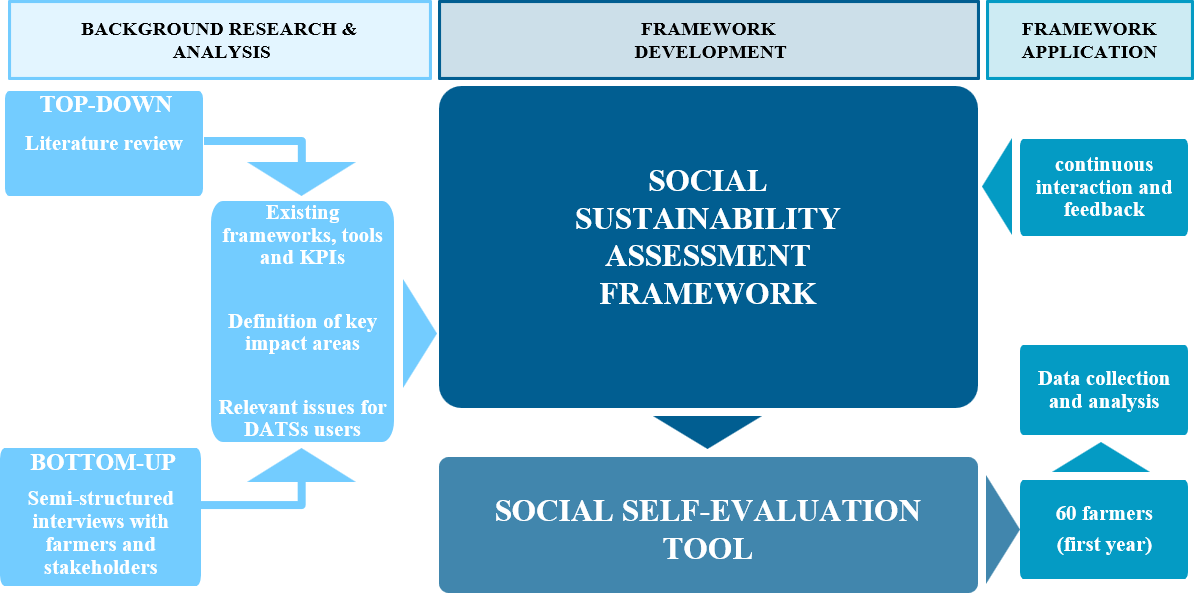
A literature review was conducted to explore the application of the social sustainability concept in agriculture, particularly in relation to the digital innovation process and the use of Agriculture 4.0 technologies. More specifically, the goal of the literature review was the identification of the main areas of impact of DATSs on social sustainability, thanks to the analysis of existing frameworks, tools and KPIs for assessing the social impacts in farming. The review provided a deeper understanding of how digital technologies interact with the social aspects of farmers’ lives and daily work activities, including work-life balance, working conditions, skills development, farm management, workplace culture, and workforce development. Given the predominantly practical outcomes of the research – namely, the development of a framework that could be easily used with farmers – a pragmatic approach took precedence over a purely theoretical literature review. Therefore, a balance was sought between narrowing the research focus to the main areas of impact and maintaining the ability to account for all the nuances and types of influence that the technology could exert on farmers. Consequently, rather than a systematic review, our work more aligns with the concept of scoping/mapping review (Paré et al. 2015), or integrative review, defined by Torraco (2005) as: “…a form of research that reviews, critiques, and synthesizes representative literature on a topic in an integrated way such that new frameworks and perspectives on the topic are generated.” As underlined by Elsbach & Knippenberg (2020), an integrative review could consolidate evidence but also generate new insights to advance a specific field of study.
For the literature review, the PRISMA (Preferred Reporting Items for Systematic reviews and Meta-Analyses) guidelines were followed, as described in Figure 2 (Page et al., 2021). This approach allowed for a transparent and structured identification, selection, and evaluation of relevant studies, ensuring the reliability and validity of the review process. Thus, a four-step review methodology was followed, consisting of: 1) the definition of an appropriate search strategy, including keywords and databases, 2) the delineation of boundaries and inclusion and exclusion criteria, 3) a first screening and selection of papers, and 4) the full-text analysis of papers and extraction of relevant information.
Based on the authors’ expertise and previous literature analysis, a set of keywords related to digital technologies in agriculture was selected. The keyword “Agriculture 4.0”, which refers to a wide array of digital technologies and solutions used in agriculture (Maffezzoli et al. 2022), has been complemented by other keywords frequently used as synonymous terms in academia and industry: “Precision Farming”, “Precision Agriculture”, “Smart Farming”, “Smart Agriculture” and “Digital Agriculture”. This allowed for the inclusion of studies published before the widespread adoption of the Agriculture 4.0 concept, encompassing digital agricultural technologies not explicitly categorised under the Agriculture 4.0 paradigm by the authors. The selected keywords were combined with the keyword “Social”: “Agriculture 4.0” AND “Social”, “Precision Farming” AND “Social”, “Precision Agriculture” AND “Social”, “Smart Farming” AND “Social”, “Smart Agriculture” AND “Social”, “Digital Agriculture” AND “Social”. These queries were considered sufficient to allow the retrieval of research articles relevant to our objective, enabling a thorough investigation of the main areas of social impact of DATSs.
The literature search was undertaken through Scopus, the largest abstract and citation database, selected for its international recognition, multidisciplinary coverage, and comprehensiveness. The database search was carried out using each query individually. To narrow the scope of the analysis and ensure that the papers retrieved from Scopus were relevant to the most recent digital technologies – falling under the umbrella of Agriculture 4.0 – the search was limited to publications from the last ten years, i.e., from 2013 onwards. Moreover, since a preliminary analysis of the papers found in Scopus using the first two queries, “Agriculture 4.0” AND “Social” and “Precision Farming” AND “Social”, returned many articles without a clear focus on the social dimension, the search strategy for the subsequent queries was refined by applying a “Subject area” filter in Scopus, limiting results to those in the “Social Sciences” domain.
After the elimination of duplicated papers – that is, those retrieved in Scopus by more than one query – the screening process involved the analysis of the title, keywords and abstract of each paper. This led to the exclusion of the articles that did not have a clear and substantive focus on the social impacts of digital technologies on farmers. The number of papers identified for each query is shown in Figure 2, along with the total number of papers subjected to full-text analysis after excluding duplicates and those not aligned with the research objectives.
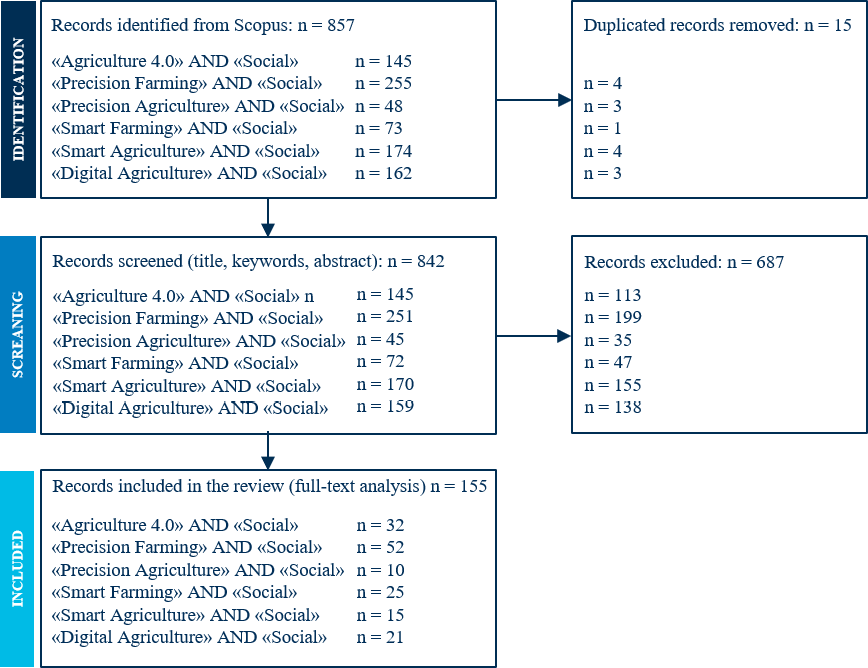
From a total of 857 publications found on Scopus, 15 were excluded because they were duplicates, while 687 were excluded because they addressed the topic of social impacts only superficially or failed to provide impact areas, indicators, or tools related to the social aspects of digital technologies in agriculture. A total of 155 papers were included in an in-depth analysis to extract relevant information, such as existing frameworks, tools and KPIs on social impacts of DATSs. Each paper was thoroughly reviewed, and those demonstrating a direct relationship with social impacts on farming were entered into an Excel database, where key information and insights were systematically recorded.
The analysis of the scientific literature was complemented by grey literature, specifically focusing on reports from government agencies, NGOs, international institutions (e.g. World Bank), UN Agencies (e.g. FAO, IFAD), and industry associations working on the social aspects of sustainability in farming. These sources were carefully reviewed and cross-referenced with the scientific literature. Including grey literature allowed us to capture a broader range of perspectives, enriching the evidence beyond what is available in peer-reviewed journals. This approach also made it possible to integrate context-specific insights and practical knowledge from real-world applications, leading to a more holistic understanding of the social implications of DATSs adoption.
3.2. Integration of a bottom-up approach
Given the practical goal of the research, the top-down literature review was complemented with a bottom-up approach. The importance of combining top-down and bottom-up methods in social science and social sustainability assessment is increasingly recognised (Ochsner et al., 2017), not only to improve the comprehensiveness of analyses but also to ensure a more holistic understanding of complex societal dynamics and the inclusion in the assessment process of all the issues that truly matter on the ground (Magee et al., 2013). As highlighted in Yin’s seminal work on Case Studies (Yin, 2017), the value of interviews lies in their ability to provide direct and context-specific insights into complex situations, allowing for the collection of detailed information about the experiences of the interviewees. Interviews not only offer an immediate understanding of social dynamics but also enrich the analysis and offer a deeper understanding of the phenomenon under study (Yin, 2017). Thus, 30 semi-structured interviews were organised with the Test Cases (1 interview for each TC), involving farmers using DATSs, but also agronomists and technology providers engaged in each TC. All the interviews were conducted remotely through the Microsoft Teams platform and lasted approximately one hour each. While the focus of the interviews was on farmers, agronomists and technology providers were also involved, as they served as contact points between the farmers and the project and played a crucial role in facilitating communication, as many of the farmers did not speak English, the language of the interviews. Moreover, agronomists and technology providers gave valuable insights into the social implications of DATSs, offering a complementary perspective to that of the farmers. A semi-structured set of open-ended questions was used to conduct the interview in order to balance consistency with the research objectives, but also to ensure enough flexibility for participants to elaborate on their experiences and perspectives. The question addressed: 1) the business and agronomical context of the farms involved in the TC; 2) the reasons behind the DATSs adoption; 3) the main impacts of DATs in terms of agronomic practices and farm management; 4) the barriers, problems and limitations to DATSs use; 5) the main benefits of DATs; 6) the impacts that DATSs had on the social dimension, including the implication the digitalisation process had on farmers lives and farm management. Each interview has been recorded and the audio transcribed to ensure accurate capturing of all information. The transcriptions of all the interviews were analysed using a “manual approach”, due to the relatively small scale of the sample and the need to maintain a more flexible, nuanced understanding of the social impacts and issues mentioned by each stakeholder. As underlined by Mattimoe et al. (2021), a manual approach “can facilitate a closeness to the qualitative data” and “facilitate the identification of themes in an organic manner”. Also, Maher et al. (2018) suggest that a manual approach “encourages more meaningful interaction with the data, compared to a technological approach”. Recurring themes, issues and concepts regarding the social impacts of DATSs were extracted from the text and collected to be compared and integrated with the outputs of the literature analysis. By doing so, the bottom-up process enriched the top-down analysis (literature review), offering direct and concrete insights into the social implications of DATSs, specifically from the perspectives of farmers and relevant stakeholders involved in field activities. This approach not only ensured that real-world context was incorporated in the research but also helped identify the key aspects around which to structure the framework, focusing on the issues that most directly affect farmers in their daily work and lives.
3.3. Framework application to Test Cases
To test and apply the Framework and the Tool, we used the sample of 30 Test Cases involved in the QuantiFarm project, comprising commercial farms operating in 20 European countries, and 7 agricultural sectors, including 20 different crops and animals. Each TC includes one or more farmers who have recently adopted one or more categories of DATSs, providing a valuable sample for the application and testing of the Framework and Tool. In Table 1, the sector of each Test Case is reported, together with the type of crop or animal production, the category of DATSs implemented in the farm, the country, the total production managed through technology (expressed in terms of ha or total number of animals), and the number of farmers using DATSs. The categories of DATSs adopted across the 30 TCs are:
– Decision Support Systems (DSS)
– Farm Management Systems
– Variable Rate Technologies (VRT)
– Precision Irrigation Systems
– Digital Pest Control Systems
– Automated Greenhouses
– Feeding robots
– Milking robots
– Sensors for quality assessment (for the aquaculture sector)
– Automated monitoring, activity sensors, heat and calving detectors (for the meat and dairy sector).
| TC | Sector | Production | DATSs category | Country | DATSs management | n. of farmers using DATSs |
|---|---|---|---|---|---|---|
| 1 | Arable | Potatoes | DSS | Greece | 0.85 ha | 2 |
| 2 | Arable | Corn | Precision Irrigation system, VRT | Portugal | 29.2 ha | 2 |
| 3 | Arable | Barley, Wheat | DSS | Spain | 30.6 ha | 1 |
| 4 | Arable | Cotton | VRT | Greece | 5.1 ha | 3 |
| 5 | Arable | Wheat | DSS | Turkey | 105 ha | 8 |
| 6 | Arable | Wheat, Onion, Potatoes | DSS | Netherlands | 3.5 ha | 1 |
| 7 | Arable | Potatoes | DSS | Poland | 98 ha | 2 |
| 8 | Arable | Wheat, Rapeseed, Rye, Barley | DSS | Latvia | 1 silo | 1 |
| 9 | Arable | Corn, Wheat | DSS | Slovenia | 17 ha | 1 |
| 10 | Arable | Wheat | DSS | Romania | 553 ha | 1 |
| 11 | Horticulture | Olives | DSS | Greece | 8.6 ha | 5 |
| 12 | Horticulture | Apples | DSS; Digital pest control System | Poland | 1 ha | 1 |
| 13 | Horticulture | Grapevine | DSS | Italy | 1.1 ha | 1 |
| 14 | Horticulture – Indoor farming | Strawberries and Blueberries | DSS | Serbia | 3.4 ha | 3 |
| 15 | Horticulture | Olives | DSS | Cyprus | 5.1 ha | 5 |
| 16 | Horticulture | Apples | DSS; Digital pest control System | Netherlands | 1 ha | 1 |
| 17 | Horticulture | Grapevine | DSS | Romania | 14 ha | 1 |
| 18 | Horticulture | Tomatoes | DSS | Italy | 60.5 ha | 9 |
| 19 | Horticulture – Indoor farming | Tomatoes | Automated Greenhouses | Netherlands | 6 ha | 1 |
| 20 | Horticulture | Bananas | Precision Irrigation System | Spain | 2.2 ha | 1 |
| 21 | Horticulture – Indoor farming | Tomatoes | Automated Greenhouses | Finland | 1.2 ha | 1 |
| 22 | Meat | Poultry | Farm management system | UK | 64,000 birds | 1 |
| 23 | Meat | Cows | Feeding robot; Heat and calving detectors | France | 302 cows | 1 |
| 24 | Meat | Pigs | Farm management system | Belgium | 682 pigs | 1 |
| 25 | Dairy | Cows | Feeding robotics + Activity Sensors | France | 207 cows | 1 |
| 26 | Dairy | Cows | Milking Robot | Ireland | 180 cows | 1 |
| 27 | Dairy | Cows | Automated monitoring | Germany | 250 cows | 1 |
| 28 | Dairy | Cows | Milking Robot; Feeding robotics | Romania | 803 cows | 1 |
| 29 | Apiculture | Bees | Automated Monitoring | Lithuania | 10 beehives | 1 |
| 30 | Aquaculture | Oysters | Sensors for quality assessment | Croatia | 5,000.0 m2 | 1 |
The final sample consists of 60 farmers, as some TCs involved more than one farmer. While the sample size may seem limited, the heterogeneity in agronomic, socio-economic contexts, and technological settings represents a strength of this research, allowing for a more comprehensive investigation of the social impacts of DATSs across diverse backgrounds and environments. Moreover, this sample of farmers enabled the evaluation of the Framework’s and Tool’s applicability in various agronomic and socio-economic settings, thus paving the way for future applications in different contexts.
4.1. The Social Sustainability Assessment Framework and the Social Self-Evaluation Tool
Based on the findings from the literature analysis (section 3) and the semi-structured interviews with the Test Cases (section 3.2), the areas of the social dimension most impacted by the adoption of DATSs were identified. Despite the widespread use and established nature of some questionnaires and indicators for social impacts and working conditions assessment found in literature, such as those proposed by Eurofound (2016) or Horodnic et al. (2019), there is a notable scarcity of questionnaires tailored to the primary sector and, more specifically, focused on the adoption of innovative technologies by farmers, failing to incorporate certain social indicators that are significantly impacted by the implementation of DATSs. Thus, the first result of this work has been the identification of the 9 key social impact areas associated with DATSs adoption, listed in Table 2.
| Social impact area | Definition | Some references |
|---|---|---|
| Data | Every aspect related to data collection, usage, ownership, sharing and privacy | Rotz et al., 2019; McGrath et al., 2023; Wisemana et al., 2019 |
| Food Quality/Safety | The influence of DATSs on the quality and safety of food delivered to consumers, including traceability and transparency issues | Guruswamy et al., 2022; |
| Food Availability | The influence of DATSs on the productivity of farms and the consequent availability of food in local, regional and global contexts | Benfica et al., 2023 |
| Labour Evolution | Every aspect related to the farmers’ activities and farm management impacted by DATSs | Rotz et al., 2019; Salvia, 2019 |
| Inclusive Growth | The influence of DATSs in creating equitable opportunities for all individuals | Hernandez et al., 2024 |
| Education and Learning | All the aspects concerning skills, education, and technical competences required to adopt and use DATSs, but also the impacts that new technologies can have on reskilling processes and learning opportunities for farmers | Lundström et al., 2018; Gardezi et al., 2022 |
| Gender Equality | The impacts that DATSs could have on the creation of opportunities for women to gain power and leadership in the sector, but also the possible digital and economic divide that new technologies can create | Ofisi & Lukamba, 2020; Abdulai 2022; Huyer, 2016; Hernandez et al., 2024 |
| Ruralisation | All those processes concerning the revitalisation of rural areas and the impacts that DATSs could have on the creation of new job opportunities for young people outside urban areas | European Commission, 2023; Rolandi et al., 2021 |
| Generational Change | The role of young farmers in innovation, the attractiveness of farming for young people and the generational change within farm companies | Kabadzhova, 2022; Afere et al., 2019 |
Although the adoption of digital technologies has both positive and negative effects on farmers across all the identified social areas, the focus of the Framework was placed on those areas that, according to the literature and the information gathered directly from the Test Cases, can be considered the most directly impacted: Labour Evolution, Education and Learning, Generational Change, and Gender Equality. Food Safety is more closely related to analyses involving downstream actors in the food value chain and was not included in the Framework. Similarly, since the areas related to Food Security, Inclusive Growth and Ruralisation go beyond impact assessments at the individual farm level and require territorial or regional approaches, they were excluded from the Framework. The area of Data Concerns was also excluded from the Framework, as it is more closely related to technical issues rather than social ones.
Labour evolution is a central topic in the literature on the social impact of DATSs, representing the area most directly affected by digitalisation and the one in which farmers experience the greatest impact from the transformative role of digital technologies (Rotz et al., 2019). A substantial part of the Framework’s development focused on this area of impact, within which three specific sub-areas were identified: Work Dynamics and Activities, Work-related Stress, and Work-life Balance.
Work Dynamics and Activities refer to the role that DATSs play in transforming the day-to-day work of farmers in terms of monitoring, automation, decision-making, resource optimisation and farm management (McGrath et al., 2023; Rotz et al., 2019). In this regard, it is relevant to understand whether DATSs help the farmer in his daily activities and how his tasks and workload change.
Work-related Stress embeds the physiological, psychological, and behavioural responses that individuals may experience when the demands of their job exceed their ability to cope effectively (Michie, 2002). Nevertheless, the impact of DATSs on work-related stress remains uncertain according to the scrutinised papers. On one hand, the solutions have the potential to reduce farmers’ workload, thereby providing them with more relaxed working schedules. On the other hand, the adoption of new technologies may introduce additional stress and intensify work demands as individuals strive to familiarise themselves with the technology (Smith & Carayon, 1995).
Work-life Balance does not imply only an equal distribution of time between work and personal life but rather entails the ability to effectively manage and harmonise these two domains, ultimately enhancing both the quality of life and work outcomes. When successfully achieved, work-life balance can generate positive spill-over effects, benefiting not only the individuals directly involved but also all other stakeholders. In this regard, the adoption of digital solutions has shown promise in facilitating this delicate equilibrium by enabling more efficient task completion and promoting conscious utilisation of data (Wolor, 2020; Esguerra, 2020; Čehovin & Kohont, 2017).
Education and Learning are a prerequisite for the dissemination of DATSs, but at the same time, can be promoted by their adoption. Agriculture 4.0 technologies require hard skills and technical competencies to fully exploit their potential. This means that a certain learning effort and re-skilling processes are often required from farmers. Therefore, it is important to analyse the effort that farmers had to exert to use a new technology, the difficulties related to understanding how it works and the possible stress generated by the learning process.
Generational Change refers to the attractiveness of the agricultural sector for young people and the impacts that new digital technologies could have on the business succession to the new generation of farmers. Understanding the perceptions of young individuals regarding agriculture as a viable and appealing career choice is essential for addressing the challenges associated with attracting and retaining young talent and promoting economic development and employment in rural areas. Historically, agriculture has struggled to attract young individuals, largely due to perceived factors such as low prestige, manual labour, and limited opportunities for growth and innovation (Kabadzhova, 2022; Afere et al., 2019). Our goal is to investigate whether the integration of digital solutions and the resulting increased entrepreneurial opportunities make the sector more attractive to young people and farmers’ sons.
Gender Equality and the issues related to the gender gap in agriculture encompass the disparities and unequal treatment experienced by men and women within the agricultural sector (OECD, 2018). This gap is apparent in multiple dimensions of agriculture, such as land ownership and tenure, availability of credit and financial services, control over productive assets, involvement in decision-making processes, access to education and training, and representation within agricultural organisations and institutions (Fremstad & Paul, 2020). Various social, cultural, economic, and institutional factors contribute to the perpetuation of the gender gap in agriculture (Ali et al., 2016). While several studies have examined the impact of gender on technology adoption in agriculture, there remains a lack of research exploring the influence of digital solutions on the gender gap. Despite this being a central topic in today’s debate, especially in a traditionally male-dominated sector like agriculture, the issue will be explored in more depth during the second year of the project, and it is not included in the framework presented below.
Building on the identified key social impact areas, the Social Sustainability Assessment Framework was developed, as illustrated in Figure 3. For each key social impact area, a set of relevant themes and indicators was identified to be included in the Framework, the evaluation of which is essential for assessing the real social impact of DATSs. Several studies in the literature (e.g. Eurofound 2016; Horodnic et al., 2019; Boxal & Macky, 2014) have provided a robust foundation, having undergone rigorous testing and demonstrating efficacy in identifying relevant social indicators. However, these studies were not specifically designed to assess the impacts of DATSs. To address this gap and ensure a comprehensive examination of the distinctive aspects of the agricultural sector, the Social Self-Evaluation Framework incorporates certain indicators already present in the literature with novel indicators focusing on work-life balance (Wiradendi Wolor, 2020; Esguerra, 2020), work-related stress (Persechino et al., 2013), and the attractiveness of the sector for young individuals (Afere et al., 2019).
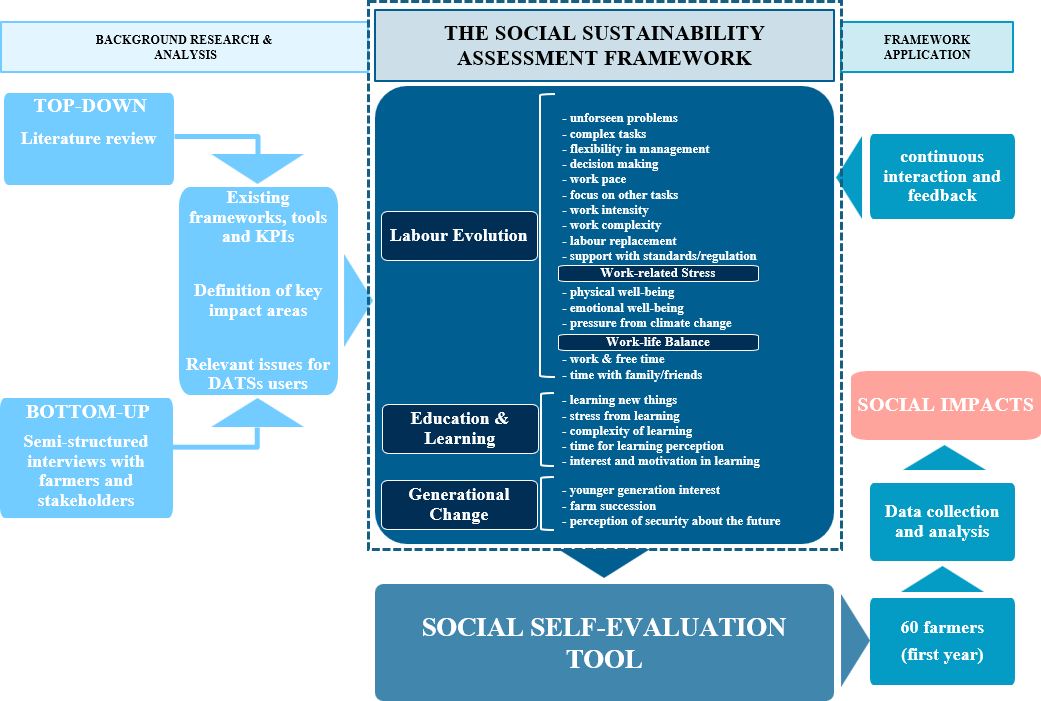
Building on the Social Sustainability Assessment Framework, the Social Self-Evaluation Tool was developed as a questionnaire consisting of 23 rating scale items to be administered to farmers. The rating scale system is used to measure the respondent’s opinion and attitude towards each item. Rating scales are frequently employed in the social sciences to measure attitudes. One commonly used instrument is the Likert-type scale (Tanujaya et al. 2022). Likert scales assess respondents’ attitudes by asking them to indicate their level of agreement or disagreement with a series of statements related to a specific topic (Croasmun & Ostrum, 2011). Some researchers argue that increasing the number of points makes the scale more representative and closer to a universal system. However, others believe that increasing the number of items beyond the minimum needed does not significantly improve reliability, and more response options can decrease response quality and consistency due to increased mental effort (Croasmun & Ostrom, 2011). Some research indicates that answer quality declines with more than eleven options and that there are no additional psychometric benefits beyond six options, with the optimal number being between four and six (Tanujaya et al., 2022).
A Likert-type scale was therefore used for the Social Self-Evaluation Tool with an ordinal data type and five answer choices for each question: strongly disagree (SD), disagree (D), neither agree nor disagree (N), agree (A), and strongly agree (SA). The questions are divided as follows:
– 15 questions on Labour Evolution – 10 on Work Dynamics and Activities, 3 on Work-related Stress and 2 on Work-life Balance
– 5 questions on Education and Learning
– 3 questions on Generational Change
The Social Self-Evaluation Tool was distributed to the sample of farmers for completion, with the data being collected and returned through the contact points of each TC. These contact points facilitated communication and ensured the farmers’ participation in the process, allowing for a systematic collection of the social impact data generated through the application of the tool.
4.2. First application of the Social Self-Evaluation Tool
The analysis of the data collected through the Social Self-Evaluation Tool administered to the farmers shows that digital solutions seem to contribute positively to the social sustainability of farming in line with what has been found on economic and environmental aspects by other researchers (Papadopoulos et al., 2024). Indeed, considering the responses obtained from farmers from the first application of the Tool, it appears that DATSs positively impact social aspects concerning all three key impact areas identified within the Framework: Labour Evolution, Education and Learning, and Generational Change. The overall farmers’ perception of DATSs seems to be quite positive, even in cases where the technology has been adopted quite recently and farmers are still getting accustomed to it.
In Figure 4, Figure 5, Figure 6 and Figure 7, the results obtained from the Tool application are shown for each item. To facilitate an immediate interpretation of results, data are expressed in terms of the percentage of all the responses for each Likert class. Concerning the dimension of “Labour Evolution”, specifically the “Work Dynamics and Activities” in Figure 5, the most evident positive impact is the enhanced ability to make decisions more consciously and efficiently, a factor observed in over 90% of cases, considering the sum of the farmers who strongly agree and those who agree with that sentence. This aligns with the fact that more than half of the implemented DATSs fall into the DSS category, hence solutions that are specifically designed to support the decision-making process of farmers. Moreover, most of the other technologies incorporate sensors, IoT and monitoring systems that can valorise the large amount of data generated in fields, stables or greenhouses and support day-to-day farm management. DATSs also appear to contribute significantly to tackling complex tasks and addressing unforeseen problems, with 72% and 64% of respondents agreeing or strongly agreeing, respectively. The implementation of new digital technologies in farms has allowed more than half of the farmers to have more time to focus on other tasks, likely due to a reduction in the workload in areas where DATSs can assist. In nearly half of the cases, farmers perceive that DATSs reduce the intensity and complexity of work activities, improve their planning, and allow them to better calibrate the speed of execution. Despite the occasional perception that digital technologies might replace farmers and their managerial and decision-making roles, only a small portion of respondents (12%) feel that their role is being “replaced” by DATSs.
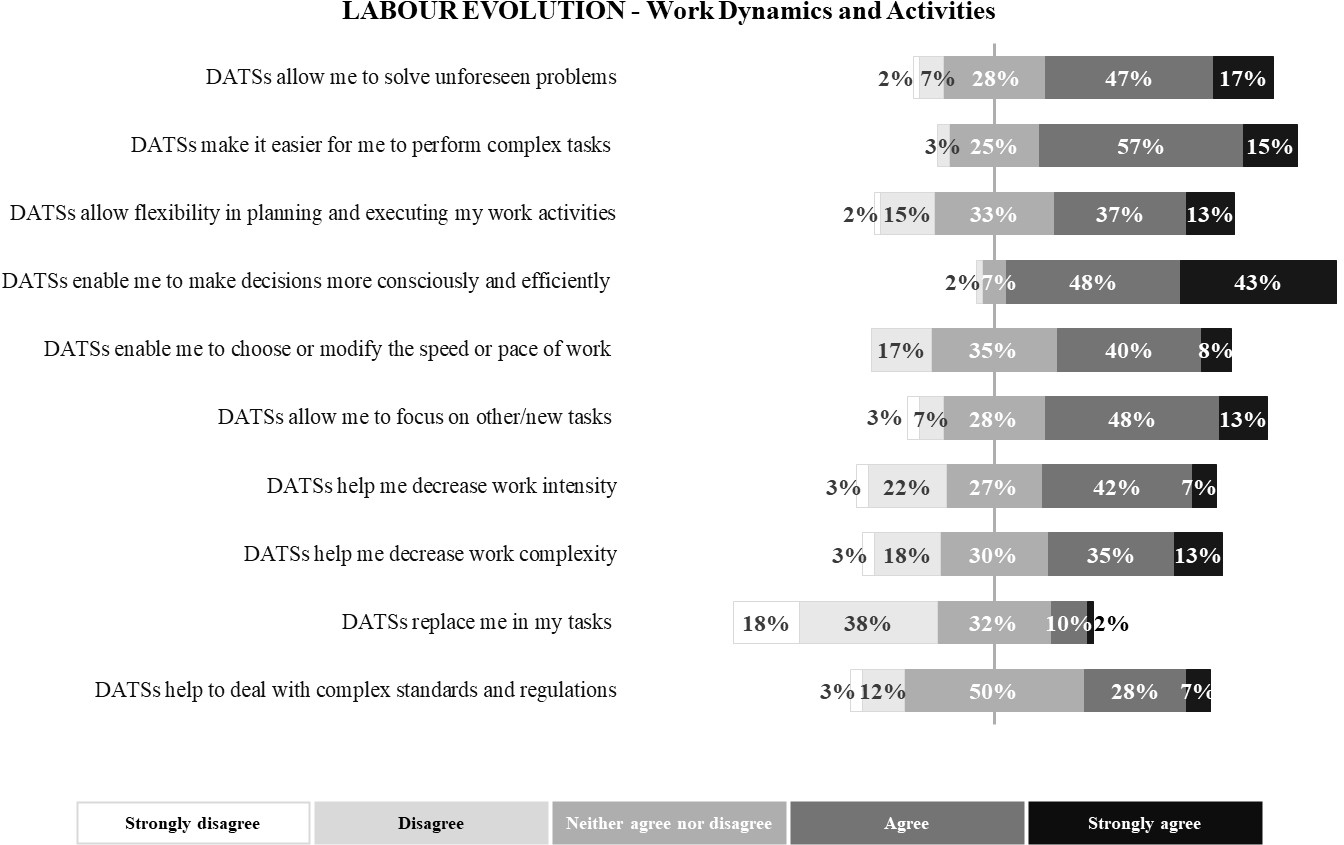
Currently, the perceived contribution of DATSs to certification and compliance with production standards remains limited. However, this perception is likely to evolve in the coming years, given the increasing importance of certifications related to sustainability, provenance, and traceability for both consumers and food companies. Digitalisation has the potential to significantly enhance third-party certification processes, thereby increasing the relevance and utility of DATSs in this domain.
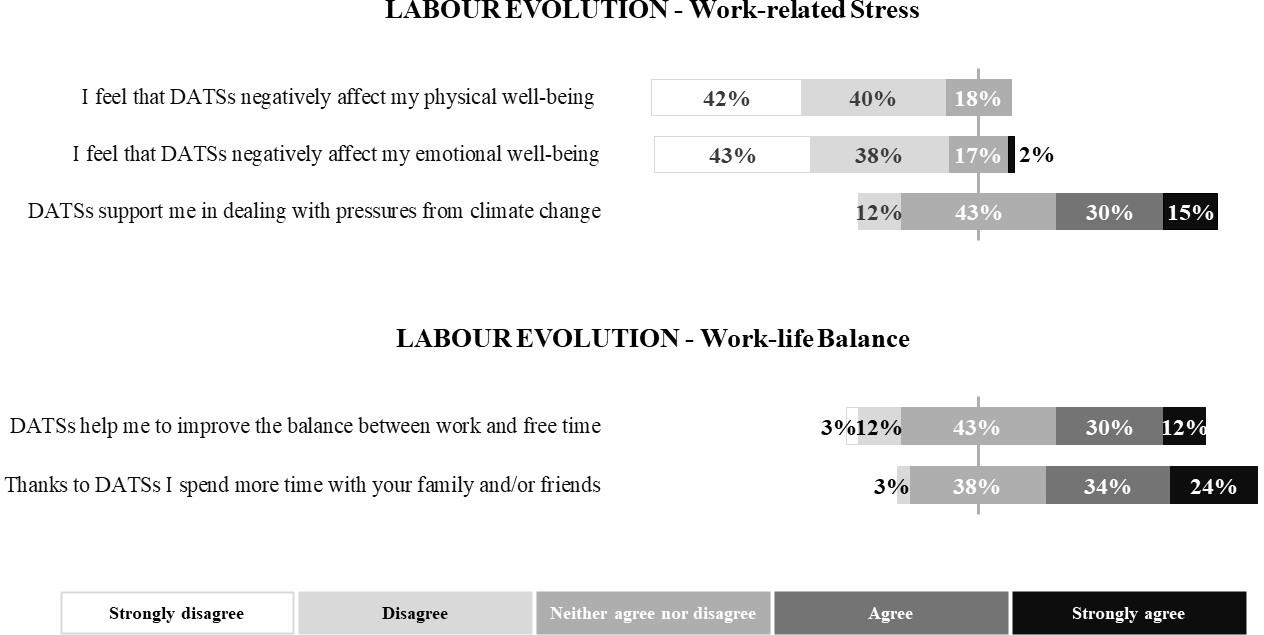
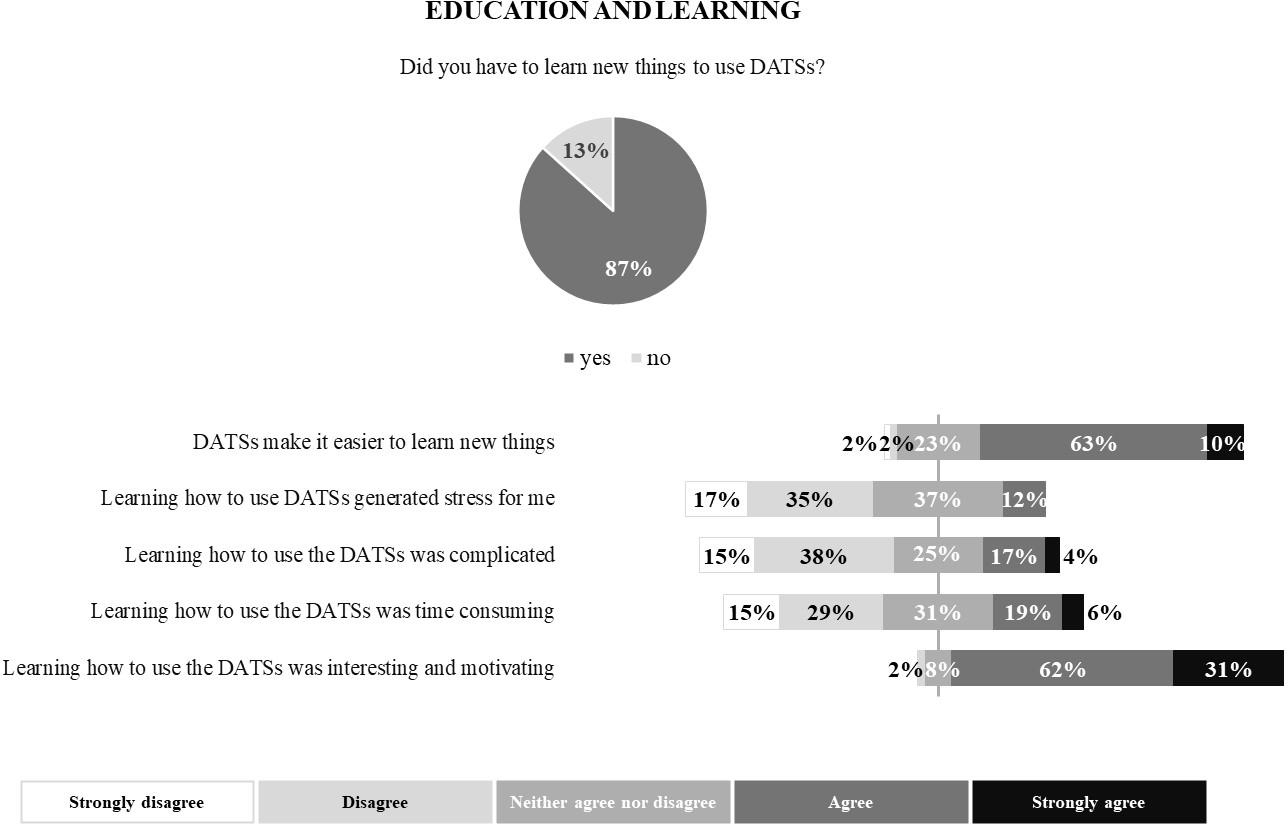
Adopting new digital technologies demands that farmers acquire new skills to operate and maintain innovative solutions they are not used to. In addition, steep learning curves and the time required to achieve proficiency with these new technologies can be daunting, particularly for farmers less accustomed to technology and more tied to “traditional” management. This could lead to work-related stress, which in turn can reduce the acceptance of DATSs and curb their adoption. Despite these considerations, it can be seen in Figure 4 that most farmers are not affected by stressful factors, from a physical and emotional point of view. Instead, for 45% of respondents DATSs appear to mitigate stress stemming from external factors like climate change.
A key component to consider in assessing farmers’ well-being in terms of their work and their quality of life, and consequently the impact that DATSs can have on these areas, is Work-life Balance (Herrera Sabillòn et al., 2021). Our analysis suggests that farmers perceive DATSs as increasing their available free time, providing more opportunities to spend quality time with family and friends. These results stem not only from having more free time but also more regular working hours, better aligned with those of other types of employment.
It is well recognised how technical knowledge and skills, both soft and hard, are essential to facilitate the adoption of DATSs (Geng et al., 2024) and can limit their successful use and resulting benefits (Trendov et al., 2019). As can be seen in Figure 6, more than 4 out of 5 farmers had to learn new things to use DATSs. Nevertheless, farmers perceive that they have engaged in an interesting and motivating learning and upskilling process, and so, for more than 90% of respondents, the need to acquire new knowledge is viewed entirely positively and not as a burden on their work. Contrary to common assumptions, the learning process is not experienced as time-consuming, nor is it regarded as complicated or stressful.
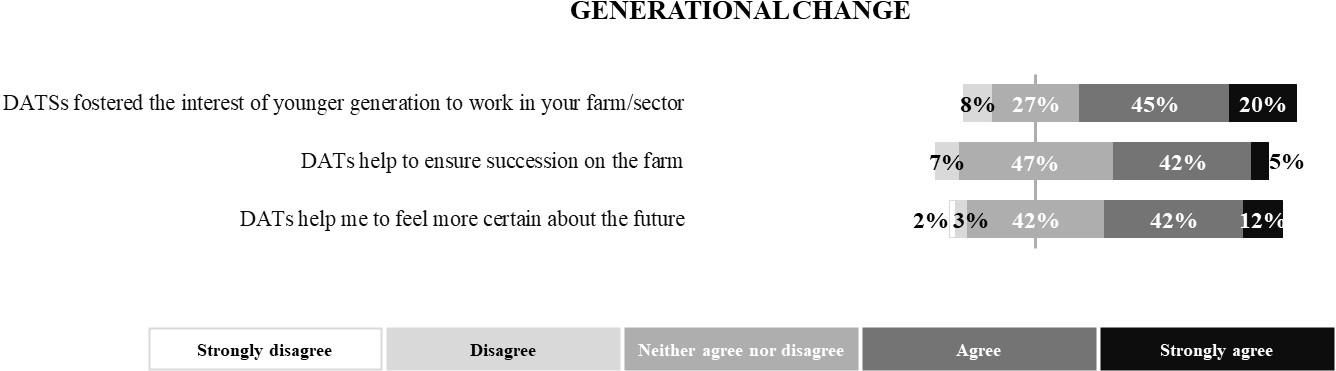
Digitalisation should not be regarded solely as a consequence of generational renewal in agriculture; rather, it ought to be recognised also as a catalyst for this process. By making the sector more appealing to younger generations, digital innovations can actively facilitate and accelerate generational turnover within agricultural enterprises. (Farrell et al., 2021; Borda et al., 2023). This is also what the farmers involved in this work perceive, as can be seen in Figure 7: 65% of them believe that DATSs are capturing the interest of younger people in working on the farm or in the agricultural sector, thereby facilitating the transition in company management (47% of respondents). All of this helps half of the farmers become less uncertain about the future of their business.
The main contribution of this work lies in the development of a Framework for the analysis of social sustainability impacts of digital agriculture solutions. This Framework identifies the key areas of social impact and, within each area, delineates specific indicators for assessing social outcomes.. The Framework was designed to be operationally usable for assessments and self-assessments, providing a structured approach, simple yet effective, to evaluate the social implications of DATSs adoption by farmers. To test its practical usability, we developed and implemented a first pilot application in the form of a Social Self-Evaluation Tool, which enabled the collection and assessment of social impacts experienced by farmers following the implementation of digital solutions in their farms. Existing frameworks and indicators in the literature on social sustainability in agriculture do not specifically focus on the effects of digitalisation, which is a growing area of interest within the primary sector. Moreover, among the papers reviewed in the literature analysis that address the social impacts of DATSs, a lack of structured frameworks emerges for understanding the positive and negative repercussions of digital solution adoption by farmers. Some existing frameworks for analysing the social aspects of digitalisation in agriculture, despite their significant scientific and theoretical value, are often distant from the perspective of the individual farmer. These frameworks address important issues, but they focus on broader societal impacts, which are not aligned with the primary objective of this study: to understand the effects of digitalisation on the social sphere more directly related to farmers’ daily lives and work.
The Framework and the corresponding Tool were tested on a sample of 60 farmers who adopted different types of DATSs. This allowed for an assessment of its usefulness and applicability, as well as the collection of valuable insights about the group of farmers involved in the project. The analysis of the results from the first application of the Framework has revealed a generally positive perception of DATSs, with several beneficial impacts identified. DATSs were found to be effective in reducing workload, increasing work productivity, and simplifying complex tasks. Although limited hard skills and technical knowledge are recognised as common barriers to the widespread adoption of DATSs, farmers were not deterred by the necessity for learning and did not perceive the required training as stressful. Conversely, the process of learning to utilise DATSs was regarded as engaging and intellectually stimulating. Furthermore, in most cases, farmers observed that the introduction of digital solutions heightened the interest of younger generations in agriculture, reinforcing the notion that digital innovations can facilitate the generational transition and ensure the continuity of the agricultural sector. The present work attempted to define a tool for assessing the social impacts of DATSs in real farming conditions, leading to good relevance of the collected data, but posing some challenges. Indeed, the practical and time-related requirements of the project have necessitated a compromise between the amount of information that could have been asked from the farmers and the ability to thoroughly investigate and rigorously explain all the social issues related to the adoption of DATSs. The research methodology, therefore, was focused on reviewing existing literature on the social impacts of DATSs and subsequently developing a framework that could have been easily interpreted by farmers. Since the Framework collected responses from DATSs adopters involved in the QuantiFarm project, the total number of respondents was only 60, whereas a larger sample size would have allowed for greater robustness. However, it is important to highlight the geographical scope and the internal diversity of this sample. This heterogeneous group of farmers, albeit seemingly not sizable, allowed us to assess the framework in different agronomical contexts, sectors (i.e. arable, horticulture, livestock, apiculture, aquaculture), socio-economic, and technological backgrounds, ensuring a more comprehensive understanding of the social impacts of DATSs in agriculture. To obtain a more statistically robust analysis of the social impacts of DATSs, the Social Self-Evaluation Framework will be applied throughout the remaining two years of the project. This longitudinal approach will enable an examination of the evolution of social impacts over time, while also allowing farmers to adapt to the technologies, become familiar with their usage, and more accurately assess the perceived experiences and benefits resulting from their adoption. This will lead to a more robust evaluation of the social impacts of DATSs. Furthermore, a tool like the Social Self-Evaluation Framework could be applied in other contexts with a higher number of potential respondents, such as the annual research on Agriculture 4.0 conducted by our research group, the Smart AgriFood Observatory of the Politecnico di Milano, which involves the participation of hundreds of farmers every year.
The TCs and farmers’ active involvement with a bottom-up approach facilitated the successful development of the Framework and contributed to a robust and inclusive data collection process. This bottom-up approach has allowed for the validation of the questionnaire’s robustness and the identification of potential responses to impacts not yet analysed in the literature. Additionally, through the continuous interaction with farmers, TCs and other stakeholders involved in the project, the Social Self-Evaluation Framework will be integrated with new indicators, primarily focusing on the Gender Gap and the role of DATSs in improving the condition of women in agriculture. The qualitative nature of social indicators and the challenge of attributing impacts solely to digital solutions underscore the need for a process of “data normalisation” in subsequent data collection rounds. This normalisation aims to refine the analysis by excluding contingencies and external factors, providing a more accurate view of the true impact of digital technologies on social dimensions.
This work addressed a critical gap in the existing literature by developing a Framework, specifically tailored to the primary sector, to assess the impacts of digitalisation on a diverse range of social aspects. Indeed, despite the existence of frameworks in scientific literature focusing on assessing social sustainability and working conditions in companies, there is a lack of social frameworks tailored to the primary sector and specifically focused on DATSs adoption. For these reasons, the Social Sustainability Assessment Framework has been developed to offer an operational tool to evaluate the social implications of DATSs adoption by farmers.
The approach followed to develop the Social Sustainability Assessment Framework, with the integration of a literature analysis and a bottom-up process with semi-structured interviews with farmers and other relevant stakeholders, has proven to be effective in identifying the most relevant social issues related to DATSs adoption. The developed Framework offers an opportunity for further exploration of critical aspects that can be impacted by the digital innovation process, such as the evolution of work, generational change, and gender equality in the agricultural sector. In this way, the Social Sustainability Assessment Framework not only offers a valuable initial contribution to the social sustainability assessment of DATSs, but also lays the groundwork for future research aiming to develop robust methodologies for assessing and addressing the social impacts of digital innovations in the agricultural sector.
In order to test the practical applicability of the Social Sustainability Assessment Framework, we developed and implemented a Social Self-Evaluation Tool, which enabled the collection and assessment of social impacts experienced by a sample of 60 farmers following the implementation of digital solutions in their farms. The overall results of the first year demonstrated the real benefits that the adoption of DATSs could have on farmers and farm management, not only in terms of economic and environmental sustainability (broadly demonstrated by other researchers), but also regarding social impacts. Even more importantly, the application of the Framework allowed us to demonstrate both its utility and its simplicity in use with farmers in assessing the social sustainability of DATSs.
It is increasingly evident that the need to consider social sustainability arises whenever discussing and working on the digitalisation of agriculture. The social impact areas and issues identified in our Social Sustainability Assessment Framework, along with the data collected through the Social Self-Evaluation Tool, demonstrate that policymakers, technology providers, agribusinesses, agronomists, and all stakeholders involved in the digital innovation of the primary sector could benefit from using frameworks and tools like the one developed in this study to guide the adoption of digital solutions in agriculture. By focusing on the social impact areas and issues identified in this work, policies can help ensure that the digital transformation in agriculture not only drives economic and environmental sustainability but also promotes social benefits, such as inclusive growth and improvements in working conditions on farms. The adoption of such frameworks can be instrumental in the design of targeted policy interventions aimed at addressing social issues in rural areas, ensuring that technological advancements benefit all members of the farming community. From the perspective of technology providers, it is equally crucial to consider the social implications of DATSs that could be linked to the technical aspects of their development. The usability, ease of use, and reliability of digital tools play a significant role in determining farmers’ willingness to adopt and effectively implement these technologies. By integrating social sustainability into the design and development of their solutions, technology providers can ensure that their products promote inclusivity, equity, and social benefits, without causing stress or introducing additional complications to farm management. This includes making sure that digital solutions are accessible to a wide range of farmers, including those with limited digital literacy or technical skills, and that these solutions foster work-life balance, flexibility, better decision-making processes, and simplify the overall management of their farms.
This study was supported by the project “QuantiFarm: Assessing the impact of digital technology solutions in agriculture in real-life conditions”. Project funded by the European Union’s Horizon Europe research and innovation programme under grant agreement No 101059700. Additionally, the work was carried out within the activities of the Smart AgriFood Observatory of Politecnico di Milano and Università degli Studi di Brescia.
Abdulai, A. R. (2022). A New Green Revolution (GR) or neoliberal entrenchment in agri-food systems? Exploring narratives around digital agriculture (da), food systems, and development in Sub-Sahara Africa. The Journal of Development Studies, 58(8), 1588-1604.
Afere, L., Adedeji, O., Baker, V., Barbou des Courières, C., Mabonga, L., Ocansey, M., & Neate, P. J. (2019). Making agriculture attractive to young people. CTA.
Ali, D., Bowen, D., Deininger, K., & Duponchel, M. (2016). Investigating the gender gap in agricultural productivity: Evidence from Uganda. World Development, 87, 152-170.
Balafoutis, A. T., Evert, F. K. V., & Fountas, S. (2020). Smart farming technology trends: economic and environmental effects, labor impact, and adoption readiness. Agronomy, 10(5), 743.
Bampasidou, M., Goldgaber, D., Gentimis, T., & Mandalika, A. (2024). Overcoming ‘Digital Divides’: Leveraging higher education to develop next generation digital agriculture professionals. Computers and Electronics in Agriculture, 224, 109181.
Barron, P. J., Cord, L. J., Cuesta Leiva, J. A., Espinoza, S. A., Larson, G. M., & Woolcock, M. (2023). Social Sustainability and the Development Process: What Is It, Why Does It Matter, and How Can It Be Enhanced? (No. 10487). The World Bank.Benfica, R., Chambers, J., Koo, J., Nin-Pratt, A., Falck-Zepeda, J., Stads, G. J., & Arndt, C. (2023). Food system innovations and digital technologies to Foster productivity growth and rural transformation. Science and innovations for food systems transformation, 421.
Bertoglio, R., Corbo, C., Renga, F. M., & Matteucci, M. (2021). The digital agricultural revolution: a bibliometric analysis literature review. Ieee Access, 9, 134762-134782.
Borda, Á. J., Sárvári, B., & Balogh, J. M. (2023). Generation Change in Agriculture: A Systematic Review of the Literature. Economies, 11(5), 129.
Butler, D., Holloway, L. (2016). Technology and restructuring the social field of dairy farming: hybrid capitals, ‘Stockmanship’ and automatic milking systems. Sociol. Rural. 56, 513–530. Century. New Frontiers of Social Policy. Washington, DC: World Bank.
Castle, M., Lubben, B. D., & Luck, J. (2015). Precision agriculture usage and big agriculture data.
Caxaj, C. S., Shkopi, E., Naranjo, C. T., Chew, A., Hao, Y. T., & Nguyen, M. (2023). Health, social and legal supports for migrant agricultural workers in France, Italy, Spain, Germany, Canada, Australia and New Zealand: a scoping review. Frontiers in public health, 11, 1182816.
Čehovin Zajc, J., & Kohont, A. (2017). Impacts of work intensity on employees’quality of work, life and health. Teorija in praksa, 54(2).
Croasmun, J. T., & Ostrom, L. (2011). Using likert-type scales in the social sciences. Journal of adult education, 40(1), 19-22.
Driessen, C., Heutinck, L.F.M. (2015). Cows desiring to be milked? Milking robots and the co-evolution of ethics and technology on Dutch dairy farms. Agric. Hum. Values 32, 3–20.
Dutta, S., Lanvin, B., & Wunsch-Vincent, S. (2019). The global innovation index 2017. Cornell University, INSEAD, & WIPO (Eds.), Global innovation index, 1-39.
Elsbach, K. D., & van Knippenberg, D. (2020). Creating high‐impact literature reviews: An argument for ‘integrative reviews’. Journal of Management Studies, 57(6), 1277-1289.
Esguerra, I. D. G. (2020). Work-Life Balance and Job Stress of Employees of a Lone Agricultural College in Bulacan, Philippines. Journal of Business on Hospitality and Tourism, 6(2), 61-73.
Eurofound (2016). Sixth European Working Conditions Survey – Overview Report. Luxembourg: Publications Office of the European Union.
European Commission (2023a), Joint Research Centre, Barabanova, Y., Krzysztofowicz, M., Digital transition – Long-term implications for EU farmers and rural communities, Publications Office of the European Union, 2023
European Commission (2023b). Food 2030 Research and Innovation – Pathways for action 2.0: Research and innovation policy as a driver for sustainable, healthy, climate-resilient and inclusive food systems
European Commission (2023c). Summary of CAP Strategic Plans for 2023-2027: joint effort and collective ambition.
European Commission (2025). Communication from the Commission to the European Parliament, the Council, the European Economic and Social Committee and the Committee of the Regions. A Vision for Agriculture and Food. Shaping together an attractive farming and agri-food sector for future generations
FAO, IFAD, UNICEF, WFP and WHO. 2024. The State of Food Security and Nutrition in the World 2024 – Financing to end hunger, food insecurity and malnutrition in all its forms. Rome.
FAO, IFAD, UNICEF, WFP and WHO. 2025. The State of Food Security and Nutrition in the World 2025 – Addressing high food price inflation for food security and nutrition. Rome. https://doi.org/10.4060/cd6008en
FAO (2023). The status of women in agrifood systems. Rome.
Farrell, M., Murtagh, A., Weir, L., Conway, S. F., McDonagh, J., & Mahon, M. (2021). Irish organics, innovation and farm collaboration: A pathway to farm viability and generational renewal. Sustainability, 14(1), 93.
Fremstad, A., & Paul, M. (2020). Opening the farm gate to women? The gender gap in US agriculture. Journal of Economic Issues, 54(1), 124-141.
Gaber, K., Rösch, C., & Bieling, C. (2024). Digital transformation of fruit farming in Germany: Digital tool development, stakeholder perceptions, adoption, and barriers. NJAS: Impact in Agricultural and Life Sciences, 96(1), 2349544.
Gardezi, M., Adereti, D. T., Stock, R., & Ogunyiola, A. (2022). In pursuit of responsible innovation for precision agriculture technologies. Journal of Responsible Innovation, 9(2), 224-247.
Geng W, Liu L, Zhao J, Kang X, Wang W. (2024) Digital Technologies Adoption and Economic Benefits in Agriculture: A Mixed-Methods Approach. Sustainability. 16(11):4431.
Guruswamy, S., Pojić, M., Subramanian, J., Mastilović, J., Sarang, S., Subbanagounder, A., … & Jeoti, V. (2022). Toward better food security using concepts from industry 5.0. Sensors, 22(21), 8377.
Hernandez, K., Flynn, J., He, J. and Alsahi, H. (2024). Towards digital inclusion in rural transformation. Rome, FAO
Herrera Sabillon, B., Gerster‐Bentaya, M., & Knierim, A. (2022). Measuring farmers’ well‐being: Influence of farm‐level factors on satisfaction with work and quality of life. Journal of Agricultural Economics, 73(2), 452-471.
Horodnic, I. A., & Williams, C. C. (2020). Evaluating the working conditions of the dependent self-employed. International Journal of Entrepreneurial Behavior & Research, 26(2), 326-348.
Huyer, S. (2016). Closing the gender gap in agriculture. Gender, Technology and Development, 20(2), 105-116.
IPCC (2022): Climate Change 2022: Impacts, Adaptation and Vulnerability. Contribution of Working Group II to the Sixth Assessment Report of the Intergovernmental Panel on Climate Change. Cambridge University Press, Cambridge, UK and New York, NY, USA, pp. 37–118.
Janker, J., & Mann, S. (2020). Understanding the social dimension of sustainability in agriculture: a critical review of sustainability assessment tools. Environment, Development and Sustainability, 22(3), 1671-1691.
Janker, J., Mann, S., & Rist, S. (2019). Social sustainability in agriculture–A system-based framework. Journal of rural studies, 65, 32-42.
Kabadzhova, M. (2022). Attractiveness of the agricultural sector to achieving generational renewal. Bulgarian Journal of Agricultural Science, 28(1), 3-9.
Khanna, A., & Kaur, S. (2019). Evolution of internet of things (IoT) and its significant impact in the field of precision agriculture. Computers and Electronics in Agriculture, 157, 218–231.
Klerkx, L., Jakku, E., & Labarthe, P. (2019). A review of social science on digital agriculture, smart farming and agriculture 4.0: New contributions and a future research agenda. NJAS-Wageningen journal of life sciences, 90, 100315.
Latruffe, L., Diazabakana, A., Bockstaller, C., Desjeux, Y., Finn, J., Kelly, E., … & Uthes, S. (2016). Measurement of sustainability in agriculture: a review of indicators. Studies in Agricultural Economics, 118(3), 123-130.
Lundström, C., & Lindblom, J. (2018). Considering farmers’ situated knowledge of using agricultural decision support systems (AgriDSS) to Foster farming practices: The case of CropSAT. Agricultural Systems, 159, 9-20.
Maher, C., Hadfield, M., Hutchings, M., & De Eyto, A. (2018). Ensuring rigor in qualitative data analysis: A design research approach to coding combining NVivo with traditional material methods. International journal of qualitative methods, 17(1), 1609406918786362.
Maffezzoli, F., Ardolino, M., Bacchetti, A., Perona, M., & Renga, F. (2022). Agriculture 4.0: A systematic literature review on the paradigm, technologies and benefits. Futures, 142, 102998.
Magee, L., Scerri, A., James, P., Thom, J. A., Padgham, L., Hickmott, S., … & Cahill, F. (2013). Reframing social sustainability reporting: Towards an engaged approach. Environment, development and sustainability, 15, 225-243.
Mattimoe, R., Hayden, M., Murphy, B., & Ballantine, J. (2021). Approaches to analysis of qualitative research data: A reflection on the manual and technological approaches. Accounting, Finance & Governance Review, 27(1), 1-16.
McGrath, K., Brown, C., Regan, Á., & Russell, T. (2023). Investigating narratives and trends in digital agriculture: A scoping study of social and behavioural science studies. Agricultural Systems, 207, 103616.
McGuinn, J., Fries-Tersch, M. C. E., Jones, M. C. M., & Crepaldi, M. C. C. (2020). Social sustainability–Concepts and benchmarks.
Messenger, J. (2018). Working time and the future of work. ILO future of work research paper series, 6(8), 33-37.
Michie, S. (2002). Causes and management of stress at work. Occupational and environmental medicine, 59(1), 67-72.
Nowak, A., Krukowski, A., Różańska-Boczula, M. (2019) Assessment of Sustainability in Agriculture of the European Union Countries. Agronomy. 9(12):890.
Ochsner, M., Hug, S., & Galleron, I. (2017). The future of research assessment in the humanities: bottom-up assessment procedures. Palgrave communications, 3(1), 1-12.
Ofisi, M., & Lukamba, M. T. (2020). Closing the Gender Gap through ICT in Small Scale Farming: Towards Achieving Sustainable Development Goals. Gender & Behaviour, 18(4), 16687-16697.
Organisation for Economic Co-operation and Development (OECD). (2018). Bridging the digital gender divide: Include, upskill, innovate. OECD.
Packer, G., & Zanasi, C. (2023). Comparing social sustainability assessment indicators and tools for bio-districts: building an analytical framework. Frontiers in Sustainable Food Systems, 7, 1229505.
Page, M. J., McKenzie, J. E., Bossuyt, P. M., Boutron, I., Hoffmann, T. C., Mulrow, C. D., … & Moher, D. (2021). The PRISMA 2020 statement: an updated guideline for reporting systematic reviews. bmj, 372.
Papadopoulos, G., Arduini, S., Uyar, H., Psiroukis, V., Kasimati, A., & Fountas, S. (2024). Economic and Environmental Benefits of Digital Agricultural Technologies in Crop Production: A review. Smart Agricultural Technology, 100441.
Paré, G., Trudel, M. C., Jaana, M., & Kitsiou, S. (2015). Synthesizing information systems knowledge: A typology of literature reviews. Information & management, 52(2), 183-199.
Persechino, B., Valenti, A., Ronchetti, M., Rondinone, B. M., Di Tecco, C., Vitali, S., & Iavicoli, S. (2013). Work-related stress risk assessment in Italy: a methodological proposal adapted to regulatory guidelines. Safety and health at work, 4(2), 95-99.
Peterman, A., Behrman, J. A., & Quisumbing, A. R. (2014). A review of empirical evidence on gender differences in nonland agricultural inputs, technology, and services in developing countries (pp. 145-186). Springer Netherlands.
Pogorelskaia, I., & Várallyai, L. (2020). Agriculture 4.0 and the role of education. Journal of Agricultural Informatics/Agrárinformatika Folyóirat, 11(1).
Rodgers, Y., & Akram-Lodhi, H. (2019). The gender gap in agricultural productivity in sub-Saharan Africa: causes, costs and solutions.
Rolandi, S., Brunori, G., Bacco, M., & Scotti, I. (2021). The digitalization of agriculture and rural areas: Towards a taxonomy of the impacts. Sustainability, 13(9), 5172.
Rotz, S., Gravely, E., Mosby, I., Duncan, E., Finnis, E., Horgan, M., … & Fraser, E. (2019). Automated pastures and the digital divide: How agricultural technologies are shaping labour and rural communities. Journal of Rural Studies, 68, 112-122.
Salvia, L. (2019) The restructuring of Italian agriculture and its impact upon capital–labour relations: Labour contracting and exploitation in the fresh fruit and vegetable supply chain of the Lazio Region, Central Italy. J. Agrar. Chang. 20, 98–112.
Schroeder, K., Lampietti, J., & Elabed, G. (2021). What’s cooking: digital transformation of the agrifood system. World bank publications.
Smith, M. J., & Carayon, P. (1995). New technology, automation, and work organization: stress problems and improved technology implementation strategies. International Journal of Human Factors in Manufacturing, 5(1), 99-116.
Sri Heera, S., Athreya, S. P., N. S. S, S. S., & Rakesh, M. (2019). Automated irrigation and smart farming. International Journal of Engineering and Advanced Technology, 8 (6S3), 1450–1452.
Tanujaya, B., Prahmana, R. C. I., & Mumu, J. (2022). Likert scale in social sciences research: Problems and difficulties.
Torraco, R. J. (2005). ‘Writing integrative literature reviews: Guidelines and examples’. Human
Resource Development Review, 4, 356-67.
Trendov, N. M., Varas, S. & Zeng, M. (2019). Digital technologies in agriculture and rural areas – Status report. Rome. Licence: cc by-nc-sa 3.0 igo.
Trivino-Tarradas, P., Gomez-Ariza, M. R., Basch, G., & Gonzalez-Sanchez, E. J. (2019). Sustainability assessment of annual and permanent crops: The Inspia model. Sustainability, 11(3), 738.
Tsouros, D. C., Bibi, S., & Sarigiannidis, P. G. (2019). A review on UAV-based applications for precision agriculture. Information, 10(11), 349.
United Nations, Department of Economic and Social Affairs, Population Division (2022). World Population Prospects 2022: Ten Key Messages.
UN General Assembly. Resolution adopted on 25 September 2015. Transforming our World: The 2030 Agenda for Sustainable Development.
Wiradendi Wolor, C. (2020). The importance of work-life balance on employee performance millennial generation in Indonesia. Journal of critical reviews.
Yin, R. K. (2017). Case study research and applications. Design and methods (Vol. 6). Thousand Oaks, CA: Sage.
Zanin, A., Dal Magro, C.B., Kleinibing Bugalho, D., Morlin, F., Afonso, P., Sztando, A. (2020) Driving Sustainability in Dairy Farming from a TBL Perspective: Insights from a Case Study in the West Region of Santa Catarina, Brazil. Sustainability. 12(15): 6038.