Received: January 27, 2025; Accepted: June 7, 2025; Published: 2025-12-30
Farmers’ intention to use Agriculture 4.0 in marginal and non-marginal conditions
Department of Agricultural Sciences, University of Sassari, Sassari, Italy
*Corresponding author. E-mail: msabbagh@uniss.it
Abstract. Agriculture 4.0 enhances efficiency, sustainability, and yields while supporting climate change mitigation and adaptation. This study explores the adoption of Agriculture 4.0 among 131 durum wheat farmers in Sardinia, focusing on differences between marginal and non-marginal areas. Using an extended Unified Theory of Acceptance and Use of Technology (UTAUT2) framework, which includes perceived performance risk, the study identifies key factors influencing adoption. Facilitating conditions positively impact the adoption intentions, and perceived performance risk has a negative impact. However, performance expectancy, effort expectancy, social influence and price value don’t significantly affect adoption intentions. Policy recommendations include financial support, technical advice access, training programs, and awareness campaigns to promote adoption. These interventions aim to address barriers and foster equitable integration of Agriculture 4.0 technologies across diverse farming contexts.
Keywords: Agriculture 4.0, technology adoption, marginal areas, non-marginal areas, UTAUT2.
Index
2. Agriculture 4.0 and Behavioural Models for the Adoption of New Technologies
2.1. Agriculture 4.0 in marginal and non-marginal areas
2.2. The Unified Theory of Acceptance and Use of Technology 2
2.3. Selected variables for the study
3.3. Modelling analysis framework
3.4. Structural model assessment
3.4.1. Dataset sample validation
3.4.2. Framework model analysis
4. Discussion and Policy Recommendations
4.1. Differences in impact between marginal and non-marginal areas and their policy implications
Marginal areas are territories where farming is challenging due to a confluence of biophysical, socioeconomic, and infrastructural aspects (Ahmadzai et al., 2021; Alhajj Ali et al., 2024; Peter et al., 2018; Sallustio et al., 2018). These territories face natural and geographic constraints that reduce agricultural competitiveness (Ahmadzai et al., 2022; Csikós & Tóth, 2023; Food & Nations, 2017; Jussila et al., 2019; Lal, 2004). On the other hand, non-marginal areas benefit from better natural resources, more established infrastructure, and more access to markets, technology, and research and development (R&D) (Coxhead et al., 2002; Hidayat et al., 2024; Rondinelli, 1992; Ruddle, 1991). These areas are often better integrated into regional, national, and worldwide agricultural markets, resulting in increased production and economic benefits (Hidayat et al., 2024; Jouanjean, 2013; Long et al., 2016).
Farmers in non-marginal areas are generally more willing to accept new technologies due to improved access to credit and extension services, which reduce perceived risks and increase the possibility of successful adoption (Pannell et al., 2006; Rogers, 2003; Yigezu et al., 2018). Differently, farmers in marginal areas are more likely to be risk-averse and hesitant to adopt new technologies due to uncertainties about their effectiveness and the potential financial risks involved (Girma et al., 2023; Marra et al., 2003; Wu et al., 2023). These farmers may also lack the technical knowledge and skills required to effectively implement and benefit from new technologies, as well as the necessary support systems for ongoing innovation and R&D (Abrol & Ramani, 2014; Douthwaite et al., 2001; Klerkx et al., 2019; Scoones et al., 2009). Agriculture 4.0 may provide a transformative opportunity to solve these imbalances. Agriculture 4.0, an advanced framework that incorporates technologies such as the Internet of Things (IoT), Artificial Intelligence (AI), robotics, precision farming, and big data analytics, has the potential to transform farming methods in a variety of situations (Abiri et al., 2023; Fuentes-Peñailillo et al., 2024; Raj et al., 2021; Stupina et al., 2021; Wolfert et al., 2017). IoT systems enable real-time monitoring of soil, crops, and equipment (e.g., moisture sensors and smart irrigation) (Osservatori.net, 2023). Precision agriculture tools such as GPS-guided machinery and variable-rate technology (VRT) optimize the use of inputs like fertilizers, pesticides, and water (McCormick, 2023) being tools to achieve more sustainable farming systems. Remote sensing technologies and drones are destinated to crop health analysis and yield forecasting (Maffezzoli et al., 2022). Robotics and automation through autonomous tractors, harvesters, and weeding robots help reduce labor requirements (McCormick, 2023; Osservatori.net, 2023) , while AI and machine learning offer predictive analytics and decision support (Abiri et al., 2023). Additionally, blockchain and cloud computing enhance traceability and data management, big data analytics support informed forecasting and strategic planning (Maffezzoli et al., 2022), and mobile applications provide farmers with access to weather data, technical assistance, and real-time market prices (AgendaDigitale, 2023). Together, these technologies not only improve efficiency and productivity but also reduce environmental impact and enhance climate resilience. These advances are intended to maximize resource utilization, boost crop yields, and improve overall farm management, being extremely advantageous, especially in marginal areas (Abiri et al., 2023; Benfica et al., 2023; Klerkx et al., 2019; Rose & Chilvers, 2018; Saidakhmedovich et al., 2024). However, whereas non-marginal areas are well-positioned to adopt these technologies, marginal areas face major barriers (Benfica et al., 2023; Klerkx et al., 2019; Mercure et al., 2021; Saidakhmedovich et al., 2024). Understanding these constraints is critical to ensure that the benefits of Agriculture 4.0 are more widely realized, thereby possibly bridging the development gap between marginal and non-marginal areas (Burland & von Cossel, 2023; Kirk & Cradock-Henry, 2022; Sureth et al., 2023). A complex interaction of elements such as economic situations, information access, social influences, and individual perceptions of risk and benefit impact farmers’ attitudes and behaviours regarding new technology adoption (Adrian et al., 2005; Brick & Visser, 2015; Rizzo et al., 2024; Sabbagh & Gutierrez, 2022, 2023). Previous studies investigated such elements on smart agriculture technologies in the Italian context (Caffaro & Cavallo, 2019; Caffaro et al., 2020; Caffaro et al., 2019).
To investigate these dynamics,this research utilized the Unified Theory of Acceptance and Use of Technology 2 (UTAUT2) model (Venkatesh et al., 2012), which provides a comprehensive framework for understanding technology adoption (Alghatrifi & Khalid, 2019; Macedo, 2017; Tamilmani et al., 2021).
UTAUT2 expands on the original UTAUT model, which identifies core factors that influence technology acceptance and use (Chang, 2012; Venkatesh et al., 2012). UTAUT2 introduces additional variables such as hedonic motivation, price value, and habit that capture a more comprehensive understanding of consumer and user behaviour in different contexts such as mobile applications, digital communication, e-health, educational tools, banking, agriculture, etc. (An et al., 2016; Arain et al., 2019; Arenas Gaitán et al., 2015; Chang, 2012; Medeiros et al., 2022; Venkatesh et al., 2012; Widodo et al., 2019). As well, UTAUT2 is important in understanding technology adoption since it explains both short-term and long-term technology use (Diekmann & Theuvsen, 2019). Moreover, research has shown that perceived performance risk predicts the intention to adopt a new technology (Abikari, 2024; Budhi & Aminah, 2010; Budhi et al., 2022; Deng et al., 2018; Diekmann & Theuvsen, 2019; Hasselwander & Weiss, 2024; Sohn, 2024). For this reason, we extended the UTAUT2 model to include the variable of perceived performance risk (Featherman & Pavlou, 2003).
We focus our analysis on durum wheat farmers in the Sardinia region, considering both marginal and non-marginal conditions. Sardinia’s unique agricultural landscape, with considerable regional differences, makes it an appropriate case study for investigating these dynamics. Some areas of Sardinia suffer severe challenges due to low soil quality, water scarcity, and limited infrastructure (Fraser-Baxter, 2024). Durum wheat, a key crop in the region and vital to producing traditional items such as pasta and bread, is inseparably linked to Sardinian history and the local economy (Mefleh et al., 2019; Soddu et al., 2013). Furthermore, durum wheat agriculture in Sardinia is particularly sensitive to environmental conditions, making it a great indicator of the overall agricultural issues faced across the region (Mereu, 2010).
Agriculture 4.0 technologies may improve durum wheat sowing, monitor soil moisture and nutrient levels in real time, and predict crop diseases before they spread (Balyan et al., 2024; Güven et al., 2023; Shafi et al., 2019; Trivelli et al., 2019). The geographical differences in durum wheat yields in Sardinia, caused by different soil quality, water availability, and infrastructure, make it a suitable case study for investigating farmers’ intentions to implement Agriculture 4.0 technologies in marginal and non-marginal areas.
This study is pioneering in proposing an expanded UTAUT2 model to explore the behavioural factors influencing the adoption of Agriculture 4.0 technologies in marginal and non-marginal settings. The implications of this study may extend beyond Sardinia, providing significant insights into the broader challenges and opportunities associated with the adoption of agricultural technologies. The findings could help shape agricultural policies that promote sustainable farming practices and economic development in locations with similar agricultural profiles. Moreover, it intends to contribute to the global discourse on sustainable agricultural innovation by offering a detailed knowledge of the factors that influence technology adoption, thereby assisting in the transition to more resilient and efficient farming systems. This leads to the central research question: “What are the key factors influencing farmers’ behavioural intention to adopt Agriculture 4.0 technologies in Sardinia?”
This research aligns with several United Nations Sustainable Development Goals (SDGs), specifically SDG 2 (Zero Hunger), SDG 9 (Industry, Innovation, and Infrastructure), and SDG 12 (Responsible Consumption and Production). By investigating the behavioural and structural factors that influence the adoption of Agriculture 4.0 technologies, especially in marginal areas, the study contributes to the broader agenda of building resilient food systems and fostering inclusive and sustainable economic growth in rural areas (SDG 8). Moreover, promoting the use of resource-efficient technologies directly supports climate action goals (SDG 13) by reducing environmental impact and improving adaptation to climate-related risks. This study contributes to the ongoing discussion on farmers’ motivations and aspirations in agricultural innovation. As noted by Arata and Menozzi (2023), there is a need for multidimensional approaches that account for both individual drivers and contextual influences on farmer behaviour. While recent contributions, such as Deißler et al. (2022), have explored the role of personality traits in shaping aspirations in smallholder contexts, our work adds to this conversation by focusing on behavioural intentions toward Agriculture 4.0 use. By drawing on the Theory of Planned Behaviour, our approach emphasizes farmers’ perceptions and attitudes as key drivers of decision-making. These are the factors that, while distinct from personality traits, are similarly influential in shaping future-oriented action. This alignment offers a complementary perspective to the journal’s growing body of research on aspirations and innovation adoption. The paper is structured as follows: section 2 outlines the theoretical framework and hypotheses; section 3 details the methodology, including data collection and analysis methods; section 4 presents and discusses the results; section 5 provides conclusions, and section 6 addresses the study’s limitations.
2. Agriculture 4.0 and Behavioural Models for the Adoption of New Technologies
2.1. Agriculture 4.0 in marginal and non-marginal areas
Agriculture 4.0 represents a transformative shift in farming, leveraging advanced technologies such as precision agriculture, IoT, AI, robotics, and big data analytics to enhance efficiency, optimize resource use, and foster sustainable agricultural practices (Abiri et al., 2023; Wolfert et al., 2017). These technologies have the potential to revolutionize farming in both marginal and non-marginal areas, but their adoption and impact vary significantly due to differences in infrastructure, access to resources, and socioeconomic conditions between the two regions (Ahmadzai et al., 2022; Klerkx et al., 2019). Non-marginal regions often benefit from stable and predictable weather patterns, ensuring that Agriculture 4.0 technologies can function optimally (Mana et al., 2024; Pechlivani et al., 2023). These tools, which include IoT sensors that monitor crop health, soil moisture levels, and pest infestations, empower farmers to make data-driven decisions that enhance productivity, reduce resource consumption, and promote environmental sustainability (Fuentes-Peñailillo et al., 2024; Raj et al., 2021). The availability of advanced farming machinery and technologies, such as AI-driven machinery and variable rate technology (VRT), further contributes to higher productivity, with less environmental impact (Shafi et al., 2019; Van Klompenburg et al., 2020).
On the other hand, marginal areas face a host of challenges that hinder the adoption of Agriculture 4.0 technologies. Marginal areas are often characterized by poor soil quality, limited water resources, geographical isolation, and inadequate infrastructure, which restrict the applicability of advanced farming technologies (Ahmadzai et al., 2021; Jacobs et al., 2022). These regions are prone to extreme environmental conditions such as drought, floods, heat waves, soil erosion and water scarcity, making it difficult to implement technologies like precision irrigation or smart farming systems that rely on consistent environmental data (Akter et al., 2023; Cogato et al., 2019; Wheaton & Kulshreshtha, 2017). The absence of digital literacy and technical support networks in these regions makes it even more challenging for farmers to adopt new technologies (Dibbern et al., 2024; Ruzzante et al., 2021). As a result, farmers in these areas often lack the knowledge or resources to implement technologies such as IoT sensors, AI-driven machinery, and other forms of Agriculture 4.0 (Douthwaite et al., 2001; Klerkx et al., 2019).
Additionally, the high cost of adopting advanced technologies further exacerbates the divide between marginal and non-marginal areas. While financial support mechanisms such as subsidies and loans are more readily available in non-marginal areas, farmers in marginal regions often have limited access to credit and financial resources, making it difficult for them to invest in expensive technologies like artificial intelligence (AI) driven machinery or VRT (Klerkx et al., 2019; Yigezu et al., 2018). In marginal areas, where the financial risks of farming are already high due to environmental unpredictability, the upfront investment in advanced technologies can seem discouraging (Hurlbert et al., 2019; Khan et al., 2024). Without sufficient financial backing, many farmers prioritize short-term survival, limiting their ability to make long-term investments in precision farming tools that could potentially enhance productivity (Marra et al., 2003).
Environmental factors, including the vulnerability to climate change, further differentiate the two regions in terms of Agriculture 4.0 adoption. In non-marginal areas, stable climatic conditions, fertile soils, and reliable access to water resources make it easier to deploy Agriculture 4.0 (Javaid et al., 2022; Solaw, 2011). Technologies that rely on real-time data on soil moisture and weather conditions can significantly enhance water use efficiency and boost agricultural productivity (Balyan et al., 2024). However, marginal areas face more unpredictable environmental factors that challenge Agriculture 4.0. In these areas, the high variability of environmental conditions means that Agriculture 4.0 may not deliver accurate or effective results unless adapted specifically to local conditions (Jacobs et al., 2022).
Social and cultural factors also influence the adoption of Agriculture 4.0 technologies, with farmers in non-marginal areas typically more exposed to modern farming practices and educational programs (Ahmed & Ahmed, 2023; Nhuong & Truong, 2024). In these regions, farmers often have access to extension services, training programs, and education that promote the adoption of innovative technologies (Gardezi & Bronson, 2020; Raji et al., 2024; Ruzzante et al., 2021). Their more favourable attitudes towards technology adoption are often supported by governmental and institutional initiatives aimed at integrating new technologies into farming practices (Cramb, 2000; Tey & Brindal, 2012). In contrast, farmers in marginal areas may be more risk-averse, especially when their livelihoods are already precarious due to environmental and financial challenges (Scoones et al., 2009). The limited access to education, technical knowledge, and extension services in these regions further limits the willingness and ability of farmers to adopt new technologies, resulting in slower adoption rates compared to non-marginal areas (De Rosa & Chiappini, 2012; Girma et al., 2023; LEAP, 2023; Masi et al., 2023; Wu et al., 2023).
The differences in the adoption of Agriculture 4.0 technologies between marginal and non-marginal areas highlight the need for tailored interventions. While non-marginal areas focus on optimizing technology and fostering innovation, marginal areas require foundational efforts to improve basic infrastructure, enhance digital literacy, and address the specific environmental and socioeconomic challenges that hinder technology adoption (Elsawah et al., 2020; Loo et al., 2023; Mazzucato & Willetts, 2019). The development of affordable, locally tailored technologies and support systems is crucial for ensuring that farmers in marginal areas can benefit from the transformative potential of Agriculture 4.0, without exacerbating existing inequalities (Jacobs et al., 2022; Klerkx et al., 2019).
Agriculture 4.0 technologies present a stark contrast between marginal and non-marginal agricultural areas due to inherent disparities in natural resources, infrastructure, socioeconomic conditions, and access to technology (Ahmadzai et al., 2022; Klerkx et al., 2019; Saidakhmedovich et al., 2024). Understanding these contrasts is critical for developing strategies that ensure equitable access to these technologies and bridge the development gap.
2.2. The Unified Theory of Acceptance and Use of Technology 2
This study utilizes the UTAUT2 model to explore the factors affecting farmers’ intentions to adopt Agriculture 4.0 technologies. The UTAUT2 model, introduced by Venkatesh et al. (2012), expands upon the original UTAUT framework by integrating additional constructs pertinent to consumer-related contexts. The original UTAUT model emerged from synthesizing eight theoretical frameworks from various disciplines, focusing on technological change and adoption.: Innovation Diffusion Theory IDT (Rogers, 1962); Theory of Reasoned Action TRA (Ajzen & Fishbein, 1980); Theory of Planned Behaviour TPB (Ajzen, 1991); Social Cognitive Theory SCT (Bandura, 1986); Technology Acceptance Model TAM (Davis, 1989); Model of PC Utilization MPCU (Thompson et al., 1991); Motivational Model MM (Davis et al., 1992); Combined TAM-TPB C-TAM (Taylor & Todd, 1995). The main value of this model arises from bringing a historical light on technology use by working around a set of constructs; that is, concepts that encapsulate what is central to the effects of technology use from a user’s intention perspective (Yu, 2012). The UTAUT model centered on four constructs: Performance Expectancy (PE), Effort Expectancy (EE), Social Influence (SI), and Facilitating Conditions (FC) with moderating demographic inputs: gender, age, level of experience, and voluntariness of use (Venkatesh et al., 2003). Table 1 illustrates these constructs alongside their theoretical origins, showcasing how each is rooted in one or more of the eight foundational models. Building on the theoretical foundation of UTAUT, Venkatesh et al. (2012) introduced the UTAUT2 model, a pivotal framework that emphasizes the consumer perspective by incorporating three key factors: Hedonic Motivation, Price/Value, and Habit. This enhancement significantly boosts the model’s predictive accuracy for estimating user adoption, reaching up to 74% (Venkatesh et al., 2016). The UTAUT2 model’s applicability has been widely recognized as a robust framework within the technology industry. The extensive body of research supporting it underscores its effectiveness in analysing the adoption of new technologies, especially in diverse cultural and social contexts (Šumak & Šorgo, 2016). Several studies, such as those by Ena and Siewa (2022) Toral et al. (2018), have utilized the UTAUT2 model to investigate the factors influencing farmers’ adoption of precision agriculture technologies.
| Constructs | Variables | Model contributing to constructs |
|---|---|---|
| Performance Expectancy | Perceived usefulness | Technology Acceptance Model (TAM) (Davis, 1989) |
| Combined TAM-TPB (Taylor & Todd, 1995) | ||
| Extrinsic motivation | Motivational Model MM (Davis et al., 1992) | |
| Job-fit | Model of PC Utilization MPCU (Thompson et al., 1991) | |
| Relative advantage | Innovation Diffusion Theory IDT (Rogers, 1962) | |
| Outcome expectations | Social Cognitive Theory SCT (Bandura, 1986) | |
| Effort Expectancy | Perceived ease of use | Technology Acceptance Model (TAM) (Davis, 1989) |
| Complexity | Model of PC Utilization MPCU (Thompson et al., 1991) | |
| Social Influence | Subjective norms | Theory of Reasoned Action TRA (Ajzen & Fishbein, 1980) |
| Theory of Planned Behaviour TPB (Ajzen, 1991) | ||
| Technology Acceptance Model (TAM) (Davis, 1989) | ||
| Combined TAM-TPB C-TAM (Taylor & Todd, 1995) | ||
| Social factors | Model of PC Utilization MPCU (Thompson et al., 1991) | |
| Image | Innovation Diffusion Theory IDT (Rogers, 1962) | |
| Facilitating Conditions | Perceived behavioural control | Theory of Planned Behaviour TPB (Ajzen, 1991) |
| Combined TAM-TPB (Taylor & Todd, 1995) | ||
| Facilitating conditions | Model of PC Utilization MPCU (Thompson et al., 1991) | |
| Complexity | Innovation Diffusion Theory IDT (Rogers, 1962) |
2.3. Selected variables for the study
This study engages important variables from the UTAUT2 (Venkatesh et al., 2012) as well as the variable of perceived performance risk (Featherman & Pavlou, 2003) to cope with the extended research model and better understand the factors influencing farmer acceptance of Agriculture 4.0 technologies. Each variable indicates a distinct feature that may influence a farmer’s willingness to adopt Agriculture 4.0 technologies. As a result, the variables chosen for this study are presented below.
Firstly, Performance Expectancy (PE) refers to the degree to which individuals believe that using technology will help them achieve gains in job performance (Venkatesh et al., 2012).In the context of Agriculture 4.0, this construct captures farmers’ expectations regarding the improvement in crop yield, efficiency, and overall farm productivity due to the adoption of advanced technologies. Previous research has seen this variable for its influence on the adoption of Agriculture 4.0 (Kolady et al., 2021; Paustian & Theuvsen, 2017). Therefore, based on this, the following research hypothesis is proposed:
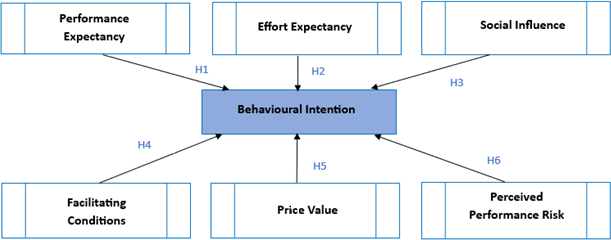
H1: PE directly and positively influences farmers’ intention to adopt Agriculture 4.0 technologies.
Secondly, Effort Expectancy (EE) is defined as the degree of ease associated with the use of the technology (Venkatesh et al., 2012). For farmers, this relates to the perceived ease of learning and using Agriculture 4.0 technologies, including IoT devices, data analytics tools, and automated machinery. Previous research has studied this variable to understand its influence on Agriculture 4.0’s adoption (Fragomeli et al., 2024; Giua et al., 2022). Hence, we investigate the research hypothesis that:
H2: EE directly and positively influences farmers’ intention to adopt Agriculture 4.0 technologies.
Then, Social Influence (SI) refers to the degree to which individuals perceive that important others believe they should use the new technology (Venkatesh et al., 2012). In agricultural communities, social influence can come from peers, family members, agricultural advisors, and community leaders. In the context of the study, it is the degree to which a farmer believes that important people support their use of Agriculture 4.0 for their daily field tasks. Previous studies have provided empirical support that evidences the impact of SI on the use of a new technology (Moriuchi, 2021). Zhai et al. (2020) and Harisudin et al. (2023) have studied this variable to examine its influence on the adoption of Agriculture 4.0. In this context, our hypothesis is the following:
H3: SI directly and positively influences farmers’ intention to adopt Agriculture 4.0 technologies.
Also, Facilitating Conditions (FC) are the degree to which an individual believes that an organizational and technical infrastructure exists to support the use of the technology (Venkatesh et al., 2012). This includes access to necessary resources, such as training programs, technical support and funds. Previous research analysed FC from the standpoint of influence on adoption, specifically, Agriculture 4.0 (Da Silveira et al., 2023; Giua et al., 2022). Thus, our research hypothesis is formulated as follows:
H4: FC directly and positively influences farmers’ intention to adopt Agriculture 4.0 technologies.
In addition, the Price Value (PV) variable has introduced to capture the farmer’s evaluation of whether the benefits of adopting Agriculture 4.0 technologies justify the costs (Venkatesh et al., 2012). Previous studies have evidenced the effect that price/value has on technology adoption, a process that is enhancing in itself, and as such, provides a positive feeling and impact on users (Moorthy et al., 2019; Palau-Saumell et al., 2019). The research hypothesis is formulated as follows:
H5: PV directly and positively influences farmers’ intention to adopt Agriculture 4.0 technologies.
Finally, Perceived Performance Risk (PR) refers to the potential negative outcomes associated with the use of technology, such as financial loss and crop failure. This construct, introduced by Featherman and Pavlou (2003), is particularly relevant in the agricultural sector where adopting new technologies often involves significant risks. Understanding PR is crucial as it influences farmers’ willingness to adopt innovative agricultural technologies like those encompassed in Agriculture 4.0. Several studies have incorporated PR to predict the adoption of Agriculture 4.0 technologies (Cook et al., 2022; Fragomeli et al., 2024; Kendall et al., 2022). For that, the proposed research hypothesis is the following:
H6: PR directly and negatively influences farmers’ intention to adopt Agriculture 4.0 technologies.
The extended UTAUT2 model, with the addition of Perceived Performance Risk, provides a comprehensive framework for understanding the adoption of Agriculture 4.0 technologies. The research model is depicted in Figure 1.
The survey’s questionnaire was divided into three sections. The first section explained the scenario and the research objectives, as well as the definition of Agriculture 4.0, its advantages, and the related investments. To ensure participants clearly understood the concept of Agriculture 4.0, the questionnaire provided a detailed definition inspired by the International Association of Precision Agriculture. Agriculture 4.0 was described as a data-driven farm management strategy where information is collected, processed, and analyzed to guide decisions aimed at improving the efficiency of resource use, productivity, quality, profitability, and sustainability. The definition was accompanied by examples of potential benefits, such as reducing resource waste (e.g., more efficient fertilizer and pesticide use), increasing yields and improving crop quality, enhancing work conditions and efficiency through automation, enabling traceability from production to consumer. Furthermore, examples of specific Agriculture 4.0 tools and their estimated costs were provided. This allowed respondents to better relate to the technologies under investigation and reflect on their potential adoption. A summary is presented in Table 2.
| Technology / Tool | Functionality | Estimated Cost |
|---|---|---|
| 4.0 Tractors & Implements | Onboard computer, automatic guidance, automated spraying/fertilization | + €5,000 over traditional machinery |
| Weather Stations & DSS (Decision Support) | Real-time weather and field monitoring, pest/disease alerts, irrigation/fertilization advice | From €1,500 upwards |
| Analytics Platforms & Farm Apps | Integration of field data from sensors, drones, and equipment; decision support | €500–€2,500 per year |
| Drones | Aerial imaging, multispectral surveys, application of treatments | From €5,000 (excluding pilot license) or €25–€200/ha if outsourced |
The second section included questions about the farmers’ socio-economic characteristics (Table 3). This survey section featured the use of nominal and ordinal scales. The third section contained questions about the major constructs included in the UTAUT2 research model, which are PE, EE, SI, FC, PV, PR , and BI. Specifically, PE was measured using four items. These items were relative to the respondents’ belief that Agriculture 4.0 reduces the use of phytosanitary treatments, increases yield, enhances durum wheat’s quality, and is compatible with other technologies that the farmer already uses to cultivate durum wheat. EE was evaluated using three items related to respondents’ belief that Agriculture 4.0 reduces time and workloads and allows for better organization of work, limiting injuries in the cultivation of durum wheat, especially on the most difficult surfaces. SI was measured using three items reflecting the usefulness of considering the opinion of other farmers regarding the adoption of Agriculture 4.0, the easiness of using Agriculture 4.0 if other farmers close to the respondents’ farms utilize it, and the belief of considering the adoption of this technology if farmers’ associations will actively promote it. FC was assessed with three items related to the belief of having the necessary knowledge for the adoption of agriculture 4.0 on durum wheat, the belief of having easy access to technical advice in using this technology as well, as the reliance that the stabilization of a specific measure in the Rural Development Program (RDP) in Sardinia Region with a capital contribution greater than or equal to 60% would lead respondents to invest in Agriculture 4.0. Furthermore, the PV construct was assessed with three items related to the belief that Agriculture 4.0 could reduce the cost of durum wheat production, obtaining more profits and promoting the efficient work of the farmers as well. PR was measured with three items regarding the possibility that Agriculture 4.0 could generate more problems than solutions in managing the farm, tying the farmer as well to external consultants and experts, and creating more administrative work diverting the farmer from fieldwork. The intention to invest in Agriculture 4.0 was measured with three items regarding the near future intention of adopting this technology.
| Socio-Economic Variables | Category | Non-Marginal Conditions (N=72) |
Marginal Conditions (N=59) |
||
|---|---|---|---|---|---|
| Frequency | % | Frequency | % | ||
| Gender | Male | 63 | 87.50 | 49 | 83.05 |
| Female | 9 | 12.50 | 10 | 16.95 | |
| Age | 18-49 years | 24 | 33.33 | 19 | 32.20 |
| 50-64 years | 37 | 51.39 | 30 | 50.85 | |
| > 65 years | 11 | 15.28 | 10 | 16.95 | |
| Educational level | Lower than high school diploma | 35 | 48.61 | 28 | 47.46 |
| High school diploma | 31 | 43.06 | 24 | 40.68 | |
| University degree | 6 | 8.33 | 7 | 11.86 | |
| Characteristics of the farm | Family farm for several generations | 62 | 86.11 | 49 | 83.05 |
| First generation family farm | 9 | 12.50 | 10 | 16.95 | |
| Part of a corporate enterprise | 1 | 1.39 | 0 | 0 | |
| The probability that the farm will have a successor | None | 8 | 11.11 | 6 | 10.17 |
| Unlikely | 11 | 15.28 | 26 | 44.08 | |
| Likely | 40 | 55.56 | 21 | 35.59 | |
| Very Likely | 5 | 6.94 | 3 | 5.08 | |
| Certainly | 8 | 11.11 | 3 | 5.08 | |
| Average yield per hectare of the area cultivated with durum wheat | < 2 t/ha | 5 | 6.94 | 8 | 13.56 |
| 2.1 - 3 t/ha | 39 | 54.17 | 37 | 62.72 | |
| 3.1 - 4 t/ha | 23 | 31.95 | 13 | 22.03 | |
| > 4.1 t/ha | 5 | 6.94 | 1 | 1.69 | |
| Experience Agriculture 4.0 techniques | I have no experience with Agriculture 4.0 techniques. | 32 | 44.44 | 33 | 55.94 |
| I don’t use these techniques, but I’ve seen them used by others and I think I’m somewhat familiar with them. | 13 | 18.06 | 13 | 22.03 | |
| I use Agriculture 4.0 techniques. | 27 | 37.50 | 13 | 22.03 | |
Intentions and attitudes cannot be quantified directly (Straub et al., 2004). However, they can be indirectly quantified through observed and measurable indicators using scaling approaches (Gefen et al., 2000). To this end, a five-point Likert-type scale ranging from “strongly disagree” (-2) to “strongly agree” (2) was used to measure the participants’ attitudes, beliefs, and opinions about the adoption of Agriculture 4.0 (see Table 4 for the mean and standard deviation of scores). The structural equation model (SEM) was used for the analysis of the results since it allows testing all the relationships between the observed and latent variables simultaneously by combining multiple regression with factor analysis and provides general adjustment statistics (Iacobucci, 2010). In addition, it can consider the measurement error with the observed variables (Hair et al., 2006).
An online questionnaire was distributed from November 20th, 2023 to February 26th, 2024, to 217 randomly selected durum wheat farmers in Sardinia, Italy, with the help of a farmers’ association, Coldiretti Sardinia. The sample was obtained using a convenience sampling method facilitated by Coldiretti. It is not statistically representative of the full Sardinian farming population but includes a diverse range of farm sizes and conditions. To better understand the participants’ perspectives, we asked whether they believe the land used for cultivating durum wheat meets the criteria for marginal lands. In the questionnaire, we defined marginal lands, according to existing scientific literature (Ahmadzai et al., 2022; Csikós & Tóth, 2023; Food & Nations, 2017; Jussila et al., 2019; Lal, 2004), , as areas characterized by poor soil quality, limited rainfall, extreme temperatures, and inadequate access to transportation and communication networks Respondents who indicated that their land fit this description were classified as cultivating in marginal conditions, while those who did not were classified as operating in non-marginal conditions. By that, the sample was divided into two groups: farmers located in marginal areas and those in non-marginal areas. Overall, 86 questionnaires were eliminated due to incomplete ones and small duration completion (less than 4 minutes, i.e., less than half the median duration of the interview).
In Table 3, we present the demographic and socio-economic characteristics of the participants in marginal and non-marginal conditions. The majority of respondents are male in both non-marginal and marginal conditions, with a slightly higher percentage of females in marginal conditions. The age distribution is quite similar between the two groups, with the majority being between 50-64 years old. This indicates that middle-aged farmers form the core demographic in both non-marginal and marginal conditions. Education levels are comparable across both conditions, with most respondents having a high school diploma or less. Most farms are multi-generational family farms, with a slightly higher presence of first-generation farms in marginal conditions (a first-generation farm refers to one where the current farmer is the first in their family to establish or manage a farming business, as opposed to multi-generational family farms passed down through successive generations). There is a notable difference in the likelihood of having a successor between the two conditions. Non-marginal farms are more optimistic about having successors compared to marginal farms, where a significant percentage are unlikely to have successors. This is aligned with Lobley et al. (2010) who showed that farm succession planning is more prevalent in financially stable farms, where future prospects are more secure and with Kimhi and Nachlieli (2001) who indicated that farm profitability and stability significantly influence the likelihood of having successors, with marginal farms often facing more uncertainty. Moreover, yield levels are higher in non-marginal conditions, with a notable percentage achieving between 2,1-4 tons/ha. Marginal conditions show a greater proportion of farms with yields less than 2 tons/ha. This could be due to the fact that yield performance is related to farm management practices and resource availability, which are typically better in non-marginal conditions (Fischer et al., 2014) and as well the fact that non-marginal lands benefit from better soil quality, access to water, and inputs leading to higher yields compared to marginal lands (Tilman et al., 2011).
To explore group differences, pairwise t-tests were performed to assess differences between marginal and non-marginal conditions. To save space, we do not report these t-tests. However, all the pairwise t-tests were significant at the 5% level of confidence. Thus, the constructs showed significant differences between the two areas. The analysis of Agriculture 4.0-related items (Table 4) reveals notable differences in perceptions between non-marginal and marginal farmers. Each construct was calculated by taking the average of all related items. Non-marginal farmers consistently report higher scores across all UTAUT2 constructs compared to marginal farmers. They perceive Agriculture 4.0 as more beneficial (higher PE and PV), easier to use, and better supported socially and institutionally. In contrast, marginal farmers show greater PR and lower BI to adopt these technologies.
| Agriculture 4.0 items and latent components | Variables | Non-Marginal Conditions (N=72) |
Marginal Conditions (N=59) |
||
|---|---|---|---|---|---|
| Mean(M) | StDev(SD) | Mean(M) | StDev(SD) | ||
| Performance Expectancy (I Believe that…) | PE | 0.93 | 0.07 | 0.68 | 0.09 |
| Agriculture 4.0 would help the cultivation of durum wheat by reducing the use of resources such as, for example, fertilizers and phytosanitary treatments. | PE1 | 1.15 | 0.09 | 0.80 | 0.12 |
| Thanks to Agriculture 4.0, we can increase the yield per hectare of durum wheat. | PE2 | 0.92 | 0.09 | 0.54 | 0.12 |
| Agriculture 4.0 allows for a better quality of durum wheat production. | PE3 | 0.85 | 0.09 | 0.49 | 0.13 |
| Agriculture 4.0 is compatible with the other technologies I already use to cultivate durum wheat. | PE4 | 0.88 | 0.09 | 0.81 | 0.11 |
| Effort Expectancy (I Believe that …) | EE | 0.76 | 0.07 | 0.58 | 0.10 |
| Agriculture 4.0 allows us to reduce time and workload in the cultivation of durum wheat. | EE1 | 0.89 | 0.10 | 0.66 | 0.13 |
| Agriculture 4.0 allows for better organization of work in cultivating durum wheat. | EE2 | 0.97 | 0.08 | 0.81 | 0.10 |
| Agriculture 4.0 can limit injuries in the cultivation of durum wheat, especially on the most difficult surfaces. | EE3 | 0.46 | 0.10 | 0.22 | 0.14 |
| Social Influence (I Believe…) | SI | 0.83 | 0.06 | 0.60 | 0.11 |
| It is useful to consider the opinions of other farmers regarding the adoption of Agriculture 4.0 techniques. | SI1 | 0.92 | 0.08 | 0.81 | 0.13 |
| It would be easier to use Agriculture 4.0 techniques if other farmers close to my farm also used it. | SI2 | 0.69 | 0.09 | 0.41 | 0.13 |
| I would consider adopting Agriculture 4.0 techniques if Farmers’ Associations actively promoted their use. | SI3 | 0.88 | 0.08 | 0.58 | 0.14 |
| Facilitating Conditions (I Believe …) | FC | 0.76 | 0.07 | 0.51 | 0.11 |
| I have all the necessary knowledge for the adoption of Agriculture 4.0 in the cultivation of durum wheat. | FC1 | 0.26 | 0.12 | -0.03 | 0.17 |
| The stabilization of a specific measure in the RDP in the Sardinia Region, with a capital contribution greater than or equal to 60% for companies that invest in Agriculture 4.0, would lead me to invest in these new technologies. | FC2 | 1.15 | 0.09 | 0.83 | 0.16 |
| Agriculture 4.0 technologies are compatible with those I already use. | FC3 | 0.72 | 0.10 | 0.54 | 0.14 |
| Price Value (Thanks to the use of Agriculture 4.0 …) | PV | 0.87 | 0.08 | 0.75 | 0.13 |
| A reduction in the cost of durum wheat production can be achieved. | PV1 | 0.89 | 0.09 | 0.71 | 0.15 |
| I could work more efficiently. | PV2 | 0.96 | 0.08 | 0.88 | 0.13 |
| I could obtain a greater profit. | PV3 | 0.75 | 0.09 | 0.66 | 0.14 |
| Perceived Performance Risk (I believe it is likely that the use of Agriculture 4.0 techniques will …) | PR | 0.00 | 0.10 | 0.14 | 0.12 |
| Generate more problems than solutions in managing my farm. | PR1 | - 0.24 | 0.12 | -0.34 | 0.16 |
| Tie me to external consultants and experts due to the level of sophistication in applying these techniques. | PR2 | 0.25 | 0.12 | 0.46 | 0.15 |
| Create more administrative work, diverting my business from fieldwork. | PR3 | 0.00 | 0.12 | 0.29 | 0.15 |
| Behavioural Intention | BI | 0.38 | 0.11 | -0.12 | 0.14 |
| I will introduce Agriculture 4.0 to durum wheat cultivation in the coming months. | BI1 | 0.35 | 0.11 | -0.15 | 0.16 |
| In the near future, I plan to use Agriculture 4.0 techniques in growing durum wheat. | BI2 | 0.58 | 0.11 | 0.27 | 0.16 |
| I have already planned to use Agriculture 4.0 techniques on my farm. | BI3 | 0.22 | 0.12 | -0.49 | 0.16 |
3.3. Modelling analysis framework
Due to the limited data available, we had to create a unified model to offer a comprehensive understanding of the factors influencing the adoption intentions of Agriculture 4.0 technology. Consequently, we merged data from both marginal and non-marginal areas to develop a consolidated model that reflects the overall regional dynamics.
A confirmatory factor analysis (CFA) was carried out using IBM SPSS AMOS version 26 to evaluate the measurement model’s validity, focusing on convergent validity, discriminant validity, and internal consistency of the constructs.
Convergent validity was assessed by examining the reliability of measurement items (factor loadings), the composite reliability (CR) of each construct, and the average variance extracted (AVE) (Anderson & Gerbing, 1988). Standardized factor loadings ranged from 0.58 to 0.96, all exceeding the recommended minimum of 0.50 (Gefen et al., 2000). The composite reliability values were consistently above the threshold of 0.70, indicating strong internal consistency of the latent constructs (Heinzl et al., 2011). Additionally, the AVE values, which measure the proportion of variance explained by the latent variables relative to measurement error, ranged between 0.50 and 0.70, exceeding the minimum acceptable value of 0.50 (Fornell & Larcker, 1981). These results, detailed in Table 5, demonstrate high reliability and good convergent validity of the constructs, as they are well-correlated with each other within the model.
| Constructs | Items | Loading Values | Cα | CR | AVE |
|---|---|---|---|---|---|
| Performance Expectancy | PE1 | 0.74 | 0.86 | 0.87 | 0.53 |
| PE2 | 0.85 | ||||
| PE3 | 0.91 | ||||
| PE4 | 0.58 | ||||
| Effort Expectancy | EE1 | 0.83 | 0.79 | 0.78 | 0.50 |
| EE2 | 0.80 | ||||
| EE3 | 0.62 | ||||
| Social Influence | SI1 | 0.58 | 0.72 | 0.75 | 0.50 |
| SI2 | 0.63 | ||||
| SI3 | 0.91 | ||||
| Facilitating Conditions | FC1 | 0.60 | 0.70 | 0.69 | 0.50 |
| FC2 | 0.84 | ||||
| FC3 | 0.58 | ||||
| Price Value | PV1 | 0.77 | 0.87 | 0.87 | 0.69 |
| PV2 | 0.86 | ||||
| PV3 | 0.86 | ||||
| Perceived Performance Risk | PR1 | 0.60 | 0.74 | 0.75 | 0.50 |
| PR2 | 0.71 | ||||
| PR3 | 0.81 | ||||
| Behavioural Intention | BI1 | 0.83 | 0.89 | 0.87 | 0.70 |
| BI2 | 0.96 | ||||
| BI3 | 0.88 |
Discriminant validity was evaluated using the Heterotrait-Monotrait ratio (HTMT) (Henseler et al., 2015) with coefficients needing to be below 0.90 to confirm that the latent variables are distinct. The results, shown in Table 6, indicated that all HTMT values were below 0.90, confirming that the constructs are appropriately differentiated.
| BI | EE | FC | PE | PR | PV | SI | |
|---|---|---|---|---|---|---|---|
| BI | |||||||
| EE | 0.523 | ||||||
| FC | 0.834 | 0.621 | |||||
| PE | 0.632 | 0.758 | 0.676 | ||||
| PR | 0.422 | 0.178 | 0.357 | 0.315 | |||
| PV | 0.684 | 0.692 | 0.769 | 0.647 | 0.267 | ||
| SI | 0.579 | 0.513 | 0.750 | 0.554 | 0.184 | 0.564 |
The overall fit of the measurement model was assessed through three key goodness-of-fit indices: the chi-square to degrees of freedom ratio (PCMIN/DF), the Comparative Fit Index (CFI), and the Standardized Root Mean Square Residual (SRMR). According to established criteria, the model is considered to fit well if the PCMIN/DF ratio is less than 3, the CFI exceeds 0.90, and the SRMR is below 0.08 (Hair et al., 2006). The results showed PCMIN/DF = 2.330, CFI = 0.921, and SRMR = 0.080, indicating that the measurement model demonstrates a good fit for the data.
3.4. Structural model assessment
3.4.1. Dataset sample validation
With the aim of validating the adequacy of samples collected, Hoelter’s N critical index was applied with a significance level of 0.05, equivalent to 95% confidence (Bollen & Liang, 1988; Hoelter, 1983). The size of the sample is131 questionnaires and the Hoelter’s N (0.05) is 83 which exceeds the commonly cited minimum threshold of 75, indicating an acceptable sample size for model fit (Garson, 2015).
3.4.2. Framework model analysis
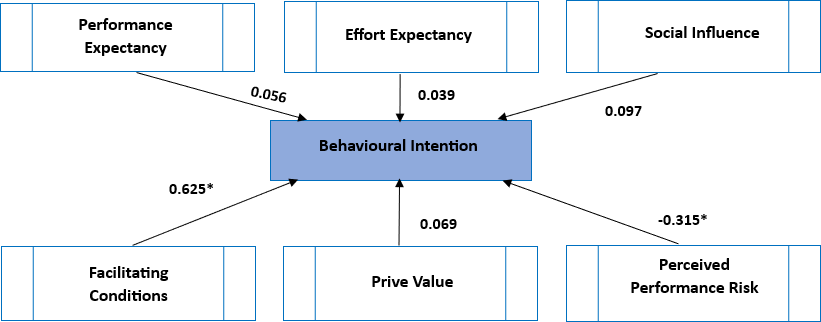
After performing the overall goodness of fit of the research model indicating a good fit to the data (chi-square to degrees of freedom ratio (PCMIN/DF) of 2.330, Comparative Fit Index (CFI) of 0.921, Standardized Root Mean Square Residual (SRMR) of 0.080), the next step in the analysis involves assessing the explanatory power of the model’s dependent variable, measured as R², which reflects how well the independent variables account for variations in the dependent variable. In this study, the R² for behavioural intention was found to be 0.49, meaning that 49% of the variability in behavioural intention is explained by the independent variables in the model (Kapoor & Singh, 2023; Schukat & Heise, 2021). The f² values (the change in R² when an exogenous variable is removed from the model) range from 0.09 to 0.16, suggesting a small to medium effect size (Cohen, 2013) as indicated in Table 7. Further analysis involves examining the structural relationships among constructs using the Structural Equation Modelling (SEM) approach with the IBM SPSS AMOS version 26 software. The results of the path coefficient analysis are shown and detailed in Figure 2 and Table 8. Findings reveal that FC significantly affects behavioural intention (β=0.625, p-value=0.010), while PR negatively impacts behavioural intention (β=-0.315, p-value=0.010). This suggests that participants who perceive higher performance risks are less likely to invest in Agriculture 4.0 technologies. The analysis highlights that FC exerts the most substantial influence on the intention to adopt these technologies. Conversely, the hypotheses related to PE (β=0.056, p-value=0.729), EE (β=0.039, p-value=0.792), SI (β=0.097, p-value=0.686), and PV (β=0.069, p-value=0.685) were not supported, indicating that these factors do not significantly affect farmers’ intentions to adopt Agriculture 4.0 technologies for durum wheat cultivation. It’s worth noting that demographic variables such as age, education, and previous experience were initially considered for inclusion in the model. However, upon analysis, none of them were statistically significant, and their inclusion resulted in a decrease in the model’s goodness of fit. Therefore, to maintain the model’s validity and optimal fit, demographic variables were excluded from the analysis.
| Constructs | F-square |
|---|---|
| PE → BI | 0.09 |
| EE → BI | 0.13 |
| SI → BI | 0.09 |
| FC → BI | 0.16 |
| PV → BI | 0.11 |
| PR → BI | 0.10 |
| Hypothesis | Β | p-value | Decision | ||||||||||||||||
|---|---|---|---|---|---|---|---|---|---|---|---|---|---|---|---|---|---|---|---|
| H1: PE→ BI | 0.056 | 0.729 | Unsupported | ||||||||||||||||
| H2: EE → BI | 0.039 | 0.792 | Unsupported | ||||||||||||||||
| H3: SI → BI | 0.097 | 0.686 | Unsupported | ||||||||||||||||
| H4: FC → BI | 0.625* | 0.010 | Supported | ||||||||||||||||
| H5: PV →BI | 0.069 | 0.685 | Unsupported | ||||||||||||||||
| H6: PR →BI | -0.315* | 0.010 | Supported | ||||||||||||||||
| Note: *p-value < 0.05. | |||||||||||||||||||
4. Discussion and Policy Recommendations
4.1. Differences in impact between marginal and non-marginal areas and their policy implications
As emerged from Table 4, non-marginal farmers demonstrated higher performance expectancy, effort expectancy, social influence, facilitating conditions, and price value compared to marginal farmers. In this context, non-marginal farmers perceived Agriculture 4.0 technologies as beneficial for resource efficiency, yield improvement, reduced effort, and work efficiency.
Policies and interventions for farmers should aim to reinforce their positive behavioural intentions and help them scale adoption. Information provision (Hines et al., 1987; Stern & Dietz, 2002) can focus on showing case studies of successful implementation from peer farmers, inducing a reduction in resource use, increased yield, and efficient work, accompanied by less effort. These campaigns could also be amplified to present, in the form of infographics or videos, how Agriculture 4.0 can contribute to sustainability goals by adopting it. Additionally, incentives (van Valkengoed et al., 2022) such as stabilizing a specific measure within the regional RDP can reward those who adopt these practices. Commitment strategies (Cialdini, 2009) can motivate farmers to adopt new technologies because people are driven to remain consistent with their actions and beliefs, leading them to feel obligated to fulfil their promises. Public commitments are made to try specific technologies, and these pledges can be recognized in public forums through certifications or awards. Public recognition inspires individuals and sets positive examples in farming communities, encouraging others to follow suit (Cialdini, 2009; Schultz et al., 2007).
In contrast, marginal farmers expressed hesitancy and a negative behavioural intention due to higher perceived performance risks related to their concerns about being linked to external consultants and lower availability of facilitating conditions, especially for technology knowledge and limited access to financial resources. To increase knowledge and build technological trust, workshops, and training programs can help marginal farmers understand how to efficiently utilize Agriculture 4.0 technologies and understand their benefits (Kutter et al., 2011; Menozzi et al., 2015). Implementing pilot programs could enable marginal farmers to test these technologies on their farms for a limited time without long-term commitments.
Additionally, the government should prioritize providing subsidies or establishing low-interest loans to facilitate access to Agriculture 4.0 technologies. These technologies can lead to more efficient resource use and reduced environmental impact; outcomes that benefit not only farmers but also the broader public through environmental protection, rural development, and climate change mitigation. Insurance incentive strategies can help reduce obstacles and ease fears of financial instability by offsetting potential losses during the transition to new technologies (Mills, 2007; Wreford et al., 2017). Policymakers can support marginal farmers by collaborating with local institutions and experts to define small, attainable goals that gradually build trust and familiarity with technology. According to Appelbaum and Hare (1996), setting clear and realistic objectives – whether individually or through collective initiatives – can strengthen farmers’ self-efficacy and motivation, ultimately supporting more ambitious technological transitions.
Results of the unified UTAUT2 model supported H4 and H6 hypotheses as seen in Table 6, showing that facilitating conditions and perceived performance risk significantly influence farmers’ intention to adopt Agriculture 4.0 technologies on durum wheat within our convenience sample. The results showed that facilitating conditions significantly impacted farmers’ intentions to use Agriculture 4.0 technologies. Our findings align with Fragomeli et al. (2024), who emphasize that practical and financial support from government initiatives significantly influences the adoption of Agriculture 4.0. This support often includes subsidies, training and educational programs, and technical assistance, which help farmers overcome barriers to adopting new technologies. For instance, government-funded training sessions can provide information to improve farmers’ understanding of how to use Agriculture 4.0 technologies based on IoT devices and data analytics platforms, making it easier for them to integrate these technologies into their operations. As well, creating educational programs explaining the challenges in traditional farming practices and the environmental and economic benefits of Agriculture 4.0 can also positively induce the adoption of Agriculture 4.0. Araújo et al. (2021) highlight that having access to essential technological infrastructure such as IoT sensors and data analytics tools is critical for successful implementation. When farmers have the necessary resources, infrastructure, and knowledge, they are more likely to adopt and utilize Agriculture 4.0 technologies effectively.
Perceived performance risk had a negative and significant impact on the intention to adopt Agriculture 4.0 technologies. Perceived performance risk encompasses concerns about the reliability and effectiveness of new technologies. Benos et al. (2022) found that if farmers are uncertain about whether Agriculture 4.0 will deliver the promised benefits or if they fear potential operational failures or being linked to external consultants, they may be hesitant to adopt these technologies. This concern can stem from previous experiences with technology failures or from insufficient evidence demonstrating the technology’s effectiveness. Abikari (2024) further supports this by showing that perceived risks, including those related to technology performance, are crucial in adoption decisions. Duong et al. (2019) also highlight that uncertainties about new technologies’ effectiveness can significantly impact farmers’ willingness to adopt them. To mitigate these concerns and build trust, not only clear demonstrations, pilot projects, and empirical evidence of technology benefits should be emphasized but also providing financial incentives, such as subsidies for purchasing Agriculture 4.0 technologies or microloans (Fragomeli et al., 2024; Osorio et al., 2024). It is important to note that financial incentives and public subsidies may strongly influence farmers’ awareness and perceived value of Agriculture 4.0 technologies. Menozzi et al. (2015) indicates that many Italian farmers are primarily driven by economic benefits. This pattern could affect how farmers evaluate the usefulness and feasibility of adopting such technologies, especially if some options are more frequently promoted through subsidy programs or public campaigns. Additionally, media coverage and institutional promotions often emphasize the availability of tax credits or financial contributions for specific Agriculture 4.0 technologies (Confagricoltura, 2024; ESG360, 2023), which may shape farmer awareness and preferences toward subsidized solutions.
Contrary to expectations, performance expectancy did not significantly influence the intention to use Agriculture 4.0 technologies. Although performance expectancy scores were relatively positive in both marginal (0.68) and non-marginal areas (0.96), this construct did not significantly influence behavioural intention in our model. This finding contrasts with Im et al. (2008) and Araújo et al. (2021), who found that when farmers perceive significant improvements in their operations due to new technologies, they are more inclined to adopt them. A possible explanation for our results could be that, while farmers acknowledge the potential benefits of Agriculture 4.0, these benefits alone are not sufficient to drive adoption. This may be due to overriding concerns such as performance risk, limited infrastructure and experience with digital tools, which may weaken the link between perceived performance and the intention to adopt, especially in marginal areas. Another possible explanation for our result could be that the perceived benefits of Agriculture 4.0 technologies might not align with the specific needs of farmers in Sardinia. If farmers do not clearly see how these technologies will enhance their productivity or efficiency, their intention to adopt may not be strongly influenced by performance expectancy (Kutter et al., 2011; Menozzi et al., 2015).
Effort expectancy also did not impact on the intention to adopt Agriculture 4.0 technologies. This result differs from findings by Fragomeli et al. (2024) and Abikari (2024), who suggested that technologies perceived as user-friendly and requiring minimal additional effort are more likely to be adopted. Our findings are consistent with Araújo et al. (2021), which noted that difficulties in integrating Agriculture 4.0 technologies with existing systems can act as barriers to adoption. If the technologies are perceived as challenging to integrate, farmers may be discouraged from using them despite their potential benefits. This suggests that high expectancy, or the perception of increased effort and complexity, could negatively impact adoption intentions.
Social influence did not significantly affect the intention to adopt Agriculture 4.0 technologies. This finding is consistent with Li et al. (2024) which found that societal norms and peer pressure do not always positively impact the intention to use Agriculture 4.0 technologies. Farmers may resist adopting new technologies due to scepticism from their community or a preference for traditional methods. Yap and Al-Mutairi (2024) also highlight that negative social perceptions within certain farming communities can hinder technology acceptance. If the broader community holds negative views about Agriculture 4.0 technologies, individual farmers may be less inclined to adopt them, even if they recognize potential benefits.
Price value did not significantly influence the intention to adopt Agriculture 4.0 technologies such as 4.0 tractors, weather stations and DSS, analytics platforms, farm applications and drones. This result contrasts with findings by Araújo et al. (2021) and Fragomeli et al. (2024) who highlighted that farmers often justify the initial investment in Agriculture 4.0 technologies through anticipated long-term economic returns, such as increased crop yields and improved resource management. The lack of significant impact in our study might suggest that other factors, such as perceived risks or the complexity of technology, overshadow price considerations in the adoption decision-making process.
Overall, the extended UTAUT2 framework provides a solid foundation for understanding how facilitating conditions and perceived performance risk influence Sardinian wheat farmers’ intentions to adopt Agriculture 4.0 technologies. Designing a supportive choice architecture (Thaler & Sunstein, 2008) can simplify the adoption process. Ensuring easy access to Agriculture 4.0 technologies can reduce difficulties. This comprehensive approach, combining education, financial support, social recognition, and accessibility, addresses the barriers to adoption while enhancing farmers’ readiness to embrace Agriculture 4.0 technologies.
The study highlighted notable differences in adoption intentions between marginal and non-marginal farmers of durum wheat in Sardinia, driven by disparities in facilitating conditions, perceived benefits, and social influence. Non-marginal farmers demonstrated greater readiness and positive intentions toward Agriculture 4.0 technologies, while marginal farmers faced barriers such as limited resources and higher perceived risks although they had positive performance expectancy, effort expectancy, social influence, facilitating conditions and price value. Combining data from both groups provided a holistic understanding of regional adoption dynamics showing that facilitating conditions and perceived performance risk significantly affect the intention to adopt Agriculture 4.0 technologies. Facilitating conditions were found to have a positive and substantial impact, highlighting the critical role of support mechanisms such as financial aid, technical training, and access to technological infrastructure in promoting the adoption of these advanced technologies. In contrast, perceived performance risk negatively influenced adoption intentions, reflecting farmers’ concerns about the reliability and effectiveness of new technologies.
Several targeted interventions are recommended to enhance the adoption of Agriculture 4.0 technologies. It is essential to focus on providing easy access to technical advice and educational programs through regional extension services. This approach will enable farmers to effectively utilize Agriculture 4.0 technologies and reduce barriers to adoption. Establishing accessible platforms for technical support will ensure that farmers are well informed about the benefits and functionalities of these technologies.
Furthermore, improving the educational qualifications of technicians working in regional extension services is necessary to address the knowledge gap related to Agriculture 4.0 technologies. This aligns with the findings of Caffaro and Cavallo (2019) that lower levels of education were linked to higher perceptions of economic barriers, which in turn were negatively correlated with the adoption of smart farming technologies. Universities and educational institutions should develop specialized courses or master’s programs focused on these technologies to equip technicians with the skills and knowledge required to support farmers and facilitate successful implementation.
Overall, by concentrating on enhancing facilitating conditions and addressing perceived performance risks, stakeholders can create a more supportive environment for the adoption of Agriculture 4.0 technologies. These interventions will help overcome existing barriers, promote the integration of innovative solutions in durum wheat farming, and ultimately improve productivity and sustainability within the agricultural sector.
While this study provides valuable insights into adopting Agriculture 4.0 technologies in durum wheat farming, it is important to acknowledge several limitations. The study is constrained by its geographical focus on Sardinia, which may limit the generalizability of the findings to other regions with different agricultural contexts or technological infrastructures. Additionally, using a convenience sampling method further limits the representativeness of the findings. Therefore, the results can be generalised to the wider farming population in Sardinia. Additionally, the study relies on self-reported data from farmers, which may introduce biases related to respondents’ perceptions or reporting accuracy. The adoption intentions assessed are also based on subjective assessments, which might not fully capture actual technology usage or long-term adoption outcomes. Furthermore, the research does not account for all possible variables influencing technology adoption, such as economic fluctuations or policy changes, which could impact the relevance of the findings over time. As highlighted by Menozzi et al. (2015), economic incentives often outweigh environmental concerns in Italian agricultural decision-making. Therefore, farmers may have expressed more favourable opinions toward technologies with known funding opportunities, possibly biasing the intention data. Future studies could attempt to control for this effect by comparing knowledge of subsidized vs non-subsidized solutions. Also, future research could benefit from a broader geographical scope, longitudinal studies, and a more comprehensive analysis of external factors to enhance the understanding of Agriculture 4.0 adoption across diverse agricultural settings.
The data supporting this study’s findings are available as a supplementary file to this paper.
The authors would like to express their sincere gratitude to Luca Saba, Director General of Coldiretti Sardegna, and Engineer Giovanni Sechi for their valuable support in facilitating the administration of the questionnaires. Their availability, professionalism, and deep knowledge of the local context were instrumental in ensuring the successful completion of the study.
This study was carried out within the Agritech National Research Center and received funding from the European Union Next-GenerationEU (Piano Nazionale di Ripresa e Resilienza (PNRR) – Missione 4 Componente 2, Investimento 1.4 – D.D. 1032 17/06/2022, CN00000022). This manuscript reflects only the authors’ views and opinions, neither the European Union nor the European Commission can be considered responsible for them.””
Abikari, M. (2024). Emotions, perceived risk and intentions to adopt emerging e-banking technology amongst educated young consumers. International Journal of Bank Marketing.
Abiri, R., Rizan, N., Balasundram, S. K., Shahbazi, A. B., & Abdul-Hamid, H. (2023). Application of digital technologies for ensuring agricultural productivity. Heliyon.
Abrol, D., & Ramani, S. (2014). Pro-poor innovation making, knowledge production, and technology implementation for rural areas. Cambridge University Press.
Adrian, A. M., Norwood, S. H., & Mask, P. L. (2005). Producers’ perceptions and attitudes toward precision agriculture technologies. Computers and electronics in agriculture, 48(3), 256-271.
AgendaDigitale. (2023). Agricoltura 4.0 in Italia: a che punto siamo? Retrieved 20 March 2024 from https://www.agendadigitale.eu/industry-4-0/agricoltura-4-0-in-italia-a-che-punto-siamo/
Ahmadzai, H., Tutundjian, S., Dale, D., Brathwaite, R., Lidderr, P., Selvaraju, R., Malhotra, A., Boerger, V., & Elouafi, I. (2022). Marginal lands: potential for agricultural development, food security and poverty reduction.
Ahmadzai, H., Tutundjian, S., & Elouafi, I. (2021). Policies for sustainable agriculture and livelihood in marginal lands: a review. Sustainability, 13(16), 8692.
Ahmed, H., & Ahmed, M. (2023). Influencing factors on adoption of modern agricultural technology in developing economy countries. Developing Country Studies, 13(2), 1-15.
Ajzen, I. (1991). The theory of planned behavior. Organizational behavior and human decision processes, 50(2), 179-211.
Akter, A., Mwalupaso, G. E., Wang, S., Jahan, M. S., & Geng, X. (2023). Towards climate action at farm-level: Distinguishing complements and substitutes among climate-smart agricultural practices (CSAPs) in flood prone areas. Climate Risk Management, 40, 100491.
Alghatrifi, I., & Khalid, H. (2019). A systematic review of UTAUT and UTAUT2 as a baseline framework of information system research in adopting new technology: a case study of IPV6 adoption. 2019 6th International Conference on Research and Innovation in Information Systems (ICRIIS),
Alhajj Ali, S., Tallou, A., Vivaldi, G. A., Camposeo, S., Ferrara, G., & Sanesi, G. (2024). Revitalization Potential of Marginal Areas for Sustainable Rural Development in the Puglia Region, Southern Italy: Part I: A Review. Agronomy, 14(3), 431. https://www.mdpi.com/2073-4395/14/3/431
An, L., Han, Y., & Tong, L. (2016). Study on the factors of online shopping intention for fresh agricultural products based on UTAUT2. The 2nd Information technology and mechatronics engineering conference (ITOEC 2016),
Anderson, J. C., & Gerbing, D. W. (1988). Structural equation modeling in practice: A review and recommended two-step approach. Psychological bulletin, 103(3), 411.
Appelbaum, S. H., & Hare, A. (1996). Self‐efficacy as a mediator of goal setting and performance: some human resource applications. Journal of Managerial Psychology, 11(3), 33-47.
Arain, A. A., Hussain, Z., Rizvi, W. H., & Vighio, M. S. (2019). Extending UTAUT2 toward acceptance of mobile learning in the context of higher education. Universal Access in the Information Society, 18, 659-673.
Arata, L., & Menozzi, D. (2023). Farmers’ motivations and behaviour regarding the adoption of more sustainable agricultural practices and activities. Bio-based and Applied Economics, 12(1), 3-4.
Araújo, S. O., Peres, R. S., Barata, J., Lidon, F., & Ramalho, J. C. (2021). Characterising the agriculture 4.0 landscape – emerging trends, challenges and opportunities. Agronomy, 11(4), 667.
Arenas Gaitán, J., Peral Peral, B., & Ramón Jerónimo, M. (2015). Elderly and internet banking: An application of UTAUT2. Journal of Internet Banking and Commerce, 20 (1), 1-23.
Balyan, S., Jangir, H., Tripathi, S. N., Tripathi, A., Jhang, T., & Pandey, P. (2024). Seeding a Sustainable Future: Navigating the Digital Horizon of Smart Agriculture. Sustainability, 16(2), 475.
Bandura, A. (1986). Social foundations of thought and action. Englewood Cliffs, NJ, 1986(23-28).
Benfica, R., Chambers, J., Koo, J., Nin-Pratt, A., Falck-Zepeda, J., Stads, G.-J., & Arndt, C. (2023). Food system innovations and digital technologies to Foster productivity growth and rural transformation. Science and innovations for food systems transformation, 421.
Benos, L., Makaritis, N., & Kolorizos, V. (2022). From precision agriculture to Agriculture 4.0: integrating ICT in farming. In Information and Communication Technologies for Agriculture – Theme III: Decision (pp. 79-93). Springer.
Bollen, K. A., & Liang, J. (1988). Some properties of Hoelter’s CN. Sociological Methods & Research, 16(4), 492-503.
Brick, K., & Visser, M. (2015). Risk preferences, technology adoption and insurance uptake: A framed experiment. In Journal of Economic Behavior & Organization (Vol. 118, pp. 383-396).
Budhi, G., & Aminah, M. (2010). Swasembada kedelai: antara harapan dan kenyataan. Forum Penelitian Agro Ekonomi. https://epublikasi.pertanian.go.id/berkala/fae/article/view/1848
Budhi, H., Santosa, T., & Setiyawati, S. (2022). Effect Of Perceived Risk on The Intention to Use Internet Banking by Implementing the Technology Acceptance Model. International Journal of Economics and Business Issues, 1(1), 61-71.
Burland, A., & von Cossel, M. (2023). Towards Managing Biodiversity of European Marginal Agricultural Land for Biodiversity-Friendly Biomass Production. Agronomy, 13(6), 1651.
Caffaro, F., & Cavallo, E. (2019). The effects of individual variables, farming system characteristics and perceived barriers on actual use of smart farming technologies: Evidence from the Piedmont region, northwestern Italy. Agriculture, 9(5), 111.
Caffaro, F., Cremasco, M. M., Roccato, M., & Cavallo, E. (2020). Drivers of farmers’ intention to adopt technological innovations in Italy: The role of information sources, perceived usefulness, and perceived ease of use. Journal of rural studies, 76, 264-271.
Caffaro, F., Roccato, M., Micheletti Cremasco, M., & Cavallo, E. (2019). An ergonomic approach to sustainable development: The role of information environment and social‐psychological variables in the adoption of agri‐environmental innovations. Sustainable Development, 27(6), 1049-1062.
Chang, A. (2012). UTAUT and UTAUT 2: A review and agenda for future research. The Winners, 13(2), 10-114.
Cialdini, R. B. (2009). Influence: Science and practice (Vol. 4). Pearson education Boston.
Cogato, A., Meggio, F., De Antoni Migliorati, M., & Marinello, F. (2019). Extreme weather events in agriculture: A systematic review. Sustainability, 11(9), 2547.
Cohen, J. (2013). Statistical power analysis for the behavioral sciences. routledge.
Confagricoltura. (2024). Agricoltura 4.0: il credito d’imposta per investimenti nel 2024. Confagricoltura Rovigo. Retrieved 27 March 2024 from https://www.confagricolturaro.it/confagricoltura-informa/fiscale/redditi-imposte-e-tasse/agricoltura-40-il-credito-dimposta-per-investimenti-nel-2024/
Cook, S., Jackson, E. L., Fisher, M. J., Baker, D., & Diepeveen, D. (2022). Embedding digital agriculture into sustainable Australian food systems: pathways and pitfalls to value creation. International Journal of Agricultural Sustainability, 20(3), 346-367.
Coxhead, I., Shively, G., & Shuai, X. (2002). Development policies, resource constraints, and agricultural expansion on the Philippine land frontier. Environment and Development Economics, 7(2), 341-363.
Cramb, R. A. (2000). Processes influencing the successful adoption of new technologies by smallholders.
Csikós, N., & Tóth, G. (2023). Concepts of agricultural marginal lands and their utilisation: A review. Agricultural systems, 204, 103560.
Da Silveira, F., Da Silva, S. L. C., Machado, F. M., Barbedo, J. G. A., & Amaral, F. G. (2023). Farmers’ perception of the barriers that hinder the implementation of agriculture 4.0. Agricultural systems, 208, 103656.
Davis, F. D. (1989). Perceived usefulness, perceived ease of use, and user acceptance of information technology. MIS quarterly, 319-340.
Davis, F. D., Bagozzi, R. P., & Warshaw, P. R. (1992). Extrinsic and intrinsic motivation to use computers in the workplace 1. In Journal of applied social psychology (Vol. 22, pp. 1111-1132).
De Rosa, M., & Chiappini, S. (2012). The adoption of agricultural extension policies in the Italian farms.
Deißler, L., Mausch, K., Karanja, A., McMullin, S., & Grote, U. (2022). A complex web of interactions: Personality traits and aspirations in the context of smallholder agriculture. Bio-based and Applied Economics Journal, 12(1), 53-67.
Deng, Z., Hong, Z., Ren, C., Zhang, W., & Xiang, F. (2018). What predicts patients’ adoption intention toward mHealth services in China: empirical study. JMIR mHealth and uHealth, 6(8), e9316.
Dibbern, T., Romani, L. A. S., & Massruhá, S. M. F. S. (2024). Main drivers and barriers to the adoption of Digital Agriculture technologies. Smart Agricultural Technology, 8, 100459.
Diekmann, M., & Theuvsen, L. (2019). Non-participants interest in CSA–Insights from Germany. Journal of rural studies, 69, 1-10.
Douthwaite, B., Keatinge, J., & Park, J. (2001). Why promising technologies fail: the neglected role of user innovation during adoption. Research policy, 30(5), 819-836.
Duong, T. T., Brewer, T., Luck, J., & Zander, K. (2019). A global review of farmers’ perceptions of agricultural risks and risk management strategies. Agriculture, 9(1), 10.
Elsawah, S., Filatova, T., Jakeman, A. J., Kettner, A. J., Zellner, M. L., Athanasiadis, I. N., Hamilton, S. H., Axtell, R. L., Brown, D. G., & Gilligan, J. M. (2020). Eight grand challenges in socio-environmental systems modeling. Socio-Environmental Systems Modelling, 2, 16226.
Ena, G. W. W., & Siewa, A. L. S. (2022). Factors Influencing the Behavioural Intention for Smart Farming in Sarawak, Malaysia. Journal of Agribusiness, 9(1), 37-56.
ESG360. (2023). Agricoltura 4.0: cos’è, incentivi e tecnologie abilitanti. Retrieved 30 March 2024 from https://www.esg360.it/agrifood/agricoltura-4-0-cose-incentivi-e-tecnologie-abilitanti/
Featherman, M. S., & Pavlou, P. A. (2003). Predicting e-services adoption: a perceived risk facets perspective. In International journal of human-computer studies (Vol. 59, pp. 451-474).
Fischer, E. M., Sedláček, J., Hawkins, E., & Knutti, R. (2014). Models agree on forced response pattern of precipitation and temperature extremes. Geophysical Research Letters, 41(23), 8554-8562.
Food, & Nations, A. O. o. t. U. (2017). The future of food and agriculture: Trends and challenges. Fao.
Fornell, C., & Larcker, D. F. (1981). Evaluating structural equation models with unobservable variables and measurement error. In Journal of marketing research (Vol. 18, pp. 39-50).
Fragomeli, R., Annunziata, A., & Punzo, G. (2024). Promoting the Transition towards Agriculture 4.0: A Systematic Literature Review on Drivers and Barriers. Sustainability, 16(6), 2425.
Fraser-Baxter, S. (2024). Climate change key driver of extreme drought in water scarce Sicily and Sardinia. https://coilink.org/20.500.12592/1yrjrxf
Fuentes-Peñailillo, F., Gutter, K., Vega, R., & Silva, G. C. (2024). Transformative technologies in digital agriculture: Leveraging Internet of Things, remote sensing, and artificial intelligence for smart crop management. Journal of Sensor and Actuator Networks, 13(4), 39.
Gardezi, M., & Bronson, K. (2020). Examining the social and biophysical determinants of US Midwestern corn farmers’ adoption of precision agriculture. Precision Agriculture, 21(3), 549-568.
Garson, G. (2015). Structural Equation Modeling (blue book series). In: Asheboro: Statistical Associates Publishing.
Gefen, D., Straub, D., & Boudreau, M.-C. (2000). Structural equation modeling and regression: Guidelines for research practice. Communications of the association for information systems, 4(1), 7.
Girma, Y., Kuma, B., & Bedemo, A. (2023). Risk aversion and perception of farmers about endogenous risks: An empirical study for maize producers in Awi Zone, Amhara Region of Ethiopia. Journal of risk and financial management, 16(2), 87.
Giua, C., Materia, V. C., & Camanzi, L. (2022). Smart farming technologies adoption: Which factors play a role in the digital transition? Technology in Society, 68, 101869.
Güven, B., Baz, İ., Kocaoğlu, B., Toprak, E., Erol Barkana, D., & Soğutmaz Özdemir, B. (2023). Smart farming technologies for sustainable agriculture: From food to energy. In A sustainable green future: Perspectives on energy, economy, industry, cities and environment (pp. 481-506). Springer.
Multivariate data analysis 6th Edition, New Jersey: Prentice Hall (2006).
Harisudin, M., Riptanti, E. W., Setyowati, N., & Khomah, I. (2023). Determinants of the Internet of Things adoption by millennial farmers. AIMS Agriculture & Food, 8(2).
Hasselwander, M., & Weiss, D. (2024). Super App Adoption Intention Based on Utaut2 with Perceived Risk. Available at SSRN 4784554.
Heinzl, A., Buxmann, P., Wendt, O., & Weitzel, T. (2011). Theory-guided modeling and empiricism in information systems research. Springer Science & Business Media.
Henseler, J., Ringle, C. M., & Sarstedt, M. (2015). A new criterion for assessing discriminant validity in variance-based structural equation modeling. Journal of the academy of marketing science, 43, 115-135.
Hidayat, B. A., Supartoyo, Y. H., Setiawan, S., Ragimun, R., & Salim, Z. (2024). Government infrastructure investment stimulation through booming natural resources: Evidence from a lower-middle-income country. PloS one, 19(5), e0301710.
Hines, J. M., Hungerford, H. R., & Tomera, A. N. (1987). Analysis and synthesis of research on responsible environmental behavior: A meta-analysis. The Journal of environmental education, 18(2), 1-8.
Hoelter, J. W. (1983). The analysis of covariance structures: Goodness-of-fit indices. Sociological Methods & Research, 11(3), 325-344.
Hurlbert, M., Krishnaswamy, J., Johnson, F. X., Rodríguez-Morales, J. E., & Zommers, Z. (2019). Risk management and decision making in relation to sustainable development.
Iacobucci, D. (2010). Structural equations modeling: Fit indices, sample size, and advanced topics. In Journal of consumer psychology (Vol. 20, pp. 90-98).
Im, I., Kim, Y., & Han, H.-J. (2008). The effects of perceived risk and technology type on users’ acceptance of technologies. Information & management, 45, 1-9.
Jacobs, C., Van Minnen, J., Junttila, V., Pirttioja, N., Smets, B., & Bonte, K. (2022). Climate Change Impacts on Biomass Production:(national Case Studies). European Topic Centre on Climate change adaptation and LULUCF (ETC-CA).
Javaid, M., Haleem, A., Singh, R. P., & Suman, R. (2022). Enhancing smart farming through the applications of Agriculture 4.0 technologies. International Journal of Intelligent Networks, 3, 150-164.
Jouanjean, M.-A. (2013). Targeting infrastructure development to foster agricultural trade and market integration in developing countries: an analytical review. London: Overseas Development Institute, 1-26.
Jussila, H., Leimgruber, W., & Majoral, R. (2019). Perceptions of marginality: Theoretical issues and regional perceptions of marginality in geographical space. Routledge.
Kapoor, M., & Singh, H. (2023). Information Needs and Dissemination Among Farmers: A Step Towards Sustainability. International Management Review, 19, 71-199.
Kendall, H., Clark, B., Li, W., Jin, S., Jones, G. D., Chen, J., Taylor, J., Li, Z., & Frewer, L. J. (2022). Precision agriculture technology adoption: a qualitative study of small-scale commercial “family farms” located in the North China Plain. Precision Agriculture, 1-33.
Khan, F. U., Nouman, M., Negrut, L., Abban, J., Cismas, L. M., & Siddiqi, M. F. (2024). Constraints to agricultural finance in underdeveloped and developing countries: a systematic literature review. International Journal of Agricultural Sustainability, 22(1), 2329388.
Kimhi, A., & Nachlieli, N. (2001). Intergenerational succession on Israeli family farms. Journal of Agricultural Economics, 52(2), 42-58.
Kirk, N. A., & Cradock-Henry, N. A. (2022). Land Management Change as Adaptation to Climate and Other Stressors: A Systematic Review of Decision Contexts Using Values-Rules-Knowledge. Land, 11(6), 791. https://www.mdpi.com/2073-445X/11/6/791
Klerkx, L., Jakku, E., & Labarthe, P. (2019). A review of social science on digital agriculture, smart farming and agriculture 4.0: New contributions and a future research agenda. NJAS-Wageningen journal of life sciences, 90, 100315.
Kolady, D. E., Van der Sluis, E., Uddin, M. M., & Deutz, A. P. (2021). Determinants of adoption and adoption intensity of precision agriculture technologies: evidence from South Dakota. Precision Agriculture, 22, 689-710.
Kutter, T., Tiemann, S., Siebert, R., & Fountas, S. (2011). The role of communication and co-operation in the adoption of precision farming. Precision Agriculture, 12, 2-17.
Lal, R. (2004). Soil carbon sequestration impacts on global climate change and food security. Science, 304(5677), 1623-1627.
LEAP. (2023). Educational poverty in Italy - Our First LEAP Policy Brief. Laboratory for Effective Anti-poverty Policies (LEAP), Bocconi University. Retrieved 4 April 2024 from https://leap.unibocconi.eu/newsevents/educational-poverty-italy-our-first-leap-policy-brief
Li, L., Min, X., Guo, J., & Wu, F. (2024). The influence mechanism analysis on the farmers’ intention to adopt Internet of Things based on UTAUT-TOE model. Scientific reports, 14(1), 15016.
Lobley, M., Baker, J. R., & Whitehead, I. (2010). Farm succession and retirement: some international comparisons. Journal of Agriculture, Food Systems, and Community Development, 1(1), 49-64.
Long, T. B., Blok, V., & Coninx, I. (2016). Barriers to the adoption and diffusion of technological innovations for climate-smart agriculture in Europe: evidence from the Netherlands, France, Switzerland and Italy. Journal of Cleaner Production, 112, 9-21.
Loo, M. K., Ramachandran, S., & Raja Yusof, R. N. (2023). Unleashing the potential: Enhancing technology adoption and innovation for micro, small and medium-sized enterprises (MSMEs). Cogent Economics & Finance, 11(2), 2267748.
Macedo, I. M. (2017). Predicting the acceptance and use of information and communication technology by older adults: An empirical examination of the revised UTAUT2. Computers in Human Behavior, 75, 935-948.
Maffezzoli, F., Ardolino, M., Bacchetti, A., Perona, M., & Renga, F. (2022). Agriculture 4.0: A systematic literature review on the paradigm, technologies and benefits. Futures, 142, 102998.
Mana, A., Allouhi, A., Hamrani, A., Rahman, S., el Jamaoui, I., & Jayachandran, K. (2024). Sustainable AI-Based Production Agriculture: Exploring AI Applications and Implications in Agricultural Practices. Smart Agricultural Technology, 100416.
Marra, M., Pannell, D. J., & Ghadim, A. A. (2003). The economics of risk, uncertainty and learning in the adoption of new agricultural technologies: where are we on the learning curve? In Agricultural Systems (Vol. 75, pp. 215-234).
Masi, M., Di Pasquale, J., Vecchio, Y., & Capitanio, F. (2023). Precision farming: Barriers of variable rate technology adoption in Italy. Land, 12(5), 1084.
Mazzucato, M., & Willetts, D. (2019). A mission-oriented UK industrial strategy.
McCormick. (2023). Agricoltura 4.0: quali sono strumenti e vantaggi. McCormick Trattori (Argo Tractors S.p.A.). Retrieved 22 March 2024 from https://www.mccormick.it/agricoltura-4-0-quali-sono-strumenti-e-vantaggi/
Medeiros, M., Ozturk, A., Hancer, M., Weinland, J., & Okumus, B. (2022). Understanding travel tracking mobile application usage: An integration of self determination theory and UTAUT2. Tourism Management Perspectives, 42, 100949.
Mefleh, M., Conte, P., Fadda, C., Giunta, F., Piga, A., Hassoun, G., & Motzo, R. (2019). From ancient to old and modern durum wheat varieties: Interaction among cultivar traits, management, and technological quality. Journal of the Science of Food and Agriculture, 99(5), 2059-2067.
Menozzi, D., Fioravanzi, M., & Donati, M. (2015). Farmer’s motivation to adopt sustainable agricultural practices. Bio-based and Applied Economics, 4(2), 125-147.
Mercure, J.-F., Sharpe, S., Vinuales, J. E., Ives, M., Grubb, M., Lam, A., Drummond, P., Pollitt, H., Knobloch, F., & Nijsse, F. J. (2021). Risk-opportunity analysis for transformative policy design and appraisal. Global Environmental Change, 70, 102359.
Mereu, V. (2010). Climate change impact on durum wheat in Sardinia.
Mills, E. (2007). Synergisms between climate change mitigation and adaptation: an insurance perspective. Mitigation and Adaptation Strategies for Global Change, 12, 809-842.
Moorthy, K., Chun T’ing, L., Ming, K. S., Ping, C. C., Ping, L. Y., Joe, L. Q., & Jie, W. Y. (2019). Behavioral intention to adopt digital library by the undergraduates. International Information & Library Review, 51(2), 128-144.
Moriuchi, E. (2021). An empirical study on anthropomorphism and engagement with disembodied AIs and consumers’ re‐use behavior. Psychology & Marketing, 38(1), 21-42.
Nhuong, B. H., & Truong, D. D. (2024). Factors affecting the adoption of high technology in vegetable production in Hanoi, Vietnam. Frontiers in Sustainable Food Systems, 8, 1345598.
Osorio, C. P., Leucci, F., & Porrini, D. (2024). Analyzing the relationship between agricultural AI adoption and government-subsidized insurance. Agriculture, 14(10), 1804.
Osservatori.net, O. D. I. (2023). Agricoltura 4.0: cos’è, vantaggi, tecnologie. Osservatori.net. Retrieved 24 March 2024 from https://blog.osservatori.net/agricoltura-4-0-cose-vantaggi-tecnologie
Palau-Saumell, R., Forgas-Coll, S., Sánchez-García, J., & Robres, E. (2019). User acceptance of mobile apps for restaurants: An expanded and extended UTAUT-2. Sustainability, 11(4), 1210.
Pannell, D. J., Marshall, G. R., Barr, N., Curtis, A., Vanclay, F., & Wilkinson, R. (2006). Understanding and promoting adoption of conservation practices by rural landholders. Australian journal of experimental agriculture, 46(11), 1407-1424.
Paustian, M., & Theuvsen, L. (2017). Adoption of precision agriculture technologies by German crop farmers. Precision Agriculture, 18, 701-716.
Pechlivani, E. M., Gkogkos, G., Giakoumoglou, N., Hadjigeorgiou, I., & Tzovaras, D. (2023). Towards Sustainable Farming: A Robust Decision Support System’s Architecture for Agriculture 4.0. 2023 24th International Conference on Digital Signal Processing (DSP),
Peter, B. G., Messina, J. P., & Snapp, S. S. (2018). A multiscalar approach to mapping marginal agricultural land: smallholder agriculture in Malawi. Annals of the American Association of Geographers, 108(4), 989-1005.
Raj, M., Gupta, S., Chamola, V., Elhence, A., Garg, T., Atiquzzaman, M., & Niyato, D. (2021). A survey on the role of Internet of Things for adopting and promoting Agriculture 4.0. Journal of Network and Computer Applications, 187, 103107.
Raji, E., Ijomah, T. I., & Eyieyien, O. G. (2024). Improving agricultural practices and productivity through extension services and innovative training programs. International Journal of Applied Research in Social Sciences, 6(7), 1297-1309.
Rizzo, G., Migliore, G., Schifani, G., & Vecchio, R. (2024). Key factors influencing farmers’ adoption of sustainable innovations: a systematic literature review and research agenda. Organic Agriculture, 14(1), 57-84.
Rogers, E. (2003). Diffusion of Innovations fifth Ed Free Press. New York. Rezvani, Z., Jansson. J. & Bodin.
Rogers, E. M. (1962). Diffusion of innovations. In (Third Edit ed.): New York, Free Press of Glencoe [1962].
Rondinelli, D. A. (1992). Location analysis and regional development: summing up and moving on. International Regional Science Review, 15(3), 325-340.
Rose, D. C., & Chilvers, J. (2018). Agriculture 4.0: Broadening responsible innovation in an era of smart farming. Frontiers in Sustainable Food Systems, 2, 87.
Ruddle, K. (1991). Integrated farming systems and future directions for Asian farming systems research and extension. Journal of the Asian Farming Systems Association, 1(1), 91-99.
Ruzzante, S., Labarta, R., & Bilton, A. (2021). Adoption of agricultural technology in the developing world: A meta-analysis of the empirical literature. World development, 146, 105599.
Sabbagh, M., & Gutierrez, L. (2022). Micro-irrigation technology adoption in the Bekaa Valley of Lebanon: A behavioural model. Sustainability, 14(13), 7685.
Sabbagh, M., & Gutierrez, L. (2023). Farmers’ acceptance of a micro-irrigation system: A focus group study. Bio-based and Applied Economics.
Saidakhmedovich, G. S., Uralovich, M. D., Saidakhmedovich, G. S., & Tishabayevna, R. M. (2024). Application of Digital Technologies for Ensuring Agricultural Productivity. British Journal of Global Ecology and Sustainable Development, 25, 6-20.
Sallustio, L., Pettenella, D., Merlini, P., Romano, R., Salvati, L., Marchetti, M., & Corona, P. (2018). Assessing the economic marginality of agricultural lands in Italy to support land use planning. Land Use Policy, 76, 526-534.
Schukat, S., & Heise, H. (2021). Towards an understanding of the behavioral intentions and actual use of smart products among German farmers. Sustainability, 13(12), 6666.
Schultz, P. W., Nolan, J. M., Cialdini, R. B., Goldstein, N. J., & Griskevicius, V. (2007). The constructive, destructive, and reconstructive power of social norms. Psychological science, 18(5), 429-434.
Scoones, I., Thompson, J., & Cambers, J. (2009). Farmer first revisited: Innovation for agricultural research and development. Practical Action Pub.
Shafi, U., Mumtaz, R., García-Nieto, J., Hassan, S. A., Zaidi, S. A. R., & Iqbal, N. (2019). Precision agriculture techniques and practices: From considerations to applications. Sensors, 19(17), 3796.
Soddu, A., Deidda, R., Marrocu, M., Meloni, R., Paniconi, C., Ludwig, R., Sodde, M., Mascaro, G., & Perra, E. (2013). Climate variability and durum wheat adaptation using the AquaCrop model in southern Sardinia. Procedia Environmental Sciences, 19, 830-835.
Sohn, S. (2024). Consumer perceived risk of using autonomous retail technology. Journal of Business Research, 171, 114389.
Solaw, F. (2011). The state of the world’s land and water resources for food and agriculture. Rome, Italy.
Stern, P. C., & Dietz, T. (2002). New tools for environmental protection: Education, information, and voluntary measures. National Academies Press.
Straub, D., Boudreau, M.-C., & Gefen, D. (2004). Validation guidelines for IS positivist research. Communications of the association for information systems, 13, 24.
Stupina, A., Rozhkova, A., Olentsova, J., & Rozhkov, S. (2021). Digital technologies as a tool for improving the efficiency of the agricultural sector. IOP Conference Series: Earth and Environmental Science,
Šumak, B., & Šorgo, A. (2016). The acceptance and use of interactive whiteboards among teachers: Differences in UTAUT determinants between pre-and post-adopters. Computers in Human Behavior, 64, 602-620.
Sureth, M., Kalkuhl, M., Edenhofer, O., & Rockström, J. (2023). A welfare economic approach to planetary boundaries. Jahrbücher für Nationalökonomie und Statistik, 243(5), 477-542.
Tamilmani, K., Rana, N. P., Wamba, S. F., & Dwivedi, R. (2021). The extended Unified Theory of Acceptance and Use of Technology (UTAUT2): A systematic literature review and theory evaluation. International journal of information management, 57, 102269.
Taylor, S., & Todd, P. (1995). Assessing IT usage: The role of prior experience. In MIS quarterly (pp. 561-570).
Tey, Y. S., & Brindal, M. (2012). Factors influencing the adoption of precision agricultural technologies: a review for policy implications. Precision Agriculture, 13, 713-730.
Thaler, R., & Sunstein, C. (2008). Nudge: Improving decisions about health, wealth and happiness. Amsterdam Law Forum; HeinOnline: Online,
Thompson, R. L., Higgins, C. A., & Howell, J. M. (1991). Personal computing: Toward a conceptual model of utilization. MIS quarterly, 125-143.
Tilman, D., Balzer, C., Hill, J., & Befort, B. L. (2011). Global food demand and the sustainable intensification of agriculture. Proceedings of the National Academy of Sciences, 108(50), 20260-20264.
Toral, S., Martínez-Torres, M., & Gonzalez-Rodriguez, M. (2018). Identification of the unique attributes of tourist destinations from online reviews. Journal of Travel Research, 57(7), 908-919.
Trivelli, L., Apicella, A., Chiarello, F., Rana, R., Fantoni, G., & Tarabella, A. (2019). From precision agriculture to Industry 4.0: Unveiling technological connections in the agrifood sector. British food journal, 121(8), 1730-1743.
Van Klompenburg, T., Kassahun, A., & Catal, C. (2020). Crop yield prediction using machine learning: A systematic literature review. Computers and electronics in agriculture, 177, 105709.
van Valkengoed, A. M., Abrahamse, W., & Steg, L. (2022). To select effective interventions for pro-environmental behaviour change, we need to consider determinants of behaviour. Nature human behaviour, 6(11), 1482-1492.
Venkatesh, V., Morris, M. G., Davis, G. B., & Davis, F. D. (2003). User acceptance of information technology: Toward a unified view. In MIS quarterly (pp. 425-478).
Venkatesh, V., Thong, J. Y., & Xu, X. (2012). Consumer acceptance and use of information technology: extending the unified theory of acceptance and use of technology. MIS quarterly, 157-178.
Venkatesh, V., Thong, J. Y., & Xu, X. (2016). Unified theory of acceptance and use of technology: A synthesis and the road ahead. Journal of the association for Information Systems, 17(5), 328-376.
Wheaton, E., & Kulshreshtha, S. (2017). Environmental sustainability of agriculture stressed by changing extremes of drought and excess moisture: A conceptual review. Sustainability, 9(6), 970.
Widodo, M., Irawan, M. I., & Sukmono, R. A. (2019). Extending UTAUT2 to explore digital wallet adoption in Indonesia. 2019 International Conference on Information and Communications Technology (ICOIACT),
Wolfert, S., Ge, L., Verdouw, C., & Bogaardt, M.-J. (2017). Big data in smart farming–a review. Agricultural Systems, 153, 69-80.
Wreford, A., Ignaciuk, A., & Gruère, G. (2017). Overcoming barriers to the adoption of climate-friendly practices in agriculture.
Wu, H.-X., Yan, S., Yu, L.-S., & Yan, G. (2023). Uncertainty aversion and farmers’ innovative seed adoption: Evidence from a field experiment in rural China. Journal of Integrative Agriculture, 22(6), 1928-1944.
Yap, C. K., & Al-Mutairi, K. A. (2024). A Conceptual Model Relationship between Industry 4.0 – Food-Agriculture Nexus and Agroecosystem: A Literature Review and Knowledge Gaps. Foods, 13(1), 150.
Yigezu, Y. A., Mugera, A., El-Shater, T., Aw-Hassan, A., Piggin, C., Haddad, A., Khalil, Y., & Loss, S. (2018). Enhancing adoption of agricultural technologies requiring high initial investment among smallholders. Technological Forecasting and Social Change, 134, 199-206.
Yu, C.-S. (2012). Factors affecting individuals to adopt mobile banking: Empirical evidence from the UTAUT model. Journal of electronic commerce research, 13(2), 104.
Zhai, Z., Martínez, J. F., Beltran, V., & Martínez, N. L. (2020). Decision support systems for agriculture 4.0: Survey and challenges. Computers and electronics in agriculture, 170, 105256.