Received: February, 18, 2025; Accepted: July, 17, 2025; Published: September 30, 2025
Towards the knowledge and innovation system for the bioeconomy?
Alma Mater Studiorum – University of Bologna, Via Zamboni 33, 40126, Bologna, Italy
*Corresponding author. Email: giacomomaria.rinald2@unibo.it
Abstract. The bioeconomy is a growing sector in both high- and low-income countries, closely linked to innovation. However, knowledge creation and innovation flows remain underexplored due to their complexity. This study aims to introduce the Knowledge and Innovation System for the Bioeconomy (KISB) to analyze sector dynamics. A systematic literature review examined its application, revealing the need for both technology- and collaboration-focused approaches. Key findings emphasize the importance of multi-actor and multidisciplinary strategies, with recent research prioritizing collaboration over innovation. Ethical and market challenges were noted in commercialization. Additionally, the concept of microKISB, operating at an organizational level, offers potential in business and policy research. Ultimately, KISB and microKISB serve as tools for policymakers, businesses, and researchers to drive bioeconomy advancements.
Keywords: bioeconomy, innovation system, knowledge development, innovation flows.
JEL codes: D85, O31, Q57.
Index
3.2. Contextual factors identified
3.2.4. Challenging commercialisation
3.3.1. Groups and Innovation Systems
3.3.2. Groups and Contextual Factors
The bioeconomy represents an important segment of the economy of both high-income and low-income countries (Johnson et al., 2022; M’barek and Wesseler, 2023), gaining increasing popularity in recent years (M’barek and Wesseler, 2023). As pointed out by the systemic literature review in Wei et al. (2022), four stages of bioeconomy research can be identified, namely: the Infancy stage (1998-2002); the Exploring stage (2003-2012); the Blooming stage (2013-2017); and the Mature stage (2018-to date). Hence, the bioeconomy research can be considered in its maturity. Moreover, even from a policy perspective, the bioeconomy is considered an established and no longer emerging sector, with more than 60 specific strategies around the world (GBS, 2024).
Despite this maturity, the concept of bioeconomy is still subject to debate, both in policy and research fields (Vogelpohl and Töller, 2021; Wei et al., 2022), with different points of view that hinder a common vision (Johnson et al., 2022; Lewandowski, 2018; Viaggi et al., 2021). The main issue is that, based on local characteristics, each country (but even each continent) pushes for a different interpretation of the bioeconomy (M’barek and Wesseler, 2023). Several papers have tried to aggregate the main visions and approaches of the bioeconomy (e.g. Bugge et al., 2016; Vivien et al., 2019; Wei et al., 2022). However, regardless of the vision taken, there are some elements that are transversal and accepted as intrinsic to the bioeconomy. One of these is innovation (Viaggi et al., 2021). Nevertheless, few studies have focused on the innovative processes that regulate the bioeconomy and, in most cases, they emphasized practical rather than theoretical implications (Bröring et al., 2020; Faulkner et al., 2024; Van Lancker et al., 2016). Among the few examples of theoretical advancement, one is given by Van Lancker et al. (2016), who identified five factors and outlined the key characteristics of the innovation process. The five factors, called by the Authors “contextual factors” and defined as factors that “impact the implementation and management of innovation development processes in the context of the bioeconomy” (Van Lancker et al., 2016: 61) are: Radical Innovation (RI), Complex Knowledge Base (CKB), Fragmented Policy (FP), Challenging Commercialisation (CC), and Intense Cooperation (IC). These elements are considered by the authors as the basis on which innovation development processes are established, but they do not describe the wholeness of the development processes. A methodological approach that allows us to analyse, at the same time, the contextual factors and the development processes is that of Innovation Systems (IS). The IS perspective has its roots in the seminal works of Lundvall (1985; 1992), Nelson (1988; 1993) and Dosi (Dosi et al., 1988), who started to switch from a technology-based to a knowledge-based approach (Godin, 2006), replacing, in this way, the firm-centred vision of innovation with a systemic vision. The concept of IS is nowadays well-established (Rubach et al., 2017), with extensive literature on the topic (Pyka and Scharnhorst, 2009). In this framework, the socio-economic context and the relationships among organisations are considered key areas of research (Beckenbach et al., 2009; Garud et al., 2013). Consequently, with the inclusion of new economic and social variables within the innovation processes, the number of disciplines involved in the study of IS notably increased, moving the study of innovation into the domain of complexity science (Burmaoglu et al., 2019). Hence, in the last decades, following the varied backgrounds and the different research interests of the scholars, many different models to visualize innovation have been proposed.
One of the first models, widely accepted was outlined by Lundvall (1992), who introduced the concept of National Innovation Systems (NIS), shading the light on the impact of national institutions on the development of innovation processes (Russo and Rossi, 2009). Similarly, Cooke (1992) introduced the Regional Innovation Systems (RIS), underlining the local aspects of innovation and the importance of proximity (Boschma, 2004). Malerba (2002) focused on the Sectoral Systems of Innovation and Production. Merging the concepts of National and Sectoral Systems, Spielman and Birner (2008) developed a concept for a National Agricultural Innovation System, further developed by Klerkx et al. (2012) in the Agricultural Knowledge and Innovation System (AKIS). Instead, focusing on the typologies of actors that interact within the system, Etzkowitz and Leydesdorff (2000) identified three main categories, i.e. government, industry and academia, that establish mechanisms, more or less complex, of feedback and support for innovation. Referring to the double helix model of DNA, the Authors metaphorically called this three-actor model Triple Helix. Afterwards, the diffusion of this model in the scientific and political fields brought scholars to consider new categories. Hence, Carayannis and Campbell, first added the media and culture, affirming the Quadruple Helix model (Carayannis and Campbell, 2009), and then, introducing the natural environment, proposed the Quintuple Helix (Carayannis and Campbell, 2010).
Despite the academic debate toward these models, these theories have been favourably received by policymakers (Aragón et al., 2012). Indeed, in the field of innovation policy, the systemic approach has found increasing success, following and proceeding in parallel with the scientific debate (Aragón et al., 2012; Enger, 2018; Protogerou et al., 2010).
The aim of this paper is to identify if there is scope for a Knowledge and Innovation System for the Bioeconomy (KISB) framework and which may be its peculiarities. To do so, we decided to first explore what types of IS were adopted to describe the bioeconomy, and then to outline the main common characteristics.
Indeed, to the best of the Authors’ knowledge, there are no specific literature reviews that assess the state of the art of IS framework in the bioeconomy. The originality of the present systematic literature review lies in its ability to assess, at the same time, the contextual factors of Van Lancker et al. (2016) and IS frameworks that mostly characterize the innovation literature in the bioeconomy.
The final results highlight there is no unique IS for the bioeconomy – as it happens in other sectors, such as agriculture – and that the contextual factors of Van Lancker et al. seem to be deficient in describing the complexity of the current innovation context.
The paper is structured in the following way. In section 2, we present the material and methods adopted to carry out this study. In section 3, the results are reported in three main subsections, namely: general information about the papers; contextual factors identified; and categorization of the papers into four groups based on two dichotomies: collaborative-oriented vs. innovation-oriented and business-centred vs. policy-centred. These categories were then related to the contextual factors and the type of IS approach. In section 4 we discuss the results under the lens of a possible unique Knowledge and Innovation System for the Bioeconomy (KISB), similar to what happens in agriculture with the Agricultural Knowledge and Innovation System (AKIS). Finally, some conclusions are outlined in section 5.
The present paper is conducted following the PRISMA (Preferred Reporting Items for SysteMAtic reviews) approach (Moher et al., 2009). This approach foresees several consequential steps. First, the identification of what to investigate (research question), where (sources, databases, etc.) and how to start (keywords, search strings, etc.). Second, the Authors determine specific preliminary criteria for including or excluding studies, for example, based on the typology of items (articles, reviews, book chapters, etc.) or only publications in a specific range of years. After that, a screening phase is carried out, reading titles and abstracts and identifying the match with the predetermined criteria. The final selection of the eligible articles is made by reading the full papers, rejecting the non-compliant ones that had passed the abstract-based selection. The last phase of the PRISMA approach is the qualitative review of the selected papers and the presentation of results.
Our research was conducted in July 2024. Based on the research question, we conducted our search in the Scopus database1, using as a string: “(bioeconomy OR bio-based AND economy) AND innovation AND (system* OR network OR cluster)”. This first query returned 209 documents (Fig. 1).
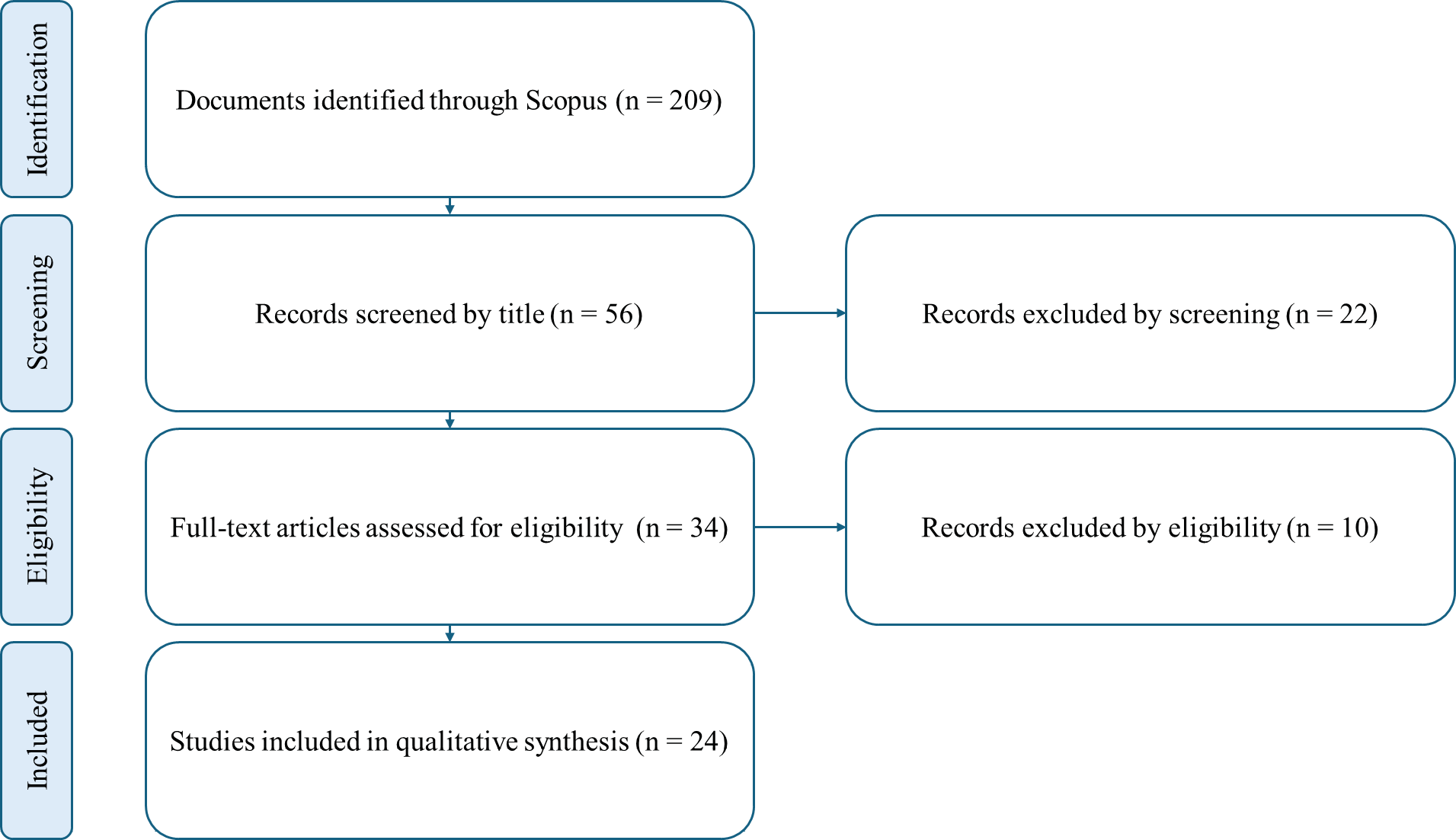
Hence, we filtered by subject area, keeping “Social Sciences”, “Business, Management and Accounting”, “Economics, Econometrics and Finance”, and “Multidisciplinary.” Based on the document type, we kept only articles and reviews. Then, we excluded Chinese as a language. Finally, according to our research question and the explained background, we selected only papers from 2017 to 2024 – the so-called maturity stage of the bioeconomy (Wei et al., 2022). In this way, a subtotal of 56 documents was found.
Based on the research question and the objective of this study, before starting to read titles, abstracts and, eventually, full papers, we defined some criteria:
– no papers with no focus/analysis of innovation processes;
– no papers on business opportunities/product-oriented (with no specific focuses on innovation systems);
– no papers on sustainability assessment;
– no papers on technology’s impact on sustainability;
– no papers on circular economy with no reference to bioeconomy.
After the exclusion of non-compliant papers based on abstracts or full-paper reading or because the document was not findable, we conducted our qualitative research on the final number of 24 papers.
The qualitative analysis was conducted through four main steps:
i. Identification of general information, namely: Nationality of the Institution(s) of the Author(s); Paper’s Topic; Sector(s) or Subsector(s) of the Bioeconomy considered; Study reference Scale; Methodology applied; Innovation Systems Framework adopted; and whether Case Study or not (if yes, where);
ii. Identification of the contextual factors (see Tab. 1 for the considered criteria);
iii. Classification of the papers based on four categories, contrasting on the vertical axis the collaborative-oriented and innovation-oriented papers, while on the horizontal axis the business-centred and policy-centred ones (Fig. 2). The assignment of a paper to one of the categories was concerned primarily with the paper’s research objective. If the research objective was not clear enough, and doubts persisted, the analysis moved to results, discussion and conclusion. However, based on the main focus, none of the papers fell into multiple categories;
iv. Distribution of IS and contextual factors into the four previously identified groups.
In greater detail, the criteria listed in Tab. 1 are extrapolated by Van Lancker et al. (2016). Hence, to assign one factor to one paper, one or more than one of the criteria must be directly addressed in at least one of the sections of the paper. Thus, for example, to assign “challenging commercialisation”, in at least one section there must be the identification of difficulties related to the commercialisation or adoption of bio-based products by other companies (B2B), by the final consumer (B2C) or both.
| Contextual factor | Criteria |
|---|---|
| Radical innovation | · Redesigned business models · Reconfigured supply chains · Setup new supply chains (new convergences of sectors) |
| Complex knowledge base | · Varieties of sciences and technologies |
| Intense cooperation | · Cooperation between different actors |
| Challenging commercialisation and adoption | · Challenging in B2B · Challenging in B2C |
| Policy schemes fragmented | · Different policy schemes · Different administrative levels · Legal limitations for biobased/biomass applications |
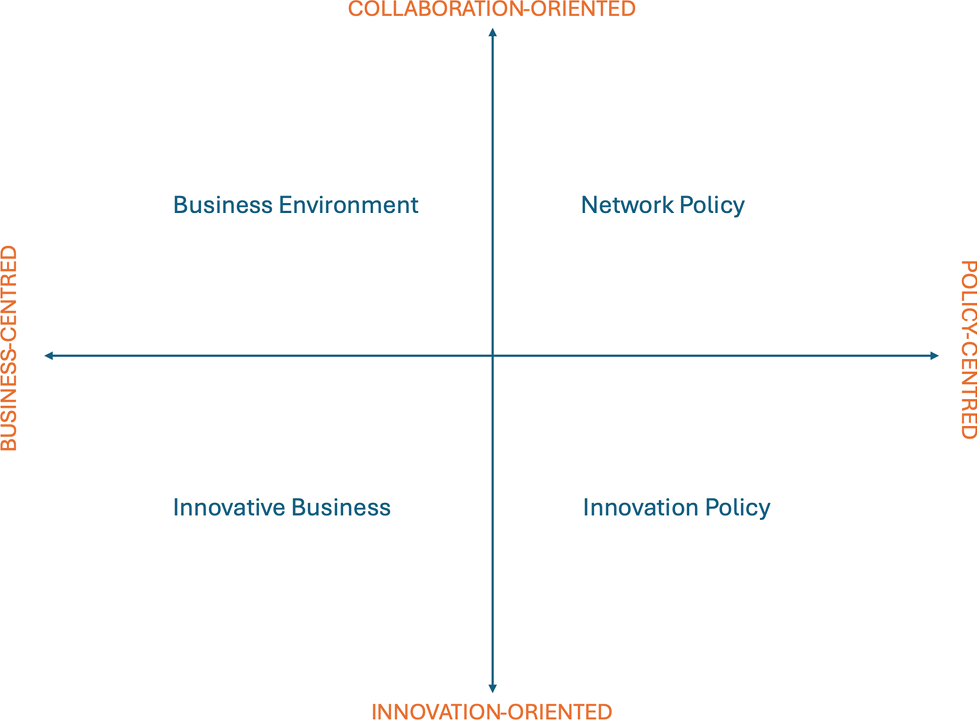
The classification of papers based on the identified four categories represents an original framework developed by the Authors. This framework, taking up the original distinction between technology-based and knowledge-based approaches, broadens its scope and contrasts innovation-oriented papers with collaboration-oriented ones. This choice was made to understand whether, in the study of the bioeconomy, linear approaches to innovation persist or whether, given the relatively recent birth of this sector, the collaborative and systemic model is prevalent in the analysis of the sector. Similarly, the contrast between firm/business-centred research and policy-centred research was adopted to understand the main point of view of today’s research on the topic of innovation in the bioeconomy. The main scope of this contrast was to understand the distinctions in perspectives between two economic branches (namely, business economics and economic policy) and to identify which of the two prevails when it comes to innovation in the bioeconomy. Furthermore, given the importance of these two perspectives, the analysis of the current literature on the topic provides insights in terms of knowledge gaps and future research. Hence, by placing these two contrasts on two axes, four different quadrants were identified, and each of them was named depending on the two dimensions involved. The four quadrants are: I) Network Policy (collaboration-oriented and policy-centred); II) Business Environment (collaboration-oriented and business-centred); III) Innovative Business (innovation-oriented and business-centred); and IV) Innovation Policy (innovation-oriented and policy-centred).Through these groups, it was possible to better understand the differences in IS framework adoption pathways and, focusing on the innovation process, the factors that characterise the bioeconomy context.
In the results section, after a general overview (subsection 3.1) and a description of the contextual factors identified (subsection 3.2), the four groups are used as a lens (subsection 3.3) to explore the relationship among them and IS frameworks adopted by scholars (subsubsection 3.3.1) and among them and contextual factors emerging from the papers (subsubsection 3.3.2).
Considering the geographical location of the authors’ institutes, Europe has the most prominent role, with twenty papers out of twenty-four that involve only European institutes and two papers that involve European and non-European entities (however, in both cases the first Author belongs to a European country). Only in two cases, the Authors are not European, i.e. in one case from Brazil and in the other from Brazil and Australia. At the country level, the most represented country is Germany with 10 contributions, followed by Finland with 5 papers.
In terms of approach, the large majority of papers are applied research with eighteen of them that consider a case study. Lovrić et al. (2020) and Bueno et al. (2022) stand out as the sole studies where the Authors conducted practical research without analysing a specific case. Among the remaining three, two are literature reviews (Lang et al., 2023; Salvador et al., 2021) and one is a commentary (Losacker et al., 2023). Moreover, in terms of methodology, the most used methods are qualitative ones, namely focus groups, semi-structured interviews and questionnaires. Other methods comprise analysis of research projects, social network analysis, system dynamics and innovation systems approaches.
Looking at the reference scale, the National perspective is the most addressed, with twelve papers, followed by the Global perspective with five papers. Other scales, such as Regional or Continental are addressed as well, but respectively in three and two cases. The Municipal and mixed scale (i.e. National plus Regional) are referenced in one article each.
Regarding the bioeconomy sectors or subsectors considered in the papers, the main approach is that of considering the bioeconomy in its general complexity (Bogner and Dahlke, 2022; Chmielińskii and Wieliczko, 2022; Hurtado and Berbel, 2023; Lang et al., 2023; Losacker et al., 2023; Salvador et al., 2021), followed by forestry or wood-based bioeconomy (D’Amato et al., 2022; Giurca and Metz, 2018; Laasonen, 2023; Lovrić et al., 2020) and green chemistry or biofibre (Alfano et al., 2023; Kamath et al., 2023; Korhonen et al., 2020; Loos et al., 2018). Less common is the propensity to consider various sectors at the same time (Pyka, 2017; Scheiterle et al., 2018; Torre et al., 2023).
3.2. Contextual factors identified
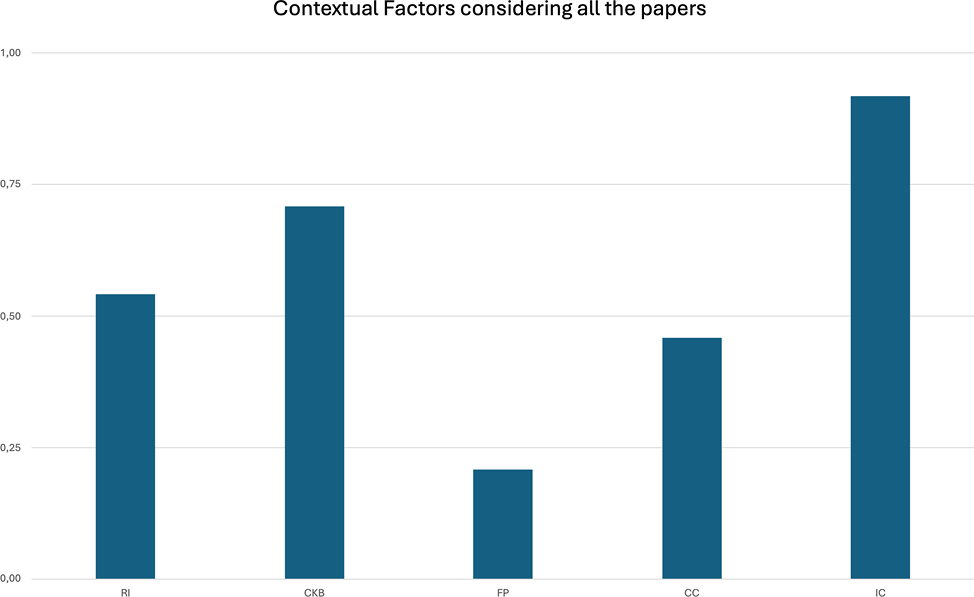
Identifying the contextual factors as outlined by Van Lancker et al. (2016), we found that the most common one is intensive cooperation, a concept that emerged in almost all the papers considered (Fig. 3). Even the complex knowledge base is a widespread factor, discussed or addressed in almost 75% of papers. Radical innovation is covered in just over half of the papers, while slightly less than half examines the challenging commercialisation. Finally, the least explored factor is that of fragmented policy, with less than a quarter of the articles focusing on it.
However, we also found some elements or critiques that, moving away from Van Lancker’s definitions, may deepen the knowledge of the innovative context in the bioeconomy. These aspects are further discussed in the following sections.
This factor is the most addressed by different authors and no changes or modifications are reported in the concept: The idea of different actors that intensely cooperate in the bioeconomy innovation processes is widely perceived as one of the main characteristics of the sector. Furthermore, this result may suggest that, nowadays, the multi-stakeholder approach is perceived as more distinctive than the multidisciplinary approach (see next section on CKB). Bogner and Dahlke (2022) underline the importance of empowering and educating heterogeneous actors (different in age, gender, social and educational background) to stay actively engaged and participate in the innovation process with an ex-ante approach rather than an ex-post acceptance approach.
However, D’Amato et al. (2022) report the difficulty in the Finnish Wood-based Bioeconomy (WBE) to engage in cross-sectoral and cross-discipline knowledge co-production, pointing out the lack of collaborative skills, and organisational differences. Similarly, Laasonen (2023) highlights the positive effects of well-developed relational capabilities, and, on the other hand, the negative impact of their lack on the whole innovation system. A solution to these problems is pointed out by Alfano et al. (2023), which observe the role of clusters in aggregating different actors, that could act as intermediaries and help to overcome the collaboration issues.
Donner and de Vries (2023) underline the importance of small-scale initiatives in the circular bioeconomy business models and the role of geographical embeddedness and the relational proximity of actors. In this vein, the local-based innovation and the importance of local actors are pointed out also by Torre et al. (2023), in their study on rural development, and by Taffuri et al. (2021) in their paper on the urban management of bio-waste. In the former, the Authors underline the effectiveness of knowledge exchange that the multi-level coordination (from national to local) made and the importance of long-term research programs to keep local actors embedded and aware of how collaborative research works. In the latter, the Authors highlight the complex web of stakeholders involved in the CBE paradigm even at the municipality level.
However, in some cases, the difference between IC and CKB is blurred. This is the case with some emerging concepts, such as living labs, where, in the case of Losacker et al. (2023), they are interpreted as places of interdisciplinary interaction, while in the case of Donner and de Vries (2023), they are seen, more in general, as “joint systemic co-creation approaches” (Donner and de Vries, 2023: 13). However, in both cases, the living labs are cited in the “future research” section, underlining the absence of studies in the direction of stable and, more or less, informal collaborations in the bioeconomy.
Although the complex knowledge base of the bioeconomy is widely recognised (e.g. Bogner and Dahlke, 2022; Loos et al., 2018; Scheiterle et al., 2018) and still remains one of the peculiarities of this sector, the papers considered a greater tendency to identify this concept with the terms multi- or interdisciplinarity emerges (see for example Chmielińskii and Wieliczko, 2022; Orozco and Grundmann, 2022; Torre et al., 2023). Chmielińskii and Wieliczko (2022) identify interdisciplinary as a way to catch the overall complexity of the bioeconomy and render a holistic vision. This complexity is also pointed out when addressing the issue of lacking knowledge or capacity. For example, the case of Loos et al. (2018) points out the lack of capacity of the national system for the implementation of a biomass-based value web that involves several professionals and different know-how. In particular, the authors underline the poor awareness and evaluation of by-products as a resource and the need for coordination and support from public institutions. The latter should facilitate innovation diffusion, support applied R&D, and align institutions toward the commercialisation of plantain fibre (the byproduct analysed in the paper). Similarly, Drejerska et al. (2020), point out the lack of managerial know-how in implementing circular biowaste management. These two examples demonstrate how, through a systemic analysis, factors emerge that are difficult to identify in a mere technology-oriented or based on a linear approach. In this vein, in recent years some connected concepts are often addressed together with knowledge base, such as skills (e.g. Alfano et al., 2023) or education (e.g. Chmielińskii and Wieliczko, 2022; Hurtado and Berbel, 2023).
In their paper, Van Lancker et al. (2016) state that “although some existing products and processes may only need some incremental, gradual innovations, the transition [towards the bioeconomy] will mainly require diverse, radically new and disruptive innovations” (Van Lancker et al., 2016: 61). This contrast between a more radical and a more moderate approach to innovation often emerges in the papers analysed, although with varying terminology. For example, Taffuri et al. (2021) apply an “improvement” perspective, by introducing bio-waste valorisation possibilities within the current Metropolitan Solid Waste Management System of a city in northern Italy (i.e. Turin). Kamath et al. (2023) contrast the “path-modernisation” with the “path-creation.” The range of different types of innovation is also part of the work of Orozco and Grundmann (2022), who outline the variation from incremental to disruptive innovations. This latter concept, gains a wide consensus. Indeed, also Lovrić et al. (2020), Bueno et al. (2022), and Losacker et al. (2023) use the term “disruptive” to identify the most radical innovations. However, it is important to underline that, although both radical and disruptive are concepts that imply a deep change, they slightly differ from each other. In fact, the concept of disruptive innovation implies a modification of market dynamics through novel business models and low-end market capture, while the concept of radical innovation is more related to groundbreaking technological advancements (completely new ideas or products) that cause significant organizational transformations within companies (Hopp et al., 2018).
Closer to the concept of “radical” is the concept of “transformative knowledge” explored by Bogner and Dahlke (2022) in their paper on the German bioeconomy policy. Indeed, also in this case the main focus is on the policy side. However, the transition from “innovation” to “knowledge” implies a broadening of the overall vision of the phenomenon, with further dimensions analysed, such as “system knowledge”, “normative knowledge”, “techno-economic knowledge” and “transformative knowledge.” Furthermore, this approach reconnects the concept of RI with that of CKB.
In the papers analysed, radical innovation is also seen from the business side, as emerged with the concept of disruptive innovation. In this field, Giurca and Metz (2018) consider the market formation, while Lazarevic et al. (2020) consider a niche market. Lang et al. (2023) underline the important connection between transformative innovation and the involvement of consumers in bio-based business models. Hence, even from a more business-oriented perspective, the importance of a systemic vision may help (e.g. the business model canvas developed by Salvador et al., 2021).
3.2.4. Challenging commercialisation
The aspect of how challenging is the commercialisation of innovations both for B2B and B2C is addressed both directly and indirectly in the papers considered. For example, Bogner and Dahlke (2022) indirectly address the problem by considering the projects that took place in Germany, documenting a strong focus on the market acceptance of products and processes related to the bioeconomy.
Chmielińskii and Wieliczko (2022) underline the difficulties that findings from research encounter in commercialisation. However, in their statement, the authors do not only imply the importance of convincing potential buyers, but they also call for engaging stakeholders across business, scientific, governmental, and consumer sectors and for using better education at all levels. In this way, they mix business and policy recommendations to systematically enhance the national bioeconomy.
Losacker (2023), more in line with van Lancker, refer to “technology legitimization.” However, this concept encompasses social acceptability and broadens the discussion to a legal aspect. Moreover, Lang et al. (2023) discuss the active role of consumers in influencing business models, while, Korhonen et al. 2020 face the problem of the performativity of biomaterials compared to other materials and the importance of this issue in health risks for humans and the environment, stating that in some cases “it makes sense to use the most durable materials available, regardless of the material’s environmental performance.”
In other words, due to the large number of ethical challenges that the innovation processes have to face in the bioeconomy, it seems that the specific focus on the commercialisation side limits the capacity of this factor to describe the bioeconomy innovation context.
Due to the sectors convergence that characterise the bioeconomy (Lazarevic et al., 2020) the optimisation of policies still represents an issue (e.g. Korhonen et al., 2020). Anyhow, in addition to the low rate of papers that directly address this factor, we found that three policy issues are perceived as more compelling. First, a need for targeted policy interventions (Giurca and Metz, 2018), that implement the nowadays well-established and structured strategies for the bioeconomy (Bogner and Dahlke, 2022; Hurtado and Berbel, 2023). This is the case of the EU, where in addition to the strategy pointed out by the Commission (EC, 2018), almost all MS developed their own strategy (Joint Research Centre European Commission, 2022). An example of successful policy intervention is outlined by Lovrić et al. (2020) in the case of Finnish WBE. In this context, the incremental change from a forestry to a wood-based bioeconomy policy has been perceived as a success for the stakeholders involved thanks to the reduced policy fragmentation.
The second policy issue is the lack of specific funds, considered under several aspects: D’Amato et al. (2022) indicate the limited funding opportunities for cooperating in cross-sectoral initiatives as one of the main tension factors in the Finnish WBE; in Laasonen (2023), the Finnish regional and business development agencies and the research and education organisations point out the need for external funding for R&D activities with other partners as one of the element to keep vital collaborations; Alfano et al. (2023) show that only a small percentage of the green investments made by Italian firms belonging to a biocluster is supported by public funds, with the highest percentage of investments financed by venture capital or traditional bank financing.
The third policy issue is a lack of legal frameworks for new technologies or services in the field of the bioeconomy, as emerged in the challenging commercialisation (see specific section).
Based on these findings, the fragmented policy factor does not describe the overall complexity of policy frameworks in the bioeconomy.
The highest number of papers belongs to the category of Business environment, with nine papers, followed by Network policy with eight (Fig. 4).
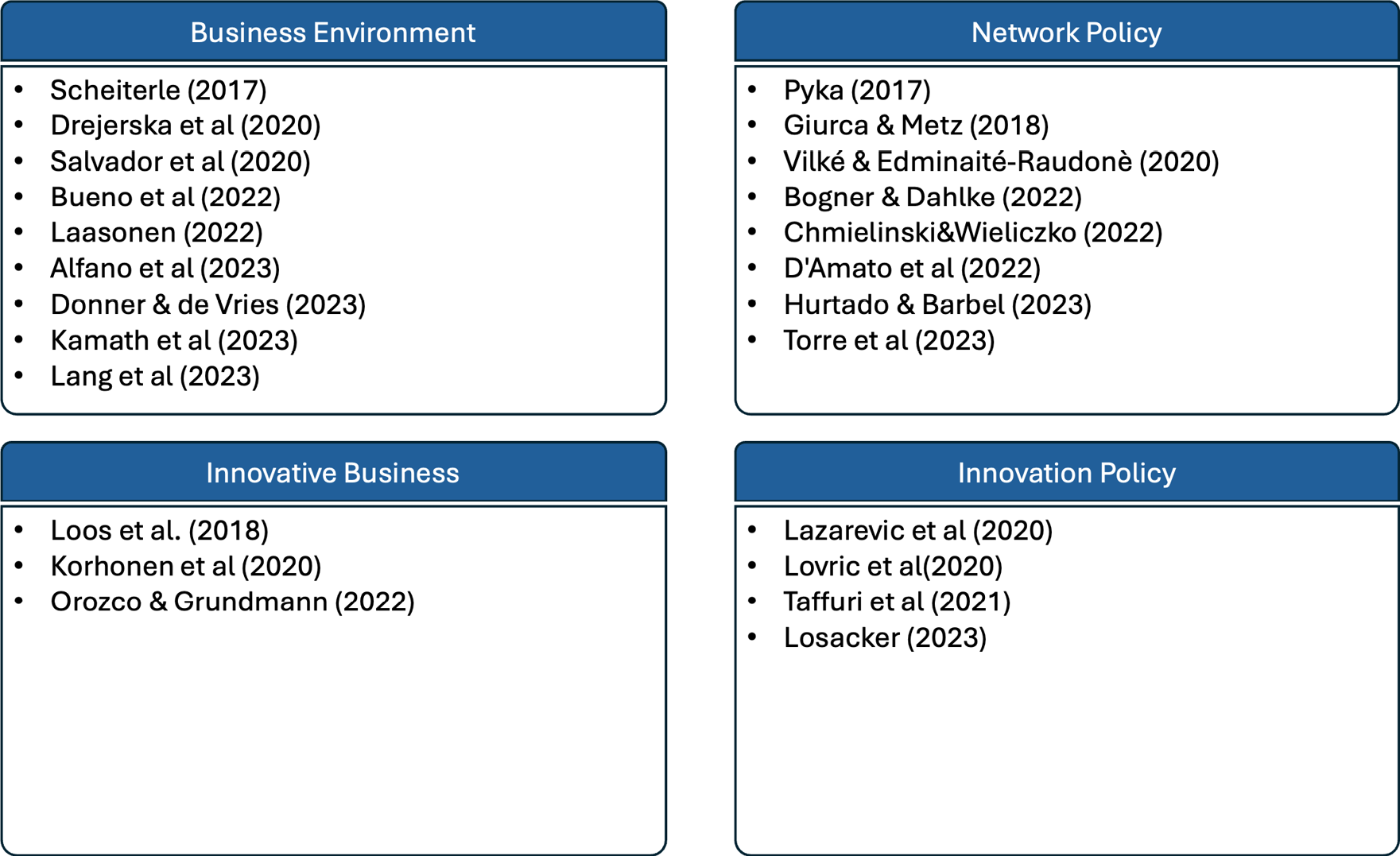
The Innovation Policy group and Innovative Business follow with, respectively, four and three papers. Hence, looking at the four dimensions considered, we found a higher number of papers directly focused on collaboration (seventeen papers) rather than innovation (seven articles), while between business and policy-centred papers we found a balance of twelve papers each.
3.3.1. Groups and Innovation Systems
Although the identification of the Innovation Systems (IS) Framework for each category did not yield significant results, some remarks can be made. In general, there is a wide range of frameworks adopted by different authors . In the first period (2017-2020) we notice a greater diffusion of innovation systems most known in the literature on innovation, i.e. National Innovation Systems (NIS), Regional Innovation Systems (RIS) and Technology Innovation Systems (TIS); while in a second phase (2020-2023) we notice a decline in these systems in favour of other frameworks, such as knowledge-based systems (e.g. Bogner and Dahlke, 2022; D’Amato et al., 2022) or stakeholders analysis (Taffuri et al., 2021). More in detail, looking at the several IS frameworks, the NIS was more adopted in the business-centred (Loos et al., 2018; Scheiterle et al., 2018), TIS in policy-centred papers (Giurca and Metz, 2018; Lazarevic et al., 2020) and RIS in collaboration-oriented studies (Hurtado and Berbel, 2023; Kamath et al., 2023). No specific IS are adopted on the innovation-oriented side.
Delving into the specific groups, no remarks emerge from the Innovative Business and Innovation Policy, while in the case of Business Environment and Network Policy, we notice two peculiarities. In the Business Environment case, there is a tendency to focus with greater detail on sub-groups of the whole IS, adopting concepts like networks (Bueno et al, 2022) or bioclusters (Alfano et al., 2023; Kamath et al., 2023). Instead, the Network Policy group’s peculiarity is the broadening of the vision towards a systemic approach of both innovation and knowledge. Indeed, only in this group, the concept of knowledge is used as a discriminant. For example, Bogner and Dahlke (2022) use different knowledge (i.e. transformative knowledge, system knowledge, normative knowledge and techno-economic knowledge) to identify the different types of policies, while D’Amato et al (2022) discuss the Knowledge co-production within the Finnish WBE. Finally, Chmielińskii and Wieliczko (2022) adopt the framework of Innovation and Knowledge Systems, which can be linked to the broad literature on Knowledge and Innovation Systems (KIS).
3.3.2. Groups and Contextual Factors
Apart from Intense cooperation, which is the most addressed factor in each category, other contextual factors are mostly in line with the IS frameworks outlined above (Fig. 5).
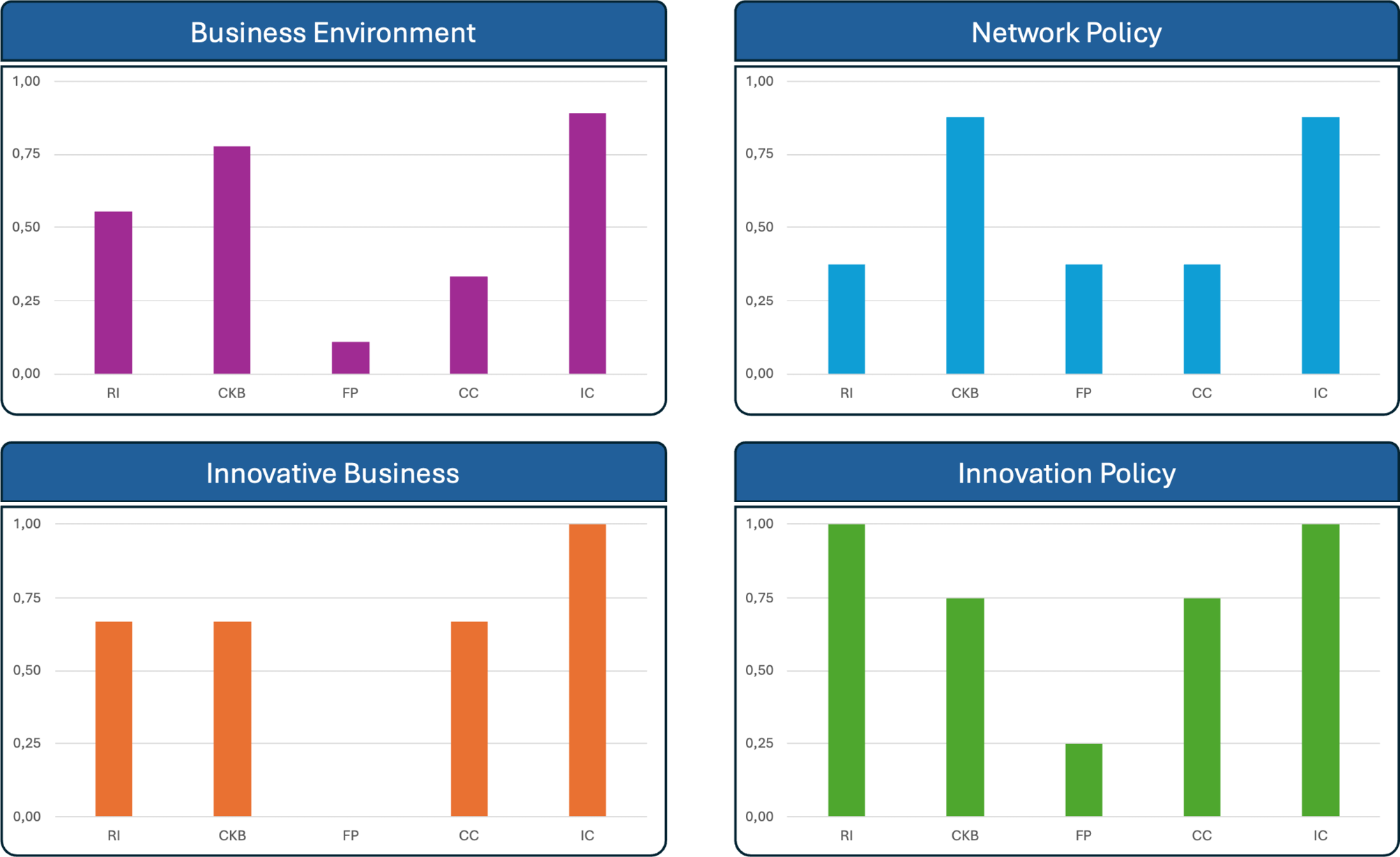
Indeed, Complex Knowledge Base is the most represented factor in collaborative-oriented research, in particular in the Network Policy group, where it is at the same level of Intense Cooperation and this confirms the aforementioned interest in the concept of knowledge in this group. Instead, in innovation-oriented studies, Radical Innovation has a prominent role in the Innovation Policy group, while in Innovative Business, it shares the same rate with Complex Knowledge Base and Challenging Commercialisation. In particular, this latter factor characterises innovation-oriented research more than collaborative-oriented one. The Fragmented Policy is addressed almost only in the policy-centred papers.
The variety of frameworks applied to describe the IS in the bioeconomy hinders the identification of a singular and unified framework. While this abundance of methodologies allows for the analysis of innovative systems from multiple perspectives, moving toward a unique, widely accepted IS may provide some advantages. An example might be provided by one of the most known and successful IS, the Agricultural Knowledge and Innovation System (AKIS) (Germundsson and Norrman, 2023; Ingram and Maye, 2020; Klerkx and Begemann, 2020). Rooted in the studies of Röling (Röling, 1988; Röling and Wagemakers, 1998), Arnold and Bell (2001) and Spielman and Birner (2008), the AKIS framework was supported by various supranational bodies, such as OECD (2012), World Bank (Julio and German, 2001), and EU (EU-SCAR, 2012, 2015, 2019). The latter, in particular, after a gradual introduction of this framework as a policy tool (EU-SCAR, 2012, 2015, 2019), decided to highlight the role of the AKIS introducing it in the Common Agricultural Policy (CAP) 2023-2027 (European Parliament and the Council of the European Union, 2021) and asking MS to assess how the different actors that compose the national AKIS interact and support the production and use of knowledge and innovation (EU CAP Network, 2023). Although this concept is still perceived by many political and administrative decision-makers as vague and there is difficulty in fully understanding it (Knierim and Birke, 2023), a well-functioning AKIS is seen as a way to strengthen the impact of funds and policy interventions, avoiding duplications and saving costs (EU-SCAR, 2019). In this sense, a unique IS for the bioeconomy, as the Knowledge and Innovation System for the Bioeconomy (KISB) proposed by Esposti (2012), might represent a way to determine coherent fund allocations and policy interventions, fulfilling the requests in this direction that we found in this review. In general, this vision might overcome the fragmented and sectorial policy framework that persists in the current bioeconomy. Furthermore, such a tool might be useful not only for policymakers but also for all the other components of the system (Knierim and Birke, 2023). For example, through the analysis of the KISB, several gaps in the system may emerge (e.g. missed brokers or missed technologies) and this may provide to extension services and firms interesting niche markets.
Nevertheless, it is fundamental to keep in mind that some profound differences persist between AKIS and KISB. First, due to its modernizing mission and its focus on increasing the sustainability of the rural world, AKIS’s core components are practitioners, i.e. farmers, foresters, fishers, and food processors (Knierim and Birke, 2023), seen as implementers of practices that have a direct effect on the environment (Schmidt et al., 2022). Instead, as we saw in our findings, the current bioeconomy implies a vision that even overcomes Van Lancker’s Complex Knowledge Base, incorporating knowledge-intensive, high-tech and high organisational and implementation skills. In this sense, the different typologies of practitioners involved in the bioeconomy (e.g. biomaterial producers, bioenergy producers, etc.) expands the audience of stakeholders involved, each with particular needs linked to their own area of interest and reference market. In addition, as we found in this review, the active role of primary producers in the innovation processes of KISB is little explored and, therefore, considered marginal.
Second, the current AKIS literature and the actual policy implementation are mainly focused on extension services (Amerani et al., 2024; Knierim and Birke, 2023), especially in their role as innovation brokers. Based on the papers we considered, this aspect cannot be focal of KISB nowadays because of the current lack of specific research on advisory services in the bioeconomy innovation process. Indeed, to date, research is mainly based on the helix approaches (triple, quadruple and rarely quintuple), considering only the main actors (e.g. business, academia and policymakers) and not connection figures. In this sense, it is not clear whether firms are directly linked to research institutions – with no need for intermediaries –, or if the high-tech innovations in the bioeconomy sector have equipped firms’ in-house R&D with the necessary skills to avoid external advisory services.
Third, AKIS can be considered part of KISB if we consider that agriculture is part of the bioeconomy. Anyhow, the study of the interactions between these two systems is still in its infancy (Chmielińskii and Wieliczko, 2022; Vilkė and Gedminaitė-Raudonė, 2020), with several aspects to be further explored, such as the importance of the national AKIS within a national KISB or the interactions between AKIS and the other IS to form KISB. In particular, can we consider one system overarching the other, or are they synergistic or complementary?
Fourth, the different roles and importance of consumers. On this aspect, the KISB perspective gives a complexity that the contextual factors identified by Van Lancker et al. (2016) do not catch completely. Indeed, both the Challenging Commercialisation and Intense Cooperation do not focus directly on the challenging aspects that characterise the whole innovation process in the bioeconomy. For example, sustainability and circularity concepts are nowadays considered paramount for the bioeconomy (D’Amato and Korhonen, 2021; Drejerska et al., 2020; Lang et al., 2023; Salvador et al., 2021). In this vein, the use of biological resources inevitably raises ethical dilemmas (Viaggi, 2018; Viaggi et al., 2021). An example of this is the possible contrast between food production and the production of other crops (e.g. for biofibres or bioenergy), which is known as the competing dilemma (Asada et al., 2020). Another example is the well-known debate around genetic modifications (Hartung and Schiemann, 2014; Jacobsen et al., 2013; Weisenfeld et al., 2023), which strongly affects the biotechnological component of the bioeconomy (Wei et al., 2022). These two examples give an idea of the importance of stakeholders’ engagement in the innovation development, in particular consumers, citizens and end-users. This could be also the reason why the Intense cooperation is the most accepted contextual factor as emerged from our results. However, many aspects of this cooperation are still unclear. Just to cite some unanswered questions: What are, nowadays, the main drivers? What bottom-up mechanisms characterize cooperation for innovation in the bioeconomy? Is this cooperation market-pushed or policy-driven? How does consumer behaviour influence the whole system in the transition towards new bio-products? What is the role and how do local actors contribute to the implementation of new bioeconomic value chains?
This latter aspect raises questions regarding the dispute that we found among researchers around the issue of Radical innovation. As we saw, researchers are mainly divided between a more moderate and incremental vision of how to implement the bioeconomy (e.g. Taffuri et al., 2021) and a more intense and radical one (e.g. Bogner and Dahlke, 2022). Although opposed, from a KISB perspective these two positions can be reconciled. Indeed, the path-modernisation and the path-creation (Kamath et al., 2023) are both part of the knowledge and innovation processes, with their own actors, mechanisms and characterising factors. Hence, both these two streams of research can contribute to a better understanding of the complexity of innovation in the bioeconomy.
Moreover, all the underlined aspects can benefit both from business-centred and policy-centred research. The business-centred research can largely contribute, through its attitude toward the stakeholder concept (Taffuri et al., 2021; Korhonen et al., 2020) and the sub-systems description (bioclusters, networks, etc.) (Alfano et al. 2023; Bueno et al., 2022; Kamath et al., 2023). Even in this case, the AKIS literature may provide a framework to explore many of the aspects underlined in the previous questions: microAKIS (Sutherland et al., 2023). This framework focuses on the innovation subset of the whole AKIS that operates at the farm’s individual level or, using the description provided by Sutherland et al. (2022), “the sources of knowledge that farmers personally develop to pursue innovations and to manage their farms” (Sutherland et al., 2022: 40). The possibility of exploring the microKISB opens the room to further analysis in the business research, such as new business models, business environment and market creation with a firm-centred systemic perspective. It also allows for considerations in the field of policy-centred research. This stream of research can benefit from the microKISB perspective to draw conclusions about the role of local actors in the transition from national strategies to local implementations. Furthermore, the lack of analysis of the mechanisms of knowledge transmission in the whole system and the pressing requests to combine policy interventions and funds allocations – short and medium-term perspective – with bioeconomy strategies – long-term perspective – also questions the wider KISB perspective (more national-oriented). An example is provided by the emerging issue of education and training in the bioeconomy (Chmielińskii and Wieliczko, 2022; Hurtado and Berbel, 2023; Laasonen, 2023), which represents an interesting point of view for policy considerations to optimize the system’s ability to absorb or generate knowledge (Buchmann and Pyka, 2015; Kurtsal et al., 2024). In this sense, the policy-centred research may merge Intense cooperation with Fragmented policy, showing that the system perspective can, at the same time, explain the mechanisms and propose pathways, as occurs in the study by Hurtado and Berbel (2023).
Hence, both KISB and microKISB can contribute to answering the unanswered questions, combining different levels of research (national, regional, local, etc.), and, at the same time, explaining the mechanisms that regulate all the contextual factors, taken both individually and together.
Finally, considering the least adopted contextual factors, i.e. CC and FP, we saw that in both cases they were limited in their ability to describe the overall complexity of the innovation development processes in the bioeconomy. This may partly explain why they are less explored by the papers considered. Hence, our suggestion is to enlarge both the concepts. The CC should become commercialisation dilemmas (or ethical and market challenges in commercialisation), extending the concept to the ethical aspects of the commercialisation of bioproducts. Instead, the FP should become a complex policy and legal framework, underlining the large mix of different levels of policies and norms that characterize the bioeconomy.
However, this study has some limitations. Excluding the linear approach of innovation from research criteria, part of the innovation processes are excluded. In this sense, future research may include this approach to enlarge the vision of the innovation processes. Similarly, future research may include contributions provided before 2017, the year we chose as the lower limit of our study. Indeed, earlier studies from the Infancy and Exploring stages of the bioeconomy literature may provide further insights for theoretical advancements in knowledge creation and innovation development in the field of bioeconomy.
Furthermore, no specific analysis has been conducted in terms of the current level of innovation in the field of the bioeconomy system. Specific research on this topic is deemed necessary in the future for a better knowledge of the sector and to understand how the bioeconomy fits into the main modern technological processes (e.g. digitalisation, nature-based solutions, etc.).
Finally, consulting a single scientific database (i.e. Scopus) can be considered a limitation of this research, which future research on the topic could overcome by consulting more databases.
In this study, we conducted a systematic literature review to explore the application of the IS framework in the field of the bioeconomy. In particular, the aim was to identify the scope and the characteristics of a KISB framework. We found that a unique framework is nowadays missed. Several approaches were adopted, but rarely with the aim of a theoretical advancement for the whole bioeconomy literature. Indeed, often the approach adopted was the one best fitting for the purpose of the research, with rare examples of the opposite, i.e. to seek a holistic framework that describes innovation processes within the bioeconomy.
However, one of the main results of this study is the possibility of applying and benefiting from a specific KISB. In fact, the mechanisms and dynamics examined in this study go further beyond the simple technology-oriented or linear approach to innovation, as we saw considering the complex amount of skills and professionals needed to implement bioeconomy processes (e.g. in biowaste management). Hence, based on the examined papers, some peculiarities should characterise the KISB. First, based on the result that Intense Cooperation (IC) and Complex Knowledge Base (CKB) are the most common factors, we outlined how the multi-actor and multidisciplinary approaches are fundamental in the bioeconomy innovation processes, and it is not possible to exclude them in the KISB. Second, we found a more intense stream of research in the field of collaborations rather than innovations. In this sense, the efforts made by scholars can strongly contribute to outlining a KISB, for example including the analysis of knowledge development. Third, even if less represented, the innovation-oriented papers add insights in terms of challenging aspects of commercialisation in the bioeconomy. Finally, we found that there is a wide scope for KISB and the connected concept of microKISB (i.e. the innovation subset of the whole KISB that operates at the organisation’s individual level) in both business-centred and policy-centred research. Therefore, KISB and microKISB must be designed in such a way that they can represent an interesting and useful tool for all the actors involved in the bioeconomy innovation process, mainly policymakers, business actors, and researchers.
Furthermore, similarly to AKIS in the current CAP, even KISB may become a policy objective transversal to all the sectors involved. This would make all the operators aware of the actors involved in the knowledge and innovation system, and, on the other hand, the bioeconomy would benefit from a more systemic promotion and sharing of knowledge.
Moreover, looking at the contextual factors of Van Lancker et al. (2017), our suggestion is to enlarge the two less-represented concepts, i.e. challenging commercialization (CC) and fragmented policy (FP). The CC should become commercialisation dilemmas (or ethical and market challenges in commercialisation), extending the concept to the ethical aspects of the commercialisation of bioproducts. Instead, the FP should become a complex policy and legal framework, underlining the large mix of different levels of policies and norms that characterize the bioeconomy.
Alfano, M. R., Cantabene, C., Lepore, A., and Palermo, S. (2023). The green to circular bioeconomy transition: Innovation and resilience among Italian enterprises. Business Strategy and the Environment 32: 6094–6105.
Amerani, E., Nastis, S., Loizou, E., and Michailidis, A. (2024). Cross-Analysis of Agricultural Knowledge and Innovation System of Actors’ Interactions in Greece. Journal of Agricultural Extension 28: 9–23.
Aragón, C., Aranguren, M. J., Iturrioz, C., and Wilson, J. R. (2012). A social capital approach for network policy learning: The case of an established cluster initiative. European Urban and Regional Studies 21: 128–145.
Arnold, E., and Bell, M. (2001). Some New Ideas About Research for Development. Partnership at the Leading Edge: A Danish Vision for Knowledge, Research and Development: 278–316.
Asada, R., Cardellini, G., Mair-Bauernfeind, C., Wenger, J., Haas, V., Holzer, D., and Stern, T. (2020). Effective bioeconomy? a MRIO-based socioeconomic and environmental impact assessment of generic sectoral innovations. Technological Forecasting and Social Change 153: 119946.
Beckenbach, F., Briegel, R., and Daskalakis, M. (2009). Innovation Networks. In Pyka, A. and Scharnhorst, A. (eds), Innovation Networks - Understanding complex systems. Berlin, Heidelberg: Springer Berlin Heidelberg.
Bogner, K., and Dahlke, J. (2022). Born to transform? German bioeconomy policy and research projects for transformations towards sustainability. Ecological Economics 195: 107366.
Boschma, R. (2004). Competitiveness of Regions from an Evolutionary Perspective. Regional Studies 38: 1001–1014.
Bröring, S., Laibach, N., and Wustmans, M. (2020). Innovation types in the bioeconomy. Journal of Cleaner Production 266: 121939.
Buchmann, T., and Pyka, A. (2015). The evolution of innovation networks: An automotive case study. In The Evolution of Innovation Networks: An Automotive Case Study.
Bueno, C. da S., Masago, F. K., da Silveira, J. M. F. J., Moraes, B. de S., Mendes, L. B. B., and Luna, I. R. (2022). Bioenergy emerging paradigm: Collaborative networks and determinants in the upgrading process of technological frontiers. African Journal of Science, Technology, Innovation and Development 14: 1413–1428.
Bugge, M., Hansen, T., and Klitkou, A. (2016). What Is the Bioeconomy? A Review of the Literature. Sustainability 8: 691.
Burmaoglu, S., Sartenaer, O., Porter, A., and Li, M. (2019). Analysing the theoretical roots of technology emergence: an evolutionary perspective. Scientometrics 119: 97–118.
Carayannis, E. G., and Campbell, D. F. J. (2009). ‘Mode 3’ and ‘Quadruple Helix’: toward a 21st century fractal innovation ecosystem. International Journal of Technology Management 46: 201.
Carayannis, E. G., and Campbell, D. F. J. (2010). Triple Helix, Quadruple Helix and Quintuple Helix and How Do Knowledge, Innovation and the Environment Relate To Each Other? International Journal of Social Ecology and Sustainable Development 1: 41–69.
Chmielińskii, P., and Wieliczko, B. (2022). Research and innovation challenges for better policies in food systems and bioeconomy transitions – evidence from Poland. International Food and Agribusiness Management Review 25: 789–801.
Cooke, P. (1992). Regional innovation systems: Competitive regulation in the new Europe. Geoforum 23: 365–382.
D’Amato, D., Korhonen-Kurki, K., Lyytikainen, V., Matthies, B. D., and Horcea-Milcu, A. I. (2022). Circular bioeconomy: Actors and dynamics of knowledge co-production in Finland. Forest Policy and Economics 144: 102820.
D’Amato, D., and Korhonen, J. (2021). Integrating the green economy, circular economy and bioeconomy in a strategic sustainability framework. Ecological Economics 188: 107143.
Donner, M., and de Vries, H. (2023). Innovative Business Models for a Sustainable Circular Bioeconomy in the French Agrifood Domain. Sustainability (Switzerland) 15: 1–29.
Dosi, G., Freeman, C., Nelson, R., Silverberg, G., and Soete, L. (1988). Technical Change and Economic Theory , G. Dosi, C. Freeman, R. Nelson, G. Silverberg, & L. Soete (eds.). Laboratory of Economics and Management (LEM), Sant’Anna School of Advanced Studies, Pisa, Italy.
Drejerska, N., Vrontis, D., Siachou, E., and Golebiewski, J. (2020). System solutions for the circular economy on the regional level: The case of Green Lungs of Poland. Journal for Global Business Advancement 13: 447–468.
Enger, S. G. (2018). Closed clubs: Network centrality and participation in Horizon 2020. Science and Public Policy 45: 884–896.
Esposti, R. (2012). Knowledge, technology and innovations for a bio-based economy: Lessons from the past, challenges for the future. Bio-Based and Applied Economics 1: 235–268.
Etzkowitz, H., and Leydesdorff, L. (2000). The dynamics of innovation: from National Systems and “Mode 2” to a Triple Helix of university–industry–government relations. Research Policy 29: 109–123.
EU-SCAR. (2012). Agricultural knowledge and innovation systems in transition: a reflection paper. Publications Office.
EU-SCAR. (2015). Agricultural knowledge and innovation systems towards the future – a foresight paper. Brussels.
EU-SCAR. (2019). Preparing for Future AKIS in Europe. Brussels, Belgium.:
EU CAP Network. (2023). Learning Portal - Assessing AKIS. https://eu-cap-network.ec.europa.eu/training/evaluation-learning-portal/learning-portal-assessing-akis_en
European Parliament and the Council of the European Union. (2021). Regulation (EU) 2021/2115 of the European Partliament and of the Council. Official Journal of the European Union 2021: 435/1-435/186.
Faulkner, J. P., Murphy, E., and Scott, M. (2024). Bioeconomy, Planning and Sustainable Development: A Theoretical Framework. Sustainability (Switzerland) 16: 1–14.
Garud, R., Tuertscher, P., and Van De Ven, A. H. (2013). Perspectives on innovation processes. Academy of Management Annals 7: 775–819.
GBS. (2024). IACGB Communiqué. Nairobi, Kenya.: https://gbs2024.org/wp-content/uploads/2024/10/IACGB-Communique-24October2024.pdf
Germundsson, L. B., and Norrman, C. (2023). Market Formation and the Role of the Farmer in a Micro-level Agri-food Innovation System. International Journal on Food System Dynamics 14: 394–406.
Giurca, A., and Metz, T. (2018). A social network analysis of Germany’s wood-based bioeconomy: Social capital and shared beliefs. Environmental Innovation and Societal Transitions 26: 1–14.
Godin, B. (2006). The Linear Model of Innovation. Science, Technology, & Human Values 31: 639–667.
Hartung, F., and Schiemann, J. (2014). Precise plant breeding using new genome editing techniques: Opportunities, safety and regulation in the EU. Plant Journal 78: 742–752.
Hopp, C., Antons, D., Kaminski, J., and Salge, T. O. (2018). The Topic Landscape of Disruption Research—A Call for Consolidation, Reconciliation, and Generalization. Journal of Product Innovation Management 35: 458–487.
Hurtado, A. R., and Berbel, J. (2023). Learning, knowledge, and the role of government: a qualitative system dynamics analysis of Andalusia’s circular bioeconomy. Bio-Based and Applied Economics 12: 141–164.
Ingram, J., and Maye, D. (2020). What Are the Implications of Digitalisation for Agricultural Knowledge? Frontiers in Sustainable Food Systems 4.
Jacobsen, S. E., Sørensen, M., Pedersen, S. M., and Weiner, J. (2013). Feeding the world: Genetically modified crops versus agricultural biodiversity. Agronomy for Sustainable Development 33: 651–662.
Johnson, F. X., Canales, N., Fielding, M., Gladkykh, G., Aung, M. T., Bailis, R., Ogeya, M., and Olsson, O. (2022). A comparative analysis of bioeconomy visions and pathways based on stakeholder dialogues in Colombia, Rwanda, Sweden, and Thailand. Journal of Environmental Policy & Planning 24: 680–700.
Joint Research Centre European Commission. (2022). Bioeconomy strategy development in EU regions , M. Borzacchiello, J. Sanchez Lopez, & M. Avraamides (eds.). Publications Office of the European Union.
Julio, A. B., and German, E. (2001). Agricultural knowledge and information systems and poverty reduction. The World Bank: 45.
Kamath, R., Elola, A., and Hermans, F. (2023). The green-restructuring of clusters: investigating a biocluster’s transition using a complex adaptive system model. European Planning Studies 31: 1842–1867.
Klerkx, L., and Begemann, S. (2020). Supporting food systems transformation: The what, why, who, where and how of mission-oriented agricultural innovation systems. Agricultural Systems 184.
Klerkx, L., Van Mierlo, B., and Leeuwis, C. (2012). Evolution of systems approaches to agricultural innovation: Concepts, analysis and interventions. In Farming Systems Research into the 21st Century: The New Dynamic.
Knierim, A., and Birke, F. M. (2023). Visualised AKIS Diagnosis – an Instrumental Approach to Support AKIS Appraisal. EuroChoices 22: 59–70.
Korhonen, J., Koskivaara, A., and Toppinen, A. (2020). Riding a Trojan horse? Future pathways of the fiber-based packaging industry in the bioeconomy. Forest Policy and Economics 110.
Kurtsal, Y., Rinaldi, G. M., Savini, F., Sirri, R., Melin, M., Pacetti, E., De Cesare, A., Fioravanti, M., Luppi, E., Manfreda, G., and Viaggi, D. (2024). Improving the Education and Training Policies of the Agri-Food and Forestry Sectors: Identifying New Strategies to Meet the Needs of the Sector and Farm-to-Fork Priorities. Sustainability (Switzerland) 16.
Laasonen, V. (2023). Exposing the role of relational capabilities in business–research–government cooperation: examples from the transition towards a bioeconomy in Finland. European Planning Studies 31: 1226–1246.
Lang, S., Minnucci, G., Mueller, M., and Schlaile, M. P. (2023). The Role of Consumers in Business Model Innovations for a Sustainable Circular Bioeconomy. Sustainability (Switzerland) 15: 1–19.
Lazarevic, D., Kautto, P., and Antikainen, R. (2020). Finland’s wood-frame multi-storey construction innovation system: Analysing motors of creative destruction. Forest Policy and Economics 110: 101861.
Lewandowski, I. (2018). Bioeconomy , I. Lewandowski (ed.). Cham: Springer International Publishing.
Loos, T. K., Hoppe, M., Dzomeku, B. M., and Scheiterle, L. (2018). The potential of plantain residues for the ghanaian bioeconomy-assessing the current fiber value web. Sustainability (Switzerland) 10.
Losacker, S., Heiden, S., Liefner, I., and Lucas, H. (2023). Rethinking bioeconomy innovation in sustainability transitions. Technology in Society 74: 102291.
Lovrić, N., Lovrić, M., and Mavsar, R. (2020). Factors behind development of innovations in European forest-based bioeconomy. Forest Policy and Economics 111.
Lundvall, B.-Å. (1985). Product Innovation and User-Producer Interaction Product Innovation and User-Producer Interaction. In Product Innovation and User-Producer Interaction (Issue January 1985).
Lundvall, B.-Å. (1992). User-Producer Relationships, National Systems of Innovation and Internationalisation. In Lundvall, Bengt-Åke (ed.), National Systems of Innovation: Towards a Theory of Innovation and Interactive Learning. Pinter Publishers, 45–67.
M’barek, R., and Wesseler, J. (2023). The Rapid Development of Bioeconomy Policies in the EU and other Regions of the World. EuroChoices 22: 5–12.
Malerba, F. (2002). Sectoral systems of innovation and production. Research Policy 31: 247–264.
Moher, D., Liberati, A., Tetzlaff, J., and Altman, D. G. (2009). Preferred reporting items for systematic reviews and meta-analyses: the PRISMA statement. PLoS Medicine 6: e1000097.
Nelson, R., Freeman, C., Lundvall, B.-A., and Pelikan, P. (1988). Part V - National Systems of innovation. In Dosi, G., Freeman, C., Nelson, R., Silverberg, G., and Soete, L. (eds), Technical Change and Economic Theory. Laboratory of Economics and Management (LEM), Sant’Anna School of Advanced Studies, Pisa, Italy, 309–398.
Nelson, R. R. (1993). National Innovation Systems: A Comparative Analysis. Oxford University Press.
OECD. (2012). Improving Agricultural Knowledge and Innovation Systems. In Improving Agricultural Knowledge and Innovation Systems.
Orozco, R., and Grundmann, P. (2022). Readiness for Innovation of Emerging Grass-Based Businesses. Journal of Open Innovation: Technology, Market, and Complexity 8: 180.
Protogerou, A., Caloghirou, Y., and Siokas, E. (2010). The impact of EU policy-driven research networks on the diffusion and deployment of innovation at the national level: The case of Greece. Science and Public Policy 37: 283–296.
Pyka, A. (2017). Dedicated innovation systems to support the transformation towards sustainability: Creating income opportunities and employment in the knowledge-based digital bioeconomy. Journal of Open Innovation: Technology, Market, and Complexity 3: 1–18.
Pyka, A., and Scharnhorst, A. (2009). Innovation Networks , A. Pyka & A. Scharnhorst (eds.). Berlin, Heidelberg: Springer Berlin Heidelberg.
Röling, N. G. (1988). Extension science: Information systems in agricultural development. CUP Archive.
Röling, N., and Wagemakers, A. (1998). Facilitating sustainable agriculture: participatory learning and adaptive management in times of environmental uncertainty. , N. Roling & A. Wagemakers (eds.). United Kingdom: Cambridge University Press.
Rubach, S., Hoholm, T., and Håkansson, H. (2017). Innovation networks or innovation within networks. IMP Journal 11: 178–206.
Russo, M., and Rossi, F. (2009). Cooperation networks and innovation: A complex systems perspective to the analysis and evaluation of a regional innovation policy programme. Evaluation 15: 75–99.
Salvador, R., Puglieri, F. N., Halog, A., Andrade, F. G. d., Piekarski, C. M., and De Francisco, A. C. (2021). Key aspects for designing business models for a circular bioeconomy. Journal of Cleaner Production 278: 124341.
Scheiterle, L., Ulmer, A., Birner, R., and Pyka, A. (2018). From commodity-based value chains to biomass-based value webs: The case of sugarcane in Brazil’s bioeconomy. Journal of Cleaner Production 172: 3851–3863.
Schmidt, P. G., Díaz-Puente, J. M., and Bettoni, M. (2022). How rurality influences interactive innovation processes: lessons learnt from 15 case studies in 12 countries. European Planning Studies 30: 2595–2617.
Spielman, D. J., and Birner, R. (2008). How innovative is your agriculture?: Using innovation indicators and benchmarks to strengthen national agricultural innovation systems. World Bank Washington, DC, USA.
Sutherland, L. A., Adamsone-Fiskovica, A., Elzen, B., Koutsouris, A., Laurent, C., Stræte, E. P., and Labarthe, P. (2023). Advancing AKIS with assemblage thinking. Journal of Rural Studies 97: 57–69.
Sutherland, L. A., Madureira, L., Elzen, B., Noble, C., Bechtet, N., Townsend, L., Zarokosta, E., and Triboulet, P. (2022). What Can We Learn from Droppers and Non-adopters About the Role of Advice in Agricultural Innovation? EuroChoices 21: 40–49.
Taffuri, A., Sciullo, A., Diemer, A., and Nedelciu, C. E. (2021). Integrating circular bioeconomy and urban dynamics to define an innovative management of bio-waste: The study case of turin. Sustainability (Switzerland) 13.
Torre, A., Wallet, F., and Huang, J. (2023). A collaborative and multidisciplinary approach to knowledge-based rural development: 25 years of the PSDR program in France. Journal of Rural Studies 97: 428–437.
Van Lancker, J., Wauters, E., and Van Huylenbroeck, G. (2016). Managing innovation in the bioeconomy: An open innovation perspective. Biomass and Bioenergy 90: 60–69.
Viaggi, D. (2018). The bioeconomy: delivering sustainable green growth , D. Hemming (ed.). Oxfordshire, UK ; Boston, MA: CABI.
Viaggi, D. ., Bartolini, F., and Raggi, M. (2021). The Bioeconomy in economic literature: looking back, looking ahead. Bio-Based and Applied Economics 10: 169–184.
Vilkė, R., and Gedminaitė-Raudonė, Ž. (2020). Collaboration between government and agribusiness for biogas production: Balanced development of rural sustainability. Public Policy and Administration 19: 298–313.
Vivien, F.-D., Nieddu, M., Befort, N., Debref, R., and Giampietro, M. (2019). The Hijacking of the Bioeconomy. Ecological Economics 159: 189–197.
Vogelpohl, T., and Töller, A. E. (2021). Perspectives on the bioeconomy as an emerging policy field. Journal of Environmental Policy and Planning 23: 143–151.
Wei, X., Liu, Q., Pu, A., Wang, S., Chen, F., Zhang, L., Zhang, Y., Dong, Z., and Wan, X. (2022). Knowledge Mapping of bioeconomy: A bibliometric analysis. Journal of Cleaner Production 373: 133824.
Weisenfeld, U., Hauerwaas, A., Elshiewy, O., Halder, P., Wesseler, J., Cingiz, K., and Broer, I. (2023). Beyond plastic – Consumers prefer food packaging derived from genetically modified plants. Research Policy 52: 104883.
1 Scopus, Elsevier B.V., https://www.scopus.com/, last seen 04/02/2025