Received: February 25, 2025; Accepted: July 27, 2025; Published: 2025-12-30
Agritech policy landscape: Insights from relevant stakeholders on policy issues and strategic plans in Italy
University of Bologna, Italy
*Corresponding author. E-mail: ahmed.moussaoui2@unibo.it
Abstract. Agricultural practices face growing challenges, including climate change, resource constraints, meeting sustainability goals and food security. This study examines stakeholder perspectives on smart farming technologies and their integration into policy frameworks. A mixed-method approach, using triangulation of qualitative and quantitative data, combines an online survey (targeting experts from academia, industry, and policymaking) distributed through the Agritech project network and face-to-face interviews (engaging key stakeholders with in-depth knowledge of agricultural policy and technology implementation). Key findings reveal significant optimism about the potential of smart technologies to enhance efficiency, sustainability, and productivity in agriculture. However, widespread adoption is hindered by barriers such as high initial investment costs and a lack of technical knowledge. The study identifies policy gaps and provides actionable recommendations, including financial incentives, capacity-building initiatives, and improved infrastructure, to support the integration of these technologies. The findings underscore the critical need for adaptive policies that align with the evolving landscape of agricultural innovation, ensuring equitable access and long-term sustainability.
Keywords: Agritech, technology adoption, European agricultural policy, sustainability, stakeholders’ perspectives.
Index
2.2. Qualitative data collection
2.3. Quantitative data collection
3.1. Cross-cutting perspectives on smart technology adoption
3.1.1. Geographic distribution and professional sectors of the online survey
3.1.2. Policy awareness and integration
3.2. Technology-specific insights
3.2.1. Perspectives on robotic systems
3.2.2. IoT for resource optimization
3.2.3. Sensor platforms and remote sensing technologies
3.2.4. Role of artificial intelligence and machine learning in agriculture
3.2.5. Nature-based solutions and renewable agriculture
3.2.6. Novel spectral interface technologies
5. Conclusion and Policy Implications
The global agricultural sector faces increasing challenges in balancing productivity, sustainability, and environmental responsibility. Climate change and resource constraints are putting increasing pressure on agricultural systems, whereas food security remains a multifaceted challenge that goes beyond production. Ensuring stable access to affordable, nutritious food also depends on market structures, distribution networks, and social inclusion (FAO, 2021). While technological innovation can support more efficient and sustainable production, it must be embedded within broader strategies that address systemic barriers to food security (FAO, 2021; IPCC, 2023). Given the limitations of arable land and the growing demand for sustainable food production, smart agriculture technologies are gaining recognition as a key driver of transformation. These technologies, encompassing sensor-based systems, IoT configurations, AI applications, and renewable energy solutions, offer advanced tools for precision farming, real-time monitoring, and resource optimization (Basso and Antle, 2020; Finger et al., 2019; Knierim et al., 2019). However, their adoption remains low and uneven despite their potential, primarily due to high initial costs, limited technical knowledge, and inadequate infrastructure (Akimowicz et al., 2021). These barriers are particularly pronounced for small and medium-sized farms, which often lack the necessary resources and institutional support to implement such technologies effectively.
Recent research by Menozzi et al. (2023) also highlights that farmers’ decisions to engage in sustainability practices are shaped not only by economic incentives but also by behavioral drivers, such as perceived control and peer influence. In the case of digital agriculture, these behavioral aspects, especially regarding trust in digital systems and ease of use, are equally important and deserve policy attention.
Complementing this view, Giampietri et al. (2020) emphasize the role of trust in intermediaries and institutional transparency in shaping farmers’ willingness to adopt CAP-subsidized risk management tools. While their study addresses instruments like insurance and mutual funds, our work extends this behavioural framing to digital agriculture, where trust also involves confidence in data systems and algorithm-based decision-making. While these behavioral dynamics were not the primary focus of our empirical study, they provide a valuable conceptual lens through which to interpret stakeholder concerns around adoption.
A well-structured policy environment is critical in facilitating the adoption of smart agriculture technologies. Policies that support financial incentives, training programs, and rural infrastructure development can significantly enhance accessibility and encourage broader implementation among diverse farming operations (Détang-Dessendre et al., 2018). While existing frameworks, such as the Common Agricultural Policy (CAP), the Green Deal, and the Farm to Fork Strategy, emphasize the role of innovation in agricultural sustainability, they exhibit notable gaps in addressing key adoption barriers. For instance, the CAP’s current funding mechanisms primarily benefit large-scale farms with greater financial capacity, leaving smallholders with limited access to grants and subsidies necessary for adopting high-cost digital technologies (Lovec et al., 2020). Additionally, despite the Green Deal and Farm to Fork Strategy highlighting the need for sustainable agriculture, they fall short in prioritizing investments in rural digital connectivity, an essential component for integrating smart technology, particularly in remote agricultural regions (Ehlers et al., 2022). There is a need for proactive and adaptive policy approaches that address both financial and technical barriers while fostering stakeholder collaboration and long-term sustainability.
This study aims to examine stakeholder perspectives on the adoption challenges and opportunities of smart agriculture technologies and identify policy interventions that can facilitate their broader integration. Using a mixed-method approach, the research combines qualitative interviews with key stakeholders and a quantitative online survey to gather diverse insights on the policy landscape, adoption barriers, and potential solutions. The analysis applies triangulation between the qualitative and quantitative findings to strengthen the interpretation of results and ensure that policy recommendations are grounded in multiple sources of evidence. The findings contribute to the existing literature by bridging the gap between technological advancements and policy implementation, providing evidence-based recommendations to enhance the diffusion of technology in agriculture.
This study is part of the Agritech project, a national research initiative funded by the Italian National Recovery and Resilience Plan (PNRR) that brings together universities, research institutions, and industry stakeholders to foster innovation in precision agriculture, AI, and sustainable farming. Conducted within Spoke 3, which focuses on policy frameworks and governance for smart agriculture adoption, this research builds on prior project activities that mapped key actors in the innovation ecosystem and developed targeted engagement strategies (AGRITECH, 2023). The stakeholder database, created in the framework of the project, enabled the distribution of our questionnaires through a trusted and well-informed network, ensuring policy-relevant insights from diverse, experienced participants across academia, industry, and policymaking.
The paper first describes the methodological framework, detailing the qualitative and quantitative data collection and analysis approaches. It then presents key findings, highlighting stakeholder perspectives on the benefits and challenges of smart agriculture technologies. The discussion explores the broader implications for policy and practice, focusing on the need for strategic policy interventions to overcome adoption barriers. Finally, the study concludes with recommendations for future research and actionable policy measures to foster a more supportive environment for smart agriculture innovation.
To comprehensively assess stakeholder perspectives on smart agriculture technologies, this study employed a mixed-method approach, integrating qualitative and quantitative data collection techniques. This methodological choice is well-suited for exploring complex issues such as technology adoption in agriculture, as it allows for in-depth insights from expert stakeholders while also capturing broader trends in the sector (Creswell & Clark, 2017; Fielke et al., 2020). The combination of qualitative interviews and a structured online survey aims to strengthen the study’s analytical depth by triangulating stakeholder perceptions across different backgrounds and levels of expertise.
Given the exploratory aim of this research and considering the quantitative sample size, the survey quantitative data primarily serve to identify general trends and perceptions rather than provide statistically robust conclusions. This quantitative approach is complemented by the qualitative interviews, which offer deeper, context-rich insights. By combining both qualitative and quantitative data, we follow an established methodological practice known as triangulation, enhancing the reliability and validity of our findings through cross-verification (Fetters et al., 2013).
The review of the existing literature revealed that previous research has often examined technology adoption in agriculture from either a purely economic or behavioral perspective. The focus of this study is to integrate policy dimensions and directly involve stakeholders from multiple sectors, including academia, technology providers, policy institutions, and farmers’ associations. This holistic approach, which explicitly links technological innovation with policy development, represents a novel contribution to the existing body of literature.
The study focused on stakeholders in Italy. While Emilia-Romagna, one of Italy’s most technologically advanced agricultural regions, was the starting point of the stakeholders’ mapping, the survey distribution and interviews also involved participants from other key agricultural areas such as Puglia, Lombardia, and Veneto. This broader geographical engagement allowed the research to capture a more representative view of the national smart agriculture policy landscape.
Both qualitative and quantitative components of the study shared a common core of thematic focus, centering on:
– The barriers and drivers of smart agriculture technology adoption.
– The role of existing policies in shaping adoption trajectories.
– The perceived needs for policy innovation to facilitate broader uptake.
These dimensions were used both to frame the design of the survey and interviews and to guide the interpretation of findings in the results and discussion sections. Rather than formal hypotheses, they function as thematic pillars for an exploratory investigation into how policy, behavior, and technology interact in the current agricultural innovation landscape.
This methodological design aims to ensure a holistic assessment of the policy landscape surrounding smart agriculture technologies, while providing valuable insights for both academic discourse and policy formulation.
2.2. Qualitative data collection
The qualitative phase focused on gathering comprehensive insights from experts with extensive knowledge of smart agriculture technologies and policies. It was essential to understanding the barriers and opportunities surrounding the adoption of these technologies. A semi-structured interview format was used to ensure a structured approach, allowing for a mix of predefined questions and open-ended discussions. This approach provided a comprehensive view of stakeholder experiences, enabling the identification of key themes related to technology adoption and policy needs.
In-depth qualitative interviews were conducted with carefully selected experts in smart agriculture technologies and policy. These interviews were designed to elicit rich, detailed insights from highly experienced individuals. Although the final sample comprised five (5) participants, The decision to proceed with these interviews was taken based on the principle of thematic saturation, that is, the point at which no substantially new insights emerge from additional interviews (Guest et al., 2006). Given the specificity and expertise of our respondents, the interviews provided consistent and robust information across key themes. This approach aligns with accepted qualitative research standards, where small, purposively selected samples are typical and appropriate for exploratory, expert-based investigations (Creswell, 2013).
The questionnaire was designed based on the Agricultural Knowledge and Innovation System (AKIS) framework, which highlights the importance of multi-actor collaboration in agricultural innovation. It was structured into five main sections: (1) the respondent’s background and expertise, (2) their perspectives on smart agriculture technologies, (3) challenges related to adoption, (4) awareness and evaluation of current policies, and (5) recommendations for improving policy support. This structured design ensured that responses covered both technical and policy-related dimensions, making this phase a crucial foundation for the overall study.
Participants were selected through a purposive sampling approach, ensuring that only individuals with significant expertise and direct involvement in the field were included. The selection process was based on a stakeholder mapping exercise carried out earlier in the Agritech project. Experts were identified from three key groups: public sector representatives involved in agricultural policy, academic researchers specializing in precision agriculture and rural policy, and industry professionals working with smart agriculture technologies and farmer cooperatives. This targeted selection process ensured a diverse yet highly relevant sample, strengthening the credibility of the findings.
Interviews were carried out face-to-face whenever possible, allowing for detailed discussions and clarifications. In cases where in-person meetings were not feasible, remote interviews were held. Five key experts participated in this qualitative survey. Thematic and textual analysis was used to process the responses, identifying recurring themes and key insights. The results from this phase informed the refinement of the quantitative survey in the next stage of data collection, ensuring that the study captured both broad trends and in-depth perspectives.
2.3. Quantitative data collection
The second data collection phase involved an online questionnaire to capture broad stakeholder perspectives on smart agriculture technologies, their adoption, perceived benefits, policy awareness, and associated challenges. This structured survey was designed to complement the qualitative insights gathered in the first phase by providing quantifiable data to identify patterns and validate expert opinions. The integration of both qualitative and quantitative methods was an attempt to ensure a comprehensive and balanced understanding of the key factors influencing the adoption of smart agriculture technologies.
The online questionnaire was adapted from the qualitative questionnaire, and structured into multiple sections, each addressing a critical aspect of technology adoption and policy implications. The first section focused on general respondent information, including their professional background, sector of activity, and geographic location, allowing for an analysis of how perspectives varied across different stakeholder groups. The second section examined familiarity and involvement with smart agriculture technologies, prompting respondents to indicate their level of knowledge and direct engagement with specific technologies, such as robotics, IoT, AI, renewable agri-systems, and spectral technologies. The third section examined the perceived contributions of these technologies, evaluating opinions on their potential to improve agricultural productivity, resource efficiency, environmental sustainability, and labor optimization.
A key component of the questionnaire was its focus on policy awareness and barriers to adoption. Respondents were asked whether they were aware of existing policies that support smart agriculture technologies, providing insights into the effectiveness of current policy communication and identifying gaps where improved dissemination of information might be needed. Additionally, the survey investigated major obstacles preventing the widespread adoption of these technologies, including financial constraints, technical knowledge gaps, regulatory barriers, and infrastructure limitations. The final section solicited policy recommendations, encouraging respondents to suggest changes to existing policies or propose new policy instruments that could facilitate the integration of smart agriculture technologies into mainstream agricultural practices.
The questionnaire was strategically distributed across multiple channels to ensure a high-quality and representative dataset. It was shared within the Agritech project network, reaching academics and researchers with expertise in agricultural policy, technology, and innovation. It was also circulated among stakeholders from the previously established project stakeholders’ network, including policymakers, industry representatives, farmers’ associations, and technology developers, potentially reaching over 90 persons. This distribution strategy was designed to maximize diversity in respondent backgrounds while maintaining a high level of expertise in the responses collected.
The sampling approach was purposive, targeting individuals with direct experience and informed perspectives on adopting smart agriculture technologies. Rather than aiming for a large random sample, the focus was on obtaining high-quality responses from knowledgeable stakeholders whose input could provide valuable insights into policy needs and adoption challenges. A total of 35 responses were collected, and after applying validity criteria, 20 responses were retained for final analysis. While this sample size may appear modest for a quantitative survey, it is consistent with expert-elicitation methods in policy and innovation research, where depth of knowledge and professional insight are prioritized over statistical representativeness (Baker et al., 2013).
The criteria for inclusion ensured that responses were complete, internally consistent, and provided by individuals with relevant expertise in the field of smart agriculture. Validity was assessed based on completeness, consistency, and relevance to the research topic. Responses that were incomplete, contained inconsistencies, or came from participants with no clear connection to smart agriculture were excluded. Both the online questionnaire and the qualitative interviews were conducted in parallel in the same period of time.
Rather than claiming statistical generalizability, the primary goal of the quantitative data is to highlight general patterns, stakeholder perspectives, and areas needing policy attention. These quantitative insights are therefore exploratory and are critically supported and contextualized through the qualitative findings obtained from in-depth expert interviews, ensuring that the interpretations are robust and contextually meaningful.
While the sample size of five qualitative interviews and 20 valid quantitative responses may appear limited, it is justified by the methodological rigor applied in the selection and analysis processes. The qualitative interviews were conducted with carefully selected key stakeholders representing different sectors of agriculture, including policy, research, and industry, ensuring expert-driven insights. Thematic saturation was reached, as no significantly new themes emerged in later interviews, suggesting that the core challenges and opportunities had been effectively captured (Baker et al., 2013).
For the quantitative survey, although the response count is modest, it reflects targeted participation from experienced stakeholders within the Agritech project network and a pre-established stakeholder database. The respondents’ expertise ensured high-quality, informed perspectives, making the findings valuable for understanding adoption trends and policy needs. Future research could expand the sample size to further validate the findings.
The analysis of the collected data followed a structured multi-step approach, integrating both qualitative and quantitative methodologies to ensure a comprehensive interpretation of stakeholder perspectives on the adoption of smart agriculture technology and policy needs. Given the mixed-methods nature of the study, different analytical strategies were applied to the qualitative and quantitative datasets to maximize the depth and reliability of insights.
The qualitative data obtained from face-to-face interviews were manually analyzed using a combination of textual synthesis and thematic analysis. This approach was chosen to extract detailed insights from expert responses while maintaining the depth and context of qualitative feedback. In particular, thematic analysis involved identifying recurring patterns in the responses related to technology adoption, policy gaps, financial constraints, and regulatory needs (Kiger & Varpio, 2020). While the analysis was primarily descriptive, it provided structured insights into the challenges and opportunities surrounding each specific smart technology developed in the Agritech project. The responses were synthesized into key themes aligned with the study’s focus, ensuring stakeholders’ perspectives on technology diffusion, policy barriers, and suggested interventions were effectively captured.
To ensure a structured interpretation of the qualitative data, insights were categorized into two main dimensions. The first focused on technology-specific insights, where each smart technology of the Agritech project, namely: IoT, AI, sensor-based systems, and robotics, was examined separately. Responses highlighted perceived benefits, adoption challenges, and policy needs unique to each innovation. The second dimension analyzed the broader policy environment, capturing stakeholder views on existing policy frameworks, gaps in regulatory support, and recommendations for improving policy measures. This approach ensured that the qualitative findings were systematically organized, aiming to understand stakeholder perspectives.
Given the exploratory purpose and the sample size, the quantitative data obtained from the online survey were analyzed in XLSTAT using basic descriptive statistical methods (frequencies, percentages, and cross-tabulations) to highlight general trends and stakeholder perceptions regarding smart technology adoption, rather than conducting in-depth statistical tests. Frequency distributions were used to summarize categorical variables such as familiarity with specific technologies, perceived benefits, policy awareness, and adoption challenges. Cross-tabulations were applied to compare stakeholder perspectives across different professional sectors. Additionally, mean and standard deviation calculations were used to analyze responses on Likert-scale questions, assessing attitudes toward policy effectiveness, investment challenges, and knowledge dissemination needs.
The findings from the quantitative analysis provided a broad overview of key trends in technology adoption and policy perceptions. These insights were cross-referenced with the qualitative findings to ensure that the study’s conclusions were supported by both in-depth expert opinions and a wider range of stakeholder perspectives.
The presentation of results follows the dual structure of our research design, distinguishing between general (cross-cutting) trends observed across stakeholders from the online survey (Section 3.1) and technology-specific insights derived from expert qualitative interviews (Section 3.2).
3.1. Cross-cutting perspectives on smart technology adoption
3.1.1. Geographic distribution and professional sectors of the online survey
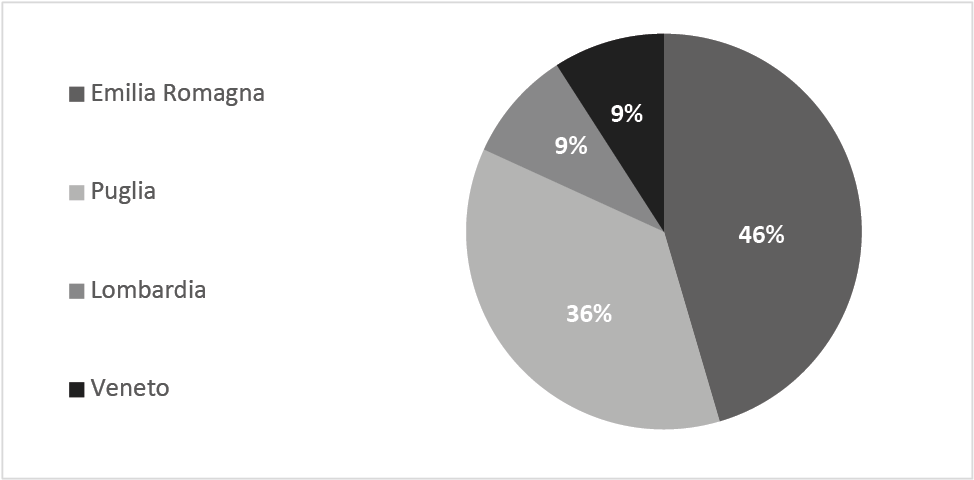
The geographic distribution of online respondents shows a balanced representation from Italy’s major agricultural regions (figure 1), with the highest representation from Emilia Romagna (46%), followed by Puglia (36%), and smaller contributions from Lombardia and Veneto (9% each). This distribution indicates a blend of perspectives from key agricultural areas, offering insights into potential regional variations in technology adoption and policy needs within the smart technologies sector.
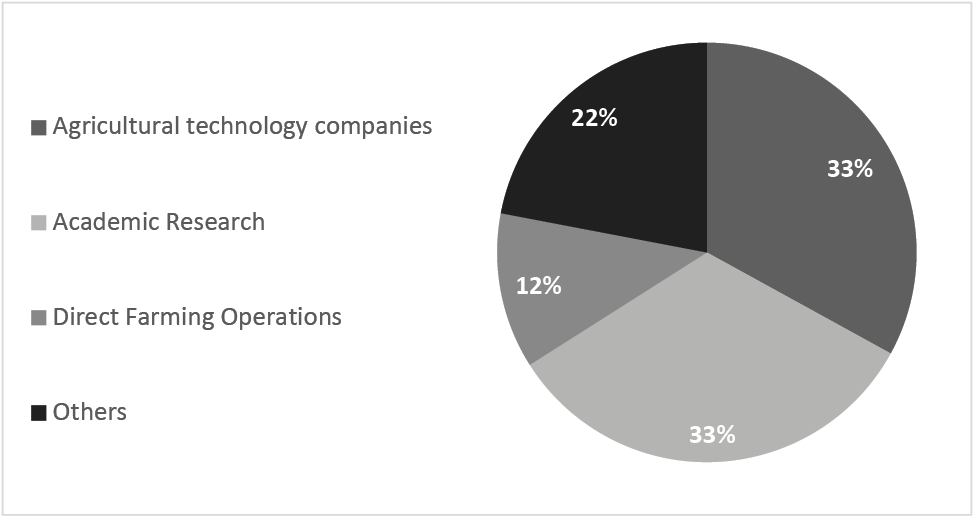
In terms of professional sectors, the respondents represented a broad spectrum within the agricultural and smart technologies domains (figure 2). Approximately 33.33% of participants were involved in agricultural technology, including roles related to software development and research in precision agriculture. Another 33.33% came from academic backgrounds, emphasizing the importance of research-driven insights in advancing smart technologies solutions. Direct farming operations accounted for 12% of respondents, ensuring representation of the practical, on-ground perspective crucial to understanding adoption barriers. The remaining participants were involved in diverse areas, including professional training, technological transfer, manufacturing, and viticulture. This multifaceted representation highlights the need for cross-sectoral collaboration to create comprehensive and inclusive smart technology adoption policies.
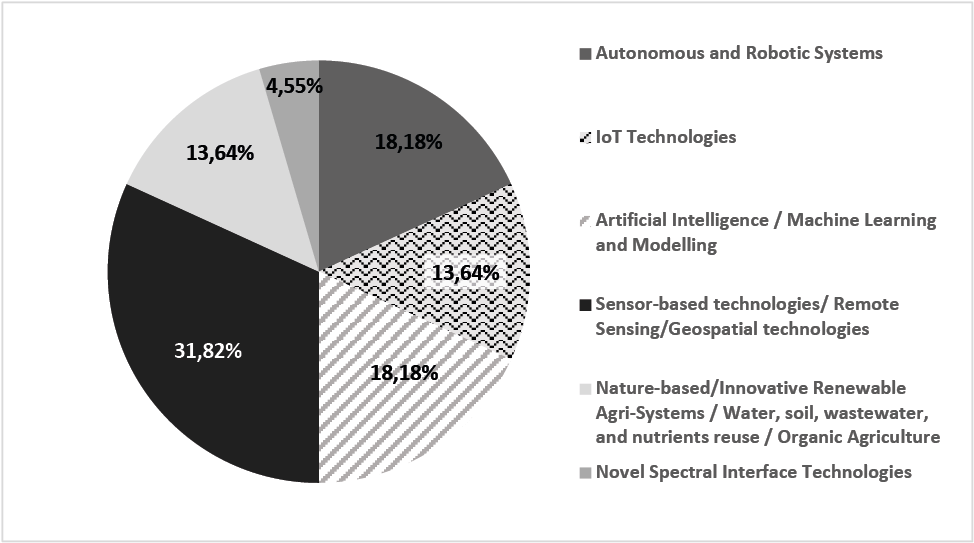
The level of involvement with specific smart agriculture technologies varied among online respondents (figure 3). Sensor-based technologies emerged as the most familiar, with 31.82% of respondents indicating familiarity. Autonomous systems, AI, IoT, and nature-based renewable systems each garnered attention from 13%-18% of respondents, reflecting a broad interest in diverse smart agricultural innovations. Novel spectral interface technologies were the least familiar, with only 4.55% of respondents indicating involvement or interest, which could be attributed to limited applications or high implementation costs.
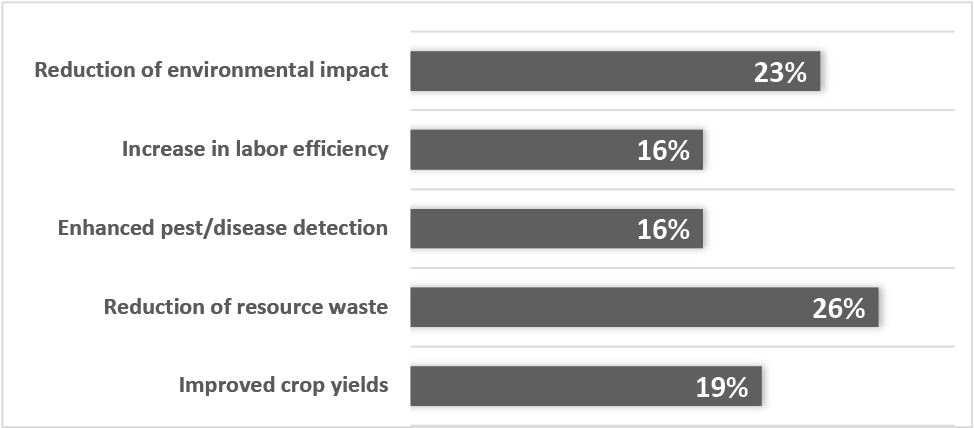
Online Respondents identified several primary contributions of smart technologies to the agricultural sector (figure 4). The leading perceived benefit was resource waste reduction, cited by 25.81% of participants as a crucial advantage. Closely following was the potential for reducing environmental impact, highlighted by 22.58% of respondents as a key benefit. Improved crop yields were also a prominent contribution, recognized by 19.35% of participants as a fundamental outcome of adopting smart technologies. Enhanced pest, as well as disease detection and increased labor efficiency were both identified as significant benefits, with each selected by 16.13% of respondents. Interestingly, none of the respondents chose the “Others” option, suggesting that the primary contributions listed were comprehensive enough to cover stakeholders’ perceptions of the benefits of smart technologies.
3.1.2. Policy awareness and integration
The survey revealed varied levels of policy awareness among respondents. A substantial portion, 50%, expressed uncertainty regarding whether smart agriculture technologies are acknowledged within existing policy frameworks, suggesting a need for clearer communication on policy provisions. In contrast, 37.50% of respondents believed that relevant policies do exist, while 12.50% indicated an absence of any supportive policy. Several specific frameworks were noted among those who confirmed policy awareness, including PAC 2023-27, Agenda 2030, and precision farming policies. Additionally, respondents mentioned partial policy alignment with broader frameworks such as the Green Deal, Farm to Fork, and Soil and Biodiversity Strategies. This feedback highlights a fragmented policy environment where existing frameworks recognize the importance of innovation in agriculture but lack specific support for smart agriculture technologies.
Survey participants identified significant barriers impacting the adoption of smart agriculture technologies, primarily focusing on high initial investment costs and limited technical knowledge. 45% of respondents cited each of these factors, emphasizing the need for financial strategies and educational initiatives to address these challenges. Additionally, 10% of respondents noted limited infrastructure as an obstacle, highlighting the importance of developing robust infrastructure to support connected technologies like IoT. None of the respondents considered regulatory barriers an issue, suggesting that financial and knowledge-based obstacles are the most immediate concerns. These findings imply that while policies supporting smart agriculture technologies exist, they are not tailored to alleviate farmers’ specific challenges, particularly small and medium-sized operations with limited capital and expertise.
Participants offered a range of recommendations for policy adjustments that could facilitate the adoption of specific smart agriculture technologies. For autonomous and robotic systems, respondents suggested financial incentives, such as non-repayable grants, and the diddemination of broader information to raise awareness. IoT technologies were identified as requiring targeted training programs, while AI and machine learning would benefit from a structured data-sharing framework and technical support to aid users in navigating complex algorithms. Sensor-based technologies require policies that focus on transforming raw data into actionable information, enabling farmers to make informed decisions based on real-time insights. For renewable agri-systems, respondents suggested training vouchers and regulatory adjustments to support organic and sustainable practices. These policy recommendations emphasize the importance of tailoring support mechanisms to the distinct requirements of each smart agriculture technology, thus enhancing both accessibility and usability.
Online survey respondents prioritized several key research questions to guide future policy development regarding smart agriculture technologies. Approximately 44.44% of participants identified “How can government policies foster innovation in agriculture?” as the most pressing question, signaling strong interest in government’s direct role in driving technological advancements. Equally prioritized was “How can smart agriculture technologies be integrated into the existing agricultural system?” indicating that the practicalities of implementing new technologies within current systems are of critical concern alongside policy considerations. The importance of understanding the impact of existing policies on the adoption of smart agriculture technologies was also noted, with 11.11% ranking it as the primary concern and 44.44% ranking it as the second most important concern. Lastly, the collaboration between government and private sector stakeholders was noted as an area for future exploration, even if with lower priority. The diversity of opinions on this question suggests a balanced focus on government-led and collaborative initiatives.
The online survey also identified key stakeholders essential to the development of smart agriculture technologies policy, including farmers and academia (each cited by 25% of respondents), smart technologies companies (17.86%), public agencies, and large retailers (14.29% each). This distribution underscores the necessity of engaging diverse participants to create policies that address practical needs, market demands, and technological feasibility.
3.2. Technology-specific insights
The qualitative data gathered from the qualitative expert interviews provide a deeper understanding of stakeholder perspectives on specific smart agriculture technologies, their potential contributions, and the barriers that may hinder their adoption. The insights gained through these interviews underscore the diversity of challenges and recommendations within the smart agriculture technologies domain, offering nuanced perspectives that supplement the survey findings.
3.2.1. Perspectives on robotic systems
Stakeholders frequently highlighted the transformative potential of robotic systems in addressing labor shortages, a pressing issue particularly in labor-intensive areas such as fruit and vegetable production. Robotic technologies allow for precise management of tasks, from field crop monitoring to harvesting, which can significantly improve efficiency while reducing reliance on manual labor. This technological precision supports a shift toward sustainable practices, as robots can optimize resource allocation, minimize wastage, and even carry out tasks with environmental sensitivity in mind. However, stakeholders pointed out that the high costs associated with robotic systems pose substantial barriers to adoption, especially for small and medium-sized farms. The financial outlay required for these technologies and their technical complexity presents a formidable challenge for farmers without specialized knowledge or resources to support this transition.
To address these issues, stakeholders suggested targeted financial incentives, such as non-repayable grants or tax relief for farms adopting robotic systems. Furthermore, they advocated for broader policy adjustments to ease the learning curve associated with these technologies. Suggestions included on-site training programs, community equipment-sharing initiatives, and educational workshops that demystify the use of robotics in farming. From a policy perspective, interviewees indicated that while overarching strategies like the Green Deal and Farm to Fork acknowledge the importance of agricultural innovation, they lack specific provisions to support the adoption of robotics. By expanding precision farming policies to include robotics, policymakers could foster a more comprehensive approach to integrating these technologies into agricultural systems.
3.2.2. IoT for resource optimization
IoT technologies were recognized by stakeholders as essential for optimizing resource use, particularly in water management. By integrating IoT-enabled devices, farmers can collect real-time data on soil moisture, crop health, and environmental conditions, allowing for precise irrigation adjustments that conserve water and reduce costs. Beyond individual farm benefits, stakeholders noted that the data generated by IoT systems could support broader agricultural analytics, improving forecasting and resource management on a regional or even national level (Weersink et al., 2018).
Despite these advantages, stakeholders expressed concerns over the cost and interoperability of IoT systems, which can make adoption challenging, particularly for smaller farms. The lack of standardized protocols for data sharing among different IoT devices presents another barrier, as farmers often require an integrated view of data across multiple devices and systems. To address these issues, stakeholders recommended policy interventions to promote data-sharing standards and compatibility protocols to enable seamless integration across IoT platforms. Additionally, they advocated for reducing bureaucratic complexities surrounding IoT implementation, which could encourage more farms to adopt IoT configurations and benefit from their potential efficiencies.
3.2.3. Sensor platforms and remote sensing technologies
Sensor technologies, particularly those designed for unmanned or automated configurations, were identified as having significant potential to enhance agricultural efficiency. These technologies allow for precise management of resources like water and nutrients and provide real-time monitoring that supports effective disease control and overall crop health management. For example, by using soil moisture sensors, farmers can optimize irrigation schedules, reducing water use without compromising crop quality. Additionally, the environmental benefits of sensor-based systems are considerable, as they minimize the need for excess inputs, thereby lowering the environmental footprint of agricultural operations.
However, stakeholders noted that sensor platforms face barriers similar to those of other advanced technologies, including high installation costs, technical limitations, and the need for specialized training. Furthermore, respondents pointed out that the absence of a unified data platform for sensor integration complicates data interpretation, making it challenging for farmers to convert raw data into actionable insights. To support the adoption of sensor technology, stakeholders suggested policy adjustments that include infrastructure investments, such as broadband expansion to rural areas and establishing public-private partnerships for data platform development. These initiatives could facilitate real-time data aggregation and analysis, allowing farmers to maximize the benefits of sensor platforms for sustainable agriculture.
3.2.4. Role of artificial intelligence and machine learning in agriculture
Artificial Intelligence (AI) and Machine Learning (ML) technologies hold transformative potential for agriculture, enabling real-time analysis and predictive insights that enhance decision-making and resource allocation. AI-driven applications allow farmers to monitor crop health, predict yield outcomes, and optimize input use, making farm management more efficient and responsive. Stakeholders believe that AI could streamline processes across the agricultural value chain, from planning and planting to harvest and market delivery, thereby adding value at each production stage.
Despite this promise, AI adoption in agriculture is restricted by several challenges. First, the high costs associated with AI solutions can be prohibitive, particularly for smaller operations. Second, data interoperability presents technical challenges, as different AI applications often require diverse data inputs that may not be readily compatible with each other. Lastly, stakeholders highlighted the complexity of using AI solutions, which often require advanced technical knowledge that may be inaccessible to many farmers. Recommendations for policy interventions included establishing open data systems, which could facilitate data sharing across AI platforms, and government-supported training programs that simplify the use of AI. Additionally, respondents advocated for technical support mechanisms to help farmers navigate AI applications and fully realize their potential benefits.
3.2.5. Nature-based solutions and renewable agriculture
Stakeholders emphasized the growing importance of nature-based solutions, such as water and soil reuse, nutrient recycling, and organic farming practices, as essential components of sustainable agriculture. These renewable systems reduce environmental impact by reducing reliance on synthetic inputs and fostering a more balanced relationship between agriculture and the environment. Nature-based solutions promise healthier soils, improved crop resilience, and long-term sustainability, making them an attractive alternative for farmers aiming to minimize their ecological footprint.
However, the transition to renewable agri-systems is not without challenges. Stakeholders noted that high initial investment costs, limited expertise, and regulatory inconsistencies are significant barriers. To address these challenges, respondents recommended that policies provide financial incentives, such as subsidies for transitioning to organic farming and grants for infrastructure investments. Training programs focused on sustainable farming practices and more robust certification systems were also suggested to ensure market recognition of organic and nature-based products. By supporting these transitions, policymakers can promote a more sustainable agricultural model that aligns with environmental goals.
3.2.6. Novel spectral interface technologies
While novel spectral interface technologies, including microwave and THz radiation applications, were less familiar to many respondents, some stakeholders acknowledged their potential for non-invasive agricultural monitoring. These technologies allow for detailed analysis of crop health, soil composition, and other critical indicators without physical contact, which could prove valuable for precision agriculture. However, the application of spectral technologies faces unique challenges, including high costs, safety concerns related to radiation use, and the need for specialized expertise to interpret complex data.
Stakeholders recommended targeted policy interventions to address these challenges. Suggestions included funding for research focused on agricultural applications of spectral technologies, safety standards to ensure that radiation use does not pose health risks, and farmer training programs to build competence in spectral data interpretation. Additionally, respondents expressed interest in exploring integrating spectral data with AI, which could improve data analysis and support more efficient agricultural decision-making.
The findings of this study reinforce the well-documented potential of smart agriculture technologies to address pressing challenges in the agricultural sector, such as resource efficiency, climate adaptation, and sustainability. These technologies, when the right conditions are met, also play a growing role in building food system resilience by improving productivity and reducing losses, particularly under climate stress, as reported by Gemtou et al., (2024). Despite this potential, adoption remains limited due to financial, technical, and infrastructural constraints. These results align with previous research, which emphasizes that economic barriers and knowledge gaps are among the most significant obstacles to the adoption of technology in agriculture (Basso & Antle, 2020; Finger et al., 2019). However, the findings also highlight a critical gap in policy awareness, which has received less attention in the existing literature but emerged as a key concern among stakeholders in this study.
One of the particularities of this research lies in its mixed-methods approach, which combines qualitative depth with exploratory quantitative insights. While the number of responses in the survey is modest, the alignment between the survey trends and the interview narratives provides a form of triangulation that enhances the robustness of the results. This integration allowed us to validate emerging patterns, ensuring that the insights are not reliant on a single data source but are reflected across multiple forms of stakeholder engagement (Fetters et al., 2013; Creswell & Plano Clark, 2017). The triangulation design was particularly valuable for assessing the adoption barriers and policy dynamics around smart technologies, where numerical trends were consistently reinforced by expert perspectives.
This convergence of evidence across the two methods strengthens confidence in the relevance of the results. One of the most striking of these results is the widespread lack of clarity regarding the role of existing policies in supporting smart agriculture technologies. Many respondents expressed uncertainty about whether current frameworks, such as the Common Agricultural Policy (CAP) 2023–2027, the Green Deal, and Farm to Fork, sufficiently address the specific needs of technological adoption in agriculture. This reflects findings from previous studies indicating that while sustainability and innovation are often mentioned in high-level policies, their implementation at the farm level is often fragmented and unclear (Candel, 2022; Rose et al., 2021). A key implication of this study is that policymakers must improve communication strategies to ensure that farmers, technology developers, and other stakeholders are well-informed about existing policy instruments and funding opportunities.
This lack of clarity is also linked to a broader issue of trust and how farmers perceive these policies. For instance, Giampietri et al. (2020) show that trust in intermediaries plays a critical role in adoption of CAP-subsidized risk management tools. Our findings suggest that in the context of smart farming, this trust must extend to digital service providers and data systems, highlighting the need for transparency, digital literacy, and certification mechanisms that can build farmers’ confidence in technological tools.
Consistent with earlier research (Long et al., 2016; Weersink et al., 2018), this study also confirms that high initial investment costs remain a fundamental barrier to technology adoption. This is particularly problematic for small and medium-sized farms, which struggle to access capital for automation, AI-driven decision support tools, and IoT-enabled monitoring systems. The exploratory quantitative results highlighted the widespread concern about financial and technical barriers, and likewise, these survey insights were strongly supported by qualitative findings, where experts repeatedly emphasized similar barriers such as high upfront costs, limited access to financial resources, and difficulties accessing technical support. This cross-analysis between survey data and expert interviews strengthens the validity of our observations and highlights the need for targeted policy responses that directly address these barriers. While financial incentives, such as grants, tax credits, and low-interest loans, are already part of some policy frameworks, stakeholders expressed concerns that these incentives are often complex, difficult to access, or insufficient to offset adoption costs. Policymakers should consider simplifying administrative procedures for funding applications and targeting financial assistance toward the most impactful technologies identified in this study, such as sensor-based monitoring, AI-driven decision-making, and precision irrigation systems.
Additionally, as reinforced by both datasets, cost-sharing and infrastructure emerged as cross-cutting themes, underscoring their significance regardless of methodological lens. Stakeholders recommended public-private partnerships to support cost-sharing initiatives, particularly for expensive infrastructure investments, such as rural broadband expansion. These findings reinforce recent discussions on the role of co-financing mechanisms and innovation clusters in mitigating the risk associated with technology adoption for farmers (Ehlers et al., 2022).
A consistent finding across both data sources was the importance of technical knowledge and training in shaping adoption outcomes, consistent with previous studies (Charatsari & Lioutas, 2013; Lovec et al., 2020). Smart agriculture technologies often require specialized skills, yet many farmers have limited access to training programs that could help them integrate these innovations effectively. Stakeholders emphasized the need for structured, hands-on training initiatives that focus on technology usability, data interpretation, and integration into existing farming systems.
This highlights an important policy gap: while some funding exists for technology development, there is often insufficient investment in farmer education and capacity building. Policymakers should consider expanding agricultural extension services to provide in-person training, online courses, and demonstration farms where farmers can experience the benefits of digital agriculture firsthand. Knowledge transfer partnerships between research institutions and farming communities could also play a crucial role in reducing this barrier. This aligns with Menozzi et al. (2023), who emphasize that perceived behavioural control and attitudes are pivotal in shaping adoption decisions, especially when practices are unfamiliar or technically demanding. Similarly, our respondents stressed the difficulty of using AI or IoT platforms, reinforcing the need for support measures that go beyond finance to include training, usability, and peer-to-peer learning networks.
The study also highlights infrastructure limitations, particularly concerning internet connectivity in rural areas. Technologies such as IoT-based monitoring, remote sensing, and AI-driven decision support tools rely on high-speed internet and cloud computing, yet many agricultural regions lack the necessary broadband infrastructure. This issue is consistent with prior research, which emphasizes that the digital divide between urban and rural areas is a significant barrier to the diffusion of technology (Ehlers et al., 2022).
A broader finding from this study is that smart agriculture policies must be adaptive, responsive, and inclusive. Stakeholders reported that existing policies often fail to differentiate between the needs of different types of farmers, particularly smallholders versus large-scale agribusinesses. One-size-fits-all policy approaches may not be effective in promoting equitable adoption, suggesting the need for targeted support mechanisms.
Additionally, stakeholder engagement must be prioritized in policy design and implementation. The findings of the qualitative survey suggest that many policy frameworks lack farmer representation in the decision-making process, leading to misalignment between policy objectives and on-the-ground realities. To improve this, policymakers should, according to the key expert stakeholders, incorporate participatory approaches, such as co-design workshops, multi-actor innovation networks, and regional consultation forums.
While this study aims to provide valuable insights into the adoption barriers and policy needs of smart agriculture technologies, using triangulation, combining exploratory survey findings with detailed expert interviews, to provide a balanced and credible approach, in an attempt to make the insights more robust, certain limitations should be acknowledged. The sample size, particularly for the qualitative interviews, was relatively small, which may limit the generalizability of some findings. Additionally, the reliance on self-reported data introduces the possibility of response biases, as participants’ perceptions may not always reflect objective realities. However, it is important to note that the study purposefully targeted key stakeholders, namely: policy experts, researchers, and technology developers, identified through a structured stakeholder mapping within the Agritech project. As such, the participants likely represent some of the most informed individuals on smart agriculture policy and technology in Italy, enhancing the relevance and depth of the insights gathered. Future research should explore larger and samples to validate these findings across different agricultural systems and geographic regions. Comparative studies examining policy effectiveness in multiple countries could offer deeper insights into best practices for supporting smart agriculture adoption.
5. Conclusion and Policy Implications
This study highlights the importance of policy frameworks in facilitating the adoption of smart agriculture technologies while revealing key barriers hindering their widespread implementation. The results emphasize stakeholders’ strong optimism regarding these technologies’ role in improving agricultural efficiency, sustainability, and resilience. However, the study also identifies three major obstacles: high investment costs, technical knowledge gaps, and inadequate infrastructure, all of which must be addressed through targeted policy interventions.
A critical takeaway from this research is the necessity for policy alignment and accessibility. While existing frameworks acknowledge innovation, a disconnect exists between policy provisions and stakeholder awareness. This highlights the need for simplified policy regulations, better communication strategies, and stronger engagement with the farming community. Policies should be designed to be practical, transparent, and adaptable, ensuring that they effectively support farmers and technology adopters in different agricultural settings.
Another key implication is the urgent need for financial instruments tailored to the realities of smart agriculture, Such as differences in farm sizes, digital readiness and access to broadband infrastructure, among others. Policies must focus on incentives such as subsidies, tax relief, and low-interest loans to lower the entry barriers for farmers, particularly small and medium-sized operations. At the same time, public-private partnerships should be expanded to create co-financing models that distribute investment risks across multiple stakeholders.
The role of education and technical training also emerges as a fundamental aspect of successful adoption. Smart agriculture technologies require specialized skills that many farmers currently lack. To address this, agricultural extension services should integrate digital training programs, on-field demonstration projects, and mentorship initiatives. Collaboration between universities, policymakers, and industry leaders can create structured knowledge-sharing platforms that provide ongoing support to farmers.
Finally, this study underscores the importance of an inclusive and adaptive policy-making approach. Engaging diverse stakeholders, from farmers to technology developers and policymakers, is essential for crafting policies grounded in real-world needs. Multi-actor governance structures, such as stakeholder consultation groups, regional innovation hubs, and participatory policy platforms, should be institutionalized to ensure that agricultural policies evolve in tandem with technological advancements.
In conclusion, smart agriculture technologies represent a transformative opportunity for the agricultural sector; however, their full potential can only be realized with robust, well-coordinated, and forward-thinking policies. Policymakers can accelerate the transition toward a more sustainable, productive, and resilient agricultural system by addressing financial constraints, bridging the knowledge gap, expanding digital infrastructure, and improving stakeholder engagement. Beyond economic and technological advancements, the successful integration of these innovations has profound implications for long-term sustainability and global food security. By improving resource efficiency, reducing environmental degradation, and enhancing adaptive capacity to climate change, smart agriculture technologies contribute to more resilient food systems that can meet the demands of a growing population. However, ensuring equitable access to these technologies is essential to prevent the widening of disparities between large-scale and smallholder farmers. Future policy efforts should focus on fostering inclusive innovation, integrating sustainability goals into technology adoption strategies, and aligning digital agriculture with broader climate and food security policies. By doing so, agricultural technologies can evolve in ways that not only drive economic growth but also ensure environmental sustainability and food system resilience.
This study was carried out within the Agritech National Research Center and received funding from the European Union Next-GenerationEU (Piano Nazionale di Ripresa e Resilienza (PNRR) – Missione 4 Componente 2, Investimento 1.4 – D.D. 1032 17/06/2022, CN00000022). This manuscript reflects only the authors’ views and opinions, neither the European Union nor the European Commission can be considered responsible for them.
Akimowicz, M., Del Corso, J.P., Gallai, N., and Képhaliacos, C. (2021). Adopt to adapt? Farmers’ varietal innovation adoption in a context of climate change. The case of sunflower hybrids in France. Journal of Cleaner Production, 279. https://doi.org/10.1016/j.jclepro.2020.123654
Basso, B. and Antle, J. (2020). Digital Agriculture to Design Sustainable Agricultural Systems. Nature Sustainability, 3: 254–256. https://doi.org/10.1038/s41893-020-0510-0
Baker, R., Brick, J. M., Bates, N. A., Battaglia, M., Couper, M. P., Dever, J. A., Gile, K. J., & Tourangeau, R. (2013). Summary report of the AAPOR task force on non-probability sampling. Journal of Survey Statistics and Methodology, 1(2), 90–143.
Branca, G., and Perelli, C. (2020). Clearing the air: Common drivers of climate-smart smallholder food production in Eastern and Southern Africa. Journal of Cleaner Production, 270. https://doi.org/10.1016/j.jclepro.2020.121900
Caffaro, F., and Cavallo, E. (2019). The effects of individual variables, farming system characteristics, and perceived barriers on actual use of smart farming technologies: Evidence from the Piedmont region, northwestern Italy. Agriculture, 9(5). https://doi.org/10.3390/agriculture9050111
Candel, J. (2022). EU food-system transition requires innovative policy analysis methods. Nature Food, 3(5), 296–298. https://doi.org/10.1038/S43016-022-00518-7
Charatsari, C., and Lioutas, E.D. (2013). Of Mice and Men: When Face-to-Face Agricultural Information is replaced by a Mouse Click. Journal of Agricultural and Food Information, 14(2): 103-131. https://doi.org/10.1080/10496505.2013.774276
Creswell J.W. and Clark V.L.P. (2017). Designing and Conducting Mixed Methods Research. : SAGE Publications.
Détang-Dessendre, C., Geerling-Eiff, F., Guyomard, H., and Poppe, K. (2018). EU Agriculture and Innovation: What Role for the Cap? INRA and WUR.
Ehlers, M.H., Finger, R., El Benni, N., Gocht, A., Sørensen, C.A.G., Gusset, M., Pfeifer, C., Poppe, K., Regan, Á., Rose, D.C., Wolfert, S., and Huber, R. (2022). Scenarios for European agricultural policymaking in the era of digitalisation. Agricultural Systems, 196, 103318. https://doi.org/10.1016/J.AGSY.2021.103318
European Commission. (2020a). Communication from the Commission to the European Parliament, the Council, the European Economic and Social Committee of the Regions: A Farm to Fork Strategy for a fair, healthy and environmentally-friendly food system.
FAO (2021). The State of Food and Agriculture 2021. Food and Agriculture Organization of the United Nations. Available at: https://www.fao.org/publications/sofa/en/ (Accessed 28 June 2024).
Fetters, M.D., Curry, L.A. and Creswell, J.W. (2013), Achieving Integration in Mixed Methods Designs – Principles and Practices. Health Serv Res, 48, 2134-2156. https://doi.org/10.1111/1475-6773.12117
Fielke, S., Taylor, B., and Jakku, E. (2020). Digitalisation of agricultural knowledge and advice networks: A state-of-the-art review. Agricultural Systems, 180, 102763. https://doi.org/10.1016/J.AGSY.2019.102763
Finger, R., Swinton, S.M., El Benni, N., and Walter, A. (2019). Precision Farming at the Nexus of Agricultural Production and the Environment. Annual Review of Resource Economics, 11(1) : 313–335. https://doi.org/10.1146/annurev-resource-100518-093929
Giampietri, E., Yu, X., & Trestini, S. (2020). The role of trust and perceived barriers on farmer’s intention to adopt risk management tools. Bio-Based and Applied Economics, 9(1), 1–24. https://doi.org/10.13128/bae-8416
Gemtou, M., Guillén, B.C., Anastasiou, E. (2024). Smart Farming Technologies and Sustainability. In: Lynn, T., Rosati, P., Kreps, D., Conboy, K. (eds) Digital Sustainability. Palgrave Studies in Digital Business & Enabling Technologies. Palgrave Macmillan, Cham. https://doi.org/10.1007/978-3-031-61749-2_6
Guest, G., Bunce, A., & Johnson, L. (2006). How many interviews are enough? An experiment with data saturation and variability. Field Methods, 18(1), 59–82.
Jongeneel, R.A. (2020). Research for AGRI Committee – The CAP support beyond 2020 – Assessing the future structure of direct payments and the rural development interventions in the light of the EU agricultural and environmental challenges.
IPCC (2023). Climate Change 2023: Synthesis Report. Intergovernmental Panel on Climate Change. Available at: https://www.ipcc.ch/report/ar6/syr/ (Accessed 28 June 2024).
Knierim, A., Kernecker, M., Erdle, K., Kraus, T., Borges, F., and Wurbs, A. (2019). Smart farming technology innovations – Insights and reflections from the German Smart-AKIS hub. NJAS - Wageningen Journal of Life Sciences, 90-91, 1-10. https://doi.org/10.1016/j.njas.2019.100314
Long, T.B., Blok, V., and Coninx, I. (2016). Barriers to the adoption and diffusion of technological innovations for climate-smart agriculture in Europe: Evidence from the Netherlands, France, Switzerland, and Italy. Journal of Cleaner Production, 112, 9-21. https://doi.org/10.1016/j.jclepro.2015.06.044
Lovec, M., Šumrada, T., and Erjavec, E. (2020). New CAP Delivery Model, Old Issues. Intereconomics, 55(2): 112–119. https://doi.org/10.1007/S10272-020-0880-6
Menozzi, D., Fioravanzi, M., & Donati, M. (2015). Farmer’s motivation to adopt sustainable agricultural practices. Bio-Based and Applied Economics, 4(2), 125-147. https://doi.org/10.13128/bae-14776
Michalek, J. (2022). Environmental and farm impacts of the EU RDP agri-environmental measures: Evidence from Slovak regions. Land Use Policy, 113: 105924. https://doi.org/10.1016/j.landusepol.2021.105924
Rose, D.C., Wheeler, R., Winter, M., Lobley, M., and Chivers, C.A. (2021). Agriculture 4.0: Making It Work for People, Production, and the Planet. Land Use Policy, 100: 104933. https://doi.org/10.1016/j.landusepol.2020.104933
Weersink, A., Fraser, E., Pannell, D., Duncan, E., and Rotz, S. (2018). Opportunities and Challenges for Big Data in Agricultural and Environmental Analysis. Annual Review of Resource Economics, 10, 19-37. https://doi.org/10.1146/annurev-resource-100516-053654