Received: February 28, 2025; Accepted: July 3, 2025; Published: 2025-12-30
Agriculture 4.0: Technological adoption, drivers, benefits and challenges in Italy. A descriptive survey
1 Department of Management Engineering, Politecnico di Milano, Via Lambruschini, 4b 20156 - Milano, Italy (cosimo.pacciani@polimi.it, eleonora.catellani@polimi.it, chiara.corbo@polimi.it, federica.ciccullo@polimi.it)
2 Department of Mechanical and Industrial Engineering, University of Brescia, Via Brianze, 38 25123 - Brescia, Italy (andrea.bacchetti@unibs.it, marco.ardolino@unibs.it)
*Corresponding author. E-mail: cosimo.pacciani@polimi.it
Abstract. This study aims to examine the current state of awareness regarding Agriculture 4.0 (A4.0) among Italian agricultural enterprises and to analyse variations in adoption levels, expressed needs, perceived benefits, challenges and barriers to digitalisation. Drawing on data from a descriptive survey conducted among Italian farms in 2024, this study presents findings from 1,248 respondents. The results indicate varying levels of adoption of A4.0 solutions, with monitoring systems and connected vehicles being the most widely implemented. The primary drivers for A4.0 adoption include farm management, operational control, and the enhancement of production efficiency, all of which are associated with significant perceived benefits. However, challenges such as limited interoperability and skill shortages hinder A4.0 implementation, while financial and structural constraints remain major barriers for farms seeking to transition to A4.0. This study offers valuable insights to inform policymakers, industry stakeholders, and researchers in fostering a more effective and inclusive digital transformation in the Italian agricultural sector.
Keywords: Agriculture 4.0, smart farming, digital agriculture, survey.
Index
2.1. The evolution of agricultural technologies
2.2. Key technologies and applications
4.1. A4.0 awareness and adoption level
4.2. Needs expressed and benefits perceived from A4.0 implementation
4.3. A4.0 implementation challenges and factors inhibiting A4.0 adoption
Agriculture 4.0, also known as “digital agriculture”, “smart farming” or “smart agriculture”, is defined as the integration of advanced digital technologies – such as the Internet of Things (IoT), robotics, Artificial Intelligence (AI), and Big Data analytics - into the agricultural sector (Fragomeli et al., 2024). This concept is grounded in the broader framework of Industry 4.0, which is responsible for the transformation of manufacturing processes (Da Silveira et al., 2021). Agriculture 4.0 (hereby A4.0) represents a significant departure from both traditional and precision agriculture by leveraging automated, interconnected, and data-driven systems (Sharma et al., 2022).
The transition to digitalised agricultural systems is increasingly considered as pivotal for addressing the global challenges facing society today. Rapid population growth, urbanization, industrialization, loss of arable land, freshwater scarcity, and environmental degradation have escalated concerns regarding food security (Abbasi et al., 2022). To meet the rising global demand for food, agricultural practitioners must enhance productivity while minimising pressure on natural resources such as water, land, and energy (Sharma et al., 2022).
This highlights the urgent need for efficient, data-driven agricultural practices that optimise resource usage and improve productivity (Fragomeli et al., 2024). Moreover, agriculture is both a major contributor to greenhouse gas emissions and a sector vulnerable to the impacts of climate change (Sott et al., 2020). Integrating digital technologies offers the potential to mitigate the environmental footprint of agricultural practices while bolstering farmers’ resilience to climate change (Balasundram et al., 2023).
Technologies such as robotics, smart irrigation and IoT sensors can promote more sustainable agricultural practices by reducing emissions, optimising resource use, and enabling real-time monitoring of crop conditions (Assimakopoulos et al., 2024). The environmental benefits of A4.0 are closely tied to economic advantages, as digital solutions improve operational productivity, reduce resource waste, and generate cost savings (Zul Azlan et al., 2024). Additionally, from a social perspective, the digitalisation of agriculture empowers farmers by providing better decision-making tools and improving working conditions (Zhai et al., 2020).
According to Papadopoulos et al. (2024), for instance, recording and mapping technologies, combined with guidance and controlled traffic farming technologies, could lead to reductions of up to 80% in fertiliser use. Furthermore, VRT (Variable Rate Technologies) could achieve a 60% decrease in fertiliser consumption and an 80% reduction in pesticide use, while also potentially boosting yields by 62%. Additionally, robotic systems and smart machines could reduce labour by 97% and diesel consumption by 50%.
Thus, A4.0 represents a transformative approach that addresses environmental, economic, and social challenges, contributing to the development of more sustainable and resilient agricultural systems (Maffezzoli et al., 2022b).
Despite the promising role that A4.0 solutions could play in mitigating sustainability challenges while improving productivity, their uptake remains limited and fragmented (Osrof et al., 2023). Literature relates the uneven adoption rate to different factors.
Recent empirical contributions confirm that farmers’ intentions to adopt new solutions go beyond purely economic considerations and are shaped by a combination of personal attitudes and perceived obstacles. For instance, Giampietri et al. (2020) emphasize the role of farmers’ trust, experience and knowledge in the adoption of risk management practices, highlighting the importance of transparency about costs and benefits in adoption incentivization. Menozzi et al. (2015) highlight the relevance of farmers’ attitudes and perceived control in adopting sustainable farming practices, stressing the need for better communication and collaboration within the agricultural supply chain to increase A4.0 adoption.
Meanwhile, data from farm-level surveys show how age, gender, education and farm size remain significant influencing factors for choices regarding, for example, climate change adaptation strategies (Onyenekwe et al., 2023).
Despite the ongoing discussions in the literature regarding the factors that favour or hinder the spread of A4.0, the influence of specific contexts, as countries and types of farms and farmers, remains a compelling area of investigation (Fragomeli et al., 2024; Da Silveira et al., 2023). Therefore, the authors emphasise the need for a country-specific investigation on: i) farmers’ awareness of A4.0; ii) the main challenges and barriers in the adoption as well as iii) the sustainability benefits perceived. We believe that building a comprehensive knowledge around the gap between A4.0 technologies, their promised technical advantages and the actual implementation along with the feasibility of realising the related sustainability benefits, is fundamental to inform key decision makers (e.g., policy makers). This knowledge can help in shaping proper strategies which place farmers and their context-specific needs at the centre.
To this end, a survey was conducted targeting Italian farms to assess the current level of digitalisation in the agricultural sector, with a specific focus on the key dimensions influencing the adoption and implementation of A4.0 solutions. The following research questions were formulated to explore the state-of-the-art of A4.0 in Italy:
- RQ1: What is the level of adoption and awareness of A4.0 solutions in Italy?
- RQ2: What are the primary factors driving agricultural enterprises to adopt A4.0 solutions?
- RQ3: To what extent have the achieved benefits aligned with the expressed needs?
- RQ4: What are the most significant hindering factors to farmers’ adoption of A4.0 solutions?
This study reveals that, while A4.0 awareness is high, adoption is uneven, with greater uptake of A4.0 solutions such as monitoring systems and connected vehicles. Adoption is mainly driven by improvements in farm management rather than operational efficiency.
Benefits generally meet or exceed expectations, particularly in optimizing technical inputs and water use, which yield both economic and environmental gains. Social sustainability effects remain debated, with some evidence of labor market benefits, though concerns persist over potential job displacement.
Despite the benefits, adoption is hindered by challenges such as interoperability, lack of skills, uncertain return on investments and limited technical support. Financial and structural barriers - especially for small farms - and poor connectivity in remote areas further constrain A4.0 uptake. This study recommends targeted policy support, training, and agrifood supply chains stakeholder collaboration to overcome these barriers and accelerate digital transformation in Italian agriculture.
The remainder of the paper outlines as follows: the first section develops a review of the existing literature on main A4.0 solutions and applications along with the factors connected to their spread, section 2 presents a literature review covering the evolution of technologies in agriculture, the main driving technologies and their applications, challenges and benefits. Section 3 explains the methodology adopted, while results are described in section 4. Finally, sections 5 and 6 discuss the main results and draw conclusions from the authors’ work.
2.1. The evolution of agricultural technologies
Over the years, agriculture has evolved through distinct technological phases, progressing from Agriculture 1.0 to Agriculture 4.0 (Zhai et al., 2020). Traditional agriculture, Agriculture 1.0, relied heavily on manual labour and animal power. The transition to Agriculture 2.0 began in the 19th century with the introduction of mechanised farming and steam engines, which significantly increased the efficiency of agricultural activities. This second phase was also characterised by an extensive use of chemical fertilizers and pesticides, leading to environmental degradation and resource overexploitation. In the 20th century, Agriculture 3.0 emerged, leveraging advancements in computing and electronics to automate processes and enhance precision, also reducing dependency on chemicals. Today, A4.0 marks the era of smart farming, integrating digital technologies to create highly interconnected and data-driven agricultural systems (Fragomeli et al., 2024).
These innovations enable farmers to make real-time, data-informed decisions, improving productivity, sustainability, and resource efficiency while minimising environmental impact. Several terms are used to denote A4.0, such as “digital agriculture”, “smart farming” and “smart agriculture” (Albiero et al., 2020).
As outlined by Sponchioni et al. (2019) and Maffezzoli et al. (2022b), Agriculture 4.0 can be defined as the evolution of precision farming, realised through the automated collection, integration, and analysis of data from the field, equipment sensors, and other third-party sources. While precision farming serves as a management system that aims at optimising crop production inputs at the field level (Bongiovanni and Lowenberg-Deboer, 2004; Pierce and Nowak, 1999; Gebbers and Adamchuk, 2010), A4.0, facilitated by the smart and digital technologies inherent in Industry 4.0, transforms previously isolated data silos into actionable knowledge, supporting farmers in decision-making both within their enterprises and across the broader agrifood supply chain. This shift from traditional to digital systems ultimately aims to enhance cost efficiency and profitability, fostering the transition to more sustainable agricultural systems from an economic, environmental and social perspective.
Recent advancements in A4.0 are marked by emerging trends that are shaping the future of farming, with a particular focus on enhancing efficiency, sustainability, and resilience. A key forthcoming development is the transition toward Agriculture 5.0, which extends the foundations of A4.0 by incorporating human-centric, sustainable, and resilient principles derived from Industry 5.0 (Abbasi et al., 2022). This shift refines the collaboration between humans and machines, aiming to improve efficiency while reducing environmental impact through circular economy strategies (Fragomeli et al., 2024). Alongside this evolution, digital twin technology has gained prominence as a tool for optimising agricultural operations (Peladarinos et al., 2023; Escribà-Gelonch et al., 2024), creating real-time virtual replicas of farms that enable monitoring, predictive analytics, and improved system integration (Polymeni et al., 2023). By simulating real-world agricultural processes, digital twins can support decision-making in areas such as crop growth, soil composition, and climate adaptability (Peladarinos et al., 2023). At the same time, the increasing challenges posed by climate change have accelerated the adoption of climate-smart agricultural (CSA) practices, which focus on building resilience against environmental concerns, reducing greenhouse gas emissions, and ensuring long-term food security through adaptive resource management (Balasundram et al., 2023).
2.2. Key technologies and applications
There are various ways to categorize the key technologies driving A4.0, as different literature studies highlight several aspects of innovation in the field. Internet of Things (IoT) enables the connection of agricultural devices and machinery, allowing real-time monitoring and automation of farm operations (Assimakopoulos et al., 2024; Abbasi et al., 2022). Sensors and wireless sensor networks collect critical data on soil conditions, weather, and crop health, supporting precision farming (Ahmed et al., 2024). Artificial Intelligence (AI) and Machine Learning process large datasets to optimise resource use, detect plant diseases, and predict yields, making farming more data-driven and efficient (Ahmed et al., 2024; Balyan et al., 2024). AI-driven systems are increasingly capable of autonomous decision-making, on-farm reinforcement learning, and real-time adaptation, significantly transforming how decisions are made at the farm level (Khanna et al., 2024). Robotics and automation include autonomous machines and drones that assist in tasks such as planting, harvesting, and spraying, reducing labour dependency and increasing precision (Ahmed et al., 2024; Balyan et al., 2024). Data analytics and Big Data play a crucial role in processing vast amounts of information collected from farms, offering insights for better decision-making (Abbasi et al., 2022). Cloud and edge computing ensure that agricultural data is processed efficiently and securely, reducing latency and enabling real-time responses in smart farming systems (Abbasi et al., 2022). Blockchain technology enhances transparency and traceability in the agricultural supply chain by securely recording transactions and ensuring data integrity (Ahmed et al., 2024).
While the technologies discussed above form the foundations of A4.0, they are not typically deployed in isolation. Instead, they are combined into integrated digital solutions, translating technological capabilities into practical tools for farming and therefore addressing different agricultural needs. Such integrated solutions include Decision Support Systems (DSS) (Araujo et al., 2021), monitoring systems (Dayıoğlu and Turker, 2021), mapping solutions (Karunathilake et al., 2023), Variable Rate Technologies (VRT) (Dayıoğlu and Turker, 2021), connected vehicles (Karunathilake et al., 2023), telemetry systems (Papadopoulos et al., 2024), robotics and drones (Araujo et al., 2021). These solutions are further described in the methodology section, where their identification, based on a review of scientific and grey literature, forms a key step of the survey design. Investigating adoption at the solution level, rather than at the level of individual technologies, better reflects how farmers actually implement digital tools in practice.
As with key technologies and solutions, the applications of A4.0 have been categorised in different ways, reflecting the broad range of domains in which digital technologies can support agricultural practices. Water and irrigation management involves smart irrigation systems, IoT-based sensors, and climate monitoring tools to optimise water use, ensuring efficient irrigation and drought adaptation (Ahmed et al., 2024; Javaid et al., 2022). Soil and crop health monitoring utilizes remote sensing, drones, and AI-driven diagnostics to assess soil fertility, detect diseases, and manage agrochemical and fertilizer use with precision (Yousaf et al., 2023). Predictive analytics for climate adaptation and yield forecasting apply Machine Learning and Big Data analytics to anticipate weather patterns, pest outbreaks, and crop productivity, helping farmers make data-driven decisions to mitigate risks (Kumar Kasera et al., 2024). Autonomous machinery and robotics enhance efficiency by using automated tractors, drones, and harvesting robots to perform tasks such as soil preparation, planting, and harvesting with minimal human intervention (Oliveira et al., 2021). Controlled-environment agriculture includes greenhouse cultivation, hydroponics, and aquaponics, which optimise growing conditions and reduce dependency on natural weather cycles, ensuring year-round food production (Maffezzoli et al., 2022b). Livestock monitoring and regulation employs wearable sensors, automated feeding systems, and AI-based health tracking to improve animal welfare, optimise breeding, and prevent diseases (Ahmed et al., 2024). Finally, supply chain optimisation focuses on product tracking, storage management, and food processing, incorporating blockchain and automation to enhance traceability, reduce waste, and streamline logistics from farm to consumer (Kumar Kasera et al., 2024).
To summarise, these technological solutions, applied in a diverse range of domains, can result in a set of improvements for farmers. Such improvements, later investigated through a survey, encompass different dimensions. A4.0 solutions can support farmers with improved forecasting capabilities and improved farm management and control; support planning and scheduling activities, while also facilitating and streamlining workforce processes; optimise the use of technical inputs (water, pesticides, fertilizers), enhance efficiency and reduce losses due to pests and diseases. Finally, through monitoring and measurement, they enable increased awareness on farm operations and improve the quality of agricultural products.
All these enhancements can lead to substantial economic, environmental and social benefits.
A4.0 yields significant economic, social, and environmental benefits, thereby fostering a profound transformation of the agricultural sector. Economically, it enhances resource use efficiency by optimising the application of water, fertilizers, and pesticides, reducing waste, and increasing agricultural yields. This leads to greater profitability for farmers and more cost-effective farming practices (Zul Azlan et al., 2023; Abbasi et al., 2022). Additionally, the automation and digitalisation of farm operations, such as harvesting, sowing, and irrigation, result in time and cost savings, improving operational efficiency (Pradel et al., 2022). The introduction of predictive models and real-time data analysis can help farmers forecast adverse conditions like disease outbreaks or extreme weather, thereby improving the resilience of agricultural systems and ensuring production even in challenging circumstances (Zul Azlan et al., 2023). From an environmental standpoint, smart farming practices significantly reduce agriculture’s ecological footprint. Precision agriculture technologies, AI-driven crop monitoring, and automated machinery facilitate the efficient use of resources, leading to reduced fuel consumption, lower greenhouse gas emissions, and improved water conservation (Cambra Baseca et al., 2019). Moreover, the deployment of technologies such as drones and IoT-based environmental monitoring systems supports soil health management, optimises nutrient use efficiency, and strengthens climate resilience (Abbasi et al., 2022). By minimising waste and promoting environmentally responsible practices, A4.0 emerges as a key driver of sustainable agricultural development (Zul Azlan et al., 2023).
From a social perspective, A4.0 plays a crucial role in enhancing the well-being of rural communities, agricultural workers, and consumers. By promoting more efficient and sustainable farming practices, A4.0 strengthens food security, mitigates food shortages, and reduces waste (Jin et al., 2020). Furthermore, the integration of advanced technologies equips farmers with improved decision-making tools, contributing to higher living standards by lowering labour costs and enhancing working conditions (Da Silveira et al., 2021). Additionally, A4.0 enhances product quality and traceability, ensuring food safety and addressing consumer concerns (Zul Azlan et al., 2023). The integration of advanced digital monitoring technologies can in fact support the verification of environmental and social standards along the food supply chain (Meemken et al., 2024). These systems not only strengthen sustainability management but also offer new avenues for accountability and trust in food systems. However, they further raise important questions about equity and data access, which merit further attention as digital monitoring expands (Meemken et al., 2024). Despite such promising social benefits, scholars have also drawn attention to the danger of overly optimist narratives that see these innovations as universal solutions. Klerkx et al. (2020) emphasize the need to account for the social and ethical implications of A4.0 transitions, particularly in terms of labor displacement, rural depopulation, power concentration, and the marginalization of alternative, potentially more accessible technologies.
In fact, while A4.0 promises numerous benefits, its impacts are not unilaterally positive. Muhl et al. (2022) stress how digital agriculture may reinforce existing inequalities and that social issues like food insecurity, often driven by broader social injustices, will not be solved by technological development alone. The sustainability debate thus calls for an inclusive and responsible approach to the use and development of these technologies, ensuring accessibility across different contexts (Muhl et al., 2022).
The adoption of A4.0 technologies is hindered by a range of significant challenges and barriers, as highlighted by (Assimakopoulos et al., 2024, Da Silveira et al., 2021; Da Silveira et al., 2023; Fragomeli et al., 2024). An interesting classification of challenges is provided by Lezoche et al. (2020), where a distinction is made between organizational, social and technological challenges. Among organization challenges, one of the most frequently associated with A4.0 adoption is the high cost connected to the technology adoption, including the initial investment required for the implementation of the components, the ongoing maintenance costs, and the cost of skilled labour (Da Silveira et al., 2023). These financial challenges are particularly burdensome for small-scale farms, which often lack the necessary capital or access to financing options to invest in such innovations (Assimakopoulos et al., 2024). Additionally, from a more social perspective, the complexity of modern agricultural technologies and the advanced skills required for their operation present further obstacles (Fragomeli et al., 2024). These barriers are not unique to the Italian context; similar challenges have been widely observed in other regions, particularly among smallholder farmers. For instance, Mhlanga et al. (2023) highlight the digital transformation obstacles in African agriculture, where factors such as limited infrastructure, insufficient digital literacy, lack of funding mechanisms, and farmer resistance significantly constrain adoption. In general, farmers with limited technological proficiency - especially older individuals or those with lower levels of formal education - may struggle to integrate digital tools into their daily operations (Assimakopoulos et al., 2024). It can be stated that, beyond costs, adoption is shaped by a complex interaction of operator characteristics (such as age, education, and digital skills), farm-level attributes (including size, income, and specialization), and the perceived attributes of the technologies themselves – such as their trialability, ease of integration, and perceived utility (Khanna et al., 2024).
From an organizational perspective, uncertain regulatory aspects and complex legal frameworks often hinder adoption (Lezoche et al., 2020), highlighting the role of manufacturers and governmental bodies as critical in mitigating these challenges.
Looking at technological challenges, a further barrier is often recognized in inadequate infrastructures, particularly in rural areas, where poor internet connectivity and restricted access to technical support networks hinder the full utilization of digital technologies (Da Silveira et al., 2023; Fragomeli et al., 2024). Moreover, farmers already managing extensive daily responsibilities may perceive these new technologies as overly time-consuming or complex, together with concerns about lack of interoperability and issues about data security and privacy (Lezoche et al., 2020). Moreover, many farmers report a lack of accessible training programs, technical guidance, and support services, which prevents them from fully understanding and implementing digital tools (Da Silveira et al., 2023).
These financial, educational, infrastructural, and institutional barriers underscore the multifaceted challenges associated with adopting A4.0 technologies. Addressing these issues through targeted policies, improved infrastructure, and comprehensive training initiatives is essential for promoting widespread and equitable adoption of digital farming solutions.
The primary objective of this research is to assess the current state of digitalisation within the Italian agricultural sector, with a specific focus on different key dimensions that shape the adoption and implementation of A4.0 technologies. To evaluate the state-of-the-art of A4.0 in Italy, the following research questions have been formulated:
– RQ1: What is the level of adoption and awareness of A4.0 solutions in Italy?
– RQ2: What are the primary factors driving agricultural enterprises to adopt A4.0 solutions?
– RQ3: To what extent have the achieved benefits aligned with the expressed needs?
– RQ4: What are the most significant hindering factors to farmers’ adoption of A4.0 solutions?
To address these research questions, the study examines the following dimensions:
Adoption and awareness of A4.0 solutions: assessing the extent to which identified A4.0 solutions have been implemented across the sector and the level of awareness that Italian farms have regarding these technologies.
Drivers of digitalisation: identifying the factors motivating farms to explore and implement the proposed A4.0 solutions, highlighting key needs and expectations.
Benefits achieved: evaluating the advantages achieved through the adoption of A4.0 solutions with regards to the specific needs expressed.
Challenges encountered by farmers adopting A4.0 technologies: examining obstacles that farms encountered during the adoption and implementation process of A4.0 solutions.
Inhibiting factors for non-adopting farmers: investigating the underlying reasons for the hesitation or inability of non-user farmers to adopt A4.0 solutions.
The last two categories are drawn from the literature on “challenges and barriers”, which typically does not distinguish between adopters and non-adopters. However, based on the authors’ experience and discussions with farmers and technology providers, this distinction was deemed necessary to better reflect the obstacles faced by Italian agricultural enterprises in uptaking and using A4.0 solutions.
To address these objectives systematically, the research followed a structured methodology comprising the following steps:
Sample development. The research referenced data from the 7th General Census of Agriculture of the Italian National Institute of Statistics (ISTAT)1 to identify a representative sample of Italian agricultural enterprises. The sampling framework accounted for critical variables, including farm size, production type, and geographic distribution, ensuring a diverse and comprehensive representation of the Italian agricultural sector. The sample was drawn from three perspectives: (1) geographic distribution: Italian farms were grouped in four main regions to capture macro-regional variations in farms geographical distribution (Table 1). (2) Primary crop production: Italian farms have been classified based on their primary agricultural products, determined by the proportion of Utilised Agricultural Area (UAA) allocated to specific cultivations (Table 2). (3) Farm size: Italian farms have been categorised according to their UAA size, allowing for an analysis of adoption patterns by operational scale (Table 3). A proportionate stratified random sampling approach was employed, whereby the total population, as defined by ISTAT, was divided into mutually exclusive strata. Each stratum was sampled in proportion to its representation within the overall population. Within each stratum, participants were selected using a random sampling method.
| Pop. size distr. | Pop. size distr. (%) | Sample size distr. | Sample size distr. (%) | |
|---|---|---|---|---|
| North-west | 113,972 | 10% | 304 | 24% |
| North-east | 187,429 | 16% | 319 | 26% |
| Centre | 179,230 | 16% | 328 | 26% |
| South and Islands | 652,392 | 58% | 297 | 24% |
| Total | 1,133,023 | 100% | 1,248 | 100% |
| Pop. size distr. | Pop. size distr. (%) | Sample size distr. | Sample size distr. (%) | |
|---|---|---|---|---|
| Cereal crops | 3,054,288 | 34% | 31,923 | 19% |
| Vineyards | 742,926 | 8% | 92,693 | 56% |
| Fruit crops | 444,805 | 5% | 7,310 | 4% |
| Fodder crops | 2,564,217 | 28% | 3,469 | 2% |
| Olive cultivation | 1,114,593 | 12% | 4,723 | 3% |
| Vegetable crops | 445,966 | 5% | 4,490 | 3% |
| Legumes | 85,007 | 1% | 132 | 0.1% |
| Citrus fruits | 149,863 | 2% | 21,353 | 13% |
| Industrial plants | 477,091 | 5% | 562 | 0.3% |
| Total | 9,078,756 | 100% | 166,655 | 100% |
| Pop. size distr. | Pop. size distr. (%) | Sample size distr. | Sample size distr. (%) | |
|---|---|---|---|---|
| 0 hectares | 12,499 | 1% | 23 | 1% |
| Up to 0.99 hectares | 228,481 | 20% | 19 | 2% |
| From 1 to 1.99 hectares | 209,662 | 18% | 61 | 5% |
| From 2 to 2.99 hectares | 128,381 | 11% | 55 | 4% |
| From 3 to 4.99 hectares | 147,320 | 13% | 123 | 10% |
| From 5 to 9.99 hectares | 160,133 | 14% | 209 | 17% |
| From 10 to 19.99 hectares | 109,545 | 10% | 262 | 21% |
| From 20 to 29.99 hectares | 45,118 | 4% | 104 | 8% |
| From 30 to 49.99 hectares | 41,167 | 4% | 109 | 9% |
| From 50 to 99.99 hectares | 32,487 | 3% | 120 | 10% |
| From 100 onwards | 18,230 | 2% | 163 | 13% |
| Total | 1,133,023 | 100% | 1,248 | 100% |
Identification of a set of A4.0 solutions. A tailored set of A4.0 solutions was developed in alignment with the operational characteristics of the agricultural sector based on an analysis of scientific and grey literature on this topic (Araújo et al., 2021; Dayıoğlu and Turker, 2021; Karunathilake et al., 2023; Papadopoulos et al., 2024). This set comprises the following A4.0 solutions:
DSS – Decision Support Systems, that assist farmers in decision-making by optimising management and agronomic choices based on field data, environmental, weather and soil data, and information provided by the farmer. These systems can directly provide both management and agronomic advice to the users.
Monitoring systems, enabling the monitoring, often remotely and automatically, of environmental conditions or other parameters related to crops.
Mapping solutions, allowing the mapping of soil and crops, providing spatial variability in soil, crop, and hydrological characteristics, among others. These spatialised datasets can be used for various purposes such as variable rate input applications, agronomic decision-making support, and operational management.
Variable Rate Technology (VRT) solutions that enable field operations and the distribution of inputs based on the spatial variability detected in the field and the needs of the soil and crop systems.
Connected vehicles, i.e. digitally connected machinery that is equipped with integrated digital technologies, such as assisted driving, precision navigation systems, and auto-steering systems.
Telemetry systems and solutions for vehicle and equipment monitoring, that can locate, monitor and provide assisted control of agricultural machinery, including auto-steering systems and telematic solutions for fleet monitoring, predictive maintenance, and machinery efficiency improvement.
Robotics, i.e. solutions involving autonomous machinery capable of movement, decision-making, and performing specific tasks and crop operations with little or no operator intervention.
Drones, i.e. solutions and services involving the use of drones for mapping crops and land through cameras and sensors, monitoring crop health, and applying products or biological control agents.
For the purpose of this research, Farm Management Information Systems (FMIS) have been excluded from the analysis, as they are classified as enabling technologies rather than core components of the A4.0 paradigm. As Industry 4.0 evolves and digital technologies continue to expand and mature into practical solutions for farmers, it becomes crucial to distinguish between core components of the paradigm and enabling technologies. While enabling technologies play a vital role in supporting A4.0, they are considered complementary rather than fundamental elements of the paradigm itself.
Survey design and implementation. An online survey was developed and distributed targeting farms identified through the sampling framework. The online format was chosen for its cost-efficiency, ease of administration, and ability to minimise errors associated with manual data collection, as also reported by van Selm and Jankowski (2006) and Maffezzoli et al. (2022a).
This survey consisted of seven sections:
1. General information, collecting foundational and demographic details about the respondent and their agricultural enterprise.
2. A4.0 awareness and implementation, assessing the level of familiarity and the extent of adoption of the proposed set of A4.0 solutions.
3. Needs, benefits, and challenges, exploring the specific needs driving the adoption of A4.0 solutions, the benefits achieved, and the challenges encountered during their implementation.
4. Data management capabilities, evaluating the farms’ ability to collect, store, analyse, and utilize data effectively to inform decision-making processes.
5. Digital skills, assessing the competences and level of expertise of farm operators in relation to A4.0 solutions.
6. Investments, reviewing past investments, current expenditures, and anticipated future investments in A4.0 solutions.
7. Inhibiting factors, identifying the barriers and constraints preventing or limiting the adoption of A4.0 solutions.
The full set of questions included in each section of the survey is provided in Appendix A, located at the end of this manuscript.
Data collection. Data collection was conducted from September 2024 to December 2024. The process yielded a total of 1,248 valid responses, providing a robust dataset for detailed analysis. Table 1, Table 2 and Table 3 report the sample of responses collected according to the critical sampling variables and Table 4 provides a summary of the main descriptive statistics on collected data.
| Unit | Mean | Median | Std | Min | Max | |
|---|---|---|---|---|---|---|
| Farm size | Ha | 22.21 | 38.50 | 1,718.21 | 0 | 40,000 |
| Farm annual turnover | EUR | |||||
| Less than €50,000 | share | 0.35 | ||||
| Between €50,000 and €250,000 | share | 0.38 | ||||
| Between €250,000 and €500,000 | share | 0.12 | ||||
| Between €500,000 and €1,000,000 | share | 0.06 | ||||
| Over €1,000,000 | share | 0.09 | ||||
| Employees in farm | no. | 3.69 | 11.75 | 6.60 | 0 | 950 |
| A4.0 solutions adopted in farm | no. | 2.68 | 4.00 | 1.65 | 0 | 8 |
| Total amount spent on A4.0 solutions by farm | EUR | |||||
| Less than €5,000 | share | 0.23 | ||||
| Between €5,000 and €15,000 | share | 0.17 | ||||
| Between €15,000 and €30,000 | share | 0.13 | ||||
| Between €30,000 and €50,000 | share | 0.09 | ||||
| Between €50,000 and €75,000 | share | 0.08 | ||||
| Between €75,000 and €100,000 | share | 0.07 | ||||
| More than €100,000 | share | 0.23 |
The tables presented below highlight a discrepancy between the sample distribution and that of the overall population, resulting in an overrepresentation of farms located in Northern Italy and an underrepresentation of those in the South and Islands. This imbalance may introduce a geographical bias into the analysis. Moreover, the average Utilised Agricultural Area (UAA) of the sampled farms, amounting to 22 hectares, is notably higher than the national average of 11.1 hectares reported by ISTAT2, indicating a sample skewed toward more structured and capital-intensive farming operations. The sample also includes a disproportionately large share of vineyard farms, a sector typically associated with higher profitability and investment capacity, which may further influence the study’s results.
However, these deviations do not necessarily compromise the validity of the findings. The research primarily aims to investigate the adoption and perceived benefits of A4.0 solutions, an area where more structured and technologically advanced farms are expected to play a pioneering role (Giua, 2022). Consequently, focusing on more innovative and capitalised enterprises allows for a more detailed understanding of current trends, challenges, and potential impacts, which can serve as a reference point for the broader agricultural sector as it transitions toward digitalisation.
Prior to presenting the results of the survey data analysis, the authors provide a table outlining the key descriptive statistics of the collected dataset.
The descriptive statistics in the table above highlight that farm size distribution is skewed. This asymmetry is commonly observed across many countries, as both very large and very small farms coexist, often with significantly different spending capacities, as also noted by the OECD (Bokusheva and Kimura, 2016).
4.1. A4.0 awareness and adoption level
The initial findings of this analysis focus on the current levels of adoption of A4.0 solutions among survey respondents. A summary of these results is presented in Figure 1. To assess awareness of A4.0 solutions, a four-point scale was employed, ranging from low to high familiarity, following the approach outlined by Maffezzoli et al (2022a). This scale effectively distinguishes varying levels of awareness and facilitates cross-tabulation, allowing for the identification of patterns across different respondent groups. The four levels of awareness are defined as follows: (a) Unknown, representing a complete lack of familiarity, indicating no awareness of the existence of the proposed solution; (b) Known, denoting limited familiarity and implying that the respondent has heard of the solution, but possesses only a superficial understanding; (c) Used in the past, not anymore, indicating theoretical familiarity and suggesting that the respondent has a solid understanding of the solution despite no longer using it; and (d) In use, representing practical familiarity, meaning the respondent not only knows about the solution, but also employs it.
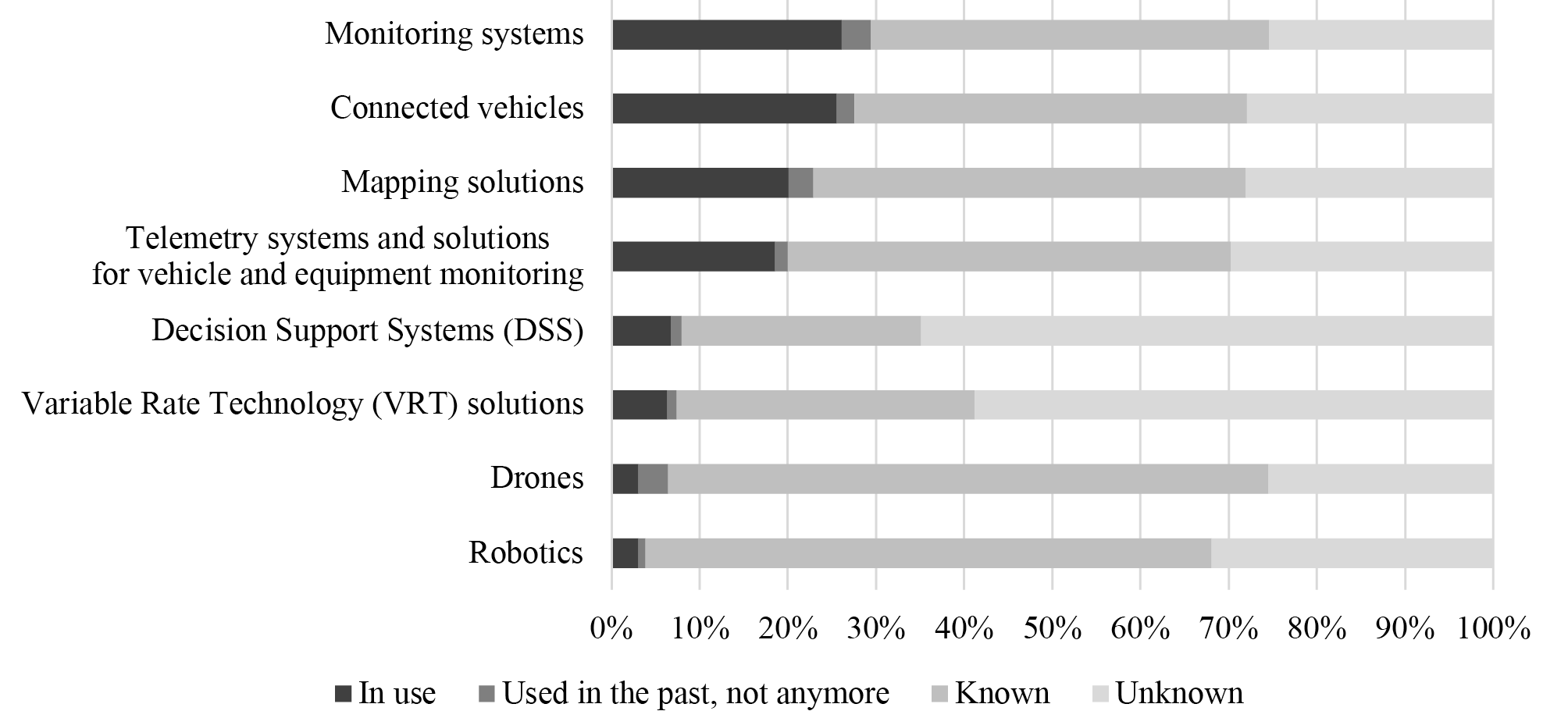
The data reveal varying levels of adoption and awareness of A4.0 solutions. Key findings show that approximately 26% of respondents implement monitoring systems and connected vehicles, making these among the most widely adopted A4.0 solutions. Meanwhile, 20% of respondents adopted mapping solutions and 19% employed telemetry systems and solutions for vehicle and equipment monitoring.
Adoption rates for Decision Support Systems (DSS) and Variable Rate Technology (VRT) solutions are notably lower, at 7% and 6% respectively. Robotics and drones show the lowest adoption rate, standing at only 3%, likely due to constraints related to cost, technical expertise, or perceived necessity.
Disaggregated data by farm size reveal that only 23% of farms with less than 10 hectares of UAA have adopted at least one A4.0 solution. Similarly, among farms with annual revenues below EUR 50,000, the adoption rate stands at 21%. However, adoption increases substantially with scale: 66% of farms with a UAA between 100 and 199.9 hectares have adopted A4.0 technologies, and this figure rises to 82% for farms exceeding 200 hectares. A comparable trend is evident with respect to economic size, where adoption reaches 74% among farms with annual revenues between EUR 500,000 and EUR 1,000,000, and rises further to 81% for those with revenues above EUR 1,000,000.
In contrast, our findings do not reveal substantial differences in A4.0 adoption based on the age or education level of farm managers. The only exception is among managers over the age of 65, who show a lower adoption rate (30%). Similarly, post-graduate degree holders are the only educational group exhibiting higher-than-average adoption rates (48%).
With regard to agricultural production types, enterprises primarily engaged in cereal cultivation report higher adoption rates of A4.0 solutions (49%), alongside vineyard and fodder farms (both at 43%). The relatively higher A4.0 adoption among cereal and fodder producers can be attributed to the extensive nature of these cropping systems, which can be particularly well-suited to the application of A4.0 solutions in optimizing operations over wide areas. Conversely, vineyard enterprises, typically characterized by higher revenue margins, tend to possess greater financial capacity to invest in innovation, thereby facilitating the uptake of digital solutions and innovative technologies.
4.2. Needs expressed and benefits perceived from A4.0 implementation
To comprehensively analyse the key drivers that motivated respondents to adopt and implement A4.0 solutions, this study focuses on the specific needs expressed by farmers. These needs reflect both strategic and operational priorities, ranging from farm management and control to the optimisation of input consumption.
Figure 2 reveals a substantial level of awareness among respondents regarding the broad and multifaceted nature of the A4.0 paradigm. Rather than being perceived merely as an extension of precision agriculture - whose primary goal is to deploy technological solutions in the field to optimise input consumption and reduce costs - A4.0 appears to be increasingly recognised as a comprehensive framework for enhancing overall farm management and control, with positive effects along the overall agrifood supply-chain. This paradigm shift suggests that farmers view A4.0 not only to refine specific agricultural practices, but also as an integral component in fostering a more efficient and data-driven agricultural enterprise.
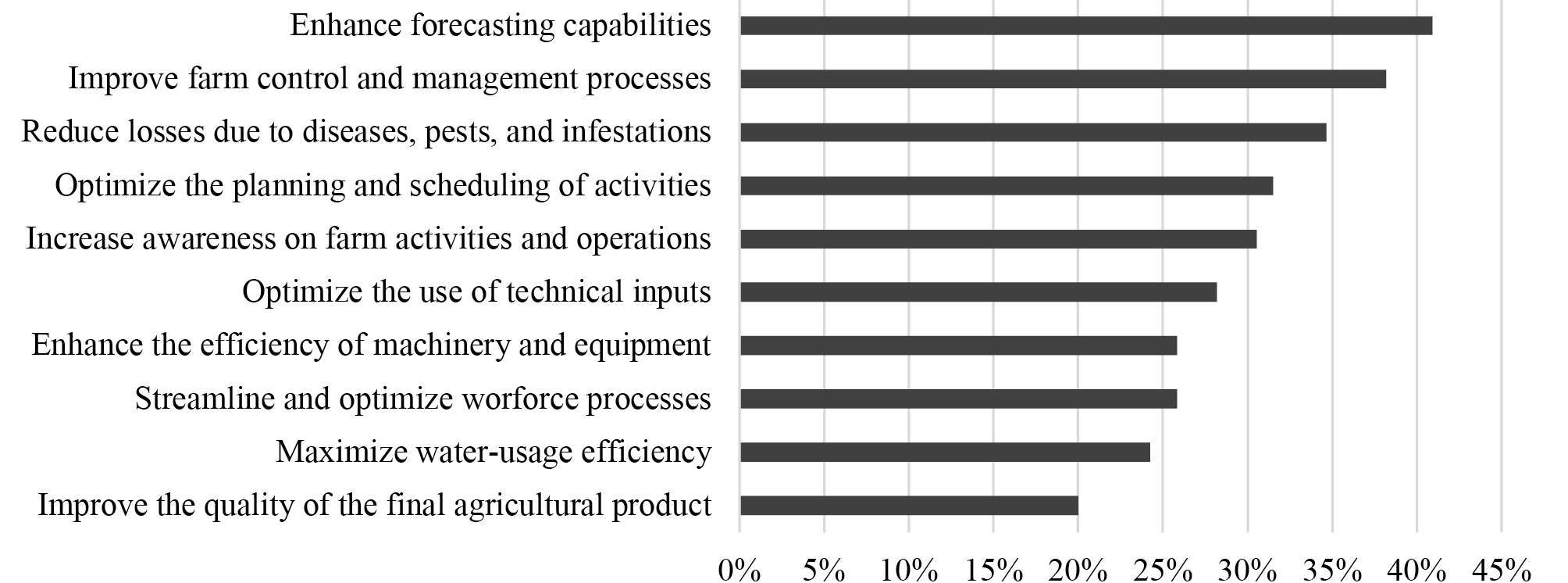
Among the ten most frequently expressed needs related to farm management and control, the most prominent include enhancing forecasting capabilities (41%), particularly in areas such as disease outbreaks, crop requirements, plant growth and yield projections, improving control and management processes within the farm enterprise (38%) with a focus on better decision-making and operational efficiency, optimising the planning and scheduling of agricultural activities (32%) and increasing awareness of ongoing farm activities and operations (31%). Similarly, in relation to the optimisation of input consumption, respondents identified key areas where A4.0 solutions could bring significant improvements, including optimising the use of technical inputs such as fertilisers and agrochemicals (28%) and enhancing the efficiency of machinery and equipment utilisation (26%), contributing to both cost reductions and operational sustainability. Furthermore, respondents expressed the need to streamline and optimise workforce processes (26%), ensuring that operators can perform tasks with efficiency and effectiveness, and to maximize water-use efficiency (24%), which is particularly critical in the context of recent meteorological events in Italy: in 2024, the country experienced heavy rainfall in the northern regions, while facing severe droughts in the south3.
Furthermore, respondents reported adopting A4.0 solutions for additional objectives, including reducing losses due to diseases, pests, and infestations (35%), a critical aspect of maintaining both yield stability and crop health, and improving the quality of the final agricultural product (20%) to meet regulatory requirements.
Figure 3 illustrates the perceived benefits derived from the adoption of A4.0 solutions, as evaluated in relation to the specific needs previously expressed by respondents. The findings indicate that, on average, the implementation of A4.0 technologies resulted in outcomes that aligned with initial expectations for most adopters (74% on average). Additionally, a subset of respondents (8% on average) reported that the benefits they experienced exceeded their initial expectations.
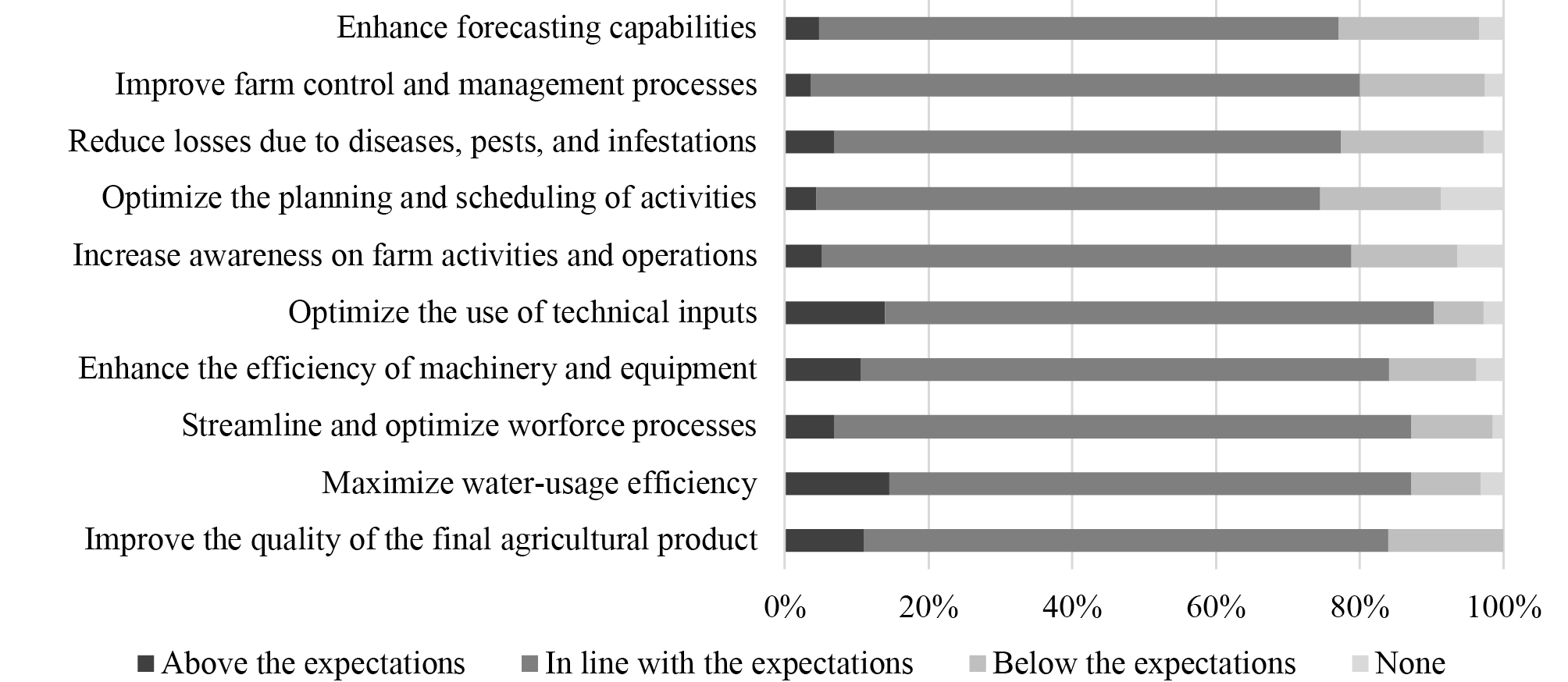
These results suggest that most farmers who invested in A4.0 solutions perceived their adoption as a successful means of addressing their agricultural needs, with reported benefits generally meeting anticipated outcomes. However, a smaller proportion of respondents indicated that the benefits they obtained were either below their expectations (14% on average) or entirely absent (4% on average), highlighting potential limitations in implementation effectiveness, technology adoption challenges, or contextual constraints that may have hindered the full realisation of expected advantages.
Furthermore, the analysis reveals that the perceived benefits were more pronounced in activities related to the optimisation of input consumption compared to those associated with farm management and control. Specifically, an average of 11% of respondents reported experiencing benefits that exceeded their expectations in the domain of input consumption optimisation. In contrast, only an average of 4% of respondents indicated that benefits surpassed expectations for farm management and control activities. This suggests that A4.0 solutions may be particularly effective in enhancing input efficiency, resource utilisation, and operational streamlining, whereas their impact on broader management and control functions may be more variable or dependent on additional contextual factors.
Moreover, Italian farmers who have already adopted A4.0 solutions exhibit a significantly higher propensity to invest further in these technologies compared to non-adopters. Specifically, 20% of current users reported their intention to invest more than EUR 50,000 in A4.0 technologies within the next year, whereas only 3% of non-users indicated an equivalent investment plan. Furthermore, 27% of adopters expected to allocate between EUR 5,000 and EUR 30,000, compared to just 18% among non-adopters. Notably, 55% of non-users were unable to estimate their future investments, in contrast to only 26% of current users. These findings suggest that A4.0 adopters, having already perceived benefits (often exceeding expectations) are more inclined to pursue further technological advancement and exhibit a clearer strategic orientation toward digital transformation.
4.3. A4.0 implementation challenges and factors inhibiting A4.0 adoption
This study also aims to assess the challenges encountered by respondents who have adopted at least one of the proposed A4.0 solutions, as well as the barriers faced by those who either could not or chose not to adopt any of these solutions.
Figure 4 presents the challenges encountered by farms that have implemented A4.0 solutions. The findings indicate that one of the most significant issues – reported by 36% of respondents – is limited or non-existent interoperability among the adopted solutions. Many farmers, indeed, struggle with integrating different digital tools within their existing farm management systems, leading to inefficiencies and operational difficulties (Khanna et al., 2024).
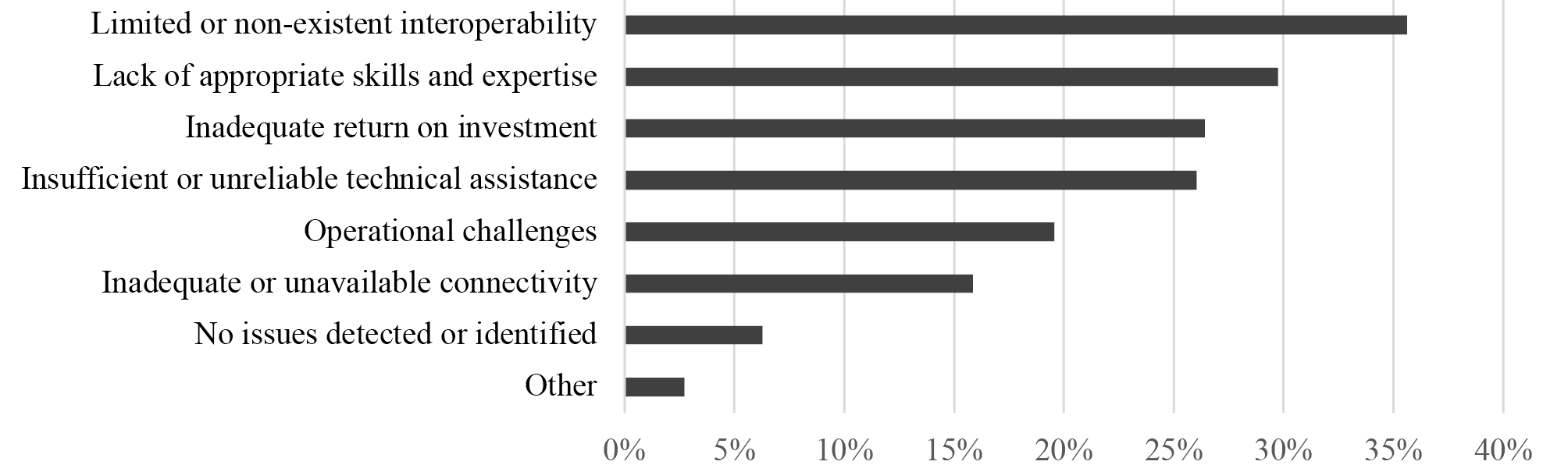
Following interoperability concerns, other notable challenges include the lack of appropriate skills to effectively utilise A4.0 solutions (30%) and the perceived inadequacy of return on investment (26%), suggesting that respondents may not see immediate or sufficient financial benefits from their A4.0 investments, potentially discouraging further technological adoption. Furthermore, 26% of respondents indicate insufficient or unreliable technical assistance, which further limits A4.0 effectiveness together with operational challenges (20%) and inadequate connectivity (16%).
Interestingly, only 6% of respondents reported that they did not face any challenges during A4.0 implementation. This finding suggests that most adopters have encountered at least some difficulties in integrating and implementing A4.0 solutions, emphasising the need for targeted interventions to enhance system compatibility, improve user experience and provide better support mechanisms for farmers transitioning to digital technologies.
Figure 5 illustrates the key barriers that have prevented farms from adopting A4.0 technologies. One of the most frequently cited limitations is farm size, with 68% of respondents indicating that their farms are too small to justify investment in A4.0 solutions. This is not surprising, as Table 3 shows that in the Italian context, most farms (77%) are small or medium-sized.
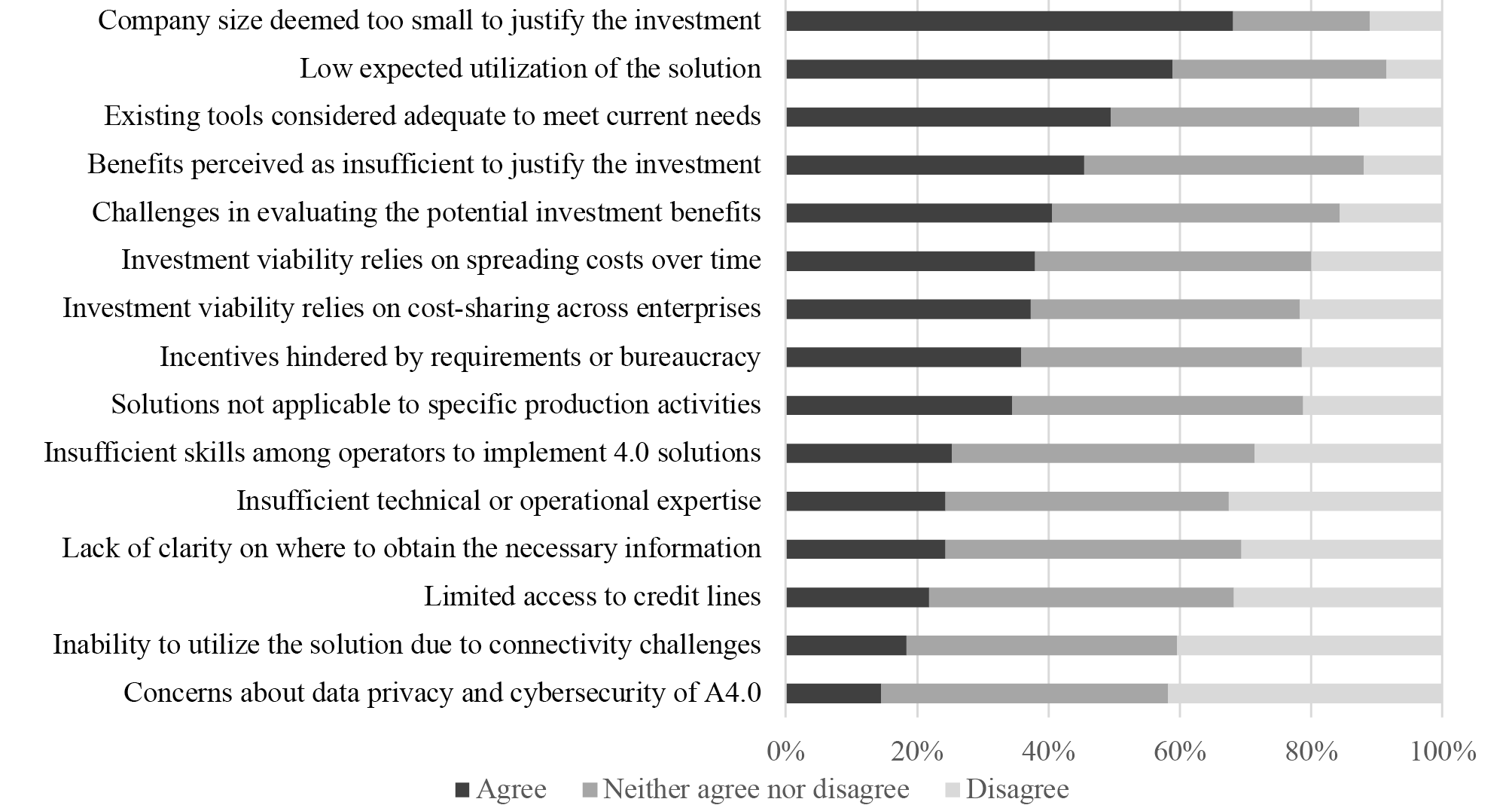
Further constraints concern the possible exploitation of A4.0 solutions, with 59% of respondents believing that they would not fully exploit these solutions and 50% stating that their current agricultural technologies and management practices adequately meet their business needs, thereby reducing the perceived necessity of implementing A4.0 solutions.
Financial concerns also play a significant role, as 45% of respondents believe that the anticipated benefits do not justify the required investment, while 41% struggle to see the potential economic advantages of incorporating digital tools into their operations. Additionally, financial constraints further limit adoption, with 38% of respondents citing their inability to spread investment costs over time and 36% highlighting the difficulty of sharing these costs across multiple enterprises. Bureaucratic challenges also emerge as a deterrent, as 36% of respondents report difficulties in accessing financial incentives due to stringent requirements and administrative burdens, while 22% point to restricted access to credit lines as a further impediment.
While digital skills were identified as a notable challenge among those who have already adopted A4.0 solutions, they appear to be a less pressing concern for non-adopters: only 25% of respondents cited a lack of necessary competencies as a barrier, while an equal proportion stated that their collaborators also lacked the required skills. Such discrepancy in how digital skills are perceived between adopters and non-adopters reflects an experience gap in A4.0 implementation: non-adopters seem to not yet acknowledge the digital skills challenge because they have not engaged with A4.0 deeply enough, whereas adopters have firsthand knowledge of the difficulties and their impact on agricultural activities. Furthermore, 24% of non-adopters indicated that they did not know where to access basic information about A4.0 solutions, underscoring the need for better dissemination of knowledge and educational resources.
Beyond financial and technical barriers, several other factors have contributed to the reluctance to adopt A4.0 technologies. A lack of applicability to specific agricultural production areas was cited by 34% of respondents, suggesting that certain farming sectors or operational models do not align with the capabilities offered by the proposed A4.0 solutions. Connectivity issues also play a role, with 18% of respondents identifying poor internet access as a constraint, particularly where digital infrastructure may be insufficient. Additionally, concerns related to data security and privacy were reported by 15% of respondents, indicating a degree of hesitation regarding the management and protection of sensitive farm data in digital systems.
These findings highlight the multifaceted nature of the barriers impeding A4.0 adoption, encompassing economic, technical, infrastructural, and informational challenges. Addressing these concerns through targeted policies, financial support mechanisms, improved access to training, and enhanced digital infrastructure could facilitate broader adoption and ensure that a wider range of farms can benefit from the efficiencies and advancements offered by A4.0 solutions.
This study examines the adoption and awareness levels of Agriculture 4.0 (A4.0) solutions, the drivers influencing technological adoption, the benefits obtained, as well as the challenges faced by A4.0 users and the inhibiting factors expressed by A4.0 non-adopters. A comprehensive understanding of these aspects is essential for policymakers, researchers, and industry stakeholders to identify obstacles and develop strategies aimed at facilitating the widespread integration of digital technologies in the agricultural sector. Such integration holds the potential to enhance productivity, efficiency, and sustainability within Italian agriculture.
The findings indicate that while there is widespread awareness of A4.0 solutions among Italian farmers, adoption levels vary significantly. These discrepancies are closely associated with the structural characteristics of farming enterprises, particularly the size of the Utilised Agricultural Area (UAA) and the level of annual turnover. Existing literature has consistently highlighted that the uptake of digital agricultural technologies is contingent upon several structural and socio-economic factors, including farm scale, crop specialization, farmer age, and educational background (Giua, 2022). At the national level, our results corroborate this evidence, demonstrating that adoption rates tend to increase proportionally with both the physical and economic size of farms. This trend is further reflected in specific production types - such as cereals, fodder crops, and vineyards - where the extensive nature of the former two may necessitate technological support, while the relatively higher revenue margins typical of vineyard operations may facilitate investment in A4.0 solutions. Certain solutions, such as monitoring systems and connected vehicles, have achieved higher acceptance, whereas others remain unexploited. The primary motivation for adopting A4.0 solutions is predominantly associated with macro-level farm management improvements, including enhanced forecasting capabilities and more effective control and management processes, rather than in-field operational efficiencies, such as optimising technical inputs and increasing machinery and equipment efficiency.
The analyses presented in this manuscript, which focus on the Italian agricultural sector, are broadly aligned with the findings of international research. For instance, as reported by the United States Department of Agriculture4, in 2023, 27% of U.S. farms or ranches employed A4.0 solutions for crop management. Among the most widely adopted A4.0 solutions for crop management were automated guidance systems (covering 58% of planted acres), yield mapping (44%), Variable Rate Technology (37%), soil maps (22%) and drones and satellite imagery (7%) (United States Government Accountability Office, 20245). Similarly, in Germany, a survey conducted on Bavarian farmers reported that the most widely adopted digital tools included weather and pests forecast models and apps (38%), digital field records (21%), automated steering systems (21%), maps from satellite data (14%), with an overall adoption rate estimated around 62% of the sampled agricultural enterprises (Gabriel and Gandorfer, 2023).
This study also underscored the benefits of A4.0 solutions, which were generally perceived as aligning with expectations, with some exceeding initial anticipations. This suggests a largely successful implementation among adopters. Notably, the areas where respondents reported the greatest benefits surpassing expectations were related to the optimisation of technical inputs and water management. Consistent with the findings of Zul Azlan et al. (2023), Abbasi et al. (2022), and Pradel et al. (2022), A4.0 solutions have demonstrated the potential to assist farmers in reducing input and water consumption, thereby generating both economic advantages through cost reduction and environmental benefits. Regarding the potential social sustainability benefits, Italian farmers have identified “streamline and optimise workforce processes” among the ones more in line with expectations, with a small share of farmers pointing out that A4.0 solutions disappointed their expectations. The broader social sustainability implications of this perceived benefit remain debated in literature. Some studies suggest a positive evolution in the agricultural labour market, potentially improving farmers’ livelihoods and creating new employment opportunities (e.g., Rotz et al., 2019). Other contributions, instead, underline the need for specific studies on the yet unexplored consequences on the agricultural labour market originated from the optimisation of farming activities, potentially reducing the demand for unskilled workers (Rotz et al., 2019; Rose et al., 2021).
Nevertheless, despite the perceived benefits of A4.0 solutions, their implementation remains constrained by several challenges. These include interoperability issues, lack of adequate skills, return on investment concerns and technical assistance limitations, which hinder correct A4.0 solutions implementation and their benefits. In addition, several financial and structural constraints emerge as significant deterrents for non-adopters. Among these, the lack of trust in A4.0 solutions appears to be the most critical barrier. This skepticism is often linked to a perceived low utility of A4.0, a belief that existing tools are sufficient to meet current needs, difficulties in assessing the potential benefits, and the generally small size of agricultural enterprises - factors that collectively slow digital adoption in Italian agriculture. Economic and financial obstacles seem to be less relevant: these include doubts about the feasibility of investments that depend on cost-sharing over time or across multiple farms, as well as limited access to incentives - often constrained by bureaucratic complexity (Cisilino and Licciardo, 2022). These financial constraints pose a fundamental challenge particularly for small and medium-sized farms that may lack the capital required for initial investments in A4.0 solutions. This issue is further exacerbated by the uncertainty surrounding return on investment, making it difficult for farmers to justify the adoption of these solutions without clear and measurable long-term economic benefits. In contrast, technical challenges appear to be less influential: only a minority of non-adopters cite inapplicability to specific production processes, lack of technical skills, or insufficient expertise as reasons for avoiding A4.0 solutions. Moreover, connectivity issues emerge as a challenge for non-adopters, especially in marginal areas and on hills across Italian regions, thus limiting the implementation of A4.0 solutions, as highlighted by Sozzi et al. (2021). As also emphasised by Fragomeli et al. (2024) and Da Silveira et al. (2023), such obstacles significantly impede the broader adoption of A4.0 solutions by limiting both the willingness and ability of farmers to integrate these tools into their production systems. Furthermore, as highlighted by Gonzales-Gemio and Sanz-Martín (2025), the inequality in access to A4.0 solutions could hinder the adoption of sustainable agricultural practices. Digital platforms and monitoring solutions, for instance, have the potential to substantially enhance the efficiency of carbon farming initiatives and contribute more broadly to agricultural sustainability.
These findings are consistent with an analysis published by the General Secretariat of the Council of the European Union6, which emphasizes that - compared to other sectors - the pace of digital adoption in agriculture has been slower. This lag is attributed to several interrelated factors, including inadequate infrastructure, substantial upfront investment requirements, a widespread lack of digital skills, and the inherent complexity of the agricultural sector. The latter includes considerable variability in climate conditions, soil types, crop systems, and farming practices, all of which pose additional challenges to the effective implementation of A4.0 solutions.
The findings of this study are also aligned with emerging academic literature on the barriers to A4.0 adoption within the Italian agricultural sector. For example, Addorisio et al. (2025), based on interviews with Italian farmers, underscore the critical role of stakeholder cooperation and targeted training initiatives in addressing key impediments to adoption. These include limited interoperability among A4.0 solutions, insufficient digital competencies, and a lack of adequate technical support. Similarly, Giorgio et al. (2024) explore perceived advantages and challenges associated with digitalisation in Northern Italy. Reported benefits include enhanced environmental sustainability, improved input efficiency, reduced labour requirements, and lower operational costs. However, the study also identifies persistent barriers such as limited digital skills, inadequate data management practices and issues with interoperability. These findings suggest that policies should not only support equipment acquisition, but also promote the development of farmers’ human capital.
Addressing these challenges through targeted policy interventions, comprehensive training initiatives, and improved system interoperability could substantially enhance A4.0 adoption rates, thereby ensuring that a broader range of agricultural enterprises benefits from the efficiencies and advancements offered by digital innovations. Moreover, collaboration among policymakers, technology providers, and industry stakeholders is crucial in fostering an ecosystem that supports seamless integration, mitigates adoption barriers, and maximizes the impact of digital agricultural innovations.
This study offers valuable empirical insights into the current state of Agriculture 4.0 (A4.0) adoption in Italy, shedding light on drivers influencing the uptake of A4.0 solutions, the perceived benefits, the challenges met by farmers who adopted A4.0 solutions and the barriers that prevented other agricultural enterprises from adopting A4.0 solutions. By disaggregating results according to critical variables related to farms (size, primary crop production and geographical localisation), this research contributes to a more nuanced understanding of how the A4.0 paradigm is taking root within the Italian agricultural sector. These findings provide a strong empirical foundation for informing public policy, guiding investment strategies and designing initiatives that are tailored to the needs of diverse farming profiles.
Specifically, the results highlight the importance of structural variables such as farm size, crop production and turnover in shaping adoption patterns, suggesting that public support mechanisms should be differentiated accordingly. Small farms, which tend to face greater barriers in terms of investment capacity and technical know-how, may benefit from targeted subsidies, tax incentives, and digital infrastructure improvements, particularly in under-served rural regions. Moreover, the limited adoption of certain A4.0 solutions underscores the need for broader outreach, technical assistance and knowledge transfer mechanisms to ensure that innovation diffuses beyond a small subset of more-structured farms. Training programs should also be adapted to the varying levels of digital literacy across the sector, with modular content suited to both entry-level and experienced users.
Moreover, by identifying which types of farms might be most likely to adopt A4.0 solutions and which barriers inhibit the uptake of digital tools, technology providers can refine their product design, marketing strategies, and sales services. Companies may, for instance, enhance interoperability and user-friendliness to address common usability challenges.
A promising avenue for future research would involve a comparative analysis of the levels of A4.0 adoption, associated needs, benefits, challenges, and barriers identified in this study with those observed in other European countries and beyond.
Another potential research direction could focus on examining the impact of A4.0 solutions on economic, environmental, and social sustainability to comprehensively assess the costs and benefits of A4.0 implementation. This analysis could, in turn, contribute to bridging the gap between adopting and non-adopting agricultural enterprises.
Nonetheless, these contributions should be considered in light of the following methodological limitations arising from the survey administration method and the sample distribution compared to the reference population. As with all Computer-Assisted Web Interviewing (CAWI) methods, this online survey may exclude individuals without internet access or those less comfortable with technology. Additionally, self-selection bias could skew the results, as participants are likely to be those with an interest in the topic or familiarity with online surveys. Consequently, adoption rates of A4.0 solutions reported in this study may be overestimated, while the perceived benefits and willingness to invest further in digital technologies could reflect the attitudes of a smaller group of more innovation-oriented farmers. Addressing these limitations in the future research would require efforts to reach less digitally-involved segments of the Italian agricultural sector to enhance the external validity of the findings.
Moreover, the discrepancy between the sample size distribution and the population size distribution leads to an overrepresentation of farms in the North and an underrepresentation of those in the South and Islands, potentially introducing a geographical bias. Furthermore, the average UAA (Utilised Agricultural Area) of the sampled farms (22 hectares) is significantly higher than the figure reported by ISTAT7 (11.1 hectares), suggesting a selection of more structured agricultural enterprises. Additionally, the greater representation of the vineyard sector, which is characterised by higher-than-average profitability and greater spending capacity, could influence this study’s findings.
This study was carried out within the Agritech National Research Center and within the Smart AgriFood Observatory - Politecnico di Milano & University of Brescia and received funding from the European Union Next-GenerationEU (Piano Nazionale di Ripresa e Resilienza (PNRR) – Missione 4 Componente 2, Investimento 1.4 – D.D. 1032 17/06/2022, CN00000022). This paper reflects only the authors’ views and opinions, neither the European Union nor the European Commission can be considered responsible for them.
Abbasi, R., Martinez, P., and Ahmad, R. (2022). The Digitization of Agricultural Industry – a Systematic Literature Review on Agriculture 4.0. Smart Agricultural Technology, 2: 100042. https://doi.org/10.1016/j.atech.2022.100042.
Addorisio, R., Casolani, N., Maesano, G., Coderoni, S., Perito, M.A., Mattetti, M., Canavari, M., 2025. Barriers and drivers of digital agriculture adoption: Insights from Italian farming stakeholders. https://doi.org/10.18461/ijfsd.v16i1o1
Ahmed, B., Shabbir, H., Naqvi, S. R., and Peng, L. (2024). Smart Agriculture: Current State, Opportunities, and Challenges. IEEE Access, 12: 144456-78. https://doi.org/10.1109/ACCESS.2024.3471647.
Albiero, D., De Paulo, R. L., Felix Junior, J. C., Da Silva Gomes Santos, J., and Melo, R. P. (2020). Agriculture 4.0: A Terminological Introduction. Revista Ciência Agronômica, 51(5). https://doi.org/10.5935/1806-6690.20200083.
Araújo, S. O., Peres, R. S., Barata, J., Lidon, F., and Ramalho, J. C. (2021). Characterising the Agriculture 4.0 Landscape - Emerging Trends, Challenges and Opportunities. Agronomy, 11(4): 667. https://doi.org/10.3390/agronomy11040667.
Assimakopoulos, F., Vassilakis, C., Margaris, D., Kotis, K., and Spiliotopoulos, D. (2024). The Implementation of “Smart” Technologies in the Agricultural Sector: A Review. Information, 15(8): 466. https://doi.org/10.3390/info15080466.
Balasundram, S. K., Shamshiri, R. R., Sridhara, S., and Rizan, N. (2023). The Role of Digital Agriculture in Mitigating Climate Change and Ensuring Food Security: An Overview. Sustainability, 15(6): 5325. https://doi.org/10.3390/su15065325.
Balyan, S., Jangir, H., Tripathi, S. N., Tripathi, A., Jhang, T., and Pandey, P. (2024). Seeding a Sustainable Future: Navigating the Digital Horizon of Smart Agriculture. Sustainability, 16(2): 475. https://doi.org/10.3390/su16020475.
Bongiovanni, R., and Lowenberg-Deboer, J. (2004). Precision Agriculture and Sustainability. Precision Agriculture, 5: 359-387. https://doi.org/10.1023/B:PRAG.0000040806.39604.aa.
Bokusheva, R., and S. Kimura (2016). Cross-Country Comparison of Farm Size Distribution. OECD Food, Agriculture and Fisheries Papers, No. 94, OECD Publishing, Paris. https://doi.org/10.1787/5jlv81sclr35-en
Cambra Baseca, C., Sendra, S., Lloret, J., and Tomas, J. (2019). A Smart Decision System for Digital Farming. Agronomy, 9(5): 216. https://doi.org/10.3390/agronomy9050216.
Cisilino, F., Licciardo, F., 2022. Potential and Complexity of Implementing Financial Instruments in the Framework of Rural Development Policies in Italy – The Friuli Venezia Giulia Revolving Fund. Sustainability 14, 16090. https://doi.org/10.3390/su142316090
Da Silveira, F., Da Silva, S. L. C., Machado, F. M., Barbedo, J. G. A., and Amaral, F. G. (2023). Farmers’ Perception of the Barriers That Hinder the Implementation of Agriculture 4.0. Agricultural Systems, 208: 103656. https://doi.org/10.1016/j.agsy.2023.103656.
Da Silveira, F., Lermen, F. H., and Amaral, F. G. (2021). An Overview of Agriculture 4.0 Development: Systematic Review of Descriptions, Technologies, Barriers, Advantages, and Disadvantages. Computers and Electronics in Agriculture, 189: 106405. https://doi.org/10.1016/j.compag.2021.106405.
Dayıoğlu, M., and Turker, U. (2021). Digital Transformation for Sustainable Future - Agriculture 4.0: A Review. Tarım Bilimleri Dergisi, 27. https://doi.org/10.15832/ankutbd.986431.
Escribà-Gelonch, M., Liang, S., Van Schalkwyk, P., Fisk, I., Van Duc Long, N., and Hessel, V. (2024). Digital Twins in Agriculture: Orchestration and Applications. Journal of Agricultural and Food Chemistry, 72(19): 10737-52. https://doi.org/10.1021/acs.jafc.4c01934.
Fragomeli, R., Annunziata, A., and Punzo, G. (2024). Promoting the Transition towards Agriculture 4.0: A Systematic Literature Review on Drivers and Barriers. Sustainability, 16(6): 2425. https://doi.org/10.3390/su16062425.
Gabriel, A., Gandorfer, M., 2023. Adoption of digital technologies in agriculture – an inventory in a European small-scale farming region. Precision Agric 24, 68-91.
Gebbers, R., and Adamchuk, V. (2010). Precision Agriculture and Food Security. Science, 327(5967): 828-31. https://doi.org/10.1126/science.1183899.
Giampietri, E., Yu, X. and Trestini, S. (2020). The role of trust and perceived barriers on farmer’s intention to adopt risk management tools. Bio-based and Applied Economics, 9(1): 1-24. https://doi.org/10.13128/bae-8416.
Giorgio, A., Penate Lopez, L.P., Bertoni, D., Cavicchioli, D., Ferrazzi, G., 2024. Enablers to Digitalization in Agriculture: A Case Study from Italian Field Crop Farms in the Po River Valley, with Insights for Policy Targeting. Agriculture 14, 1074. https://doi.org/10.3390/agriculture14071074
Giua, C., Materia V., and Camanzi, L. (2022). Smart Farming Technologies Adoption: Which Factors Play a Role in the Digital Transition?. Technology in Society 68: 101869. https://doi.org/10.1016/j.techsoc.2022.101869
Gonzales-Gemio, C., and Sanz-Martín, L. (2025). Socioeconomic Barriers to the Adoption of Carbon Farming in Spain, Italy, Egypt, and Tunisia: An Analysis Based on the Diffusion of Innovations Model. Journal of Cleaner Production 498: 145155. https://doi.org/10.1016/j.jclepro.2025.145155
Javaid, M., Haleem, A., Singh, R. P., and Suman, R. (2022). Enhancing Smart Farming through the Applications of Agriculture 4.0 Technologies. International Journal of Intelligent Networks, 3: 150-64. https://doi.org/10.1016/j.ijin.2022.09.004.
Jin, X. B., Yu, X. H., Wang, X. Y., Bai, Y. T., Su, T. L., and Kong, J. L. (2020). Deep Learning Predictor for Sustainable Precision Agriculture Based on Internet of Things System. Sustainability, 12(4): 1433. https://doi.org/10.3390/su12041433.
Khanna, M. et al. (2024) ‘Economics of the Adoption of Artificial Intelligence–Based Digital Technologies in Agriculture’, Annual Review of Resource Economics, 16(1), 41-61. https://doi.org/10.1146/annurev-resource-101623-092515.
Klerkx, L. and Rose, D. (2020) ‘Dealing with the game-changing technologies of Agriculture 4.0: How do we manage diversity and responsibility in food system transition pathways?’, Global Food Security, 24, 100347. Available at: https://doi.org/10.1016/j.gfs.2019.100347.
Kumar Kasera, R., Gour, S., and Acharjee, T. (2024). A Comprehensive Survey on IoT and AI Based Applications in Different Pre-Harvest, during-Harvest and Post-Harvest Activities of Smart Agriculture. Computers and Electronics in Agriculture, 216: 108522. https://doi.org/10.1016/j.compag.2023.108522.
Lezoche, M. et al. (2020). Agri-food 4.0: A survey of the supply chains and technologies for the future agriculture. Computers in Industry, 117, 103187. https://doi.org/10.1016/j.compind.2020.103187.
Maffezzoli, F., Ardolino, M., and Bacchetti, A. (2022a). The Impact of the 4.0 Paradigm in the Italian Agricultural Sector: A Descriptive Survey. Applied Sciences, 12(18): 9215. https://doi.org/10.3390/app12189215.
Maffezzoli, F., Ardolino, M., Bacchetti, A., Perona, M., and Renga, F. (2022b). Agriculture 4.0: A Systematic Literature Review on the Paradigm, Technologies and Benefits. Futures, 142: 102998. https://doi.org/10.1016/j.futures.2022.102998.
Meemken, E.-M. et al. (2024). Digital innovations for monitoring sustainability in food systems. Nature Food, 5(8), 656-660. https://doi.org/10.1038/s43016-024-01018-6.
Menozzi, D., Fioravanzi, M. and Donati, M. (2015). Farmer’s motivation to adopt sustainable agricultural practices. Bio-based and Applied Economics, 4(2): 125-147 Pages. https://doi.org/10.13128/bae-14776.
Mhlanga, D. and Ndhlovu, E. (2023). Digital Technology Adoption in the Agriculture Sector: Challenges and Complexities in Africa. In: Human Behavior and Emerging Technologies. Edited by Z. Yan, 2023, pp. 1–10. Available at: https://doi.org/10.1155/2023/6951879.
Mühl, D.D. and De Oliveira, L. (2022). A bibliometric and thematic approach to agriculture 4.0. Heliyon, 8(5), e09369. https://doi.org/10.1016/j.heliyon.2022.e09369.
Oliveira, L. F. P., Moreira, A. P., and Silva, M. F. (2021). Advances in Agriculture Robotics: A State-of-the-Art Review and Challenges Ahead. Robotics, 10(2): 52. https://doi.org/10.3390/robotics10020052.
Onyenekwe, C.S. et al. (2023). Heterogeneity of adaptation strategies to climate shocks: Evidence from the Niger Delta region of Nigeria. Bio-based and Applied Economics, 12(1), 17-35. https://doi.org/10.36253/bae-13436.
Papadopoulos, G., Arduini, S., Uyar, H., Psiroukis, V., Kasimati, A., and Fountas, S. (2024). Economic and Environmental Benefits of Digital Agricultural Technologies in Crop Production: A Review. Smart Agricultural Technology, 8, 100441. https://doi.org/10.1016/j.atech.2024.100441
Peladarinos, N., Piromalis, D., Cheimaras, V., Tserepas, E., Munteanu, R. A., and Papageorgas, P. (2023). Enhancing Smart Agriculture by Implementing Digital Twins: A Comprehensive Review. Sensors, 23(16), 7128. https://doi.org/10.3390/s23167128
Pierce, F. J., and Nowak, P. (1999). Aspects of Precision Agriculture. Advances in Agronomy, 67, 1-85. https://doi.org/10.1016/S0065-2113(08)60513-1
Polymeni, S., Plastras, S., Skoutas, D. N., Kormentzas, G., and Skianis, C. (2023). The Impact of 6G-IoT Technologies on the Development of Agriculture 5.0: A Review. Electronics, 12(12), 2651. https://doi.org/10.3390/electronics12122651
Pradel, M., De Fays, M., and Seguineau, C. (2022). Comparative Life Cycle Assessment of Intra-Row and Inter-Row Weeding Practices Using Autonomous Robot Systems in French Vineyards. Science of The Total Environment, 838, 156441. https://doi.org/10.1016/j.scitotenv.2022.156441
Rose, D. C., Wheeler, R., Winter, M., Lobley M., Chivers, C. (2021). Agriculture 4.0: Making it work for people, production, and the planet. Land Use Policy, 100. https://doi.org/10.1016/j.landusepol.2020.104933
Rotz, S., Gravely, E., Mosby, I., Duncan, E., Finnis, E., Horgan, M., LeBlanc, J., Martin, R., Tait Neufeld, H., Nixon, A., Pant, L., Shall, V., Fraser, E. (2019). Automated pastures and the digital divide: How agricultural technologies are shaping labour and rural communities. Journal of Rural Studies, 68, 112-122. https://doi.org/10.1016/j.jrurstud.2019.01.023
Sharma, V., Tripathi, A. K., and Mittal, H. (2022). Technological Revolutions in Smart Farming: Current Trends, Challenges and Future Directions. Computers and Electronics in Agriculture, 201, 107217. https://doi.org/10.1016/j.compag.2022.107217
Sott, M. K., Furstenau, L. B., Kipper, L. M., Giraldo, F. D., Lopez-Robles, J. R., Cobo, M. J., Zahid, A., Abbasi, Q. H., and Imran, M. A. (2020). Precision Techniques and Agriculture 4.0 Technologies to Promote Sustainability in the Coffee Sector: State of the Art, Challenges and Future Trends. IEEE Access, 8, 149854–67. https://doi.org/10.1109/ACCESS.2020.3016325
Sozzi, M., Ahmed, K., Ferrari, G., Zanchin, A., Grigolato, S., and Marinello, F. (2021). Connectivity in rural areas: A case study on internet connection in the Italian agricultural areas. IEEE International Workshop on Metrology for Agriculture and Forestry (MetroAgriFor), Trento-Bolzano, Italy, 466-470. https://doi.org/10.1109/MetroAgriFor52389.2021.9628665
Sponchioni, G., Vezzoni, M., Bacchetti, A., Pavesi, M., and Renga, F. (2019). The 4.0 revolution in agriculture: A multi-perspective definition. XXIV Summer School “Francesco Turco” – Indust Syst Eng, 1, 143–149.
van Selm, M., and Jankowski, N. W. (2006). Conducting Online Surveys. Quality and Quantity, 40, 435-456. https://doi.org/10.1007/s11135-005-8081-8
Yousaf, A., Kayvanfar, V., Mazzoni, A., and Elomri, A. (2023). Artificial Intelligence-Based Decision Support Systems in Smart Agriculture: Bibliometric Analysis for Operational Insights and Future Directions. Frontiers in Sustainable Food Systems, 6, 1053921. https://doi.org/10.3389/fsufs.2022.1053921
Zhai, Z., Martínez, J. F., Beltran, V., and Martínez, N. L. (2020). Decision Support Systems for Agriculture 4.0: Survey and Challenges. Computers and Electronics in Agriculture, 170, 105256. https://doi.org/10.1016/j.compag.2020.105256
Zul Azlan, Z., Hazim, Z. F., Junaini, S. N., Bolhassan, N. A., Wahi, R., and Arip, M. A. (2024). Harvesting a Sustainable Future: An Overview of Smart Agriculture’s Role in Social, Economic, and Environmental Sustainability. Journal of Cleaner Production, 434, 140338. https://doi.org/10.1016/j.jclepro.2023.140338
3 Agro-meteorological Monitoring INDices (AgroMIND) map on Agricultural Drought (SPEI6) (https://wonderful-bush-09061f403.5.azurestaticapps.net/AgroMIND.html)