Impact of the armed conflict on environmental safety and resilience of the urban environment in Ukraine
1 Department of Public Administration, State University “Kyiv Aviation Institute”, Kyiv, Ukraine
2 Educational and Scientific Institute of Public Administration and Civil Service, Taras Shevchenko National University of Kyiv, Kyiv, Ukraine
*Corresponding author
E-mail: lele4enkonatali@gmail.com; derunt@ukr.net
Abstract. The article aims to examine how the armed conflict affects the environmental safety and resilience of the urban environment in Ukraine. The author analyzes the impact of infrastructural, social, economic, and environmental resistance on the city’s ability to maintain a socioeconomic and ecological balance and minimize the mass destruction of its infrastructure. The article employs general scientific and special methods, including theoretical generalization, comparison, systematization, abstract-logical, prognostic, logical, and analytical methods. The article relies on an integrated approach when assessing environmental safety and its preservation; it primarily involves implementing preventive measures necessary to ensure the viability and sustainability of urban areas in the conditions of war and after its end. The findings confirm that a close interaction between public authorities, scientific institutions, public organizations, and the population can help to achieve sustainable development and urban environment safety in Ukraine. It is suggested to focus on climate-neutral post-war recovery and strengthen the potential of territorial communities in further scientific research.
Keywords: environmental consequences of war, environmental safety, public administration, public authorities, resilience, urban environment.
JEL code: K32.
Index
In the current conditions of the war in Ukraine, issues of environmental safety and resilience of the urban environment are of particular relevance. Military actions lead to infrastructure destruction, environmental pollution, and disruption of living conditions in cities. This creates additional risks to public health and complicates access to basic services and resources. New challenges are also associated with the restoration of the destroyed areas. The most critical problems are the damage or destruction of utility systems and transportation infrastructure. The population’s limited access to vital resources, such as water, threatens sanitary conditions. When Russia blew up the Kakhovka hydroelectric power plant in 2023, the water that spilled from the Kakhovka reservoir flooded many communities and killed dozens of residents and thousands of animals (Ivanova, 2024). In addition, Ukraine has lost its irrigation system and drinking water, which were supplied from the Kakhovka water reservoir. Chemical leaks and damage to industrial or agricultural enterprises increase the environmental burden on already exhausted ecosystems. A dire threat was the loss of control over radiation-hazardous facilities caused by the occupation of the Chornobyl Nuclear Power Plant in 2022. Russian military personnel detonated the ammunition used on the territory of the Zaporizhzhia Nuclear Power Plant (the largest in Europe) (Perha, 2023).
In such circumstances, a comprehensive approach is essential for assessing the state of the environment and developing effective strategies for maintaining environmental safety. This approach should go beyond emergency responses to immediate threats and focus on long-term planning. It should include technical and legal solutions, where the central focus is on urban resilience. It usually becomes an indicator of a city’s ability to survive crises.
The principles of resilience developed by the Organization for Economic Cooperation and Development (OECD) deserve special attention within the framework of this analysis. The OECD defines resilience as the ability of subjects at different levels (individual, public, national) to withstand crises, adapt to them, recover, and function under long-term challenges, transformations, and uncertainty. The OECD emphasizes that the principles of resilience should be implemented from the lowest (household) to the highest (international) levels. These principles concern the following:
1) preparedness involves the availability of knowledge and capabilities for effective prediction, response, and recovery from dangerous events.
2) responsiveness concerns the ability to respond quickly and positively during and after a crisis.
3) connectivity is the degree of connection or separation between people, places, and things, the nature and strength of the interaction between the components of the system.
4) learning and innovation embrace the acquisition of knowledge or skills that change collective awareness and the emergence of new norms, ideologies, and institutions.
5) self-organization is the ability to create formal or informal networks, institutions, organizations, or other social groups, regardless of the state or other central authorities.
6) diversity and redundancy mean the presence of different forms, types, or ideas, as well as redundant capabilities and backup systems that allow for maintaining basic functions in case of failures.
7) inclusion is the involvement of various stakeholders in decision-making processes.
8) social cohesion is a sense of belonging and mutual respect between members of the community, as well as the relationship between government and citizens, which allows everyone to feel like an equal participant.
9) thresholds are clearly defined acceptable levels of well-being, access to rights and common resources (MacLeman et al., 2017).
The main goal of the OECD approach is to help systems plan, perceive, recover, and adapt to failures and minimize the negative impact on critical system functions. It complements rather than replaces traditional risk management practices, i.e. places a key emphasis on sustainability, modularity, and a holistic approach to ensuring system resilience. Resilience should be viewed through the prism of social harmony and the readiness of the population to self-organize. Creating a strong link between resilience and security is the key to ensuring sustainable urban development even in times of war. It is also an important component of the post-war reconstruction of the state. To respond to these challenges, this study focuses on the following question: How can sustainability principles be effectively integrated into the urban environment to ensure environmental security in wartime? The answer to this question is crucial for shaping urban development policies and strategies.
Analyzing the evolution of the meaning the concept of resilience conveys, it is safe to say resilience has an interdisciplinary character, combining different areas of cognition. However, there are a few domestic studies in the area of public administration, where resilience is considered at the urban level through the prism of environmental safety. The first definition of resilience, brought into scientific use by such researchers as Smith and Werner, was associated with the physical properties of matter because of its resistance to restoring a deformed form. Later, the term began to be used in psychology and interpreted as psychological flexibility, stress resistance, etc. Some aspects of resilience are studied in the scientific works of Pyrozhkov et al. (2021), which are devoted to national stability in the modern world. The author considers various aspects and factors affecting the sustainability of the state, suggesting methodological approaches, models, and strategies to ensure it.
Pakhnenko (2022) interprets the concept of local community resilience (sustainability) and analyzes its component elements. The researcher examines how communities can navigate and overcome challenges, ensuring sustainable development and population well-being. Ivaniuk (2022) scrutinizes the main theoretical aspects of resilience in the context of socioeconomic systems. The author determines key concepts, models, and approaches to understand and evaluate the ability of socioeconomic systems to adapt and withstand external influences and stressful situations. In the context of this study, the scientific research of Melnyk (2024), Klymenko and Ukhnal (2023), and Sukhodolia (2023) are of greatest interest. Defining the specifics of implementing critical infrastructure resilience, Melnyk (2024) emphasizes that it (critical infrastructure resilience) “reflects its ability to adapt to changes and recover after the emergence of crises.” Implementing a resilience paradigm in Ukraine’s critical infrastructure is crucial for national economic security and sustainability in the face of growing threats and risks (Klymenko and Ukhnal, 2023).
Instead, Serzhan (2023) reveals the features of implementing the resilience of the urban environment in Ukraine against the background of global challenges; the researcher generalized the everyday experience of citizens’ lives during the war to understand the stability of the urban environment in practice. According to the researcher, sustainable cities can absorb, recover, and prepare for future shocks (economic, environmental, social, or institutional); they contribute to sustainable development, well-being, and inclusive growth. Kachuriner (2022) and Melnik and Sierova (2023) consider critical infrastructure resilience through the promotion of specialization, competition, economies of scale, innovation, and technology transfer at the global level. Bezditnyi (2024) notes that trade can help reduce production costs and achieve better environmental results under such conditions. Thus, the experience of the citizens’ lives in Ukraine during the war is an important lesson for the development of sustainable, adaptive, inclusive, and recession-proof urban environments.
The impact of the armed conflict on environmental safety and the resilience of the urban environment in Ukraine was grounded on the study of many legal, scientific, and analytical materials. The materials analyzed in this study consisted primarily of two main sources: 1) normative and legislative acts regulating environmental safety requirements, and 2) scientific works by domestic and foreign authors. These materials served as the foundation for analyzing how the ongoing armed conflict has disrupted urban environments in Ukraine, impacting their capacity to sustain environmental safety and resilience.
Legal frameworks play a critical role in regulating environmental safety in Ukraine. The study examined the normative and legislative acts in place to safeguard the environment under armed conflict. These legislative acts included national laws of Ukraine, in particular the Law of Ukraine “On Environmental Protection” (Verkhovna Rada of Ukraine, 1991) and the Law of Ukraine “On Ensuring the Rights and Freedoms of Citizens and the Legal Regime in the Temporarily Occupied Territory of Ukraine” (Verkhovna Rada of Ukraine, 2014) In addition, resolutions of the Cabinet of Ministers of Ukraine regulating environmental safety and emergency response were analyzed. The article also presents the analysis of international legal acts on the protection of the environment during armed conflicts, such as the Geneva Conventions and Additional Protocols thereto.
The study reviewed scientific works by Ukrainian and foreign researchers who focused on environmental safety and urban resilience. The scientific literature reviewed covered such issues as environmental degradation, urban infrastructure damage, resilience strategies, and post-conflict recovery. The review was conducted using various databases. Scopus, Web of Science, and Google Scholar were used to search for international articles. The National Scientific Repositories of Ukraine were used to extract domestic research. The criteria for selecting sources concerned the peer-reviewed articles published over the last 5 years and relevant to the research topic. A comprehensive analysis of the multifaceted impact of the conflict on Ukraine’s urban environments helped to identify key trends and emerging challenges in maintaining urban environmental safety during ongoing hostilities.
Theoretical generalization, comparison, and systematization were used to investigate the theoretical foundations of environmental safety and resilience. By comparing various theoretical frameworks, the research systematically categorized key concepts related to environmental impact, urban resilience, and conflict dynamics. The method of comparison was particularly useful in contrasting domestic and international approaches to environmental safety and resilience in conflict-affected urban areas. The abstract-logical and prognostic methods helped to formulate the purpose, objectives, and conclusions. The abstract-logical approach facilitated the development of conceptual models that explain the relationship between armed conflict and environmental degradation in urban areas. Prognostic methods were employed to forecast the potential impacts of ongoing conflict on urban resilience. These methods were critical in hypothesizing about long-term environmental challenges and the necessary policy responses. The analytical method allowed for a critical synthesis of the most recent scientific research on the subject. This method provided for generalizing the latest scientific developments by leading Ukrainian and foreign experts on eliminating the effects of the armed conflict on environmental safety and urban resilience. The method also allowed the identification of gaps in existing research. The logical method was employed to clarify and expand the conceptual and categorical apparatus related to the research topic. This approach was instrumental in refining key definitions, such as environmental safety, resilience, and conflict-induced degradation.
Thus, the research combines legal analysis, scientific literature review, and research methods to comprehensively examine the impact of armed conflict on environmental safety and urban resilience in Ukraine. By integrating these materials and methods, the study offers a holistic understanding of the ongoing challenges faced by Ukrainian cities and the strategies required to enhance their resilience in the face of conflict-induced environmental degradation.
Resilience of the urban environment is defined as the ability of a city to adapt to external challenges and threats, in particular, social, economic and environmental, as well as to withstand negative influences, adapt to changes and quickly recover from destruction (Lošonczi et al., 2022). In war conditions, resilience is of particular importance, as it ensures the preservation of the vital functions of the city. Cities must not only survive but also maintain functionality and ensure the safety of their inhabitants. It is the resilience of the urban environment that includes the city’s ability to respond effectively to crisis situations, adapt to change and recover from shocks. This applies not only to physical infrastructure but also to social and economic systems that ensure the livelihoods of the city, each of which has its own manifestation and features (Clark, 2024).
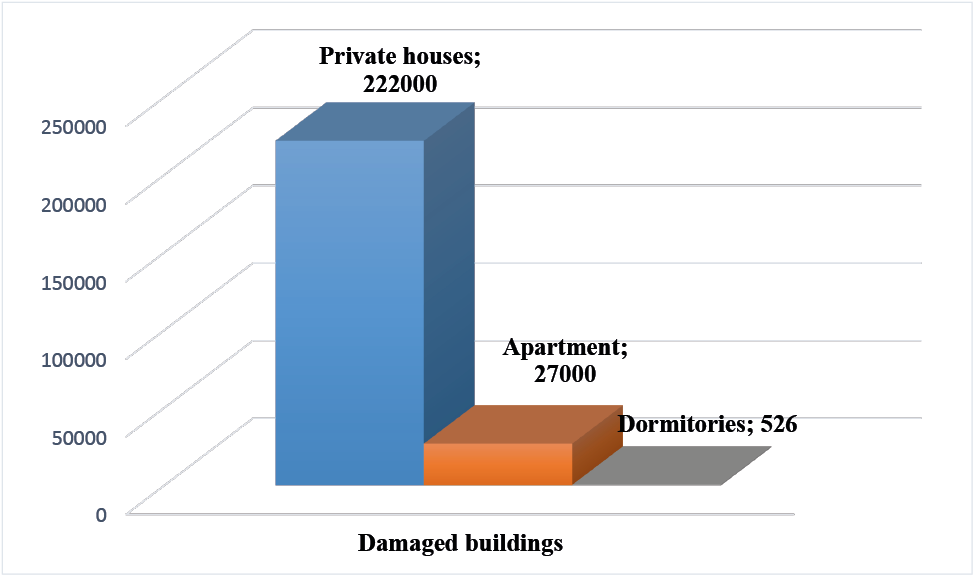
Infrastructural resilience includes the ability of urban communications, transport, energy systems, water supply, and sanitation to withstand the load during a crisis and quickly recover from damage. Russia caused damage to the infrastructure facilities of Ukraine for almost $155 billion. As a result of hostilities and regular shelling, the number of damaged and destroyed residential buildings is increasing daily: as of January 2024, there are more than 250 thousand buildings. Among them – are 222 thousand private houses, more than 27 thousand – apartments, and 526 dormitories. Direct damage from the destruction of these objects is estimated at $58.9 billion (Figure 1).
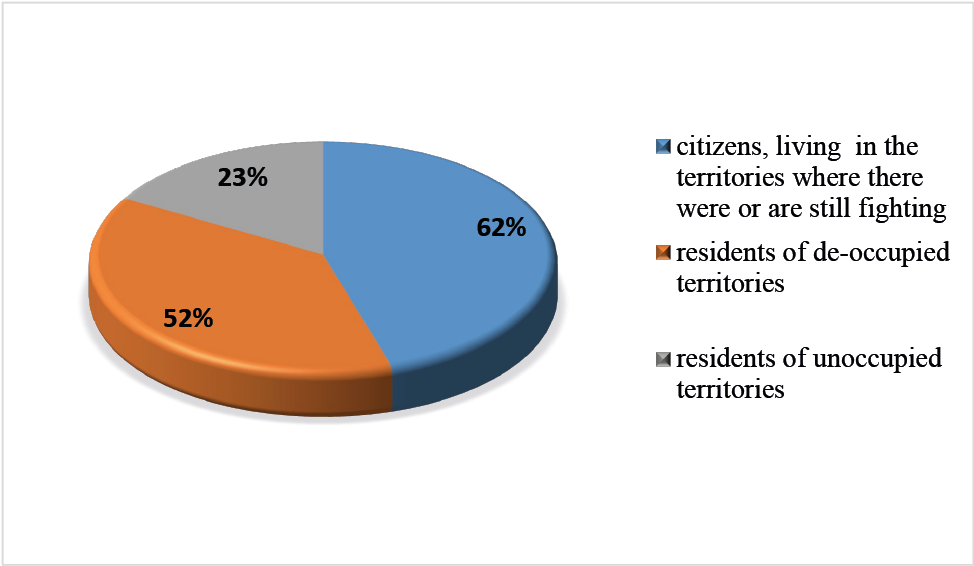
Social resilience means the ability of communities to maintain social cohesion and help each other in times of crisis. This includes providing health care, education, and other social services. According to the data presented by the Rating Group in the conditions of hostilities, one-third of the polled Ukrainians suffered material losses as a result of the war. Among them, 62% of citizens living in the territories where there were or are still military actions, 52% of residents of de-occupied territories, and 23% – unoccupied territories (Figure 2).
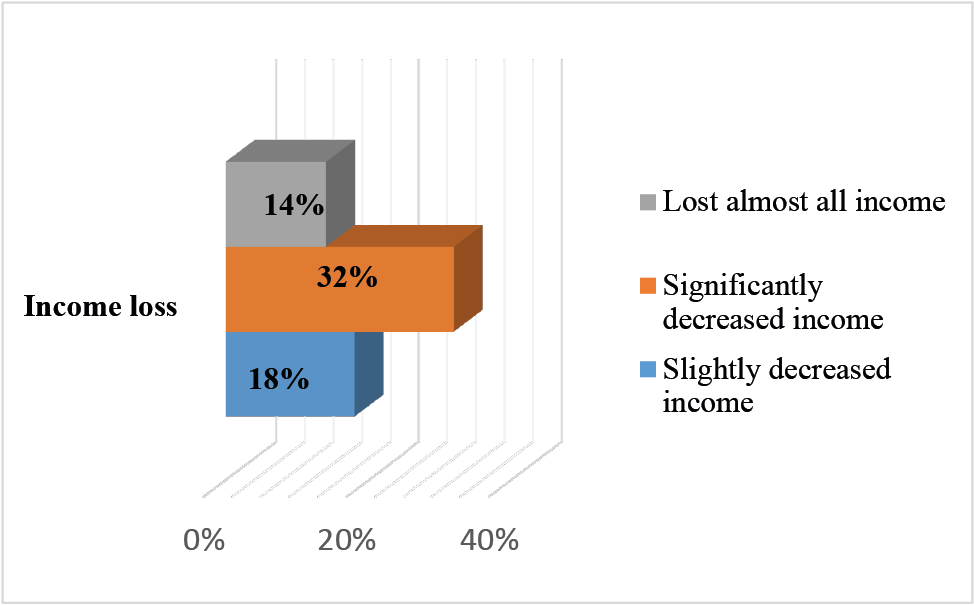
Economic resilience lies in the ability of the urban economy to withstand economic shocks, keep jobs, and maintain business stability (Abrhám et al., 2018). Military actions affect the economy negatively, leading to the closure of enterprises, and a decrease in employment and incomes. The consequences of the war are its devastating impact and damage to infrastructure, and the lack of raw materials and labor, leading to the temporary or even complete closure of a large number of enterprises (Kyiv School of Economics, 2024). This, in turn, reduces production volumes, leads to mass dismissal of workers and increased unemployment, and worsens consumer demand and export opportunities. At the same time, 64% of Ukrainians have a drop in income. In particular, 18% of respondents have a slightly decreased income, 32% – have a significantly decreased, and 14% have lost almost all income (Figure 3).
The consequence of the decline in incomes of the population is the loss of jobs, the delay in salaries or their complete absence, and the depreciation of savings due to inflation. All this leads to a significant drop in the real incomes of citizens. Such processes cause a chain reaction when the mutual strengthening of negative economic factors unfolds in a deep economic crisis (Kimhi et al., 2023a). Overcoming such consequences of war requires considerable efforts and special programs of restoration and stabilization. Environmental resilience determines a city’s ability to maintain ecological balance, protect natural resources, and minimize environmental impact (Bautista-Hernáez et al., 2024). The environmental damage caused to Ukraine by Russia’s invasion already exceeds 2.2 trillion hryvnias. This amount includes destruction, damage from emissions of harmful substances into the atmosphere, pollution of soils and water resources, as well as the cross-border impact on neighboring countries such as Moldova and Romania. Approximately, every day these losses from a full-scale war increase by about 102 million euros (Kyiv School of Economics, 2024). It is important to pay attention to these consequences and look for ways to reduce the impact of hostilities on the environment.
Constant hostilities such as bombing and shelling of towns and villages have resulted in the release of large amounts of toxic chemicals into the environment. These dangerous chemicals have contaminated soil, water bodies and air, causing several negative health effects on the local population, in particular respiratory diseases, skin irritations and various types of cancer. A serious problem is the impact of military conflict on water resources, especially in conditions of active hostilities, which can lead to pollution of water sources with heavy metals (for example, from mining of water bodies) and nitrogen-containing compounds; destruction of infrastructure, including water and sewer systems, flooding of territories due to the destruction of dams (Kimhi et al., 2023b). Thus, the serious impact of the war on the environment of Ukraine is evidenced by the ecocide associated with the explosion of the Kakhovka Reservoir by the Russians, which led to the loss of 18 billion cubic meters of water and is a huge humanitarian, economic and environmental disaster in the Kherson region of Ukraine.
To this end, given the negative impact of hostilities on water resources, local governments need to: promote long-term planning of water supply through effective use of water, develop an action plan for the restoration of water potential through shoreline protection belts, install real-time water quality monitoring systems to detect pollution; ensure quick restoration of damaged water supply networks and structures. It is important to take into account that the preservation of water resources during military operations is not only an environmental necessity but also a humanitarian responsibility to the population. Another serious environmental problem during the war in Ukraine was the destruction of forests and natural habitats of wild animals. Constant bombing and shelling of forests caused significant damage to ecosystems, forcing many species of plants and animals to leave their homes. This significantly affected the biodiversity of the region, as well as the functioning of local communities that depend on forest resources.
The war also caused significant damage to Ukraine’s infrastructure, including factories, power plants and oil refineries. This caused leaks and spills of hazardous substances such as oil, chemicals and radioactive materials, which further polluted the air, water and soil, creating long-term health and environmental problems for the population of Ukraine. Despite these serious challenges, certain measures are being taken to solve environmental problems in Ukraine. International organizations, in particular the United Nations Environment Programme (UNEP), are supporting the cleanup of contaminated areas and the restoration of damaged ecosystems. The Government of Ukraine is also taking measures aimed at strengthening environmental legislation and increasing funding for environmental initiatives.
After all, to rebuild the country, we will need a significant number of resources. The destruction of entire cities, such as Mariupol, Irpin, Chernihiv, Kherson, the cities of Kharkiv and Donetsk region, led to problems associated with the formation of a huge amount of waste and the attraction of a significant number of natural resources necessary for the restoration of destroyed cities. Although today all the efforts of public authorities are aimed at “green reconstruction,” however, such reconstruction requires as many building materials (metal, wood, cement, etc.) as was used in 10 previous years of development of the construction sector in Ukraine. This will be a long-term consequence of large-scale destruction. Accordingly, the resilience of the city’s critical infrastructure requires the implementation of measures related to:
–an early warning and risk and threat response system;
–the ability of infrastructure to change flexibly in response to new conditions;
–development of action plans for recovery from accidents and emergencies;
–establishing cooperation with public crisis management bodies and other stakeholders for effective recovery;
–a comprehensive analysis of potential threats and weaknesses of critical infrastructure;
–performing a comprehensive assessment of risks and vulnerabilities of critical infrastructure that require increased attention;
–developing resilience plans and strategies that include anti-crisis measures for prevention, response, and recovery;
–implementation of the necessary investments to improve the technical condition and reliability of critical infrastructure, as well as the introduction of the latest technologies to ensure their rapid recovery from accidents;
–the development of cooperation mechanisms between public authorities, the public, and the private sector to coordinate actions in the event of a crisis, training, and studies of personnel to ensure their readiness to act in emergencies;
–the introduction of modern effective measures and mechanisms for protecting against cyber threats, which requires the allocation of the necessary financial resources (special attention – to the protection of city management systems, communications, and life support services);
–development and implementation of reserve systems and solutions that can ensure the continuous functioning of critical infrastructure in situations of hostilities at the level of territorial communities. This includes the creation of reliable shelters, backup energy sources, water supply systems, and logistics;
–improving the culture of continuous improvement and formation of practical skills and algorithms of actions under martial law among citizens, authorities, and city services. Regular updating of emergency response plans and staff training (Klymenko and Ukhnal, 2023).
All these aspects form a comprehensive approach to ensuring high resilience of critical infrastructure, which allows it to adequately respond to challenges and quickly recover from various crisis events. Such a sufficiently structured and comprehensive approach allows to ensure the stability of infrastructure to various failures and crises systematically. Taking into account all these components, it is important to effectively increase the overall resilience and ability to withstand various crises. As the experience of recent years shows, in conditions of crisis situations, especially those related to military operations, the role and importance of cities increase significantly.
Firstly, cities are economic, social and administrative centers, concentrating key infrastructure, population and administrative functions. Therefore, they become the main targets for influence in armed conflicts. Their damage or capture will have a devastating impact on the livelihoods of the regions and the country as a whole. Secondly, in conditions of war, it is the cities that feel the greatest burden – fluctuations in markets, lack of resources, mass migration of the population, disruption of logistics chains, etc. This poses a threat to the social stability and economic security of cities. Thirdly, cities are becoming the main reception points for internally displaced persons, which requires them to mobilize significant resources and coordinate efforts to provide humanitarian assistance. This significantly complicates the management and functioning of cities. In this regard, forced resettlement of the population creates an additional burden on the infrastructure and social services of those cities that take displaced persons (Grum and Kobal Grum, 2023).
Thus, the level of security, sustainability, and viability of cities in a crisis is considered to be a determining factor for the country’s ability to withstand external threats and ensure the survival and development of its citizens. Therefore, the ability of Ukrainian cities to withstand the challenges of war and demonstrate resilience is one of the key manifestations of resilience throughout the country. The close interaction of society and urban space plays a decisive role in this situation. Here are some examples:
1) Volunteer movement and self-organization of local communities. In the conditions of Russian aggression, it was city residents who took responsibility for ensuring life activity, safety, and assistance to those who needed it. This has created an additional resource of resilience.
2) Adaptation of urban infrastructure to military threats. Cities took measures to strengthen critical infrastructure, create shelters, organize evacuations, etc. This greatly reduced the devastating effects of shelling and bombing.
3) Creation of effective warning, shelter and evacuation systems.
4) Coordination of efforts of local authorities and the public. The harmonious interaction of governing bodies, utilities, and educational and medical institutions with active residents made it possible to respond to challenges more effectively.
5) The active involvement of internally displaced persons (IDPs) in the urban environment contributes not only to the support and integration of IDPs themselves but also to the strengthening of the overall social fabric of cities, which increases their resilience in war conditions. This is an important contribution to the overall resilience of Ukraine.
According to Britchenko et al. (2022), the key aspects of sustainable cities can also be recognized: adaptability; flexibility of urban systems and infrastructure; recoverability; an advanced emergency response system; readiness; sustainable development; and inclusiveness (Table 1).
| Key aspects of environmental safety | Impact of environmental safety on resilience (stability) of the urban environment: |
|---|---|
| Energy efficiency and renewable energy sources | efficient use of energy in buildings, transport, heating/cooling systems; development of local renewable energy sources (solar, wind, geothermal) |
| Water management | efficient use of water, including rainwater collection; treatment and reuse of sewage; sustainable drainage systems for flood prevention |
| Green infrastructure | increase in urban green spaces, parks, squares; creating “green corridors” for biodiversity migration; the use of plants to absorb pollutants |
| Resistance to natural disasters | planning and preparing for extreme weather events (floods, droughts, storms); protection of critical infrastructure (energy, water supply, transport) |
| Circular economy | waste reduction, reuse, and recycling of materials; development of “green” technologies and environmentally friendly industries |
| Sustainable transport | priority development of public transport, pedestrian and bicycle infrastructure; transition to environmentally friendly modes of transport (electric vehicles, hybrids) |
| Waste management | improvement of the system of collection, sorting, and processing of household and industrial waste; development of reuse and waste disposal technologies; implementation of “zero waste” principles |
| Pollution control | soil monitoring and reduction of air, water, and soil pollution levels; introduction of “green” technologies and environmentally friendly industries; regulation of emissions of transport and industrial enterprises |
| Adaptation to climate change | development of action plans to mitigate the effects of climate change; implementation of measures to improve the sustainability of urban infrastructure; emergency preparedness (floods, droughts, etc.) |
| Ecosystem services | conservation and restoration of natural ecosystems in urban environments; use of natural solutions for adaptation to climate change; creation of “green zones” around cities |
| Environmental education and public engagement | educational work among the population regarding a sustainable lifestyle; stimulating citizens’ participation in solving environmental problems; collaboration with NGOs, business,es and government for an integrated approach |
These and other measures should ensure the ability of cities to withstand external challenges and threats, while maintaining their livelihoods even in conditions of hostilities. It is this comprehensive work on improving the safety and vitality of cities that becomes a top priority in modern crisis conditions. Such a modern approach to the development of urban areas is becoming increasingly relevant in the conditions of increasing global challenges, one of which is environmental safety and its impact on the resilience of the urban environment.
Having analyzed the results obtained, it is safe to say that all the challenges that Ukraine has faced as a result of Russia’s armed aggression require their own phased consideration. There is an urgent need to define the sequence of measures for strengthening urban environment resilience. The priority measures include restoring critical infrastructure (energy supply, logistics, water supply, shelter availability for the population, etc). Rapid evacuation programs should also be developed. In the context of primary measures, it is advisable to create mechanisms for protecting the population from potential human-made accidents. This study identified medium-term measures based on the concept of sustainable development; they include the restoration of Ukraine’s ecosystem through the national level and local programs. The second important element of the medium-term perspective is the attraction of international investments to introduce innovative environmental technologies. The state can also refer to and strengthen pre-war programs to support green energy for business. Renewable energy development is a necessary task, which complements the urgent need to solve energy challenges. Such economic activity will help stabilize regions and lay the foundation for further transformations.
As for the long-term perspective, programs for adapting to climate change should be implemented. The implementation should go beyond the participation in such programs and introduce environmental standards into all processes of urban planning. The appropriate legislative framework is to be developed and applied. At the systemic level, it is important to form a sustainability culture and understand the role of each participant in preserving the city as an integral system.
The immediate implementation of any measures requires their assessment since each of them requires different forms of resource provision. Sources of financing can be the budget or any form of external investments. Qualified technical personnel must respond quickly to urgent challenges. Medium-term steps require institutional and regulatory support, as well as the involvement of the expert potential of relevant international organizations. Legislative initiatives and high-quality educational work with the population will be crucial for long-term measures. At the same time, it is necessary to ensure a clear division of responsibility between the main participants in the process. State structures are responsible for coordinating reconstruction and environmental monitoring, as well as for legal regulation and control over the use of funds. International organizations can provide financial and technical assistance, and public associations can involve the population.
The basic aspects of environmental safety demonstrate its impact on the resilience of the urban environment and imply the mandatory adaptation of cities to emergencies and the development and implementation of some measures to improve this process (Table 2).
| Collaboration and community engagement | Adaptation of urban planning | Resilience of the urban ecosystem | Environmental Risk Management | Protection of critical infrastructure | |||||||||||||||
|---|---|---|---|---|---|---|---|---|---|---|---|---|---|---|---|---|---|---|---|
| Involving activists, initiative groups, and volunteers in practical activities to improve the sustainability of the city | Implementation of temporary redevelopment of urban space for new challenges | Conservation and restoration of parks, forests, reservoirs | Minimization of threats from damage to industrial facilities, storage of hazardous substances | Strengthening and duplication of life support systems (water, energy, gas, sewage, etc.). | |||||||||||||||
| Informing and educating residents on environmental safety issues | Creation of shelters, storage, and infrastructure to protect the population | Development of “green” infrastructure to maintain the microclimate and absorb pollution | Emergency, leak, or contamination response plans | Improving the sustainability of the transport network and logistics. | |||||||||||||||
| Coordination of efforts at the national, and local levels, with international partners | Temporary repurposing of premises for urgent security and logistics needs | Creation of new recreational areas, “breathing lungs” of the city, landscaping of cities | Readiness to eliminate pollution, clean the environment | Creation of spare capacity and alternative routes. | |||||||||||||||
| Revision of evacuation and zoning schemes taking into account environmental risks | Using green technologies in environmental management | Inventory and enhanced control of hazardous facilities | Strengthening of water supply systems, wastewater treatment, energy supply | ||||||||||||||||
| Implementation of ecosystem solutions in urban planning | Assessment and monitoring of risks of pollution, accidents, and man-made threats | Increased safety of high-risk facilities | |||||||||||||||||
| Source: compiled by the authors. | |||||||||||||||||||
To solve environmental problems and increase the resilience of the urban environment in war conditions, public authorities need to implement comprehensive strategies that cover various aspects of urban life. They should promote the development of backup power supply, water supply, and communication systems to ensure uninterrupted operation of critical facilities in case of destruction of the main systems. The further recommendations include the following:
–use mobile health facilities, mobile water treatment stations, and other mobile infrastructure solutions for rapid emergency response;
–promote the development and implementation of support programs for the most vulnerable categories of the population, including displaced persons, children, the elderly, and people with disabilities, as well as develop a system of psychological assistance and support to reduce stress and psychological trauma among the population;
–introduce programs to support small and medium-sized businesses, in particular, the provision of soft loans, subsidies, and consulting assistance;
–stimulate the development of local production and economic activity to reduce dependence on external factors;
–ensure the implementation of measures to protect and restore parks, squares, and other green areas to maintain the ecological balance and create favorable conditions for the recreation of residents, as well as the development of effective waste management systems to minimize the environmental burden in war conditions.
Below are some examples of resilience in Ukrainian cities. During the first months of the large-scale invasion, the city of Kyiv demonstrated a high ability to adapt and rebuild. The capital actively worked to ensure the population’s safety, developed a shelter system, organized volunteer assistance, and supported the functioning of critical infrastructure. The city of Lviv has become one of the key centers for receiving displaced persons from other regions. The city provided accommodation, medical care, educational services, and employment support for tens of thousands of displaced persons, while actively attracting international assistance to maintain its resilience. As an important port city, Odessa faced numerous challenges but maintained its functionality through effective management and coordination between different services. The city ensured the smooth functioning of the port, which was important for the country’s economy.
As you can see, the resilience of the urban environment in war conditions is extremely important for the life of cities and the well-being of their inhabitants. This requires a comprehensive approach that includes infrastructure, social, economic, and environmental measures. The experience of Ukrainian cities that have already passed through severe trials can become the basis for the further development of resilience strategies that will help cities respond effectively to the challenges of war, adapt to new conditions, and recover from shocks. This is an important path to sustainability and development of urban environments, even in the most difficult circumstances. The main components of resilience of the urban environment are: the ability of engineering networks and buildings to withstand the load and quickly recover from damage, the ability of the community to self-organization, support and mutual assistance, the preservation of economic activity, and the creation of conditions for the rapid restoration of business, the preservation of ecosystems and natural resources that ensure the livelihoods of the city.
An integrated approach to preservation and restoration involves preventive measures to reduce environmental risks in wartime, such as: ensuring the environmental safety of military operations, including monitoring the use and storage of hazardous substances; emergency preparedness, including the development of action plans and the creation of resource reserves to respond to environmental disasters; educating and informing the public about actions in case of environmental hazards. In the context of nature conservation and increasing the resilience of the urban environment, special attention should be paid to the implementation of innovative approaches to the restoration of ecosystems of urbanized territories as a network of interacting participants (companies, universities, startups, research centers, etc.) that work together to develop and implement innovative solutions. Innovative approaches to ecosystem restoration include the following components:
–use of drones and satellite technologies that can provide accurate data on the state of ecosystems, identify problem areas and monitor the recovery process, and allow monitoring of large areas with high accuracy;
–the development of bioengineering and genetic technologies, which include the development of genetically modified organisms to deal with invasive species or restore endangered species. Bioengineering can also help create plants that are resistant to climate change or pollution;
–rewilding is an approach aimed at restoring natural processes and ecosystems by reintroducing defunct or extinct species, such as large predators, which can regulate populations of other animals and contribute to biodiversity;
–creation or restoration of natural landscapes in urban and rural areas (Green Infrastructure) and including green roofs, vertical gardens, green corridors that improve the local climate, purify air and water;
–active use of microbiology to clean contaminated soils and waters through natural processes;
–ecological design and landscape planning as an integration of environmental principles into the design and planning of territories, which allows the creation of sustainable and healthy ecosystems, including the creation of artificial wetlands, green parks, and zones for wildlife conservation;
–climate-smart agricultural practices, which include agroforestry, waterless tillage, and mulching, which contribute to increasing soil fertility, preserving water resources and reducing erosion;
–using artificial intelligence and big data (AI and Big Data) to analyze large amounts of environmental data using AI, which allows to identify patterns, predict consequences, and develop effective strategies for restoring ecosystems;
–public engagement and education – innovative approaches that also include the active involvement of local communities in the process of ecosystem restoration through educational programs, volunteer projects, and joint initiatives (Polishchuk et al., 2019).
At the same time, improving the process of managing environmental safety in military conditions involves the following: integration of environmental safety into military planning; development and implementation of standards and procedures that reduce the negative impact on the environment; regular environmental audits and assessments of the impact of hostilities on the environment; implementation of protocols to minimize pollution, waste management, and conservation of natural resources; involvement of environmental specialists in military units to advise and develop measures to reduce environmental risks; training and study of military personnel on environmental safety issues; waste management and disposal.
The other critical measures include the restoration of the affected areas, the development of programs to restore ecosystems affected by hostilities, the use of bioremediation and other methods for cleaning contaminated areas. The authorities should establish the cooperation with international organizations and other countries to exchange best practices and technologies. There should be participation in international conferences and forums devoted to environmental safety in military conditions. It is also required to implement national and international policies that regulate the impact of hostilities on the environment. Involving local communities in the process of monitoring and restoring the environment is also crucial. The information campaigns should be conducted to raise awareness of the importance of environmental safety during hostilities. Furthermore, it is essential to develop climate change adaptation strategies that take into account possible environmental risks in the context of hostilities. Implementation of these recommendations will help to minimize the negative impact of hostilities on the environment of urbanized areas and ensure their environmental safety.
Thus, the impact of environmental safety and resilience of the urban environment on the socio-economic development of cities in military Ukraine is an extremely important task to ensure their sustainability. An integrated approach to conservation and restoration, which includes preventive measures, and environmental assessment is necessary to ensure the viability of urban areas in conditions of war and after its completion. Only with the close cooperation of public authorities, scientific institutions, public organizations and the population, taking into account the climate-neutral post-war restoration and strengthening of the potential of territorial communities, creating jobs and thus ensuring a gradual approximation of the quality of life to European standards, it is possible to achieve sustainable development and environmental safety in the urban environment of Ukraine.
It has been found that to assess environmental risks during the war period, it is necessary to use different methods and approaches: the use of computer models, which allows for predicting the spread of toxic substances in the air, water, and soil; a real-time monitoring system that helps track air, water, and soil pollution levels in conflict zones. This generalization reflects the complexity of the situation and the need for consolidated efforts both at the national and international levels to address the environmental problems caused by the war. This is critical to ensuring a sustainable future for the country and its people and requires in-depth analysis and well-considered management decisions.
The complexity of data collection in a war zone presents certain limitations. For example, data on the environmental impacts of conflict may be fragmented and limited. Some estimates are predictive in nature, which may impact the accuracy of the results. In addition, the analysis was based on available open sources, which may leave out confidential or unpublished information. The research is also limited by the evolving nature of the conflict and the ongoing collection of reliable data, which may affect the accuracy and comprehensiveness of the analysis. Additionally, the study focuses on Ukraine, limiting its generalizability to other conflict zones. Future research should explore long-term environmental impacts and resilience strategies, especially in the context of post-war recovery and climate change adaptation. Further studies could examine international best practices, the role of technological innovations, and the socio-economic challenges of rebuilding urban environments to enhance environmental safety and resilience in war-affected regions.
Abrhám, J., Britchenko, I., Jankovic, M., & Garškaite-Milvydiene, K. (2018). Energy security issues in contemporary Europe. Journal of Security and Sustainability Issues, 7(3), 387–398. https://doi.org/10.9770/jssi.2018.7.3(1)
Bautista-Hernáez, A. (2024). La protección del medio ambiente en situaciones de conflicto armado: implicaciones para la Unión Europea a raíz de la guerra de Ucrania. Cuadernos Europeos De Deusto, 71, 29–57. https://doi.org/10.18543/ced.3130
Bezditnyi, V. (2024). Legal regulation of competition in online trade and the role of marketplaces as trade administrators. Legal Horizons, 21(2), 18–25. https://doi.org/10.54477/LH.25192353.2024.2.pp.18-25
Britchenko, I., Filyppova, S., Niekrasova, L., Chukurna, O., & Vazov, R. (2022). The system of evaluation efficiency of the strategy of sustainable development of the enterprise in the decentralisation conditions. Ikonomicheski Izsledvania, 31(1), 118–138.
Clark, J. N. (2024). Resilience as a ‘concept at work’ in the war in Ukraine: exploring its international and domestic significance. Review of International Studies, 50(4), 720–740. https://doi.org/10.1017/S0260210524000305
Grum, B., & Kobal Grum, D. (2023). Urban resilience and sustainability in the perspective of global consequences of COVID-19 pandemic and war in Ukraine: a systematic review. Sustainability, 15(2), 1459. https://doi.org/10.3390/su15021459
Ivaniuk, U. V. (2022). The theoretical basis of the study of the resilience of the socio-economic system under the influence of global trends. In Shtuler, I., Pohorila, S., & Kharchenko, A. (Eds.). Directions of improvement of social and humanitarian relations in modern conditions of development of Ukraine and the world. Kharkiv, Novyi Kurs.
Ivanova, T. (2024). The event of 2023: the explosion of the Kakhovka HPP and its consequences for the Kherson region. Available at: https://suspilne.media/kherson/647518-podia-2023-roku-pidriv-kahovskoi-ges-ta-jogo-naslidki-dla-hersonsini/ (accessed 17 August 2024).
Kachuriner, V. L. (2022). Impact of armed conflicts on the state of ecological security and the environment. Almanac of International Law, 28, 52–59. https://doi.org/10.32841/ILA.2022.28.06
Kimhi, S., Baran, M., Baran, T., Kaniasty, K., Marciano, H., Eshel, Y., & Adini, B. (2023a). Prediction of societal and community resilience among Ukrainian and Polish populations during the Russian war against Ukraine. International Journal of Disaster Risk Reduction, 93, 103792. https://doi.org/10.1016/j.ijdrr.2023.103792
Kimhi, S., Eshel, Y., Marciano, H., & Adini, B. (2023b). Impact of the war in Ukraine on resilience, protective, and vulnerability factors. Frontiers in Public Health, 11, 1053940. https://doi.org/10.3389/fpubh.2023.1053940
Klymenko, K. V., & Ukhal, N. M. (2023). Implementation of the resilience paradigm in ensuring the functioning of critical infrastructure of Ukraine. In Survivability and Resilience – 2023, October 19, 2023, Kyiv. G.E. Pukhov Institute for Modelling in Energy Engineering.
Kyiv School of Economics. (2024). The total amount of damage caused to Ukraine’s infrastructure due to the war, as of January 2024. Available at: https://kse.ua/ua/about-the-school/news/zagalna-suma-zbitkiv-zavdana-infrastrukturi-ukrayini-zrosla-do-mayzhe-155-mlrd-otsinka-kse-institute-stanom-na-sichen-2024-roku/ (accessed 23 May 2024).
Lošonczi, P., Britchenko, I., & Sokolovska, O. (2022). Analysis of the main threats to the system of sustainable development and planning of the region in the context of ensuring the economic security of the state. International Journal of Sustainable Development and Planning, 17(5), 1411–1416. https://doi.org/10.18280/ijsdp.170504
MacLeman, H., Malik Miller, A., & Marty, L. (2017). Resilience systems analysis: Learning and recommendations report. Paris, OECD Publishing.
Melnik, T., & Sierova, L. (2023). Prospects for import substitution and balancing Ukraine’s external trade. New Global Studies, 17(1), 17–44. https://doi.org/10.1515/ngs-2022-0016
Melnyk, D. S. (2024). Creating a model of threats to Ukraine’s national critical infrastructure as a basis for ensuring its security and resilience. Bulletin of Kharkiv National University of Internal Affairs, 104(1), 237–250. https://doi.org/10.32631/v.2024.1.20
National Institute for Strategic Studies (2022). The labor market in the conditions of war: trends and prospects. Available at: https://niss.gov.ua/news/komentari-ekspertiv/rynok-pratsi-v-umovakh-viyny-tendentsiyi-ta-perspektyvy (accessed 11 May 2024).
Pakhnenko, O. M. (2022). Essence and components community resilience in the context of COVID-19. Economy and Society, 39, 1–6. https://doi.org/10.32782/2524-0072/2022-39-51
Perha, T. Y. (2023). Environmental consequences of Russia’s war against Ukraine. Available at: https://ivinas.gov.ua/viina-rf-proty-ukrainy/ekolohichni-naslidky-viiny-rosii-proty-ukrainy.html (accessed 14 June 2024).
Polishchuk, Y., Ivashchenko, A., Britchenko, I., Machashchik, P., & Shkarlet, S. (2019). European smart specialization for Ukrainian regional development: Path from creation to implementation. Problems and Perspectives in Management, 17(2), 376–391. https://doi.org/10.21511/ppm.17(2).2019.29
Pyrozhkov, I. S., Bozhok, Ye. V., & Khamitov, N. V. (2021). National resilience of the country: strategy and tactics of anticipation of hybrid threats. Bulletin of the National Academy of Sciences of Ukraine, 8, 74–82. https://doi.org/10.15407/visn2021.08.074
Serzhan, A. V. (2023). Resilience of the urban environment in Ukraine against the background of global challenges. Available at: http://catalog.liha-pres.eu/index.php/liha-pres/catalog/download/202/4459/10015-1?inline=1 (accessed 7 July 2024).
Sukhodolia, O. (2023). EU critical infrastructure resilience: Strengthening policy and coordination. Available at: https://niss.gov.ua/en/node/4839 (accessed 4 May 2024).
Verkhovna Rada of Ukraine (1991). Law of Ukraine No. 1264-XII “On Environmental Protection”. Available at: https://zakon.rada.gov.ua/laws/show/1264-12#Text (accessed 15 August 2024).
Verkhovna Rada of Ukraine (2014). Law of Ukraine No. 1207-VII “On Ensuring the Rights and Freedoms of Citizens and the Legal Regime in the Temporarily Occupied Territory of Ukraine”. Available at: https://zakon.rada.gov.ua/laws/show/1207-18#Text (accessed 7 August 2024).