https://doi.org/10.36253/aestim-17288
Received: February 8, 2025; Accepted: September 10, 2025; Published: September 11, 2026
Effectiveness of the Community Household Level Coconut Processing Project (CHLCPP) in Bukidnon, Philippines
Department of Agricultural Sciences, College of Environment and Life Sciences, Mindanao State University at Naawan, Philippines
E-mail: christianfel.batoctoy@msunaawan.edu.ph
*Corresponding author
Abstract. The Philippine government spends a lot of resources to aid the farming sector. Still, most of the farmers are considered economically poor. The study evaluated the effectiveness of the KAANIB Enterprise Development Project’s coconut processing component by the Philippine Coconut Authority in Kibawe and Damulog, Bukidnon, 10 years after implementation. Using descriptive research and thematic analysis on 140 beneficiaries, it measured profitability changes through a paired sample t-test. Significant improvements were found in Return on Investment, Return on Asset, Return on Equity, Gross Profit Margin, and Net Profit Margin for both locations. The study highlights the need for a proper community needs assessment and comprehensive impact evaluation to address project setbacks. Findings support policy recommendations to help the agency better achieve its goals.
Keywords: effectiveness, KEDP, profitability.
Contents
2.4 Data analysis and validation
3.1 Socio-demographic profile of the beneficiaries of the project
3.3 Thematic analysis in identifying the problems before, during and after project implementation
1. Introduction
The Philippine economy has historically relied heavily on agriculture, which serves as a cultural and historical foundation that unites generations as well as a source of income for millions of people. Agriculture contributes 10% of the nation’s GDP and employs roughly 23% of the labor force, making its role undeniable. Beyond the numbers, though, is a tale of resilience – one molded by Filipino farmers overcoming structural obstacles, erratic weather patterns, and changing market dynamics (Ichwandiani and Hassan, 2025).
The coconut is one of the country’s natural resources. The Philippine coconut industry is characterized by a high incidence of poverty among small-scale coconut farmers (Seriño et al., 2021). The Philippines is the world’s second-largest producer of coconuts and the biggest exporter of coconut products. Over the previous few decades, the industry has provided an average of 35% of the country’s overall agricultural exports, and millions of Filipinos depend on it for their living and income. The coconut industry is considered to be one of the pillars of the Philippine economy since it generates the majority of the country’s agricultural exports (Philippine Coconut Authority, 2023).
According to Ndoen et al. (2018), a significant barrier for coconut growers is a lack of access to support services. They proposed that increasing the accessibility of support systems could boost agricultural production and income.
Coconut, a crucial crop and export in the Philippines, has not seen significant improvement in recent years due to controversies surrounding the coconut levy fund. President Duterte vetoed bills to support development initiatives and increase farmer income. However, the industry’s positioning should be addressed, with continued expansion of coconut and fostering oil palm development as strategic paths. The industry is vital due to its presence in 69 provinces, vast coconut fields, high rural poverty, and potential for diversification. The coconut levy funds, which have been a court battle since 1986, offer a vast resource pool for industry growth. In 2021, coconut production increased by 1.9%, with Calabarzon being the leading producer, followed by Northern Mindanao and Davao Region (Ani and Castillo, 2019; Dy and Reyes, 2006; PSA, 2021).
The coconut industry is stuck in a wormhole of stagnating productivity and terrible poverty. The industry’s access to resources is constrained. Nonetheless, this orphan child of Philippine agriculture has one of the highest development potentials because of greater productivity, diversification, and industry value addition. When correctly managed, it can aid in rural industrialization and job generation (Dy and Reyes, 2006).
The KAANIB Enterprise Development Project (KEDP) of the Philippine Coconut Authority (PCA) aims to develop and institutionalize coconut-based enterprises by utilizing an integrated resource-service convergence approach to solve food security, enhance income, and create jobs in small coconut farming communities. The implementation was based on enterprise development, with Community-Based Organizations (CBOs) or Micro, Small, and Medium Enterprises (MSMEs) as fundamental production units encouraged to achieve equitable development (Philippine Coconut Authority, 2018).
As reported by Balane (2013), according to a coordination meeting, the Matigsalug tribe in Bukidnon was eyeing coconut plantations for livelihood, and they were coordinating with the PCA. In addition, the author cited that despite the grants, coconut farmers had been stuck in poverty, and the tribe still struggles to use their resources to make ends meet. Additionally, there was a program of the PCA which grew out of the Maunlad na Niyugan Tugon sa Kahirapan Program that was introduced under EO 210 in February 2000, which seeks to raise farmer income and productivity from PhP 10,000.00 to PhP 100,000.00. It also aims to boost coconut production by conserving, replanting, and rehabilitating the palm population. Regrettably, this program has fallen short of its objectives (Dy and Reyes, 2006).
The Maunlad na Niyugan Tugon sa Kahirapan Program was also implemented by the PCA, similar to the KAANIB Enterprise Development Project (KEDP), which also seeks to increase farmer beneficiary’s annual income. With that being said, it is relevant for the researcher to study the Community Household–Level Coconut Processing Project (CHLCPP) Component of the KAANIB Enterprise Development Project (KEDP) implemented in Kibawe, and Damulog, Bukidnon, to determine the effectiveness of the project for its beneficiaries.
According to Barret et. al. (2018) and Bayacag (2020), to analyze the contribution of a certain project to impact, it is necessary to establish causal links between the current operation and the changes it has on farmers’ representations and practices and, on the other hand, its effects in economic, social, and environmental terms. Additionally, impact assessment is embedded in many national and international research rating systems. The Research Impact Pathway is used by most applications to track the inputs, activities, outputs, and outcomes of an invention or initiative to assess impact beyond scholarly contributions to an academic research field. Existing approaches emphasize easy-to-attribute hard impacts while ignoring a variety of soft impacts that are more difficult to attribute but are frequently a dominant part of the impact mix. (Fryirs et al., 2019).
The results of the study can be very helpful to different organizations and individuals. For the project implementor (PCA), in terms of programs to be implemented for the farmers. Policy inputs that will be formulated by the researcher can help in crafting appropriate programs for the benefit of the coconut farmers. For the other government agencies, in implementing their programs for farmer beneficiaries. The results of this research can also help in designing and redesigning future coconut programs. For future researchers, the results of this research can be used as secondary data by researchers in studying the overall impact assessment of the KAANIB Enterprise Development Project as implemented by the PCA. Also, the results of the study can be useful for future researchers if their area of interest is the effectiveness of government projects on the welfare of the farmer beneficiaries. For local government units, the results of this study can be a basis for local government units in helping the coconut farmers solve the problems and challenges to be gathered, if there are any, being the closest support system in terms of government interventions. And for coconut farmers, the results of the study can help small-scale coconut farmers in solving the current problems and challenges they are facing in terms of government project interventions, if there are any.
The objective of the study was to assess the effectiveness of the KAANIB Enterprise Development Project (KEDP) – Community Household Level Coconut Processing Project (CHLCPP) component of the PCA in Kibawe, Bukidnon, 10 years after its implementation in the municipality. It seeks to identify the change brought about by the project to the farmer beneficiaries after its implementation.
2. Materials and Methods
2.1 Study area
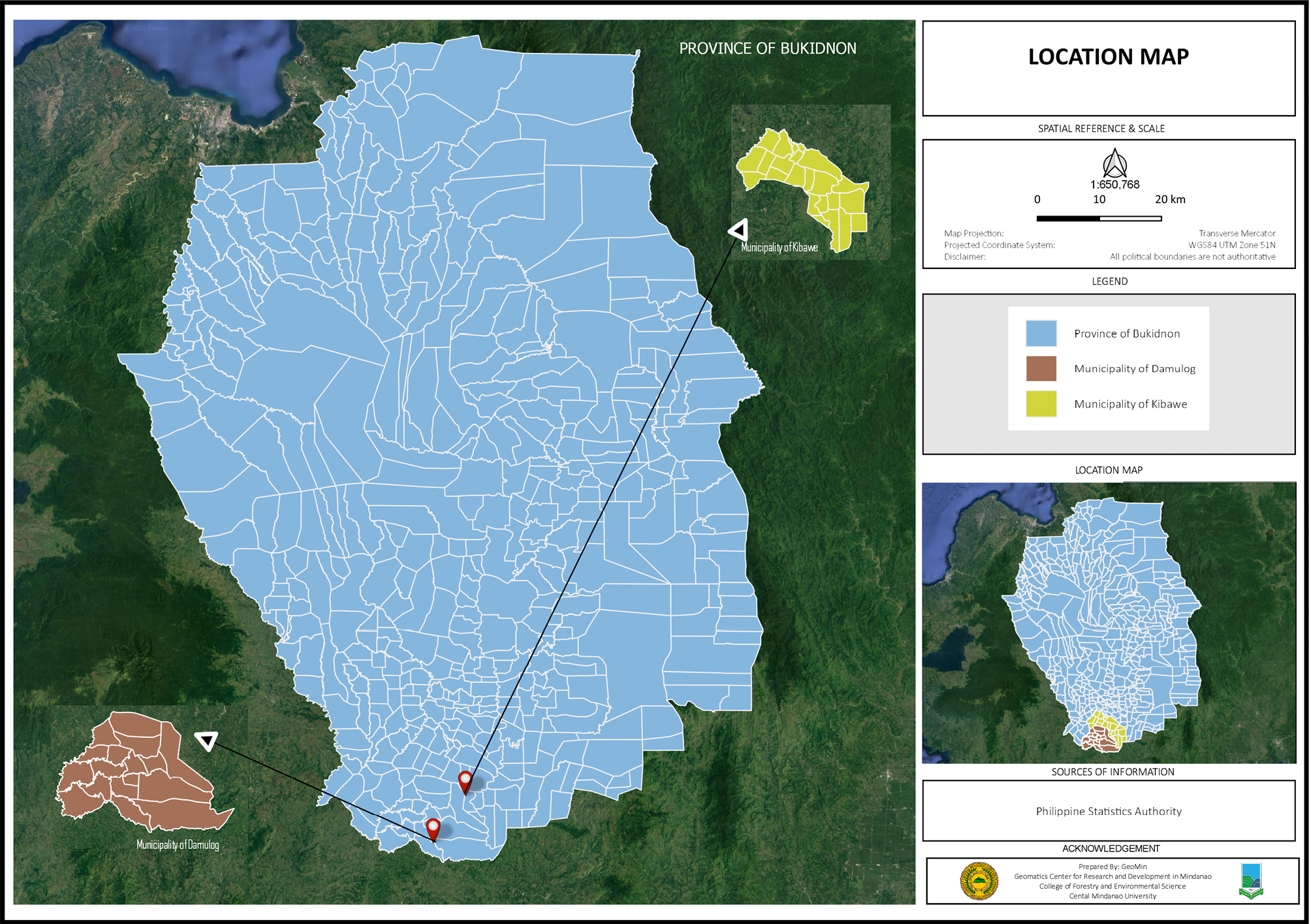
The study used the theory of effectiveness by Bullock (2006) to identify the change brought about by the project. The study covered Kibawe and Damulog, Bukidnon, in the Northern part of Mindanao, Philippines, since it is the second largest coconut area in terms of hectares according to the Philippine Statistics Authority in 2021, and the municipalities were the first beneficiaries of the KEDP–CHLCPP in the Philippines in general by the PCA. Figure 1 shows the Map of Bukidnon with emphasis on Kibawe and Damulog.
2.2 Procedures
A total of 140 respondents were identified using complete enumeration with the help of the Division Chief of the PCA in Bukidnon. These respondents were the farmer-beneficiaries of the project by the PCA.
A baseline survey was used as secondary data to identify the profitability of farmer beneficiaries before the project implementation, and primary data were gathered and calculated from it and were used to identify the profitability of the farmer-beneficiaries after project implementation.
A before-and-after approach is a method that identifies variables that indicate impact attainment. Indicators can be used both prospectively during planning as milestones and targets, and retrospectively to determine whether planned impacts were met. Categories or logical structures can be used to identify, organize, and evaluate indicators (Reed et al., 2021).
A similar study conducted by Daryanto et al. (2021) examined the difference in the financial performance of PT Japfa Comfeed Indonesia before and during the COVID-19 pandemic to determine the company’s ability to generate profit before and during the pandemic, which provides insight into the company’s future financial plan. Profitability parameters such as return on assets, return on invested capital, return on equity, gross margin percentage, and profit margin were assessed in terms of financial performance. In addition, the study of Golestani and Fallah (2019) was conducted using the Before and After method. The purpose of the study was to analyze the profitability proportions in companies before and after the implementation of corporate governance in companies listed on the Tehran Stock Exchange. The research was descriptive and causal-comparative in nature. Also, Putra et al. (2014) conducted a before-and-after research. The study’s goal was to compare the financial performance of the oil and gas sector before and after the global financial crisis.
2.3 Research instrument
The research instrument that was used includes a cover letter and the main questionnaire. The cover letter explains the objectives and the overall concept of the study, asking for the commitment of the respondents to participate in the research. The researchers used the questionnaire adopted from the PCA with some degree of modification. It was not subjected to validation since it was the standard questionnaire used by the PCA. It was subject to proofreading, editing, and pilot testing with a Cronbach’s alpha result of 0.867. It was a personal interview conducted by the researcher. It was more practical for the researchers to do a personal interview to gather all the data needed to satisfy the research objectives.
2.4 Data analysis and validation
Data were analyzed using a paired sample t-test to evaluate if there were any significant differences in the CBO’s ability to generate income before and after the project implementation to determine the outcome brought about by the KEDP - Community Household Level Coconut Processing Project (CHLCPP). These data were validated by a focus group discussion with a total of 7 representatives. The researcher asked further questions about the results of the data gathered and analyzed.
2.5 Ethical consideration
The research was conducted by observing research ethics. Permission to conduct the study was sought from the municipal Mayor of Kibawe, and an Institutional Ethics Review Committee (IERC) permit was secured from Central Mindanao University before the conduct of the study.
3. Results and Discussion
3.1 Socio-demographic profile of the beneficiaries of the project
This sector highlights the data gathered exclusively from the conduct of the research, stating the socio-demographic profile of the farm-beneficiaries of the project from the two municipalities in Bukidnon.
Table 1 shows the distribution of farmers according to gender. It was found out that sixty-seven per cent (67%) or about 94 beneficiaries were females. This result undermines the 2002 Census of Agriculture and Fisheries (CAF) conducted by the Philippine Statistics Authority (2009), that male operators dominated the agriculture sector. Of the 4.8 million farmers, 89% were male operators, while 11% comprised the female operators. The farmer beneficiaries mentioned during data validation that most of the males work in the farms, while most of the females work in the processing site. Moreover, a study conducted by Lu (2007) shows that male farmers outnumber female farmers. In addition, a study was also conducted by Ani and Casasola (2020) that shows that women do not have enough representation as well in key decision-making bodies such as local government units, rural organizations and farmers’ cooperatives. The organizations also employed women, since it is one of the objectives of the KAANIB Enterprise Development Project. Nevertheless, it only shows that the agriculture sector is changing from a traditionally male-dominated sector to a female-dominated sector.
| Item | Frequency | Percent |
|---|---|---|
| Gender | ||
| Male | 46 | 33 |
| Female | 94 | 67 |
| Total | 140 | 100 |
| Address | ||
| Kibawe, Bukidnon | 70 | 50 |
| Damulog, Bukidnon | 70 | 50 |
| Total | 140 | 100 |
| Age | ||
| 70 years old above | 21 | 15 |
| 61 – 70 years old | 29 | 21 |
| 51 – 60 years old | 52 | 37 |
| 41 – 50 years old | 22 | 16 |
| 40 years old below | 16 | 11 |
| Total | 140 | 100 |
| Religion | ||
| Catholic | 132 | 94 |
| Others (Jehovah’s Witness and Baptist) | 8 | 6 |
| Total | 140 | 100 |
| Ethnicity | ||
| Cebuano | 98 | 70 |
| Boholano | 38 | 27 |
| Ilocano | 2 | 1 |
| Surigaonon | 1 | 1 |
| Camiguinon | 1 | 1 |
| Total | 140 | 100 |
| Highest Educational Attainment | ||
| Elementary level | 44 | 32 |
| High School level | 63 | 45 |
| College level | 20 | 13 |
| College graduate | 12 | 9 |
| Post graduate level | 0 | 0 |
| Vocational Education | 1 | 1 |
| Total | 140 | 100 |
| Employment Status | ||
| Employed | 2 | 2 |
| Unemployed | 6 | 4 |
| Farming | 130 | 92 |
| Others | 2 | 2 |
| Total | 140 | 100 |
| Number of years as Coconut Farmer | ||
| 20 years below | 45 | 32 |
| 16 – 20 years | 15 | 11 |
| 11 – 15 years | 44 | 31 |
| 5 – 10 years | 30 | 22 |
| 5 years below | 6 | 4 |
| Total | 140 | 100 |
| Ownership status of the farm | ||
| Owned | 115 | 82 |
| Leased | 3 | 2 |
| Tenanted | 20 | 15 |
| Rented | 2 | 1 |
| Total | 140 | 100 |
| Housing ownership/ status | ||
| Rented | 7 | 5 |
| Owned | 133 | 95 |
| Total | 140 | 100 |
Shown also in Table 1 is the distribution of respondents according to their addresses. The respondents were situated in two different municipalities in Bukidnon, Kibawe and Damulog. These two municipalities were the first recipients of Coconut sugar technology and Virgin coconut oil technology in the region, respectively. Since the study used complete enumeration, the Division Chief, with the help of the Coconut Development Officer, identified 70 respondents at each site. These 70 respondents at each site were the original recipients way back in 2013. Thus, fifty per cent (50%) of the respondents were from Kibawe, and another fifty per cent (50%) were from Damulog, Bukidnon.
Table 1 also reveals the age distribution of the coconut farmers. The finding implies that thirty seven percent (37%) of the farmer beneficiaries belong to the 51-60 years old age group, twenty-one (21%) belong from the 61-70 years old age group, sixteen percent (16%) belong to the 41-50 years old group, fifteen percent (15%) of the farmers belong to the 70 years old above age group, and the remaining eleven percent (11%) were the youngest which belongs to the 40 years old and below group. The average age of farmers engaged in coconut farming is 60 years old, with 84 years old as the oldest and 36 years old as the youngest. This goes to show that farmers were already at retirement age. This corroborates with the Department of Agriculture (DA) survey in 2017 that the average age of farmers was 60 years old (Inso, 2018). According to Abbott (2019), in the year 2019, the average age of farmers was 59 years old, considered as “principal operator”. Nonetheless, these farmers have a long range of experience in coconut farming and hope to teach the cultural management practice of coconut to their next generations.
The distribution of farmers according to religious affiliation is also shown in Table 1. The result indicates that ninety-four per cent (94%) or 132 of the farmers were Roman Catholics, and the remaining six per cent (6%) or 8 farmers were divided among other religions like Jehovah’s Witnesses and Baptists. Accordingly, there were fewer than non-Catholic members because most of the non-Catholic members of the community lived in the mountains, where communication is very difficult and roads are not very accessible. This indicates that among the farmers, Roman Catholicism is dominant in both Kibawe and Damulog, Bukidnon areas. This result conforms to the report of PSA (2010) that among the household population in Bukidnon, 76.5% were Roman Catholics, which comprised the largest among the population.
It can be gleamed from Table 1 that (70%) of the respondents were Cebuanos and twenty-seven per cent (27%) were Boholanos. As supported by the focus group discussion, most of the ancestors of the farmers were Cebuanos and Boholanos who were the first few people who inhabited the Municipalities of Kibawe and Damulog, Bukidnon. The remaining percentages were farmers who were Ilocano, Surigaonon and Camiguinon, respectively.
The distribution of farmers according to educational attainment is also revealed in Table 2. The finding of the study implies that forty-five per cent (45%) of the farmers were holders of high school level education, thirty-two per cent (32%) of the farmers have an elementary level degree, thirteen per cent (13%) were college level degree while one per cent (1%) were vocational education degree holders. This indicates that farmers attained basic education. Due to the lack of financial resources back then, the respondents were not able to go to higher education because they were forced to do farming for them to have food on their tables. Thus, this result supports the PSA (2013) survey, where they found that from the total household population, the largest portion of the population had finished at most high school.
| Indicators | Mean | Standard Deviation | t | p-value | |||||||||||||||
|---|---|---|---|---|---|---|---|---|---|---|---|---|---|---|---|---|---|---|---|
| Pair 1 | Return on Investment | -26.12 | 101.47 | -2.154 | 0.035** | ||||||||||||||
| Pair 2 | Return on Asset | -44.49 | 126.61 | -2.940 | 0.004** | ||||||||||||||
| Pair 3 | Return on Equity | -18.26 | 81.64 | -1.871 | 0.066 | ||||||||||||||
| Pair 4 | Gross Profit Margin | -16.72 | 57.89 | -2.416 | 0.018** | ||||||||||||||
| Pair 5 | Net Profit Margin | -15.44 | 38.39 | -3.365 | 0.001** | ||||||||||||||
| Note: **significant at 0.05 p-value. | |||||||||||||||||||
As reflected in Table 1, employment status, ninety-two (92%) of the beneficiaries were full-time farmers, as their employment, unemployed respondents were also six per cent (6%), and the remaining percentages were distributed to public and private employees, which were two per cent each (2%). This is because most of the farmer beneficiaries were not able to finish higher education courses, and most of them only knew how to farm. Thus, farming plays an important role in the community. According to a study conducted by Jimenez et al. (2018), agriculture is the main economic driver in Bukidnon, with farming being the primary agricultural activity.
Data shows that in terms of number of years as coconut farmers, thirty-two per cent (32%) had been in the coconut farming for more than 20 years, thirty-one per cent (31%) were farming for 11-15 years, twenty-two per cent (22%) were farming for 5-10 years, eleven per cent (11%) were farmers for 16-20 years and the remaining four per cent (4%) were just new at farming and had been doing so for 5 years and below (Table 2). The farmer beneficiaries had been farming for more than 20 years due to familial ties and a lack of alternative livelihood options in the community, as supported by the focus group discussion. Moreover, farmers involved in farming for several years are expected to perform better than new ones. According to a study by Sivapragasam et al. (2019), coconut farming provides a stable source of income for many farmers in developing countries, where agriculture is the mainstay of the economy. As such, farmers who have invested significant time and resources in coconut farming may be reluctant to abandon their livelihoods. Also, farmers experience bridge theory and practice, which may affect farmers’ openness in accepting and participating in agricultural programs (Francis et al., 2014).
Table 1 shows the distribution of farmers according to the ownership status of the farm. Eighty-two per cent (82%) of the farmers were land owners. This indicates that most farmers work on their own farm. This result corroborates the report of PSA (2009) that the majority (80%) of the agricultural operations were engaged in their own landholdings.
Household ownership or status of the farmer beneficiaries is also seen in Table 1. About ninety-five per cent (95%) of the farmer beneficiaries own their households, while the remaining five (5%) are renting their households. A study conducted by the International Labour Organization (2018) in the Philippines found that coconut farmers were among the poorest agricultural workers in the country, with high levels of debt and limited access to social services and financial resources. Though these beneficiaries were considered poor, these beneficiaries were able to build their own houses out of the small income they had from their farms.
3.2 Difference in the Profitability of the Beneficiaries before and after the implementation of the program
A paired sample t-test was used to identify the difference between the profitability of the farmers in terms of Return on Investment (ROI), Return on Asset (ROA), Return on Equity (ROE), Gross Profit Margin (GPM), and Net Profit Margin (NPM) before and after the KAANIB Enterprise Development Project. Similarly, Aisah et. al. (2023) used a paired sample t-test to determine the differences between two variables. According to the American Psychological Association (2020), a p-value of 0.05 or less is generally considered statistically significant.
Table 2 below shows the two-tailed paired sample t-test on the profitability of the farmer beneficiaries in Kibawe, Bukidnon. A baseline survey was conducted by the PCA before the start of the KEDP in Kibawe, Bukidnon. It was used as the data before project implementation, and gathered the data after project implementation through personal interviews.
The standard deviation represents the average level of variation in a dataset. It tells how far each value deviates from the mean on average. A high standard deviation indicates that values are spread out from the mean, while a low standard deviation indicates that values are close to the mean (Bhandari, 2020).
In terms of Net Profit Margin, it is one indicator of the company’s financial performance. In the cruise industry, for example, leading cruise operators exhibited consistently strong growth in net profit margins between 2016 and 2019. In contrast to most commercial shipping segments, which experienced sharp and prolonged revenue declines following the 2008 global financial crisis, cruise shipping demonstrated remarkable resilience and a relatively rapid recovery (Budiyanta, 2021).
The result shows a 101.47 standard deviation on the return on investment, 126.61 on the return on asset, 81.64 on the return on equity, 57.89 on the gross profit margin, and 38.39 on the net profit margin before and after project implementation. Thus, the profitability ratio values of the 70 respondents from Kibawe, Bukidnon, were far from the mean, indicating that each farmer’s net income and net investment, total assets, total equity, net sales, gross profit, and net profit before and after project implementation has huge differentiation from each other. Some farmers have high profitability, and some farmers have low to negative profitability. Also, it goes to show that one farmer beneficiaries’ profitability ratio has high variability in another’s profitability ratio. Since the KEDP – CHLCPP was just an additional income to the farmer beneficiaries, some beneficiaries were earning long before the start of the project, while others just started earning because of the project.
The result shows a significant difference of 0.035 in the return on investment of the farmer beneficiaries before and after project implementation, which was considered statistically significant at a p-value of 0.05. Thus, the intervention of the government, specifically the PCA, was effective in changing the ROI of the farmer beneficiaries. Thus, it follows that return on investment (ROI) is a metric that may be used to assess a company’s profitability as well as reveal the origins of its competitive advantages (Mauboussin and Callahan, 2014; Baldwin, 2016).
The result also shows a significant difference of 0.004 in the return on asset of the farmer beneficiaries before and after project implementation, and was also considered statistically significant at a p-value of 0.05. Thus, the intervention of the government, specifically the PCA, was effective in changing the ROA of the farmer beneficiaries. The farmer beneficiaries’ net income and utilization of the total assets changed significantly over 10 years of project implementation.
A 0.066 significant difference was calculated on the return on equity before and after project implementation. This means that the p-value was not statistically significant. The value before project implementation lacks evidence that the project was effective in changing the return on equity of the farmer beneficiaries 10 years after project implementation. The beneficiaries were not able to significantly convert their available equity before and after project implementation. Because the given technology by the implementing agency was not according to the needs of the community.
A paired sample t-test yields a non-significant result for the return on equity variable, suggesting that there is no statistically significant difference between the paired ROEs being compared. This means that the ROE did not change significantly before and after project implementation.
The gross profit margin’s significant difference shows a value of 0.018, which was considered statistically significant. The project was effective in changing the gross profit of the farmer beneficiaries 10 years after project implementation.
Lastly, a net profit margin of 0.001 significant difference before and after project implementation. The project was effective in changing the net profit against the total sales of the farmer beneficiaries. Results show a significant change in the net profit of farmer beneficiaries 10 years after the implementation of the project.
Also, the data below shows the significant difference in the ROI, ROA, ROE, GPM, and NPM of the farmer beneficiaries after the PCA gave them coconut sugar processing as part of their project. And the net margin is perhaps the most important measure of a company’s overall profitability. It is the ratio of net profits to revenues for a company or business segment. Expressed as a percentage, the net profit margin shows how much profit is generated from every $1 in sales, after accounting for all business expenses involved in earning those revenues. Larger profit margins mean that more of every dollar in sales is kept as profit (Murphy, 2022).
According to Zamfir et al. (2016), the value of ROI can be either positive or negative. A positive ROI indicates a profitable project, while a negative ROI indicates otherwise. Therefore, the bigger the value of ROI, the better the investment would be.
Table 3 shows the two-tailed paired sample t-test on the profitability of the farmer beneficiaries in Damulog, Bukidnon. A baseline survey was conducted by the PCA before the start of the KEDP in Damulog, Bukidnon. It was used as the data before project implementation, and gathered the data after project implementation through personal interviews.
| Indicators | Mean | Standard Deviation | t | p-value | |||||||||||||||
|---|---|---|---|---|---|---|---|---|---|---|---|---|---|---|---|---|---|---|---|
| Pair 1 | Return on Investment | -24.71 | 72.38 | -2.85 | 0.006** | ||||||||||||||
| Pair 2 | Return on Asset | -9.39 | 56.28 | -1.40 | 0.167 | ||||||||||||||
| Pair 3 | Return on Equity | -21.6 | 61.2 | -2.95 | 0.004** | ||||||||||||||
| Pair 4 | Gross Profit Margin | -60.28 | 146.43 | -3.44 | 0.001** | ||||||||||||||
| Pair 5 | Net Profit Margin | -16.10 | 57.32 | -2.50 | 0.022** | ||||||||||||||
| Note: **significant at 0.05 p-value. | |||||||||||||||||||
The result shows a 72.38 standard deviation on the return on investment, 56.28 on the return on asset, 61.2 on the return on equity, 146.43 on the gross profit margin, and 57.32 on the net profit margin before and after project implementation. Thus, the profitability ratio values of the 70 respondents from Damulog, Bukidnon were far from the mean, indicating that each farmer’s net income and net investment, total assets, total equity, net sales, gross profit and net profit before and after project implementation has huge differentiation from each other. Just like the farmer beneficiaries from Kibawe, Bukidnon, there are also farmers who have high profitability, and there are also farmers who have low to negative profitability. Also, it goes to show that one farmer beneficiaries’ profitability ratio has high variability in another one’s profitability ratio. Because the KEDP – CHLCPP was just an additional income to the farmer beneficiaries, some beneficiaries were earning long before the start of the project, while others just started earning because of the project, the same with the farmer beneficiaries in Kibawe, Bukidnon.
The result shows a significant difference of 0.006 in the return on investment of the farmer beneficiaries before and after project implementation, which was considered statistically significant at a p-value of 0.05. Thus, the intervention of the government, specifically the PCA, was effective in changing the ROI of the farmer beneficiaries. The farmer beneficiaries’ net income and total investment changed significantly over 10 years of project implementation. Thus, the null hypothesis, which states that the Return on Investment of farmer beneficiaries has no significant difference before and after the implementation of the KAANIB Enterprise Development Project, is to be rejected.
The result also shows a significant difference of 0.167 in the return on asset of the farmer beneficiaries before and after project implementation, and was not considered statistically significant at a p-value of 0.05. Thus, the intervention of the government, specifically the PCA, was not effective in changing the ROA of the farmer beneficiaries. The farmer beneficiaries’ net income and utilization of the total assets has no significant change over 10 years of project implementation. The equipment given was not totally used due to the absence of a market, and the equipment given does not match the needs of the organization. Thus, the null hypothesis, which states that the Return on Asset of farmer beneficiaries has no significant difference before and after the implementation of the KAANIB Enterprise Development Project, is to be accepted.
A paired sample t-test yields a non-significant result for the return on asset variable, suggesting that there is no statistically significant difference between the paired ROA’s being compared. It means that the ROA did not change significantly before and after project implementation. According to a study by Atidhira and Yustina (2017) it shows that a good profitability performance by an enterprise can be really seen by considering other profitability ratios, and when the customers are able to use the technology given, thus the community benefits from it.
A 0.004 significant difference was calculated on the return on equity before and after project implementation. This means that the p-value was statistically significant. The value before project implementation has sufficient evidence showing a significant difference that the project was effective in changing the return on equity of the farmer beneficiaries 10 years after project implementation. Thus, the null hypothesis, which states that the Return on Equity of farmer beneficiaries has no significant difference before and after the implementation of the KAANIB Enterprise Development Project, is to be rejected.
3.3 Thematic analysis in identifying the problems before, during and after project implementation
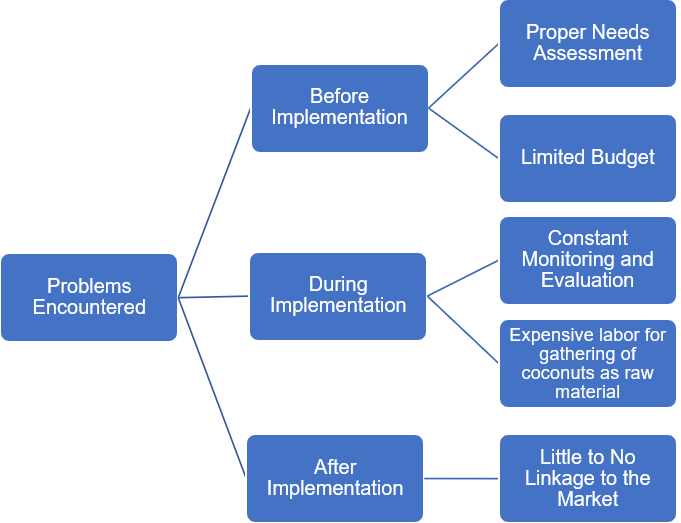
There were several problems that the farmer beneficiaries encountered before, during and after the implementation of the KAANIB Enterprise Development Program (KEDP), specifically the Community Household Level Coconut Processing Project (CHLCPP) component. These problems were identified by the farmers during data collection and focus group discussion.
Farmers’ involvement in government programs has been found to have a positive impact on farmer morale. According to a study conducted by Johnson et al. (2018), active participation of farmers in government initiatives and decision-making processes increases their sense of ownership and engagement, leading to improved morale within the farming community.
According to a study by Rambaldi et al. (2018), the cost of support systems can be a barrier for farmers, particularly small-scale farmers who do not have the financial capacity to access these services.
Kibawe, Bukidnon, identified a problem with the lack of labor, especially coconut toddy collector, because their trained collector died. With the absence of the collector, raw material such as toddy or vernacularly known as “tuba” was not available. And accordingly, the “tuba” collection is very crucial because it needs to be collected at a specified time, failure to collect on the said time may lead to spoilage of the “tuba”.
Damulog, Bukidnon, identified a problem with the shift of officers. The old officers were replaced by new ones who have little knowledge about virgin coconut oil processing. Nonetheless, the old officers were still part of the organization and helped in maintaining the production of virgin coconut oil and other products from coconut by products.
According to Yusuf and Surjaatatmadja (2018), profitability is also significant in terms of a firm’s long-term survival because it signals whether the company has high future possibilities. Profitability ratios are classified into two types: margin ratios and return ratios.
The summary of the problems encountered before, during and after the implementation of KAANIB Enterprise Development Project (KEDP) – Community Household – Level Coconut Procession Project (CHLCPP) component of the PCA is shown in Figure 2.
4. Conclusion
Results of the paired t-test showed that the Return on Investment, Return on Asset, Net Profit Margin, and Gross Profit Margin were statistically significant before and after the program was implemented. However, the Return on Equity was considered not statistically significant in terms of profitability before and after the program was implemented in the case of Kibawe, Bukidnon. On the other hand, in the case of Damulog, Bukidnon, Return on Investment, Return on Equity, Gross Profit Margin, and Net Profit Margin were statistically significant, while the Return on Asset was not statistically significant.
There were problems encountered before project implementation, which were the conduct of proper needs assessment, limited budget of the implementing agency, during project implementation, which were constant monitoring and evaluation and expensive labor for gathering of coconuts as raw materials, and after the project implementation, which was the absence of market and little to no linkage.
5. Recommendation
A properly conducted needs analysis would be recommended to the implementing agency. A needs analysis identifies causes and solutions to challenges or problems. It can be thought of as the process of identifying and accounting for the gaps between what should and should not be happening. Additionally, the implementing agency should conduct monitoring and evaluation of the technologies given at least once or twice a month in order for the government agency to have information on what happened with the technology they gave. To further know the status of the technology, whether it is still functional or not, constant monitoring must be done. If it is not functional, identify other organizations that need the technology in order for the investment of the government not to go to waste.
To maintain and enhance these technologies, continuous training should be offered to farmers to guarantee effective adoption of technology and adjustment to local circumstances. Furthermore, encouraging collaboration between farmers, local government, research organizations, and private sector stakeholders will promote knowledge sharing and the spread of innovation, allowing for the creation of customized circular economy models suited to local needs.
Acknowledgement
The PCA Region X, considered as the implementor of the project, Municipal Mayor of Kibawe and Damulog, considered as the farmer beneficiaries of the project, the author is beyond blessed to have worked with them in finishing this research and hopes to have more research collaborations in the future.
References
Abbott, R. (2019). Ratio Analysis: Gross Profit Margin. Available at: https://www.gurufocus.com/news/972172/ratio-analysis-gross-profit-margin (Accessed 15 March 2023).
Aisah, D. N., Munandar, K., Wadiono, G., & Jannah, S. R. (2023). Increasing students’ creative thinking through differentiated learning with an CRT-Integrated PjBL Model. Bioeduca: Journal of Biology Education, 5(2), 125–132. https://doi.org/10.21580/bioeduca.v5i2.17299
American Psychological Association (2020). Publication manual of the American Psychological Association (7th ed.). Washington, American Psychological Association. https://doi.org/10.1037/0000165-000
Ani, P. A. B., & Castillo, M. (2019). The Philippine coconut industry: Status, Policies and Strategic Directions for Development. Food and Fertilizer Technology Center for the Asian and Pacific Region – Agricultural Policy Platform.
Ani, P. A. B., & Casasola, H. (2020). Transcending Barriers in Agriculture through Gender and Development. Food and Fertilizer Technology Center for the Asian and Pacific Region – Agricultural Policy Platform.
Atidhira, A. T., & Yustina, A. I. (2017). The influence of return on asset, debt to equity ratio, earnings per share, and company size on share return in property and real estate companies. Journal of Applied Accounting and Finance, 1(2), 128–146.
Balane, W. I. (2013). Matigsalug tribe folks in Bukidnon eye coconut plantation for livelihood. MindaNews. Available at: https://www.mindanews.com/top-stories/2013/06/matigsalug-tribe-folks-in-bukidnon-eye-coconut-plantation-for-livelihood/ (Accessed 14 March 2023).
Baldwin, C. Y. (2016). Return on Invested Capital (ROIC). In Augier, M., and Teece, D. J. (Eds). The Palgrave Encyclopedia of Strategic Management. London, Palgrave Macmillan, pp. 1466–1469.
Barret D., Blundo-Canto G., Dabat M-H., Devaux-Spatarakis A., Faure G., Hainzelin E., Mathé S., Temple L., Toillier A., Triomphe B., Vall E. (2018). Methodological guide to ex post impact evaluation of agricultural research in developing countries. Montpellier, CIRAD. https://doi.org/10.19182/agritrop/00006
Bayacag, P. (2020). Understanding impact assessment and its framework. A lecture notes. Training – Workshop on Impact Assessment of RDE Projects in Agriculture, Aquatic and Natural Resources.
Bhandari, P. (2020). How to calculate standard deviation guide: calculator and examples. Available at: https://www.scribbr.com/statistics/standard-deviation/ (Accessed 15 March 2023).
Budiyanta, W. A. (2021). A literature review of net profit margin. Social Science Studies, 1(2), 115–128. https://doi.org/http://dx.doi.org/10.47153/sss12.2262021
Bullock, R. K. (2006). Theory of effectiveness measurament. Dissertation. Air Force Institute of Technology (AFIT).
Daryanto, W. M., Maharani, A. P., Wiradjaja, N. (2021). Profitability ratio analysis before and during COVID-19: case study in PT JAPFA comfeed Indonesia. South East Asia Journal of Contemporary Business, Economics and Law, 24(4), 52–59.
Dy, R., & Reyes, S. (2006). The coconut industry: Performance, Issues and Recommendations. Economic Policy Reform and Advocacy. Ateneo de Manila University – Rockwell and Quezon City.
Francis, C., Nicolaysen, A. M., Morse, S., Breland, T. A., & Lieblen, G. (2014). Bridging farming experience and science: Learning for agroecological design of sustainable farming systems. In Proceedings of the 4th ISOFAR Scientific Conference ‘Building Organic Bridges’, at the Organic World Congress 2014, 13-15 October, Istanbul, Turkey.
Fryirs, K., Brierley, G., Dixon, T. (2019). Engaging with research impact assessment for an environmental science case study. Nature Communications, 10(1), 4542.
Golestani, R., & Fallah, R. (2019). Comparison of profitability proportions before and after the implementation of corporate governance in companies listed in Tehran stock exchange. Dutch Journal of Finance and Management, 3(1), em0055. https://doi.org/10.29333/djfm/5872
Ichwandiani, R., & Hassan, S. (2025). Industry analysis: agriculture in Philippines. ARC BCS ID: BCS010. Kuala Lumpur, Asia School of Business. Available at: https://asb.edu.my/faculty/research-publication-database/ (Accessed 19 May 2025).
International Labour Organization (2018). Coconut farming in the Philippines: an overview of challenges and opportunities. Available at: https://www.ilo.org/wcmsp5/groups/public/---asia/---robangkok/documents/publication/wcms_632718.pdf (Accessed 15 March 2023).
Inso, F. A. (2018). Declining farmer population. Available at: https://cebudailynews.inquirer.net/191635/declining-farmer-population (Accessed 19 May 2023).
Jimenez, M. A. L., Santos, P. B., & Gomez, M. L. (2018). Economic contributions of agriculture in Bukidnon, Philippines. Bukidnon State University Research Journal, 7(1), 1–13.
Johnson, A., Smith, B., & Thompson, C. (2018). The role of farmer involvement in government programs: effects on farmer morale. Journal of Agricultural Economics, 62(3), 689–705. https://doi.org/10.1111/agec.12458
Lu, J. L. (2007). Gender differentiation among farmers in the agricultural sector in Benguet, Philippines. Available at: https://pdfs.semanticscholar.org/a621/575789d2943c7beb295b399ec32c6dcc5fe3 (Accessed 14 April 2023).
Mauboussin, M. J., & Callahan, D. (2014). Calculating Return on Invested Capital. Credit Suisse. Available at: www.credit-suisse.com (Accessed 15 April 2023).
Murphy, C. (2022). Corporate Finance and Accounting: Financial Ratios, Net Profit Margin. Available at: https://bit.ly/2BAsY3g (Accessed 29 April 2023).
Ndoen, M. J., Bumame, S. O., & Sopamena,J. (2018). Developing a sustainable coconut plantation: challenges and opportunities in North Sulawesi, Indonesia. Asian Journal of Agriculture and Rural Development, 8(1), 40–51.
Philippine Coconut Authority (2018). PCA Programs and Projects 2018. Available at: https://pca.gov.ph/pdf/compliance2018/MajorProjectsAndProgramsActivities/2018/2018projandoprograms.pdf (Accessed 15 April 2023).
Philippine Coconut Authority (2023). Coconut Trade Performance and Market Trends (January-December 2022). Quezon City, Trade Information and Relations Division, Trade and Market Development Department.
PSA - Philippine Statistics Authority (2021). Data on Coconut Production, Yield, and Area Planted. Available at: http://countrystat.psa.gov.ph (Accessed 14 February 2023).
PSA- Philippine Statistics Authority (2010). 2010 census of population and housing in Bukidnon. Retrieved from https://psa/gov.ph/sites/default/files/BUKIDNON_FINAL%20PDF (Accessed 14 February 2023).
PSA - Philippine Statistics Authority). (2009). Women in agriculture. Available at: https://psa.gov.ph/content/women-agriculture (Accessed 23 March 2023).
PSA (Philippine Statistics Authority). (2013). The educational attainment of the household population (2010 census). Available at: https://psa.gov.ph/content/educational-attainment-household-population-results-2010-census (Accessed 14 February 2023).
Putra, A., Lahindah, L., & Rismadi, B. (2014). Financial performance analysis before and after global crises: case study in Indonesian oil and gas sector for the period of 2006 – 2011. Review of Integrative Business & Economics Research, 3(1), 42.
Rambaldi, G., Yatbantoong, N., Wattanapenpaiboon, N., & Wahlqvist, M. L. (2018). “Growing old gracefully”: a pilot study of the challenges for smallholder coconut farmers in Thailand in maintaining productivity and sustainability. Journal of Agriculture and Rural Development in the Tropics and Subtropics, 119(1), 1–14.
Reed, M.S., Ferre, M., Martin – Ortega, J., Blanche, R., Lawford – Rolfe, R., Dallimer, M., & Holden, J. (2021). Evaluating impact from research: a methodological framework. Research Policy, 50(4), 104147.
Seriño, M. N., Cavero, J., Cuizon, J., Ratilla, T., Ramoneda, B., Bellezas, M. H., & Ceniza, M. J. (2021). Impact of the 2013 super typhoon haiyan on the livelihood of small-scale coconut farmers in Leyte island, Philippine. International Journal of Disaster Risk Reduction, 52, 101939. https://doi.org/10.1016/j.ijdrr.2020.101939.
Sivapragasam, C., Krishna, V. V., & Krishnasamy, V. (2019). Determinants of adoption and intensity of adoption of coconut cultivation technologies by farmers in Tamil Nadu, India. Agricultural Research, 8(2), 183–191. https://doi.org/10.1007/s40003-019-00329-1
Yusuf, M., & Surjaatmadja, S. (2018). Analysis of financial performance on profitability with non performance financing as variable moderation (Study at Sharia Commercial Bank in Indonesia period 2012 – 2016). International Journal of Economics and Financial Issues, 8(4), 126–132.
Zamfir, M., Manea, M. D., & Ionescu, L. (2016). Return on investment – Indicator for measuring the profitability of invested capital. Valahian Journal of Economic Studies, 7(2), 79–86. https://doi.org/10.1515/vjes-2016-0010