https://doi.org/10.36253/aestim-17761
Received: April 23, 2025; Accepted: May 15, 2025; Published: September 11, 2026
Metabolic approach and Life Cycle Assessment in building an energy community: the case of the Mondeggi Estate in the Municipality of Bagno a Ripoli
1 Department of Architecture, University of Florence, Italy
2 Department of Planning, Design, Architecture Technology, Sapienza University of Rome, Italy
3 School of Architecture, University of Florence, Italy
E-mail: fabrizio.battisti@unifi.it, carlo.pisano@unifi.it, orazio.campo@uniroma1.it, melania.perdono@unifi.it, domenico.mele@edu.unifi.it
*Corresponding author
Abstract. The “urban and territorial metabolism” refers to the construction of urban systems by analyzing the directions of energy, water, nutrients, materials, and waste flows in an urban system, with the aim of quantifying the inputs, outputs, and stored parts of the system. In short, it is an evaluative-design approach to the stability and impact of a production system, with the aim of verifying its results in terms of sustainability. The transition from linear production-consumption approaches to circular systems, now accepted by various European public administrations, represents a new direction in the processes of regeneration and transformation of the territory, in order to improve the quality impact of urban and peri-urban areas and meet the environmental objectives set out in the European agenda. On this basis, in developing the meta-project for the eco-sustainable restructuring and functionalization of the Mondeggi Public Estate, this article aims to use a metabolic approach to define the conditions for achieving the overall environmental, social, and economic sustainability of the Mondeggi Estate’s systems. Specifically, the metabolic approach defined to safeguard and maintain natural and ecosystem resources over time, without producing irreversible alterations, is evaluated through a Life Cycle Assessment considering the relationship between the flows of resources (firstly energy, even considering water) that the ‘Tenuta di Mondeggi’ system absorbs and produces.
Keywords: landscape, environment, metabolism, Life Cycle Assessment, energy community.
Contents
2.1 Energy: production, efficiency, and savings
2.3 Methodological approach for designing a local metabolic energy system
Mathematical formalization of LCA
3.2 The development of a metabolic energy scenario
3.2.1 Analysis of the research scope
3.2.2 Study of energy potential
3.2.3 Examination of territorial resources
3.3.1 Energy potential and energy requirements
3.3.2 A local metabolic energy mix
3.3.3 Metabolic energy indicators
3.4 The metabolic energy scenario
4. Experimentation and results
4.1 Life Cycle Inventory (input data)
4.2 Emissions and environmental impact (output data)
5. Discussions and conclusions
1. Introduction
Urban territorial systems based on the traditional linear economic model – “extract, produce, use, and dispose” – have given rise to several pressing societal challenges (Fernandes and Ferrão, 2023; Perrotti and Stremke, 2017).
The lack of coordinated and circular planning has produced urbanization models that fail to manage nonrenewable resources and raw materials effectively (Brown et al., 2017). These shortcomings have contributed to climate change and rising global temperatures, significantly undermining residents’ quality of life and the resilience of territories, as reflected in recent well-being indicators (Cinquepalmi, 2019).
The exponential growth of the global population, now surpassing 8 billion, combined with the ongoing abandonment of inland and rural areas and recent technological and economic developments, has significantly contributed to urban overcrowding. This scenario exacerbates the challenges of managing energy, resources, and material flows (Paoli and Pirlone, 2024).
In this context, issues related to the supply of fossil resources become crucial globally, especially for countries that lack these resources within their territory. This situation has made energy dependence a central theme in national debates across many states of the European Union (ENEA, 2011).
The European Union’s substantial reliance on offshore energy supplies remains one of its most pressing challenges. The EU continues to depend heavily on imports of natural gas and oil (GEA, 2012). This vulnerability is further exacerbated by fossil fuels being primarily imported from countries with high geopolitical risk profiles (ENEA, 2011). Scientific literature consistently shows that a nation’s energy security is significantly weakened when dependence is high and when imports are concentrated among a small number of suppliers with low geopolitical stability (Gross and Mautz, 2015; Magnani, 2018). Moreover, reliance on cross-border primary energy sources affects not only the resilience of the energy system but also a country’s overall security and competitiveness.
Heavy reliance on fossil fuel imports from non-EU countries exposes many EU Member States to significant fuel price volatility. These price fluctuations directly impact electricity costs and hinder environmental sustainability, as external fossil fuel use remains a major driver of greenhouse gas emissions and other environmental pressures.
This context calls for a sustainable rethinking of urban systems, including the diversification of energy sources, as demonstrated by recent policies supporting renewables, the development of efficient and circular models, and, ultimately, the diversification of fossil fuel supplier countries (Aura, 2022; Khan, 1995; Pluchino, 2019).
To strengthen the methodologies used for analyzing, evaluating, and designing urban systems based on circular economy principles – defined as an economic model capable of self-regeneration and long-term sustainability (Bortolotti et al., 2023) – it is advisable to adopt the urban metabolism approach (Castán Broto et al., 2012; Kennedy, 2007). This framework enables the analysis of energy flow inputs and outputs within cities or specific urban areas. Moreover, it serves as a design tool for implementing circular, resilient, and sustainable urban models, improving energy system efficiency, and helping mitigate the impacts of climate change.
Urban metabolism aligns closely with key European energy strategies, including the “2030 Framework for Climate and Energy” (European Commission, 2014) and the “Long-term Strategy for 2050” (European Commission, 2018). These frameworks are designed to meet the targets established by the Paris Agreement, which include: (i) keeping the global temperature increase below 2°C, with efforts to limit it to 1.5°C; (ii) reducing greenhouse gas emissions by at least 55% compared to 1990 levels, surpassing the previous 40% target (Kennedy et al., 2011); (iii) increasing the share of energy consumption from renewable sources to at least 32%; and (iv) improving energy efficiency by a minimum of 32.5%.
Italy is among the EU countries facing significant energy dependency, fossil fuel use, and waste management challenges.
At the national level, the National Energy Strategy (SEN), published in late 2017, established long-term policy guidelines aligned with EU goals and called for a a reduction of emissions by at least 80% compared to 1990 levels.
The SEN also led to the adoption of the Integrated National Energy and Climate Plan (NECP) 2021-2030, a strategic framework structured around five key pillars: (i) decarbonization; (ii) energy efficiency and security; (iii) development of the internal energy market; (iv) research and innovation; and (v) competitiveness.
Municipalities play a central role in climate action at the local level through the Covenant of Mayors for Climate and Energy, which sets a target of a 40% reduction in greenhouse gas emissions by 2030. Italian municipalities implement this commitment through the Sustainable Energy and Climate Action Plan (PAESC), adapting climate goals to local contexts and resource availability (Bolognesi, 2018). These strategies recognize that achieving the energy transition requires acting on multiple fronts, including increasing renewable energy production, reducing emissions, and lowering energy demand. One promising avenue is the development of energy communities (Tucci et al., 2024; Galán-Cano et al., 2025).
The construction of energy communities offers a chance to address the social acceptability of energy interventions and move beyond the traditional sectoral approach, fostering locally defined energy mixes, tailored to resource availability. In dynamic energy communities, inhabitants engage in identifying heritage resources, assuming a lead role in managing their territory’s transition towards self-sustainability (Biggeri et al., 2023; Pisano, 2021). Core principles of energy communities include decentralization and localization of energy production. Involving citizens, businesses, and local enterprises enables energy production, consumption, and exchange focused on self-consumption and collaboration (ENEA, 2021).
The development of local energy communities in Italy can serve as a pathway to constructing metabolic energy systems that enhance regional energy potential and generate alternative energy sources (Bolognesi and Magnaghi, 2020), thereby promoting greater energy independence. This initiative partially mitigates the deficit that currently hampers Italy’s energy autonomy. Within this framework, an energy community possesses the capacity to function as an instrument for attaining national energy independence in a scenario where the Italian landscape encompasses a network of such communities.
The significance of this tool/model can be understood by referencing the Italian case study and briefly examining the data regarding domestic energy production.
In 2021, Italy’s electricity demand was recorded at 319.9 TWh, marking an increase of 6.2% compared to the previous year. Domestic production accounted for 86.6% of the electricity demand, while the remaining 13.4% was fulfilled through net imports from abroad, which rose by 32.9% from 2020. The gross domestic production reached 289.1 TWh, reflecting a 3.0% increase over 2020. Specifically, domestic generation consisted of 59.0% non-renewable thermoelectric generation (an increase of 5.5% relative to 2020), 16.4% from hydro generation (a decrease of 4.1% compared to 2020), and the remaining 24.6% was derived from wind, geothermal, photovoltaic, and bioenergy sources (with wind increasing by 11.5%, photovoltaic by 0.4%, geothermal decreasing by 1.9%, and bioenergy decreasing by 2.9% when compared to 2020). The renewable generation sector continued to expand in 2021, with an overall growth of 2.5%, representing 48.4% of the total installations in Italy. Conversely, the thermoelectric generation fleet slightly declined, decreasing from 62.7 GW in 2020 to 61.9 GW. In quantitative terms, the number of renewable installations increased from 948,979 in 2020 to 1,029,479 in 2021, with the photovoltaic sector registering an increase of 80,245 installations. Various sectors demonstrated growth over the preceding year, with photovoltaics increasing by 4.4% and wind power by 3.5%. Meanwhile, the hydro renewable sector experienced a modest increase of 0.3%, reaching 19.2 GW; the bioenergy (4.1 GW) and geothermal (0.8 GW) sectors remained stable. Additionally, as of December 31, 2021, there were 75,070 operational storage systems, reflecting a 90% increase compared to 2020, with a total nominal active capacity of 407.1 MW, representing a 124% rise compared to 2020 (TERNA, 2021).
The above data suggest that, despite a significant decline, the still high national dependence on nonrenewable energy sources presents an issue that requires prompt and practical solutions.
This research endeavors to delineate the methodology for establishing a metabolic energy community, utilizing the Mondeggi Estate in Bagno a Ripoli, a public property under the jurisdiction of the Metropolitan City of Florence, as a case study.
In detail, it aims to understand and explore the potential of local energy systems based on urban metabolism and circularity principles. It utilizes the energy community model by planning alternative energy production facilities tailored to a specific local system’s spatial energy potential and energy demand.
The study was conducted as part of a collaboration between the DIDA and DISEI departments of the University of Florence and the Metropolitan City of Florence. The outcome was a Technical-Economic Feasibility Project, which was submitted for funding under the Integrated Urban Plans supported by NRRP.
The area being tested was the focus of a project proposal for environmental, architectural, social, and cultural redevelopment through the implementation of one of the project lines of the National Recovery and Resilience Plan (NRRP), which allocates resources to Metropolitan Cities for investments aimed at fostering better social inclusion in urban or suburban areas.
The process of building the energy community for the Mondeggi area followed an analytical approach articulated through in-depth research into the area’s energy potential and needs to be met, the foreseeable production and waste production cycles, and the correlations between the basic components of urban metabolism (product, energy, waste) (Muñoz and Navia, 2018).
This study also considered landscape values and the citizens’ perceptions of the area, also supported by the participatory process that accompanied the development of the project (Biggeri et al., 2023). From this point of view, the analyses also served as the basis for redefining the general perception of the area, enabling shared envisioning and building support for the proposed ideas (Pisano and Lingua, 2021).
After this, a comprehensive series of metabolic intervention options was developed, meticulously calibrated in accordance with the relationship between available resources and the requisite needs to be addressed. Consequently, the final hypothesis was formulated, accompanied by a thorough assessment of the associated implementation costs.
A Life Cycle Assessment was conducted using One Click LCA Planetary software and the Net Zero Carbon application to evaluate the operational validity of the design process and the results obtained.
Based on the above, the following sections are outlined: Section 2 provides a literature review of the topics covered in the article and illustrates the LCA method used; Section 3 presents the results arising from the experiment, specifically the construction of an energy community on the Mondeggi Estate in the Municipality of Bagno a Ripoli; Section 4 presents the outcomes of the LCA conducted; and Section 5 discusses the experiment results and draws conclusions from the work.
2. Materials and methods
This section presents: i) the results of a literature review on the key topics addressed in this paper, including: 2.1) energy production, efficiency, and savings; 2.2) urban metabolism; ii) a description of the research methodology, covering: 2.3) The planning approach for energy communities, illustrated through the case study of the Mondeggi Estate in the Municipality of Bagno a Ripoli (Metropolitan City of Florence); 2.4) The application of Life Cycle Assessment (LCA) to evaluate the outcomes of the experiment.
2.1 Energy: production, efficiency, and savings
Addressing the energy performance of an urban system begins with understanding the amount of energy required to maintain its basic functions (Kennedy et al., 2011; Castán Broto et al., 2012). In line with current best practices in territorial planning and design, assessing the energy production potential from renewable sources is essential. At the same time, it is crucial to reduce energy consumption, particularly in infrastructure and service operations, transport, public lighting, and building management (ARSIA, 2009).
This approach seeks to diminish urban reliance on extensive, frequently remote energy infrastructures and fossil fuels linked to considerable market volatility and energy insecurity (Gross and Mautz, 2015). These factors exemplify the fundamental challenges of advancing energy conservation and using renewable energy sources efficiently. Originating from natural resources that are either inexhaustible or capable of regeneration within a human timescale, renewable sources afford significant advantages for environmental protection and public health and serve as a plausible alternative to fossil-based electricity generation.
Nevertheless, the emergence of new design models for local energy systems, such as energy communities, has largely been driven by the dynamics introduced by renewable energy sources (RES). This shift is often associated with large-scale installations that are disproportionate to the territorial context. These systems have been incentivised by policy frameworks and strategically leveraged by industry operators seeking to reduce costs and maximise the efficiency of individual energy sources (Mushafiq et al., 2023).
Thus, the most common strategy for reducing costs has been the development of large-scale facilities, such as ground-mounted photovoltaic systems comprising hundreds or even thousands of panels, geothermal plants, and large wind farms (Gross and Mautz, 2015).
Recently, growing concerns about the impacts of large-scale energy infrastructures have opened new avenues for rethinking energy production and consumption. This shift has encouraged the emergence of a cultural approach that links renewable energy generation to localized energy configurations (Conde and Takano-Rojas, 2025).
This necessitates exploring innovative approaches to execute interventions aimed at energy conservation and energy efficiency that, although functioning distinctly, aspire to attain comparable and synergistic outcomes. Among these, the focal point of this article is urban metabolism.
Before turning to the literature review on urban metabolism, it is important to distinguish between the two concepts established at the normative level by European Directive 2012/27/EU, which defines them as follows:
i) “energy savings, amount of energy saved, determined by measuring and/or estimating consumption before and after implementation of an energy efficiency improvement measure, while ensuring normalization of external conditions affecting energy consumption”.
ii) “energy efficiency, the ratio of output in terms of performance, services, goods, or energy to the input of energy”.
Common energy-saving measures include reducing energy needs by adopting “virtuous” behaviors such as limiting heating and lighting usage, using household appliances efficiently, and regulating winter heating and summer air conditioning temperatures.
On the other hand, a system’s energy efficiency represents its ability to optimize energy utilization to meet a given demand.
Enhanced efficiency enables the same result to be achieved with reduced energy consumption. In contrast to savings, energy efficiency is quantifiable, typically expressed as a percentage or through a building’s energy class rating. This rating provides insights into construction quality, particularly insulation and technological systems, and, more importantly, helps identify the most effective interventions to enhance overall performance (Sorgenia, 2022).
2.2 Urban metabolism
Comparing the city to a living organism has been a significant aspect of urban studies and technology for many years. The term “metabolism” defines the set of chemical reactions occurring within each cell of a living organism, providing energy for life processes and synthesizing new organic material. Living organisms transform what they extract from their environment into energy into energy for activities such as development, movement, and reproduction (Wolman, 1965).
This is precisely why the need arises to understand the workings of processes within urban systems; that is, how the city utilizes energy and matter to support its inhabitants.
In analogy to biological metabolism, it is possible to construct a model that facilitates descriptions and analyses of the incoming and outgoing (input and output) exchanges of flows, materials, and energy related to cities and the territories they occupy, studying the interactions between urban infrastructure and services, as well as those between natural systems and the human species (Wolman, 1965).
This methodology was first systematized by Abel Wolman in 1965 to analyze the direction of energy, water, nutrient, material, and waste flows in an urban system, quantifying the inputs, outputs, and stored components within the system. This methodology assesses the stability and impact of a production system to determine its overall resilience and sustainability.
Wolman conducted his research using a hypothetical city of one million residents, focusing on quantifying resource inputs and waste outputs. He described “urban metabolism” as encompassing all materials and resources required to support a city’s residents at home, at work, and during leisure activities.
Since Wolman’s work, research on urban metabolism has intensified, and some cities have adopted this approach to study their resource flows to improve efficiency, sustainability, and resilience.
Recently, researchers at the University of Toronto conducted a comparative study on urban metabolism across eight metropolitan regions. This study identified various processes that present a significant threat to urban sustainability, including the formation of heat islands, alterations in groundwater levels, the accumulation of nutrients such as phosphorus and nitrogen, the production of toxic materials, and the depletion of local raw materials (Kennedy et al., 2011).
This research redefines urban metabolism as the sum total of technical and socioeconomic processes occurring in cities, reflecting growth, energy production, and waste disposal (Kennedy et al., 2011). This approach provides a useful interpretive key for understanding the city’s complex dynamics and redesigning it sustainably.
Over the years, the urban metabolic approach has evolved from a purely spatial monitoring tool focused on studying urban energy and material flows into a sophisticated method that uses monitoring data to develop small-scale design models centered on circularity, material reuse, and environmental sustainability.
Today, contemporary urban planning fully embraces the idea of urban and spatial metabolism (e.g., Kennedy et al., 2011; Van Bueren et al., 2012; Ibañez and Katsikis, 2014; Sijmons et al., 2014). Urban planners and decision-makers currently apply the urban metabolism model across four main practical domains:
i) Sustainability reporting: this model facilitates the reporting, analysis, and comparison of impacts, resource reserves, and sustainability levels in cities globally, presenting data in a manner that is accessible to decision-makers and allows for comparisons over time;
ii) Greenhouse gas accounting: this model quantifies greenhouse gas emissions in urban areas, reflecting resource consumption and waste. By utilizing relevant indicators, such as the previously mentioned carbon footprint, it is feasible to pinpoint emissions surpassing expected limits and formulate suitable action plans for their reduction;
iii) Analysis of strategies: urban metabolism has created mathematical models to measure and forecast the amounts of pollutants and nutrients in the urban environment. Utilizing these simulations allows for the identification of effective pollution prevention strategies and the assessment of their efficacy;
iv) Sustainable urban planning: utilizing the previously mentioned applications, the urban metabolism model serves as a design tool for creating and executing more sustainable urban infrastructure and services. By monitoring the flow of energy, materials, and waste within the system and combining this information with social, health, and economic indicators, it becomes possible to devise strategies for urban regeneration. This is achieved by establishing a circular metabolism where resources are reclaimed and waste is reduced (Kennedy et al., 2011; Paoli and PirlPirlone, 2024; Pluchino, 2019).
Considering the previously mentioned applications, we aim to propose a methodological framework for designing a local metabolic energy system to be integrated with the energy community tool.
2.3 Methodological approach for designing a local metabolic energy system
The proposed method for building a local metabolic energy system is based on forming an energy community that can arise from the collaborative dynamics among users within a given local system. Each energy community has specific characteristics, but all share the same goal: to self-produce and provide affordable renewable energy to its members.
The fundamental principles of this approach lie in the decentralisation and localisation of energy production. This is made possible through the active involvement of citizens, businesses, corporations, and other regional stakeholders, who collectively participate in the production, consumption, and exchange of energy (Guetlein and Schleich, 2023).
Indeed, as shown in the literature, citizen participation influences the success of local energy communities, where cooperative management is a crucial element for energy efficiency and sustainability (Neves et al., 2024). This approach suggests that energy-efficient systems should be designed based on community acceptance, tailored to local energy resources, and proportionate to the landscape and territorial context. The goal is to prevent large-scale projects that may have considerable impacts, as the community must accept and manage the metabolic cycle of production, consumption, and waste.
Based on the above, the path of an energy-metabolic project arises through the construction of a structured analytical framework, primarily focused on exploring potential local energy as it relates to heritage, environment, and landscape, articulated in:
– General framing of the area;
– Development of a state of affairs of renewable energy sources;
– Analysis of existing landscape and urban planning constraints;
– Definition of potential renewable energies that can be installed;
– Analysis of spatial and architectural heritage;
– Definition of local energy-metabolic potentials and options.
Once the analysis framework is finalized, we need to evaluate viable energy-metabolic options using assessment tools and indicators that inform design choices and actions. In this context, we propose utilizing LCA.
Based on the local energy demand framework and the area’s potential, we evaluate alternative energy production and efficiency systems to optimize territorial energy resources and formulate a project hypothesis.
2.4 Life Cycle Assessment
Life Cycle Assessment (LCA) is a method for assessing and quantifying energy and environmental loads, as well as the potential impacts associated with a product, process, or activity throughout its life cycle, from raw material acquisition to end of life (“cradle to grave”) (ISO, 2006). The relevance of this technique primarily lies in its innovative approach to evaluating all stages of a production process as related and dependent.
Among the tools that have emerged for industrial systems analysis, LCA has assumed a prominent role and is expanding rapidly both nationally and internationally.
Internationally, the LCA methodology is governed by the ISO 14040 series of standards, under which a life cycle assessment study involves defining the objective and scope of the analysis (ISO 14040), compiling an inventory of the inputs and outputs of a given system (ISO 14041), assessing the potential environmental impact related to those inputs and outputs (ISO 14042), and finally interpreting the results (ISO 14043).
At the European level, the strategic importance of adopting LCA methodology as a fundamental and scientifically appropriate tool for identifying significant environmental aspects is clearly expressed in Green Paper COM(2001) 68 final and COM(2003) 302 final on Integrated Product Policy. It is also suggested, if only indirectly, in the European Regulations: EMAS (Reg. 1221/2009) and Ecolabel (Reg. 66/2010).
LCA, for that matter, is a key support for developing environmental labelling schemes: in defining the environmental reference criteria for a given product group (type I eco-labels: Ecolabel), or as the primary tool for obtaining an Environmental Product Declaration: EPD (type III eco-label).
Its applications are potentially limitless: product and process development; environmental marketing; strategic planning; and public policy implementation.
However, detailed LCA studies can be costly and complex, requiring extensive environmental data and knowledge of methods and tools. Therefore, “simplified LCA” tools are being developed for quick life cycle verification of products, accessible even to those lacking the necessary skills and resources for full study.
Additionally, reliable data is crucial for the success of an LCA study. Efforts in the international and European arena aim to enhance access, availability, and open exchange of LCA data via public, protected, compatible, transparent, and accredited databases.
Simplified LCA builds on the traditional detailed LCA framework by evaluating the life cycle impacts of a product while also streamlining the analysis of those impacts.
For example, in contrast to a full LCA, the simplified version might utilize more secondary data (sourced from international databases) while reducing the number of primary data points (gathered directly from the farm). It might consider simplifying or omitting the analysis for certain product life stages.
Life Cycle Assessment (LCA) is a standardized methodology for evaluating the environmental impacts of a product, process, or service throughout its life cycle. Its mathematical formalization is based on mass, energy, and emission balance models, following a set of fundamental equations.
Mathematical formalization of LCA
As previously outlined, Life Cycle Assessment (LCA) involves four stages: i) defining objectives and scope; ii) conducting inventory analysis; iii) assessing impacts; and iv) interpreting results (Figure 1) (ISO, 2006). These stages are executed using mathematical equations that detail the material and energy flow within the system being analyzed, along with its environmental impact.
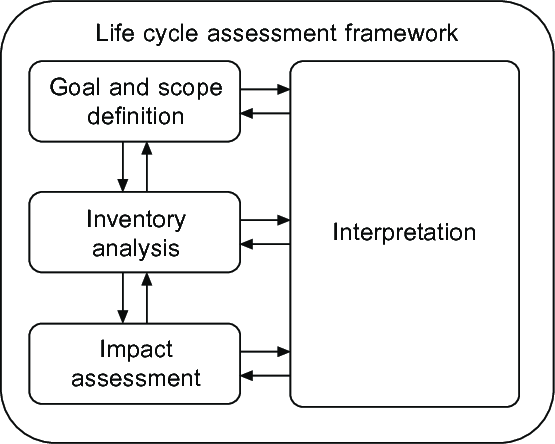
The very first stage involves defining the purpose and boundaries of the study, followed by identifying the product system and its intended function, as well as the environmental impacts and other factors to be evaluated (Baumann and Tillman, 2004).
In the inventory phase (LCI), inputs and outputs are quantified for each stage of the life cycle, starting from the extraction of raw materials to the end of life. This stage can be formally represented through the equation:
(1)
where:
Ij= output flux j (usually CO2 emitted);
Sij= emission coefficient, resource consumption of process unit i;
fi= process flow for activity i.
Inventory is typically represented in matrix form; thus, a model is established that can analyze flows and express them succinctly. The matrix is defined by the following relationship (fundamental equation):
I=S•f(2)
in which:
I= vector of emission/output flows (e.g., CO2; SO2; NO2);
S= technology matrix of emission coefficients;
f= vector of process flows.
At the end of the inventory stage, the environmental impacts associated with each category (LCIA) are characterized. During this stage, each elementary flow calculated previously is multiplied by a characterization factor (CF), which is defined using matrix notation as follows:
E=C I(3)
in which:
E= vector of environmental impacts for each category k (e.g., global warming)
C= matrix of characterization factors (conversion of j flows to k impact units)
I= vector of emission flows resulting from the LCI
Finally, to relate the different impacts obtained, the following are applied: i) normalization; ii) weighting.
Normalization is represented by the formula:
(4)
where:
= normalized value of k
= reference value
= environmental impact by category k
In the end, the weighting process assigns relative weight, , to the different impacts. This leads to an overall total impact value represented by the following formula:
(5)
where:
T= total environmental impact value
= weight assigned
3. Methodological proposal: the case study experiment, a metabolic project for the Mondeggi Estate in the Municipality of Bagno a Ripoli
3.1 Spatial framework
The model proposed by this research was tested within the Mondeggi Estate, located southeast of Bagno a Ripoli in the Metropolitan City of Florence. The site lies south of the Antella hamlet, along the provincial road connecting Grassina to Figline Valdarno.
Situated approximately 8 km from Florence and just a few kilometers from the Firenze Sud highway exit, the estate is embedded in the hilly landscape of Bagno a Ripoli, an area that combines agricultural predominance – primarily olive cultivation – with a historical layering of rural and urban settlements of significant cultural and architectural value.
This area forms part of the so-called “Florentine landscape,” characterized by a dense infrastructural network of minor roads and a rich architectural heritage, including villas, religious buildings, and tabernacles. Despite its historic rural identity, the area has undergone progressive transformations, revealing clear signs of broader “urbanization of the countryside”. In particular, the valley floor of the Ema stream has experienced major landscape changes due to the development of the Scolivigne artisan district, which has significantly altered its rural character.
While the anthropogenic presence is long-established, recent decades have seen an intensification of residential construction with distinctly urban traits – such as the subdivision and renovation of former farm properties, the emergence of newly built villas, and the introduction of non-native vegetation in green spaces (Magnaghi et al., 2013; Bolognesi, 2018).
The goal of establishing a metabolic and circular energy system in the Mondeggi area begins with identifying a clearly defined territorial unit. This unit encompasses the estate itself and the surrounding zones of energy relevance, representing a potential energy community.
The study covers 340 hectares, comprising 170 hectares of the estate and an additional 170 hectares nearby. Over half of this area is agricultural land, featuring classic Tuscan crops such as vineyards, olive groves, orchards, and arable fields.
Another important portion of the area is occupied by deciduous and coniferous forests, which greatly enhance the area’s natural beauty.
Thirteen percent of the area is sealed: within the estate, we find the villas and farm buildings; to the north is the Lapeggi villa farm complex, to the southwest is the Scolivigne industrial area, and to the south is the Capannuccia residential complex.
The presence of the Ema stream is important, as it naturally marks the border with the municipality of Impruneta.
The built-up areas in the region can be classified as farm-historical (43 percent), industrial-commercial (40 percent), and residential (17 percent).
3.2 The development of a metabolic energy scenario
3.2.1 Analysis of the research scope
The goal of designing a metabolic and circular energy system on Mondeggi’s territory starts with defining a specific area that extends beyond the current boundary of the Estate, including regions of significant energy interest (Figure 2).
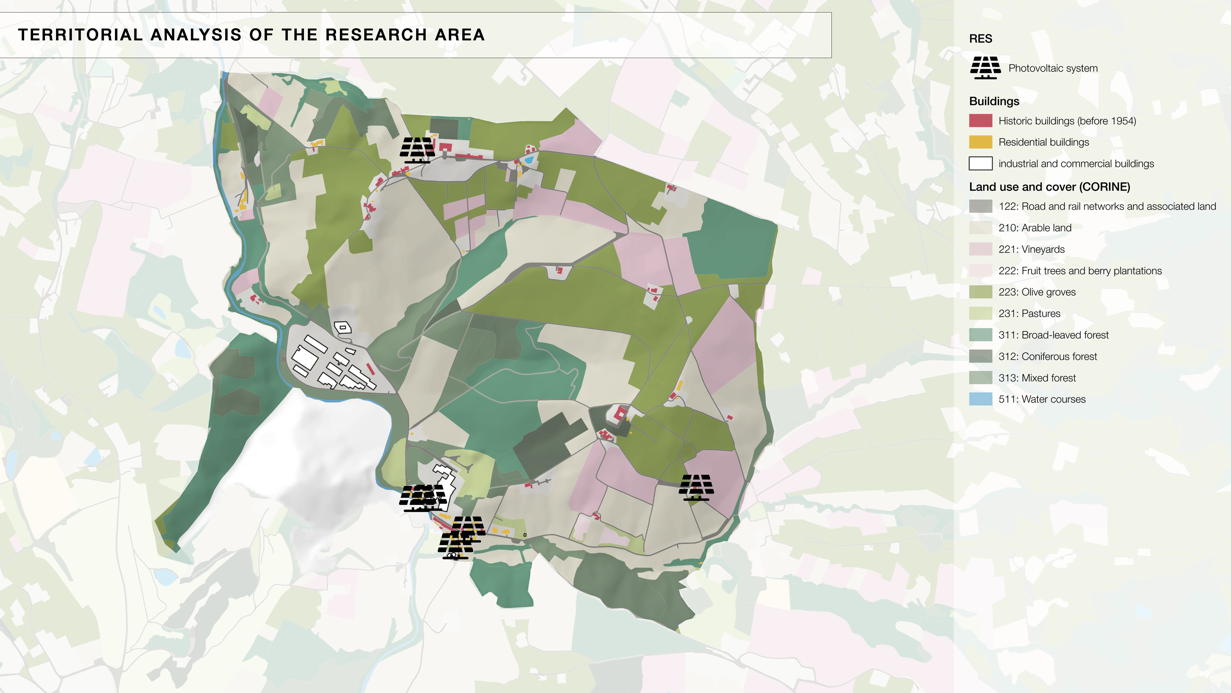
Establishing a status quo on current renewable energy production in the study area defines the project’s starting point.
The Gestore Servizi Energetici (GSE), through the photovoltaic and solar plant census portal Atlasole, identifies six photovoltaic plants in the area capable of producing approximately 22 kW of power.
The limited presence of plants represents one of the area’s weaknesses. It defines a key objective of the project: to establish a circular metabolic energy system, specifically to enhance the installation of renewable energy production plants through careful and precautionary operations that we will explore as the study progresses.
The development of a summary analysis of the various constraints on the study area is most important for landscape and environmental values (Figure 3).
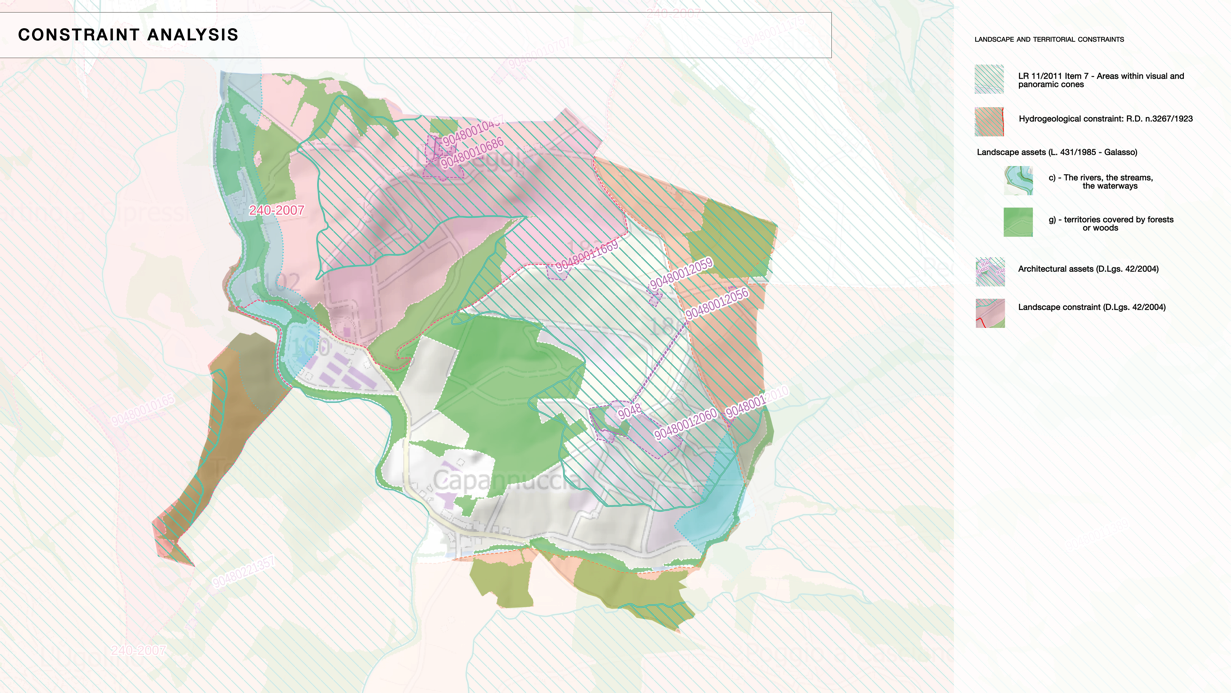
In line with national and regional legislation and the guidelines outlined in the regional spatial plan regarding the landscape plan (PIT-PPR), the areas under constraints have been identified using geographical data from the Tuscany Region’s geo-portal.
After an initial analysis of the current state’s territorial and constraining framework, the research continues by addressing the project approach and constructing a series of specific analyses that will define the area’s energy potential.
3.2.2 Study of energy potential
The study and research regarding the Mondeggi area’s wind energy potential rely on sources from the LaMMA Consortium’s “WindGis” portals and the Gestore Servizi Energetici (GSE) “atlaeolico”.
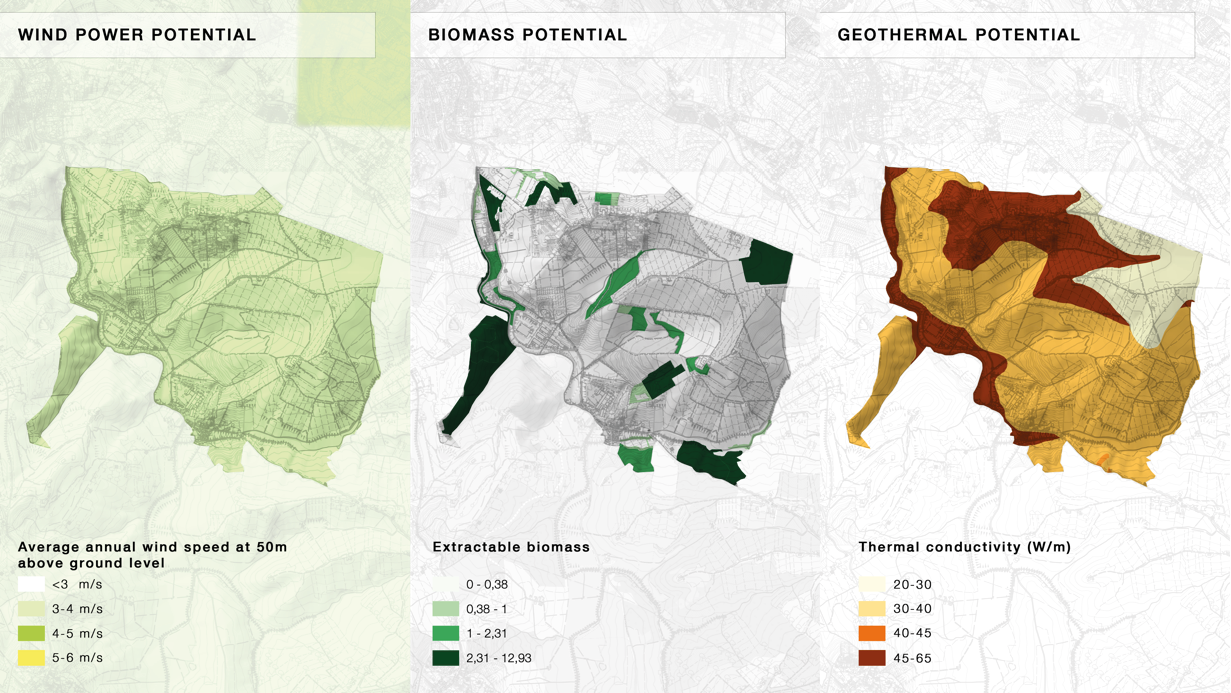
The average annual wind speed, a simple yet indispensable datum, was chosen as the indicator to define the area’s wind potential.
The average annual wind speed is crucial for defining the potential energy producibility of a site, as it is proportional to the cube of the wind speed. Therefore, the average value of that speed allows for a rough estimate. However, arriving at an accurate value for producibility also requires considering the distribution of wind speeds, since winds of above-average speed contribute much more to producibility than those of below-average speed, as well as turbulence, which refers to rapid variations in wind speed. These variations can alter the normal flow of the wind, diminishing energy and significantly decreasing productivity. Average wind speed is typically calculated over a 12-month period to account for slow seasonal fluctuations. In fact, the average wind speed measured in any single year deviates from the average wind speed over 20 years by only about 5 percent.
Let us assume that electricity generated by wind power is produced where there is an average wind speed above 5 m/s and where a wind turbine can operate for more than 1,500 hours per year. As a rough estimate, with a properly installed micro-wind power plant at a site with an average annual wind speed between 5 and 6 m/s, between 1,000 and 1,800 kWh per year can be generated for each kW of rated turbine power. Thus, for a plant of only 5 kW, this means a minimum of 5,000 kWh per year (5 kW x 1,000 kWh) and a maximum of 9,000 kWh. By feeding the energy produced into the grid, thanks to the government incentive of €0.30/kWh given by the “All-inclusive Tariff”, this results in an annual income of a minimum of (0.30 x 5,000 =) €1,500 and a maximum of €2,700. If the micro-wind power plant is larger, for example, based on a 20 kW turbine, the minimum annual production can be estimated at 20,000 kWh and the maximum at 36,000 kWh, values that correspond in practice to an annual revenue of between € 6,000 and € 11,000.
In conclusion, Mondeggi Estate’s low wind speed, under 5 m/s, which is below the minimum requirement for installing a micro-wind power plant, eliminates wind power as a feasible technology for the energy project (Figure 4a).
The presence of forests in the study area allows for sustainable estimation of biomass withdrawal for fuel in electricity and heat production.
The analysis started by evaluating factors including forest type, constraints assessment, morphogenetic analysis of the region, and forest accessibility review.
Considering the favorable outcome of the analysis and the fact that we are situated in a well-accessible hilly region where the majority of the forested areas are not subject to significant constraints, the study concentrated on estimating the biomass that could potentially be harvested in the area (Figure 4b).
The sustainable drawdown calculation was processed using GIS software in accordance with methods defined in the Tuscany Region.
The calculation starts by employing the Corine Land Cover codes for forest areas, each linked to specific accretion rates by species (m3/ha). These rates are then multiplied by the area in hectares of each forest polygon to determine the annual increment (m3/year). This figure is subsequently multiplied by the density associated with each species (kg/m3) to compute the total increment weight. From this, we extract the percentage of residual biomass, yielding the potentially harvestable biomass (t/ha) available for energy production as fuel.
The substantial energy potential of the subsoil, characterized by its inexhaustibility and complete renewability, can be harnessed to cool buildings.
Starting at a depth of 10 meters, the ground temperature remains nearly constant throughout the year, unaffected by thermal exchanges with the surface or daily and seasonal temperature variations.
At a depth of 10 meters, the average geothermal gradient increases by approximately 3°C for every additional 100 meters. Between depths of 100 and 150 meters, ground temperatures generally range from 13°C to 17°C. Utilizing low-enthalpy geothermal systems makes it feasible to transfer heat between the subsurface and indoor environments that necessitate heating or cooling, thereby assisting in the maintenance of stable indoor temperatures throughout the year.
The systems that move heat between the underground and living spaces utilize a liquid circulating through geothermal probes, a heat pump, and a “low temperature” heat distribution system (such as underfloor heating, radiant panels, and vents) as the medium.
In the Mondeggi energy system project, we identified the optimal locations for geothermal plant installations based primarily on the thermal conductivity of the underlying rocks (Figure 4c). Areas with higher heat transfer capacity indicate greater plant efficiency (geothermal yield) and allow for a rough estimation of the heat that can be extracted from each meter of buried probe.
However, the application of low-enthalpy geothermal technology depends on several variables that influence its deployment:
– Particularly in vertically developed systems (probes that penetrate deep into the subsurface rather than expanding horizontally), drilling into the ground may intercept the water table and contaminate it with pollutants
– Excavation runs the risk of connecting surface aquifers with deep aquifers, increasing the danger of contaminating the latter
– Slope dynamics should be considered because landslide movements could damage the plant.
Consequently, to determine the feasibility of constructing a plant, it is imperative to conduct comprehensive investigations to ascertain the soil stratigraphy and aquifer trends in a timely manner.
The subsurface’s geological and hydrogeological parameters determine the geothermal system’s efficiency. For this reason, it is difficult to calculate the exact amount of energy that can be obtained from low-enthalpy geothermal technology: the potential energy yield of this type of solution is infinite, since the Earth constitutes an inexhaustible reservoir of energy that is always available and could theoretically meet the air conditioning needs of any building (Bernetti et al., 2009).
3.2.3 Examination of territorial resources
Spatial heritage analysis gathers, outlines, and illustrates the existing spatial assets constituting the territory’s identity.
Territorial heritage refers to the enduring structures created by the co-evolution of the natural environment and human settlements, the value of which is acknowledged for present and future generations. Recognizing this value necessitates ensuring the existence of territorial heritage as a resource for community wealth production (Battisti and Pisano, 2022; Tuscany Region, 2015).
The constituent elements of the territorial heritage, their interrelationships, and their perception by the populations express the landscape identity of Tuscany (Article 3 L.R. 65/2014). Therefore, the Region promotes and guarantees the reproduction of territorial heritage as a common asset that constitutes the regional collective identity and serves as a resource for producing wealth for the community.
The mapping of territorial heritage follows the guidelines defined by the Territorial Address Plan (PIT) and the Landscape Plan (PPR) of the Tuscany Region.
The Estate’s significant historical importance, which still allows us to observe the foundational structure of the Tuscan villa farm, makes Mondeggi one of the most valuable areas in the Metropolitan City.
The study area exhibits significant heritage elements, including the villa farm’s foundational structure, the agricultural land’s layout, and the presence of linear features such as dry-stone walls, irrigation canals, hedges, and rows that preserve the character of the Tuscan landscape (Figure 5).
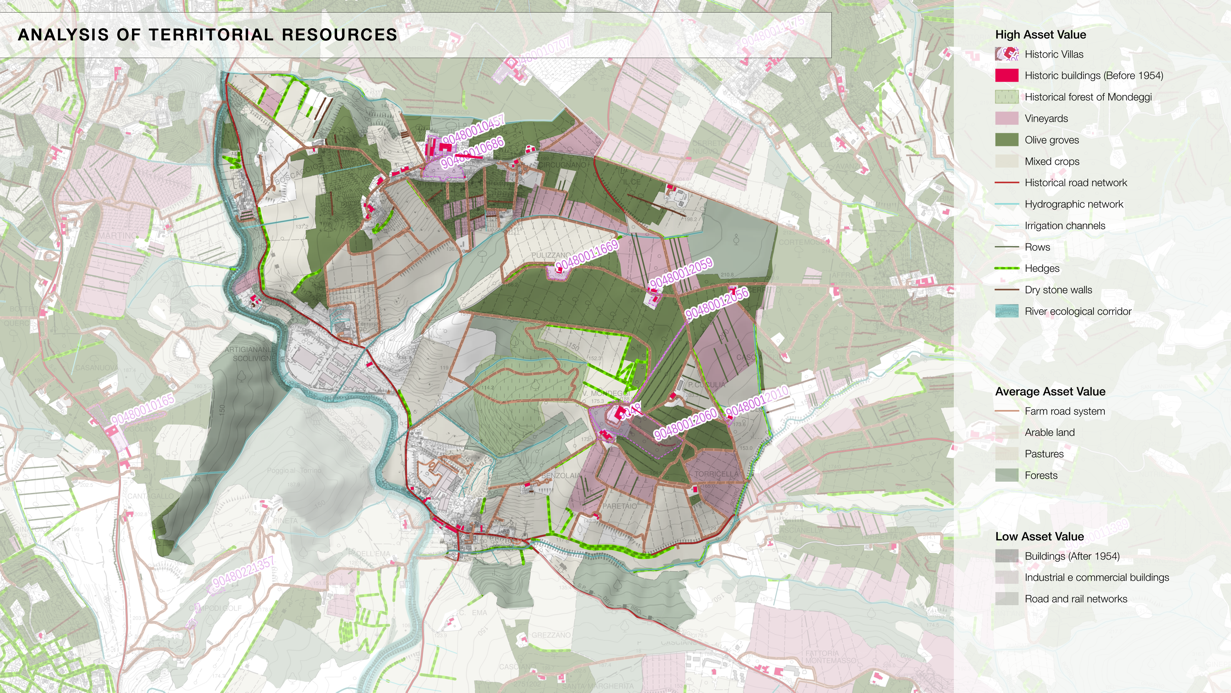
The patrimonial analysis is crucial for defining project ideas by evaluating the area’s long-term structure and outlining innovative actions, such as creating an energy cycle with renewable sources while respecting the area’s historical character (Gross, 2007). The choice of processes to enhance the energy independence of the area relies heavily on compliance with the heritage criteria defined by the area’s urban and landscape planning instruments.
Therefore, the next step involves identifying the potential energy resources that can be used in compliance with the landscape, territorial, and environmental protection criteria.
3.3 The project
3.3.1 Energy potential and energy requirements
The choice of potential energy resources in the area arises from the analytical framework that has enabled us to identify, as noted above, through detailed studies, the most suitable options that respect the landscape and environment of the study area.
The spatial elements that could be exploited are (Figure 6):
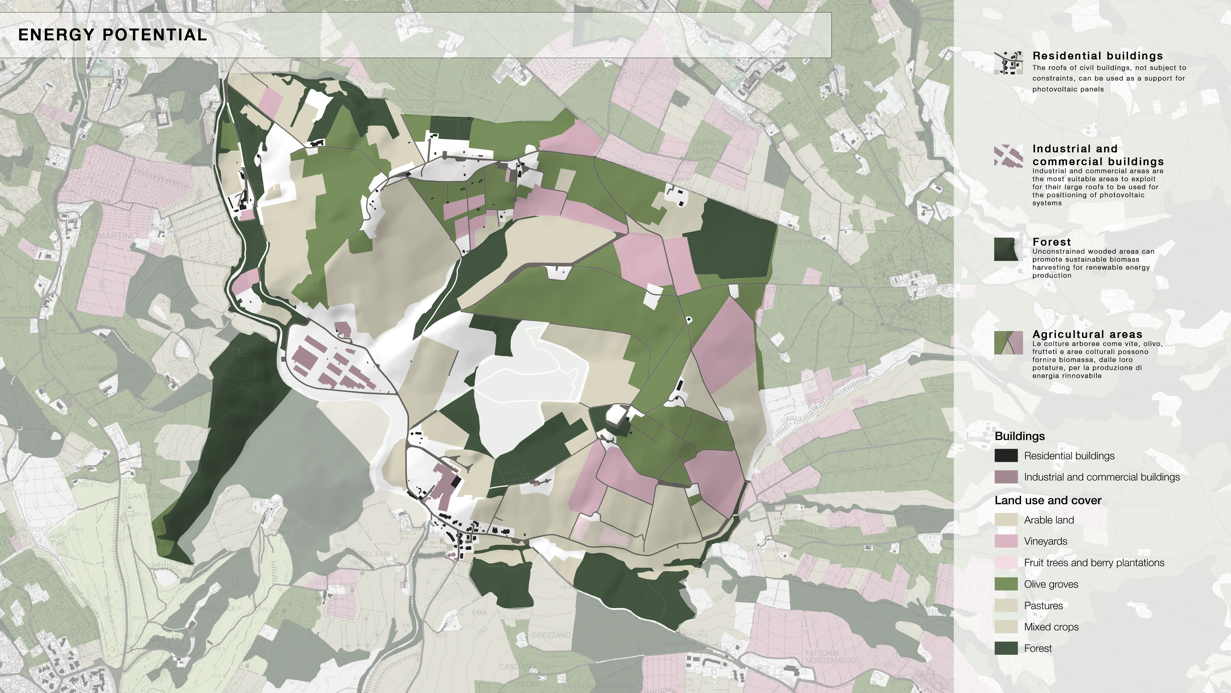
– Residential buildings: roofs of civil buildings not subject to constraints can be used as support for photovoltaic panels.
– Industrial and commercial buildings: industrial and commercial areas are the most suitable locations for installing various types of photovoltaic systems.
– Forested areas: unrestricted forested regions can support sustainable biomass harvesting for renewable energy fuel production.
– Tree crops such as vines, olive trees, orchards, and various crop areas can provide biomass from their pruning and waste for alternative energy production.
Estimating the energy needs of the study area is a key step in developing a metabolic energy project.
The final calculation determines the energy that will be generated by the facilities proposed in the project to enhance the area’s energy self-sufficiency (Figure 7).
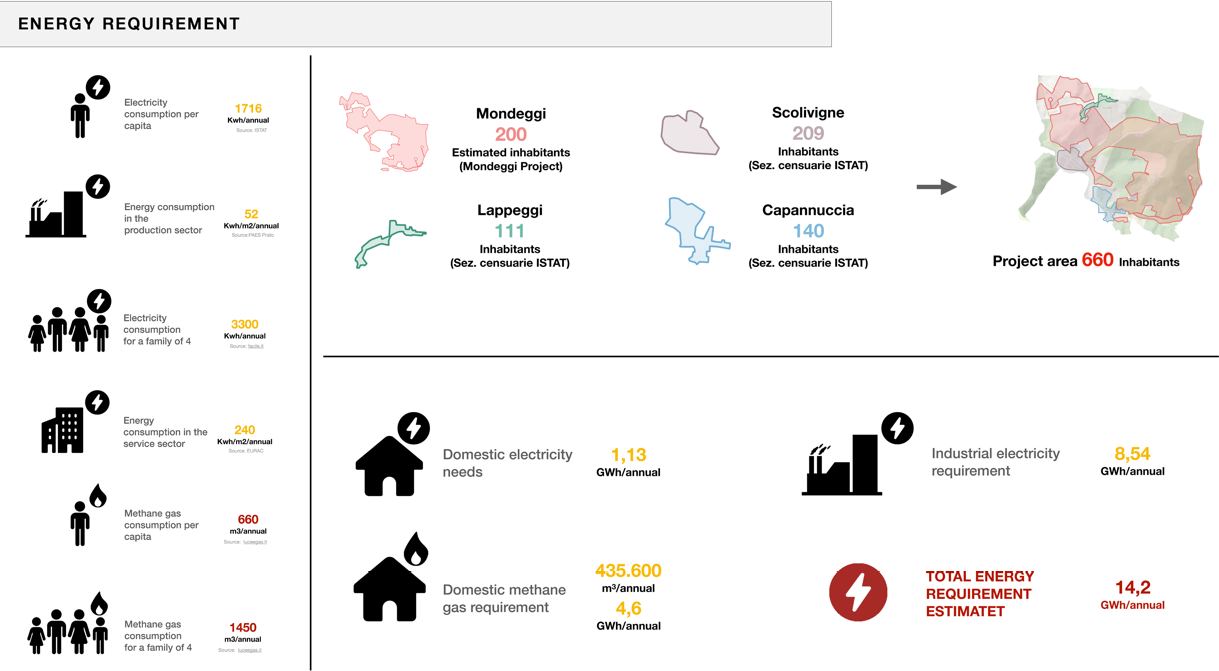
The process begins by calculating the population of the study area. For the Mondeggi Estate, the population figures stem from the project “Mondeggi: social, cultural and agricultural regeneration for a sustainable metropolitan city”, which projects the potential residents that could occupy the site following redevelopment, as Mondeggi currently lacks officially counted inhabitants. In contrast, population data for other areas within the larger region were gathered from the 2022 ISTAT census, based on the 2021 findings. The total estimated population is 660 inhabitants.
The estimation utilizes various energy coefficients, allowing for the assessment of the energy needs in the study area.
3.3.2 A local metabolic energy mix
The territorial analysis of Mondeggi Estate enabled us to understand the project area in detail and define the design actions.
Focusing on local energy needs, efforts were made to create various elements that enhance energy self-sufficiency and develop a circular metabolic energy system. Each element functions as a circular unit, generating energy or heat from various renewable energy sources (Figure 8).
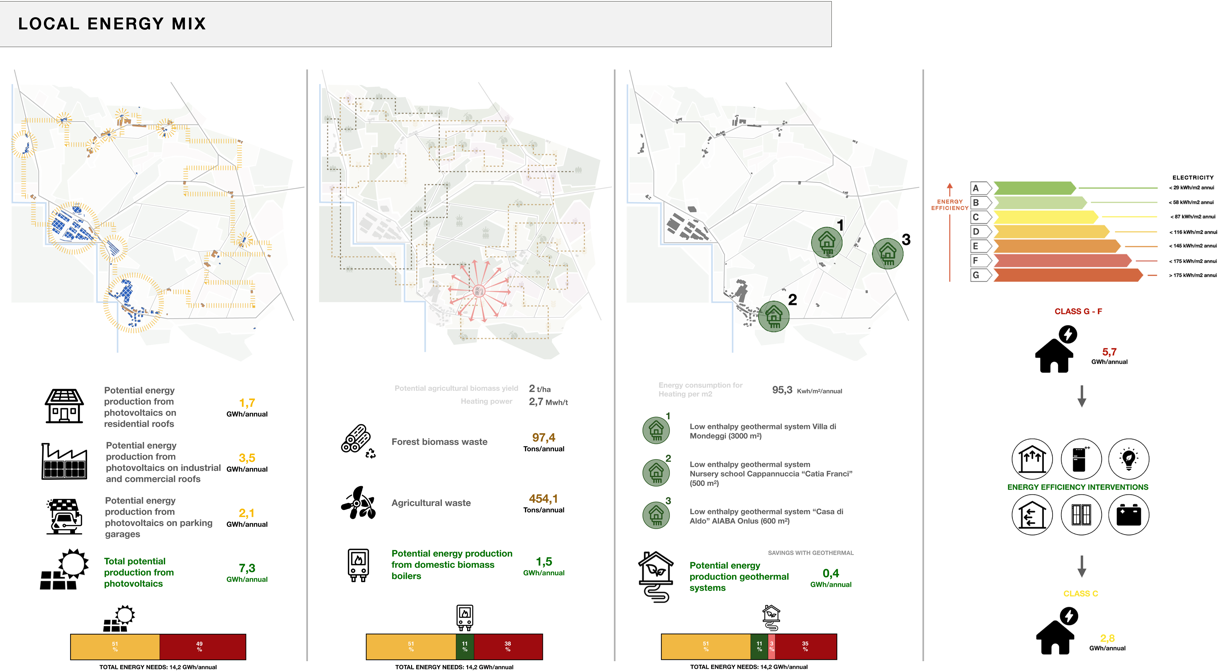
The graphical synthesis utilising an ideogram will be correlated with an estimation of energy production that will be compared against the potential requirements of the area. Moreover, the proposals, even when represented individually, will possess the capacity to coexist within the territorial framework, thereby establishing a complex structure that can adequately address the energy demands of the inhabitants to the greatest extent possible.
The self-generation of renewable energy must also be supported by energy-saving actions and efficiency practices that can reduce current demand.
The first metabolic energy cycle was developed based on using the most renewable and sustainable energy source in existence: the sun. Photovoltaic systems represent one of the most widely used technologies for renewable energy production in the world, partly due to their easy structural installation.
The study assessed three options for the placement of photovoltaic systems in the designated area, selected primarily in accordance with the principles of sustainability while mitigating the increased land consumption associated with ground installations. These options include the installation of panels on residential, industrial, and commercial rooftops and the establishment of freestanding structures on impermeable surfaces, such as asphalt parking lots.
Placement choices were made considering various constraints, as shown in the appropriate table of the cognitive framework. The Mondeggi Estate features historic buildings where the installation of photovoltaic systems on roofs is restricted, except for a new shed designated for agricultural activities at the Cuculia farm.
Outside the boundary of the Estate, we find the placement of the facilities:
– in the Scolivigne artisanal area, with systems installed on roofs and in waterproofed parking lots using photovoltaic canopies
– in the Capannuccia building complex, located on commercial and residential roofs
– in the new parking lot located southwest of the Scolivigne area that supports the Estate, planned in the redevelopment project, which will feature photovoltaic carport shelters.
The calculation of the potential energy yield was performed using the formula:
Productivity = solar rad. (kWh/m²) * useful sup. (m²) * max. efficiency(6)
where:
Municipal solar radiation in Bagno a Ripoli: 1,453 kWh/m2 annually;
Useful panel area: varies depending on the type of roofing (36% for flat roofs, 60% for pitched roofs);
Maximum photovoltaic panel efficiency: 0.2.
The calculations indicate that the photovoltaic project has a total potential production of approximately 7.3 GWh per year.
Given the estimated energy demand of around 9.7 GWh/year, the project’s implementation results in an energy deficit of 25 percent, or 2.4 GWh/year.
The second component defines a metabolic cycle for heat and hot water production. As analysed within the cognitive framework, the area includes several forested regions from which sustainable biomass withdrawals can be utilised as fuel.
This can be supplemented by establishing a collection loop for all woody agricultural waste from activities in the area. The supply chain was developed by designing a biomass and waste collection centre that subsequently converts all the collected material into wood chips, providing local residents with fuel for their domestic boilers. The calorific value of wood chips, 2.7 MWh/t, multiplied by the tons of wood chips produced from collecting local biomass and wood waste, makes it possible to produce 147,600 m3/year of energy, corresponding to about 1.48 GWh/year. Given the estimated energy demand in the area of 435,600 m3/year, the result of implementation is an energy deficit of 66 percent or 288,000 m3/year.
The third study examines possible sites for the installation of low-enthalpy geothermal systems.
Extensive public facilities, like school buildings, recreation centers, and community spaces, often have a high energy demand, particularly for air conditioning. This demand can be addressed by installing a low-enthalpy geothermal system.
The geothermal study identifies initial potential installation sites based on a comprehensive geothermal analysis within the analytical framework, alongside a search for strategic spatial locations. However, determining the appropriateness of constructing a plant necessitates precise investigations to understand the soil stratigraphy and aquifer trends in detail.
The selected points represent the primary and most energy-intensive public activities, both current and planned:
1. Villa di Mondeggi: the planned redevelopment will convert the historic villa into the estate’s primary attraction. This approximately 3,000 m2 structure will feature a potential low-enthalpy geothermal system, allowing for year-round air conditioning.
2. Capannuccia Preschool ‘Catia Franci’: Situated in the Capannuccia area, this building along Tizzano road, south of Mondeggi, spans approximately 500 m² and could implement a low-enthalpy geothermal system.
3. AIABA ONLUS Headquarters ‘Aldo’s House’: One of the headquarters of the Italian Association for the Assistance of Autistic Children (AIABA) established in Florence in 1970, the facility is a historic country villa of about 600 m2 that has been redeveloped to accommodate the independent living project for adults diagnosed with autism. It represents the last potential point of installation for a low-enthalpy geothermal system. By utilising a low-enthalpy geothermal system, the considerable initial installation cost, once amortised, will result in a considerable reduction or elimination of home heating expenses.
An estimate was made of the economic savings resulting from switching the heating system of the selected structures in the project from a gas boiler to a low-enthalpy geothermal system. It is estimated that the average gas consumption per square meter per year for heating a building with average insulation, without thermostats to regulate the temperature in individual rooms, and with a boiler less than 10 years old is 9 Sm3/m2/year. Knowing that the total area of buildings slated for installing a low-enthalpy geothermal system is 4,100 m2, the total gas requirement for heating is about 36,900 Sm3/year. Given that, as of November 2022 the cost of methane gas established by ARERA for those with a contract under the protection regime is € 1.05/Sm3, the total cost of the requirement is about € 38,700, which can be entirely saved with a low-enthalpy geothermal plant.
The installation of renewable energy production systems must be supported by energy efficiency works and cost-saving practices.
Energy efficiency is represented by the value of a building’s energy class, which indicates how the building has been constructed concerning insulation, technological systems, and, most importantly, the interventions needed to optimise the building’s energy performance. The fundamental goal of energy efficiency is not to give up consumption but to consume more effectively and experience positive effects on the amount of energy used. According to the depiction, improving efficiency helps transition a building from a lower to a higher class, significantly reducing energy consumption.
Through a broad analysis, which involved observing the buildings in the study area and calculating inversely from the residential areas, it was estimated that the energy classes present in the study area are class F and class E. These classes are very energy-intensive and consequently inefficient.
The scenario envisions enhancements in efficiency for all residential structures within the region by upgrading them to energy class A, which facilitates a reduction of approximately 50 percent in total energy demand.
3.3.3 Metabolic energy indicators
A final metabolic energy scenario was developed through an evaluation process that utilised several indicators, enabling the definition and summary of the environmental and economic impacts of the design choices (Figure 9) (Battisti, 2022). The development of a territorial energy mix, composed of various production components that enhance the area’s potential, requires significant investment, which must be evaluated to identify the best opportunities and the feasibility of implementation.
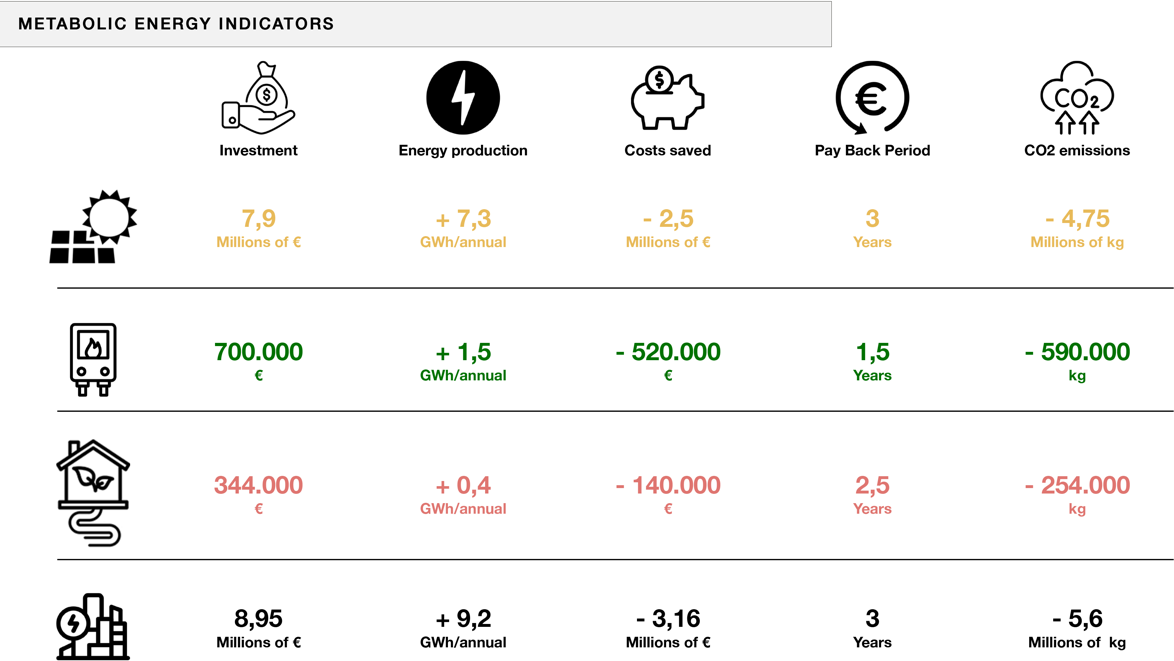
In addition, installing renewable energy systems for self-consumption can reduce annual energy costs to zero in cases of complete self-sufficiency. The design of an energy metabolic system based on local renewable energy production enables substantial reductions in energy costs.
A key metric for the project is the payback period, a commonly used method for determining the time required to recover the invested capital in purchasing an input through the net cash flows it generates. Among alternative investments, the one with a shorter “payback period” will be chosen, as from that point onward, the capital asset will contribute to gross profits.
Finally, avoided CO2 emissions serve as an indicator of environmental benefits, calculated by multiplying the electricity output from each renewable source by the average specific CO2 emissions derived from fossil thermoelectric generation that would otherwise be necessary. The environmental benefits of adopting renewable systems are proportional to the amount of energy produced, assuming it replaces energy supplied by conventional sources.
3.4 The metabolic energy scenario
The final stage of the research involved creating a summary paper that visually encapsulates the journey undertaken (Figure 10). The analysis of metabolism and the study of energy systems were effectively directed toward developing an energy project within a specified spatial region, which was examined, designed, and evaluated according to the principles and models of urban metabolism. The concluding scenario emerges from formulating a local energy mix that considers the identified energy potential within the analytical framework and aims to enhance it by advancing sustainable energy recovery and production cycles.
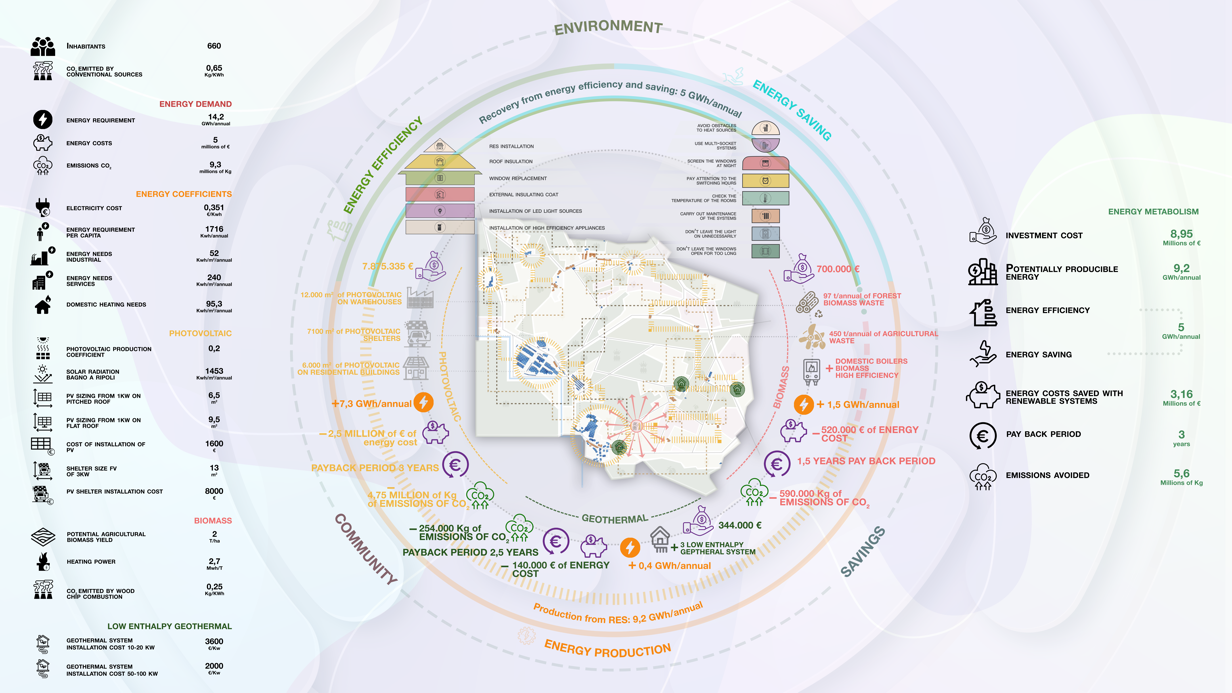
The project was created with essential objectives and concerns in mind, such as respecting the environment and landscape, minimizing land consumption, choosing sustainable energy options, and sizing renewable production facilities appropriately. Project development starts by estimating the area’s energy needs using per capita consumption coefficients based on the current and future population.
The study area is a linear metabolic system capable of consuming 14.2 GWh/year of energy produced entirely by large national plants, necessitating an annual expenditure of approximately 5 million euros. Furthermore, if this energy is generated solely from conventional sources, it will produce 9.3 million kilograms of gaseous emissions.
The territorial analytical framework defined the area’s energy potential based on regional environmental standards, leading to three initiatives: installing photovoltaic systems, recovering agricultural and forestry biomass for energy through domestic boilers, and proposing three low-enthalpy geothermal plants for energy-intensive activities.
The energy mix results from the simultaneous presence of these three energy production components in the area. This setup aims to harness the region’s energy potential and could ideally generate up to 9.2 GWh/year.
The photovoltaic system represents the most productive component of the project, given the greater possibility of installation. It entails an estimated intervention of about 7.9 million euros, which would enable the installation of photovoltaic systems on any roof not subject to landscape or architectural constraints, as well as photovoltaic canopies on sealed soil. This setup could potentially produce a total of 7.3 GWh/year of electricity.
This intervention would lower current energy costs by 2.5 million euros, amortising the initial investment in approximately 3 years. Additionally, from an environmental perspective, the intervention would also have very positive effects, avoiding the emission of 4.75 million kilograms of carbon dioxide into the atmosphere due to the switch from conventional to alternative sources.
The region’s extensive agricultural and forested areas generate approximately 550 tons of wood waste annually. Utilising this waste as fuel for domestic biomass boilers could produce 1.5 GWh of energy per year, potentially saving €520,000 in energy costs and preventing 590,000 kg of carbon dioxide emissions annually.
The energy mix is complemented by the planned installation of three low-enthalpy geothermal plants, which will be located in the three most energy-intensive public buildings. The estimated investment is around €340,000 and is expected to yield 0.4 GWh/year of clean energy, reducing energy costs by €140,000 and allowing for the initial investment to pay off in approximately 2.5 years, while also helping to decrease annual emissions by about 250,000 kg. Enhancing territorial energy potential as much as possible, while respecting landscape and sustainability canons, produced 9.2 GWh/year of energy compared to the 14.2 GWh potentially required by the territory, meeting about 65 percent of energy demand.
Nonetheless, as the article consistently emphasises, the advancement of a metabolic energy initiative cannot solely be confined to production; it must also be complemented by measures aimed at enhancing efficiency and implementing conservation actions.
As illustrated in the scenario, energy efficiency is integrated into the metabolic energy project, delineating the most utilised methodologies for a substantial advancement toward a significantly higher energy classification that would dramatically reduce a building’s energy consumption. Ultimately, structural and operational modifications must be complemented by effective energy-saving practices. It is important to note that energy saving does not invariably result in enhanced efficiency; rather, it signifies a reduction in demand through the adoption of lifestyles and consumption patterns rooted in a more responsible utilisation of energy. Consequently, the objective of energy conservation is to minimise consumption.
Thanks to the energy efficiency initiatives and commendable savings practices mentioned earlier, the area must recover around 5 GWh/year of energy. This will help ensure it does not have to rely on the national electricity system and can achieve complete energy self-sufficiency. The goal is to meet all energy needs and reduce greenhouse gas emissions by utilising renewable energy produced locally from small plants, which align with landscape regulations, rather than constructing large facilities.
The metabolic energy project was developed around three pillars of sustainability, focusing on fostering positive environmental, social, and economic outcomes. The evaluation process highlighted a noticeable reduction in costs attributed to the transition to alternative energy sources, which significantly enhanced economic sustainability. Additionally, the production of alternative energy has led to a considerable drop in carbon dioxide emissions, aiding in climate change mitigation and addressing the global temperature rise as identified in both national and international regulations.
In conclusion, creating an energy community fosters community support, integrating into a broader community-building effort that encourages citizens to collaborate more and heightens their engagement in social activities.
4. Experimentation and results
4.1 Life Cycle Inventory (input data)
The simplified Life Cycle Assessment (LCA) calculation was conducted utilising the professional software One Click LCA Planetary, which possesses the capability to analyse the environmental impacts associated with a building system. This assessment evaluates five stages of the life cycle, commencing with the extraction of materials (A1), followed by transportation to the production site (A2), culminating at the end of the production process at the factory (A3), thereafter transporting to the construction site (A4), and concluding with the installation at the construction site (A5).
The initial section requests project input data, specifically highlighting three evident sections: i) Building materials; ii) Construction site operations; iii) Area of construction.
As outlined in Section 2.4, a crucial aspect of the LCA involves creating an inventory of the materials utilised in the project (LCI). The initial section, “Building materials”, presents the materials by functional groups: i) Foundations and substructures; ii) Vertical structures and facades; iii) Horizontal structures, including floors and roofs; and iv) Other structures and materials.
The details include the average AITEC 2022 cement present in all primary structures (pillars and floors), clay bricks (Clay Brick) utilised for vertical structures and interior walls, and solid wood panels (493 kg/m3) applied in fixtures and finishes. Each material specifies the following: quantity, unit of measure, average transport distance (km), transport type, and percentage of material lost or discarded (%). The input data is displayed in Figure 11.

The “Construction site operations” section outlines the various activities at construction sites, specifically focusing on the quantitative aspects of resource consumption related to construction activities, including electricity, fuel, biogas, and construction waste. For simplification, data on water usage or auxiliary materials have been excluded from the model.
Finally, the “Area of construction” section comprises the site data; the software mandates the input of the gross internal building area, including any basements, and exclusive of parking or vehicle circulation areas. Consequently, the area is calculated to be 98,000 m2.
4.2 Emissions and environmental impact (output data)
Once the calculation is run correctly, the software returns a result of 19,054 tCO2e, broken down into the following phases:
– Phases A1-A3: 17,997 tCO2e
– Phase A4: 119 tCO2e
– Phase A5: 938 tCO2e
It is also of interest to analyse the figure referred to as the “social cost of carbon”. Specifically, this figure represents the economic value of the damage attributable to those particular CO2 emissions, totalling € 952,713 (Figure 12).

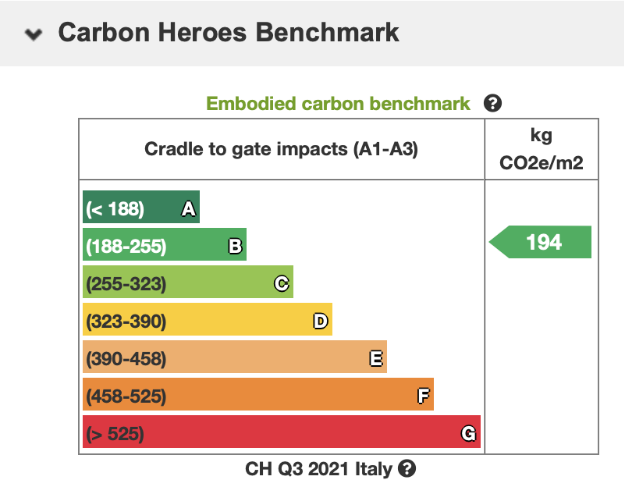
Additionally, the project’s average carbon footprint is measured at 194 kgCO₂e/m² of gross usable area. The comparison below (Figure 13) with the “Carbon Heroes” benchmarks (classification A to G) shows that the project’s carbon footprint places it in category B (188 to 255 kgCO₂e/m²).
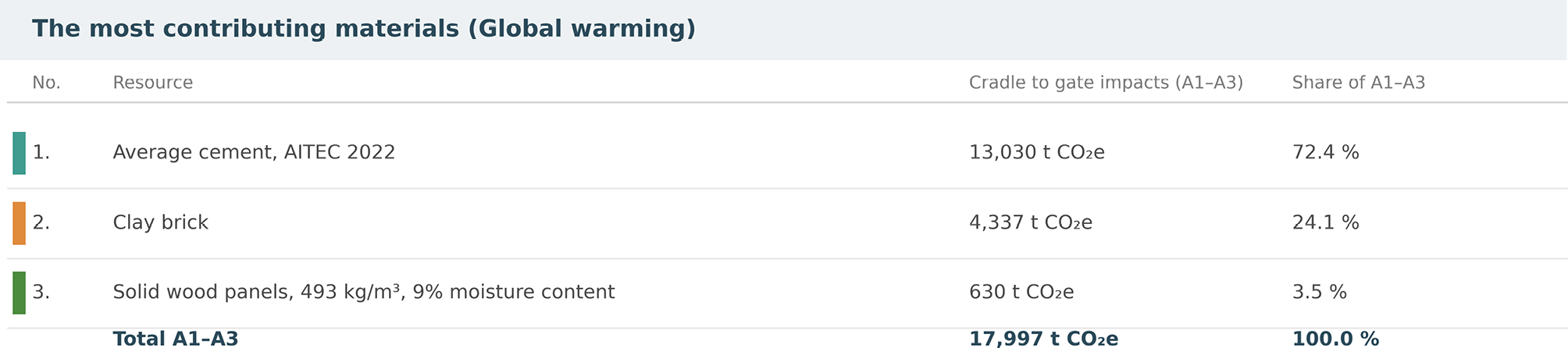
More specifically, the results suggest that phases A1-A3 have the highest emission contribution compared to the total. Examining the emission contribution by material within these phases, it is clear that cement is the primary contributor to CO2 emissions, accounting for approximately 13,030 t CO₂e (72.4 percent of the cradle-to-gate A1-A3 impacts), followed by materials such as bricks (4,337 t CO2e; 24.1 percent) and wood (630 t CO2e; 3.5 percent), which have significantly lower impacts than that of cement but remain notable relative to their mass (Figure 14).
The analysis is also organised by functional categories. Horizontal structures – including floors, ceilings, and roofs – are identified as the most impactful categories due to their use of concrete, which is the largest contributor to key CO₂ emissions. Although vertical structures also contribute to global warming, their impact is considerably lower than that of horizontal structures. These vertical categories primarily consist of bricks, a material that has a smaller carbon footprint compared to concrete. Figure 15 illustrates the impacts expressed in tCO2e for the functional groups across different phases (A1-A5) and the materials that compose them.
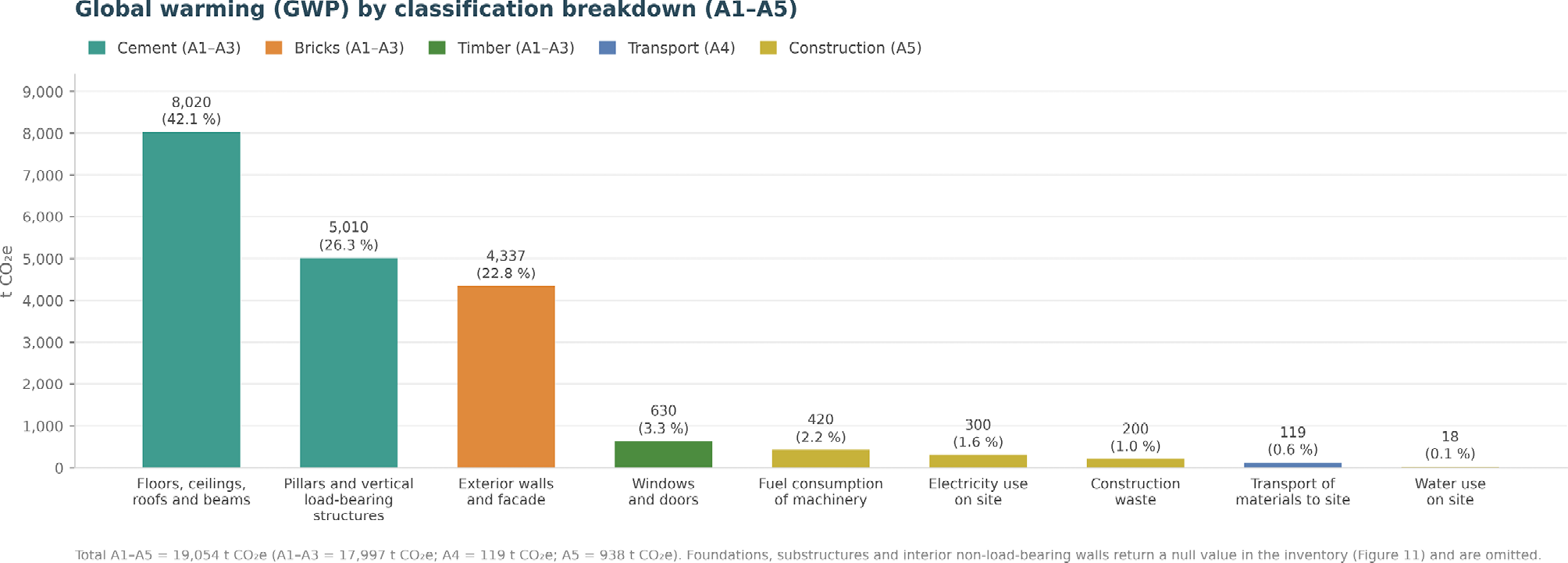
The categories related to transportation (light blue) and construction activity (orange) have relatively less impact than the production phases. Below are graphs summarising the distribution of CO2 emissions by stages and categories (Figure 16).
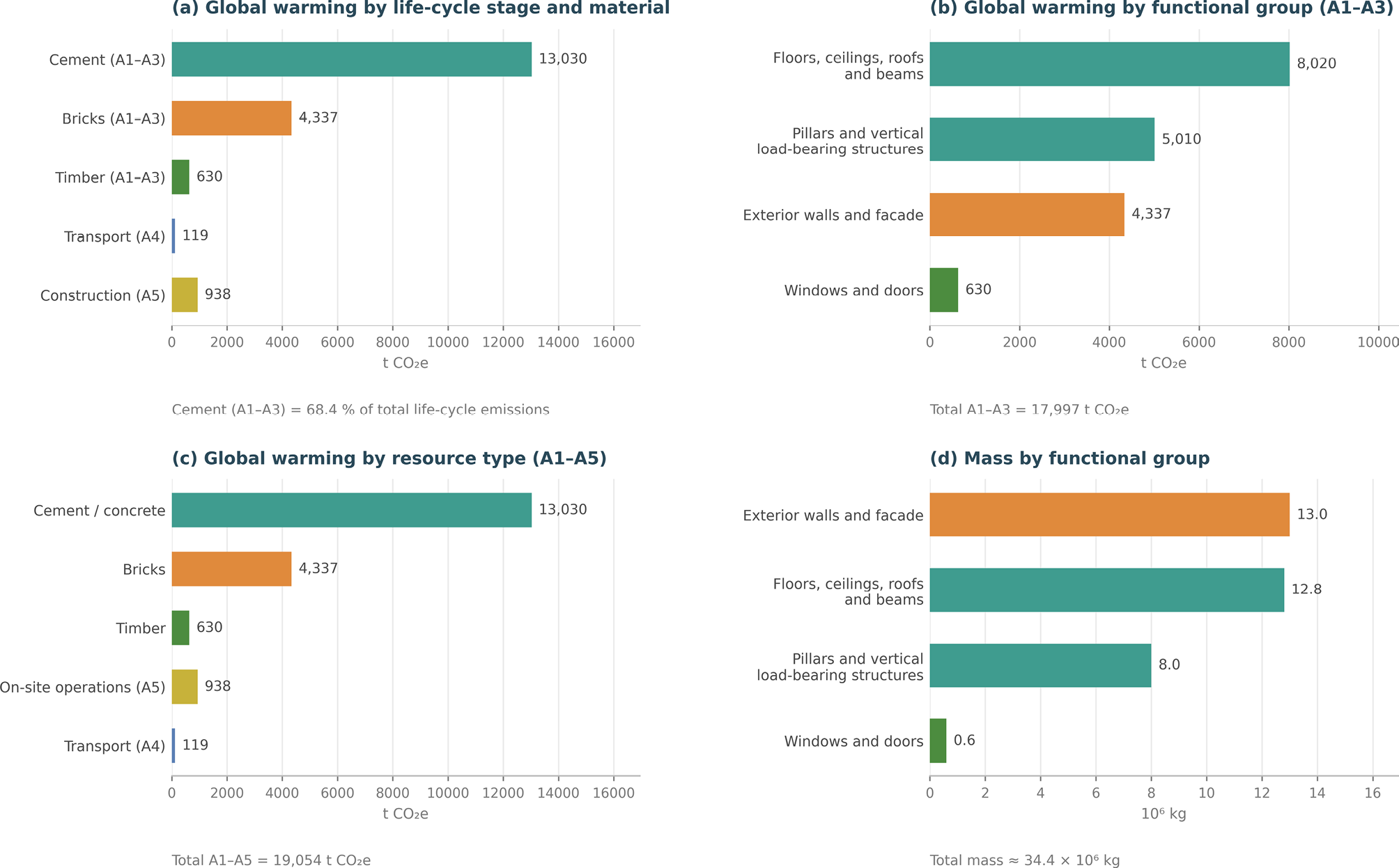
In the life-cycle phases, cement contributes 68.4 percent to total emissions, while bricks represent 22.8 percent, and wood has a 3.3 percent impact. Transportation (Phase A4) and site installation (Phase A5) have lower impacts, contributing 0.6 percent and 4.9 percent, respectively, of the total emissions.
Through the simplified LCA analysis conducted, it is possible to state that the Mondeggi project performs well compared to the average, placing in the B range according to the Carbon Heroes Benchmarks. There may be room for improvement by adopting more sustainable materials and optimising the construction and transportation phases. The use of energy-intensive materials such as concrete should be reduced in favour of more sustainable and circular solutions.
5. Discussions and conclusions
The Mondeggi project constitutes a pivotal component of the Integrated Urban Plan Next regeneration: Florence 2026, appropriately funded by resources allocated under Law 233/21. This initiative seeks to facilitate the comprehensive enhancement of extensively deteriorated urban territories, encompassing areas within the municipalities of the Metropolitan City of Florence, through systematic urban regeneration and economic revitalisation efforts.
The objective of the project is to transform the Mondeggi Estate, situated amidst vineyards and olive groves at the confluence of the municipalities of Bagno a Ripoli, Impruneta, and Greve in Chianti, into a collaborative, innovative platform that promotes social inclusion for all generations. The articulated aim is to enhance the social and economic prospects of the current and future residents of the entire metropolitan territory, ensuring comprehensive respect for the environmental ecosystem and natural resources, with a particular emphasis on the youth (Biggeri et al., 2023).
Such a project, undoubtedly characterised by significant complexity and governed by a long-term strategic vision, derives its strength from the organisation of a multifaceted and transparent system (Guarini et al., 2014; Guarini et al., 2017). This framework establishes a stable environment within which activities, functions, and programs can evolve over time, while also facilitating the expression of energy-environmental sustainability in a metabolic context.
Based on this framework, the research was conducted to delineate a sustainable model for implementation by specifying the conditions necessary to attain environmental and energy sustainability within the anticipated and proposed complex systems of the estate. To adequately address the multifaceted requirements of the intricate, heterogeneous, and energy-intensive meta-project, a meticulous analysis of all relevant elements was undertaken to convert them into design strategies.
The research findings illustrate the capacity to protect and preserve, over time, the natural and ecosystemic resources, while avoiding irreversible alterations. The relationship between the flows of resources (energy and water) that the Mondeggi Estate system absorbs and produces can be described as a zero balance. Upon the completion of eco-sustainable renovation and functionalisation interventions, the Mondeggi Estate will function as a complex organism, where the processes involved will include the absorption of energy, water, and raw materials, which, once “metabolized”, will facilitate the operation of the Estate itself, particularly its agricultural component and the buildings encompassed within it that are subject to restoration or refunctionalization, until they eventually become waste and refuse. This approach is, in summary, one that has been embraced by numerous European administrations in recent years, promoting research from a metabolic and ecosystem perspective in the development of urban plans and projects both at the national level (e.g., foresight Future of Cities Project, UK; Government Office for Science, 2017) and at the local level (e.g., Genoa or Antwerp). Transitioning from linear production-consumption models to circular systems now appears to be imperative in order to mitigate the impacts of urban and peri-urban environments and achieve the environmental objectives outlined in the European agenda.
References
ARSIA (2009). Estimating the production potential of agrienergy in Tuscany. Florence, Italy, Regional Agency for Development and Innovation in Agriculture and Forestry.
Aura, C. (2022). Circular economy and energy transition: the new challenges for SMEs. Milan, Italy, Franco Angeli.
Battisti, F. (2022). ELECTRE III for strategic environmental assessment: a “Phantom” approach. Sustainability, 14, 6221. https://doi.org/10.3390/su14106221
Battisti, F., & Pisano, C. (2022). Common property in Italy. Unresolved issues and an appraisal approach: towards a definition of environmental-economic civic value. Land, 11, 1927. https://doi.org/10.3390/land11111927
Baumann, H., & Tillman, A. M. (2004). The Hitch Hiker’s Guide to LCA: an orientation in Life Cycle Assessment methodology and application. Lund, Sweden, Studentlitteratur.
Bernetti, I., Fagarazzi, C., Sacchelli, S., & Ciampi, C. (2009). Forestry and primary wood processing compartments. Florence, Italy, Interdepartmental research centre for alternative and renewable energies.
Biggeri, M., De Luca, G., Ferrannini, A., & Pisano, C. (2023). Mondeggi: rigenerazione sociale, culturale e agricola per una Città Metropolitana sostenibile. Firenze, Firenze University Press. DOI: 10.36253/979-12-215-0195-7.
Bolognesi, M. (2018). For an integrated energy policy with territorial enhancement: the case of Valdera. In Saragosa, C., & Rossi, M. (Eds.). Territories of contemporaneity. Multidisciplinary research paths. Florence, Italy, Firenze University Press.
Bolognesi, M., & Magnaghi, A. (2020). Verso le comunità energetiche. Scienze del Territorio, 142–150.
Bortolotti, A., Verga, G. C., & Khan, A. Z. (2023). Which circularity for urban design and planning? A compass to navigate circular economy research, knowledge, and methods. Planning Practice & Research, 41(2), 265-284. https://doi.org/10.1080/02697459.2023.2262128
Brown, J., Soderbaum, P., & Dereniowska, M. (2017). Positional analysis for sustainable development: reconsidering policy, economics and accounting. London, UK, Taylor & Francis.
Castán Broto, V., Allen, A., & Rapoport, E. (2012). Interdisciplinary perspectives on urban metabolism. Journal of Industrial Ecology, 16(6), 851–861.
Cinquepalmi, F. (2019). La città fragile. Dalla Smart alla (R) Evolving City. Firenze, Didapress.
Conde, J. J., & Takano-Rojas, H. (2025). Rethinking energy transition: approaches from social representations theory. Energy Research & Social Science, 122, 104001. https://doi.org/10.1016/j.erss.2025.104001
ENEA (2011). Energy dependence and energy security. Rome, Italy.
ENEA (2021). The energy community: vademecum 2021. Rome, Italy.
European Commission (2014). The 2030 climate and energy framework. Available at: https://climate.ec.europa.eu/eu-action/climate-strategies-targets/2030-climate-targets_it (Accessed 15 April 2025).
European Commission (2018). A long-term strategy for a prosperous, modern, competitive and climate-neutral economy by 2050. Available at: https://climate.ec.europa.eu/eu-action/climate-strategies-targets/2050-long-term-strategy_it (Accessed 15 April 2025).
Fernandes, J., & Ferrão, P. (2023). Urban metabolism-based approaches for promoting circular economy in buildings refurbishment. Environments, 10(1), 13.
Galán-Cano, L., Cámara-Aceituno, J., Hermoso-Orzáez, M. J., Mena-Nieto, Á., & Terrados-Cepeda, J. (2025). Urban metabolism, sustainability and energy transition in cities: a comprehensive review. Results in Engineering, 25, 104278. https://doi.org/10.1016/j.rineng.2025.104278
Global Energy Assessment (GEA) (2012). Toward a sustainable future. Cambridge, UK, Cambridge University Press & IIASA, Laxenburg.
Government Office for Science (GOfS) (2017). Future of cities: foresight for cities. Available at: https://www.gov.uk/government/publications/future-of-cities-foresight-for-cities (Accessed 15 April 2025).
Gross, C. (2007). Community perspectives of wind energy in Australia: the application of a justice and community fairness framework to increase social acceptance. Energy Policy, 35(5), 2727–2736.
Gross, M., & Mautz, R. (2015). Renewable energies. London, UK, Routledge.
Guarini, M. R., Battisti, F., & Buccarini, C. (2014). Rome: Re-qualification program for the street markets in public-private partnership. A further proposal for the Flaminio II street market. Advanced Materials Research, 838–841, 2928–2933. https://doi.org/10.4028/www.scientific.net/AMR.838-841.2928
Guarini, M. R., Buccarini, C., & Battisti, F. (2017). Technical and economic evaluation of a building recovery by public-private partnership in Rome (Italy). In Stanghellini, S., Morano, P., Bottero, M., & Oppio, A. (Eds.). Appraisal: From Theory to Practice. Results of SIEV 2015. Green Energy and Technology. Cham, Springer. https://doi.org/10.1007/978-3-319-49676-4_8
Guetlein, M. C., & Schleich, J. (2023). Understanding citizen investment in renewable energy communities. Ecological Economics, 211, 107895. https://doi.org/10.1016/j.ecolecon.2023.107895
Ibañez, D., & Katsikis, N. (2014). Grounding metabolism. Cambridge, Massachusetts, Harvard GSD.
ISO (2006). ISO 14040:2006. Environmental management - Life cycle assessment - Principles and framework. Geneva, International Organization for Standardization.
Kennedy, C. (2007). The changing metabolism of cities. Journal of Industrial Ecology, 11(2), 43–59. https://doi.org/10.1162/jiec.2007.1236
Kennedy, C., Pincetl, S., & Bunje, P. (2011). The study of urban metabolism and its applications to urban planning and design. Environmental Pollution, 159, 1965–1973.
Khan, M. A. (1995). Sustainable development: the key concepts, issues and implications. Sustainable Development, 3, 63–69.
Magnaghi, A., Sala, F., Bolognesi, M., Fagarazzi, C., & Garofalo, E. (2013). The territory energy factory. Milan, Italy, Wolters Kluwer.
Magnani, N. (2018). Energy transition and society. Themes and perspectives of sociological analysis. Milan, Italy, Franco Angeli.
Muñoz, E., & Navia, R. (2018). Urban metabolism as a key method to assess sustainability of cities. Waste Management & Research, 36(8), 661-662.
Mushafiq, M., Arisar, M. M. K., Tariq, H., & Czapp, S. (2023). Energy efficiency and economic policy: comprehensive theoretical, empirical, and policy review. Energies, 16(5), 2381. https://doi.org/10.3390/en16052381
Neves, C., Oliveira, T., & Santini, F. (2024). Citizen participation in local energy communities: a meta and weight analysis. Sustainability: Science, Practice and Policy, 20(1), 2366628. https://doi.org/10.1080/15487733.2024.2366628
Paoli, F., & Pirlone, F. (2024). Closing the city cycle: an approach for defining cross-sectoral circular actions to be included in a circular urban plan. Sustainability, 16(17), 7747.
Perrotti, D., & Stremke, S. (2017). Urban metabolism planning and designing approaches between quantitative analysis and urban landscape. City, Territory and Architecture, 4(1), 1–11.
Pisano, C. (2021). Brussels and Paris: the application of the metabolic approach. In Cinquepalmi, F. (Ed.). La città fragile. Dalla Smart alla (R) Evolving City. Firenze, Didapress. pp. 257–269. ISBN: 9788833381374.
Pisano, C., & Lingua, V. (2021). The impact of regional design on river agreements: the case of the Ombrone river in Tuscany. Planning Practice & Research, 39(1), 32–53.
Pluchino, P. (2019). The living city. Catania, Italy, Malcor D’Edizioni.
Sijmons, D. F., Hugtenburg, J., Feddes, F. M., & Hoorn, A. (2014). Landschap en energie: ontwerpen voor transitie. Rotterdam, nai010 Uitgevers.
Sorgenia (2022). Energy efficiency and energy saving. Milan, Italy.
TERNA (2021). Electricity statistics data. Available at: https://www.terna.it/it/sistema-elettrico/statistiche/pubblicazioni-statistiche (Accessed 15 April 2025).
Tucci, F., Altamura, P., & Turchetti, G. (2024). Il progetto tecnologico-ambientale di comunità energetiche e circolari: Strumento per la rigenerazione urbana nell’orizzonte della neutralità climatica. In Monticelli, S., & Bonafede, A. (Eds.). Comunità Energetiche 2.0. L’autoconsumo alla luce dei recenti aggiornamenti normativi. Napoli, Edizioni Scientifiche Italiane, 13–21.
Tuscany Region (2015). Territorial Address Plan with the value of Landscape Plan (PIT-PPR). Approved by Regional Council Resolution No. 37 of March 27, 2015. Florence, Tuscany Region. Available at: https://www.regione.toscana.it/-/piano-di-indirizzo-territoriale-con-valenza-di-piano-paesaggistico (Accessed 15 April 2025).
Van Bueren, E., Van Bohemen, H., Itard, L., & Visscher, H. (2012). Sustainable urban environments: an ecosystems approach. Dordrecht, Netherlands, Springer.
Wolman, A. (1965). The metabolism of cities. Scientific American, 213(3), 178–190. https://doi.org/10.1038/scientificamerican0965-178