Social media, power, and control: Addressing digital gender-based violence among adolescents1
Social media, potere e controllo: affrontare la violenza di genere digitale tra gli adolescenti
Università degli studi di Milano Bicocca, Italy
brunella.fiore@unimib.it; c.bruttomesso@campus.unimib.it
* Corresponding author
Abstract. Digital gender-based violence (DGBV) is a pressing issue that disproportionately affects adolescents, particularly young women. This study examines how digital platforms show gender-based violence, exploring adolescents’ perceptions, experiences, and coping mechanisms. Drawing on a mixed-methods approach, data were collected from 242 students (94 males and 148 females) aged 16 from upper secondary schools in Italy. Findings reveal that digital violence, including cyberstalking, sextortion, and non-consensual sharing of intimate images, is normalized among adolescents. Boys are more likely to justify or minimize the impact of digital abuse, while girls experience heightened vulnerability and distress. The research also highlights the normalization of controlling behaviors in adolescent relationships, with over 50% of boys and 25% of girls considering phone surveillance by a partner as acceptable. Additionally, perceptions of online abuse differ significantly by gender: while 63.5% of girls equate digital abuse with physical-world violence, only 44.7% of boys share this view. These findings underscore the urgent need for gender-sensitive digital literacy programs in educational institutions. Schools, policymakers, and digital platforms must work together to implement interventions that challenge harmful gender norms, enhance digital safety, and promote respectful online interactions. Addressing DGBV requires a multifaceted approach, integrating education, regulatory policies, and community engagement to foster a safer and more equitable digital environment for adolescents.
Keywords: digital gender violence, social media, cyberstalking, sextortion, digital literacy.
Riassunto. La violenza di genere digitale (Digital Gender-Based Violence, DGBV) è un problema urgente che colpisce in modo sproporzionato gli adolescenti, in particolare le giovani donne. Questo studio analizza come le piattaforme digitali veicolino la violenza di genere, esplorando le percezioni, le esperienze e le strategie di coping degli adolescenti. Attraverso un approccio a metodi misti, sono stati raccolti dati da 242 studenti (94 maschi e 148 femmine) di 16 anni, provenienti da scuole secondarie di secondo grado in Italia. I risultati mostrano che la violenza digitale, inclusi il cyberstalking, la sextortion e la condivisione non consensuale di immagini intime, è normalizzata tra gli adolescenti. I ragazzi tendono maggiormente a giustificare o minimizzare l’impatto degli abusi digitali, mentre le ragazze sperimentano livelli più elevati di vulnerabilità e disagio. La ricerca evidenzia inoltre la normalizzazione di comportamenti di controllo nelle relazioni adolescenziali: oltre il 50% dei ragazzi e il 25% delle ragazze considera accettabile il controllo del telefono da parte del/della partner. Le percezioni degli abusi online differiscono significativamente in base al genere: mentre il 63,5% delle ragazze equipara la violenza digitale a quella fisica nel mondo reale, solo il 44,7% dei ragazzi condivide questa opinione. Questi risultati sottolineano l’urgenza di programmi di alfabetizzazione digitale sensibili al genere nelle istituzioni educative. Scuole, decisori politici e piattaforme digitali devono collaborare per implementare interventi che contrastino le norme di genere dannose, rafforzino la sicurezza digitale e promuovano interazioni online rispettose. Affrontare la DGBV richiede un approccio multifattoriale che integri educazione, politiche regolatorie e coinvolgimento della comunità, al fine di favorire un ambiente digitale più sicuro ed equo per gli adolescenti.
Parole chiave: violenza di genere digitale, social media, cyberstalking, sextortion, alfabetizzazione digitale.
Index
2. Addressing Digital Gender-Based Violence
2.1. Youths’ use of emerging technologies for engaging services
4.1. Social media use and the perceived importance of ‘likes’
4.2. The echo of an offense: How online words become silent poison
4.3. Perceptions of the severity of online insults vs. real-world offenses
4.4. From keyboard to wounds: The impact of digital violence on real life
4.5. A digital cage: When control is disguised as care
6. Limits and contribution’s points of strength
Digital gender-based violence (DGBV) has become an increasingly salient dimension of adolescent life, shaped by platform architectures that amplify pre-existing gendered inequalities and expose young people to new forms of harm Historically, GBV has been entrenched in societal norms, perpetuated through stereotypes and discriminatory practices against women. These cultural narratives have evolved over time, but their harmful impacts remain evident, particularly as they find new forms of expression in the digital landscape (Vickery, 2017; DeCook et. al., 2022; Dubois & Reepschlager, 2024). In modern society, the digital realm serves as both a mirror and an amplifier of these societal inequities, fostering environments where abuse can occur with alarming ease and reach.
Digital environments, like all aspects of human interaction, are not gender-neutral. Instead, they tend to replicate the existing power dynamics found within society. The World Health Organization (WHO, 2021) reports that nearly 35% of women globally have experienced physical or sexual violence. However, such statistics fail to capture the growing incidence of non-physical abuse, especially in digital spaces. Digital violence includes forms such as cyberstalking, revenge pornography, sextortion, and online harassment, which have become increasingly common (Alonso-Ruido, Sande-Muñiz & Regueiro, 2022). These digital threats often coalesce with traditional forms of abuse, creating a continuum of harm that extends beyond the online sphere and deeply impacts victims’ real lives (Narayani, 2024).
Adolescents are particularly vulnerable to such abuse (Mainardi & Voli, 2024). Growing up immersed in technology, their social interactions are frequently mediated through digital platforms. For this generation, the boundaries between online and offline experiences are increasingly blurred, with virtual interactions exerting significant influence over their social development and mental well-being (Chassiakos & Stager, 2020; Kaarakainen et al., 2024). Adolescence is a critical developmental stage marked by identity formation, emotional exploration, and the establishment of interpersonal relationships. It is also a period of heightened vulnerability to external influences, including manipulation and coercion (Chesters, 2024). Digital platforms, while offering unprecedented opportunities for connectivity and self-expression, simultaneously expose adolescents to risks such as harassment, exploitation, and control (Nyamwesa, 2024). Following boyd’s notion of networked publics and the insights of on digital sociology, we frame adolescents’ online engagement as shaped by platform affordances that simultaneously create opportunities for connection and self-expression, while also exposing young people to risks. This ambivalent environment positions social media as both a space of support and a potential arena of harm (Orton-Johnson & Prior, 2013)
Educational institutions are uniquely positioned to recognize the intersection of digital technology and DGBV. Despite the pressing need for intervention, there is a significant gap in resources and strategies tailored to adolescents. Many existing frameworks for addressing DGBV are designed with adults in mind, overlooking the specific needs and experiences of younger populations. This oversight is particularly concerning given the unique ways in which adolescents engage with technology and the distinct vulnerabilities they face. Effective prevention and intervention strategies must account for these nuances, incorporating perspectives from adolescents themselves to ensure relevance and efficacy.
Against this backdrop, the present study adopts an exploratory approach to investigate how adolescents in two upper secondary schools in Northern Italy perceive and navigate DGBV. The analysis is grounded in the recognition that digital interactions cannot be separated from broader sociocultural dynamics, and that understanding adolescents’ interpretations is essential for designing effective interventions.
To clarify the analytical direction of the study while maintaining its exploratory nature, we pose the following guiding research questions:
1. How do adolescents perceive and interpret different forms of digital gender-based violence and their manifestations across online contexts?
2. In what ways do gender differences shape adolescents’ attitudes, emotional responses, and experiences related to DGBV?
3. How are controlling digital behaviours – such as monitoring, access demands, or restrictions on online visibility – normalised, justified, or contested within adolescent relationships?
These questions orient the empirical analysis and support a nuanced understanding of how digital violence becomes embedded in adolescents’ everyday social and relational practices.
2. Addressing Digital Gender-Based Violence
Digital Gender-Based Violence (DGBV) encompasses a broad spectrum of gendered harms enacted, facilitated, or amplified through digital technologies. Contemporary scholarship defines DGBV as violence rooted in power imbalances and discriminatory gender norms that manifests through behaviours such as cyberstalking, image-based sexual abuse, non-consensual image sharing, online harassment, coerced sexting, doxing, and forms of digitally mediated coercive control (Powell & Henry, 2017; Jane, 2017; Dragiewicz et al., 2018; Flynn & Henry, 2021). International organisations including UN Women and UNESCO similarly emphasise that DGBV extends beyond individual acts to reflect structural inequalities and cultural norms that are reproduced and intensified through digital platforms.
Importantly, DGBV should not be conflated with other online risks such as cyberbullying: while cyberbullying may involve repeated aggression, DGBV is specifically anchored in gendered logics and often targets girls, women, and gender-diverse youth. The distinction between these phenomena helps clarify the unique relational, sexualised, and power-laden dynamics of DGBV. Furthermore, young people encounter digital risks within socio-technical ecosystems shaped by platform affordances, peer culture, and normative expectations around visibility and intimacy. We need to situate DGBV within the broader landscape of youth digital practices, acknowledging how online environments both expose adolescents to harm and serve as crucial spaces for connection, identity work, and support. By integrating these perspectives, the revised theoretical framework situates DGBV as a multi-layered construct involving technological affordances, gendered socialisation processes, and structural inequalities, therefore aligning the study with current international scholarship and providing a stronger conceptual basis for analysing adolescents’ experiences.
While media representations and digital gender-based violence are distinct phenomena, they are connected through the gender norms and symbolic power relations that shape adolescents’ interpretations of online behaviour. Media stereotypes contribute to a wider cultural continuum in which femininity and masculinity are differently valued, and this framework influences how young people recognise, justify, or minimise digital harm. Distinguishing these levels of analysis avoids conceptual overlap while clarifying how cultural narratives inform digitally mediated violence.
The role of media in perpetuating harmful gender stereotypes has been extensively documented (Valls, Puigvert, & Duque, 2008; Women U.N. 2015; Abbott, Weckesser, & Egan, 2021; Torp Løkkeberg et al., 2023; Andrade, Sampaio & Donard, 2024). For decades, women have been portrayed through reductive and often objectifying lenses, reinforcing societal expectations of subservience and compliance. These portrayals have shifted over time, but the underlying stereotypes persist, evolving to fit modern narratives. Today, the digital media landscape continues to propagate these stereotypes, albeit in more nuanced forms. Social media platforms play a dual role: they empower women to challenge societal norms but also serve as arenas where misogyny and harassment are rampant (Castells, 2009; 2012; DeCook et al., 2022).
Digital GBV (DGBV) encompasses various forms of abuse, including cyberstalking, non-consensual pornography, and sextortion, which have profound psychological and social impacts on victims. These behaviors often exploit the anonymity, scalability, and permanence of digital platforms, making them particularly difficult to combat (Ybarra, Diener-West & Leaf 2007; Jones, Mitchell & Finkelhor, 2013). The anonymity afforded by online platforms emboldens perpetrators, allowing them to act without fear of immediate repercussions (Powell & Henry, 2017; Sardá et al., 2019). Scalability ensures that abusive content can reach a wide audience within moments, amplifying its impact (Recuero, 2024). Finally, the permanence of digital tracks means that harmful content can persist indefinitely, causing long-term psychological distress for victims. These features make digital violence a formidable challenge to address, necessitating innovative strategies that go beyond traditional approaches to combating DGBV.
2.1. Youths’ use of emerging technologies for engaging services
Adolescents often lack the tools to recognize and respond to digital abuse effectively (Patton, 2020; Tintori, Ciancimino, & Cerbara, 2024). A 2020 report by Save the Children highlights that many young people perceive certain abusive behaviors, such as excessive monitoring or unsolicited messages, as expressions of affection rather than as red flags for coercive control. This misinterpretation underscores the urgent need for education that fosters critical digital literacy and helps young individuals navigate their online interactions safely. Moreover, the normalization of digital abuse in adolescent relationships contributes to its perpetuation, with many victims hesitating to seek help due to fear of judgment or social stigma (Mainardi & Magaraggia, 2024).
Structural inequities further exacerbate the challenges faced by marginalized groups. Women, LGBTQIA+, and those from socioeconomically disadvantaged backgrounds are disproportionately targeted by both traditional and digital forms of abuse. Research by McInroy & Beer (2022) indicates that LGBTQIA+ youth frequently encounter harassment online, but they also use digital platforms as critical spaces for community building and access to mental health resources. This duality highlights the complexity of digital environments, which can simultaneously serve as sources of harm and avenues for empowerment.
Adolescents increasingly turn to digital technologies as a vital part of their social lives, shaping how they interact with peers, access information, and seek support. The last generations have grown up in a hyperconnected world where online and offline experiences are deeply intertwined (Chassiakos & Stager, 2020; Lajnef, 2023). Nearly 95% of youth own a mobile device, with a significant proportion using social media platforms daily to maintain relationships and find resources (Rideout & Robb, 2018; Fitzpatrick, Harvey & Almeida, 2024). This ubiquitous connectivity presents both opportunities and challenges in addressing issues such as DGBV. Adolescents, who are among the most active users of social media, are disproportionately affected, often lacking the tools to navigate these threats effectively.
Educational institutions have a pivotal role in addressing digital GBV by fostering awareness and promoting preventive strategies. Schools can implement gender-sensitive curricula that challenge stereotypes and equip students with critical digital literacy skills. Such initiatives can help young people recognize abusive behaviors, understand the risks associated with sharing personal content, and develop strategies for seeking support. Studies emphasize the importance of a multi-stakeholder approach in tackling digital GBV, involving educators, parents, policymakers, and technology providers (Auriemma et. al., 2020; Blatterer, 2022; Scott et al., 2024). Collaborative efforts can create safer digital environments by enhancing platform accountability, promoting community engagement, and integrating digital safety features into app designs (Castells, 2012).
The pervasive use of digital platforms by adolescents provides new avenues for accessing support services, especially in cases where stigma or fear prevents individuals from seeking help through traditional methods. Digital interventions, such as apps or online counseling platforms, have shown potential in reducing barriers to access by offering anonymity and reducing perceived judgment (Storer, Nyerges & Hamby 2022). These tools also allow youth to process sensitive issues, such as intimate partner violence or digital abuse, in environments perceived as more neutral and accessible than physical services (Bailey et al., 2023).
Despite these advancements, gaps remain in understanding the effectiveness of these technologies across diverse youth populations. While digital tools facilitate access to information and support, studies highlight the critical need for education on safe online behaviors and the recognition of abusive patterns (Grignoli, Barba & D’Ambrosio 2022). Young people often struggle to distinguish between care and control in relationships, particularly in digital contexts where constant communication may be normalized. This highlights the importance of integrating digital literacy into educational programs, equipping adolescents with the skills to identify and resist manipulative behaviors online.
The study aims to explore how technologies show digital gender-based violence (DGBV) among youth, particularly in educational settings. The research focuses on understanding how media and digital platforms shape perceptions of gender stereotypes and violence. It investigates the impact of digital abuse on adolescents. The methodology involves quantitative approaches to capture the nuanced experiences of young individuals in a digital context (Leavy, 2022).
Understanding how adolescents relate to digital violence is a complex task for several reasons. On the one hand, it is essential to consider the developmental characteristics of this age group. Adolescents are in a stage of growth characterized by a focus primarily on themselves and their personal experiences. This introspective tendency may lead them to underestimate or overlook the consequences of their actions on others, as well as to develop a limited awareness of risky phenomena that can be difficult to recognize at such a formative age.
On the other hand, digital violence represents a relatively new phenomenon that remains under-researched compared to violence in the physical world. Therefore, gaining insight into how young people perceive and engage with digital violence is crucial for developing effective interventions. Understanding their perspectives can provide valuable insights for educators, psychologists, teachers, social workers, and other support professionals seeking to address and mitigate the impacts of digital violence. For these reasons, this study conducted a quantitative investigation aimed at analyzing adolescents’ perceptions of digital violence.
For this study, a self-administered online questionnaire using Google Form was chosen as the research instrument (De Leeuw & Hox 2012; Kostyk et al., 2021). This method allows participants to provide their responses independently, without the presence of an interviewer. The questionnaire consisted of 30 closed-ended questions designed not only to explore how adolescents engage with digital violence but also to examine its various manifestations across different contexts. Additionally, several questions aimed to assess whether adolescents perceive controlling and manipulative behaviors as normal or as expressions of interest. To facilitate questionnaire administration, QR codes were used. Given adolescents’ familiarity with smartphones, this approach enabled quick and easy access to the questionnaire, contributing to a high response rate (Sevón et al., 2023). Ensuring the autonomy of responses, emphasizing the credibility of the research institution, and highlighting the role of the researcher are essential aspects of scientific research (Creswell & Creswell, 2017; Leavy, 2022). To enhance transparency, the questionnaire included a link to a document providing a detailed explanation of the study. This document outlined the research objectives, the measures taken to protect privacy and anonymity, and ensured a trustworthy and transparent environment by offering both students and parents clear information about the nature of the questions.
The administration of the questionnaires differed between the two schools involved in the study.
In one of the two school, the initial approach, as decided by the principal, required students to complete the questionnaire at home using their parents’ credentials to access the survey. However, this method significantly limited the response rate. This limitation may have been due to the lack of prior presentation of the study to students, which prevented them from feeling actively engaged, as well as potential time constraints on the part of parents in assisting their children with the survey completion. To address this issue, an alternative approach was agreed upon with the principal of the first school. The revised method involved teachers administering the questionnaires during class by providing QR codes only to students whose parents had given consent. This modification led to a substantial increase in response rates.
In the second school, a different level of collaboration was observed. Principal showed immediate interest in the study, recognizing its value not only for academic purposes but also for its relevance as a contemporary social issue. Additionally, some teachers emphasized the importance of introducing the research to students beforehand.
As a result, the questionnaires were administered directly by the lead researcher, in the presence of the teacher supervising the class at that time. This approach allowed students to actively participate in the research, fostering a sense of involvement rather than passive compliance. The researcher’s presence facilitated meaningful interactions, enabling students to share their thoughts and perspectives on the topic. Moreover, it allowed for real-time observation of students’ engagement with the questionnaire and provided an opportunity to clarify any doubts or questions.
A participative approach that prioritizes student engagement and individual participation can have a positive impact on research outcomes by fostering deeper involvement and higher response rates (Decataldo & Russo, 2022; Sevón et al., 2023).
After selecting the participating schools, the quantitative sample consisted of all students present in the second-year classes, while the qualitative subsample was recruited on a voluntary basis: five female students expressed interest in further discussing their experiences and were therefore invited to take part in semi-structured interviews. The interview guide was structured around key thematic areas emerging from the questionnaire, including adolescents’ use of social media, the emotional significance of ‘likes,’ experiences of online insults, perceptions of intimate image sharing, attitudes toward partner surveillance, and awareness of different forms of digital violence. Quantitative data were analysed using IBM SPSS Statistics version 29 to compute descriptive statistics and explore gender-based differences, while the qualitative interviews were transcribed verbatim and examined through thematic coding supported by NVivo 14. This integrated analytical strategy allowed for a coherent interpretation of patterns across the two datasets.
Additionally, parental consent was obtained through a digital form created using Google Forms, which was included in the official school circulars. This approach reduced paper waste and minimized the risk of students losing, damaging, or forgetting the consent form before questionnaire administration. Parents received an automatic email confirmation of their submitted consent, ensuring full transparency and documentation of their authorization.
The survey provided a broad overview of adolescents’ digital practices, perceptions, and attitudes, while the semi-structured interviews offered contextualised insights that deepened the interpretation of emerging statistical patterns. Rather than functioning as separate strands, the two datasets were intentionally brought into dialogue through a process of conceptual triangulation: qualitative narratives were used to illuminate why certain quantitative trends occurred, how adolescents made sense of digital harms, and which mechanisms contributed to the normalisation of controlling behaviours. The interviews thus served to refine, nuance, and critically situate the survey findings, enhancing the overall interpretive robustness of the study.
The target population consisted of 16-year-old students enrolled in the second year of upper secondary school. The research involved a significant sample of 242 students (94 males and 148 females) from the second-year classes of two upper secondary schools in Lombardy Region in Italy in May 2024. The first school is based in Milan city center, the second school is located in the hinterland of Milan within Lombardy regions: both the schools have heterogeneous cultural and socio-economic background within students. To minimize the risk of self-selection bias, a census-based analysis of entire classes was conducted. This approach ensured broader and more representative participation, as all students present in the selected classes were invited to complete the questionnaire, regardless of their prior interest or awareness of the research topic.
Data collection was conducted using a mixed-methods approach (Creswell & Clark, 2017). Researchers utilized an online questionnaire designed to capture the attitudes, behaviors, and experiences of adolescents regarding digital violence and gender stereotypes. The survey was distributed via school networks and took approximately 20-30 minutes to complete. The questionnaire included both closed and open-ended questions to allow for both statistical analysis and qualitative insights.
In addition to the questionnaire, semi-structured interviews were conducted with a smaller subset of participants (5) to delve deeper into their personal experiences with digital violence. The interview guide was developed based on sensitizing concepts derived from the literature on DGBV, focusing on themes such as online harassment, revenge porn, sextortion, and the role of social media in perpetuating or combating stereotypes. Interviews were conducted by trained researchers and were audio-recorded with the consent of participants, ensuring confidentiality. Pre-test was made on a sample of boys and girls in the friend’s network of the authors.
4.1. Social media use and the perceived importance of ‘likes’
Regarding social media usage (e.g., Facebook, Instagram, Twitter), no significant disparities were observed in platform preferences. Both male and female students showed a clear inclination toward Instagram and TikTok, with nearly identical percentages favoring these platforms.
However, notable differences emerged in how young people perceive the importance of ‘likes’ on their content and their concerns related to them. A defining feature of platforms such as Instagram and TikTok is the presence of ‘likes,’ which users receive for their posted content. While for some individuals, these interactions may hold little significance, for adolescents, they appear to play a crucial role, particularly for female students.
Figure 1 presents data on the perceived importance of ‘likes.’ A clear gender-based distinction emerges from the analysis. Boys tend to place less importance on receiving ‘likes.’ Specifically, 45.7% of male students assigned a score of 1 to the significance of ‘likes,’ indicating a relatively low perception of them as a measure of success or approval. In contrast, female students displayed a greater sensitivity toward this feature. Only 30.4% of girls assigned the lowest score (1), suggesting that a larger proportion of them attribute greater value to ‘likes’ compared to boys.
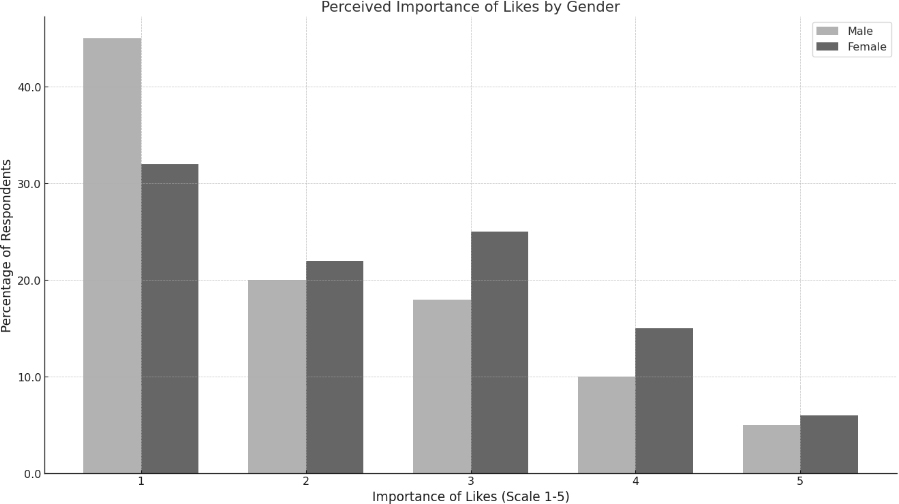
Additionally, gender differences become evident in the middle-range scores. Among female students, 12.2% assigned a score of 4 to the importance of ‘likes,’ whereas this percentage drops to 8.5% among male students. These findings suggest that, for a notable portion of female respondents, ‘likes’ hold a more substantial social and psychological significance.
An analysis of the motivations behind the significance attributed to ‘likes’ revealed notable gender differences. The question aimed to explore the reasons why young people consider ‘likes’ highly important, targeting only those respondents who assigned a significant value to them.
The primary reason for valuing ‘likes’ among female students is an increase in self-esteem, reported by 58.7% of respondents. Similarly, male students also acknowledge this factor, though to a lesser extent, with 40% indicating self-esteem enhancement as their main motivation. This suggests that while external validation is significant for both genders, it appears to have a stronger impact on the self-esteem of female students.
Regarding the influence of others’ judgment, 33.7% of female respondents emphasized its importance, highlighting the crucial role of peer opinions in shaping their self-perception. In contrast, only 18% of male students reported being significantly affected by others’ opinions, suggesting that social judgment plays a less prominent role in their perception of self-worth.
Finally, 25% of female participants stated that receiving ‘likes’ makes them feel desired, reinforcing the idea that social approval and recognition are key factors for them. Among male students, this motivation was reported by 18%, indicating that while feeling desired is relevant for both groups, it is slightly less pronounced among males.
Overall, these findings suggest that although external validation through ‘likes’ is important for both genders, its impact on self-esteem, social judgment, and the need for recognition is generally stronger among female students.
As shown in Figure 2, among male respondents, 58.5% reported having no fears and feeling highly confident when sharing content. This suggests a greater sense of ease and self-assurance among boys in their use of social media platforms, possibly linked to a lower concern about external judgment.
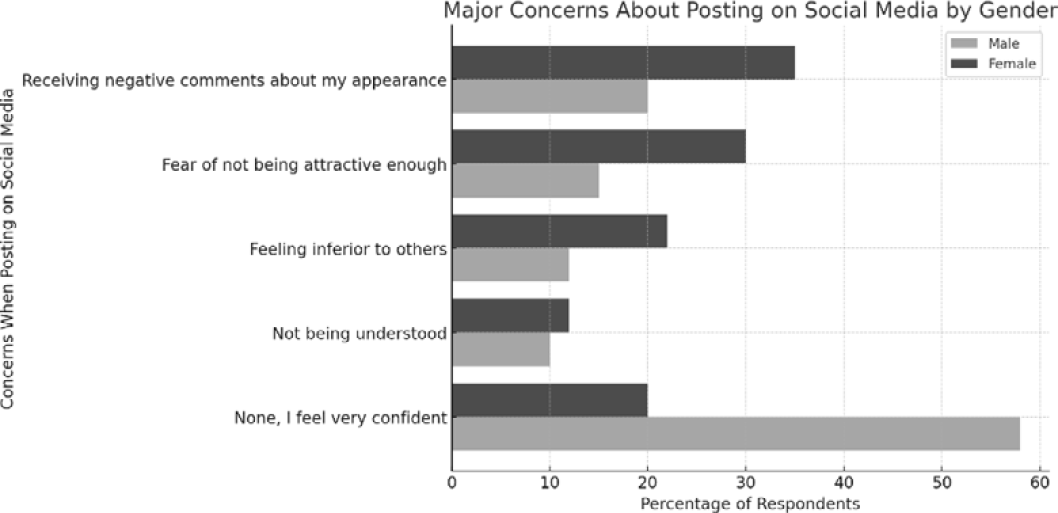
In contrast, female respondents expressed significantly higher levels of concern. Only 20.9% of girls reported feeling completely secure when posting content, indicating greater vulnerability and anxiety regarding online visibility. Furthermore, girls exhibited specific fears that were less prevalent among boys. Notably, 38.5% of female respondents feared receiving negative comments about their appearance, a concern shared by only 19.1% of boys. Additionally, 31.1% of girls expressed anxiety about feeling inferior to others, compared to 10.6% of boys. Similarly, 30.4% of girls worried about not being attractive enough, whereas this concern was reported by only 11.7% of boys.
These fears reflect not only the social pressures adolescent girls experience but also the crucial role that digital platforms play in their lives. Social media often becomes a battleground for social validation, deeply influencing self-perception and self-esteem. Adolescent girls, in particular, may invest significant emotional energy in conforming to beauty and success ideals promoted by media and peers. This heightened concern over their online image can lead to reduced self-confidence and negatively impact their sense of security and freedom of expression.
4.2. The echo of an offense: How online words become silent poison
A key challenge in the digital sphere is adolescents’ understanding of the strong link between the virtual and real worlds. Many young people struggle to recognize how experiences and interactions on social media can significantly impact their identity and overall well-being. As a result, they may perceive digital insults and aggression as less serious or impactful than those occurring in the physical world. The survey analyzed how adolescents perceive insults on social media, revealing both similarities and significant differences between genders. The percentage of young people who reported experiencing digital insults was similar for both boys and girls, with no major discrepancies between the two groups. However, a substantial difference emerged in their emotional reactions to these insults. The majority of boys (75.7%) reported feeling indifferent when receiving insults, whereas only 24.5% of girls expressed the same reaction. In contrast, girls exhibited stronger emotional responses, with 59.2% reporting sadness and 18.4% experiencing a sense of powerlessness. Regarding offensive behavior directed at others through social media, notable gender differences were also observed. The percentage of boys and girls who admitted to offending someone online varied significantly, suggesting that the nature of offensive behaviors and their perception differ between genders.
To gain further insight, the study explored the emotions felt by those who admitted to offending others online. Among boys, the predominant emotion was satisfaction (38.5%), followed by anger (34.6%), indifference (30.8%), and a feeling of increased strength (28.8%). This latter sentiment was significantly higher than among girls, where only 4.5% reported feeling more powerful after offending someone.
Conversely, among girls, the most common emotional response was feeling provoked (50%), compared to 23.1% of boys who reported the same. Additionally, 31.8% of female respondents reported feeling both satisfied and indifferent, with a lower incidence of anger (22.7%) compared to boys. These differences suggest that adolescent experiences and perceptions of online aggression vary significantly depending on gender.
4.3. Perceptions of the severity of online insults vs. real-world offenses
The analysis of how adolescents perceive the severity of online offenses compared to those in the real world further highlights significant gender differences, warranting a more in-depth examination.
As shown in Figure 3, survey responses indicate a clear gender-based difference in the perception of online offenses. The majority of girls (63.5%) considered social media insults to be just as serious as those occurring in the real world. This suggests that girls tend to perceive digital interactions with the same level of seriousness as face-to-face interactions.
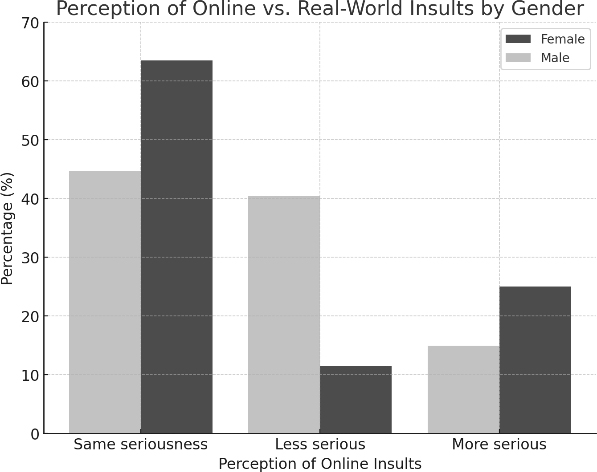
In contrast, only 44.7% of boys shared this opinion, which may indicate a tendency to downplay the severity of online offenses, possibly perceiving them as less harmful than in-person insults. Indeed, 40.4% of boys viewed online offenses as less serious, compared to just 11.5% of girls, suggesting a distorted perception of their impact. Girls appear to have a greater awareness of the potential harm caused by online insults and their impact on emotional well-being.
Moreover, 25% of girls considered online offenses to be more severe than real-world insults, compared to 14.9% of boys. This suggests that girls may experience digital aggression more frequently and perceive it as particularly harmful or invasive.
When asked why they perceived online offenses as less severe, the majority of respondents – without significant gender differences – selected the response: «The person may not know their aggressor and therefore remain indifferent.»
However, an interesting trend emerged in the open-ended responses, where participants could freely express their views. One boy’s response stood out: «The person is a pussy, so they feel powerful but actually aren’t.»
This statement reflects the respondent’s perception that an online aggressor is inherently weak, as indicated by the derogatory term ‘pussy.’ This term carries a negative connotation toward the female anatomy and is often used as an insult toward men, implying cowardice, lack of courage, or low self-esteem. It highlights a deeply ingrained gender bias, reinforcing the stereotype that weakness is associated with femininity. Such findings reveal how gender stereotypes are already internalized during adolescence.
A significant gender divide was also observed in how adolescents respond to offensive online behavior directed at others. The majority of girls (63.5%) stated that they disapproved of such behavior and actively reported it, compared to only 29.8% of boys. Among boys, the most frequent response (40.4%) was: «If they deserved it, I don’t think it’s wrong.»
This response suggests a concerning trend among male adolescents, indicating a greater tendency to justify or downplay offensive actions, particularly when they perceive the victim as deserving of mistreatment. This attitude may contribute to a minimization of the harmful effects of such behavior, in contrast to their female peers, who exhibit higher sensitivity toward these issues.
A striking difference also emerged in responses related to participation in offensive behavior to feel included in a group: 18.1% of boys reported engaging in such behavior for social acceptance, compared to only 1.4% of girls. This stark contrast suggests that boys may be more likely to adopt aggressive online behaviors as a means of social integration and group identity reinforcement.
4.4. From keyboard to wounds: The impact of digital violence on real life
Social media has made it easier to offend others, and these offenses are often minimized or perceived as less serious than those occurring face-to-face. However, it is crucial to recognize that digital offenses can be just as harmful – if not more so – than those in the physical world. This is because online aggression can occur with less emotional involvement and greater boldness, as aggressors do not directly face their victims. Addressing online violence is essential, especially given the significant gender differences in exposure to digital risks. One critical aspect to examine is adolescents’ perception of which gender is more exposed to digital violence.
The data presents a highly concerning picture. Both male and female respondents acknowledged that women are more vulnerable to online violence, with 60.6% of boys and an even higher 68.9% of girls agreeing with this statement. This suggests that adolescents are aware of the greater risks faced by girls in digital spaces, indicating a shared perception of the gendered nature of online violence. While this awareness is positive in terms of problem recognition, it underscores the urgent need for interventions to prevent and combat such discriminatory and violent behaviors. Furthermore, it highlights the elevated risks girls face in digital environments, emphasizing the necessity of targeted protection and awareness measures.
To further explore online risks, the study examined the practice of sharing intimate images among adolescents, aiming to assess potential gender differences in exposure and consequences. The data indicated a higher prevalence among boys, with 24.5% of male respondents reporting that they had shared intimate images, compared to 16.2% of girls. Participants who had shared intimate images were then asked whether they had feared their images being leaked or if they had actually experienced non-consensual distribution. The data shows that girls exhibited greater concern over privacy risks than boys. 41.9% of girls expressed fear that their images could be shared without consent, compared to 25.9% of boys. However, when looking at actual cases of non-consensual distribution, the numbers were similar: 14.8% of boys and 9.7% of girls reported that their intimate images had been leaked.
Gender differences were also evident in the reasons for sharing intimate content. 48% of girls stated that they shared images to please their partner, compared to only 16% of boys. Regarding sexual gratification, 48% of boys and 36% of girls reported that sharing intimate images contributed to their sexual fulfillment. This indicates a higher perception of sexual gratification among boys compared to girls.
Additionally, 36% of boys reported feeling more confident after sending intimate content, whereas only 16% of girls shared this experience. Conversely, 12% of girls stated that sending intimate images made them feel more insecure, a sentiment not reported by any male respondents.
These findings highlight significant gender differences in the emotional and psychological consequences of sharing intimate images. Girls appear to experience greater insecurity and feel more pressure to meet their partner’s expectations, while boys associate the practice more with self-confidence and sexual satisfaction. To assess adolescents’ understanding of digital violence, the survey investigated their awareness of revenge pornography, sexting coercion, cyberstalking, online harassment, upskirting, and doxing. The findings revealed that most students were familiar with revenge pornography, cyberstalking, and online harassment, with similar awareness levels between boys and girls. However, a particularly interesting gender difference emerged in awareness of upskirting. More boys (18.1%) than girls (7.4%) were aware of this form of abuse. This disparity suggests that boys may be more curious about upskirting while simultaneously failing to recognize it ‘as a form of sexual harassment.’
4.5. A digital cage: When control is disguised as care
Considering the sensitive nature of adolescence, it is important to understand how young people perceive controlling behaviors in romantic relationships through digital tools. The survey sought to analyze how adolescents interpret these behaviors and whether they perceive them as signs of interest or affection (Jamieson 2013; Pérez-Marco et al., 2020). Respondents were asked whether they considered it normal for a partner to request access to their phone or to forbid them from posting pictures online.
The results revealed a significant gender gap. 53.2% of boys considered phone-checking by a partner as normal. Given that 94 male students participated in the survey, this means that more than half (50 boys) accepted phone surveillance as a standard practice in relationships. The percentage of girls who found this practice normal is about 25%. With 148 female respondents, this indicates that 37 girls accepted phone-checking as a normal behavior.
This gender difference suggests that boys are more likely to accept or request this behavior compared to girls, potentially reflecting perceived power dynamics in adolescent relationships. A high percentage of boys viewing phone surveillance as acceptable could indicate a normalization of controlling behaviors, which may be mistaken for acts of care or protection. However, such behaviors are often symptomatic of unhealthy and potentially abusive relationships.
Girls’ responses, while lower than boys’, still indicate a social or relational pressure leading them to accept these behaviors.
As shown in Figure 4, the survey also examined responses to the question ‘If my partner forbids me from posting a picture online.’ The results further demonstrated differences in attitudes toward control in relationships:
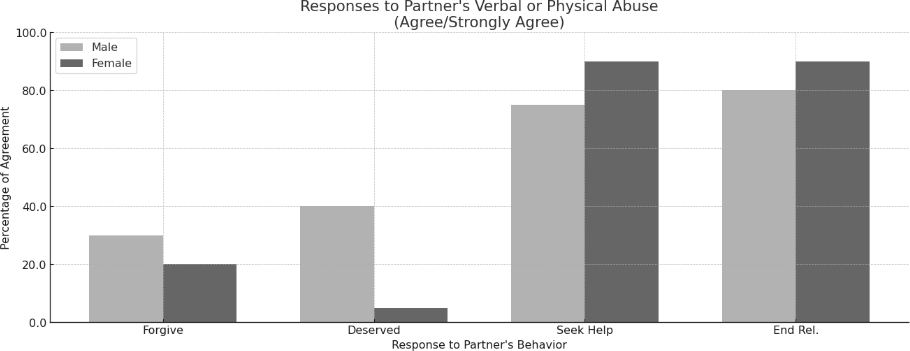
– 66.9% of girls and 42.6% of boys rejected the prohibition, considering it a violation of their personal freedom.
– 34% of boys, however, stated that they would accept the restriction out of respect for their partner, suggesting that some interpret control as a form of care rather than a violation of rights.
– Only 12.8% of girls shared this perspective, indicating that most female respondents did not view control as a sign of respect.
Moreover, 4.7% of girls and 11.7% of boys stated that they would accept the restriction because they themselves impose similar rules on their partner. This response reflects a reciprocity in control, further reinforcing the normalization of such behaviors in adolescent relationships.
These findings reveal important gender differences in how control is perceived and accepted. While a majority of adolescents reject controlling behaviors, a substantial portion normalizes them, interpreting them as signs of love and commitment.
During the survey, an interesting reflection emerged from a male student regarding relationship control through digital tools. The student observed that many couples he knew used the application ‘Life 360’ to track each other’s locations in real time. When asked about the reasons for this habit, the student explained: «People use it to make sure there are no betrayals. But in my opinion, that’s not a sign of love; it’s a sign of a lack of trust. Loving someone means trusting them, not monitoring them.»
He further added: «For me, this isn’t normal, but now it’s something that happens a lot… umh… they’re happy with it. It would have been useful to include a question about this, because that app is really widespread.
This reflection highlights two key points:
1. Some adolescents perceive controlling behaviors as normal and associate them with care and love.
2. Others recognize these behaviors as abusive and indicative of mistrust, rather than genuine affection.
Hearing a 16-year-old express such a mature perspective demonstrates a sincere interest in understanding the normalization of digital control in relationships. It also emphasizes the importance of educating young people on healthy relationship dynamics and the difference between protection and control (Storer, Nyerges & Hamby, 2022).
These findings underscore the need for comprehensive education on digital violence, healthy relationships, and gender dynamics to prevent harmful behaviors from becoming normalized in adolescent interactions.
The descriptive operationalisation of DGBV developed in this study can be understood as an initial ‘attribute space’ that organises the key dimensions through which adolescents encounter and interpret digital violence. This framework – encompassing forms of aggression (e.g., harassment, coercive control, image-based abuse), relational contexts (peer, romantic, group dynamics), and gendered patterns of emotional response – provides a structured lens for future mixed-methods research. While the present study employed the attribute space primarily for descriptive and exploratory purposes, it offers a conceptual foundation for more formalised integration strategies, such as mapping qualitative themes onto quantitative indicators or developing typologies of adolescent digital experiences. In this sense, the attribute space serves not only as an analytical tool for the current study, but also as a scaffold for future investigations aiming to compare, extend, or deepen the understanding of DGBV across contexts.
The findings of this study highlight the urgent need to address DGBV as an integral part of adolescent education and intervention strategies. With the increasing integration of technology into daily life, digital spaces have become arenas where traditional gender-based violence extends into new and often more pervasive forms (Powell & Henry, 2017). The results indicate that girls are disproportionately affected by digital abuse, including cyberstalking, sextortion, and non-consensual sharing of intimate images (Alonso-Ruido, Sande-Muñiz, & Regueiro, 2022). Boys, while also experiencing digital violence, tend to normalize and justify certain behaviors, reflecting entrenched gender norms (Sundaram, 2013).
A key observation from this research is the normalization of controlling behaviors in adolescent relationships, often perceived as signs of care rather than coercion. The findings indicate that over 50% of boys and 25% of girls consider it acceptable for a partner to check their phone or restrict their social media activity. This suggests a pressing need for educational interventions that challenge such attitudes and emphasize healthy, respectful relationships. Without targeted awareness campaigns and preventive measures, these controlling behaviors may escalate into more severe forms of abuse in adulthood (Tintori, Ciancimino, & Cerbara, 2024).
One of the most concerning trends emerging from the data is the perception of online harassment as less severe than real-world aggression, particularly among boys. While 63.5% of girls equate digital abuse with physical-world violence, only 44.7% of boys share this view. This disparity in perception highlights a gap in digital literacy and awareness that needs to be bridged through comprehensive education on the impact of online abuse. The anonymity, scalability, and permanence of digital interactions make online harassment particularly insidious, requiring innovative strategies to combat it effectively (Recuero, 2024).
The integration of quantitative and qualitative data provides a more nuanced understanding of how adolescents perceive and navigate digital gender-based violence. Survey results highlighted marked gender differences in the emotional and behavioural responses to online aggression – girls reporting higher levels of sadness, anxiety, and fear of exposure, while boys displayed greater indifference and a tendency to justify harmful behaviours. The qualitative interviews helped contextualise these patterns by revealing the interpretative frameworks adolescents use to make sense of digital interactions. For instance, girls described feeling vulnerable to online judgement and reputation damage, which resonated with the survey finding that they place greater emotional weight on social media validation. Conversely, boys frequently framed offensive online behaviour as ‘banter’ or a normative part of peer culture, aligning with quantitative data showing their reduced perception of harm.
Qualitative narratives also shed light on the normalisation of controlling behaviours. While over half of the boys in the survey considered partner phone-checking acceptable, interviews revealed that some boys (by the point of view of girls) interpreted surveillance as a sign of loyalty or a way to maintain relational certainty. At the same time, a minority articulated critical perspectives, recognising such practices as rooted in mistrust – thus qualifying the broader statistical trend. These integrative insights underscore the value of a mixed-methods approach, allowing the study to capture not only behavioural prevalence but also the meanings adolescents attach to digital practices.
The influence of social media in shaping adolescent self-perception and gender identity is another critical aspect that emerged from the study. Female participants reported higher levels of concern regarding their online image, with many associating social media validation (e.g., ‘likes’) with self-worth. This reliance on external validation contributes to increased vulnerability to online abuse, cyberbullying, and manipulation. Programs promoting digital resilience and self-esteem must be incorporated into school curricula to help young people navigate online spaces safely (Rideout & Robb, 2018; Perry et al., 2023).
The role of educational institutions in combating digital gender violence cannot be overstated. Schools serve as essential platforms for fostering digital literacy and gender-sensitive education. The implementation of structured programs that address digital consent, healthy relationships, and the ethical use of technology is imperative. Equipping educators with the tools to recognize and address digital abuse will further strengthen the protective environment necessary for adolescent development. Recent evidence highlights the importance of grounding school-based prevention efforts in established educational models. Approaches inspired by programmes such as Lights4Violence and the EU Kids Online framework demonstrate how structured activities can help adolescents recognise digital consent, identify controlling or abusive behaviours, and strengthen bystander intervention. Within this perspective, gender-sensitive digital literacy becomes central: curricula should address platform affordances, privacy governance, and the power dynamics embedded in everyday online interactions, offering students concrete tools to navigate digital environments in safer and more autonomous ways.
Additionally, policymakers and social media platforms must collaborate to create safer digital environments. Regulatory measures that enhance privacy protections, improve reporting mechanisms, and hold perpetrators accountable are crucial in mitigating the spread of digital gender violence. Encouraging platforms to integrate AI-driven content moderation and user-controlled safety settings can empower adolescents to protect themselves from digital abuse.
Parental involvement is also a critical component in addressing DGBV. Educating parents on digital safety, open communication strategies, and the risks associated with online interactions can provide adolescents with a supportive network for navigating digital challenges. A balanced approach that fosters autonomy while ensuring guidance is essential in creating a safer digital landscape for young people.
In conclusion, addressing digital gender-based violence requires a multifaceted approach involving education, policy, technological innovation, and community engagement. By implementing targeted interventions, fostering digital literacy, and challenging harmful gender norms, we can create a safer and more equitable digital environment for adolescents. This research underscores the importance of proactive measures to prevent digital abuse and promote a culture of respect and empowerment in online and offline spaces.
6. Limits and contribution’s points of strength
This study provides insights into the normalization of digital gender-based violence (DGBV) among adolescents, highlighting the ways in which young people perceive and experience online abuse. By employing a mixed-methods approach, it was possible to capture both quantitative trends and qualitative reflections, offering a comprehensive understanding of the issue. The findings contribute to ongoing discussions on gender norms, online safety, and digital literacy, emphasizing the urgent need for targeted educational interventions. The study also sheds light on controlling behaviors in adolescent relationships, revealing how digital tools can be misused to exert power and surveillance, often under the guise of care and affection.
However, despite these contributions, the study has certain limitations that should be acknowledged. First, the research is based on a sample of 242 students from two upper secondary schools in Lombardy, Italy. While this allows for an in-depth examination of adolescent experiences within a specific educational and cultural context, it may limit the generalizability of the findings to broader populations. Future studies could expand the sample to include a wider geographic range, incorporating data from multiple regions or even cross-national comparisons to better understand how digital gender-based violence manifests across different socio-cultural environments.
Another limitation is the cross-sectional nature of the study. The research captures adolescent perceptions at a single point in time, providing valuable but static insights into their understanding of digital violence. However, attitudes, behaviors, and coping mechanisms evolve over time, particularly as young people gain more awareness, digital literacy, and personal experiences. A longitudinal study would be beneficial in tracking how perceptions of digital abuse change with age and whether interventions – such as educational programs – have a lasting impact on reducing harmful behaviors.
Additionally, while the study effectively highlights the gendered dynamics of digital violence – particularly how boys are more likely to justify or minimize digital abuse while girls experience greater emotional distress – there remains an opportunity for further exploration. The experiences of LGBTQ+ youth and male victims of online abuse were not explicitly addressed, despite evidence suggesting that these groups face unique risks in digital spaces. Future research should incorporate a more intersectional approach, examining how sexual orientation, gender identity, and other social factors influence experiences of digital violence.
The study also presents policy recommendations, advocating for digital literacy programs, awareness campaigns, and intervention strategies in schools. However, further discussion is needed regarding the practical challenges of implementing such measures. Schools may face resource constraints, lack of teacher training, or resistance from students and parents. Examining successful case studies from other educational systems could provide actionable insights on how to effectively integrate digital violence prevention programs into school curricula.
Finally, ethical considerations played a key role in this research. While parental consent was required, we observed variations in response rates between the two schools, partly due to differences in administrative procedures and parental involvement. This may have introduced selection bias, potentially underrepresenting students who experience higher levels of parental control or digital surveillance at home. Furthermore, given the sensitive nature of digital violence, future research should explore additional ways to ensure emotional support for participants who may recognize their own experiences in the study’s themes.
Despite these limitations, this study makes a meaningful contribution to understanding digital gender-based violence among adolescents, offering new evidence on how gender norms influence online interactions. The findings emphasize the urgent need for interventions in schools, stronger digital safety policies, and increased awareness among young people, educators, and policymakers. By addressing the identified gaps, future research can build upon these insights to further develop effective prevention strategies and promote a safer, more equitable digital environment for all adolescents.
Abbott, K., Weckesser, A., & Egan, H. (2021). ‘Everyone knows someone in an unhealthy relationship’: young people’s talk about intimate heterosexual relationships in England. Sex Education, 21(3), 304-318. https://doi.org/10.1080/14681811.2020.1801407
Alonso-Ruido, P., Sande-Muñiz, M., & Regueiro, B. (2022). ¿ Pornografía al alcance de un clic? Una revisión de la literatura reciente sobre adolescentes españoles. Revista de estudios e investigación en psicología y educación, 9(1), 1-18. https://doi.org/10.17979/reipe.2022.9.1.8653
Andrade, T. A., Sampaio, M. A., & Donard, V. (2024). Applying digital technologies to tackle teen dating violence: A systematic review. Trends in Psychology, 32(2), 356-374. https://doi.org/10.1007/s43076-022-00180-9
Auriemma, V., Iorio, G., Roberti, G., & Morese, R. (2020). Cyberbullying and empathy in the age of hyperconnection: an interdisciplinary approach. Frontiers in Sociology, 5. https://doi.org/10.3389/fsoc.2020.551881
Blatterer, H. (2022) Friendship and solidarity. European Journal of Social Theory, 25(2): 217–234. https://doi.org/10.1177/1368431020982499
Bailey, L., Hulley, J., Gomersall, T. Kirkman, G., Gibbs, G., & Jones, A. (2023). The Networking of Abuse: Intimate Partner Violence and the Use of Social Technologies. Criminal Justice and Behavior, 51. https://doi.org/10.1177/00938548231206827
Castells, M. (2009). Communication Power. Oxford University Press.
Castells, M. (2012). Networks of outrage and hope – social movements in the Internet age. 2nd Edition · E-Book.
Chassiakos, Y. L. R., & Stager, M. (2020). Current trends in digital media: How and why teens use technology. In Technology and adolescent health (pp 25-56). Academic Press. https://doi.org/10.1016/B978-0-12-817319-0.00002-5
Chesters, J. (Ed.). (2024). Research Handbook on Transitions Into Adulthood. Edward Elgar Publishing.
Creswell, J. W., & Clark, V. L. P. (2017). Designing and conducting mixed methods research. Sage publications.
Creswell, J.W., & Creswell, J.D. (2017). Research design: Qualitative, quantitative, and mixed methods approaches, Sage publications.
Decataldo, A., Russo, C. (2022). Metodologia e tecniche partecipative. La ricerca sociologica nel tempo della complessità. Pearson Italia.
DeCook, J. R., Cotter, K., Kanthawala, S., & Foyle, K. (2022). Safe from ‘harm’: The governance of violence by platforms. Policy & Internet, 14(1), 63-78. https://doi.org/10.1002/poi3.290
De Leeuw, E. D., & Hox, J. J. (2012). Self-administered questionnaires: mail surveys and other applications. In International handbook of survey methodology (pp 239-263), Routledge.
Dragiewicz, M., Burgess, J., Matamoros-Fernández, A., Salter, M., Suzor, N. P., Woodlock, D., & Harris, B. (2018). Technology facilitated coercive control: Domestic violence and the competing roles of digital media platforms. Feminist Media Studies, 18(4), 609-625. https://doi.org/10.1080/14680777.2018.1447341
Dubois, E., & Reepschlager, A. (2024). How harassment and hate speech policies have changed over time: Comparing Facebook, Twitter and Reddit (2005–2020). Policy & Internet. https://doi.org/10.1002/poi3.387
Fitzpatrick, C., Harvey, E., Lopes Almeida, M., Binet, MA., Wakeham-Lewis, R., Garon-Carrier, G. (2024). Preschoolers, Parents, and the Pandemic: Family Media Use During the COVID-19 Crisis and Child Development. In: Frizzo, G.B. (eds) Digital Media and Early Child Development. Springer. https://doi.org/10.1007/978-3-031-69224-6_12
Flynn, A., & Henry, N. (2021). Image-based sexual abuse: An Australian reflection. Women & criminal justice, 31(4), 313-326. https://doi.org/10.1080/08974454.2019.1646190
Grignoli, D., Barba, D., D’Ambrosio M. (2022). Rethinking violence against women from real to online teen violence. Sociology & Social Work Review, 6, 20-36. https://doi.org/10.58179/SSWR6202
Haidt, J. (2024). The anxious generation: how the great rewiring of childhood is causing an epidemic of mental illness. Penguin Press.
Jamieson L. (2013). Personal relationships, intimacy and the self in a mediated and global digital age. In: Orton-Johnson K, Prior N (eds) Digital Sociology: Critical Perspectives. Palgrave Macmillan (pp 13–33).
Jane, E. (2017). Gendered cyberhate: A new digital divide? In Jane E. (Eds), Theorizing digital divides (pp 186-198), Routledge.
Jones, L. M., Mitchell, K. J., & Finkelhor, D. (2013). Online harassment in context: Trends from three youth internet safety surveys (2000, 2005, 2010). Psychology of violence, 3(1), 53. https://doi.org/10.1037/a0030309
Kaarakainen, S.S., Helenius, J., & Laakso, Mari (2025). Exploring Loneliness Among Young People: Thematic Analysis of Loneliness Experiences on Finnish YouthNet Discussion Forum. Youth & Society. https://doi.org/10.1177/0044118X241313475
Kostyk, A., Zhou, W., Hyman, M. R., & Paas, L. (2021). Securing higher-quality data from self-administered questionnaires. International Journal of Market Research, 63(6), 685-692. https://doi.org/10.1177/14707853211057172
Lajnef, K. (2023). The effect of social media influencers’ on teenagers behavior: An empirical study using cognitive map technique. Current Psychology, 42(22), 19364-19377. https://doi.org/10.1007/s12144-023-04273-1
Leavy, P. (2022). Research design: Quantitative, qualitative, mixed methods, arts-based, and community-based participatory research approaches. Guilford publications.
Lloyd, J. (2018). Abuse through sexual image sharing in schools: Response and responsibility. Gender and Education, 32(6), 784–802. https://doi.org/10.1080/09540253.2018.1513456
Mainardi, A., Magaraggia, S. (2024). Young women, dating apps, and affective assemblages in the time of pandemic: no relationship is a linear transition to a fixed point. European Journal of woman’s studies, 31(3), 325-339. https://doi.org/10.1177/13505068241262128
Mainardi, A., & Voli, S. (2024). Gender and sexuality in the political experience of young people in Italy. In Research Handbook on Transitions into Adulthood (pp 153-163). Edward Elgar Publishing.
McInroy, L.B., & Beer, O. W. (2022). Adapting vignettes for internet-based research: Eliciting realistic responses to the digital milieu. International Journal of Social Research Methodology, 25(3), 335-347. https://doi.org/10.1080/13645579.2021.1901440
Narayani, A. (2024). Women’s Safety in Digital Space. Indian Journal of Public Administration, 70(3), 546-561. https://doi.org/10.1177/00195561241271513
Nyamwesa, A. M. (2024). Mastering Digital Personas: Balancing Social Connectivity and Privacy for Tanzanian Adolescents’ Well-Being. Indonesian Journal of Social Research (IJSR), 6(3), 236-249. https://doi.org/10.30997/ijsr.v6i3.508
Orton-Johnson, K., & Prior, N. (Eds.) (2013). Digital sociology: Critical perspectives. Springer.
Patton, D. U., Leonard, P., Elaesser, C., Eschmann, R. D., Patel, S., & Crosby, S. (2019). What’s a Threat on Social Media? How Black and Latino Chicago Young Men Define and Navigate Threats Online. Youth & Society, 51(6), 756-772. https://doi.org/10.1177/0044118X17720325
Pérez-Marco, A., Soares, P., Davó-Blanes, M. C., & Vives-Cases, C. (2020). Identifying types of dating violence and protective factors among adolescents in Spain: A qualitative analysis of Lights4Violence materials. International journal of environmental research and public health, 17(7), 2443. https://doi.org/10.3390/ijerph17072443
Perry, J., Devore, S. K., Pellegrino, C., & Salce, A. J. (2023). Social media usage and its effects on the psychological health of adolescents. NASN School Nurse, 38(6), 292-296. https://doi.org/10.1177/1942602X231159901
Powell, A., & Henry, N. (2017). Sexual violence in a digital age. Palgrave Macmillan.
Recuero, R. (2024). The Platformization of violence: toward a concept of discursive toxicity on social media. Social Media Society, 10(1). https://doi.org/10.1177/205630512312242
Rideout V., Robb M.B. (2018). Social media, social life: Teens reveal their experiences. Common Sense Media.
Sardá, T., Natale, S., Sotirakopoulos, N., & Monaghan, M. (2019). Understanding online anonymity. Media, Culture & Society, 41(4), 557-564. https://doi.org/10.1177/016344371984207
Save the Children (2023), Atlante dell’infanzia a rischio, Report https://www.savethechildren.it/cosa-facciamo/pubblicazioni/14-atlante-dell-infanzia-a-rischio-tempi-digitali
Scott, C. F., Bay-Cheng, L. Y., Nochajski, T. H., & Collins, R. L. (2024). Emerging adults’ social media engagement & alcohol misuse: A multidimensional, person-centered analysis of risk. Children and Youth Services Review, 159, 1-15. https://doi.org/10.1016/j.childyouth.2024.107511
Sevón, E., Mustola, M., Siippainen, A., & Vlasov, J. (2023). Participatory research methods with young children: A systematic literature review. Educational review, 1-19. https://doi.org/10.1080/00131911.2023.2215465
Storer, H., Nyerges, E., & Hamby, S. (2022). Technology “Feels Less Threatening”: The processes by which digital technologies facilitate youths’ access to services at intimate partner violence organizations. Children and Youth Services Review, 139(C). https://doi.org/10.1016/j.childyouth.2022.106573.
Sundaram, V. (2013). Violence as understandable, deserved or unacceptable? Listening for gender in teenagers’ talk about violence. Gender and education, 25(7), 889-906. https://doi.org/10.1080/09540253.2013.858110
Tintori, A., Ciancimino, G., & Cerbara, L. (2024). How Screen Time and Social Media Hyperconnection Have Harmed Adolescents’ Relational and Psychological Well-Being since the COVID-19 Pandemic. Social Sciences, 13(9), 470. https://doi.org/10.3390/socsci13090470
Torp Løkkeberg S, Ihlebæk C, Brottveit G, Del Busso L. (2024), Digital Violence and Abuse: A Scoping Review of Adverse Experiences Within Adolescent Intimate Partner Relationships. Trauma Violence Abuse, 25(3), 1954-1965. https://doi.org/10.1177/152483802312018162
Valls, R., Puigvert, L., & Duque, E. (2008). Gender violence among teenagers: Socialization and prevention. Violence against women, 14(7), 759-785. https://doi.org/10.1177/1077801208320
Vickery, J. R. (2017). Worried about the wrong things: Youth, risk, and opportunity in the digital world. MIT Press.
Women, U. N. (2015). Cyber Violence Against Women and Girls: A World-wide Wake-up Call. UN WOMEN. https://www.unwomen.org/en/news/stories/2015/9/cyber-violence-report-press-release
WHO World Health Organization (2021). Violence against women prevalence estimates, 2018: global, regional and national prevalence estimates for intimate partner violence against women and global and regional prevalence estimates for non-partner sexual violence against women. Ginevra, https://www.who.int/publications/i/item/9789240022256
Ybarra, M. L., Diener-West, M., & Leaf, P. J. (2007). Examining the overlap in Internet harassment and school bullying: Implications for school intervention. Journal of Adolescent health, 41(6), S42-S50. https://doi.org/10.1016/j.jadohealth.2007.09.004
1 Although this work is the result of the joint effort of all authors, paragraphs 1, 2, 5 and 6 are attributed to Brunella Fiore, while paragraphs 3 and 4 are attributed to Chiara Bruttomesso.