Buone pratiche
Designing and experiencing place-based education with Socratic AI: Findings from a field workshop1
L’educazione al territorio con il supporto di una intelligenza artificiale socratica: un’evidenza sperimentale
1 University of Florence, Italy
2 Mathema S.r.l. / University of Modena and Reggio Emilia, Italy
stefano.cuomo@unifi.it; gabriele.biagini@unifi.it; francesco@mathema.com
*Corresponding author
Abstract. This paper explores how generative AI, conceived as a Socratic companion, can support place-based education. The study draws on a workshop within the T-Place project, in which AI-guided questioning was tested to foster inquiry and collaborative interpretation in territorial learning contexts. The field experiment took place at the MED Summer School 2025 in Ferrara with 20 participants, alternating between the role of designers of educational itineraries and users engaged in exploration. Central to the experience was the T-PLACE app, developed to sustain Socratic dialogue during exploration. Participants designed and experienced itineraries with its support, producing transmedia artefacts that documented and reinterpreted their discoveries. Data sources included design templates, exploration routes and questionnaire responses, offering evidence of both processes and outcomes. Findings indicate that the AI dialogue encouraged users to make implicit knowledge explicit and to sustain meta-reflection, while the transmedia outputs transformed exploration into resources for collective learning. Overall, the results suggest that generative AI, when employed in a Socratic mode, can enrich place-based education by stimulating critical engagement with territory. Despite some technical constraints related to the prototype stage, the experience demonstrates the potential of combining dialogic AI with transmedia practices to support inquiry, reflection and continuity in teaching and learning.
Keywords: dialogic AI, media education, place-based learning, Socratic method, transmedia storytelling.
Riassunto. Questo articolo indaga in che modo l’intelligenza artificiale generativa, concepita come un compagno socratico, possa supportare la place-based education. Lo studio si basa su un workshop realizzato all’interno del progetto T-Place, nel quale è stata sperimentata una modalità di interrogazione guidata dall’IA per favorire l’indagine e l’interpretazione collaborativa nei contesti di apprendimento territoriale. L’esperimento sul campo si è svolto durante la MED Summer School 2025 a Ferrara, coinvolgendo 20 partecipanti che hanno alternato il ruolo di progettisti di itinerari educativi e quello di utenti impegnati nell’esplorazione. Fulcro dell’esperienza è stata l’app T-PLACE, sviluppata per sostenere il dialogo socratico durante l’esplorazione. Con il suo supporto, i partecipanti hanno progettato e sperimentato itinerari, producendo artefatti transmediali che documentavano e reinterpretavano le loro scoperte. Le fonti dei dati comprendevano template di progettazione, tracciati esplorativi e risposte a questionari, offrendo evidenze sia sui processi sia sui risultati. I risultati indicano che il dialogo con l’IA ha incoraggiato gli utenti a esplicitare conoscenze implicite e a sostenere forme di metariflessione, mentre gli output transmediali hanno trasformato l’esplorazione in risorse per l’apprendimento collettivo. Nel complesso, i risultati suggeriscono che l’IA generativa, quando impiegata in modalità socratica, può arricchire la place-based education stimolando un coinvolgimento critico con il territorio. Nonostante alcuni vincoli tecnici legati alla fase prototipale, l’esperienza dimostra il potenziale della combinazione tra IA dialogica e pratiche transmediali nel supportare indagine, riflessione e continuità nei processi di insegnamento e apprendimento.
Parole chiave: IA dialogica, media education, place-based learning, metodo socratico, transmedia storytelling.
Index
1.1. Inside the concept of “Educazione al Territorio”
1.3. AI and the Socratic Method
2.1. The workshop context and participants
2.2. The structure of the activities
2.4. Methodology and data collection
3.1. Overview of empirical materials and sources of evidence
Usability and acceptance of the app
Evaluation of the educational design template
Educational significance in the field
Perceived transferability of the educational design template
Transferability of the T-PLACE app
Transmedia practices and StoryMaps
Quantitative synthesis: the Net Promoter Score (Q47)
Revisiting the research questions
The Socratic use of AI and its pedagogical implications
Transmedia learning and transferability
Implications for research and practice
5. Limitations and further perspectives
1.1. Inside the concept of “Educazione al Territorio”
In the Italian pedagogical and cultural discourse, the concept of “territorio” holds a singular status. Unlike the English terms land or place, which often highlight respectively the physical environment or the sociocultural dimension of space (Agnew, 2011; Rajala et al., 2020; Merschdorf & Blaschke, 2018), territorio is a dense and multidimensional notion. It combines natural landscapes, cultural heritage, historical memories and social practices into what is often referred to as the genius loci of a community (Costa & Andrade, 2023). This layered meaning has made the expression educazione al territorio difficult to translate, although place-based education is the most adequate translation, yet particularly fruitful as an educational paradigm. As Giorda and Puttilli (2011) have argued, educare al territorio ed educare il territorio implies a dual movement: on the one hand, fostering learners’ awareness and critical understanding of the places they inhabit; on the other, enhancing the territory itself as a shared resource for knowledge, identity and participation.
Such an approach has become increasingly relevant in contemporary contexts. Place-based education is not only a strategy to promote environmental awareness or cultural literacy, but also a way to cultivate democratic citizenship, social inclusion and a sense of belonging. The integration of multiple perspectives – geography, cultural heritage, pedagogy and digital technologies – helps learners to grasp the complexity of territories as evolving, contested and lived spaces. Mobile and immersive technologies have opened new possibilities for situated learning, enabling learners to explore environments through cross-media narratives, interactive simulations (Scippo et al., 2024; Ranieri & Pieri, 2014; Pachler et al., 2010) and digital augmentations that connect physical presence with mediated representations and the integration of AI now offers dynamic personalisation and intelligent scaffolding (Wang et al., 2024)
In this perspective, the “T-Place – Thinking Places, Building Communities” project2 was conceived within the Italian PNR 2021–2027 as an attempt to rethink cultural and territorial education in participatory and inclusive terms. Its guiding idea is that the knowledge should be co-constructed with communities through processes of documentation, narration and exploration. In this sense, the project explicitly aligns with the Faro Convention, which frames cultural heritage as a collective resource for democracy, human rights and community life.
From an educational perspective, T-Place emphasises two main directions (Ranieri et al., 2023; Ranieri, Tucci & Azzari, 2025). First, the sharing of historical memory: places are seen not as static repositories of monuments but as living contexts in which material traces, oral histories and social practices intersect. Making these dimensions visible through cross-media narratives and digital technologies means enabling learners to access the multiple voices that shape the identity of a territory. Second, the promotion of active citizenship: learners, whether students or citizens at large, are not passive recipients of expert knowledge but are involved as active producers of content. Through crowdsourcing, storymapping and digital documentation, they contribute to building a common heritage, reinforcing both individual belonging and collective responsibility.
Pedagogically, T-Place proposes a model that connects place-based education with media education. By combining on-site exploration with digital tools such as augmented reality, 360° videos, or generative AI, the project fosters an experiential approach where learning emerges from the interplay between embodied presence and mediated representation, to cultivate learners’ ability to interpret, re-narrate and inhabit places in ways that strengthen active citizenship and community cohesion (Luzzi & Cuomo, 2025).
1.3. AI and the Socratic Method
When the T-Place project was first conceived in 2022, the large-scale diffusion of generative AI – and in particular large language models – was not yet foreseen. The sudden rise of these technologies confronted the project with unexpected challenges, while at the same time opening new opportunities that reshaped its pedagogical potential in ways that had not originally been anticipated (Storey et al., 2025; Ogunleye et al., 2024).
One of the most significant affordances of generative AI lies in its capacity for adaptive questioning: the ability to adjust prompts dynamically in response to users’ answers, uncertainties, or errors. Unlike static scripts, this adaptivity allows the system to modulate the difficulty, framing, or focus of subsequent questions, steering learners towards deeper reflection. Importantly, the AI can sustain multi-turn coherence, drawing on prior conversational context to revisit ambiguous points, ask for clarification, or enrich exploration. This design challenge echoes earlier research on intelligent tutoring systems, where Socratic questioning has been recognised as a central concern in educational technology since its early days (Collins & Stevens, 1982; VanLehn, 2011). In this sense, large language models can be seen not as a rupture but as part of a longer pedagogical trajectory, supporting learners in advancing their critical understanding (Crompton & Burke, 2024).
Recent studies have begun to explore how AI can support learning through different forms of scaffolding. Research in areas such as visual learning analytics and academic writing has shown that proactive AI agents, designed to pose guiding questions rather than simply respond, can improve comprehension and foster metacognitive awareness compared with passive systems (e.g., Yan et al., 2025; Guo et al., 2025). Other contributions highlight the potential of “Socratic” chatbots that structure dialogue through successive prompts, helping learners to articulate their reasoning and engage in reflection (Degen, 2025; Favero et al., 2025; Hilliger et al., 2025). While the field is still evolving, this growing body of work suggests that, when carefully designed, AI can move beyond content delivery to act as a dialogic partner in inquiry, supporting deeper and more self-regulated learning (Garzón et al., 2025).
Within this framework, the T-PLACE app was developed within the project as a joint effort: the design component, focused on pedagogical modelling and user experience, was carried out by the Educational Technology Laboratory of the University of Florence (coordinated by Prof. M. Ranieri and involving S. Cuomo and G. Biagini), while the technical development was led by F. Gracci at Mathema, in the context of his doctoral research. The goal was not to provide definitive answers but to ask probing questions, stimulate reflection and scaffold inquiry during the exploration of the territory (Kaldaras et al., 2024; Teixeira de Melo et al., 2025). Rather than delivering explanations, the system offered sequences of hints, counter-questions, or prompts to help learners bridge the gap between current understanding and new concepts, echoing Vygotsky’s idea of the zone of proximal development (Vygotsky, 1978). At the same time, the AI could act as a metacognitive prompt, inviting learners to justify their reasoning, confront uncertainties and consider alternative perspectives (Stanton et al., 2021, Mazari, 2025).
Designing such dialogues is not without challenges. Overly frequent or intrusive questioning can disrupt the flow of exploration, while too little prompting risks leaving learners unguided. The quality of prompt design, the appropriateness of interventions and consistency across turns are demanding issues, both pedagogical and technical (Qian, 2025). These tensions motivated us to test the approach in a realistic setting through a dedicated workshop, conceived as a field experiment to evaluate its opportunities and limitations in practice.
On this basis, the research group designed a field test with real users to explore whether the Socratic mode implemented through the T-PLACE app could effectively sustain inquiry and reflection in an authentic context. Conducted during the Summer School of the Italian Association for Media Education (MED) in Ferrara (July 2025), the workshop represented a field experiment aimed at assessing not only the app itself but also its integration with complementary educational instruments, such as the educational design template and transmedia products, to capture both opportunities and limitations of the approach in practice. The inquiry was therefore articulated around two guiding questions:
RQ1: How did participants evaluate the educational tools in terms of (a) usability and (b) educational value, both during the design and in-field experience?
RQ2: Which elements of the experimented approach were deemed transferable to everyday educational practice?
RQ1 was articulated into two complementary dimensions – technical usability and educational significance – each investigated through specific questionnaire sections and triangulated with qualitative data. RQ2 was primarily addressed through the open-ended questions in the final section of the questionnaire complemented by the educational design templates and StoryMaps as contextual supporting artefacts. These two questions guided the exploration of whether and how GenAI, in a Socratic guise, could meaningfully support media-mediated territorial education.
2.1. The workshop context and participants
As outlined in the previous section, the T-Place project was conceived as an educational practice to connect place-based education with media education, using generative AI in a Socratic mode to stimulate observation, questioning and reflection. At the centre of this experiment was the T-PLACE app, designed not as a provider of information but as a dialogic companion for learners exploring unfamiliar environments. At the time, the system was still under development: it had undergone some internal testing, but only limited exposure to users outside the development team. The workshop therefore represented the first real opportunity to examine its functioning in an educational context with participants who, while familiar with educational technologies, had never engaged with this tool.
In this framework, the workshop offered a unique chance to integrate experimental research into a training programme for professionals. The activities unfolded over two intensive days, alternating group work, theoretical framing, outdoor exploration and digital production. The overarching goal was not only to test the usability of the app but also to reflect on the methodological potential of combining generative AI with media-education practices focused on the territory.
A total of 20 participants attended the workshop, with a balanced mix of media educators, teachers and doctoral researchers. This heterogeneity, a typical feature of the MED Summer School groups, was particularly valuable for this experiment, bringing together a rich mixture of pedagogical expertise and professional backgrounds.
Regarding digital competence, participants reported a medium-high level of confidence (M = 4.25 on a five-point scale), as measured through their self-assessment in item Q03 of the questionnaire. This suggested that they could use the app without being hindered by basic technological barriers, while still being able to critically evaluate its affordances and limitations.
As for previous experience, most respondents had occasionally created digital or interactive learning paths, while only a minority had never done so, and a smaller group reported frequent practice.
A crucial element in the design of the workshop was that almost none of the participants were familiar with Ferrara. This was a deliberate choice to create conditions for authentic interaction with the app: their lack of local knowledge meant that the AI’s questions, explanations and prompts could genuinely mediate their experience, drawing attention to details that might otherwise have been overlooked. The resulting situation was pedagogically significant: experienced educators acting as novice explorers, engaging with an unfamiliar urban landscape through the mediation of a digital Socratic guide.
This combination of contextual factors – a prototype tool, a diverse group of educational professionals and a largely unknown setting – created an experimental environment well suited to examining both the opportunities and the challenges of the T-Place approach. It provided a testing ground where methodological assumptions about AI, inquiry and media education could be confronted with the realities of practice, thereby generating evidence for the research questions at the heart of this study.
2.2. The structure of the activities
The workshop was designed as a structured pathway that combined theoretical framing, design practice and field exploration. Its overarching aim was to test how the Socratic mode of the T-PLACE app could sustain inquiry and collaborative reflection in real contexts, while simultaneously introducing participants to the principles of media and territorial education. The sequence of activities followed a progressive logic: from introductory sessions and ice-breaking tasks to collaborative planning, outdoor exploration and final digital restitution through StoryMaps. This organisation reflected the dual nature of the event, serving both as a professional training opportunity and as an experimental field study.
Each phase was meant to connect theoretical framing with practical exploration, allowing participants to experience the same inquiry process they were designing for their learners. Within this framework, the collaborative design activities focused on creating short territorial routes that integrated AI-guided questioning, digital documentation and transmedia narration. The workshop unfolded across two consecutive days and was articulated in phases that balanced introductory framing, collaborative design, field exploration and digital presentation. All phases were centred on hands-on, participatory engagement. A central concern was the formation of working groups and considerable attention was devoted to this process. The aim was to create small teams that combined diverse expertise, professional backgrounds and levels of digital confidence. This focus on group cohesion was deliberate: the design drew inspiration from constructionist principles (Papert, 1980; Papert & Harel, 1990). These emphasise that learners deepen their understanding when they actively construct meaningful artefacts in social, tangible contexts. Consistent with research on collaborative learning, group composition and dynamics were therefore considered crucial to fostering both creativity and mutual support (Dillenbourg, 1999), ensuring that all participants could contribute and learn collaboratively.
Once the groups had been established, participants were introduced to the template for educational design, a structured grid that guided them in developing a short territorial itinerary. The template asked each group to define the target audience, learning objectives, activities, content elements and sources of information. Such structured approaches to learning design are consistent with prior research on design representations and scaffolds (Persico et al., 2013). By working through it collaboratively, participants articulated their pedagogical intentions and translated them into concrete activities. This step was not only instrumental for the subsequent exploration phase but also served as a reflective exercise, prompting participants to consider how the app could be aligned with educational goals and classroom practices.
After the design phase, the groups exchanged itineraries, so that each team explored the route designed by another. This mechanism added authenticity: participants were not simply testing their own ideas but engaged with paths designed by peers, mediated by the T-PLACE app. The exchange underscores the situated nature of knowledge (Brown, Collins, & Duguid, 1989), emphasising that learning is rooted in context, interaction and negotiation and that educational meaning emerges through shared interpretation.
The workshop concluded with two complementary moments. First, each group produced a digital transmedia narrative (e.g. a StoryMap) that synthesised their itinerary through locations, texts and images. These artefacts functioned not only as tangible outputs but also as resources for collective discussion. Second, the groups presented their narratives in a plenary reflection session, sharing both the artefact and the reasoning behind their design choices. This moment served a dual function: participants evaluated their itineraries as concrete artefacts and simultaneously reflected on their experience of exploring unfamiliar territory via the app. In pedagogical terms, this step elevated restitution from mere reporting into an occasion for situated meta-reflection, where meaning is negotiated through dialogue and interpretive discussion (Lousberg et al., 2019).
Taken together, the structure of the activities emphasised active participation, collaborative construction and authentic inquiry over transmissive approaches. By guiding participants through design, exchange, exploration and restitution, the workshop enacted the principles of media education in practice, positioning learners as co-creators of knowledge rather than passive recipients (Hobbs & Jensen, 2009; National Association for Media Literacy Education [NAMLE], 2023).
As mentioned earlier, the central tool of the workshop was the T-PLACE app. The application was originally conceived for students aged 10 to 14, corresponding to primary and lower secondary education and was meant to be used under the supervision of a teacher. At the same time, its design proved flexible enough to make it suitable for other audiences, as demonstrated in this workshop where it was used with adult participants from diverse professional backgrounds. This adaptability highlights its potential beyond the school context, opening possibilities for lifelong learning and community engagement.
In the perspective of acting as a “Socratic companion,” its role was not to provide answers but to guide learners through a process of questioning and reflection, prompting them to notice details, make connections and articulate interpretations of the places they encountered. In this sense, the app, according to constructionist principles, encourages knowledge-building through active engagement with meaningful artefacts – in this case, the narratives and representations of the territory.
The functioning of the app unfolded in three stages. In the initial stage, users were welcomed and introduced to the context, often through simple prompts that activated curiosity and set the baseline for exploration. The exploration stage constituted the core of the experience: here the app posed guiding questions, invited observations and provided contextual information responsive to the user’s input. In the synthesis stage, interaction was oriented towards reflection, encouraging users to consolidate their discoveries and to connect them with prior knowledge or broader cultural frames. Figure 1 shows an example of the app’s dialogue and visual interface used during the exploration phase.
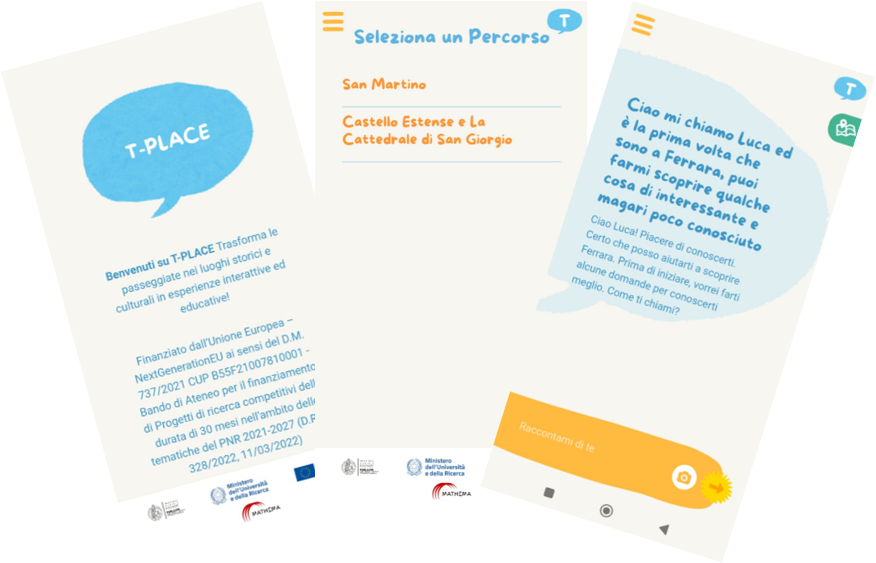
Beyond its dialogic capacity, the app integrated transmedia affordances. Users could access and create content in multiple formats – text, images, audio – and during fieldwork they documented their experience by taking photographs that were incorporated into the itinerary. This enriched the learning process by combining inquiry with production and by fostering transmedia literacies alongside territorial awareness.
Supporting the app was a digital platform that enabled teachers and educators to design customised itineraries and to upload relevant multimedia materials. Equally significant was the platform’s ability to collect and archive user interaction logs. These traces could later be analysed to support assessment, stimulate reflection, or generate narrative restitutions. In the context of the workshop, this function proved particularly valuable, as it offered authentic evidence of how participants engaged with the AI during their exploration.
Ultimately, rather than providing a definitive validation, this trial marked the beginning of a longer process of refinement, offering insights into how a Socratic AI tool can be integrated into media education practices for territorial learning.
2.4. Methodology and data collection
To address the two research questions, the study adopted a mixed-methods approach combining quantitative and qualitative evidence. The main data source was a structured questionnaire comprising 50 items. The first ten collected background information and feedback on the instrument itself, while items Q11–Q50 explored the dimensions related to usability, educational value and transferability. The questionnaire included both closed-ended items, analysed through descriptive statistics and open-ended questions, qualitatively examined to identify recurrent themes and main findings emerging from participants’ reflections.
For RQ1 – How did participants evaluate the educational tools in terms of (a) usability and (b) educational value, both during the design and in-field experience? – data were drawn primarily from the questionnaire, designed by the authors, complemented by the interaction logs automatically recorded by the app.
The questionnaire investigated three main dimensions:
1. Educational design (teachers’ perspective): clarity, usefulness and ease of use of the educational design template;
2. Acceptance of the app (students’ perspective): intuitiveness, clarity of instructions, navigation and technical reliability;
3. Educational significance in the field (students’ perspective): the extent to which the app effectively connected digital information with the physical environment.
Alongside the quantitative ratings, open-ended questions invited participants to comment on perceived advantages, limitations and possible improvements. The interaction logs served as complementary, illustrative evidence of how users engaged in AI-guided questioning during exploration but were not included in the statistical or thematic analysis.
For RQ2 – Which elements of the experimented approach were deemed transferable to everyday educational practice? – evidence was again drawn mainly from the questionnaire, particularly from its final open-ended section (Q46–Q50) and from the Net Promoter Score (NPS) item, used as a concise indicator of overall satisfaction and willingness to recommend the tools. Additional artefacts produced during the workshop, such as the design templates and StoryMaps, were considered supportive materials. They provided contextual insight and helped to interpret participants’ perceptions, but they were not systematically coded or subjected to separate analysis.
This configuration ensured methodological coherence while maintaining analytical focus. The questionnaire provided the primary quantitative and qualitative evidence addressing both research questions, whereas the supplementary outputs (templates, StoryMaps, interaction logs) functioned as triangulating sources that confirmed and contextualised the main findings within the broader learning process.
3.1. Overview of empirical materials and sources of evidence
The empirical analysis presented in this section draws on a rich corpus of materials generated during the workshop, encompassing both tangible artefacts and process-related traces. These elements collectively provided the foundation for addressing the two research questions, allowing the study to link users’ perceptions with the design practices and learning dynamics observed in the field. Each type of material corresponded to a distinct phase of the activity – planning, exploration and reflection – embodying both educational and research value.
The first set of sources consisted of the educational design templates elaborated by the working groups during the planning sessions. Structured around target audiences, learning objectives, activities, content elements and references, the templates guided participants in the creation of short territorial itineraries to be experienced through the T-PLACE app. By requiring teams to articulate pedagogical intentions and translate them into operational designs, these grids acted simultaneously as planning instruments and reflective artefacts. They revealed the reasoning processes behind each itinerary and made explicit how participants conceptualised the relationship between digital mediation and territorial education.
The second group of materials derived from the exploration routes carried out in the city of Ferrara. Each team experienced the itinerary designed by another group, engaging with the app’s Socratic questioning in real environments and responding to its prompts through observation, interpretation and dialogue. This cross-exchange mechanism created authentic inquiry conditions in which participants, acting as learners, encountered unfamiliar spaces while interacting with AI-guided scaffolding. During these activities, the system automatically generated interaction logs recording user inputs and AI responses. Although these traces are not analysed in depth in the present section, they represent a valuable source for contextual understanding and a potential dataset for future research on dialogic learning and metacognitive prompting in outdoor educational contexts.
The StoryMaps developed in the final restitution phase constituted the most visible and communicative outcomes of the process. Each digital narrative combined geographical locations, textual explanations, images and short commentaries, forming a transmedia representation of the itineraries. Beyond their documentary function, these artefacts played a crucial pedagogical role: they stimulated group discussion, fostered comparison of perspectives and enabled collective meta-reflection on the experience. Through this multimodal storytelling, participants reinterpreted their explorations and transformed them into shareable resources for teaching and learning. This dimension resonates particularly with RQ2, illustrating how transmedia storytelling can function as a bridge between experimental practice and everyday educational contexts.
Complementing these qualitative sources were the questionnaire responses, which provided the main quantitative and qualitative data for evaluating usability, educational value and perceived transferability. The questionnaire thus constituted the core analytical instrument of the study, while the other materials – templates, StoryMaps and interaction logs – served primarily as triangulating and interpretive supports, enriching the contextual understanding of participants’ experiences.
In summary, the combination of structured data and creative outputs enabled a comprehensive reading of the workshop as both an instructional experiment and a field of inquiry. The following sections build on this corpus to examine, first, participants’ evaluations of the tools and, second, the perceived transferability of the approach to everyday educational practice.
3.2. Research Question 1: How did participants evaluate the educational tools in terms of (a) usability and (b) educational value, both during the design and in-field experience?
Before analysing the quantitative and qualitative outcomes, it is important to recall that all participants alternated between two complementary roles during the workshop. Each acted both as a teacher, responsible for designing educational itineraries and structuring objectives, and as a student, experiencing in situ the paths created by others through the T-PLACE app. This dual perspective was central to the evaluation process: it enabled participants to assess the tools not only in terms of technical usability and pedagogical clarity, but also through the lens of authentic learning experience. Consequently, the results reported below should be read as a synthesis of both viewpoints rather than as separate datasets.
Usability and acceptance of the app
In their student role, participants assessed the T-PLACE app in terms of intuitiveness, navigation and technical performance. The overall evaluation (Q11–Q15) was positive (M = 4.11; SD = 0.99), confirming that the prototype was functional and accessible despite its experimental status. The linear navigation structure and the clarity of prompts were appreciated, though several participants noted that the initial familiarisation required some additional effort. A few reported minor issues – occasional delays in page loading or unstable connectivity – but these did not substantially affect task completion. The app was therefore perceived as a reliable companion rather than a barrier to exploration. Comments suggested that its guided questioning kept users focused and oriented during fieldwork, though some expressed a desire for greater personalisation and a more distinctive conversational tone from the AI.
| Dimension assessed | Corresponding items | Mean (M) | SD | Description |
|---|---|---|---|---|
| App usability and acceptance - intuitiveness, navigation, reliability | Q11–Q15 | 4.11 | 0.99 | Prototype considered functional and accessible, with minor technical issues. |
| Educational design template - clarity, usefulness, ease of use | Q16–Q39 | 4.5 - 4.6 | 0.78 | Structure perceived as logical and coherent; most valued aspect was usefulness (M = 4.63). |
| Educational significance in the field - link between digital and physical environment | Q41 | 3.60 | 0.75 | Experience promoted reflection and discovery, though occasionally hindered by contextual barriers. |
Evaluation of the educational design template
When acting in the teacher role, participants rated the design template very positively across all three dimensions – clarity (Q16–Q23), usefulness (Q24–Q31) and ease of use (Q32–Q39). Mean scores ranged between 4.5 and 4.6 on a five-point scale, with usefulness obtaining the highest ratings (M = 4.63; SD = 0.78). Respondents found the structure of the template logical and coherent, particularly appreciating the sequence of fields guiding the formulation of learning objectives and activities. Some fields, such as those related to assessment or visibility, were perceived as more demanding, suggesting the need for additional scaffolding or examples. Qualitative comments emphasised that the template helped teachers to make their pedagogical intentions explicit and to translate them into concrete design decisions. Overall, the data indicate that the template successfully supported participants in aligning conceptual aims with practical planning while encouraging reflection on the design process itself.
Educational significance in the field
When considering the app’s role in supporting learning during real exploration, responses were slightly more varied. Participants rated the connection between digital information and physical environment (Q41) at an average of 3.6/5 (SD = 0.75). Qualitative data highlight moments of discovery and surprise, where AI prompts led users to notice details they might otherwise have overlooked – historical traces, architectural features, or social uses of space. At the same time, some noted contextual barriers such as glare on screens, background noise, or variable network coverage, which occasionally interfered with smooth interaction. Despite these constraints, participants agreed that the experience stimulated inquiry and reflection, confirming the app’s potential as a tool for situated learning.
Taken together, these results portray a coherent pattern: the design template effectively supported pedagogical planning; the app was accepted as usable and meaningful in practice; and the combination of both enabled participants – alternating between teacher and student roles – to experience the complete learning cycle from conception to implementation. The quantitative indicators are reinforced by qualitative evidence, showing that the system not only functioned technically but also fostered awareness of the interplay between design, dialogue and place-based inquiry.
3.3. Research Question 2: Which elements of the experimented approach were deemed transferable to everyday educational practice?
While the first research question focused on usability and perceived educational value, the second explored the transferability of the experimented approach to everyday teaching and training contexts.
The analysis of RQ2 relied primarily on qualitative data drawn from the open-ended questions of the user-experience questionnaire (Q46 – Q50) and from the participants’ final comments. These responses were examined through thematic analysis to identify recurring patterns related to feasibility, adaptability and perceived pedagogical value. Quantitative indicators, such as the Net Promoter Score (Q47), were used only as complementary evidence to validate general trends emerging from the qualitative findings.
Perceived transferability of the educational design template
When reflecting on their experience in the teacher role, participants reported that the educational design template could be easily integrated into ordinary lesson planning and used as a practical scaffold for structuring learning activities. Responses to Q46 (“What is the greatest advantage you see in using AI in this type of activity?”) and Q48 (“What did you appreciate most?”) indicate that teachers valued the template’s clarity and internal coherence, recognising it as a reusable framework that promotes systematic thinking and consistency across different projects. Several participants emphasised that the template could be employed not only for outdoor explorations but also for classroom-based activities, where it would help align objectives, activities and resources. A few comments suggested that adding examples or increasing flexibility in specific sections – particularly those related to assessment – could enhance its adaptability to diverse educational levels and subjects.
Transferability of the T-PLACE app
Participants also reflected on the potential of the T-PLACE app to be incorporated into regular educational practice. Open-ended responses, especially to Q46 and Q49 – Q50, reveal a generally positive attitude: users perceived the app’s interface and guided questioning as accessible and pedagogically meaningful. Teachers envisioned using it for inquiry-based learning, collaborative projects and formative assessment. Some noted that its dialogic structure could support reflection and engagement in subjects as varied as local history, civic education, or environmental studies. However, several participants highlighted technical or infrastructural prerequisites – stable connectivity, reliable devices and minor functional improvements such as the inclusion of quizzes, geolocation, or voice interaction – that would make the system more seamless in everyday teaching contexts.
Transmedia practices and StoryMaps
Among all components of the approach, StoryMaps emerged as the element most clearly perceived as transferable. Qualitative evidence from Q48 (“What did you appreciate most?”) shows that participants considered this tool already familiar in school settings and directly reusable for documenting excursions, narrating historical topics, or creating thematic portfolios. The practice of combining text, images and maps was recognised as an effective means of connecting fieldwork and classroom activities, fostering both engagement and creative communication. For many respondents, the StoryMaps represented a natural continuation of the inquiry process, transforming exploration into shareable multimodal artefacts that could easily be integrated into existing teaching routines.
Quantitative synthesis: the Net Promoter Score (Q47)
To complement the qualitative findings, the Net Promoter Score (NPS) was calculated from Q47, which asked participants how likely they would be to recommend the educational tools to colleagues (Biesok, 2021). The average rating was 8.87/10 (SD = 1.13), indicating strong overall satisfaction and perceived applicability. This high score supports the qualitative evidence suggesting that the approach was not perceived as an isolated pilot but as a feasible and appealing model for wider adoption. Comments linked this positive stance to the combination of dialogic AI, collaborative design and transmedia restitution, which together made the learning experience coherent and replicable.
In summary, the qualitative analysis demonstrates that participants perceived the T-PLACE approach as both innovative and feasible. The design template provided a structured entry point for planning, the app offered an engaging means of exploration and the transmedia restitution enabled reflection and communication of results. These insights, derived mainly from the open-ended responses (Q46 – Q50), reveal that participants’ dual experience – as designers and learners – was instrumental in perceiving the model as realistic and adaptable. The consistently high NPS further supports this interpretation, highlighting the potential scalability of the approach across diverse educational contexts.
Overall, the findings outlined above provide a consistent view of how participants experienced the T-Place approach, revealing both its educational strengths and the conditions required for its wider adoption. These considerations frame the discussion that follows, which revisits the research questions in light of the theoretical perspectives introduced earlier. The experience also exemplifies a form of media education in action, where learners engage critically with an algorithmic medium, reflecting on how technological mediation shapes inquiry and meaning-making.
Revisiting the research questions
The results provide a coherent picture of how participants perceived the potential of the T-PLACE approach.
In relation to RQ1, data show that both the educational design template and the app were evaluated as usable, pedagogically meaningful and mutually reinforcing. The dual role of participants – as teachers and students – proved crucial, as it allowed them to experience the whole cycle of design, enactment and reflection.
For RQ2, qualitative evidence from the open-ended responses indicated that the model was regarded as transferable to everyday educational practice. Participants recognised its feasibility within ordinary school routines, particularly through the reusability of the template and the familiar nature of the transmedia component.
The Socratic use of AI and its pedagogical implications
Findings confirm that the pedagogical strength of AI does not lie in its ability to provide answers, but in its capacity to sustain questioning and reflection. This aligns with the literature on Socratic tutoring and intelligent tutoring systems (VanLehn, 2011; Degen, 2025; Favero et al., 2025).
Participants valued the app’s dialogic prompts as tools for inquiry and self-explanation, even when they perceived the chatbot’s tone as overly neutral. Such neutrality, while sometimes limiting engagement, also exposed users to a reflective stance in which meaning was negotiated rather than delivered.
In this sense, the workshop validated the idea – already implicit in studies on scaffolding and metacognition – that AI can act as a metacognitive partner, prompting learners to articulate reasoning and confront uncertainty rather than automating solutions. The Socratic mode thus emerges as a viable pedagogical model for AI-assisted learning, provided that technical reliability and conversational depth continue to evolve.
Transmedia learning and transferability
The transmedia dimension of the approach also proved decisive. The production of StoryMaps demonstrated how digital storytelling can transform exploration into communication and reflection. This finding resonates with previous work on media education and transmedia learning (Tombleson, 2024; Hobbs & Jensen, 2009; Lousberg et al., 2019), which emphasises the educational value of creating artefacts that bridge situated inquiry and classroom discussion.
Participants’ recognition of StoryMaps as the most easily transferable component suggests that transmedia practices can serve as an operational bridge between innovation and continuity: they are technologically simple, pedagogically rich and culturally familiar to teachers.
In this regard, the T-PLACE model shows how dialogic AI and transmedia storytelling can coexist within a single framework. AI fosters reflection in action while transmedia artefacts ensure reflection on action reinforcing continuity between design, experience and restitution.
Implications for research and practice
The pilot confirms that the integration of Socratic AI and transmedia storytelling can enhance inquiry-based and place-based education by supporting processes of interpretation and participation. For practitioners, the approach offers a scalable method for connecting local exploration with reflective and communicative tasks. For researchers, it provides a field-tested model for studying the interaction between generative AI and media-education pedagogies. In a broader sense, the experiment suggests that AI can become an instrument of cultural mediation rather than automation, reshaping how educators and learners engage with the territory as a shared cognitive and civic space.
5. Limitations and further perspectives
Several limitations emerged during the pilot. First, the sample size was small and composed mainly of users already competent with digital technologies. While this ensured a critical evaluation of the tools, it reduced the possibility of observing how less digitally confident users might respond. Second, the prototype nature of the app exposed vulnerabilities: connectivity issues, occasional slow loading and the absence of certain features not yet implemented (e.g., quizzes, geolocation, or voice interaction) were repeatedly mentioned as barriers. Such shortcomings did not invalidate the experience but constrained its fluidity and sometimes shifted attention from the educational task to the technical environment.
On the qualitative side, participants appreciated the potential of AI dialogue to sustain engagement and stimulate reflection, yet some noted that the style of the chatbot felt too neutral or insufficiently tailored to the context. This indicates that the quality of interaction is as crucial as the structural design of the tool. Moreover, while the production of transmedia artefacts was valued as a moment of synthesis and reflection, participants suggested the need for clearer scaffolding in certain parts of the design template, especially when dealing with assessment elements or complex objectives.
Future developments should therefore focus on three directions. First, broader testing with heterogeneous groups of teachers, educators and learners, to validate replicability across different educational settings. Second, technical refinement to guarantee stability and to incorporate missing functionalities that users consider essential for everyday practice. Third, enhancement of the transmedia dimension, ensuring that AI dialogue consistently feeds into outputs that can be discussed, compared and reused in ordinary teaching. Future iterations could integrate focus groups or structured interviews to deepen the understanding of users’ reflective processes.
The workshop confirmed that a Socratic use of AI, combined with transmedia storytelling, can enrich place-based and media education. Within the limits of a pilot, the T-PLACE app showed its potential to foster inquiry, reflection and collaborative meaning-making, while StoryMaps provided concrete outputs that transformed exploration into resources for dialogue and teaching. Beyond technical refinements, the experience points to a broader lesson: when technology is framed as a companion rather than a provider, it can support educators in cultivating practices of participation, interpretation and shared learning.
The T-Place Project is funded by the European Union – NextGenerationEU under Ministerial Decree 737/2021, CUP B55F21007810001 – University Call for the funding of 30-month competitive research projects within the framework of the PNR 2021-2027 themes (Regulation No. 328/2022, 11 March 2022).


Agnew, J. (2011). Space and place. In J. Agnew & D. Livingstone (Eds.), The SAGE handbook of geographical knowledge (pp. 316–330). SAGE.
Biesok, G., & Wyród-Wróbel, J. (2021). Net Promoters Score (NPS) and its relation to other marketing customer satisfaction measures. Communications of International Proceedings, 37MKT, Article ID 3751321. https://ibimapublishing.com/p-articles/37MKT/2021/3751321/
Brown, J. S., Collins, A., & Duguid, P. (1989). Situated cognition and the culture of learning. Educational Researcher, 18(1), 32–42. https://doi.org/10.3102/0013189X018001032
Collins, A., & Stevens, A. L. (1982). Goals and strategies of inquiry teachers. In R. Glaser (Ed.), Advances in instructional psychology (Vol. 2, pp. 65–119). Hillsdale, NJ: Lawrence Erlbaum Associates.
Costa, R. D. G., & Andrade, I. E. (2023). Territory as a social construction. História, Ciências, Saúde – Manguinhos, 30(Suppl. 2), e2024024. https://doi.org/10.1590/S0104-59702024000100024en
Crompton, H., & Burke, D. (2024). The educational affordances and challenges of ChatGPT: State of the field. TechTrends, 68(4), 380–392. https://doi.org/10.1007/s11528-024-00939-0
Degen, B. (2025). Resurrecting Socrates in the Age of AI: A study protocol for evaluating a Socratic tutor to support research question development in higher education. arXiv. https://doi.org/10.48550/arXiv.2504.06294
Dillenbourg, P. (Ed.). (1999). Collaborative learning: Cognitive and computational approaches. Elsevier.
Hobbs, R., & Jensen, A. (2009). The past, present, and future of media literacy education. Journal of Media Literacy Education, 1(1), 1–11.
Favero, L., Pérez-Ortiz, J. A., Käser, T., & Oliver, N. (2025). Enhancing critical thinking in education by means of a Socratic chatbot. In F. Bellas & O. Fontenla-Romero (Eds.), AI in Education and Educational Research (Communications in Computer and Information Science, Vol. 2519, pp. 17–32). Springer. https://doi.org/10.1007/978-3-031-93409-4_2
Garzón, J., Patiño, E., & Marulanda, C. (2025). Systematic review of artificial intelligence in education: Trends, benefits, and challenges. Multimodal Technologies and Interaction, 9(8), 84. https://doi.org/10.3390/mti9080084
Giorda, C., & Puttilli, M. (Eds.). (2011). Educare al territorio, educare il territorio: Geografia per la formazione. Carocci.
Guo, F., Zhang, L., Shi, T., & Coates, H. (2025). Whether and When Could Generative AI Improve College Student Learning Engagement?. Behavioral sciences (Basel, Switzerland), 15(8), 1011. https://doi.org/10.3390/bs15081011
Hilliger, I., Pérez-Sanagustín, M., Villalobos, E., Ferreira, R., & González, C. (2025). Scaffolding learning scenarios with a Socratic chatbot: Insights from educators. In I. Hilliger, M. Pérez-Sanagustín, E. Villalobos, R. Ferreira, & C. González (Eds.), Two decades of TEL: From lessons learnt to challenges ahead (Lecture Notes in Computer Science, vol. 16064, pp. 155-161). Springer.
Kaldaras, L., et al. (2024). Employing technology-enhanced feedback and scaffolding to improve learning trajectories. STEM Education Journal (Open Access). https://stemeducationjournal.springeropen.com/articles/10.1186/s40594-024-00490-7
Lousberg, L., Rooij, R., Jansen, S., van Dooren, E., Heintz, J., & van der Zaag, E. (2019). Reflection in design education. International Journal of Technology and Design Education, 30, 885–897. https://doi.org/10.1007/s10798-019-09532-6
Luzzi, D., & Cuomo, S. (2025). Strumenti e tecnologie per la didattica del territorio. In M. Ranieri, G. Tucci, & M. Azzari (a cura di), Educazione, territorio e patrimonio culturale: Strumenti innovativi per la conoscenza, la documentazione e la formazione (pp. 11-38). Pensa Multimedia.
Mazari, N. (2025). Building Metacognitive Skills with AI: Using AI Tools to Help Learners Reflect on Their Learning Process. RHS-Revista Humanismo y Sociedad. 13. 1-20. https://doi.org/10.22209/rhs.v13n1a04
Merschdorf, H., & Blaschke, T. (2018). Revisiting the role of place in geographic information science. ISPRS International Journal of Geo-Information, 7(9), 364. https://doi.org/10.3390/ijgi7090364
National Association for Media Literacy Education. (2023). Core principles of media literacy education.
Ogunleye, B., Adepoju, O., & Chen, H. (2024). A systematic review of generative AI for teaching and learning in higher education. Education Sciences, 14(6), 636. https://doi.org/10.3390/educsci14060636
Pachler, N., Bachmair, B., & Cook, J. (2010). Mobile learning: Structures, agency, practices. Springer.
Papert, S. (1980). Mindstorms: Children, computers, and powerful ideas. New York, NY: Basic Books.
Persico, D., Pozzi, F., Anastopoulou, S., Conole, G., Craft, B., Dimitriadis, Y., Hernández-Leo, D., Kali, Y., Mor, Y., Pérez-Sanagustín, M., & Walmsley, H. (2013). Learning design Rashomon I: Supporting the design of one lesson through different approaches. Research in Learning Technology, 21(Suppl. 1), Article 20224. https://doi.org/10.3402/rlt.v21i0.20224
Qian, Y. (2025). Prompt Engineering in Education: A Systematic Review of Approaches and Educational Applications. Journal of Educational Computing Research, 0(0). https://doi.org/10.1177/07356331251365189
Rajala, K., Sorice, M. G., & Thomas, V. A. (2020). The meaning(s) of place: Identifying the structure of sense of place across a social–ecological landscape. People and Nature, 2(3), 718–733. https://doi.org/10.1002/pan3.10112
Ranieri, M., Pieri, M. (2014). Mobile learning. Dimensioni, teoriche, modelli didattici, scenari applicativi. Milano: Edizioni Unicopli.
Ranieri, M., Tucci, G., Azzari, M., Parisi, E. I., & Cuomo, S. (2023). A multidimensional model for place-based education through a cross-media approach and new technologies: The T-Place project. The International Archives of the Photogrammetry, Remote Sensing and Spatial Information Sciences, XLVIII-M-2-2023, 1279–1285. https://doi.org/10.5194/isprs-archives-XLVIII-M-2-2023-1279-2023
Ranieri, M., Tucci, G., & Azzari, M. (2025). Educazione, territorio e patrimonio culturale: Strumenti innovativi per la conoscenza, la documentazione e la formazione. Lecce, Italy: Pensa Multimedia.
Scippo, S., Luzzi, D., Cuomo, S., & Ranieri, M. (2024). Education to territory with extended reality (XR): An overview. In A. Luigini (Ed.), Proceedings of the 2nd International and Interdisciplinary Conference on Digital Environments for Education, Arts and Heritage: EARTH 2023 (pp. 26–35). Springer. https://doi.org/10.1007/978-3-031-73823-4
Stanton, J. D., Sebesta, A. J., & Dunlosky, J. (2021). Fostering metacognition to support student learning and performance. CBE–Life Sciences Education, 20(2), fe3. https://doi.org/10.1187/cbe.20-12-0289
Storey, V. C., Yue, W. T., & Zhao, J. L. (2025). Generative artificial intelligence: Evolving technology, growing societal impact, and opportunities for information systems research. Information Systems Frontiers. Advance online publication. https://doi.org/10.1007/s10796-025-10581-7
Teixeira de Melo, A., Renault, L., Caves, L. S. D., Garnett, P., Lopes, P. D., Ribeiro, R., & Santos, F. (2025). An AI tool for scaffolding complex thinking: Challenges and solutions in developing an LLM prompt protocol suite. Cognition, Technology & Work. Advance online publication. https://doi.org/10.1007/s10111-025-00817-6
Tombleson, B. (2024). Transmedia learning: A literature review. Technology, Pedagogy and Education, 33(2), 255–269. https://doi.org/10.1080/1475939X.2024.2310681
VanLehn, K. (2011). The relative effectiveness of human tutoring, intelligent tutoring systems, and other tutoring systems. Educational Psychologist, 46(4), 197–221. https://doi.org/10.1080/00461520.2011.611369
Vygotsky, L. S. (1978). Mind in society: The development of higher psychological processes (M. Cole, V. John-Steiner, S. Scribner, & E. Souberman, Eds.; A. R. Luria, M. Lopez-Morillas, & M. Cole, Trans., with J. V. Wertsch). Harvard University Press
Wang, S., Wang, F., Zhu, Z., Wang, J., Tran, T., & Du, Z. (2024). Artificial intelligence in education: A systematic literature review. Expert Systems with Applications, 252(Part A), 124167. https://doi.org/10.1016/j.eswa.2024.124167
Yan, L., Martinez-Maldonado, R., Jin, Y., Echeverria, V., Milesi, M., Fan, J., Zhao, L., Alfredo, R., Li, X., & Gašević, D. (2025). The effects of generative AI agents and scaffolding on enhancing students’ comprehension of visual learning analytics. Computers & Education, 234, 105322. https://doi.org/10.1016/j.compedu.2025.105322
1 Although the authors jointly conceived both the workshop activities and the present study, specific contributions were as follows: S. Cuomo authored Sections 1, 2.1, 2.2, 2.4, 4; G. Biagini authored the Section 3; F. Gracci authored Sections 2.3 and 5
2 The T-Place Project is an interdepartmental initiative of the University of Florence, coordinated by Prof. M. Ranieri and funded by the European Union – NextGenerationEU under Ministerial Decree 737/2021, CUP B55F21007810001 (www.t-place.unifi.it)