https://doi.org/10.36253/me-19935
Received: February, 2026; Accepted: April, 2026; Published: May, 2026
Generative AI in the classroom: A TPACK-based instructional pathway in behavioral economics
Intelligenza artificiale generativa in classe: un percorso didattico basato sul modello TPACK nell’ambito dell’economia comportamentale
Istituto di Studi sul Mediterraneo del Consiglio Nazionale delle Ricerche di Palermo, Italy
Libera Università Maria Ss. Assunta, Dipartimento di Giurisprudenza, Economia e Comunicazione, Palermo, Italy
stefaniabadiglio@cnr.it; luciano.seta@cnr.it
*Corresponding author
Abstract. This article examines the methodological and practical implications of introducing Generative AI (GenAI) into upper secondary education, using the TPACK framework to foreground the interplay among teachers’ disciplinary, pedagogical, technological, and contextual knowledge. Focusing on GenAI’s linguistic interface and its tendency to be anthropomorphised, the paper argues that these affordances call for a rethinking of traditional school tasks, shifting from algorithmic and repetitive activities to tasks that elicit interpretation, argumentation, and critical reflection on AI-generated responses. On this basis, the article presents an experimental teaching pathway developed within a work-based learning programme (FSL, ex PCTO, in Italy) on behavioral economics and GenAI for students in the final years of upper secondary school, which intentionally integrates “GenAI in Education” and “GenAI literacy.” Through economic games involving simple choice situations, students are guided to compare their own behaviour with that of GenAI, thereby reflecting on human and machine biases and on the limits of rationality on both sides. In this way, the technological tool becomes an object of inquiry in its own right rather than a mere operational shortcut. The paper concludes by discussing the implications of this pathway for instructional design and teacher professional development, highlighting the need for training strategies that support critical, equitable, and pedagogically grounded uses of GenAI in school contexts.
Keywords: Generative AI, TPACK, behavioral economics, AI literacy, AI in education.
Riassunto. L’articolo esamina alcune implicazioni metodologiche e pratiche connesse all’introduzione delle Generative AI (GenAI) nella scuola secondaria di secondo grado, utilizzando il framework TPACK. Il TPACK consente di focalizzare l’attenzione sull’intreccio tra le conoscenze disciplinari, pedagogiche, tecnologiche e contestuali degli insegnanti. Dopo aver analizzato le specifiche affordance delle GenAI, con particolare riferimento all’interfaccia linguistica, alla tendenza all’antropomorfizzazione e alle relative implicazioni sui processi decisionali, sulla costruzione della fiducia epistemica e sull’attivazione di bias cognitivi, il contributo evidenzia come tali caratteristiche impongano una riconsiderazione dei compiti tradizionalmente assegnati in ambito scolastico. Ne deriva la necessità di spostare il focus dalle attività prevalentemente algoritmiche e ripetitive verso compiti orientati all’interpretazione, all’argomentazione e alla riflessione critica sulle risposte generate dai sistemi di intelligenza artificiale. A partire da queste premesse teoriche, viene presentato un percorso didattico sperimentale, sviluppato nell’ambito di un FSL (ex PCTO) su economia comportamentale e GenAI rivolto a studenti degli ultimi anni delle scuole superiori, che integra in modo intenzionale GenAI in Education e GenAI literacy. Attraverso giochi economici che prevedono semplici situazioni di scelta, gli studenti sono guidati a confrontare il proprio comportamento con quello della GenAI, in questo modo sono portati a riflettere sia sui loro bias sia su quelli dell’AI, e quindi sui limiti della razionalità di entrambi. Lo strumento tecnologico diventa esso stesso oggetto di indagine, e non più una semplice scorciatoia operativa. Il contributo discute infine le implicazioni del percorso sia per la progettazione didattica sia per lo sviluppo professionale dei docenti, evidenziando la necessità di strategie formative che sostengano un uso critico, equo e fondato sulle basi pedagogiche delle GenAI nei contesti scolastici.
Parole chiave: intelligenza artificiale generativa, TPACK, economia comportamentale, alfabetizzazione all’IA, intelligenza artificiale in educazione.
Contents
An educational proposal. Behavioral economics and GenAI
Introduction
This article introduces a teaching pathway for upper secondary students that combines behavioral economics (BE) with the critical, informed use of Generative Artificial Intelligence (GenAI), emphasizing the variety of available systems.
The pathway is anchored in the TPACK framework (Mishra & Koehler, 2006), which brings into focus the dynamic among technology, pedagogy, content, and context in educational practice. The selection of both the subject matter and educational technologies is guided by a careful analysis of GenAI’s distinctive features.
GenAI, as several authors emphasize, is frequently perceived as capable of deceiving humans (Humphries, 2022; Mishra, 2023; Mishra, Warr, & Islam, 2023; Badiglio & Seta, 2025). The real-time, creative language generation in large language models (LLMs) encourages users to anthropomorphize these systems. To support critical reflection on interactions with GenAI, the instructional sequence introduces students to foundational concepts, including rationality, social preferences, norms, cognitive biases, and strategic decision-making in economic games.
Subsequently, GenAI is seen as a potential economic agent with which students engage in economic dilemmas, in its decision-making processes, and compare its strategies to those of their peers. This procedure aligns with recent experimental findings indicating that AI can often adopt strategies oriented toward fairness and cooperation more readily than human students (Badiglio et al., 2025).
The educational intervention demonstrates that attention to the interactions among technological knowledge (TK), pedagogical knowledge (TPK), content knowledge (TCK), and context (XK), as well as their intersections in TPACK, facilitates effective and engaging learning. This approach fosters a new perspective on the relationship between AI in Education (AIEd), interpreted as “educating with AI”, and AI literacy, interpreted as “educating about AI,” two complementary, inseparable dimensions. Integrating both enables the introduction of GenAI into educational settings, supporting the development of students’ cognitive, emotional, and social skills. Reflecting on the impact of Artificial Intelligence across all educational levels, from K-12 and higher education to vocational, informal, and non-formal learning, remains crucial. Although GenAI is likely to transform individuals’ engagement with knowledge and learning over time, the school environment is where early signs of these shifts are most apparent. Here, attitudes range from enthusiastic acceptance of AI to skepticism and calls for its exclusion from classrooms and lecture halls (Rosenblatt, 2023; Kishore et al., 2023; Famaye et al., 2024; Fǒsner & Aver, 2025; Rasool et al., 2025; Zhang et al., 2026). While concerns about GenAI are legitimate, they may also foster a sense of helplessness. A more productive approach is to explore ways to integrate GenAI into traditional curricula to promote higher-level skill development (Cardona et al., 2023; Uddin, 2024; Fan, 2025; Tan et al., 2025).
Current research distinguishes two main approaches in this domain. The first, termed AI literacy (Chiu & Sanusi, 2024; Yim, 2024), concerns the essential knowledge about AI that should constitute the common foundation for today’s students and citizens’ knowledge of today’s students and citizens (Tadimalla & Maher, 2025). The second, as AIEd, is the use of AI to enhance educational experiences, including personalized adaptive learning (Chiu et al., 2023). A key limitation of both perspectives is their focus on technological knowledge, overlooking the fact that technology must interact with diverse forms of knowledge and teaching practices, which shape its impacts and users’ actions (Tang et al., 2026). This challenge is particularly salient in the context of GenAI.
Some scholars (Mishra, Warr, & Islam, 2023) assert that recognizing the distinctiveness of GenAI compared to other digital technologies requires focusing on their generative and social properties: namely, the ability to produce original content in real time that seems responsive to user prompts.
According to other scholars, what characterises GenAI is its affordance, that is, the feature of presenting itself through natural-language interfaces. In this context, affordance does not refer to the set of physical characteristics of a tool that suggest how to use it, but rather the complex of action and reaction processes between the external and internal, through which the living being seeks to adapt to the environment it perceives (Badiglio & Seta, 2025). Therefore, affordance, rather than in the technology’s characteristics, lies in the interface between the technology and the user. Interaction with GenAI is mediated through a linguistic interface. This technology thus appears to possess characteristics that the user perceives as “human.” Furthermore, GenAI utilises the full power of natural language, namely its persuasive strength, semantic ambiguity, and its rootedness in social communication. During their use, the user does not need to analyse the entire environment in its complexity; instead, they define their own scope of action and, consequently, the set of desirable operations, establishing a direct link between the linguistic interface and changes in their internal state. For this reason, the user may find it difficult to distinguish what is dictated to them by the AI’s affordance from what prompted them to query the chatbot (Tang et al, 2026). The interaction thus bypasses traditional mediators, such as codes, symbols, and formal languages, and is on the same level as usual peer-to-peer communication. GenAI systems circumvent all the complications associated with the use of structured digital technologies, presenting themselves to us humans as reliable and friendly interlocutors, communicative partners, and co-workers.
In any case, the specificities of GenAI require that their use be framed within the context of learning. The TPACK framework (Mishra & Koehler, 2006) provides a useful tool for a comprehensive view of what to consider when introducing technologies into teaching and for guiding instructional design and teacher training.
In the first section, the most traditional approaches that have studied the impacts of AI on education are analysed, namely AI literacy and AI in Education, and some of their limitations are highlighted. The second section will briefly illustrate how these limitations can be overcome by considering GenAI within the TPACK framework. In the third section, it will be shown how, using the TPACK framework, an educational pathway has been designed for students in the final years of secondary school that integrates the learning of behavioral economics (BE) and, together, the critical and conscious use of GenAI. Finally, some considerations arising from teaching experience will be discussed, along with suggestions for generalising these experiences to other contexts and disciplines.
AI and education
The gradual theoretical development of the concept of AI literacy finds a natural point of continuity in the analysis of the applications of artificial intelligence in educational contexts, the so-called AI in Education (AIEd). If, in fact, AI literacy is configured as a fundamental competence for exercising informed citizenship in the algorithmic era, then AIEd represents the privileged ground where such competence is simultaneously demanded, shaped, and developed. The increasing pervasiveness of artificial intelligence across various spheres of social, economic, and cultural life has indeed led to a profound transformation in the educational sector as well, necessitating a systematic reflection on the opportunities, benefits, and critical issues associated with its adoption. From the introduction of first-generation computers onwards, the use of technology in teaching has progressively altered teaching and learning practices (Schindler et al., 2017).
Computers were initially employed as tools to support teaching, research, and administrative management, serving as educational resources similar to libraries or laboratories, and as systems for managing student information (Jones, 1985). However, with the emergence of artificial intelligence, particularly of GenAI, there has been a qualitative leap: no longer merely calculation or storage tools, but systems designed to simulate human cognitive processes, of increasingly higher order. AI has been defined as “the science and engineering of making intelligent machines” or as “a machine that behaves in a way that could be considered intelligent if it was a human being” (McCarthy, 2007), a definition that directly refers to its historical origins, when the term was coined by John McCarthy in 1956 during the Dartmouth conference.
Over the past few decades, AI has experienced exponential development, spreading on a global scale and gradually penetrating everyday life (Tegmark, 2015). The introduction of applications based on machine learning and intelligent systems has transformed numerous sectors, including education, making AI a structural component of the contemporary technological ecosystem (Zawacki-Richter et al., 2019). Although research distinguishes between forms of “weak AI”, aimed at solving specific problems, and “strong AI”, endowed with general cognitive abilities (Berker, 2018), in the current educational context, reference is mainly made to weak or “soft AI” systems, capable of performing limited tasks but not fully replicating human intelligence.
Despite concerns raised by some scholars regarding the risks associated with the development of advanced forms of AI, including potential repercussions on teachers’ employment, current applications in the educational field mainly serve as tools to support and enhance learning processes, rather than as substitutes for teachers. In this sense, promoting AI literacy becomes a prerequisite for the critical and responsible adoption of such technologies, preventing innovation from merely resulting in functional dependency or new forms of exclusion.
The literature shows how the adoption of artificial intelligence in the educational sector has taken on a particularly significant role in the so-called developed countries, especially within the context of Industry 4.0, a historical phase characterised by a profound digital transformation that has accelerated the integration of intelligent technologies into educational systems.
Although the earliest experiments date back to the ‘60s (Chassignol et al., 2018), over time AI has progressively expanded its scope (Tegmark, 2015), evolving to the point of designing intelligent educational systems capable of influencing school and university organisation (Lynch, 2018; Wogu et al., 2019). It is true that Dickson (2017) highlighted a certain slowness in the systematic adoption of AI between the late 20th and early 21st centuries; however, more recent research documents a steady advancement, facilitated by the development of virtual applications, adaptive environments, and personalised learning support systems (Carlson et al., 2018).
Among the main areas of AI application in education, the automation of administrative and assessment tasks stands out. Intelligent systems are capable of grading multiple-choice tests and, increasingly often, evaluating written assignments through Natural Language Processing (NLP) algorithms, although issues related to the reliability and fairness of automated assessment still persist (Johnson, 2019). AI is also used in student admission processes and administrative management, enabling greater organisational efficiency (Johnson, 2019; Wogu et al., 2019). Concurrently, the concept of “smart content” has developed, referring to educational materials enriched or generated via AI, capable of summarising textbooks, creating flashcards, proposing adaptive tests, and integrating multimedia materials (Faggella, 2019; Johnson, 2019). Systems like those described in the literature enable the reorganisation of content in more coherent, navigable manners, thereby promoting personalised learning experiences.
A particularly significant area is that of Intelligent Tutoring Systems (ITS), which originated from Benjamin Bloom’s studies on individualised tutoring and were developed in the ‘70s and ‘80s by integrating cognitive science and artificial intelligence algorithms to offer personalised learning pathways (Faggella, 2019; Singh et al., 2018). Although they modulate content, timing, and feedback based on the student’s characteristics, as early as the ‘90s it was evident that these systems could not fully replicate the relational dimension of human teaching (Beck et al., 1996), emphasising the importance of critical AI literacy for teachers and students.
This reflection intertwines with the transformations in higher education, characterised by an increase in enrolments and limited resources (Hollands & Tirthali, 2014; Popenici & Kerr, 2017), where tools such as MOOCs, teacherbots, and e-learning platforms have been proposed to expand access and optimise teaching (Gonçalves et al., 2016). While these innovations have raised concerns for the teaching profession (Bayne, 2015; Botrel et al., 2015), they have also generated new professional opportunities and a demand for specialised skills. The use of machine learning systems also raises issues of privacy, ethics, trust, and security, essential components of critical AI education. In any case, the utilisation of machine learning-based systems involves an increasing centrality of data, making reflection on privacy, ethics, trust, and security indispensable (Internet Society, 2017), dimensions that are integral to AI literacy.
Recent literature also proposes conceptual frameworks for classifying AI applications in education. Nguyen, for example, distinguishes between approaches of “Guidance”, “Teacher”, and “Student”, emphasising how AI can support decision-making processes, personalise learning, and enhance teachers’ capabilities. Recommendation systems for matching teachers and students have shown a significant reduction in matching attempts, suggesting an improvement in perceived compatibility (Chen et al., 2021). Similarly, the use of predictive learning analytics to identify at-risk students and activate targeted interventions has shown positive effects, especially for disadvantaged groups (Hlosta et al., 2021). The automatic generation of personalised feedback through counterfactual explanations is another example of how AI can support student self-regulation (Afzaal et al., 2021), reinforcing the metacognitive dimension already identified as a cornerstone of AI literacy (Alpindo et al., 2024, Gonsalves, 2024).
AI education is a training programme aimed at developing AI literacy, understood as a set of knowledge, attitudes and critical thinking skills. This approach integrates disciplinary and cross-cutting dimensions, promoting technical-scientific and ethical-social skills (Chiu, 2021; Ng et al., 2021). The growing attention to this topic is evidenced by national and international strategies, as well as collaborations between universities and technology companies, aimed at defining curricula and guidelines to prepare students and teachers to understand, use and critically evaluate intelligent technologies.
International literature highlights that AI literacy and AIEd are not separate areas but interconnected dimensions of a systemic transformation of education (Mills et al. 2024; Tadimalla & Maher, 2025). AI is no longer just a subject of literacy, nor a simple teaching tool, but constitutes a real environment for knowledge construction, within which learning methods, decision-making processes, assessment practices and categories of knowledge interpretation are redefined. Analysing its integration into school contexts therefore means not only evaluating its technical effectiveness, but also considering the pedagogical, cognitive and ethical conditions that make its informed use possible. AI thus becomes a space for reflection, in which students and teachers compare cognitive autonomy, algorithmic biases and responsibility in the use of technologies.
As Huang (2021) points out, education must look to the future. The growing importance of AI literacy requires a conceptual shift from the “AI in education” model, in which AI is primarily a tool to support teaching, to “education about AI”, i.e. education that focuses on AI as an object of critical understanding. This implies the design of specific content within the domain of AI, structured around three fundamental areas: knowledge in AI, impact of AI and processes in AI (Chiu, 2021, Chiu & Sanusi, 2024). It is not enough to know how to use an algorithmic system: it is necessary to understand how it works, evaluate its social and economic implications, and analyse its decision-making mechanisms.
In this context, AI is not limited to the acquisition of disciplinary content but also contributes to the development of critical and metacognitive skills (Gonsalves, 2024). It stimulates reflexivity and encourages comparative analysis of human and algorithmic decision-making, enabling the student to become a protagonist in evaluating and problematising the solutions offered by intelligent systems. AI literacy and AIEd, therefore, converge into a single educational trajectory, aimed at training citizens and professionals capable of understanding, using, and critically governing intelligent technologies.
What is lacking, however, in this way of considering the relationship between AI and education is a greater focus on the new interaction contexts opened up by GenAI. The recent emphasis on GenAI literacy recognises the need to go beyond AI literacy towards a comprehensive approach that integrates theoretical knowledge, practical skills, and deep critical reflection (Bozkurt, 2024), examining the adoption of GenAI in relation to task characteristics, pedagogical identity, institutional support, and ethical issues (Chaieb et al., 2026). To address this gap, some authors have proposed new theoretical frameworks, for example by integrating three forms of conceptual knowledge about large language models (LLMs): fundamentals, capabilities and limitations, and social impact, with students’ perceptions and theories on AI-based chatbots (Rismanchian et al., 2026). In this context, new conceptualisations of the TPACK framework have also been proposed, such as AI-TPACK (Ning et al., 2024; Max et al., 2024; Cao et al., 2026), which highlights the complex interrelations and synergistic effects of AI technology, pedagogical methods, and specific subject content in the field of education. In the following section, we will briefly analyse what this kind of approach can offer as new insights.
GenAI and the TPACK framework
The TPACK framework has had an increasing impact on teachers’ daily work over these twenty years. What characterises this approach, from the initial formulation of Pedagogical Content Knowledge (PCK) by Shulman (1986) to its extension in TPACK by Mishra and Koehler (2006), is the emphasis it places on knowledge to effectively guide educational practice. In the TPACK framework, the different dimensions of knowledge are considered pragmatic and active forms of knowing, thus echoing classical views of scholars such as Dewey (1934/1969), Schön (1983, 1987), and Perkins (1986). Knowledge is valid insofar as it is a tool, designed and adapted for a specific purpose, which education professionals can apply within their respective contexts (Mishra, Warr, & Islam, 2023). As Punya Mishra himself emphasises, the risk is now to see “the core ideas of the framework fossilized rather than something we engage with intellectually, conceptually, and practically” (Mishra, Warr, & Islam, 2023, p. 2).
The development of GenAI is an excellent test bed for understanding whether the framework still has strength and vitality, i.e. whether it is capable of providing useful guidance for making the integration of these new digital technologies into classroom contexts more effective.
Briefly, we recall the fundamental ideas of the TPACK (Seta et al., 2010; Angeli et al., 2016; Di Blas et al., 2018). Its vision can be summarised by saying that an educator who wishes to effectively adopt technology must consider three different types of knowledge, closely interconnected: technological knowledge (TK), pedagogical knowledge (PK), and content knowledge (CK), the latter related to the domain of study, and additionally, knowledge of the context (XK) within which the teaching intervention takes place. The model encourages moving beyond isolated knowledge types, but rather to consider the effect that their interaction produces in terms of new knowledge. Therefore, although each of these types of knowledge has its internal structure, from analysing how they interact with each other, new relationships emerge. For the authors, “effective integration of technology is only achieved through understanding and negotiating the relationships between these three components of knowledge. A teacher capable of negotiating these relationships demonstrates a kind of skill and experience entirely different from that of a discipline expert, a technologist, or an educator, no matter how well prepared and up-to-date they are” (Mishra and Koehler, 2006). The iconic image that best represents the idea of the framework is shown in Figure 1.
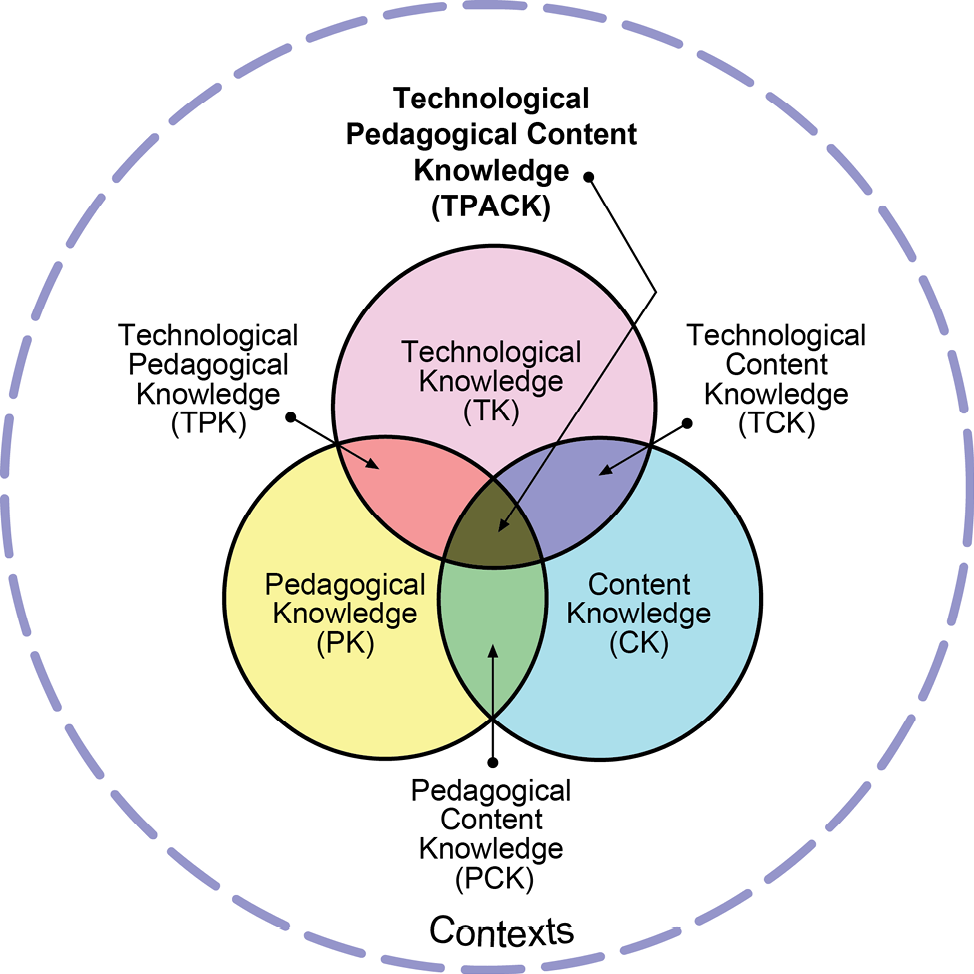
What are the most important contributions that this framework can offer in the context of GenAI?
Building on the unique characteristics of GenAI we described in the introductory section, technological knowledge (TK) must account for the dialogic nature of interaction with GenAI. It is not possible to predict in advance what using chatbots will lead to when carrying out a task, be it writing, summarising, asking and answering questions, or solving a test or problem. In this sense, assessing students’ work also poses several problems for teachers. Furthermore, as we have already observed, communication with GenAI has characteristics that make it unique, always different and emerging, similar to those of communication with human partners. This leads to attributing internal psychological states to GenAI, such as beliefs, intentions and desires (Mishra et al. 2023). It is important to encourage students to reflect on these characteristics of GenAI and to ensure that they can question these psychological dimensions transparently, which otherwise remain hidden and are therefore implicitly accepted.
Furthermore, it is necessary to address the integration between technology and pedagogy (TPK). This includes GenAI literacy and, consequently, the demand to combine theoretical knowledge with practical teaching skills. From this perspective, it is important to adopt a meta-level approach that prompts reflection while working with GenAI, considering how these systems operate, how responses are sensitive to prompting, and how they present themselves as “generative psychological agents that are now part of the classroom” (Mishra et al., 2023, p. 8). However, here we diverge from the analysis of Warr et al. (2023), or rather from Chris Dede, who encourages viewing GenAI as “alien intelligences” (Warr et al., 2023). Talking about alien intelligence can be misleading, because when we define it as alien, we admit that we have no idea what we are talking about and therefore why we should continue to call it intelligence. Moreover, this risks overlooking a series of similarities between the behaviour exhibited by GenAI and human behaviour, similarities that are the spontaneous, or “emergent”, product of training Large Language Models (LLMs) on datasets populated with human cultural artefacts. Essentially, it is forgotten that what creative and original output is produced by an LLM is the result of reworking human artefacts, not “alien” ones. Therefore, it is important to encourage students to reflect on the similarities and differences in their behaviour and that of GenAI, especially when they face decisions involving values and wisdom (Warr et al., 2023).
Regarding the interrelation between content and technology (TCK), it is important to encourage students to develop the metacognitive ability to critically reflect on responses from GenAI. Content can no longer be presented as tasks to be completed by following rules or performing repetitive, routine procedures. These tasks, due to their algorithmic nature, are where GenAI’s superiority is most evident. Such tasks would become too easy to solve with a “partner” so well equipped for this type of work. The choice of content should prompt students to question the meaning of the responses they receive and the significance of the prompts that GenAI often provides after they offer their solutions (Tang et al., 2026).
Knowledge of the context (XK) should not be overlooked either. The introduction of GenAI creates several divisions within the school context: between teachers who enthusiastically embrace them and colleagues who strenuously oppose their intrusiveness. Students who have access to paid platforms or who are more skilled in their use, and students who can only use them within the limits of free use. There will be schools that will start using GenAI systems for administrative management, evaluation and monitoring of the organisation, communication and interaction with families, and schools that will be more resistant to embracing such changes. This does not account for choices made at the school district or central administration levels regarding the use of GenAI for various education-related tasks. It therefore becomes essential that the introduction of GenAI in educational contexts be designed inclusively, avoiding the creation of new digital, cognitive, or socio-cultural divides. Unequal access to technology, differing initial skills, and varying capacities for critical use can indeed amplify existing disparities among students. It is therefore necessary to accompany the implementation of GenAI with appropriate training pathways, differentiated teaching strategies, and a constant focus on potential biases embedded in the systems, so that these tools become levers of equity rather than factors of exclusion or discrimination.
In conclusion, the TPACK approach has enabled highlighting how the peculiarities of GenAI interact with teachers’ knowledge and to incorporate these interactions to achieve a more effective teaching experience with GenAI.
In light of these considerations, we have designed a specific teaching programme for students in their final years of secondary school that combines GenAI literacy and GenAI in Education.
An educational proposal. Behavioral economics and GenAI
The idea for this educational proposal arose within a work-based learning programme (FSL, ex PCTO, in Italy) organised by Libera Università Maria Ss. Assunta (LUMSA) in Palermo (Italy), in collaboration with several secondary education institutions in the city, dedicated to behavioral economics and GenAI. The aim of the course was to present behavioral economics as an integrated set of theoretical knowledge and practical tools, capable of supporting understanding and guidance in an increasingly complex world. In this context, individual decisions cannot ignore the preferences of others, the well-being of the communities to which we belong, and, more generally, the impact on the global environment with which we are interconnected. Behavioral economics also offers an interesting perspective for evaluating GenAI, i.e. for understanding how they work and what makes them useful, but also fallacious.
From a methodological perspective, although the teaching intervention was not structured as a controlled trial in the strict sense, it was conceived with a focus on rigor, replicability, and transferability. In an experiment of this kind and in line with the proposed theoretical framework, it is appropriate to collect four types of data: 1) data describing the confidence and practices of students and teachers in the use of GenAI tools; 2) data concerning the behaviour of students and AI systems during economic interaction; 3) data verifying the competence and skills acquired regarding both economic aspects and the use of GenAI; 4) data verifying the activation of metacognitive reflection processes in students.
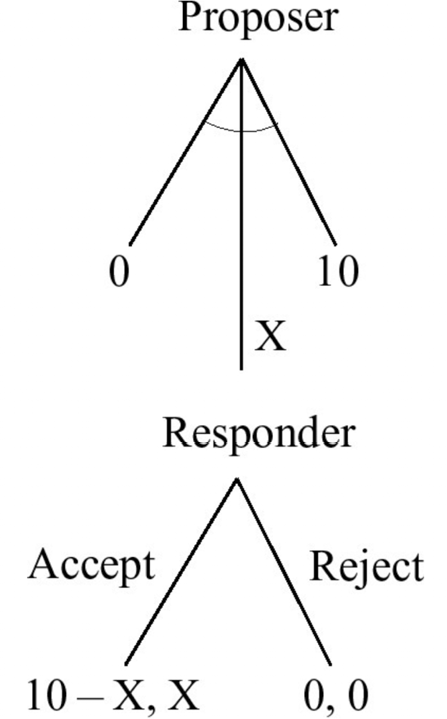
From a technological knowledge (TK) perspective, during the course, students were invited to interact with GenAI in an economic game context. Three classic economic games, usually played with human participants, were reworked to allow interaction between a human participant and a chatbot. The first game was the “Ultimatum Game” (Güth et al., 1982), in which a player, known as the proposer, is given a sum of money on the condition that they offer part of it to another player, known as the responder, whom they do not know. The proposer can decide to offer any proportion of the sum received. If the responder, who is aware of the initial sum received by the proposer whom they do not know personally, accepts the offer, then the two players keep the winnings as divided by the proposer. If the responder refuses, both lose everything. The game’s structure is shown in Figure 2.
By observing players’ behaviour in this game, well known in the field of experimental economics (van Damme et al., 2014), we can obtain a behavioral measure of fairness as a prosocial motive underlying proposers’ decisions. Furthermore, the extent to which unfair offers are rejected by respondents provides us with a simple measure of negative reciprocity, i.e., the behavioral regularity whereby people are unkind (in this case, respondents who reject unfair offers) towards those who have acted unkindly towards them (in this case, proposers who make unfair offers) (Drouvelis, 2021).
From a standard theoretical perspective, assuming individuals are rational and selfish, the situation can be resolved simply. The proposer, as the first to act, has a negotiating advantage and will obtain virtually all the gains from the transaction, leaving the respondent with the minimum possible amount. Using backward induction, the intuition behind this result is as follows: starting with the respondents’ decision, they will never reject a positive offer (assuming they are interested in maximising their income), since rejecting an offer yields zero income. Knowing this, the proposer will keep almost everything for himself, leaving the respondents with the minimum possible.
It was decided to use this game as an educational opportunity for students to interact with GenAI. Some students played the role of proposers and GenAI responded, while for other students GenAI played the role of proposer and they responded.
Beyond the results of the game, already proposed by the authors in an University context (Badiglio et al., 2024) and therefore already known, the aim is to show how GenAI behaviour was generally not comparable to human behaviour. GenAI are designed to provide positive responses to interlocutors and, in fact, even in the course of this game, they demonstrate that they do not pursue a strictly rational and utilitarian strategy. In the role of proposer, its offers are generally more generous, ranging between 40% and 60% of the initial endowment; in the role of respondent, it tends to accept any offer received, showing almost no negative reciprocity. This behaviour is particularly interesting in showing students what to expect from GenAI. The particularly benevolent and accommodating behaviour they display during conversational exchanges is simply the result of deliberate programming and does not indicate any particular preference for the interlocutor.
Moving on to the level of interaction between pedagogical and technological knowledge (TPK), students were asked to play with the prompt to make the GenAI selfish. The students thus had the opportunity to try different prompting strategies, beginning to reflect on how to guide the GenAI’s responses by carefully manipulating the prompt.
For example, some students experimented with how to influence the responses of the GenAI through prompt formulation. In particular, they included references to historical or literary figures known for selfish or greedy behaviors, observing that the machine tended to replicate such attitudes in its outputs. This experiment highlighted not only the AI’s sensitivity to contextual cues in the prompt but also how its responses can reflect stereotypes or characteristics attributed to the reference models, providing students with a concrete opportunity to reflect on the dynamics of influence, bias, and responsibility in interactions with artificial intelligence systems.
Providing, alongside the request to perform a task, one or more examples of a solution is a well-known prompting strategy that students discovered independently during the educational interaction.
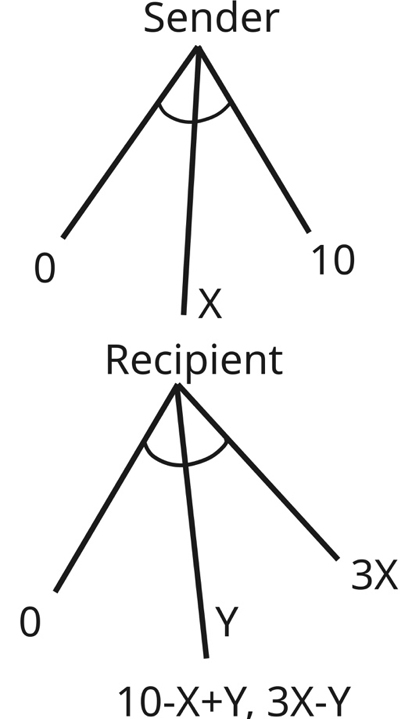
The second game proposed is the Trust Game. The trust game is a sequential game between two players: the sender and the recipient. The sender (i.e., the first player) must decide how much of his/her experimental endowment (10 dollars, in the model by Berg et al. (1995)) to transfer to an anonymous partner, the recipient (i.e., the second player). The experimenter triples the amount transferred from the sender to the recipient. Subsequently, the recipient must decide how much to return to the sender from the tripled account. Any amount not returned by the recipient remains their property. By observing the outcome of this simple Trust Game, we obtain a measure of trust (i.e., how much money the sender offers to the recipient) and reliability (an indicator of positive reciprocity, i.e., how much money the recipient returns to the sender). In this context, trust is a risky action, as it assumes that, to be repaid, the recipient must return it to the sender. The structure of the trust game is illustrated in Figure 3.
Using backward induction and assuming that both the sender and the recipient are only interested in maximising their own monetary gain, the sender will not send money to the recipient and, in the event that they do, the recipient will not transfer anything back. This means that both players will keep their initial endowment and there will be neither trust nor positive reciprocity if both are selfish.
In this case as well, the aim was to familiarise students with the GenAI’s behaviors, so the game was repeated with the GenAI both as sender and recipient. The behaviour exhibited by the GenAI appears quite different from that of the rational player and the students. Generally, as a sender, the amounts sent are more generous than those sent by human players, and as a recipient, it tends to return a sum that balances the distribution of gains between the two players.
Finally, the Public Good Game was proposed. The structure of this game is very simple: the subjects randomly form groups of n members, each with a fixed endowment of X tokens. Their task is to decide how to divide the fixed endowment between their private account and a public account. Allocating tokens to the private account benefits only the individual member, while allocating to the public account benefits the other members of the group. In fact, the overall allocation of the public account is doubled and redistributed fairly among all members of the group, regardless of how much each has contributed.
In order to capture the tension between personal gains and collective objectives, the game parameters are such that a rational and selfish group member will always try to take advantage of it (that is, contribute zero tokens to the public account). On the other hand, if all members of the group contribute their entire endowment to the public account, the well-being of the group is maximised.. The behaviour of players in this game is linked to their willingness to contribute to the public good, and therefore to cooperation, while at the opposite extreme, we have the behaviour of the so-called free-rider, that is, someone who, without contributing to the public account, will still benefit from the sharing of the common resource. The reintroduction of this game with the GenAI aimed to show the student that the GenAI never exhibits free-rider behaviour, but tends towards cooperation.
In all three cases studied, behaviors of the GenAI are observed that deviate from economic rationality and are good examples of how the paradigm of classical economics is partial and insufficient. GenAI show social preferences more in line with the predictions of behavioral economics, where values such as altruism, fairness, positive reciprocity, and cooperation come into play in determining the choices of limited rationality economic agents, which include us humans and also GenAI.
Therefore, if we consider the interaction between technological knowledge and educational content (TCK), the teaching experience has allowed students to engage with the themes of behavioral economics through the use of technology, involving their critical thinking and metacognitive knowledge. The knowledge of the context (XK) of the experience has necessarily played a role in its success. The students were involved, within a university framework, in teaching that started from a scientific research problem: understanding the behaviour of GenAI as economic agents engaged in strategic games. In this context, the use of technology appeared as a fundamental part of the research and not as a cognitive shortcut, useful for avoiding boring and repetitive tasks.
Conclusions
This work, starting from an example of teaching based on a rigorous theoretical framework, aims to suggest the necessity of opening up to an actual dialogue between technological, pedagogical, and scientific knowledge, in order to enable teachers to improve their professionalism and to offer students increasingly rich and suitable educational experiences for the world of work. The chosen theoretical framework was TPACK, the technology we focused on was the one that has been most changing the educational context in recent years, namely GenAI, and the scientific knowledge was that of behavioral economics.
In conclusion, we can say that the adoption of the TPACK framework has proven to be a particularly useful theoretical perspective for analysing the interactions between GenAI and the various dimensions of a teacher’s knowledge, from disciplinary expertise to pedagogical choices, up to contextual understanding. The analysis shows that one cannot simply consider the impact of this new technology within pre-existing teaching practices: the specific affordances of GenAI, and in particular the linguistic interface, the ability to generate responses that are always different and in real time, and the consequent tendency towards anthropomorphism, must lead to a redefinition of both the methods of didactic mediation and the strategies through which students engage with the content.
The proposed approach suggests at least three significant implications for instructional design. Firstly, in terms of the interrelations between disciplinary content and technology (TCK), there is a need to move away from purely algorithmic or repetitive tasks, where the operational superiority of GenAI makes the activity of little significance for the student, in favour of activities that stimulate interpretation, argumentation, critical evaluation, and metacognitive reflection on the responses generated by AI tools. Secondly, in terms of pedagogical choices (TPK), teachers are called to design learning environments where GenAI becomes “epistemic objects” with which to engage in dialogue and that can be interrogated, moving beyond the view of these technologies as mere automation tools.
To do this, it is useful to explicitly outline the strategies used to formulate requests, encourage comparison between multiple solutions, emphasise the identification of errors and biases, and open students to ongoing negotiation about the meaning of the responses and suggestions received. Finally, in terms of contextual knowledge (XK), the introduction of GenAI makes visible new lines of fracture, for example between schools and educational systems, between teachers more or less open to innovation, and between students with different levels of access and skills in using technology, raising issues of equity, inclusion, and academic integrity.
The educational proposal on behavioral economics and GenAI, developed within the framework of a work-based learning programme (FSL, ex PCTO) aimed at students in the final years of secondary school, represents an exemplary case of intentional integration between “educating with AI” (AI in Education) and “educating about AI” (AI literacy). Working with simple economic games and decision-making dilemmas has enabled students to consider GenAI as an economic agent with which to engage, highlighting similarities and differences between human choices and machine decisions, thereby fostering a more critical understanding of bounded rationality, which characterises both humans and artificial systems, and the bias mechanisms that influence decisions. At the same time, designing activities that require discussion, justification, and problematising of the solutions offered by GenAI has made possible a reflective and conscious use of these tools, in line with the broader aims of contemporary GenAI literacy.
The results of this experience suggest at least two directions for development. On one hand, it is important to deepen, also through empirical research on larger samples and in different contexts, the impact of TPACK-informed pathways that simultaneously integrate GenAI literacy and GenAI in Education, verifying their effects on students’ disciplinary, metacognitive, and socio-emotional skills. On the other hand, further reflection is needed on teachers’ professional development: in order for GenAI to become opportunities for cognitive and ethical growth, rather than mere operational shortcuts or new sources of inequality, it is essential that teachers are supported in rethinking not only the tools but also their own models of teaching, assessment, and educational relationships.
In this sense, the intertwining of TPACK, behavioral economics, and GenAI, outlined in this contribution, can represent a first step towards more conscious pedagogical design, capable of transforming the presence of GenAI in the classroom into an opportunity for pedagogical innovation and the strengthening of students’ critical skills.
Starting from this experience, other similar activities can be devised, for example on cognitive biases, which open an interesting field of investigation to better understand certain behaviors of GenAI and thus can serve as a basis for the development of important experiments by students. In the field of STEAM disciplines, the framework proposed here can offer guidance for designing innovative educational experiences that compare the problem-solving methods of GenAI with the procedures adopted by expert solvers. The work thus aims to be a theoretical and methodological contribution to establishing teaching and training pathways for teachers interested in integrating GenAI into their disciplinary curricula.
References
Afzaal, M., Nouri, J., Zia, A., Papapetrou, U.F., Wu, Y., Li, X., & Weegar, R. (2021). Generation of Automatic Data-Driven Feedback to Students Using Explainable Machine Learning. In: Roll, I., McNamara, D., Sosnovsky, S., Luckin, R., Dimitrova, V. (eds) Artificial Intelligence in Education. AIED 2021. Lecture Notes in Computer Science, vol 12749. Springer, Cham. https://10.1007/978-3-030-78270-2_6
Alpindo, O., Istiyono, E., Widihastuti, & Andriyanti, E. (2024). Can Critical-Thinking Skills Be Measured by Analyzing Metacognition? Journal of Teaching and Learning, 18(2), 194–211. https://10.22329/jtl.v18i2.8813
Angeli, C., Valanides, N., & Christodoulou, A. (2016). Theoretical considerations of technological pedagogical content knowledge. In Handbook of technological pedagogical content knowledge (TPACK) for educators (pp. 11-32). Routledge.
Badiglio, S., Chiazzese, G., Pipitone, V., & Seta, L. (2024). ChatGPT in Economic Games: Experimenting with Human-AI Interaction. International Journal on E-Learning, 23(3), 285-303. https://10.70725/132673mzivtr
Badiglio, S., & Luciano, S. (2025). Artificial Intelligence in Higher Education: Potential, Challenges, and Future Perspectives, in Proceedings of SITE 2025. Orlando, FL, USA: Association for the Advancement of Computing in Education (AACE), 532–40.
Bayne, S. (2015). Teacherbot: interventions in automated teaching. Teaching in Higher Education Critical Perspective, 20(4).
Beck, J., Stern, M., & Haugsjaa, E. (1996). Applications of AI in education. Crossroads, 3(1), 11–15. https://10.1145/332148.332153
Berg, J., Dickhaut, J., & McCabe, K. (1995). Trust, reciprocity, and social history. Games and Economic Behavior, 10: 122‒42.
Berker, B. A. (2018). Artificial Intelligence in Education. Academic Press.
Botrel, L., Holz, E. M., & Kübler, A. (2015). Brain Painting V2: evaluation of P300-based brain-computer interface for creative expression by an end-user following the user-centered design. Brain-Computer Interfaces, 2(2–3).
Bozkurt, A. (2024). Why Generative AI Literacy, Why Now and Why It Matters in the Educational Landscape? Kings, Queens and GenAI Dragons. Open Praxis, 16(3), 283–90. https://10.55982/openpraxis.16.3.739
Cao, X., Zhuo, H., Mingzhu, L., & He, T. (2026). Teachers’ AI-TPACK as a Tangible Outcome in the Digital Transformation of Education: A Machine Learning-Based Multilevel Approach. Teaching and Teacher Education, 169,105270. https://10.1016/j.tate.2025.105270
Cardona, M. A., Rodríguez, R. J., & Ishmael, K. (2023). Artificial intelligence and the future of teaching and learning. Office of Educational Technology. https://tech.ed.gov/files/2023/05/ai-future-of-teaching-and-learning-report.pdf
Carlson, E., Evans, J., & Hardin, P. (2018). AI, Education and the Future of Everything. Thejournal.Com, 45(2).
Chaieb, M., Roberta, C., & Bouzaabia, R. (2026). Reconceptualizing of GenAI Adoption in Higher Education: A Task-Based Perspective. The International Journal of Management Education, 24(2), 101365. https://10.1016/j.ijme.2026.101365
Chassignol, M., Khoroshavin, A., Klimova, A., Bilyatdinova, A., Chassignol, M., Khoroshavin, A., & Klimova, A. (2018). Artificial Intelligence trends in education: a narrative overview overview. ScienceDirect, 16–24.
Chen, J., Li, H., Ding, W., Liu, Z. (2021). An Educational System for Personalized Teacher Recommendation in K-12 Online Classrooms. In: Roll, I., McNamara, D., Sosnovsky, S., Luckin, R., Dimitrova, V. (eds) Artificial Intelligence in Education. AIED 2021. Lecture Notes in Computer Science, vol 12749. Springer, Cham. https://10.1007/978-3-030-78270-2_18
Chiu, T. K. F. (2021). Digital support for student engagement in blended learning based on self-determination theory. Computers in Human Behavior, 124, Article 106909. https://10.1016/j.chb.2021.106909
Chiu, T. K. F., & Sanusi, I. T. (2024). Define, Foster, and Assess Student and Teacher AI Literacy and Competency for All: Current Status and Future Research Direction. Computers and Education Open, 7, 100182. https://10.1016/j.caeo.2024.100182
Chiu, T. K. F., Xia Q., Zhou, X., Chai, C. S., & Cheng, M. (2023). Systematic Literature Review on Opportunities, Challenges, and Future Research Recommendations of Artificial Intelligence in Education. Computers and Education: Artificial Intelligence, 4, 100118. https://10.1016/j.caeai.2022.100118
van Damme, E, Binmore, K. G., Roth, A. E., … & Azar, O. H. (2014). How Werner Güth’s ultimatum game shaped our understanding of social behavior. Journal of Economic Behavior and Organization, 108: 292–318. https://10.1016/j.jebo.2014.10.014
Dewey, J. (1934/1969). A common faith. In J. A. Boydston (Ed.), The collected works of John Dewey, 1882-1953 (Vol. 9). IntaLex Corporation.
Di Blas, N., Fabbri, M. & Ferrari, L. (2018). Il modello TPACK nella formazione delle competenze digitali dei docenti. Normative ministeriali e implicazioni pedagogiche. Italian Journal of Educational Technology (IJET-ONLINE FIRST). http://10.17471/2499-4324/954.
Dickson, B. (2017). How Artificial Intelligence is shaping the future of Education. https://www.pcmag.com/news/how-artificial-intelligence-is-shaping-the-future-of-education
Drouvelis, M. (2021) Social Preferences: An Introduction to Behavioral Economics and Experimental Research. Agenda Publishing Ltd.
Faggella, D. (2019). Examples of Artificial Intelligence in Education. https://emerj.com/ai-sector-overviews/examples-of-artificial-intelligence-in-education/
Famaye, T., Bailey, C. S., Adisa, I., & Irgens, G. A. (2024). “What Makes ChatGPT Dangerous Is Also What Makes It Special”: High-School Student Perspectives on the Integration or Ban of Artificial Intelligence in Educational Contexts. International Journal of Technology in Education, 7(2), 174–99. https://10.46328/ijte.651
Fan (范国睿), G. (2025). The Reconfiguration of Human Education in an Uncertain World. ECNU Review of Education, 0(0), 1-29. https://10.1177/20965311241266856
Fošner, A., & Aver, B. (2025.) AI Chatbots in Higher Education: Students’ Beliefs and Concerns. Sustainable Futures, 9, 100734. https://10.1016/j.sftr.2025.100734
Gonsalves, C. (2024). Generative AI’s Impact on Critical Thinking: Revisiting Bloom’s Taxonomy. Journal of Marketing Education, 1(16), 02734753241305980. htpps://10.1177/02734753241305980
Gonçalves, V., Chumbo, I., Torres, E., & Gonçalves, B. M. F. (2016). Teacher education through MOOC: a case study. In Proceedings of ICERi2016: 9th International Conference of Education, Research and Innovation (pp. 8350-8358). IATED Academy. https://10.21125/iceri.2016.0907
Güth, W., Schmittberger, R., & Schwarze, B. (1982). An experimental analysis of ultimatum bargaining. Journal of Economic Behavior and Organization, 3: 367–88.
Hlosta, M., Herodotou, C., Bayer, V., Fernandez, M. (2021). Impact of Predictive Learning Analytics on Course Awarding Gap of Disadvantaged Students in STEM. In: Roll, I., McNamara, D., Sosnovsky, S., Luckin, R., Dimitrova, V. (eds) Artificial Intelligence in Education. AIED 2021. Lecture Notes in Computer Science, vol 12749. Springer, Cham. https://10.1007/978-3-030-78270-2_34
Hollands, F., & Tirthali, D. (2014). MOOCs: Expectations and Reality. Center for Benefit-Cost Studies of Education, Teachers College, Columbia University.
Huang, X. (2021). Aims for cultivating students’ key competencies based on artificial intelligence education in China. Education and Information Technologies 26, 5127–5147. https://doi.org/10.1007/s10639-021-10530-2
Humphries, M. (2022). Meta’s latest AI can play diplomacy better than most humans. PC Magazine. https://www.pcmag.com/news/metas-latest-ai-can-play-diplomacy-better-than-most-humans
Internet Society. (2017). Artificial Intelligence and Machine Learning: Policy Paper. Artificial Intelligence. https://www.internetsociety.org/resources/doc/2017/artificial-intelligence-and-machine-learning-policypaper/?gclid=CjwKCAjw8qjnBRA-EiwAaNvhwHSr9CPjaPfF_p9bD8HmtUsO0PR2Yy-_SQrFw-Ruia94PHsro4STRoCi7IQAvD_BwE#_ftn7
Johnson, A. (2019). 5 ways AI is changing the Education Industry. https://elearningindustry.com/ai-is-changingthe-education-industry-5-ways
Jones, M. (1985). Applications of artificial intelligence within education. Academic Press.
Kishore, S., Hong, Y., Nguyen, A., & Qutab, S. (2023). Should ChatGPT Be Banned at Schools? Organizing Visions for Generative Artificial Intelligence (AI) in Education. In Proceedings of Forty-Five International Conference on Information System, Hyderabad, India, 2023.
Lynch, M. (2018). The Effects of Artificial Intelligence on Education. https://www.theedadvocate.org/the-effectsof-artificial-intelligence-on-education/
Max, A.‐L., Lukas, S., & Weitzel, H. (2024). The Pedagogical Makerspace: Learning Opportunity and Challenge for Prospective Teachers’ Growth of TPACK. British Journal of Educational Technology 55(1), 208–30. https://10.1111/bjet.13324
McCarthy, J. (2007). What Is Artificial Intelligence? https://www-formal.stanford.edu/jmc/whatisai.pdf
Mills, K., Ruiz, P., Lee, K., Coenraad, M., Fusco, J., Roschelle, J., & Weisgrau, J. (2024). AI Literacy: A Framework to Understand, Evaluate, and Use Emerging Technology. https://10.51388/20. 500.12265/218
Mishra, P. (2023). ChatGPT is a smart drunk intern: 3 examples. https://punyamishra.com/2023/07/26/chatgpt-i s-a-smart-drunk-intern-3-examples/
Mishra, P., & Koehler, M. J. (2006). Technological pedagogical content knowledge: A framework for teacher knowledge. Teachers College Record: The Voice of Scholarship in Education, 108(6), 1017–1054. https://doi.org/10.1111/ j.1467-9620.2006.00684.x
Mishra, P., Warr, M., & Islam, R. (2023). TPACK in the Age of ChatGPT and Generative AI. Journal of Digital Learning in Teacher Education, 39(4), 235–51. https://10.1080/21532974.2023.224748
Ning, Y., Zhang, C., Xu, B., Zhou, Y., & Wijaya, T. T. (2024). Teachers’ AI-TPACK: Exploring the Relationship between Knowledge Elements. Sustainability, 16(3), 978. http://10.3390/su16030978
Ng, D. T. K., Leung, J. K. L., Chu, S. K. W., & Qiao, M. S. (2021). Conceptualizing AI literacy: An exploratory review. Computers and Education: Artificial Intelligence, 2. Retrieved from https://10.1016/j.caeai.2021.100041
Perkins, D. N. (1986). Knowledge as design. Lawrence Erlbaum Associates.
Popenici, S. A. D., & Kerr, S. (2017). Exploring the impact of artificial intelligence on teaching and learning in higher education. Research and Practice in Technology Enhanced Learning, 12(1), 22. Advance online publication. https://1186/s41039-017-0062-8 PMID:30595727
Rasool, U., Li, J., & Liu, M. (2025). Perceptions of Generative AI in Teaching and Learning: UTAUT and TPACK Model-Based Study of Teachers and Students. Acta Psychologica 261, 105827. https://10.1016/j.actpsy.2025.105827
Rismanchian, S., Tur Razia Babar, E., & Doroudi, S. (2026). What Undergraduate Students Need to Know and Actually Know about Generative AI. Computers and Education: Artificial Intelligence 10, 100554. https://10.1016/j.caeai.2026.100554
Rosenblatt, K. (2023). ChatGPT banned from New York City public schools’ devices and networks. NBC News. https:// www.nbcnews.com/tech/tech-news/new-york-city-public-schools-ban-chatgpt-devices-networks-rcna64446
Schindler, L. A., Burkholder, G. J., Morad, O. A., & Marsh, C. (2017). Computer-based technology and student engagement: A critical review of the literature. International Journal of Educational Technology in Higher Education, 14(1), 1–28. https://10.1186/s41239-017-0063-0
Schön, D. A. (1983). The reflective practitioner: How professionals think in action. Basic Books.
Schön, D. A. (1987). Educating the reflective practitioner. Jossey-Bass Publishers.
Seta, L., Chiazzese, G., Chifari, A., Merlo, G., Ottaviano, O., & Allegra, M. (2010). Lettura e comprensione online: da un modello allo sviluppo di un sistema. TD. Tecnologie didattiche 49, 29–40.
Singh, N., Ahuja, N. J., & Kumar, A. (2018). A Novel Architecture for Learner-Centric Curriculum Sequencing in Adaptive Intelligent Tutoring System. Journal of Cases on Information Technology, 20(3), 1–20. https://10.4018/JCIT.2018070101
Shulman, L. S. (1986). Those who understand: Knowledge growth in teaching. Educational Researcher, 15(2), 4–14. https://10.3102/0013189X015002004
Tadimalla, S. Y., & Maher, M. L. (2025). AI Literacy as a Core Component of AI Education. AI Magazine, 46(2), e70007. https://10.1002/aaai.70007
Tan, X., Cheng, G., & Ling, M. H. (2025). Enhancing Teachers’ AI Competency: A Professional Development Intervention Study Based on Intelligent-TPACK Framework. Computers and Education: Artificial Intelligence, 9:100521. https://10.1016/j.caeai.2025.100521
Tang, K.-S., Cooper, G., Rappa, N., & Edwards, J. (2026). Critical Questioning with Generative AI: Developing AI Literacy in Secondary Education. Thinking Skills and Creativity, 59:102043. https://10.1016/j.tsc.2025.102043
Tegmark, M. (2015). Benefits & Risks of Artificial Intelligence. https://futureoflife.org/background/benefitsrisks-of-artificial-intelligence/
Uddin, M. M. (2024). Rejection or Integration of AI in Academia: Determining the Best Choice through the Opportunity Cost Theoretical Formula. Discover Education, 3(1), 249. https://10.1007/s44217-024-00349-7.
Warr, M., Mishra, P., Henriksen, D., & Woo, L. J. (2023). A Chat about GPT3 (and Other Forms of Alien Intelligence) with Chris Dede. TechTrends, 67(3), 396–401. https://10.1007/s11528-023-00843-z
Wogu, I. A. P., Misra, S., Assibong, P. A., Olu-Owolabi, E. F., Maskeliūnas, R., & Damasevicius, R. (2019). Artificial Intelligence, Smart Classrooms and Online Education in the 21st Century: Implications for Human Development. Journal of Cases on Information Technology, 21(3).
Yim, I. H. Y. (2024). Artificial Intelligence Literacy in Primary Education: An Arts-Based Approach to Overcoming Age and Gender Barriers. Computers and Education: Artificial Intelligence, 7:100321. https://10.1016/j.caeai.2024.100321
Zawacki-Richter, O., Marín, V. I., Bond, M., & Gouverneur, F. (2019). Systematic review of research on artificial intelligence applications in higher education – where are the educators? International Journal of Educational Technology in Higher Education, 16(1), 39. Advance online publication. https://10.1186/s41239-019-0171-0
Zhang, J., Cavanaugh, P., & Tenney, D. (2025). AI-Enhanced Open Educational Practices (AIOEP). In 2025 Northeast Section Conference Proceedings. University of Bridgeport, Bridgeport, CT: ASEE Conferences.