Organizational Culture and Innovative Behavior in Wine SMEs: Case Study in Valle de Guadalupe, Mexico
1 Universidad Autónoma de Baja California, Carretera Transpeninsular Ensenada, Tijuana 3917, México
2 Universidad de Colima, Av. Universidad No. 333, Las Víboras, 28040, Colima, México
3 Universidad de Cundinamarca, Bogotá, Colombia
Email: luna.andres@uabc.edu.mx; lino.meraz@uabc.edu.mx; omar_perez@ucol.mx; ginga@uabc.edu.mx; Lalejandrariveros@ucundinamarca.edu.co
*Corresponding author.
Abstract. This study investigates the impact of organizational culture on innovative behavior in small and medium-sized wine enterprises (SMEs) located in Valle de Guadalupe, Mexico. Using a non-experimental correlational design, data were collected through structured questionnaires distributed to 45 wine entrepreneurs and producers. The data were analyzed with SmartPLS 4.1 software to assess the reliability and validity of the proposed theoretical model. The findings indicate a significant relationship between a positive organizational culture and enhanced innovative behavior, highlighting the critical role of internal communication and employee commitment in promoting innovation. The study underscores the importance of a robust organizational culture as a catalyst for innovation in wine-producing SMEs.
Keywords: organizational culture, innovation behavior, small enterprises, wine, Mexico.
Index
2.1. Introduction to Innovative Behavior in Wine Companies
2.2. Importance of Organizational Culture in Wine Companies
2.3. Dimensions of Organizational Culture
2.4. Relationship between Organizational Culture and Innovative Behavior
4.1 Exploratory Factor Analysis (EFA)
4.2. Confirmatory Factor Analysis
Appendix A. Final Version of the Questionnaire
Over the past three decades, the global wine industry has undergone significant structural changes, driven by globalization and evolving consumer habits [27]. Historically dominated by countries such as France, Italy, and Spain, wine production and trade have seen increased participation from emerging players, including Chile, Argentina, and Mexico [28]. This phenomenon, known as the “globalization of wine,” has led to a highly competitive and diverse market, where both large corporations and small and medium-sized enterprises (SMEs) strive to adapt to the changing environment and respond to increasingly demanding and varied customer preferences [4].
In this context, wine-producing SMEs face significant challenges. Unlike large corporations, these smaller companies often lack the financial and technological resources required to implement large-scale innovations in both products and processes [14]. However, these small enterprises, often recognized for their commitment to producing high-quality wines and their close connection to local traditions, have been able to identify growth opportunities in select markets, particularly in wine tourism and sustainable production [16].
The Valle de Guadalupe, located in Baja California, is a clear example of how an emerging region can integrate into the global wine market. Despite the limitations of the Mexican market, particularly for SMEs, this area combines innovation and tradition, factors that have driven the production of high-quality wines and the development of sustainable wine tourism. This, in turn, has fostered both the region’s progress and the preservation of its natural heritage, strengthening its competitiveness against foreign companies [35]. In 2023, the region accounted for 75% of national wine production, generating 3.6 billion pesos (approximately USD 210 million) and employing 10,500 people, 40% of whom are women [27; 5].
This research aims to address two fundamental questions: (1) How does organizational culture impact the promotion of innovation within the wine-producing SMEs of the Valle de Guadalupe? and (2) What management practices are key to fostering innovation in these types of enterprises? Through a case study of wine companies in this region of Baja California, Mexico, the goal is to generate an initial generalization of the results that could be useful for other wine-producing contexts in emerging markets.
Although numerous studies on innovation in the wine sector exist, most have focused primarily on technology or sales-related topics, leaving the influence of internal factors such as organizational culture largely unexplored. Furthermore, there is a lack of research examining this relationship within the context of small and medium-sized wine enterprises in emerging regions, particularly in Mexico. This gap in the literature highlights the need to investigate how organizational culture can foster innovative behavior in MSMEs located in the Valle de Guadalupe. This need directly supports the research questions addressed in the present study.
For context, this study adopts the definition of SMEs provided by Mexico’s Ministry of Economy, which considers companies with up to 250 employees and an average annual sales volume of 250 million pesos (approximately USD 14.7) [9]. The research specifically focuses on wine-producing SMEs that incorporate wine tourism activities, including lodging, gastronomy, and guided experiences. Such activities are particularly relevant due to their economic impact on the region, offering a means of income diversification and a differentiated business model that combines production with experiential services. These companies are essential for job creation and regional economic growth, particularly in rural areas [41]. Their structural characteristics distinguish them significantly from large international wine corporations and present unique challenges in terms of access to technology, financing, and innovation [15; 32].
2.1. Introduction to Innovative Behavior in Wine Companies
Currently, micro, small, and medium-sized enterprises (SMEs) play a vital role as economic drivers, not only in Mexico, where they make up a significant portion of the business landscape, but also worldwide. This has led to a growing interest in creating and strengthening more competitive companies. These enterprises are crucial for generating employment, boosting local production, and preserving cultural traditions, particularly in industries that emphasize the promotion of entrepreneurial culture, innovation, and competitiveness [31].
Innovation is a critical factor for the competitiveness and sustainability of these companies. Studies, such as those by Molina-Martínez and Baltazar-Ramos [33], indicate that innovation has a positive impact on the performance of SMEs in the wine sector. To become leaders or pioneers in innovation, these companies must improve their organizational structures, characteristics, and production methods. This will enable them to stay ahead of the competition by launching new products and processes, thereby maintaining their competitiveness in the market [2].
Although theoretical and practical advancements in wine companies are promising, there is still much work to be done to fully understand innovation in this sector. Research by Duran and Cabello [18] in Tequisquiapan, Querétaro, underscores innovation management as a tool for improving key indicators in the wine industry, such as customer service, profitability, sales, pricing, and competitiveness. However, Barragán-Quintero’s [7] study highlights the importance of considering different types of innovation, along with the perceived challenges and opportunities that arise when making strategic decisions related to innovation.
While it is true that studies on consumer behavior and marketing dominate the wine business literature, innovations in wine marketing and sales have received far less attention compared to advancements in grape cultivation or winemaking, which are more commonly studied [32]. As a result, there is a need to explore research opportunities focused on innovation within micro and small companies [17]. This creates an area of opportunity for future studies to expand knowledge in this field, acting as a catalyst for wine industry entrepreneurs and producers, as well as researchers from various disciplines.
2.2. Importance of Organizational Culture in Wine Companies
Organizational culture exerts a significant influence on behavior, decision-making, and the adaptive capacity of organizations. In micro, small, and medium-sized wine enterprises, its strength can be a critical factor in driving innovation. Thus, for a deeper understanding, it is essential to introduce a precise definition of the concept. According to Schein y Shein [40], one of the most prominent experts in the field, organizational culture is distinguished as a pattern of shared basic assumptions learned by a group as it solved problems of external adaptation and internal integration assumptions that have worked well enough to be considered valid and, therefore, to be transmitted to new members as the appropriate way to interpret, reason, and respond to the challenges faced.
Today, fostering an innovative spirit within organizational culture is essential, as it directly influences work attitudes, which can be used to measure key performance indicators. This is achieved by motivating employees who are committed to driving innovation and meeting business objectives. Additionally, these companies offer diverse roles and encourage direct interaction between management and staff [25].
Analyzing organizational culture can help identify areas for improvement and direct employees’ innovative behavior by cultivating an environment that supports and promotes creative and innovative practices. Erlygina and Abramova [19] suggest that the implementation of precise, innovative management methods can significantly enhance organizational culture and foster innovation. This, in turn, facilitates the selection and evaluation of personnel who align with the company’s objectives.
Some studies, such as those by Motocanche and Bernaola [33], suggest that managers, representatives from the production sector, and directors of wine and pisco-producing SMEs in the Moquegua region should allocate a portion of their budget to investments in workshops and training programs aimed at improving the business culture within each company. Similarly, La Sala [25], in their research on the wine industry in the Basilicata region of southern Italy, contributes to the understanding of dynamic capabilities in the wine sector. Their study explores the impact of organizational culture, as well as strategic and relational approaches, on buyer-supplier interactions, inter-organizational learning, and the value creation process.
2.3. Dimensions of Organizational Culture
Organizational culture today faces numerous challenges and difficulties stemming from factors such as technological advancements, globalization, politics, and the broader economy. In the business environment, it is essential to develop strategies that strengthen organizational culture in key dimensions, with a focus on innovation and transforming the way human relationships are built [45]. Each organization must adapt its culture to meet its specific needs and interact effectively with the external environment.
According to the study by Bryan and Lammers [11], organizational culture affects various aspects such as efficiency, motivation, employee morale, work quality, stress levels, accident rates, burnout, and staff turnover. These factors have serious implications for the well-being of both employees and clients. Therefore, it is crucial to establish a connection between various authors and their contributions to the understanding of organizational culture and its relationship with innovation.
It is essential to connect the theories of various authors and their contributions to understanding organizational culture and its impact on innovation. The construct of ICT use is formulated by considering not only the presence and adoption of digital technologies in wine-producing organizations, but also the perception of their effect on innovation capacity. This approach aligns with the perspective of Yasmina and Etikariena [46], who integrate both elements when examining how the integration of ICT can foster innovative processes within organizations.
In this context, the cultural models developed by Geert Hofstede and Fons Trompenaars developed models that examine how cultural differences influence business management and innovation. In contrast, Edward and Mildred Hall, along with Shalom Schwartz, explored cultural dimensions and values that affect communication and change within organizations. These approaches highlight the importance of understanding cultural dimensions as a key factor in fostering innovation.
In today’s environment, organizational culture faces critical challenges. Companies must adopt innovative strategies to strengthen their cultures and promote innovation in human relationships. This approach impacts efficiency, employee morale, work quality, and the well-being of both employees and customers. Therefore, it is crucial to connect various studies to better understand how organizational culture influences innovation and contributes to business success.
2.4. Relationship between Organizational Culture and Innovative Behavior
This study employs a structural model grounded in Barney’s [6] Resource-Based View (RBV), which emphasizes the importance of internal resources such as organizational culture, knowledge, and technological capabilities as key determinants of innovation and sustainable competitive advantage. Within this framework, organizational culture is understood as a dynamic resource that, when aligned with financial strategies and supported by Information and Communication Technologies (ICT), can significantly enhance both employee and organizational innovative behavior.
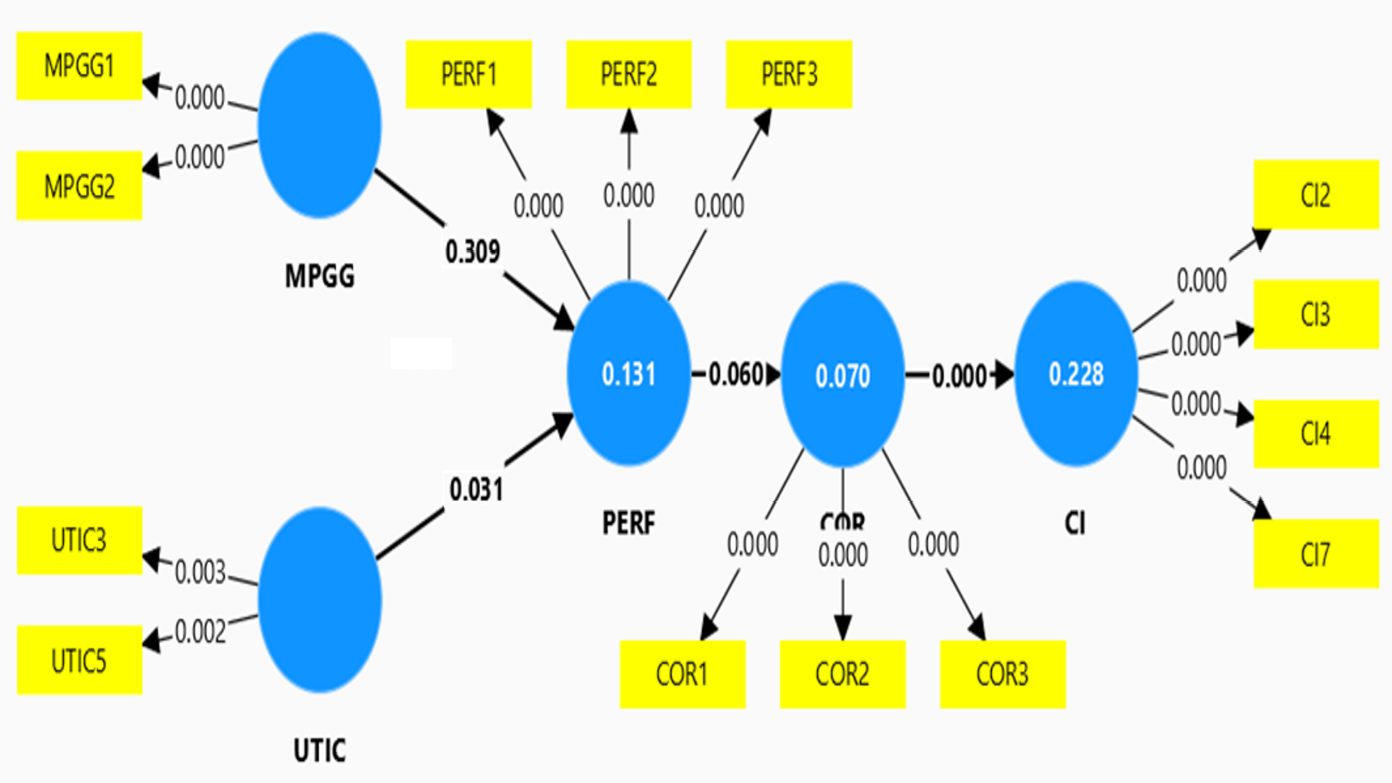
Based on this theoretical foundation, the proposed model explores the following hypothetical relationships:
H1: Organizational culture has a positive impact on innovative behavior.
H2: The perception of financial strategies enhances organizational culture.
H3: The use of Information and Communication Technologies (ICT) positively influences the perception of financial strategies.
H4: General management practices have a positive impact on the perception of financial strategies.
These hypotheses are supported by empirical studies that link organizational culture to innovation. For instance, Gerasimov [21], examines how cultural norms and values influence employees’ willingness to innovate, particularly in service-oriented firms. Similarly, Yasmina and Etikariena [46], demonstrate that cultures promoting cooperation and innovation encourage greater participation in creative initiatives. Siswanti and Nurhariati [42], further highlight the role of organizational culture in enhancing job satisfaction and innovation in SMEs.
The study applies Partial Least Squares Structural Equation Modeling (PLS-SEM), as it is well-suited to the exploratory nature of the model, the sample size, and the focus on predictive relationships among latent variables. PLS-SEM facilitates the identification of key innovation drivers from multiple perspectives, especially in contexts where traditional covariance-based techniques may be limited due to data characteristics Hair [22].
By integrating these theoretical and methodological elements, the proposed model offers a robust analytical framework for understanding how internal organizational factors influence innovation in small and medium-sized wine enterprises operating in emerging markets.
This research was conducted from a quantitative perspective, employing a correlational-explanatory and non-experimental design. The primary objective was to examine the influence of organizational culture on innovation within small and medium-sized enterprises (SMEs) in the wine industry of the Valle de Guadalupe, Baja California. Through a case study approach, the goal was to understand the management practices that foster innovation in these businesses, laying a foundation for extending the findings to other developing wine regions.
The structural model evaluated through Partial Least Squares Structural Equation Modeling (PLS-SEM) is grounded in the Resource-Based View (RBV) proposed by Barney [6]. This theory asserts that sustainable competitive advantage arises from the efficient and strategic management of internal assets that are scarce, inimitable, and difficult to substitute. Specifically, organizational culture is conceptualized as a dynamic resource that influences a firm’s capacity for innovation.
Additionally, the model integrates findings from empirical studies that emphasize the role of financial strategies and the use of Information and Communication Technologies (ICT) in enhancing innovation outcomes. Research conducted by Gerasimov [21] and Yasmina and Etikariena [46] shows that the adoption of technological tools and sound financial practices enables micro, small, and medium-sized enterprises (MSMEs) to optimize internal resources and foster innovation.
Accordingly, the theoretical relationships proposed such as the influence of organizational culture on innovative behavior and the mediating role of financial strategies and ICT are rooted in the RBV and supported by recent empirical evidence. This theoretical alignment provides a solid foundation for interpreting the statistical results obtained through the PLS-SEM analysis.
The implementation of the correlational-explanatory design in this study enabled the analysis of the correlation between key variables such as organizational culture, innovative behavior, perceptions of financial strategies, the use of information and communication technologies (ICT), and overall management. In business research, this approach is ideal for analyzing the interaction of these variables in their natural environment, without direct intervention, providing a detailed view of the factors influencing the innovation process.
The correlational methodology was employed to identify connections between the variables, while the explanatory component delved into understanding the reasons and processes that govern these relationships. This methodology has been supported by methodological research, such as those conducted by Hernández et al. [23] and Rosenthal and Rosnow [37], which emphasize its importance in the field of business research.
The study population consisted of 45 small and medium-sized wine-producing enterprises from the Valle de Guadalupe, selected through non-probability convenience sampling. The selection criteria included:
1. Organizational structure: The study focused on micro-enterprises with an annual production of fewer than 5,000 cases of wine, as well as small and medium-sized enterprises with an annual production ranging between 5,000 and 50,000 cases. This distribution reflects the dominant configuration of the industry in the region.
2. Active involvement in the wine sector: The selected entities were required to actively participate in the production, manufacturing, and distribution of wine. Additionally, they needed to demonstrate active implementation of digital technologies to optimize their production, administrative, and commercial processes.
3. Diversification of activities: The study included entities that, in addition to wine production, offered complementary services such as lodging and gastronomy, which are fundamental elements in the wine tourism offerings of the Valle de Guadalupe.
This sample provided a representative perspective of the small and medium-sized wine-producing enterprises in the region, facilitating the generalization of findings to other similar contexts.
For data collection, a structured questionnaire consisting of 50 items was used, organized into five key dimensions: organizational culture, innovative behavior, perception of financial strategies, use of ICT, and general management. Responses were measured using a 5-point Likert scale (1 = Strongly disagree, 5 = Strongly agree). Below are examples of the questions included in each dimension:
1. Organizational Culture: “Is training in emerging technologies encouraged within your company?” and “Is creativity promoted among employees?”
2. Innovative Behavior: “Has your organization introduced new products or processes in the past two years?” and “Are employees encouraged to engage in innovation initiatives?”
3. Perception of Financial Strategies: “Are your company’s financial strategies aligned with innovation objectives?” and “Are financial metrics used to evaluate economic performance?”
4. Use of ICT: “Does your company have software for production and inventory management?” and “Has technological connectivity improved your company’s innovation capacity?”
5. General Management: “Does the cost system used by your company adapt to the specific characteristics of products and processes?” and “Does your company have an established system for inventory control?”
The questionnaire was validated through a pilot test, and reliability analyses revealed a Cronbach’s Alpha exceeding 0.7, indicating adequate internal consistency for the scales used.
Data collection was conducted in two distinct phases. The initial phase, carried out between June and September 2019, involved in-person visits to the organizations to administer the corresponding questionnaire. The second phase, conducted between November 2019 and May 2020, involved the distribution of electronic surveys via Google Forms, which led to an increase in the response rate. Confidentiality and anonymity were ensured, and participants provided their responses voluntarily and anonymously.
The final version of the questionnaire, detailing the items corresponding to each construct, is presented in Appendix A, with the aim of facilitating consultation and understanding.
The collected data were analyzed using SmartPLS 4.1 software, which facilitated the execution of exploratory and confirmatory factor analyses. These analyses contributed to the validation of the proposed structural model and the identification of significant relationships between the variables analyzed. Additionally, assessments of discriminant validity and composite reliability were conducted, ensuring that the constructs accurately measured the study variables.
The study adhered to the ethical principles of scientific research, ensuring that all participants provided informed consent. Data confidentiality was guaranteed, and participation was entirely voluntary. Additionally, participants had the option to withdraw from the study at any time without any consequences.
4.1 Exploratory Factor Analysis (EFA)
A thorough Exploratory Factor Analysis (EFA) was conducted to examine the factorial structure of the key constructs: Organizational Culture (OR), Innovative Behavior (IB), General Management (GM), Perception of Financial Strategies (PFS), and the Use of Information and Communication Technologies (ICTU). Out of an initial 24 items, 14 were selected for having factor loadings above 0.7, as established by Dijkstra and Henseler [12]. The selected items present a solid structure for further analysis. The EFA confirmed a coherent factorial structure for the study variables.
The values of these factor loadings are shown in Table 1.
| IB | OR | GM | PFS | ICTU | |||||||||||||||
|---|---|---|---|---|---|---|---|---|---|---|---|---|---|---|---|---|---|---|---|
| IB2 | 0.769 | ||||||||||||||||||
| IB3 | 0.850 | ||||||||||||||||||
| IB4 | 0.826 | ||||||||||||||||||
| IB7 | 0.863 | ||||||||||||||||||
| OR1 | 0.801 | ||||||||||||||||||
| OR2 | 0.893 | ||||||||||||||||||
| OR3 | 0.871 | ||||||||||||||||||
| GM1 | 0.913 | ||||||||||||||||||
| GM2 | 0.895 | ||||||||||||||||||
| PFS1 | 0.830 | ||||||||||||||||||
| PFS2 | 0.876 | ||||||||||||||||||
| PFS3 | 0.892 | ||||||||||||||||||
| ICTU 3 | 0.875 | ||||||||||||||||||
| ICTU 5 | 0.877 | ||||||||||||||||||
| Note: Innovative Behavior (IB); Organizational Culture (OR); General Management (GM); Perception of Financial Strategies (PFS); and Use of Information and Communication Technologies (ICTU). | |||||||||||||||||||
| Source: Own elaboration based on research data. | |||||||||||||||||||
Confirmatory Factor Analysis (CFA) was used to validate the theoretical structure of the model. The Cronbach’s Alpha (CA) for the five dimensions ranged between 0.753 and 0.901, indicating high internal reliability. Additionally, Composite Reliability (CR) and Average Variance Extracted (AVE) also showed robust values, with the AVE ranging between 0.633 and 0.835, confirming that the model has good convergent validity [38].
The results are presented in Table 2, meeting the recommended reliability standards.
| Indicator | Α | CC | AVE | ||||||||||||||||
|---|---|---|---|---|---|---|---|---|---|---|---|---|---|---|---|---|---|---|---|
| Innovative Behavior (IB) | 0.808 | 0.872 | 0.633 | ||||||||||||||||
| Organizational Culture (OR) | 0.868 | 0.915 | 0.783 | ||||||||||||||||
| General Management (GM) | 0.901 | 0.938 | 0.835 | ||||||||||||||||
| Perception of Financial Strategies (PFS) | 0.855 | 0.910 | 0.771 | ||||||||||||||||
| Use of Information and Communication Technologies (ICTU) | 0.753 | 0.817 | 0.698 | ||||||||||||||||
| Note: α = Cronbach’s Alpha; CR = Composite Reliability; and AVE = Average Variance Extracted. Own elaboration based on Smart PLS 4.1. | |||||||||||||||||||
As shown in Table 2 presents the correlations between the constructs (HTMT) and the square root of the average variance extracted (√AVE). The HTMT values were lower than the √AVE values, thus fulfilling the discriminant validity criteria outlined by Martínez and Fierro (29). Additionally, the VIF values indicate that there is no issue of collinearity, which allows us to affirm that there is discriminant validity between the constructs, as proposed by Dijkstra and Henseler [12].
According to the data in Table 1 and Table 2, the dimensions show values that support the discriminant validity of the proposed theoretical model. The subsequent phase involved testing the structural model, thereby evaluating the relationships between the variables defined in the conceptual model.
4.2. Confirmatory Factor Analysis
To evaluate the robustness and predictive accuracy of the structural model, the authors explain that the Q² communality index should be examined [22]. These values must be greater than zero to indicate the predictive accuracy of a specific construct. The results show that for PACAP (Q² = 0.36) and for RACAP (Q² = 0.41). The values for CR (Q² = 1.00) meet the condition of being greater than zero.
Regarding the Confirmatory Factor Analysis (CFA) of the questionnaire, the absolute fit indices include the Standardized Root Mean Square Residual (SRMR), Normed Fit Index (NFI), and the Chi-Square (χ²) ratio. In this model, the SRMR was 0.102; the squared Euclidean distance (d-ULS) was 1.095; the geodesic distance (d-G) was 0.749; Chi-Square (χ²) was 176.767; and the Normed Fit Index (NFI) was 0.932. These values indicate an acceptable fit, suggesting that the model is adequate and valid according to the guidelines established by Ringle, Wende, and Becker [36] and Rojas-Torres [37]. The results are presented in Table 3.
| Indicator | Saturated | Estimated | |||||||||||||||||
|---|---|---|---|---|---|---|---|---|---|---|---|---|---|---|---|---|---|---|---|
| SRMR | 0.102 | 0.130 | |||||||||||||||||
| d_ULS | 1.095 | 1.764 | |||||||||||||||||
| D_G | 0.749 | 0.803 | |||||||||||||||||
| X2 | 176.767 | 185.213 | |||||||||||||||||
| NFI | 0.932 | 0.909 | |||||||||||||||||
| Note 1: PACAP = Potential Absorptive Capacity; RACAP = Realized Absorptive Capacity; CR = Composite Reliability. | |||||||||||||||||||
| Note 2: SRMR = Standardized Root Mean Square Residual; d-ULS = Squared Euclidean Distance; d-G = Geodesic Distance; X² = Chi-Square; NFI = Normed Fit Index. Own elaboration based on Smart PLS 4.1. | |||||||||||||||||||
| Note 3: Saturated refers to the model with all paths estimated; “Estimated” refers to the final model after adjustments. These terms are standard in PLS-SEM model fit reporting. | |||||||||||||||||||
The comparison results obtained demonstrate concurrent validity. Subsequently, a two-tailed bootstrapping with 5,000 repetitions was performed, including the t-values of the six specified hypothetical relationships, which showed statistically significant relationships at the 0.01 and 0.05 levels. These results are presented in Table 4.
| Hypothesis | Effect | Β | Ţ | Ρ | Decision | ||||||||||||||
|---|---|---|---|---|---|---|---|---|---|---|---|---|---|---|---|---|---|---|---|
| H1: OR → IB | + | 0.179 | 2.24 | 0.012 | Accepted | ||||||||||||||
| H2: PFS → OR | + | 0.179 | 1.679 | 0.047 | Accepted | ||||||||||||||
| H3: ICTU → PFS | + | 0.167 | 0.419 | 0.043 | Accepted | ||||||||||||||
| H4: GM → PFS | + | 0.185 | 1.116 | 0.338 | Rejected | ||||||||||||||
| Note: Own elaboration based on Smart PLS 14. | |||||||||||||||||||
In the previous table, it can be observed that of the four research hypotheses previously specified, three were accepted, and one was rejected. Therefore, it can be argued that OR, PFS, and ICTU are the factors that promote BI.
To discuss the study’s findings in comparison with the theoretical framework, it is essential to analyze how they align with the concepts and theories of various authors. First and foremost, the theoretical framework establishes that the dependent variable is innovative behavior, while the independent variables, such as Organizational Culture, Financial Strategies, Use of ICT, and General Management, influence this innovative behavior [13]. This approach is consistent with the empirical results, which highlight how wine-producing SMEs in the Valle de Guadalupe heavily rely on effective financial strategies to drive innovation.
A company’s ability to obtain and maintain comparative advantages, according to Porter [35], is reflected in the data showing that the most competitive companies are those that have successfully integrated technological innovations and solid financial management. This finding aligns with Porter’s Diamond Theory, which emphasizes that competitiveness arises from the interaction between elements such as business strategy and environmental conditions. Companies that have adapted to changing market demands while maintaining efficient financial management have achieved better competitive results in the wine sector.
The study’s results confirm the relevance of the Resource-Based View (RBV) theory, which emphasizes the importance of internal human resources as a key element in gaining a competitive advantage [6]. It was observed that companies that have optimized the use of their human resources, including human capital and the ability to generate innovation, have shown better performance in terms of competitiveness. This suggests that effective resource management is essential in a dynamic and globalized environment.
The evidence regarding intellectual capital in business competitiveness aligns with the ideas of Bontis [10] and Abeysekera [1], who describe intellectual capital as the combination of intangible assets that can generate returns for customers. SMEs that have invested in their intellectual capital, particularly in talent development and retention, have managed to be more innovative and strengthen their market position.
The principles of internal growth and clustering, as emphasized by the theories of Gallego and Pitzer [20] and Vázquez [45], are significant in the context of the Valle de Guadalupe. The data reveal that companies adopting an internal growth strategy, leveraging local advantages and promoting collaboration among local actors, have experienced more consistent growth and greater adaptability to the challenges of the global market.
In conclusion, the study’s results align with theoretical ideas on competitiveness, resource management, and internal growth, highlighting the importance of creativity, effective resource management, and a local perspective to enhance the competitiveness of small and medium-sized enterprises in the wine industry. This analysis reflects how these theories provide a foundation for understanding the dynamics present in the industry and the factors that drive business success in wine production.
The purpose of this research is to develop a causal model that describes how financial tactics are perceived and how innovation manifests in small and medium-sized wine-producing enterprises located in the Valle de Guadalupe, Baja California. A conceptual framework has been developed that encompasses the impact of competitiveness on businesses, corporate culture, innovative technologies, and financial management with the goal of promoting innovation.
In the analyzed SMEs, a positive correlation has been observed between the implementation of innovative financial tactics and the level of competitiveness achieved. However, challenges were identified, such as a lack of available funds, difficulties in obtaining loans, and rising operating costs, which threaten financial sustainability.
The research also highlights the importance of a corporate culture that fosters creativity and the effective communication of financial tactics. The implementation of information technologies has been essential in improving operational efficiency and driving creativity.
Despite the progress made, the COVID-19 pandemic limited participation in the study, affecting the willingness of business owners to complete the questionnaires. The importance of continuing research in various areas is emphasized, such as exploring alternative financing options and integrating new technologies to improve the competitiveness of small and medium-sized enterprises in the wine sector in Mexico.
The findings of this research highlight the importance of fostering a strong organizational culture to promote innovation. In the case of small and medium-sized wine enterprises, this entails the need to develop internal strategies that enhance employee engagement, communication, and creativity. It is essential for decision-makers to focus their efforts on the design and implementation of continuous training programs, the reinforcement of collaborative work practices, and the establishment of incentive systems aligned with organizational goals.
Moreover, the integration of Information and Communication Technologies (ICT) should go beyond operational improvements and be embedded into innovation strategies aimed at strengthening product development and responsiveness to market demands. These elements are crucial for enhancing sustainable competitiveness in the wine industry, particularly in emerging markets such as Mexico. In such environments, organizational resilience, digital transformation, and the ability to adapt to dynamic market conditions represent key advantages for the consolidation and sustained growth of small and medium-sized enterprises in the sector.
Although the data collection was conducted in 2019, the structural challenges faced by small and medium-sized wine enterprises in the Valle de Guadalupe remain relevant. Issues such as limited access to financing, the need for digital transformation, and the importance of fostering innovation-oriented organizational cultures persist within the industry. Consequently, the findings of this study continue to hold significance, especially as the sector recovers from the pandemic and faces ongoing competitive pressures.
The findings indicate the potential for policymakers to design specialized training initiatives aimed at strengthening organizational culture in small and medium-sized enterprises within the wine tourism sector. These initiatives could foster the development of innovative capabilities and contribute to enhancing long-term competitiveness in local and regional economies.
[1] I. Abeysekera, 2006. The Project of intellectual capital disclosure: researching the research. Journal of intellectual capital, 7(1), 61-77. https://doi.org/10.1108/14691930610639778
[2] S. Alfiero, L. Broccardo, M. Cane, A. Esposito, 2018. High performance through innovation process management in SMEs: Evidence from the Italian wine sector. Management Control, 3, 87-110. https://doi.org/10.3280/MACO2018-003005
[3] G. Arboleda, J. López, 2017. Organizational culture in healthcare service providers in the Valle de Aburrá. Revista Ciencias de Salud, 15(2), 247-258. https://doi.org/10.12804/revistas.urosario.edu.co/revsalud/a.5761
[4] L. Atalaya, 2018. Characteristics of the wine production chain of Casca-La Libertad for its competitiveness in the US market, New York (Bachelor’s thesis). Cajamarca, Universidad Privada del Norte.
[5] C. Ayala, 2022. Valle de Guadalupe could run out of farmland by 2037. El Economista. https://www.eleconomista.com.mx/estados/Valle-de-Guadalupe-podria-quedarse-sin-tierras-de-cultivo-para-el-2037-20220905-0125.html
[6] J. Barney, 1991. Firm Resources and sustained Competitive Advantage. Journal of Management, 17(1), 99-120. https://doi.org/10.1177/014920639101700108
[7] R. Barragán-Quintero, O. Ovalle-Osuna, E. Ahumada-Tello, R. Evans, 2019. Measuring the effects of innovation in wine companies in Baja California. Technology and Engineering Management (TEMSCON), 1-5. https://doi.org/10.1109/TEMSCON.2019.8813746
[8] J. Barrios, 2019. Impact of innovation on the competitiveness of agro-industrial companies in Espinal-Tolima. Revista Innova ITFIP, 4(1), 7-20.
[9] BBVA, ¿Qué son las PYMES en México? BBVA Educación Financiera, 2024. https://www.bbva.mx/educacion-financiera/creditos/que-son-las-pymes-en-mexico.html#empresas-medianas
[10] N. Bontis, 2001. Assessing knowledge assets: A review of the models used to measure intellectual capital. International Journal of Management Reviews, 3(1), 41-60. https://doi.org/10.1111/1468-2370.00053
[11] A. Bryan, J. Lammers, 2022. Healthcare Organizational Culture. The International Encyclopedia of Health Communication. https://doi.org/10.1002/9781119678816.iehc0701
[12] T. Dijkstra, J. Henseler, 2015. Consistent partial least squares path modeling. MIS Quarterly, 39(1), 297-316. https://doi.org/10.25300/MISQ/2015/39.2.02
[13] G. Dimitrova, M. Angelova, D. Pastarmadzhieva, 2019. Innovation Activity as an Element of the Competitiveness of Wine Industry: A conceptual framework. Trakia Journal of Sciences, 17(1), 221-226. https://doi.org/10.15547/tjs.2019.s.01.038
[14] M. Dini, G. Stumpo, (Coords.). 2020. SMEs in Latin America. A fragile performance and new challenges for promotion policies. Santiago: Economic Commission for Latin America and the Caribbean (ECLAC).
[15] E.M. Doacă, 2022. The influence of the macroeconomic environment on the financing decision in SMEs. Proceedings of CBU in Economics and Business, 3, 25-31. https://doi.org/10.12955/peb.v3.289
[16] A. Dogru, J. Peyrefitte, 2022. Investigation of innovation in wine industry via meta-analysis. Wine Business Journal, 5(1), 44-76. https://doi.org/10.26813/001c.31627
[17] A. Duarte, A. Bressan, 2016. Micro and small business innovation in a traditional industry. International Journal of Innovation Science, 8(4), 311-330. https://doi.org/10.1108/IJIS-06-2016-0013
[18] D. Duran, L. Cabello, 2023. Management of innovation in wine companies of Tequisquiapan, Querétaro, Mexico. International Journal of Business Research, 23(1), 25-29. https://doi.org/10.18374/IJBR-23-1.3
[19] E. Erlygina, Y. Abramova, 2019. Organizational culture as a factor of organizational innovativeness. Bulletin of Science and Practice, 5(11), 276-279. https://doi.org/10.33619/2414-2948/48/31
[20] J.R. Gallego, J.V. Pitxer, (Coords.). 2010. La política regional en: A. García Reche y A. Sánchez Andrés (Coords.), Política económica estructural y de competitividad, Tirant lo Blanch, Valencia.
[21] K.B. Gerasimov, R.S, Ozernov, 2023. Impact of organizational culture on innovative behavior of staff. Вестник Самарского университета. Экономика и управление, 14(1), 148-156. https://doi.org/10.18287/2542-0461-2023-14-1-148-156
[22] J.F. Hair, J.J. Risher, M. Sarstedt, C.M. Ringle, 2019. When to use and how to report the results of PLS-SEM. European Business Review, 31(1), 2-24. https://doi.org/10.1108/EBR-11-2018-0203
[23] R. Hernández, C.P. Mendoza, 2018. Research methodology: the quantitative, qualitative and mixed routes. México: McGraw-Hill.
[24] C. Hinojosa, E. Limón, C. Navarrete, 2019. Business culture in SMEs in the municipality of Tamazula de Gordiano, Jalisco (Mexico). Ánfora, 27(49), 143-172. https://doi.org/10.30854/anf.v27.n49.2020.743
[25] P. La Sala, R. Silvestri, F. Contò, 2017. Differentiation strategies for the wine and nursery sector: empirical evidence from an Italy region. Agricultural and Food Economics, 5(1), 1-17. https://doi.org/10.1186/s40100-017-0091-z
[26] E. Lázaro, 2024. Industria del vino, pilar del turismo en Baja California. El Economista. https://www.eleconomista.com.mx/estados/Industria-del-vino-pilar-del-turismo-en-Baja-California-20240411-0149.html
[27] F.J. Medina-Albadalejo, 2020. Kym Anderson and Vicente Pinilla (eds.). Wine Globalization. A New Comparative History. Cambridge, Cambridge University Press. Investigaciones De Historia Económica, 16(4), 80–81. https://doi.org/10.33231/j.ihe.2020.03.005
[28] F. Albaladejo, J. Martínez-Carrión, J. Ramón-Muñoz, 2014. The world wine market and the competitiveness of southern hemisphere countries, 1961-2010. América Latina en la historia económica, 21(2), 40-83.
[29] M. Martínez, E. Fierro, 2018. Aplicación de la técnica PLS-SEM en la gestión del conocimiento: un enfoque técnico práctico. RIDE. Reviste Iberoamericana de Investigación y Desarrollo Educativo, 8(16), 130-164. https://doi.org/10.23913/ride.v8i16.336
[30] J.H.G. Meneses, J.R.A. Ávila, M.D.R. de Fátima Alvídrez, 2023. The Economic Importance of MSMEs in Mexico. Excelencia Administrativa Online, 2(4), 81-94.
[31] Mexican Wine Council A.C. ¿What are the challenges of the wine industry in Mexico?, 2020. CMV. https://uvayvino.org.mx/2020/03/20/cuales-son-los-retos-de-la-industria-del-vino-en-mexico/
[32] R. Molina-Martínez, V. Baltazar-Ramos, 2021. Competitiveness and technological innovation, fundamental theoretical elements for the internationalization of the Mexican Wine Industry. Journal of microfinance Planning and control, 7-23. https://doi.org/10.35429/JMPC.2021.19.7.7.23
[33] D.A. Motocanche, L.D. Bernaola, 2020. Analysis of business culture and its influence on the competitiveness of SMEs producing wine and pisco in the city of Moquegua in 2019. (Research work to obtain the Master’s degree in Business Administration). Perú, Escuela de Postgrado NEUMANN.
[34] A. Ortiz, A. Espejel, E. Aguilar, V. López, 2022. Wine System in Baja California: Support Agents in Contemporary Mexico. Journal of agro-industry sciences, 4(3), 115-120. https://doi.org/10.17268/jais.2022.014
[35] M. Porter, 1998. Clusters and the new economics of competition, Harvard Business Review, 33, 77-90. http://marasbiber.com/wp-content/uploads/2018/05/Michael-E.-Porter-Cluster-Reading.pdf.
[36] C.M. Ringle, S. Wende, J. Becker, 2024. SmartPLS 4. Bönningstedt: SmartPLS. https://www.smartpls.com
[37] L. Rojas-Torres, 2020. Robustness of the fit indices of confirmatory factor analysis to extreme values. Revista de matemática: teoría y aplicaciones, 27(2), 383–404. https://doi.org/10.15517/rmta.v27i2.33677
[38] R. Rosenthal, R.L. Rosnow, 2008. Essentials of behavioral research: Methods and data analysis (3rd ed.). McGraw-Hill. https://doi.org/10.34944/dspace/66
[39] L. Ruiz, S. Radillo, 2015. Validity and reliability of a measurement instrument for the competitiveness of small and medium-sized wineries on the Wine Route of the Guadalupe Valley, Baja California, Mexico. Investigación y Ciencia, 23(65), 40-47.
[40] E.H. Schein, P.A. Schein, 2016. Organizational culture and leadership (5th ed.). Wiley.
[41] A. Singh, 2018. Role of Small Business in Economic Development: A Quantitative Investigation. Journal of algebraic statistics, 9(1), 139-144.
[42] Y. Siswanti, E. Nurhariati, 2022. The influence of organizational culture on innovation behavior: a hierarchical linear modeling approach. Journal of International Conference Proceedings, 5(5), 267-284. https://doi.org/10.32535/jicp.v5i5.2087
[43] G. Starobinsky, M. Gonzalo, S. Filipetto, M. D’Alessandro, 2020. Market Dynamics and Technological Efforts in a Peripheral Innovation System: La Riojana Winegrowing Cooperative. RIVAR, 7(20), 67-87. https://doi.org/10.35588/rivar.v7i20.4477
[44] E. Timotius, 2023. The role of innovation in business strategy as a competitive advantage: Evidence from Indonesian MSMEs. Problems and Perspectives in Management, 21(1), 92-106. https://doi.org/10.21511/ppm.21(1).2023.09
[45] A. Vázquez, 2000. Desarrollo económico local y descentralización aproximación a un marco conceptual. Santiago de Chile, Chile: CEPAL/GTZ.
[46] E.L. Yasmina, A. Etikariena, 2022. The Relationship Between Adhocracy Culture and Innovative Work Behavior: The Role of Job Satisfaction as a Mediator. Jurnal Psikologi, 18(2), 152-162. https://doi.org/10.24014/jp.v18i2.16850
Appendix A. Final Version of the Questionnaire
Objective of the questionnaire: To identify the financial, technological, innovation, and human capital variables associated with financial performance that contribute to increasing the competitiveness of wine companies (MiPyMEs) in the Wine Route of Valle de Guadalupe, Baja California, Mexico.
Instructions: Mark with an X only one of the answers provided for each question.
I. IDENTIFICATION AND GENERAL INFORMATION
1. Interviewee’s position:
2. Profession:
3. Name or business name of the company:
4. Indicate the number of years the company has been in business:
5. Company size:
1) Micro (0–10 employees)
2) Small (11–50 employees)
3) Medium (51–250 employees)
4) Large (251 or more employees)
General Management
Mark your answer with an X. The answer key is as follows:
| 1- Never | 2.- Rarely | 3.- Sometimes | 4.- Almost always | 5.- Always | |||||||||||||||
| 1 | 2 | 3 | 4 | 5 | |
|---|---|---|---|---|---|
| 6. An accounting system is employed to deliver relevant and timely information that supports decision-making processes. | |||||
| 7. A cost system is used that fits the specific characteristics of the products and processes | |||||
| 8. They use an established system for inventory accounting and control | |||||
| 9. Use of a formal financial plan | |||||
| 10. Use of cost systems to compare monthly financial results, analyze variations, and support decision-making |
11. Please indicate whether your company uses the following financial tools
| Yes | No | Frequency | |
|---|---|---|---|
| 1) Financial ratios | |||
| 2) Statistics or reports of your operations | |||
| 3) Budgetary Control | |||
| 4) Application of percentages to financial statements | |||
| 5) Inventory Report | |||
| 6) Collection Report | |||
| 7) Cash Flow | |||
| 8) Financial Statements | |||
| 9) Budgets | |||
| 10) Sales | |||
| 11) Break-even point |
12. ¿Who is responsible for managing the company’s accounting?
a. Owner or Principal Administrator
b. Internal Accounting Department
c. External Accounting Firm
d. Other (please specify)
13. Please indicate the types of budgets your company
a. General
b. Departmental
c. Product-based
d. Sales
e. Expenditure
f. Purchasing
g. Cash Flow
h. None
14. Please indicate the basis on which your company determines its selling prices
a. Costs and profit margin
b. Competitor prices
c. Empirically
d. Experience
e. Break-even point
f. Other (please specify):
15. Please indicate the basis on which your company projects its sales
a. Sales from previous years
b. Forecasted inflation
c. Market trends
d. Experience
e. Break-even point
f. Other (please specify):
16. Please indicate the information your company uses to determine its profits:
a. Sales
b. Income statements
c. Cash flow statements
d. Other (please specify):
17. Please indicate the information your company uses to determine its purchasing volumes
a. Sales
b. Inventory balances
c. Supplier offers
d. Cash flow
e. Sales seasons
f. Other (please specify):
18. Please indicate the mechanisms your company uses for inventory control and their frequency
| Mechanism | Yes | No | Frequency |
|---|---|---|---|
| 1) Bin cards | |||
| 2) Physical inventories | |||
| 3) Inventory management software | |||
| 4) Sales reports | |||
| 5) None |
19. Please rank the problems your company regularly faces in order of importance, using a scale from 1 to 13, where 1 is the most important.
1. Liquidity
2. Sales
3. Competition
4. Personnel issues
5. Technological obsolescence
6. Lack of financing
7. Rising costs and expenses
8. Inventory control
9. Theft
10. Adaptation to fiscal and legal changes
11. Compliance with official standards and regulations
12. Import and export requirements
13. Difficulties in meeting customs requirements and procedures
Financial Management
Please indicate your answer with an X. The response key is as follows:
| 1- Very Poor | 2.- Poor | 3.- Fair | 4.- Good | 5.- Very Good |
| 1 | 2 | 3 | 4 | 5 | |
|---|---|---|---|---|---|
| 20. ¿How would you rate your company’s financial performance? | |||||
| 21. ¿How would you rate your company’s financial performance compared to that of your competitors? | |||||
| 22. ¿How would you rate your company’s profitability compared to that of your competitors? | |||||
| 23. ¿How has your company’s sales growth behaved over the past 3 years? | |||||
| 24. ¿How has your company’s return on sales behaved over the past 3 years? |
25. ¿Which of the following factors contributes most to your company’s profitability?
1. Administrative activities
2. Technological resource management
3. Market knowledge and sales policies
4. Financial management
5. Other (please specify):
26. How do you utilize your company’s profits?
1. Personal expenses
2. Investments in machinery and equipment
3. Capacity expansion
4. Savings
5. Technological development
6. Other (please specify):
27. ¿Who is responsible for managing your company’s finances?
1. Owner or principal administrator of the company
2. Accounting department
3. External accounting firm
4. Other (please specify):
II. FINANCIAL STRATEGIES
Please mark your answer with an X. The response key is as follows:
| 1- Never | 2.- Rarely | 3.- Sometimes | 4.- Almost always | 5.- Always |
| 1 | 2 | 3 | 4 | 5 | |
|---|---|---|---|---|---|
| 28. ¿Are your company’s objectives clearly defined? | |||||
| 29. ¿Is the financial strategy aligned with the strategies defined in the areas of production, innovation, human resources, and information technologies? | |||||
| 30. ¿Is your company continuously exploring different financing alternatives it could access? | |||||
| 31. ¿Are strategic alliances with other companies the result of the designed financial strategy? |
III. INNOVATIVE BEHAVIOR
Please mark your answer with an X. The response key is as follows:
| 1- Never | 2.- Rarely | 3.- Sometimes | 4.- Almost always | 5.- Always |
| 1 | 2 | 3 | 4 | 5 | |
|---|---|---|---|---|---|
| 32. Seeks ways to optimize existing processes, technology, products, services, or work relationships | |||||
| 33. Presents original ideas and is recognized for their innovative nature | |||||
| 34. Experiments with new proposals, attempting to analyze their validity | |||||
| 35. Supports and protects the innovative ideas of others | |||||
| 36. Attempts to convince others of the relevance of a new idea or innovative solution | |||||
| 37. Seeks the necessary funding to implement new proposals | |||||
| 38. Develops suitable projects to implement innovative proposals |
IV. USE OF INFORMATION AND COMMUNICATION TECHNOLOGIES
Please mark your answer with an X. The response key is as follows:
| 1- Strongly disagree | 2.- Disagree | 3.- Neither agree nor disagree | 4.- Agree | 5. Strongly agree |
Information Technology Resources
| 1 | 2 | 3 | 4 | 5 | |
|---|---|---|---|---|---|
| 39. I use and operate equipment such as fax machines, cameras, computers, and the internet to support my business | |||||
| 40. The company has adequate computer equipment (computers, printers, scanners) for business management and administration | |||||
| 41. The company has appropriate software for production and/or inventory control | |||||
| 42. This company has suitable software (accounting, payroll) for business management and administration | |||||
| 43. We have a reliable internet connection for business management and administration |
VI. ORGANIZATIONAL CULTURE
Mark your answer with an X. The response scale is as follows:
| 1- Strongly Disagree | 2.- Disagree | 3.- Neither Agree nor Disagree | 4.- Agree | 5. Strongly Agree |
General Aspects
| 1 | 2 | 3 | 4 | 5 | |
|---|---|---|---|---|---|
| 44. The company has a written and implemented organizational chart where lines of authority and responsibility are clearly defined | |||||
| 45. The company has written policies and procedure manuals that are known and followed by all staff |
Training and Promotion of Personnel
| 1 | 2 | 3 | 4 | 5 | |
|---|---|---|---|---|---|
| 46. The company has a defined organizational structure for training all its personnel, and all new employees receive an induction to the company | |||||
| 47. Personal skills, qualifications, willingness to improve, creativity, and productivity are key criteria for employee compensation and promotion |
Company Culture
| 1 | 2 | 3 | 4 | 5 | |
|---|---|---|---|---|---|
| 48. There is effective oral and written communication across the different levels of the company | |||||
| 49. The company fosters a sense of belonging among its staff | |||||
| 50. The company has established programs and incentives to improve the work environment |