Exploring Barriers Arising From Coopetition: A Case Study in the Brazilian Wine Tourism Industry
1 Unisinos, Business School, Porto Alegre/Rio Grande do Sul – Brazil, 274, Belgica St. – Canoas, RS. Brazil
2 Business Department, Federal Institute of Education Science and Technology of Rio Grande do Sul, Bento Gonçalves, Brazil
3 Federal University of Rio Grande do Norte, Brazil
Email: jmmonticelli@unisinos.br; tatiane.cislaghi@bento.ifrs.edu.br; kettrin.farias@uaac.ufcg.edu.br
*Corresponding author
Abstract. In this study, we aim to understand how coopetition can create barriers to real-estate projects through a focus on the collective interests that seek to preserve the identity of a geographical indication (GI). A qualitative longitudinal study that analyses a Brazilian wine industry, specifically the Vale dos Vinhedos (a GI region), because it provides examples of coopetition leveraged to develop the region. The study was conducted over ten years (2012–2022), collecting primary data from representatives of the Brazilian wine industry in 36 semi-structured interviews. The study found that wineries and formal institution agents established a coopetition strategy to stop uncontrolled expansion in the form of real-estate development, blocking the entry of new ventures such as hotels and timeshares that could distort the region’s character. Our study highlights the relevance of exploring the relationship between environmental, social, and governance performance in coopetition studies to understand how coopetition can support sustainable development. However, we found evidence that contrasts the perspective of coopetition as a strategy for developing a wine destination.
Keywords: coopetition, geographical indication, Brazilian wine industry.
Index
1.1 Coopetition in wine tourism: institutional dynamics and the case of Vale dos Vinhedos
3.1 Establishment of the Vale dos Vinhedos: coopetition and institutional dynamics
3.2 Expansion of tourism and real estate development
3.3 Coopetition as a barrier to the advance real estate projects
In today’s intricate business environment, firms often employ coopetition – a strategy of concurrently pursuing cooperation and competition – to navigate uncertainties stemming from emerging markets, rapid technological changes, and intensified global competition[1]. As a well-developed theory, coopetition attracts attention from researchers and practitioners exploring its role in value creation and capture and in competitive strategies influenced by institutions [2,3].
Coopetitive relationships can offer insights into development of tourism destinations amidst complexity [4]. Local products, crucial in tourism, gain greater significance with Geographical Indications (GIs), such as Champagne in France or Port in Portugal, emphasizing the geographical essence of coopetition manifesting in varying degrees of competition and collaboration [5]. The same is true of the case of the Vale dos Vinhedos (literally, the Valley of the Vineyards) in Brazil.
By 2023, Brazil had 109 Geographical Indications (GIs), a 60% increase since 2019, with more regions likely to receive accreditation [6]. The Vale dos Vinhedos, Brazil’s first GI, marked a significant shift in wine tourism, driving job creation, attracting tourists, boosting local product consumption, and fostering socio-territorial revitalization [7]. In this region, the wine industry thrives on a mix of competition and cooperation among producers and managers [8]. Wine tourism contributes directly to job creation, increased tourist visits, local product consumption, new investments, and business opportunities, all of which support broader social and territorial development [9]. For winemakers, wine tourism extends the wine business, offering diversification and greater value-added production [10].
Coopetitive strategies in this emerging market, heavily influenced by government actions [11], have evolved beyond financial gains and strategic positioning to address new tourism industry entrants [4, 12]. However, coopetition also has a “dark side,” with potential negative impacts on firms and tourism development from a barrier to the advance of hotel and real estate megaprojects. It can create barriers by emphasizing collective interests aimed at preserving the identity of a Geographical Indication (GI) [13]. This led us to define the research question: How does coopetition create barriers to tourism through a focus on preserving a GI’s identity? The study aims to explore the dynamics of coopetition and its effects on tourism when centered on GI preservation.
To fill this critical gap, we conducted a ten-year qualitative longitudinal study (2012-2022) focused on the Brazilian wine industry in Vale dos Vinhedos, a Geographical Indication (GI) region, as it demonstrates the role of coopetition in regional development. Our study builds on Miná and Dagnino [14] and Chim-Miki and Batista-Canino[15], who emphasized the importance of examining the interplay of environmental, social, and governance factors in coopetition to support sustainable development.
1.1 Coopetition in wine tourism: institutional dynamics and the case of Vale dos Vinhedos
Coopetition, combining cooperation and competition, is context-dependent and acts as a strategic tool for increasing value in tourism destinations [1, 16]. It enables stakeholders to collaborate while maintaining competitive dynamics, addressing economic, political, and social challenges, and fostering value creation [17]. This has been examined in settings such as Italian opera houses and theme parks in Finland and Italy [18,19]. Researchers generally adopt two institutional perspectives: informal, which considers the influence of culture and ethics on coopetition, as explored by Klimas [20] and Knein et al. [21]; and formal, which focuses on regulations, intellectual property, and competitive advantage [22,23]. Most studies are set in developed nations, where institutional frameworks facilitate business strategies [26,25].
However, coopetition also has a “dark side,” where value can be destroyed rather than created [13,26]. This typically occurs when tensions between firms lead to suspicion and conflict, increasing risks and costs [27]. In tourism, geographical overlap exacerbates these challenges, as businesses compete for the same customer base, making cooperation more complex [28,29]. Moreover, the opportunistic behavior of players who seek to capture value without having participated in the value creation stage can damage the relationship between the players who participate in wine tourism enterprises [30].
For instance, tensions and social conflicts arising from coopetition in wine regions can significantly impact their long-term business sustainability. These conflicts often stem from competing economic interests, environmental concerns, and sociocultural dynamics, which can undermine cooperative efforts essential for sustainable practices [31]. In the Prosecco region, social conflicts are intertwined with environmental concerns, as local communities demand greater attention to social values and equitable resource distribution[32]. Furthermore, the case of the AOC Saint-Émilion illustrates how crises can alter coopetition dynamics, leading to conflicts that hinder value creation and sustainability efforts[33]. Similarly, research in Spain has highlighted tensions arising from the competing interests of wine tourism, heritage preservation, and local communities’ housing or infrastructure needs. In this context, while Priorat has used detailed terroir zoning to strengthen community cohesion and revitalize rural residency, regions such as Penedés show how weaker regulation leaves room for urban pressure and potential social friction[34]. Thus, while coopetition can foster collaboration among wine producers, the inherent tensions and conflicts can jeopardize the long-term business sustainability of these regions, necessitating careful management and regulation to balance competing interests.
In wine tourism, coopetition is evident as wineries and related entities work together to enhance visitor experiences while maintaining competition [13,35]. This strategy drives innovation by encouraging shared research, sustainable practices, and improved viticulture techniques, benefiting both individual wineries and the broader industry [36,37]. It also includes collaboration with hotels and tour operators to create comprehensive packages that enrich the visitor experience. However, achieving a balance is crucial, as too much competition or cooperation can result in fragmented experiences and shorter visitor stays [23,24].
The Vale dos Vinhedos in southern Brazil illustrates the role of coopetition in wine tourism. Known for its grape and wine production, the region comprises 37 municipalities, managed by the Serra Tourism Association (Atuaserra), which oversees regional tourism efforts [8]. In 2015, the region attracted about 400,000 visitors, gradually becoming Brazil’s leading wine tourism destination [Formal Institution Agent 8, 2024]. The cooperative environment has enabled family wineries to expand beyond local markets, reaching national and international audiences [8].
The region, historically linked to Italian immigration since 1875, encompasses Bento Gonçalves, Garibaldi, and Monte Belo do Sul. It currently hosts 22 wineries, 40 employees, and has a designation of origin seal for its products [Formal Institution Agent 8, 2024]. The establishment of Formal Institution Agent 8 led to infrastructure improvements, job growth, and increased acceptance of local wines, as noted by Zanini and Rocha [40,41] and Valduga and Minasse [43]. Klinger et al.[42] further emphasize that coopetition benefits both established and emerging wineries along the 35-kilometer wine tourism route.
Despite these successes, the region also faces coopetition challenges. Tensions among firms can lead to negative outcomes, underscoring the need for strategic balance [18–20]. Wineries must maintain their brand identity while contributing to the destination’s appeal [18,19]. Achieving this delicate balance is crucial to ensuring a cohesive and attractive tourist experience [38].
The Vale dos Vinhedos epitomizes the historical, cultural, and gastronomic legacy of Italian immigrants who began to arrive in Brazil in 1875 and has become a focal point for coopetitive strategies in the Brazilian wine industry [46]. The region’s industry association, Formal Institution Agent 8, was founded in 1995 and plays a pivotal role in orchestrating coopetitive endeavors targeting sustainable development through wine tourism. The region attracted approximately 300,000 visitors in 2022, consolidating its status as Brazil’s premier wine tourism destination [47].
We used a data analysis process employing an inductive method to offer a strategy for constructing theories [48]. Processual research requires examination of phenomena over time with scrutiny of individual case studies to understand the flow of activities, demanding comprehensive longitudinal data [49]. We registered in detail and analyzed the evolution of a geographical location over time, exploring its response to new opportunities and conflicts, mainly focused on the dilemma of steering between promotion and development of tourism in the region and protecting and preserving the identity of the Vale dos Vinhedos GI.
For data collection, in this study we employed a combination of semi-structured interviews, observation, and document analysis. This multifaceted approach enables the essential triangulation of data, as recommended for qualitative research objectives [50].
A ten-year longitudinal study (2012–2022) collected primary data from the Brazilian wine industry through 36 semi-structured interviews with executives, managers, and consultants from wineries and formal institution agents involved in the development of the Vale dos Vinhedos’ Geographical Indication (GI) status. The initial phase (2012–2013) included 18 interviews with winery representatives and formal agents, along with three follow-up interviews with the same participants. The second phase in 2017 featured six interviews, including four repeat participants and two new ones. The third phase in 2022 added nine interviews with formal institution agents representatives new to the study (Table 1). The process was mapped to identify key events and establish a timeline that captured the evolving discourse on tourism and GI in the region.
| No. | Organization | Position | Interview Dates |
|---|---|---|---|
| - | First Phase | 2012-2013 | |
| 1 | Formal Institution Agent 1 | Technical Director | 01/2012 |
| 2 | Formal Institution Agent 2 | Export Manager | 01/2012 |
| 3 | Winery 1 | Export Supervisor | 01/2012 |
| 4 | Winery 2 | Export Coordinator | 01/2012 |
| 5 | Winery 3 | International Relationship Manager | 02/2012 |
| 6 | Winery 4 | Export Manager | 02/2012 |
| 7 | Formal Institution Agent 3 | Researcher | 01/2013 |
| 8 | Winery 3 | International Relationship Manager | 01/2013 |
| 9 | Winery 5 | Sales Manager | 01/2013 |
| 10 | Winery 6 | Sales Manager | 01/2013 |
| 11 | Formal Institution Agent 4 | Business Promotion Director | 01/2013 |
| 12 | Formal Institution Agent 5 | Brazilian Companies Relationship Manager | 01/2013 |
| 13 | Formal Institution Agent 7 | Executive Manager | 01/2013 |
| 14 | Formal Institution Agent 2 | Export Manager | 03/2013 |
| 15 | Formal Institution Agent 6 | International Relationship Manager | 03/2013 |
| 16 | Winery 2 | Export Coordinator | 04/2013 |
| 17 | Winery 7 | Winemaker | 06/2013 |
| 18 | Specialist | Researcher and winemaker | 06/2013 |
| 19 | Winery 8 | Winemaker | 06/2013 |
| 20 | Winery 9 | Foreign Trade Manager | 06/2013 |
| 21 | Formal Institution Agent 8 | President | 07/2013 |
| - | Second Phase | 2017 | |
| 22 | Formal Institution Agent 2 | Promotion Department Manager | 05/2017 |
| 23 | Winery 1 | Import and Export Assistant | 05/2017 |
| 24 | Winery 3 | Export Manager | 06/2017 |
| 25 | Formal Institution Agent 3 | Researcher | 06/2017 |
| 26 | Specialist | Researcher | 06/2017 |
| 27 | Winery 10 | Export Manager | 06/2017 |
| - | Third Phase | 2022 | |
| 28 | Educational Institution 1 | Researcher and Professor | 04/2022 |
| 29 | Formal Institution Agent 8 | Executive Director | 04/2022 |
| 30 | Winery 11 | Winemaker | 05/2022 |
| 31 | Formal Institution Agent 8 | Technical Advisor | 05/2022 |
| 32 | Educational Institution 2 | Researcher and Professor | 05/2022 |
| 33 | Educational Institution 2 | Researcher and Professor | 08/2022 |
| 34 | Vale dos Vinhedos Planning District Council | Architect and Member of the Municipal Planning Council | 08/2022 |
| 35 | Winery 12 and Formal Institution Agent 8 | Owner and Vice-president of the Superior Council and Fiscal Council | 08/2022 |
| 36 | Subprefecture of Vale dos Vinhedos | President of the Vale dos Vinhedos District Planning Council / President of the residents and community of Vale dos Vinhedos | 08/2022 |
Data were triangulated to strengthen both validity and reliability. Primary data was collected at different points in time, from multiple sources, and using varied instruments, in order to build a more comprehensive set of findings. We compared similarities and differences across the data to ensure diverse perspectives were captured, incorporating verbatim quotations from participants to reinforce the results [51]. Secondary data were obtained from companies and formal institution agents, serving both to complement and to contrast with the interview material. In addition, bibliographic sources such as websites, reports, magazines, and books were included. We took care to fulfill specific criteria of reliability, as detailed in Table 2 [51].
| Reliability criterion | What we did |
|---|---|
| Validity | To ensure the validity of both the process described and the data analyzed, we triangulated the evidence across multiple respondents and secondary sources. |
| Reliability | We sought to guarantee reliability by carefully examining the soundness of researchers’ decisions, involving an independent researcher to evaluate comparable findings and reduce potential biases linked to researchers’ philosophical stances, experiences, or perspectives. |
| Generalizability | To allow other researchers and practitioners to transfer the findings to their own contexts, we described in detail the organizational field that shaped each decision-making process. This expanded the understanding of the trajectory under analysis. We also detailed contextual phenomena to support application of the findings in other settings. |
| Consistency | We provided a transparent account of the research process, from the initial outline through methodological development and presentation of findings. Emerging issues were openly debated with team members experienced in qualitative research, enabling assumptions to be challenged and consensus reached. |
| Dependability | We safeguarded the confidentiality of firms and institutional representatives by assigning them codes with numbers. Interviews were conducted by two researchers, who also contributed to the design of composite visual maps integrating various data sources. This allowed for auditing of the data and ensured that the narrative reflected respondents’ shared meaning, not just researchers’ interpretations. We also used NVivo 14 to assign open, axial, and selective codes, and included interview excerpts in the paper. |
| Confirmability | All interviews were recorded and transcribed verbatim. Two researchers conducted interviews with representatives from different organizations, while one simultaneously took notes. The full inventory of secondary data was accessible online. |
Data analysis was carried out in three sequential phases: (i) data reduction; (ii) data display; and (iii) drawing and verifying conclusions [52]. A template analysis approach was applied to develop a hierarchical coding system, striking a balance between a predefined structure for analyzing texts and an iterative process to capture emerging codes [54]. We used the main quotes to present the case analysis. The analysis involved a systematic comparison of interview topics, a visual map, and individual cases, facilitating definition and validation of constructs. Throughout this process, “in vivo” codes were employed, aligning with the language and terms used by key informants, as recommended by Langley and Abdallah [50].
The first phase involved selecting, discarding, and organizing data according to the research design and predefined categories. Interview excerpts were examined to identify elements contributing to the debate on how coopetition can hinder tourism by prioritizing collective interests that preserve the identity of a geographical indication. Primary data from interviews and secondary sources from print and digital materials were processed, producing summaries that highlighted key aspects.
The second phase focused on linking codes with data sources. Two researchers independently coded the material, organizing the summaries according to categories that emerged during analysis (a posteriori categories). Relationships were established by mapping each interview excerpt (coding references) to analytical categories defined in the first phase, generating coded items. Data summaries were then cross-referenced using NVivo 14.0.
In the final phase, the coded output provided the foundation for interpretation. Codes were classified in line with existing literature, covering different dimensions of the phenomenon and consolidated into a research map [54]. Two researchers worked independently to refine codes, merging or separating them as appropriate, before comparing results to reach consensus (Table 3). Ultimately, the observed phenomena were explained and grouped under three central categories, which are presented in the following section.
| Categories | Guiding concepts | Theoretical background |
|---|---|---|
| Introduction | History; role and influence of the firm or formal institutions agents; relevance of the firms or formal institution agents in the industry; influence of formal institutions to develop the industry and region; characteristics of the industry. | Characterization of the firm or formal institution agent in the industry |
| Business strategies | Firms share or compete for the same resources; firms work alone or together with my competitors; firms cooperate in some areas/markets and compete in other areas; strategy of coopetition; interests of the firms and the formal institution agents for the coopetition to be successful. | Cooperation, competition, and coopetition |
| Role and influence of formal institution agents | Main formal institution agents in this industry and their roles; the role of the formal institution agents in the industry; influence (intervention) of government in this industry; the role of trade associations, industrial agencies, tax bureaus, state banks, commercial administration bureaus, and universities, the influence of GI in the industry. | Decision-making of firms and institutions from the political and economic perspective of the Neo-institutional theory |
| The Role of Coopetition in Value Dynamics within Tourism Destinations | Coopetition, Value Creation, Value Capture, Value Destruction, Formal Institutions, Informal Institutions, Institutional Interplay, Collective Branding, Asymmetric Gains, Sustainable Tourism Development. | When laws and policies conflict, the value dynamics in tourism are affected, which can result in the destruction of value for the destination. |
3.1 Establishment of the Vale dos Vinhedos: coopetition and institutional dynamics
The Vale dos Vinhedos was established in the 1990s when Brazil’s shift towards a more open economy facilitated global market integration. Six wineries initiated discussions to implement a Geographical Indication (GI) for the region, supported by the Brazilian Agricultural Research Corporation’s grape and wine department (Formal Institution Agent 3). Due to a crisis in the cooperative model, they chose to create the Vale dos Vinhedos Fine Wine Producers Association [Formal Institution Agent 8], formally established in 1995 as described bellow:
Aprovale is an organization that was set up with the main aim of bringing together the companies here in the Vale dos Vinhedos region, which later became a GI. With the aim of organizing, especially these small companies that were springing up here at the time. And winemaking was in its infancy here at the time, in the 1990s. What we had was viticulture, in other words, we didn’t make wine, we produced grapes, but what we did was supply this raw material to other larger companies in the sector. The creation of Aprovale was then to strengthen these companies that were springing up, to promote joint work between them, to be able to organize the purchase of inputs with better conditions, the marketing of the product also at fairs and external events, in São Paulo, Rio de Janeiro, they participated together at the beginning, and also, to do, and this is still one of the main objectives, to evolve the product. Imagine a small winery that started twenty years ago, the technology was very simple and well, you had to compete in an increasingly competitive market, with quality. So that was the most important step we took, seeking support mainly from Embrapa, Sebrae and universities. (Formal Institution Agent 8, 2013)
In 1995, facing a crisis in the cooperative model, the group established the Vale dos Vinhedos Association of Fine Wine Producers [Formal Institution Agent 8] instead of a cooperative. A pivotal moment for regional cooperation was a visit to Napa Valley, where local entrepreneurs considered creating a wine tourism route in Vale dos Vinhedos. This sparked discussions that led to the simultaneous launch of the wine tourism project and the Geographical Indication (GI) process. As a winemaker from Winery 11 noted: “The members were meeting to create a wine tourism route, inspired by Napa Valley... But it seems that this initial conversation provoked a further step – why not have a GI?” [Winery 11, Winemaker, 2022]. The initiative was driven by shared cultural identity and trust, reinforcing the GI’s foundation.
Formal Institution Agent 8 aims to promote sustainable development in the Vale dos Vinhedos through wine tourism, member integration, and community engagement. It oversees the Geographical Indication (GI) and the products protected by it. Since the 2000s, efforts to expand both domestic and international markets have increased, boosting wine tourism, earning awards for regional wines, and attracting more tourists [Formal Institution Agent 8, 2024].
So, if the association worked to promote the local products and wine tourism, and the regional crafts as well, as a consequence it also managed to promote Brazilian wine in general. Nowadays, Brazilian wine benefits from Vale dos Vinhedos’ recognition even in the European Union, since 2007. We have a level of recognition that we would have struggled to achieve if we didn’t have this region and the work that was done specifically focused on its identity, its products, and their recognition. (Executive Director, Formal Institution Agent 8, 2022)
In 2002, wines adhering to the standards set by Formal Institution Agent 8 and Formal Institution Agent 3 received the Indication of Origin (IO) seal, covering grape varieties, cultivation, and winemaking [Formal Institution Agent 8, 2024]. In 2012, this recognition advanced to Geographical Indication (GI) status, reserved for wines meeting specific technical criteria. This upgrade enhanced the product’s value, consumer confidence, and media visibility for Vale dos Vinhedos. As Brazil’s first product to earn this designation, the IO seal was also recognized by the European Union, benefiting grape growers, wineries, and consumers through higher product quality and spontaneous marketing. An interviewee from Formal Institution Agent 3 noted that this recognition improves the region’s business landscape, particularly in tourism, creating a favorable environment for wine enterprises:
So, if the association did a job promoting the local product, or products, because wine tourism too, the region’s handicrafts too, it consequently managed to promote the national wine too. Today, national wine has the recognition of the Vale dos Vinhedos even in the European Union, which was done back in two thousand and seven. You have a situation of recognition that we would hardly have had if we didn’t have a region with a strong focus on its identity, its product and recognition. (Formal Institution Agent 3, 2017)
Strategies of cooperation among competitors are evident in the learning gains and expanded networks through interactions among wineries, formal institution agents, and traditional events. This reflects the coopetition model, where wineries of all sizes collaborate and compete in areas like marketing, foreign commerce, and sales. The goal was to create value collectively, establishing an identity for Brazilian wine centered on the Geographical Indication (GI). This approach involved sharing resources and knowledge, leading to greater outcomes than what individual efforts could achieve, particularly in expanding both domestic and international market shares.
3.2 Expansion of tourism and real estate development
At the beginning of the 21st century, South Brazil’s winemaking region achieved Geographical Indication (GI) accreditation, prompting significant developments, particularly accelerated urbanization. The Vale dos Vinhedos Denomination of Origin (DO) spans 72 km², distributed across Bento Gonçalves (61%), Garibaldi (34%), and Monte Belo do Sul (5%). The region’s wine label, “Vale dos Vinhedos,” comes from a grape-intensive area within Bento Gonçalves, home to most winemakers [57].
Following GI recognition, a Regulatory Board was established in 2001 to manage, maintain, and preserve the GI. This self-regulating body, approved by association members, ensures the origin and quality of Vale dos Vinhedos wines. It introduced the Vale dos Vinhedos Seal of Quality, awarded to still and sparkling wines made with local grapes and bottled at origin. These wines undergo rigorous testing by experts from Formal Institution Agent 3 and Formal Institution Agent 8. Each seal is uniquely numbered for control, setting these wines apart from competitors [Formal Institution Agent 8, 2024]. This perspective is reinforced by representative from Formal Institution Agent 1:
Our first geographical indication was the indication of origin, in 2002. And in this year (2012) we were recognized as an appellation of origin. Which is another stage. You can’t compare the two. The first was the introduction of the Vale dos Vinhedos, and the denomination is, in a way, the recognition that what is made here really is linked to our conditions, to our terroir. The denomination, as well as being a geographical indication like the indication of origin, which links the product to its origin, needs to approve that the product does have a link to what is made here. So, as long as we have approved a product that we have made here, it is linked to our geographical and physical conditions, our people, our varieties, in short, to our terroir. (Formal Institution Agent 1, 2012)
The recognition of Vale dos Vinhedos as a Geographical Indication (GI) was a milestone with significant impacts on the region’s sustainable economic development. The GI not only adds value to the wine products but also benefits winemakers, the working environment, and rural properties. It enhances winemakers’ involvement in national and international sales, promotes investment in new vineyards and technology, encourages family succession, preserves the region’s cultural heritage, supports quality control, and boosts consumer trust. Additionally, it fosters the expansion of wine tourism [Formal Institution Agent 8, 2024].
Wine tourism expansion in Vale dos Vinhedos began in 1999, marked by increased hotel construction [Architect, Complan, 2022]. At the same time, wineries have begun to explore wine tourism in order to add value to their products and services. The winemaker at winery 8 explains:
Our focus has been on markets with higher returns, adding value with wine tourism activities, such as customer visits to the winery, the winery’s theme park, tasting events, an enoteca, a restaurant and a wine museum. It has also focused its efforts on individual customers who are wine connoisseurs and connoisseurs, through active telemarketing, using limited batch production. (Winery 8, 2013).
However, real estate speculation, with property values rising up to 500% in recent years due to the GI’s creation, threatens the region’s wine landscape. This underscored the need for regulated land use, formalized by the Cities Statute (Law 10.257) in 2001, which mandates Town Plans for municipalities with over 20,000 residents, identifying tourism-focused and environmentally significant areas.
The Bento Gonçalves Town Plan created conflicts, as it often dominated planning decisions in the Vale dos Vinhedos, despite the region spanning three municipalities [Architect, Complan, 2022]. As the area’s popularity and infrastructure investments grew, with new restaurants, bed and breakfasts, and retail outlets, Vale dos Vinhedos became Brazil’s leading wine tourism destination. This attracted real estate developers and the construction industry seeking to invest within the demarcated region.
By 2010, rising property values led landowners and winemakers to sell land for residential development, threatening vineyards and the Geographical Indication (GI) status [Architect, Complan, 2022]. Real estate pressures escalated after Denomination of Origin (DO) status was granted in 2012, with developments often prioritizing profit over community interests. Formal Institution Agent 8 remarked, “The Vale is easy to sell, because it is the best wine tourism route in Brazil” [Formal Institution Agent 8, Executive Director, 2022]. In response, a collaborative effort by Formal Institution Agent 8 and local stakeholders secured recognition of Vale dos Vinhedos as Historic and Cultural Heritage of Rio Grande do Sul, with interventions from the Public Prosecutor to curb unregulated growth [Winery 11, 2022].
Despite these efforts, internal conflicts emerged within Formal Institution Agent 8 from 2014 onward. Differences in firm size, unclear common goals, inconsistent GI promotion, and rising land prices contributed to tensions. Consequently, some members disengaged from the association, shifting focus to other business ventures unrelated to wine production [Vice-president of the Senior Board and Financial Board, Formal Institution Agent 8, 2022].
3.3 Coopetition as a barrier to the advance real estate projects
Recently, new conflicts have emerged over construction and real estate developments in the Vale dos Vinhedos. In 2021 and 2022, large projects like resorts began occupying winemaking lands with Denomination of Origin (DO) status. Political interests, linked to election campaigns and economic gains, fueled these developments. The longstanding issue of conflicting Town Plans among Bento Gonçalves, Garibaldi, and Monte Belo do Sul persisted, enabling ongoing approval of unsuitable constructions in Garibaldi and Monte Belo do Sul [President of the Vale dos Vinhedos District Planning Council/Residents and Community, 2022].
In response, Formal Institution Agent 8 issued an open letter to the community, warning that the region’s sustainable development was at risk. The letter emphasized that expanding hospitality capacity alone does not justify new developments, as it threatens the vineyard landscape and impacts wine tourism. Formal Institution Agent 8 stressed that the region’s appeal lies in its natural beauty, tranquility, and preservation of wine culture, free from overcrowding [Formal Institution Agent 8, 2022].
Intellectual property and the Denomination of Origin (DO) are major concerns, as highlighted in Formal Institution Agent 8’s Open Letter. According to article 178 of Law 9.279, GIs are recognized based on the unique qualities of wines derived from their geographical context, including natural and human factors [57]. If these factors are compromised, the DO status is at risk. To prevent this, a reevaluation and planning process is needed, involving entrepreneurs, producers, public administrators, and the community, to understand the negative impacts of real estate developments. Such developments could not only lead to the loss of DO status but also threaten the sustainable development and international reputation of Vale dos Vinhedos as a wine tourism destination [Formal Institution Agent 8, 2022].
The District Planning Council representative expressed concerns about large-scale developments, citing issues with mobility, public transportation, sanitation, water, daycare, and healthcare. He stated, “All of this growth does not fit in the Valley” [President of the District Planning Council/Residents and Community, 2022]. For example, two urban projects proposed in 2021 and 2022 would require 2,500 workers commuting daily over six years, doubling the current population of 2,300 and overwhelming infrastructure like water, electricity, roads, sewage, and waste management. The region’s insufficient labor force suggests that workers would likely relocate with families, further straining healthcare, education, and housing resources that the area cannot support [President of the Vale dos Vinhedos District Planning Council/Residents and Community, 2022].
In response to local concerns, a public meeting led to the removal of a project that proposed altering the Bento Gonçalves Town Plan to allow mega developments within the DO area. City Hall also introduced a Vale dos Vinhedos Landscape Management and Development Plan, which involves Bento Gonçalves, Garibaldi, and Monte Belo do Sul [Formal Institution Agent 8, 2024]. Winery 12’s owner emphasized, “We’re not against progress or development, but it must be in context… The Vale’s identity was built on vineyards, wine, fine dining, and tourism, and this character must be preserved.” (Winery 12, 2022).
Formal Institution Agent 8 resumed efforts to unite wineries, suppliers, educational institutions, and the community. Joint purchasing of supplies has helped winemakers sustain their operations, while group negotiations for machinery and equipment have delivered shared benefits. As noted by the President of Formal Institution Agent 8, “The Association’s contribution to the Valley is to help producers retain their ownership” [President of Formal Institution Agent 8, 2022].
Over time, the Geographical Indication (GI) has become central to the region’s economic, social, and environmental development (Figure 1). This is evident in increased wine production linked to tourism, fine dining, hospitality, input production, and cultural heritage. Public and private representatives stress the need for infrastructure investment and fostering a sense of belonging to the GI territory, pointing to the enhanced value of both tangible and intangible assets.
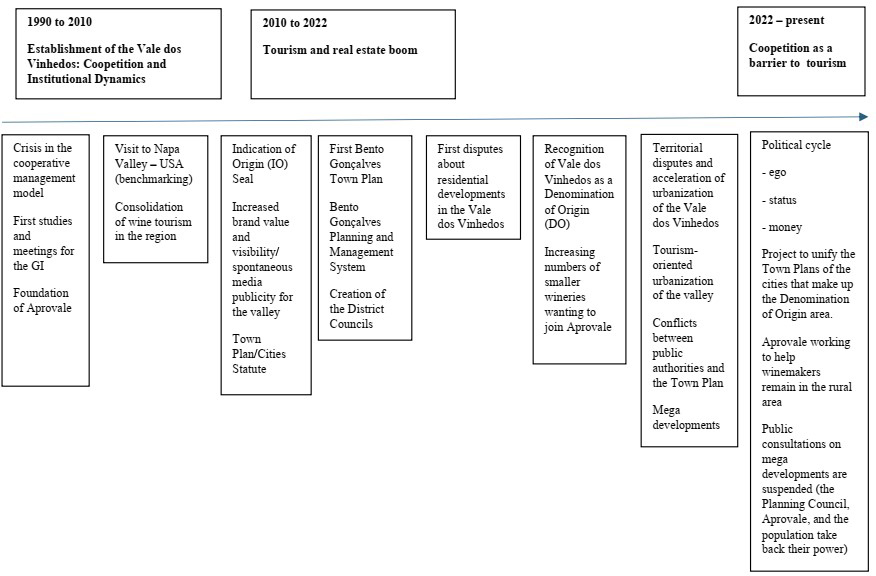
The representative from Formal Institution Agent 8 described the region’s shift toward collaboration: “[…] here, an entity tried to join forces. Initially, there was fierce competitiveness – wineries would even criticize each other’s wines. But now, they’ve realized the power of working as a group. However, competition still exists, as wineries compete for space on restaurant wine lists and in shops” [President of Formal Institution Agent 8, 2013]. This evolution over the past decade illustrates how Vale dos Vinhedos has grown not only as a center for wine production and tourism but also as a community that embraced coopetition to expand its strategic opportunities.
In these terms, several formal institution agents acted to prevent the de-characterization of the Vale dos Vinhedos. “Embrapa, for example, played an important role in identifying the most suitable regions for growing certain grape varieties, taking into account environmental factors (topography, soil, climate, rainfall). Aprovale coordinated actions between different participants in the wine chain. Ibravin acted on behalf of the wineries.” (Specialist, 2017). This coordination between different formal institutional agents was relevant in dealing with another challenge, the drop in tourist numbers due to the COVID-19 pandemic. For example, in 2019, the Vale dos Vinhedos received around 450,000 tourists, while in 2020 this number fell to 229,000 tourists[58,59]. The drop in tourist arrivals has led to multi-scalar cooperation: Aprovale as the local coordinator, the City Council as the executor of public policies, the State and Federal Governments as providers of credit and campaigns, and Sebrae/Embratur as promoters of innovation and marketing. This institutional network made it possible to reduce the impact of the crisis and speed up the recovery from 2021 onwards.
Therefore, on the one hand, coopetition has played an important role in the development of the wine tourism destination. On the other hand, it has contributed to constraining opportunistic behavior by establishing barriers to real estate speculation and large-scale hotel projects. These dynamics illustrate the paradoxical nature of coopetition, not only with regard to the interplay between competition and cooperation, but also in terms of its outcomes, which simultaneously foster tourism development while discouraging initiatives that could undermine the cultural and territorial identity of the region. In this way, the collective efforts of decades have been preserved.
Coopetition has proven to be a relevant response to institutional threats and challenges, particularly those arising from divergent interpretations of the benefits associated with the Vale dos Vinhedos Geographical Indication. Wineries in the region engage in cooperative and competitive behaviors simultaneously, although in distinct domains, in order to achieve outcomes that would be unattainable individually, both in terms of market positioning and the development of wine tourism. This collective strategy also produces positive externalities that extend to other actors along the winemaking value chain. Evidence from Vale dos Vinhedos thus supports the perspective advanced by [15], which frames coopetition not simply as a deliberate managerial choice, but as a structural condition intrinsic to tourism destinations. As emphasized in the tourism coopetition literature (e.g. [31,34], the shared use of resources, destination reputation, and infrastructure renders cooperation unavoidable, even as competitive dynamics in the marketplace persist. Nevertheless, wineries continue to display strongly individualistic behavior, characterized by intense competition in the domestic market [11]. Such dynamics result in asymmetries between individual contributions and the benefits captured by each winery, a pattern that may be partly explained by industry-specific cultural traits that favor individual action [10]. Even so, there remains a broadly shared understanding among stakeholders that collective initiatives generate greater long-term advantages than isolated efforts, particularly in safeguarding the GI from pressures linked to real estate development.
This study traced the collaborative efforts over the years to establish the GI, involving wineries, sectoral organizations, universities, research centers, public administration, and groups rooted in Italian ethnicity. The culmination of these efforts was the creation of the Vale dos Vinhedos Indication of Origin, ensuring quality assurance [42]. However, the region now faces a decision: maintaining its winemaking and tourism achievements or allowing further development focused on real estate. This situation aligns with findings by Duarte Alonso et al. [59], who highlighted the sustainable development potential of wine tourism.
The proposed framework (Figure 2) serves to analyse the paradoxical and dynamic form that cooperative competition) scene presents in a tourism destination managed by GI. The basic formation of collective branding by the actors, to assure the singularity and identity of a quality product (dimension of value creation) that integrates a degree of specificity that characterizes GI. But the other side of this cooperation would be value capture such as asymmetric gains and appropriation conflict among some actors rather than most. And the strategy may involve some value destruction that could be avoided: opposing real estate developments that would diversify what is left of the local economy. There are three dynamic values that are not linear but intersect each other: and often against, giving the paradoxical effectiveness of the strategy.
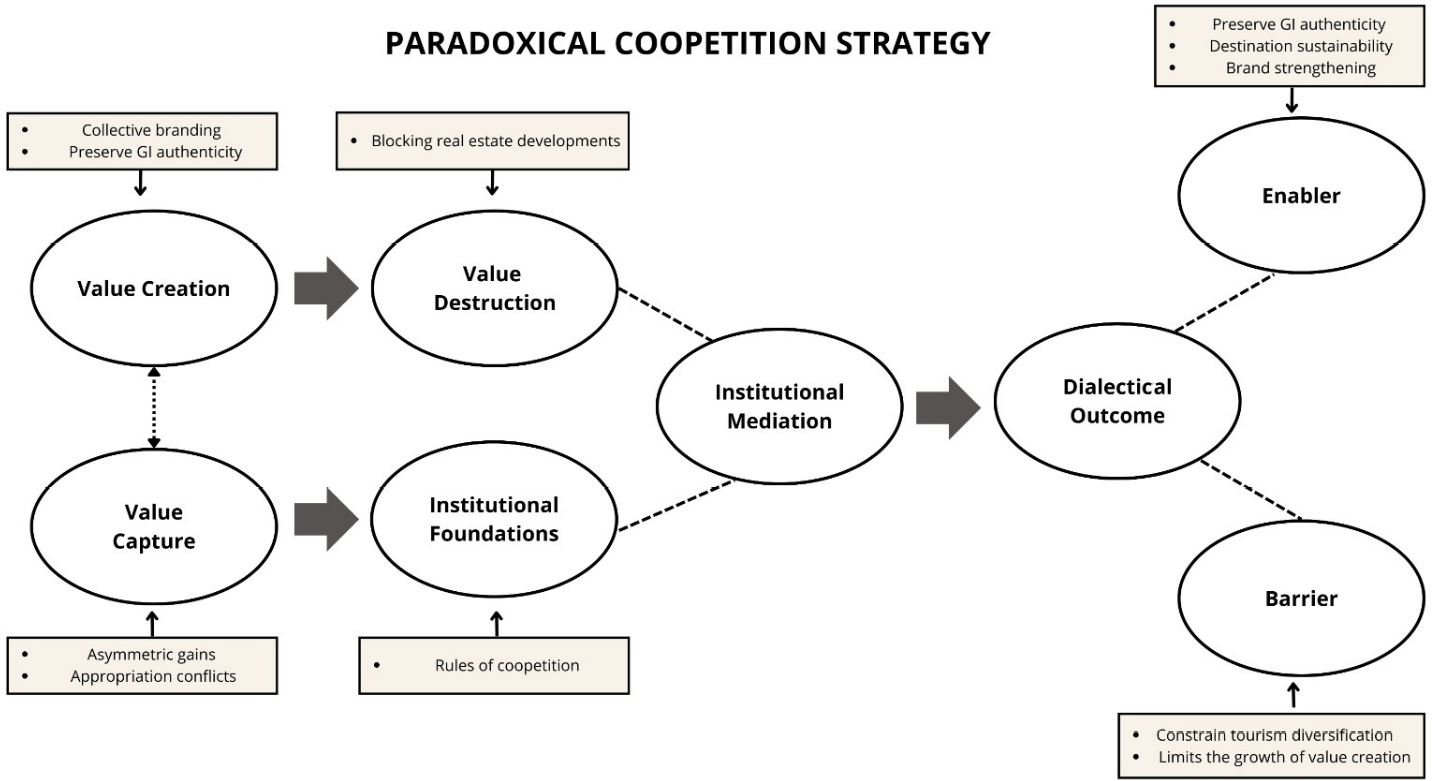
This process is structured and intermediated by institutional bases that so-called ‘rules of the game’ (both formal and informal). These rules govern the nature of competition and how costs and benefits of coopetition are shared. The result is dialectical two contradictory forces are set into play at once. On the one hand, the strategy becomes a facilitator in accurately maintaining the authenticity of GI and in achieving destination sustainability and enhancement initiatives for GI. On the other hand, it can be seen as a “breakwater” that controls tourism diversification and then limits opportunities for value added creation; this causes an intersystem contradiction between conservation and development.
The Vale dos Vinhedos has become a model for other regions, inspiring new winemaking projects and tourism investments across Brazil. The GI underscores the physical distinctions among wine regions, based on climate, soil, terrain, grape varieties, cultivation practices, and cultural factors, similar to traditional winemaking countries. This enhances the international reputation of Brazilian wines, strengthening their image, confidence, and recognition [55]. The region’s perception of quality is also closely linked to wine tourism practices that emphasize co-creation of experiences [8,47].
The objective of this study was to understand how coopetition can create barriers to tourism through coopetition focused on collective interests that seek to preserve the identity of a geographical indication. We found that GI constitutes a central driver of development in the Vale dos Vinhedos, whether economic, social, or environmental, by increasing winemaking activity in conjunction with fine wine dining, with hospitality, with winemaking equipment and supplies, and with the Vale’s cultural heritage. However, this movement is also creating a need for increased public and private infrastructure, increasing the feeling of community belonging, and appreciation of the value of the material and immaterial heritage of the territories of the geographical indications.
As such, coopetition has played a relevant role while, at the same time, impeding development of tourism through real estate projects. To stop this uncontrolled expansion, wineries and formal institution agents established a coopetition strategy to block the entry of new ventures such as hotels and timeshare resorts that could distort the region’s character. For instance, Formal Institution Agent 8 warns that the sustainable development of the region is threatened, both in the sense that increasing the accommodation supply in the Vale dos Vinhedos is an insufficient argument to justify planning approval for new real estate developments, and also in relation to degradation of the vineyard landscape and the impact on wine tourism. Therefore, coopetition has also made it possible to face up to institutional threats and difficulties, mainly those arising from different perspectives based on understanding the gains for association members from the Vale dos Vinhedos GI, but that can slow tourism development in the region.
The study showed that coopetition in Vale dos Vinhedos is a paradoxical strategy. On the one hand, it is fundamental to the establishment and maintenance of the Geographical Indication (GI), crucial for promoting economic, social, and environmental development through wine tourism; on the other hand, it also plays a role in reinforcing social identity at the regional level. Thus, this logic also creates obstacles to tourism development, preventing the diversification of demand for new real estate offerings (hotels, resorts), perceived as a threat to the authenticity of the wine landscape. The study shows how “coopetition” protects the GI from institutional threats and unrestricted real estate proliferation (which are likely to lead to overexploitation), while it can further restrict the possibilities for creating added value for the benefit of the tourist destination, leading to a conflict between conservation and development.
Despite its contributions, this study does have limitations. First, the investigation took place in a single destination, but as this is the most important wine-producing region in Brazil, the research could be easily expanded in the future to encompass other such regions. Second, it is necessary to collect more perspectives from representatives of real estate developers, hotels, and other tourism businesses to evaluate different perceptions about the challenge of steering between promoting the region’s development and preserving the region’s characteristics.
For future research, we suggest analyzing the dynamics of coopetition in other Brazilian wine regions that have obtained or are seeking a GI, from which management models and balances between conservation and creation values can be inferred. Furthermore, it would be interesting to contribute with research that considers the percentage of agents from the real estate and/or hotel sectors, analyzing how different actors perceive the challenges and growth potential in the region and how coopetition strategies among them could become more inclusive to seek to preserve the GI identity while simultaneously achieving efficient economic diversification.
[1] W. Czakon, P. Klimas, M. Mariani, Behavioral antecedents of coopetition: A synthesis and measurement scale, Long Range Plann 53 (2020) 101875. https://doi.org/10.1016/j.lrp.2019.03.001.
[2] D.R. Gnyawali, T. Ryan Charleton, Nuances in the Interplay of Competition and Cooperation: Towards a Theory of Coopetition, J Manage 44 (2018) 2511–2534. https://doi.org/10.1177/0149206318788945.
[3] G. Hidalgo, J.M. Monticelli, J. Pedroso, J.R. Verschoore, C.A. de Matos, The Influence of Formal Institution Agents on Coopetition in the Organic Food Industry, J Agric Food Ind Organ 20 (2022) 61–74. https://doi.org/10.1515/jafio-2019-0009.
[4] V.H.I. Fong, I.A. Wong, J.F.L. Hong, Developing institutional logics in the tourism industry through coopetition, Tour Manag 66 (2018) 244–262. https://doi.org/10.1016/j.tourman.2017.12.005.
[5] P. Chiambaretto, A.S. Fernandez, F. Le Roy, What coopetition is and what it is not: Defining the ‘hard core’ and the ‘protective belt’ of coopetition, Strategic Management Review 6 (2025) forthcoming. https://strategicmanagementreview.net/assets/articles/Chiambaretto,%20Fernandez,%20and%20Le%20Roy.pdf (accessed October 25, 2024).
[6] Forbes, Indicação Geográfica no Brasil cresce 60% em quatro anos, Https://Forbes.Com.Br/Forbesagro/2024/01/Indicacao-Geografica-No-Brasil-Cresce-60-Em-Quatro-Anos (2023).
[7] T.S. Dolci, L.X. DA SILVA, A. Cristóvão, M. DE SOUZA, Institutions and the development of wine tourism: Reflections on the Douro (Portugal) and the Vale dos Vinhedos (Brazil), Journal of Tourism and Development 43 (2023) 133–148. https://doi.org/10.34624/rtd.v43i0.33061.
[8] K.F.B. Maracajá, V. Batista Schramm, F. Schramm, V. Valduga, A multicriteria model for evaluation of Brazilian wineries from a tourism destination perspective, International Journal of Wine Business Research 34 (2022) 52–68. https://doi.org/10.1108/IJWBR-12-2020-0057.
[9] A. Faísco, D. Simplício, A. Carmo, Enoturismo e Desenvolvimento Local: Reguengos de Monsaraz, Cidade Europeia do Vinho 2015, GOT - Journal of Geography and Spatial Planning 1 (2021) 290–310. https://doi.org/10.17127/got/2021.21.012.
[10] J.M. Monticelli, I.L. Garrido, S.L. de Vasconcellos, Coopetition and institutions: a strategy for Brazilian wineries facing internationalization, International Journal of Wine Business Research 30 (2018) 74–95. https://doi.org/10.1108/IJWBR-08-2016-0028.
[11] J.M. Monticelli, I.L. Garrido, L.M. Vieira, A.F. Chim-Miki, J. Carneiro, Can competitors cooperate? The impact of formal institution agents in promoting coopetition among emerging market exporters, Journal of Business & Industrial Marketing 37 (2022) 1915–1932. https://doi.org/10.1108/JBIM-10-2020-0482.
[12] J.M. Crick, D. Crick, The dark-side of coopetition: Influences on the paradoxical forces of cooperativeness and competitiveness across product-market strategies, J Bus Res 122 (2021) 226–240. https://doi.org/10.1016/j.jbusres.2020.08.065.
[13] J.M. Crick, D. Crick, N. Tebbett, Competitor orientation and value co-creation in sustaining rural New Zealand wine producers, J Rural Stud 73 (2020) 122–134. https://doi.org/10.1016/j.jrurstud.2019.10.019.
[14] A. Minà, G.B. Dagnino, Foundations of coopetition strategy: A framework for competition and cooperation, Routledge, London, UK, 2022.
[15] A.F. Chim-Miki, R.M. Batista-Canino, Tourism coopetition: An introduction to the subject and a research agenda, International Business Review 26 (2017) 1208–1217. https://doi.org/10.1016/j.ibusrev.2017.05.003.
[16] A.H.M. Nguyen, L.L. Alcantara, The interplay between country-of-origin image and perceived brand localness: An examination of local consumers’ response to brand acquisitions by emerging market firms, Journal of Marketing Communications 28 (2022) 95–114. https://doi.org/10.1080/13527266.2020.1840422.
[17] A.F. Chim-Miki, R.A. da Costa, R. Oliveira-Ribeiro, Dimensions of tourism coopetition for social value creation, Anatolia 35 (2024) 457–469. https://doi.org/10.1080/13032917.2023.2247800.
[18] M. Kylanen, M.M. Mariani, Unpacking the temporal dimension of coopetition in tourism destinations: evidence from Finnish and Italian theme parks, Anatolia 23 (2012) 61–74. https://doi.org/10.1080/13032917.2011.653632.
[19] M.M. Mariani, Coopetition as an Emergent Strategy: Empirical Evidence from an Italian Consortium of Opera Houses, International Studies of Management & Organization 37 (2007) 97–126. https://doi.org/10.2753/IMO0020-8825370205.
[20] P. Klimas, Organizational culture and coopetition: An exploratory study of the features, models and role in the Polish Aviation Industry, Industrial Marketing Management 53 (2016) 91–102. https://doi.org/10.1016/j.indmarman.2015.11.012.
[21] E. Knein, A. Greven, D. Bendig, M. Brettel, Culture and cross-functional coopetition: The interplay of organizational and national culture, Journal of International Management 26 (2020) 100731. https://doi.org/10.1016/j.intman.2019.100731.
[22] N. Telg, B. Lokshin, W. Letterie, How formal and informal intellectual property protection matters for firms’ decision to engage in coopetition: The role of environmental dynamism and competition intensity, Technovation 124 (2023) 102751. https://doi.org/10.1016/j.technovation.2023.102751.
[23] Y. Nakanishi, Interplay between coopetition and institutions: How Japanese airlines enhance bargaining power, Journal of Co-Operative Organization and Management 8 (2020) 100120. https://doi.org/10.1016/j.jcom.2020.100120.
[24] T. Galkina, E.-L. Lundgren-Henriksson, Coopetition as an entrepreneurial process: Interplay of causation and effectuation, Industrial Marketing Management 67 (2017) 158–173. https://doi.org/10.1016/j.indmarman.2017.09.004.
[25] P. Gammeltoft, J.P. Pradhan, A. Goldstein, Emerging multinationals: home and host country determinants and outcomes, International Journal of Emerging Markets 5 (2010) 254–265. https://doi.org/10.1108/17468801011058370.
[26] A. Albert-Cromarias, A. Asselineau, G. Blanchard, Value creation, appropriation and destruction in coopetitive relationships among micro-firms, Industrial Marketing Management 104 (2022) 366–375. https://doi.org/10.1016/j.indmarman.2022.05.009.
[27] S. Jakobsen, Managing tension in coopetition through mutual dependence and asymmetries: A longitudinal study of a Norwegian R&D alliance, Industrial Marketing Management 84 (2020) 251–260. https://doi.org/10.1016/j.indmarman.2019.07.006.
[28] Y. Yan, J.Q. Dong, D. Faems, Not every coopetitor is the same: The impact of technological, market and geographical overlap with coopetitors on firms’ breakthrough inventions, Long Range Plann 53 (2020) 101873. https://doi.org/10.1016/j.lrp.2019.02.006.
[29] O.T. Bertolini, J.M. Monticelli, I.L. Garrido, J.R. Verschoore, M. Henz, Achieving legitimacy of a film-tourism strategy through joint private–public policymaking, International Journal of Tourism Cities 8 (2022) 424–443. https://doi.org/10.1108/IJTC-04-2021-0066.
[30] C. Gezhi, L. Jingyan, H. Xiang, Collaborative Innovation or Opportunistic Behavior? Evidence from the Relational Governance of Tourism Enterprises, J Travel Res 59 (2020) 864–878. https://doi.org/10.1177/0047287519861170.
[31] J.M. Crick, D. Crick, Coopetition strategies and wine tourism offerings, in: Trategic Management in the Wine Tourism Industry: Competitive Strategies, Wine Tourism Behaviour and New Strategic Tools, Springer Nature Switzerland., Cham, 2024: pp. 67–88.
[32] M. Basso, L. Vettoretto, Conflitto ambientale e conflitto sociale nel territorio del Prosecco: forme, razionalità e prospettive dell’attivazione, ARCHIVIO DI STUDI URBANI E REGIONALI (2023) 58–85. https://doi.org/10.3280/ASUR2023-137004.
[33] J. Cusin, E. Loubaresse, S. Charreire Petit, Analyse d’une dynamique de coopétition conflictuelle, Revue Internationale P.M.E. 26 (2014) 103–125. https://doi.org/10.7202/1024323ar.
[34] P. Alonso González, E. Parga-Dans, A. Macías Vázquez, The political economy of wine: How terroir and intra-sector dynamics affect land use in Spain, Land Use Policy 66 (2017) 288–292. https://doi.org/10.1016/j.landusepol.2017.04.048.
[35] S. Luongo, F. Sepe, G. Del Gaudio, Regional innovation systems in tourism: The role of collaboration and competition, Journal of Open Innovation: Technology, Market, and Complexity 9 (2023) 100148. https://doi.org/10.1016/j.joitmc.2023.100148.
[36] A.S. Kotur, A bibliometric review of research in wine tourism experiences: insights and future research directions, International Journal of Wine Business Research 35 (2023) 278–297. https://doi.org/10.1108/IJWBR-07-2022-0024.
[37] V. Cantino, E. Giacosa, D. Cortese, A sustainable perspective in wine production for common-good management, British Food Journal 121 (2019) 259–274. https://doi.org/10.1108/BFJ-06-2018-0351.
[38] M. Dressler, I. Paunovic, Customer-centric offer design, International Journal of Wine Business Research 31 (2019) 109–127. https://doi.org/10.1108/IJWBR-07-2018-0036.
[39] I. Mensah, Homecoming Events and Diaspora Tourism Promotion in Emerging Economies: The Case of the Year of Return 2019 Campaign in Ghana, in: I. Mensah, K. Balasubramanian, M.R. Jamaluddin, G. Alcoriza, V. Gaffar (Eds.), Marketing Tourist Destinations in Emerging Economies. Palgrave Studies of Marketing in Emerging Economies, Palgrave Macmillan, Cham, 2022: pp. 211–229. https://doi.org/10.1007/978-3-030-83711-2_10.
[40] T.V. Zanini, J.M. da Rocha, O Enoturismo no Brasil: um estudo comparativo entre as regiões vinícolas do Vale dos Vinhedos (RS) e do Vale do São Francisco (BA/PE), Revista Turismo Em Análise 21 (2010) 68. https://doi.org/10.11606/issn.1984-4867.v21i1p68-88.
[41] V. Valduga, M.H.S.G.G. Minasse, [Wine tourism in Brazil: main regions and characteristics of the activity], Territoires Du Vin (2018). http://preo.u-bourgogne.fr/territoiresduvin/index.php?id=1635LicenceCCBY4.0.
[42] C.P. Klinger, E. Silveira-Martins, G.J. de Castro, C.R. Rossetto, Strategic positioning, differentiation and performance of Brazilian wineries, International Journal of Wine Business Research 32 (2019) 219–246. https://doi.org/10.1108/IJWBR-11-2018-0068.
[43] D. Karagiannis, T. Metaxas, Sustainable Wine Tourism Development: Case Studies from the Greek Region of Peloponnese, Sustainability 12 (2020) 5223. https://doi.org/10.3390/su12125223.
[44] R.S. Jackson, Wine tasting: a professional handbook, Elsevier, Amsterdam, 2022.
[45] N. Niu, Terroir, Wine Varieties, Brands and Their Translations into Chinese, International Journal of Chinese and English Translation & Interpreting (2023) 1–20. https://doi.org/10.56395/ijceti.v2i2.68.
[46] V.A. Castro, J. de M.E. Giraldi, Shared brands and sustainable competitive advantage in the Brazilian wine sector, International Journal of Wine Business Research 30 (2018) 243–259. https://doi.org/10.1108/IJWBR-04-2017-0019.
[47] Bento Tur, Secretaria Municipal do Turismo, Turismo em Bento: município recebe mais de 1,7 milhão de visitantes em 2022, Https://Bento.Tur.Br/2023/03/Turismo-Em-Bento-Municipio-Recebe-Mais-de-17-Milhao-de-Visitantes-Em-2022/ (2023).
[48] J. Gehman, V.L. Glaser, K.M. Eisenhardt, D. Gioia, A. Langley, K.G. Corley, Finding Theory–Method Fit: A Comparison of Three Qualitative Approaches to Theory Building, Journal of Management Inquiry 27 (2018) 284–300. https://doi.org/10.1177/1056492617706029.
[49] A. Langley, I. Stensaker, Longitudinal Research and Analysis, in: G. Symon, C. Cassell (Eds.), Qualitative Organizational Research: Core Methods and Current Challenges, SAGE Publications, Inc., London, UK, 2012: pp. 149–167. https://doi.org/10.4135/9781526435620.n9.
[50] A. Langley, C. Abdallah, Templates and turns in qualitative studies of strategy and management, in: G.B. Dagnino, M.C. Cinici (Eds.), Research Methods for Strategic Management , Routledge, London, 2011: pp. 137–166.
[51] H. Noble, J. Smith, Issues of validity and reliability in qualitative research, Evidence Based Nursing 18 (2015) 34–35. https://doi.org/10.1136/eb-2015-102054.
[52] M.B. Miles, A. Huberman, Qualitative data analysis: An expanded sourcebook, Sage Publications Lt., London, 1994.
[53] J. Brooks, S. McCluskey, E. Turley, N. King, The Utility of Template Analysis in Qualitative Psychology Research, Qual Res Psychol 12 (2015) 202–222. https://doi.org/10.1080/14780887.2014.955224.
[54] D.A. Gioia, K.G. Corley, A.L. Hamilton, Seeking Qualitative Rigor in Inductive Research, Organ Res Methods 16 (2013) 15–31. https://doi.org/10.1177/1094428112452151.
[55] J. Tonietto, I. Falcade, C.C. Guerra, M.C. Zanus, As Indicações Geográficas de vinhos do Rio Grande do Sul, in: Brasil, P. e A. Ministério da Agricultura (Eds.), Indicações Geográficas do Rio Grande do Sul registradas até março de 2021, MAPA/AECS, Brasília, 2022: pp. 71–95. https://www.alice.cnptia.embrapa.br/alice/handle/doc/1142177 (accessed October 23, 2024).
[56] Brazil, Lei n.o 9.279, de 14 de maio de 1996 [Law no. 9,279, 14 May 1996], Brasília, 1996.
[57] Vale dos Vinhedos, Vale dos Vinhedos recebeu 443 mil visitantes em 2019, (2020).
[58] Secretaria Municipal de Turismo de Bento Gonçalves, Dados do Observatório Turístico de enfrentamento a Covid-19 são apresentados nesta quarta, (2020).
[59] A. Duarte Alonso, S. Kok, S. O’Brien, Sustainable wine tourism development through the lens of dynamic capabilities and entrepreneurial action: an exploratory four-region perspective, Tourism Recreation Research 45 (2020) 401–419. https://doi.org/10.1080/02508281.2020.1745000.