Stereotypes and Success: Examining Growth Barriers in the New Jersey Wine Industry
University of Colorado, Colorado Springs, 1420 Austin Bluffs Pkway, Colorado Springs, CO (USA) 80918
Email: sporter9@uccs.edu
Abstract. The New Jersey wine industry represents an emerging agricultural sector with considerable growth potential. Yet, it continues to encounter structural and perceptual challenges that constrain its growth and limit its market competitiveness. This study examines central barriers that emerged in the data and are consistent with findings from prior research. These include persistent negative consumer perceptions, collective reputation, restrictive regulatory frameworks, limited distribution channels, fragmented regional branding, and challenges related to digital transformation. Using a mixed-method approach, this research combines in-depth interviews with industry stakeholders, inductive emergent thematic analysis, document analysis, AI sentiment analysis, and quantitative descriptive data to identify and analyze these issues. The findings illustrate that while stakeholders express frustration over regulatory and logistical constraints, they also exhibit optimism for the industry’s future, particularly in areas such as quality improvement, sustainable practices, and regional identity-building. Addressing these challenges through strategies, such as quality assurance programs, further state support for extension services, regulatory reforms, collaborative marketing, and firm-level digital transformation, can significantly strengthen New Jersey’s wine industry. This study also offers public and private policy recommendations to support the industry in establishing a solid and competitive presence in the wine market, positioning New Jersey as a reputable wine-producing region, and applying frameworks for other emerging wine regions.
Keywords: emerging wine regions, New Jersey wine, East Coast wine, developing wine regions, policy.
Index
3.1. Data Collection & Sources
4.1.1. Quality Challenges, Collective Reputation, and Public Perception of New Jersey Wines
4.1.2. Marketing and Distribution Challenges
4.1.3. Tourism and Agritourism Potential
4.1.4. Regulatory Challenges and Reducing Innovation
4.1.5. The Role of Research/Development and Extension Support
4.1.6. Workforce and Training Issues
4.1.7. Changing Consumer Preferences
4.1.8. Collective Action and Cooperation Among Wineries
4.1.9. Need for More Grapes and Vineyard Incentives
4.1.10. Branding, Storytelling, and Digital Transformation Deficiencies
4.2.1. Sustainability and Innovation in Viticulture
4.2.2. Impact of Climate Change on Wine Production
4.2.3. Competition from Other Industries
4.2.4. Challenges of Small Wineries
4.2.5. Importance of Wine Competitions and Recognition
4.2.6. The Potential of Co-op Models
4.2.7. Barriers to Entry for New Wineries
6. Recommendations & Conclusion
The New Jersey wine industry, which encompasses four American Viticultural Areas (AVAs), comprises roughly 1,500 acres of vineyards and 55 wineries and has a direct annual economic impact of approximately $2.3 billion [1]. New Jersey wines now regularly receive critical acclaim, illustrating improvements in quality. However, the industry continues to face barriers to growth and reputation, including inconsistent quality, entrenched consumer perceptions, and regulatory constraints, which are explored in this study [2,3]. Despite its proximity to major urban centers like New York City and Philadelphia and the growing number of wineries with higher quality, the New Jersey wine industry faces persistent challenges related to its brand image, which continues to shape consumer perceptions of quality and reliability. Many consumers perceive New Jersey wines as inferior, often influenced by inconsistent quality across the region and stereotypes that associate the state more with industrial production and popular culture tropes than with viticulture. However, the sector has seen a clear improvement in quality [2]. These perceptions, combined with logistical, regulatory, and firm-level barriers such as restrictive regulations, limited access to distribution channels, poor business processes at the firm level, and a lack of coordinated marketing, have created a challenging landscape for New Jersey winemakers seeking to establish a foothold in the competitive global wine market. Addressing these barriers is essential for the state’s wineries to enhance their potential and attract and retain new consumer demographics, thereby expanding their market presence.
This study will analyze the issues facing New Jersey’s wine industry through a multi-method research approach. First, primary data was collected through in-depth interviews with industry stakeholders, which included winery owners, winemakers, journalists, aligned academics, and representatives from the tourism and regulatory bodies. Through thematically analyzing these interviews, this study identifies significant strengths and challenges in consumer perception, distribution, branding, marketing limitations, regulatory barriers, state support, and industry collaboration. This includes extensive secondary data collection, including document analysis, industry data and reports, media, and literature review. Second, the study incorporates AI sentiment analysis to capture the emotional responses of stakeholders regarding these themes, providing additional insights into industry frustrations and goals. Complementing these qualitative findings, quantitative descriptive statistics further illustrate these issues.
This study analyzes New Jersey’s wine industry through a mixed-methods approach. It highlights actionable insights and public and private policy recommendations for overcoming the challenges. This research aims to support industry stakeholders in enhancing regional reputation, expanding market reach, improving the digital sales ecosystem and branding, promoting growth for New Jersey wines, and assisting in creating frameworks for other emerging wine regions worldwide.
Consumer motivations and perceptions of value and quality play a crucial role in the development of emerging wine regions, influencing destination loyalty, place attachment, and purchasing decisions [4]. For example, in Wisconsin and Minnesota, visitors valued price, service, and emotional experiences over wine education, illustrating predictors of loyalty and growth [5,6]. Moreover, effective branding and regional brand equity further enhance consumer loyalty, as demonstrated by product-focused motives surpassing experiential ones [7,8].
Emerging regions face market volatility and rely on quality perception and collective reputation to build trust [9-12]. Signals like critic ratings, price, and origin influence willingness to pay [11, 13]. In Bordeaux and Burgundy, terroir and collective reputation often outweigh sensory qualities in influencing value [14-16]. Positive expert reviews are critical in emerging regions, where higher reputation risks strengthen the need for critical assessment to build consumer confidence [11, 17, 18, 19, 20].
Branding and regional identity differentiate emerging regions with motivational factors such as quality and environmental values impacting consumer preferences [8, 21]. For example, deregulation and export focus in South Africa fragmented the industry while fostering competitiveness and quality [22]. Moreover, branding has helped regions like North Carolina and New Jersey attract tourism and establish their identity through immersive experiences, such as wine trails [8, 23]. Direct-to-consumer strategies are also vital, with cellar door sales particularly prominent in regions such as New Jersey and Connecticut [23, 24]. In addition, collaborative marketing enhances visibility while sustaining business models, as observed in regions such as California and Australia [24]. Studies also highlight the role of consumer expectations, with wines labeled as “New Jersey” receiving lower ratings than those labeled as “California,” even when controlling for non-biased sensory evaluation, underscoring the importance of branding and collective reputation [2, 25].
Quality assurance programs (QAPs) mitigate consumer risk and support collective reputation [26-28]. Research in Tennessee indicates that QAPs have a positive influence on purchases and on-site spending [27]. Similarly, Texas Tech University’s viticulture programs demonstrate how education and extension offices foster regional competitiveness [29-31]. Indicators such as AVAs and production standards enhance differentiation in crowded markets, thereby reducing consumer risk [13, 32-36].
Perceived quality and pricing remain critical factors in consumer decision-making [34, 37, 38]. For example, expert ratings have been shown to impact wine prices, with even minor ratings leading to measurable price changes [11, 38-40]. In addition to expert opinion, consumer ratings serve as another quality signal that impacts price and helps reduce consumer information asymmetry [35]. Factors such as terroir and production standards also influence price expectations and consumer behavior in wine and other markets [14, 28, 33, 41, 42]. Branding and firm traceability mitigate consumer risk, particularly in luxury markets [43]. As seen in North Carolina and other aligned emerging regions, social capital and collaboration bolster regional reputation and strengthen artisanal values over bulk production [12, 24, 44].
Climate and policy also influence the development of emerging wine regions. While climate shifts benefit some areas, volatility and market trends demand adaptability [45]. Additionally, public policy plays a pivotal role, with programs such as AVAs, extension offices, and grant funding fostering growth. Virginia and Washington’s initiatives align institutional support with industry needs, which promotes economic growth and sustainability [46-48].
Moreover, viticulture and enology make significant contributions to rural economies and sustainability, driving enotourism, infrastructure development, and enhancing urban-rural connectivity. This growth is driven by public policy and the triple helix, a model of collaboration among universities, industry, and government that fosters innovation and regional development [29, 46, 48-52]. Emerging regions face challenges such as collective reputation and consumer risk, but branding, quality assurance, and institutional backing are crucial for growth. This study builds on this literature and offers case insights into New Jersey’s wine industry to explore key indicators for success and areas for further development.
3.1. Data Collection & Sources
The primary data collection process was a purposeful sampling of 21 in-depth interviews with key New Jersey wine industry experts. In total, 29 interviews were conducted, as several participants were interviewed multiple times. Many participants also shared industry documentation via email, including opinions on the state of the industry, internal operational strategy documents, and other relevant industry data. Primary data collection was finalized after data saturation was reached.
The interview protocol was developed as a follow-up to the author’s prior study of the Pennsylvania wine industry, which examined consumer perception, regulatory barriers, and regional branding in a similarly situated mid-Atlantic state [36]. This research also builds directly on earlier work analyzing New Jersey wine perception, particularly the findings on the impact of regional stereotypes and branding on consumer expectations [2]. Together, these studies informed the development of this project’s interview themes and research design. Interview questions were semi-structured and guided by themes from prior research and relevant literature on emerging wine regions, quality signals, and institutional support [10, 11, 36]. The protocol focused on consumer perception, regulatory and distribution challenges, firm-level business practices, branding and storytelling, and the role of public support.
These semi-structured interviews, which ranged in length from 32 minutes to 1 hour and 18 minutes, were conducted primarily over Zoom, with some taking place over the phone. The participants represented a broad cross-section of industry, including staff from aligned non-profits, faculty from relevant higher education institutions, state and local government representatives, tourism professionals, wine educators, wine journalists, winery owners and operators, winemakers, and sommeliers. This range of participants provided varied and complementary perspectives from policy and regulatory viewpoints to market-facing, production-level, and consumer education insights. This helped surface nuanced and overlapping challenges across the industry. While the analysis focused on thematic patterns across all participants, there is potential for future segmented analyses by stakeholder type to refine and prioritize specific themes further. All interviews were recorded with full Institutional Review Board (IRB) approval and participant consent.
A comprehensive secondary data collection was employed to triangulate and confirm specific participant claims, complementing the interviews. This step, which was crucial in ensuring the research’s robustness, helped minimize potential bias from both the participants and the researcher. All relevant media articles listed on the Garden State Grape Growers Association website from 2012 to 2024 were reviewed as part of this process. Additionally, publicly available industry-related documents were sourced from multiple organizations, reviewed, and analyzed using document analysis methods. This included the Garden State Grape Growers Association, Rutgers University, the New Jersey Center for Wine Research and Education, Camden County Community College, Stockton University, the Outer Coastal Plain Vineyard Association, the New Jersey Wine Industry Advisory Council, the New Jersey Winemakers Co-Op, the New Jersey Division of Alcoholic Beverage Control (ABC), the New Jersey State Agriculture Development Committee (SADC), and the New Jersey Division of Travel and Tourism. Furthermore, academic literature, grey literature, and public policies from other emerging wine regions were utilized to reinforce the triangulation process, contextualize the findings, and inform potential policy recommendations. These multiple layers of data collection ensured a comprehensive and validated analysis of the emergent themes.
This research primarily employed thematic analysis (TA) with an inductive approach, allowing themes to emerge naturally from the data rather than being constrained by pre-existing frameworks or assumptions. Thematic analysis is well-suited for exploratory research, as it enables the direct identification of patterns of meaning from participants’ lived experiences. The process included data review, open coding, theme refinement, and naming, all aimed at generating a focused interpretation of the major emergent issues. This approach ensured that the themes reflected the nuanced and complex realities of the New Jersey wine industry [53]. These organically arising themes formed the foundation for the study’s broader analysis [54, 55].
The analysis followed a structured, multi-layered process that combined thematic coding, sentiment analysis, and document triangulation. The author coded all transcripts using an iterative process involving memoing, codebook development, and thematic clustering. While a single researcher conducted the analysis, steps were taken to ensure consistency and reliability. To support intra-rater reliability, a subset of transcripts was recoded several weeks after the initial round, with strong alignment observed between the original, second-round, and third-round codes [56]. The themes were categorized as primary or secondary based on frequency and interpretive significance. Primary themes were raised by a broad share of participants and often connected to systemic barriers or opportunities reflected in the aligned literature and documents. Secondary themes were raised less frequently but added nuance when tied to specific contexts. These distinctions were further reinforced through triangulation with relevant policy documents and prior studies on adjacent emerging wine regions.
While this study employed a single-coder design, qualitative research does not always require multiple coders or interrater reliability to establish rigor, as analytic quality can be demonstrated through alternative systematic and transparent processes rather than solely through coder counts [57, 58]. Single-coder approaches are commonly accepted when supported by practices such as triangulation, detailed documentation, externally validated data, and intra-rater reliability checks, all of which were implemented in this study [59, 60]. Foundational texts likewise stress that consistency, reflexivity, and methodological alignment are central to validity, rather than exclusively the number of coders [58, 61]. The aim is to provide a transparent analytic path so that the development of concepts and themes can be assessed even if alternative categories might be generated by other researchers [62]. To this end, this study incorporated intra-rater checks, NVivo AI sentiment analysis, descriptive statistics, and extensive document triangulation, aligning with peer-reviewed literature and reflecting a systematic process consistent with best practices in qualitative research. This approach demonstrates that the findings are reliable and methodologically sound within a single-coder framework [57–62]. Document analysis served as a complementary method to corroborate and contextualize interview findings. Key regulatory, promotional, and planning documents were reviewed in detail to strengthen the evidentiary base. In cross-referencing participant data with these materials, document analysis reduced potential bias and reinforced the validity of the thematic structure [63]. Themes lacking external support were excluded from final reporting.
In addition, this research employed an innovative approach by applying AI-powered sentiment analysis as a secondary analysis method to assess the emotional tone of the interview data and uncover potential primary industry issues. The sentiment analysis was conducted using NVivo AI, leveraging its automated text analysis capabilities to categorize stakeholder emotions as positive, negative, or neutral. A predefined dictionary of industry-specific terms was applied, and intra-coder reliability checks were performed to validate the AI’s classifications, which ensured consistency and accuracy. This analysis, conducted using NVivo’s machine learning algorithms, classifies the sentiment as positive, negative, or neutral and detects more subtle emotions, such as excitement or frustration [64].
Following the initial AI-powered sentiment analysis, the researcher manually triangulated all sentiments to confirm the findings. During the manual validation of NVivo AI’s sentiment analysis, a few categorizations were found to be inaccurate, particularly those involving nuanced, ambiguous, sarcastic, or unclear phrases. In some instances, the researcher re-listened to the recorded interviews to gather additional context and ensure accurate interpretation. These were mitigated by excluding the problematic instances from the final findings and focusing only on consistently validated sentiments across automated and manual triangulation processes. This manual check ensured that sentiment was only applied where tone could be clearly and consistently interpreted. The final results reflect only those sentiments that withstood this validation process. Using sentiment analysis, quantitative insights were provided into the participants’ emotional responses, offering a complementary perspective to the thematic findings and illustrating the critical issues in the industry from the participants’ point of view [65, 66].
In addition, descriptive statistics were employed to support the qualitative insights further and quantify specific themes and sentiments, a technique widely accepted for identifying salience in qualitative research [55, 67]. For instance, the percentage of participants highlighting particular emergent themes in the industry was calculated; all duplicate participants were removed from the percentages in the findings. These statistics provided a transparent and accessible overview of the data, which helped summarize key findings and illustrate trends within the responses [68].
This study employed a robust mixed-methods approach, integrating thematic analysis, document review, and triangulation, as well as AI-powered sentiment analysis and descriptive statistics. These methods reduced bias, reinforced key findings, and provided a multidimensional understanding of the New Jersey wine industry. The final results were shaped by the convergence of three core analytic layers: the frequency and interpretive depth of participant themes, the emotional tone identified through validated sentiment analysis, and alignment and verification with external documents and prior research. This triangulated approach supported the identification of themes, informed their interpretation, and guided the development of final recommendations.
Following the research, a continual comparative analysis of data, text mining, document analysis, and triangulation revealed distinct patterns that represented critical categorical findings regarding the New Jersey wine industry. These findings reveal the challenges and opportunities within the industry, with clear themes developing across primary and secondary emergent themes.
As previously discussed, primary and secondary themes were identified based on their frequency of occurrence, depth, consistency, and strategic relevance. A larger share of participants raised primary themes and cut across stakeholder groups, often tying into broader structural or market concerns. Secondary themes appeared less frequently or were more context-specific, but they provided valuable insights.
This distinction was guided by both quantitative mention and qualitative weight, reinforced through document analysis and alignment with prior literature. Many findings mirror patterns observed in other geographically adjacent emerging regions, such as Pennsylvania and Connecticut, as well as earlier studies on New Jersey itself, where collective reputation, regulatory constraints, and regional branding influence market potential [2, 23, 36]. These parallels suggest enduring structural barriers while highlighting dynamics specific to New Jersey’s policy and identity landscape. The ten fundamental primary themes that will be explored in depth through this section include:
1. Quality Challenges, Collective Reputation, and Public Perception of New Jersey Wines
2. Marketing and Distribution Challenges
3. Tourism and Agritourism Potential
4. Regulatory Challenges and Reducing Innovation
5. The Role of Research and Development/Extension Support
6. Workforce and Training Issues
7. Changing Consumer Preferences
8. Collective Action and Cooperation Among Wineries
9. Need for More Grapes and Vineyard Incentives
10. Branding, Storytelling, and Digital Transformation Deficiencies
In addition to these primary findings, seven secondary themes were also identified for further consideration and analysis:
1. Sustainability and Innovation in Viticulture
2. Impact of Climate Change on Wine Production
3. Competition from Other Beverage Industries
4. Challenges of Small Wineries
5. Importance of Wine Competitions and Recognition
6. Potential of Co-op Models
7. Barriers to Entry for New Wineries
While these are interconnected themes, each will be discussed and analyzed for clarity. In addition, a brief synthesis at the end of this section will consolidate these findings to highlight their impact on New Jersey’s wine industry.
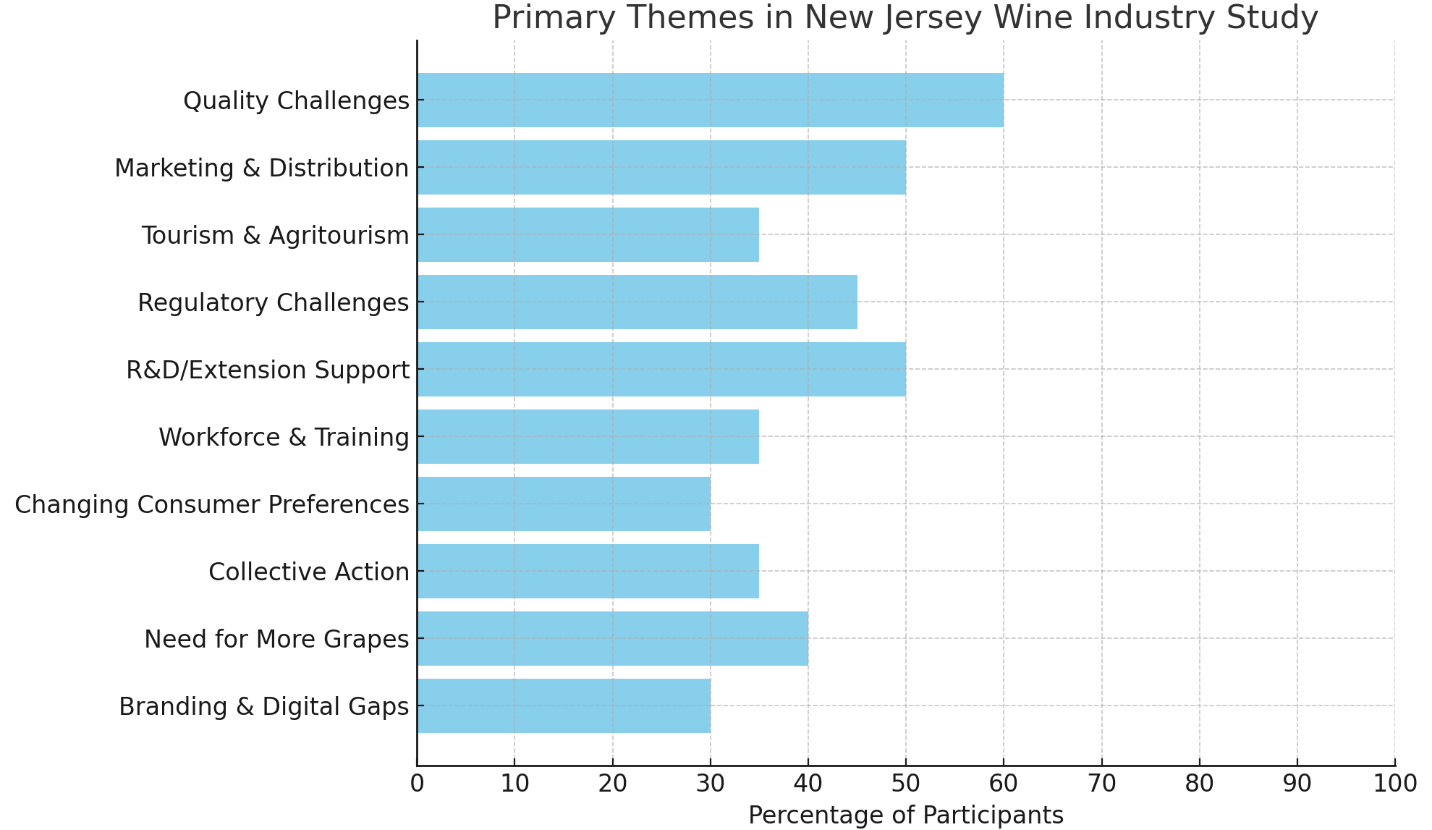
4.1.1. Quality Challenges, Collective Reputation, and Public Perception of New Jersey Wines
New Jersey wines face significant reputation challenges, with 60% of participants highlighting inconsistent quality and entrenched stereotypes as critical barriers. Negative sentiment is common, as even high-quality producers are impacted by subpar offerings. “There is amazing wine here, but there’s still just so much bad wine that people happen to have, and they don’t want to try it again,” one participant noted. Industrial stereotypes, perpetuated by pop culture phenomena like The Sopranos and Jersey Shore, exacerbate the issue, creating a “gravitational pull” that undermines credibility, noted one participant. Research supports that weak branding and inconsistent quality limit growth potential, perpetuating the “one bad apple” effect where a single poor experience deters repeat visits [10, 36].
Public unawareness further compounds the reputation issue, with 30% of participants identifying it as a critical challenge. “People don’t even know we have vineyards here. They think New Jersey is just factories and highways,” one stakeholder remarked. Despite notable improvements in wine quality, outdated perceptions persist, which limit the state’s ability to attract and retain local and out-of-state customers. Additionally, the limited visibility of New Jersey wines in restaurants and retail spaces reinforces these stereotypes. “Without being able to go to a restaurant and taste New Jersey wines, you don’t go home thinking, ‘Let me buy that wine,’’ a participant explained.
Addressing these challenges requires coordinated action to reshape perceptions and attitudes. Participants emphasized the need for consistent messaging, quality-driven branding, and expanded distribution networks to spotlight New Jersey’s unique terroir and winemaking potential. Investments in quality assurance programs and collaborative marketing can help foster local pride and attract consumer interest. As one participant reflected, “The wines are rapidly improving, but it might be too late for New Jersey to ever be seen as a world-class region” [27, 36, 69].
4.1.2. Marketing and Distribution Challenges
As cited by 50% of participants, marketing and distribution challenges emerged as a significant barrier, with predominantly negative sentiment reflecting frustration over limited visibility and difficulty accessing broader markets. Stakeholders described their reliance on local channels, such as farmers’ markets and tasting rooms, which they believe restricts their growth potential. “We’re too small to get picked up by distributors,” one participant explained, noting that distributors often favor larger production regions and producers. The absence of a cohesive regional branding strategy exacerbates these challenges, leaving wineries to struggle in competing beyond local markets. “How do we break through and get noise out? We need to figure out how to market ourselves regionally,” emphasized one stakeholder. Marketing wine as an experience good—where consumers make decisions with incomplete information—was likened to “chumming the water in Jaws,” underscoring the difficulty of building consumer trust and excitement. New Jersey wineries risk being overshadowed without improved marketing efforts and distribution partnerships. “We need all the help we can get with people recognizing who we are,” a participant remarked, reflecting the urgency to enhance brand awareness and reputation [16, 70].
4.1.3. Tourism and Agritourism Potential
New Jersey’s proximity to urban hubs like New York City and Philadelphia offers significant agritourism potential, as highlighted by 35% of participants, who expressed predominantly positive sentiment. Stakeholders view this urban-rural connectivity as crucial to attracting visitors and enhancing local economies. “We need to expand beyond the beach and get visitors to our farms and wineries,” one explained. However, limited infrastructure, such as wine trails and tourism partnerships, limits progress. “This is now the experience of the wine business, not just the wine business,” noted a stakeholder, emphasizing the shift toward hospitality-driven tourism. Integrating wine with broader agritourism could create immersive experiences that appeal to diverse audiences. “For small wineries in New Jersey, it’s about agritourism hospitality now,” one participant said. Improved infrastructure and targeted marketing could position the state as a competitive wine tourism destination, thereby enhancing rural economic development [49, 71]. “Agri-tourism isn’t just about wine tastings anymore—it’s about making people fall in love with the whole experience, from the farm to the bottle,” noted one participant.
4.1.4. Regulatory Challenges and Reducing Innovation
Strict regulations, cited by 45% of participants, present a barrier to growth, with a strongly negative sentiment reflecting widespread frustration over restrictive laws. Legal constraints such as the three-acre cultivation rule and the on-site production mandate disproportionately impact urban wineries and small-scale producers. “The law requires all New Jersey wineries to have a vineyard with at least three acres of vines and to make wine on-site, which is a huge barrier,” one participant explained. These rules constrain innovation and scalability, reinforcing the urban–rural divide, yet they also create a powerful branding opportunity centered on locally grown fruit. Urban wineries often face entry barriers, while rural wineries encounter challenges such as low foot traffic and limited infrastructure. “We can’t put our wineries in downtown environments like breweries can,” noted one stakeholder, emphasizing disparities between the wine and craft beer industries, although these wineries can open tasting rooms.
Frustration with the New Jersey Alcoholic Beverage Control (ABC) was also common, with one participant describing it as “a nightmare to work with.” The current legal framework restricts partnerships, cooperative models, and creative marketing approaches, hindering the industry’s ability to adapt to consumer trends. However, participants acknowledged that the three-acre rule provides a rallying point for advocacy. As one remarked, “The three-acre rule gives us something to rally around… but sometimes it feels like the juice isn’t worth the squeeze!” Examples like Alsace, France, and New Jersey’s own Winemakers Co-Op highlight the potential benefits of innovative collaboration and flexible regulations [72, 73]. Regulatory reforms that address these barriers unlock opportunities for boutique urban wineries, co-op distribution models, and dynamic growth strategies, positioning New Jersey’s wine industry to compete more effectively in broader markets. However, elements like the three-acre requirement may also offer unique branding potential tied to local production, warranting careful consideration of benefits and trade-offs [74].
4.1.5. The Role of Research/Development and Extension Support
A lack of robust extension services emerged as a critical barrier, cited by 50% of participants, with negative sentiment reflecting frustration over insufficient state support. Stakeholders emphasized the importance of having dedicated experts to guide wineries in improving grape quality, adapting to climate change, and fostering sustainability. “At a minimum, we need a state viticulturist and state enologist solely focused on the wine industry,” one participant stressed. The absence of strong academic partnerships, particularly with Rutgers University, further compounds the issue; however, participants noted the quality of the current staff and the need for additional state support. “Successful wine regions have robust academic collaboration, and we don’t,” a stakeholder noted, highlighting how access to scientific expertise helps other regions thrive. New Jersey wineries lack the tools to address local challenges, such as disease-resistant varietals and climate adaptation, without robust extension services. Investment in extension services is essential for advancing the state’s wine industry. Without this infrastructure, stakeholders fear New Jersey will lag behind better-supported regions, leaving its wineries at a competitive disadvantage [29, 31, 75].
4.1.6. Workforce and Training Issues
Workforce challenges, cited by 35% of participants, emerged as a key barrier, with sentiment ranging from neutral to negative. Stakeholders highlighted a significant skills gap, noting the lack of formal education and training programs as a major obstacle. “It’s hard to find workers who are skilled in winemaking. We don’t have the programs to train them,” one participant explained. This skills gap affects all aspects of operations, from vineyard management to marketing and hospitality, limiting wine quality and scalability. “You see wineries struggling to find professionals knowledgeable in winemaking,” another stakeholder observed. Participants emphasized the importance of formal education programs, apprenticeships, and training initiatives in building a skilled workforce. “We need to provide training and programs to develop a skilled winemaking labor force in New Jersey,” one interviewee emphasized. Farmers interested in agritourism face similar barriers, with limited guidance on how to diversify their operations. Investing in workforce development through education and training is crucial for enhancing wine quality, promoting agritourism, and ensuring the industry’s long-term sustainability [76].
4.1.7. Changing Consumer Preferences
As 30% of participants noted, shifting consumer preferences are reshaping the New Jersey wine industry. Sentiment ranged from positive to neutral, as stakeholders recognized opportunities for growth by aligning with the priorities of younger consumers. “There’s a big market for sweeter wines, even though they aren’t to my taste,” one participant remarked, highlighting the potential to cater to new palates. Younger generations value sustainability, unique flavors, and affordability over traditional markers, such as AVA labels. “The next generation doesn’t care about AVA labels; they care about sustainability and the story behind the wine,” explained a stakeholder. A Wine Institute study found that nearly three-quarters of U.S. consumers would consider sustainably produced wine, with nine out of ten millennials willing to pay more for such products [77]. Participants also noted openness to hybrid grape varieties and unconventional styles. “This generation doesn’t care about the prejudice against hybrids—they just want good wine and new flavors,” one interviewee said. Innovation in hybrids and distinct offerings presents an opportunity to engage adventurous, younger consumers. Adapting to these trends by prioritizing sustainability and offering innovative wines is crucial for New Jersey wineries to attract new customers and remain competitive in a rapidly evolving market.
4.1.8. Collective Action and Cooperation Among Wineries
The collective action, noted by 35% of participants, emerged as a critical theme for addressing shared challenges, though sentiment was mixed. Stakeholders acknowledged the potential of collaboration but expressed frustration with industry fragmentation. “We’re stronger together, but it’s like herding cats trying to get everyone on the same page,” one participant remarked. This lack of unity has stalled progress on key issues, including marketing, lobbying for regulatory reform, and establishing unified quality standards. “We need to have a unified voice about what we do as an industry, but there’s so much fragmentation,” another stakeholder observed. Without cohesion, New Jersey wineries struggle to establish a strong regional brand, which limits their competitiveness both locally and nationally [24]. Participants emphasized that collaboration could enhance marketing campaigns, policy advocacy, and market visibility. “If we could just agree on a unified message, New Jersey wine could be unstoppable,” one interviewee noted. However, the lack of alignment continues to hinder these efforts. By adopting a collective action and coopetition approach, New Jersey wineries could pool resources, amplify their impact, and address shared challenges effectively. A more unified strategy, particularly in terms of quality assurance, would strengthen the industry’s regional identity and enhance its competitive advantage [24].
4.1.9. Need for More Grapes and Vineyard Incentives
The need for increased vineyard acreage and incentives was a recurring concern, with 40% of participants highlighting it as a critical area for industry support. Sentiment on this topic ranged from negative to neutral, as stakeholders expressed frustration over the limited land dedicated to grape cultivation and the lack of state-level initiatives to encourage expansion. “We simply don’t have enough vineyards in the state to meet production needs. We need real incentives for grape growers,” one participant emphasized, reflecting a widespread challenge in meeting the demand for high-quality grapes.
Establishing new vineyards is a costly and long-term investment, which many small operators cannot afford without financial support. “The cost of planting new vineyards is enormous, and most of us just can’t afford to do it without help,” another stakeholder shared, highlighting the economic barriers potential growers face. While there is demand for high-quality fruit from both within and outside the state, the limited supply of grapes restricts production and hinders the region’s ability to compete with larger wine-producing states. “There’s more demand than supply currently for high-quality fruit,” one participant noted, emphasizing the disconnect between market potential and production capacity. Participants agreed that introducing targeted incentives, such as tax breaks or grants, would provide much-needed support for expanding vineyard acreage. “Any kind of incentive at all to encourage people to grow more fruit would be a massive help,” one interviewee suggested, pointing to the dual benefit of increasing production capacity while preserving farmland and fostering sustainability. Without such measures, the scalability and sustainability of the New Jersey wine industry remain uncertain, leaving wineries unable to meet the growing demand of consumers or improve their competitive standing [78].
4.1.10. Branding, Storytelling, and Digital Transformation Deficiencies
Branding and digital transformation challenges, identified by 30% of participants, were met with predominantly negative sentiment, as stakeholders criticized the lack of a cohesive regional identity and underdeveloped digital strategies. “Our wine doesn’t sell itself; the narrative is just as important,” one participant noted, highlighting the importance of storytelling in creating emotional connections with consumers. While some wineries excel at individual branding, the region struggles with outdated websites, inconsistent social media strategies, and insufficient e-commerce platforms. “Most wineries have terrible websites. You can’t even figure out how to order the wine,” another stakeholder remarked, emphasizing a critical gap in online infrastructure.
Direct-to-consumer (DTC) sales were a particular pain point, with participants identifying outdated digital sales channels and poor e-commerce execution as significant barriers to growth. “Digital storytelling and selling are crucial, and we’re just not doing it,” one respondent emphasized. Weaknesses in social media strategies further hinder consumer engagement, with stakeholders noting a lack of connection to the land, people, and stories behind the wines. Participants recommended investments in unified branding, modernizing DTC platforms, and leveraging digital storytelling to engage consumers emotionally and remain competitive. Strengthening digital infrastructure and cohesive narratives will allow New Jersey wineries to expand their market reach and secure a stronger foothold in an increasingly digital wine industry [79, 80].
4.2.1. Sustainability and Innovation in Viticulture
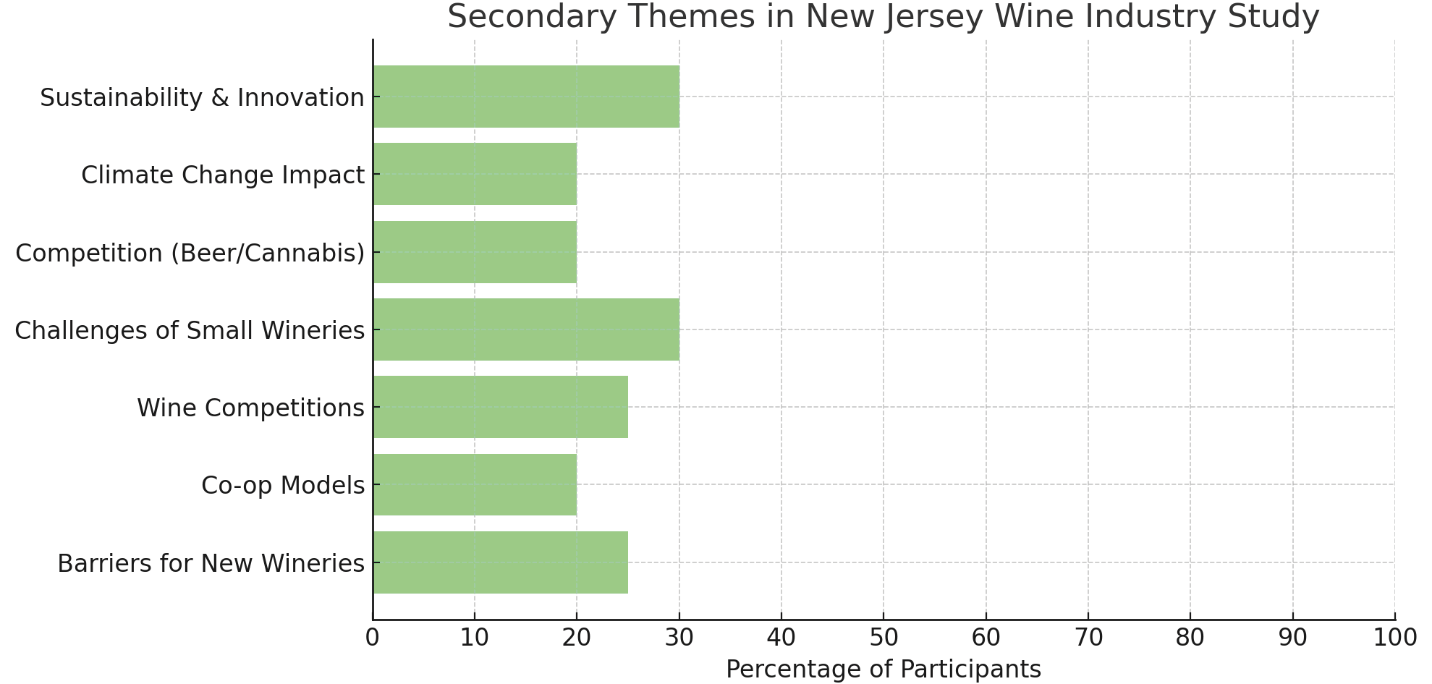
Sustainability, mentioned by 30% of participants, reflects a growing focus on environmental practices, such as reducing pesticide use and experimenting with hearty hybrid grape varieties, all of which are of value in the global wine market. While optimism and sentiment are high and positive, smaller wineries face barriers like high costs and limited infrastructure. “New Jersey can be the next Napa, but we need to innovate,” one participant remarked, emphasizing the importance of sustainable practices for long-term viability [81].
4.2.2. Impact of Climate Change on Wine Production
Climate change, noted by 20% of participants, raises concerns about its effects on grape quality and growing seasons. The sentiment was negative, with growers highlighting issues such as increased rainfall and unpredictable weather patterns. While some wineries are exploring resilient grape varieties and new management practices, these efforts remain limited. “I’m spooked by how much rain we’ve gotten in the last four years. It’s having a huge impact on our vineyards,” one participant stated. Adapting to climate instability is essential to maintaining quality and competitiveness in the evolving wine market [82].
4.2.3. Competition from Other Industries
Competition from craft beer and cannabis, mentioned by 20% of participants, is seen as a growing challenge, particularly with younger consumers. The sentiment was negative, as stakeholders noted that breweries benefit from looser regulations, and the emerging cannabis market diverts attention from wine. “It feels like cannabis is pulling customers away from tasting rooms—now people prefer a puff to a pour,” one participant remarked. Without innovative marketing or new product offerings, wineries may struggle to capture the interest of younger consumers who are increasingly diversifying their drinking habits across various product categories [83, 84].
4.2.4. Challenges of Small Wineries
Scaling operations are a significant obstacle for small wineries, as 30% of participants noted, with sentiments ranging from neutral to negative. High operating costs, limited distribution access, and competition from larger producers make growth challenging. Many small wineries are run as passion projects, which limits their investment in equipment, marketing, and staffing, contributing to inconsistent production quality. “We can’t operate as hobby businesses if we want the industry to grow,” one participant stated. Supporting these wineries through co-op models, shared resources, or incentives could enhance their scalability and bolster the region’s overall impact [85, 86].
4.2.5. Importance of Wine Competitions and Recognition
Winning awards and gaining critical recognition were highlighted by 25% of participants as a valuable tool for elevating New Jersey wines. However, sentiment was neutral due to mixed views on their current effectiveness. While competitions can bring visibility and credibility, many participants feel their impact has diminished, especially as prestigious platforms like Wine Enthusiast shift focus away from emerging regions. “Wine Enthusiast isn’t scoring emerging regions anymore, which is a big loss for us,” one stakeholder noted. Broader recognition from well-regarded contests could help New Jersey wineries establish credibility, attract consumers, and mitigate perceived risks. However, the decline in these opportunities leaves many feeling disconnected from opportunity [11, 40].
4.2.6. The Potential of Co-op Models
Co-op models were supported by 20% of participants, with positive sentiment about their ability to address financial and distribution challenges. These models, common in other agricultural sectors, facilitate resource sharing for production and distribution. The success of New Jersey’s Winemakers Co-Op demonstrates the potential for further adoption, particularly in creating shared facilities, equipment, and distribution networks. “If we could pool our resources and create co-ops for production and distribution, we could lower costs and increase output,” one participant noted. However, regulatory changes, such as relaxing on-site production requirements, may be necessary to expand these models effectively. Co-ops have been successful in regions like Alsace, France, and could offer New Jersey wineries a pathway to reduce costs, scale operations, and enhance their market presence [24, 72, 87].
4.2.7. Barriers to Entry for New Wineries
High entry costs and strict regulations were identified by 25% of participants as significant barriers to new wineries, with a strongly negative sentiment. The combination of expensive property, costly equipment, and regulatory requirements, such as the New Jersey Division of Alcoholic Beverage Control’s minimum acreage rule and the Farmland Assessment Act’s three-acre mandate, creates prohibitive hurdles for new entrants. “The initial investment is huge. It’s really hard to start a winery unless you have significant capital,” one participant explained. These barriers limit industry growth, stifle innovation, and reduce diversity in business models and wine offerings. Addressing these challenges through regulatory reform and targeted support could enable more dynamic industry growth and foster new opportunities [88-91].
These findings indicate that New Jersey’s wine industry faces several structural challenges, including limited extension support, workforce development issues, restrictive regulations, and a lack of vineyard incentives. Issues with collective reputation and weak regional brand equity continue to hinder the process of gaining consumer trust and expanding market access. At the same time, clear opportunities, such as growing interest in agritourism, improving quality, shifting consumer preferences, urban-rural connectivity, and cooperative models, offer paths forward.
While this study provides valuable insights into the New Jersey wine industry, several limitations must be noted. First, the sample size of 21 individuals and 29 total in-depth interviews, though appropriate for qualitative research, may limit the diversity of perspectives captured, as some participants were interviewed multiple times. This focused sample enables detailed thematic exploration but may not accurately represent the broader industry.
Second, participant bias is a potential concern, as the purposeful selection of highly involved experts might skew findings toward established voices, potentially marginalizing emerging perspectives. Similarly, the researcher’s role in data collection and analysis introduces the possibility of subjective influence, despite the use of structured protocols and efforts to maintain objectivity. To mitigate these issues, the study employed triangulation, cross-referencing interview data with industry reports, intra-rating reliability, public policies, and aligned academic literature to provide a broader context and enhance credibility. The integration of extensive external document analysis and AI sentiment analysis enhances the validity of the findings, ensuring they accurately reflect both individual experiences and broader industry realities. Although this study employed a single-coder design, recent methodological work emphasizes that rigor can be demonstrated through systematic and transparent processes rather than solely relying on coder counts [57, 59, 62]. This research addressed the standard by employing a consistent methodological alignment and incorporating iterative coding, memoing, intra-rater checks, and triangulation, utilizing AI sentiment analysis, descriptive statistics, peer-reviewed literature, and document review.
6. Recommendations & Conclusion
While the New Jersey wine industry has demonstrated measurable progress in quality, enduring challenges remain. This study highlights several issues that continue to restrict the industry’s capacity for sustained growth and market recognition. New Jersey’s wine industry remains constrained by negative public perception, inconsistent branding, restrictive regulations, limited distribution, and operational inefficiencies, making the recommendations below critical to overcoming these barriers. While this research reveals frustration over the obstacles, it also fosters optimism about the industry’s future and opportunities if the identified challenges are addressed.
Addressing these challenges will require a deliberate and strategic approach. First, creating a unified brand identity that emphasizes quality and regional distinctiveness is important for New Jersey wineries to compete effectively. A statewide marketing campaign highlighting the unique terroir, improved wine quality, and the stories of local winemakers could position the state as a premier wine destination. In addition, efforts to overcome negative perceptions must include cohesive branding with hyper-focused programming that emphasizes quality and is designed to enhance the collective reputation of New Jersey wines. This can include the introduction of industry-wide quality certifications, educational outreach campaigns, and media partnerships with food and wine critics, influencers, and travel writers to build public trust and elevate the region’s profile.
Regulatory reforms that address these barriers, including rethinking the three-acre rule, could unlock opportunities for boutique urban wineries, innovation, co-op distribution models, and dynamic growth strategies, positioning New Jersey’s wine industry to compete more effectively in broader markets. However, the three-acre requirement may also offer unique branding potential tied to local production, so reforms should be approached to understand the balance between removing structural limitations and preserving the identity, place-based storytelling value, and market distinctiveness that these rules can provide.
Furthermore, expanding research and development efforts through partnerships with Rutgers University and other institutions would provide the scientific support needed to adapt to New Jersey’s unique viticultural conditions. Increased funding for extension services, including the creation of a state viticulturist and oenologist position, is vital for long-term success.
The industry must also address the limited availability of vineyards by incentivizing new plantings through tax breaks, grants, and other financial support. Expanding vineyard acreage not only meets growing production demands but also enhances the scalability of New Jersey’s wine sector while focusing on terroir and improving brand image. In addition, strengthening distribution networks is equally important, as small wineries often struggle to access retail and restaurant markets. Moreover, establishing cooperative distribution models could alleviate these challenges, while direct shipping opportunities and partnerships with grocers and the hospitality sector can help increase visibility and market penetration. Finally, and most importantly, there is a hyper-focus on quality and quality assurance. Implementing comprehensive quality programs, such as quality production standards and rigorous wine competitions, will enhance consumer trust and ensure that New Jersey wines are recognized as premium products.
This study contributes to the literature by providing a comprehensive analysis of the New Jersey wine industry, offering insight into how emerging wine regions can address systemic challenges such as regulatory barriers, branding and quality inconsistencies, and distribution limitations. Integrating qualitative insights and aligned best practices with actionable policy recommendations establishes a framework that other developing regions can adapt to improve marketability, brand equity, collaboration, and growth.
[1] J. Dunham, 2025. New Jersey wine industry: Economic impact study 2025. WineAmerica. https://wineamerica.org/economic-impact-study-2025/new-jersey-wine-industry-2025/
[2] R. H. Ashton, 2014. Nothing good ever came from New Jersey: Expectations and the sensory perception of wines. Journal of Wine Economics, 9(3), 304–319.
[3] Garden State Wine Growers Association, 2025. About NJ Wine. https://www.newjerseywines.com/about-nj-wine/
[4] S. Cardinale, B. Nguyen, T.C. Melewar, 2016. Place-based brand experience, place attachment, and loyalty. Marketing Intelligence & Planning, 34(3).
[5] J.J. Cronin Jr, M.K. Brady, G.T.M. Hult, 2000. Assessing the effects of quality, value, and customer satisfaction on consumer behavioral intentions in service environments. Journal of Retailing, 76(2), 193–218.
[6] J.S. Lee, D. McCole, D.F. Holecek, 2020. Exploring winery visitors in the emerging wine regions of the North Central United States. Sustainability.
[7] U. Akkucuk, J. Esmaeili, 2016. The impact of brands on consumer buying behavior: An empirical study on smartphone buyers. International Journal of Research in Business and Social Science, 5(4), 1-16.
[8] B. Canziani, E.T., Byrd, 2017. Exploring the influence of regional brand equity in an emerging wine sector. Journal of Wine Economics, 12(4), 370-377.
[9] J. Beneke, R. Flynn, T. Greig, M. Mukaiwa, 2013. The influence of perceived product quality, relative price, and risk on customer value and willingness to buy: A study of private label merchandise. Journal of Product & Brand Management, 22(3), 218–228.
[10] A. Ugochukwu, 2015. Essays on collective reputation and authenticity in agri-food markets. 204 Doctoral dissertation, University of Saskatchewan. https://www.baclac.gc.ca/eng/services/theses/Pages/list.aspx?NW_S=Ugochukwu,+Albert
[11] D. Kaimann, C.L.M. Spiess Bru, B. Frick, 2023. Ratings meet prices: The dynamic relationship of quality signals. Journal of Wine Economics, 18(3), 226-244.
[12] F. Shi, Q. Gu, T. Zhou, 2024. Understanding brand reputation: a case study of Chinese wineries. International Journal of Contemporary Hospitality Management, 36(8), 2774–2794.
[13] H.H. Ali, C. Nauges, 2007. The pricing of experience goods: The example of en primeur wine. American Journal of Agricultural Economics, 89(1), 91–103.
[14] S. Lecocq, M. Visser, 2006. What determines wine prices: Objective vs. sensory characteristics. Journal of Wine Economics, 1(1), 42–56.
[15] R. Veale, P. Quester, 2008. Consumer sensory evaluations of wine quality: The respective influence of price and country of origin. Journal of Wine Economics, 3(1), 10–29.
[16] O. Gergaud, F. Livat, B. Rickard, F. Warzynski, 2017. Evaluating the net benefits of collective reputation: The case of Bordeaux wine. Food Policy, 71, 8–16.
[17] I. Horowitz, L. Lockshin, 2002. What price quality? An investigation into the prediction of wine-quality ratings. Journal of Wine Research, 13(1), 7–22.
[18] J. Hilger, G. Rafert, S. Villas-Boas, 2011. Expert opinion and the demand for experience goods: An experimental approach in the retail wine market. Review of Economics and Statistics, 93(4), 1289–1296.
[19] R. H. Ashton, 2012. Reliability and consensus of experienced wine judges: Expertise within and between? Journal of Wine Economics, 7(1), 70–87.
[20] B.J. Babin, C. Bushardt, 2019. Third-party ratings and the US wine market. International Journal of Wine Business Research, 31(2), 151–162.
[21] U.R. Orth, M. McGarry Wolf, T.D., Dodd, 2005. Dimensions of wine region equity and their impact on consumer preferences. Journal of Product & Brand Management, 14(2), 88–97.
[22] P. Nugent, 2023. Sour grapes and sweet harmony: Historicizing collective action problems in the South African wine industry. Journal of Wine Economics, 18(4), 332–340.
[23] E.C. Villanueva, D. Moscovici, 2016. Sustainable wine tourism development in burgeoning regions: Lessons from New Jersey and Connecticut. International Journal of Economics and Business Research, 12(4), 313-333.
[24] K.M. Birkeland, K.K. Bito, 2024. Leveraging Insights from Established Wine Regions to Empower Emerging Wine Regions (Master’s thesis, University of Agder).
[25] K.H. Lim, 2021. Sounds better? Potential implications of obscure American Viticultural Areas to consumers. Journal of Agricultural and Applied Economics, 53(1), 37–54. doi:10.1017/aae.2020.27
[26] S. Landon, C.E. Smith, 1997. The use of quality and reputation indicators by consumers: The case of Bordeaux wine. Journal of Consumer Policy, 20(3), 289–323.
[27] A.L. Rihn, K.L. Jensen, D.W. Hughes, 2022. Consumer perceptions of wine quality assurance programs: An opportunity for emerging wine markets. Sustainability, 14(4), 2340.
[28] L. Macedoni, 2022. Asymmetric information, quality, and regulations. Review of International Economics, 30(4), 1180–1198.
[29] P. Cerdán-Infantes, A. Maffioli, D. Ubfal, 2008. The impact of agricultural extension services: The case of grape production in Argentina. Office of Evaluation and Oversight (OVE). Inter-American Development Bank. Washington, DC.
[30] S. Vittek, 2023. How viticulture programs drive success for emerging wine regions. Seven Fifty Daily. Retrieved from https://daily.sevenfifty.com/how-viticulture-programs-drive-success-for-emerging-wine-regions/
[31] J.M. Cardebat, O. Guyottot, M. Hassan, 2025. Higher education institutions’ territorial embeddedness and regional reputation and ecosystem: a study of French wine programs. Higher Education, 1–250.
[32] G.A. Akerlof, 1978. The market for “lemons”: Quality uncertainty and the market mechanism. In Uncertainty in economics (pp. 235-251). Academic Press.
[33] G. Schamel, 2000. Individual and collective reputation indicators of wine quality. CIES Working Paper No. 10, March.
[34] M. Costanigro, J.J., McCluskey, C. Goemans, 2010. The Economics of Nested Names: Name Specificity, Reputations, and Price Premia. American Journal of Agricultural Economics, 92(5), 1339–1350. http://www.jstor.org/stable/40931090
[35] S. Bazen, J.M. Cardebat, M. Dubois, 2024. The role of customer and expert ratings in a hedonic analysis of French red wine prices: from gurus to geeks?. Applied Economics, 56(46), 5513-5529.
[36] S. Porter, 2022. A Comprehensive Analysis of the Pennsylvania Wine Industry with Actionable Recommendations for Industry Improvement and Growth. West Chester University Doctoral Projects. 139. https://digitalcommons.wcupa.edu/all_doctoral/139
[37] J.C. Sweeney, G.N. Soutar, L.W. Johnson, 1999. The role of perceived risk in the quality-value relationship: A study in a retail environment. Journal of Retailing, 75(1), 77–105.
[38] J. Núñez, D. Martín‐Barroso, F.J. Velázquez, 2024. The hedonic price model for the wine market: A systematic and comparative review of the literature. Agricultural Economics, 55(2), 247-264.
[39] G.V. Jones, K.H. Storchmann, 2001. Wine market prices and investment under uncertainty: An econometric model for Bordeaux crus classés. *Agricultural Economics, 26*(2), 115–133.
[40] S.M. Porter, 2024. Decoding the Italian Wine Market: A Quantitative Macro-Economic Examination of Price and Expert Rating Influences. Wine Business Journal.
[41] P. Masset, J.P. Weisskopf, M. Cossutta, 2015. Wine tasters, ratings, and en primeur prices. *Journal of Wine Economics, 10*(1), 75–107.
[42] A. Patel-Campillo, A. DeLessio-Parson, 2016. Can symbolic capital enhance agricultural production? Exploring quality certification and branding in the Basque wine region. Sociologia Ruralis, 56(3), 319–341.
[43] M. Veseth, 2011. Wine wars: The curse of the blue nun, the miracle of two buck chuck, and the revenge of the terroirists. Rowman & Littlefield Publishers.
[44] J. Franken, M. Gómez, R.B. Ross, 2018. Social capital and entrepreneurship in emerging wine regions. Journal of Wine Economics, 13(4), 419-428.
[45] O. Ashenfelter, K. Storchmann, 2016. Climate change and wine: A review of the economic implications. *Journal of Wine Economics, 11*(1), 105–138.
[46] J.J. Dethier, A. Effenberger, 2012. Agriculture and development: A brief review of the literature. Economic Systems, 36(2), 175–205.
[47] A. Hira, 2013. Mapping out the Triple Helix: how institutional coordination for competitiveness is achieved in the global wine industry. Prometheus, 31(4), 271–303.
[48] J. Mota, R. Costa, A. Moreira, S Serrão, C. Costa, 2021. Competitiveness framework to support regional-level decision-making in the wine industry: A systematic literature review. Wine Economics and Policy, 10(2), 29-40.
[49] D. Cvijanović, D.J. Novaković, Z. Vojinović, 2017. Wine industry as a source of rural growth and development. In Proceedings of the International Scientific Conference “Strategies for the Agri-Food Sector and Rural Areas–Dilemmas of Development” (pp. 19-21).
[50] J.D. Van der Ploeg, 2018. The new peasantries: Rural development in times of globalization. Routledge.
[51] L.C. Chen, A. Kingsbury, 2019. Development of wine industries in the New-New World: Case studies of wine regions in Taiwan and Japan. Journal of Rural Studies, 72, 104–115
[52] V. Santos, P. Ramos, B. Sousa, M. Valeri, 2021. Towards a framework for the global wine tourism system. Journal of Organizational Change Management.
[53] V. Braun, V. Clarke, 2012. Thematic analysis. American Psychological Association.
[54] J.P. Williams, 2008. Emergent themes. The Sage encyclopedia of qualitative research methods, 1, 248–249.
[55] H. Miles, A.M. Huberman, J. Saldana, 2020.Qualitative data analysis: A methods sourcebook. New York: Sage Publications, Inc.
[56] J.L. Campbell, C. Quincy, J. Osserman, O.K. Pedersen, 2013. Coding in-depth semistructured interviews: Problems of unitization and intercoder reliability and agreement. Sociological methods & research, 42(3), 294–320.
[57] L. Busetto, W. Wick, C. Gumbinger, 2020. How to use and assess qualitative research methods. Neurol. Res. Pract. 2, 14. https://doi.org/10.1186/s42466-020-00059-z
[58] J. Morse, 2020. The changing face of qualitative inquiry. International Journal of Qualitative Methods, 19, 1609406920909938.
[59] I.G. Raskind, R.C. Shelton, D.L. Comeau, H.L. Cooper, D.M. Griffith, M.C. Kegler, 2019. A review of qualitative data analysis practices in health education and health behavior research. Health Education & Behavior, 46(1), 32-39.
[60] V. Elliott, 2018. Thinking about the coding process in qualitative data analysis. Qualitative report, 23(11).
[61] M. Kawamoto, M. Koizumi, F. Yoshikane, 2023. Proposal of a qualitative content analysis process for a solo researcher. Libri, 73(2), 139-152.
[62] L. Spencer, J. Ritchie, W. O’Connor, 2003. Analysis: practices, principles and processes. Qualitative research practice: A guide for social science students and researchers, 199, 218.
[63] G.A. Bowen, 2009. Document analysis as a qualitative research method. Qualitative research journal, 9(2), 27–40.
[64] Nvivo, 2024. How Auto Coding Sentiment Works. QSR International. https://help-nv11.qsrinternational.com/desktop/concepts/How_auto_coding_sentiment_works.htmL
[65] M. Taboada, 2016. Sentiment analysis: An overview from linguistics. Annual Review of Linguistics, 2(1), 325–347.
[66] M. Wankhade, A.C.S. Rao, C. Kulkarni, 2022. A survey on sentiment analysis methods, applications, and challenges. Artificial Intelligence Review, 55(7), 5731–5780.
[67] G. Guest, K.M. MacQueen, E.E. Namey, 2011. Applied thematic analysis. Sage Publications.
[68] R.W. Cooksey, 2020. Descriptive statistics for summarising data. Illustrating statistical procedures: Finding meaning in quantitative data, pp. 61–139.
[69] J.E. Wilson, 1998. Terroir: The role of geology, climate, and culture in the making of French wines (Wine Wheels). University of California Press.
[70] J. Tirole, 1996. A Theory of collective reputations (with applications to the persistence of corruption and firm quality). The Review of Economic Studies, 63(1), 1-22, http://www.jstor.org/stable/2298112
[71] D.K. Bole, 2024. Sustainable Wine Tourism: Best Practices. In: Martínez-Falcó, J., Marco-Lajara, B., Sánchez-García, E., Millán-Tudela, L.A. (eds) Wine Tourism and Sustainability. Palgrave Macmillan, Cham. https://doi-org.uccs.idm.oclc.org/10.1007/978-3-031-48937-2_5
[72] R. Morais, 2018. The history and role of wine cooperatives. Grapes & Grains. https://www.grapesandgrains.org/2018/02/the-history-and-role-of-wine-cooperatives.html
[73] Garden State Wine Growers Association, 2021. Garden State Wine Growers Association launches new tourism app produced by IGM Creative Group. Wine Industry Advisor. https://wineindustryadvisor.com/2021/09/07/garden-state-wine-growers-new-tourism-app/
[74] Justia, 2024. New Jersey Revised Statutes Title 33. Intoxicating Liquors § 33:1-10. Retrieved from https://law.justia.com/codes/new-jersey/title-33/section-33-1-10/
[75] College of Agriculture and Life Sciences, 2020. Research & Extension. Cornell University. From https://cals.cornell.edu/viticulture-enology/research-extension
[76] A. Reid, H. Dixon, C., McIndoe, S. Wiradika, 2024. A skills-based wine workforce. BERL. https://berl.co.nz/our-mahi/skills-based-wine-workforce
[77] Wine Institute, 2020. Consumer & trade research shows increased demand for sustainably produced wine. Wine Institute. https://wineinstitute.org/press-releases/consumer-trade-research-shows-increased-demand-for-sustainably-produced-wine/
[78] M. Ricioli, 2019. How tax reform brings opportunity for wineries and vineyards. Moss Adams. https://www.mossadams.com/articles/2019/march/tax-reform-opportunities-for-wineries-and-vineyards
[79] M. Ramšak, 2022. Wine Storytelling. In: Social Impact of Wine Marketing. Contributions to Management Science. Springer, Cham. https://doi-org.uccs.idm.oclc.org/10.1007/978-3-030-89224-1_3
[80] M. Risser, 2024. The digital mindset wineries need to embrace. UC Davis Continuing and Professional Education. https://cpe.ucdavis.edu/news/digital-mindset-wineries-need-embrace
[81] E. Pomarici, R. Vecchio, 2019. Will sustainability shape the future wine market?. Wine Economics and Policy, 8(1), 1-4.
[82] L. Hannah, P.R. Roehrdanz, M. Ikegami, A.V. Shepard, M.R. Shaw, G. Tabor, R.J. Hijmans, 2013. Climate change, wine, and conservation. Proceedings of the national academy of sciences, 110(17), 6907-6912.
[83] IWSR, 2023.The paradox of the US wine industry: Falling volumes, yet more regular drinkers. https://www.theiwsr.com/the-paradox-of-the-us-wine-industry-falling-volumes-yet-more-regular-drinkers/
[84] J.P. Caulkins, 2024. Changes in self‐reported cannabis use in the United States from 1979 to 2022. Addiction.
[85] K. Kelley, 2015. Getting wines into local restaurants: Wine marketing. Penn State Extension. https://extension.psu.edu/getting-wines-into-local-restaurants
[86] M.A. Bonn, H.S. Chang, M. Cho, 2020. The environment and perceptions of wine consumers regarding quality, risk, and value: Reputations of regional wines and restaurants. Journal of Hospitality and Tourism Management, 45, 203–212. https://doi.org/10.1016/j.jhtm.2020.08.004
[87] The Winemakers Co-Op, 2024. The Winemakers Co-Op. https://thewinemakersco-op.com/
[88] New Jersey Department of Agriculture, 2024. Farmland assessment. Retrieved from: https://www.nj.gov/agriculture/divisions/anr/pdf/farmlandassessmentoverview.pdf
[89] New Jersey Division of Alcoholic Beverage Control, 2024. New Jersey Department of Agriculture; Rutgers Cooperative Extension, n.d.
[90] New Jersey Division of Alcoholic Beverage Control, 2024. State-issued/wholesale licenses. From https://www.njoag.gov/about/divisions-and-offices/division-of-alcoholic-beverage-control-home/licensing-bureau-applications-and-information/state-issued-wholesale-licenses/
[91] Rutgers Cooperative Extension, 2024. Planning to start a vineyard in New Jersey. Retrieved from https://njaes.rutgers.edu/fs1206/