Wine in Can: Market Potential and Consumer Interest in Different Age Groups in Tuscany
Department of Agriculture, Food, Environment and Forestry (DAGRI), University of Florence, P.le delle Cascine 18, 50144 Firenze, Italy
Email: valentina.canuti@unifi.it; veronica.alampisottini@unifi.it; monica.picchi@unifi.it; silvio.menghini@unifi.it
*Corresponding author.
Abstract. The wine industry introduced various packaging alternatives to traditional glass bottles, including aluminum cans. Recently, canned wine has gained significant market importance despite challenges in maintaining wine stability. Aluminum cans offer sustainability advantages over glass bottles. This study examines the market potential for canned wine in one region of Italy (Tuscany), focusing on consumer interest across different age groups by testing the hypothesis that the new format meets with greater success among younger individuals and trying to understand the main causes of this trend. Through a survey conducted among more than 500 wine consumers in Tuscany, in addition to seeking confirmation to this hypothesis, we verify how this trend is associated with the main wine drinking preferences and habits of young generations. Although the canned product is in fact absent in the local market and is practically unknown to most, the results show that the proportion of respondents open to purchasing canned wine is already significant. The research indicates how this preference is more consistent in younger generations, who are more likely to consume wine and other alcoholic beverages outdoors and out of meals. In these generations, preferences for light, easily drinkable wines with low alcohol content, suitable for a sustainable consumption outside traditional meal settings becomes increasingly evident, and this kind of packaging represents a solution consistent with such trends.
Keywords: packaging, wine stability, aluminum, wine consumer behavior, consumption preferences.
Index
2.2. Sustainability of aluminum can
3.1. Research questions and design
4.1. The general characteristics of the sample
4.2 Young generation vs Adult generation
4.3. The preferences of the Young generation for canned wine
5. Discussion and study limitations
In the contemporary era, the packaging of consumer goods has taken on growing importance for commercial success. To adequately protect and preserve the product, the packaging must not only be safe, but also attractive to the customer and practical for the buyer and the seller [1]. The packaging industry has developed several kinds of wine packaging alternatives to glass bottles, including aluminum cans, tetra pack boxes, polyethene terephthalate, and bag in box. Among these innovations, in some markets the most successful launch in recent years is that of aluminum cans [2, 3].
Since 1936 Acampo Winery of California began packaging a California Muscatel wine in steel cans under its Acampa brand together with Vin-Tin-Age. However, this early tin can packaging was not accepted by the wine producers and wine drinking market, presumably due to the negative interaction of wine with metal. During this time, Taylor California Cellars, underlying the lightweight of single serve aluminum cans, made efforts to convince airlines to consider for their wine drinking passengers. However, small single-serve glass and/or plastic packaging won out instead. In the USA, it was registered a noticeable growth after 2011, with the introduction of a series of canned wine brand (Infinite Monkey Theorem in 2011, Underwood in 2012, Flip Flop in 2014, Seven Daughters, Backpack, Allow Wine Works in 2015, four additional brands in 2016 and six in 2017) [4].
In the Italian market, wine in cans first appeared only in the early 1980s. In 1978, the Italian Giacobazzi company submitted an application to the Minister of Agriculture to be allowed to package wine in alternative containers for the first time in Italy. In 1982, after the acceptance of the request, it was possible to pack the wine in tetrapack, PET and aluminum can. This authorization allowed the wine producers to exploit this opportunity, so that soon there were over 50 wineries producing canned wine: Medici, Cavicchioli, Folonari, Ramazzotti, Campari, Birra Moretti (…). The diffusion of this type of packaging, however, after an initial phase of rapid growth, faced a slowdown due to bureaucratic obstacles (the permit to package wine in cans was temporary, issued year after year and lasted only a few months), until it disappeared.
Undoubtedly, the bureaucratic difficulties that emerged at that time did not contribute to the affirmation of this new packaging, but even more so were some technical problems and a significant diffidence on the part of a demand strongly oriented toward the traditional corked bottle.
However, in the last years, due to important technological innovations, several environmental emergencies and recent market trends, there has been a renewed emphasis on the opportunities that wine in cans can offer not only for export, but also for the domestic market itself.
This paper aims to propose an analysis of what might be the liking that a wine in a can would encounter in the Italian market today.
After reviewing the main technical and sustainability aspects related to wine packaging in cans, the results of a recent market survey are shown. The survey was conducted among Tuscan consumers who are known to be strongly tied to production and consumption traditions, and who therefore represent a particularly demanding challenge for a packaging that offers not only a simple technical alternative but proposes a different way of experiencing the relationship with wine.
The research was designed to specifically address a question posed by a major company operating in the sector, which intends to introduce canned wine to the Italian market. The objective was to assess the potential appeal of a product that is currently absent from local markets, particularly to younger generations. To answer this question, the study adopted appropriate sampling and statistical tools for a preliminary and exploratory investigation. The methodological approach employed can only be considered acceptable in light of its limitations, with the conclusions offering an initial contribution that calls for further in-depth research. Future studies will need to adopt more robust sampling techniques and statistical analyses, ideally conducted in a context where the product is already available on the market, thus avoiding the inevitable bias associated with the current lack of canned wine in the local market.
The factors that have given rise to this new season of rediscovery of wine in cans should be found both at the technological level and in the evolution of consumer preferences. Concerning the technological level, a number of important innovations that have greatly improved the chemical interactions between packaging and wine have been decisive. Equally relevant is the greater environmental sustainability that a can pack can boast by selling to a demand that is increasingly sensitive to sustainability issues.
At the consumer level, instead, the development potential of wine in cans is mainly linked to the preferences and behaviors of younger generations who, less tied to tradition, may find in the new packaging the opportunity to put wine at the center of new forms of consumption.
Despite the advantages from the point of view of environmental sustainability, packaging wine in aluminum cans still presents some technological challenges linked to the interaction between the wine and the container itself.
The key factor of the diffusion in wine-in-cans can be traced to the development of a lining that coats the inside of the can, preventing the liquid from interacting with aluminum.
On the basis of the literature on this topic, the factors that must be considered are: i) the composition and type of wine; ii) the sulfur dioxide content; iii) the quantity of dissolved oxygen in wine; iv) the integrity of the internal lining of the can; v) the storage temperature of wine [5].
The can packaging poses important challenges for the producer and the winemaker because it requires conditioning, and stabilization of the product set up for this specific type of container. Wine is, in fact, a drink containing alcohol, with a very low pH, and with sulfur dioxide, all factors that make it corrosive and solvent for aluminum and other trace elementals (like Cu and Fe), when it comes into contact with the bare metal. For this reason, aluminum cans have always a thin (1–10μm) polymer coating on the interior surface of the can to protect against the high reactivity of bare aluminum. Without the protective interior polymer layer, wine’s acidic pH could cause the interior of the can to slowly corrode [5, 6]. Although polymeric coatings are applied, even double-layered to avoid direct contact, small imperfections can be generated in the coating which can favor direct contact with the metal [6] and lead to the formation of hydrogen sulfide (reduced odor). The relationship between organic acids and wine pH and the corresponding risk of free H2S formation is specific to the type of wine (e.g., white, rosé, or red) [5]. Although a correlation between two factors cannot be used as sole proof of cause and effect, it is noteworthy that H2S development was strongly correlated with visible damage to the interior liners [7]. Imperfections are normally found at the welding points of the can and/or in the internal coating. It seems that the direct interaction between the wine and the aluminum triggers chain reactions started by the metal which led the SO2 to react forming H2S. The hydrogen sulphyde given its gaseous form, generates bubbles which deteriorate the surface of the aluminum coating in contact with the wine [8]. Given the central role of SO2 in winemaking, some authors considered a quantity of ~35 mg/L of free SO2 as the optimal to balancing acceptable can corrosion levels and antimicrobial protection [9].
The kinetics of migration of Al into the wine depends also on other variables, like the levels of trace metals (e.g., Cu and Fe) commonly found in the Al alloys used to manufacture beverage cans. These metals can increase the vulnerability to pitting corrosion in an acid solution like wine, due to the formation of local galvanic microcells [10]. Another aspect of the canned packaging is that it can leave air in the headspace and expose the wine to the oxygen effect, with the risk of oxidation [11] even if the packaging operation can guarantee O2 concentrations close to zero with the use of backflushing the can with N2 at the time of filling.
On the other hand, for some types of wine, a certain quantity of dissolved oxygen is important for the evolution of the product after packaging, given that cans are airtight containers that do not allow the passage of oxygen from the outside. For this reason, it is essential to consider the value of TPO (Total Package Oxygen) at the time of packaging to predict its consumption by the wine and avoid undesired oxidation or reduction [8].
Regarding the sensory influence of the wine canned packaging, the flavor deterioration can be caused by degradation, scalping, or tainting [12]. Degradation is a chemical process that induces a loss of quality in the products like oxidative deterioration, which induces modification of aroma and color. Scalping occurs when volatile migrate from the wine into the packaging material. Non-polar flavor and volatile compounds are the most affected because their capacity to be absorbed into the non-polar polymer packaging materials, that lines the inside surface of the can. Scalping has not been studied in canned wine products but some compounds (limonene, 1,1,6-trimethyldihydronaphthalene, rotundone) are considered compounds that could potentially be scalped by the can’s lining during storage [6, 8].
Tainting refers to the introduction of off-flavors into the beverage products from packaging material. The most common taint in the canned wine (above the reduction flavor induced by H2S) can be represented by the interaction between the impurities found on the can lining and the wine, resulting in off-flavor in the product. These types of reactions are called “secondary taint”, which can be much more difficult to predict and might be overlooked during simple model testing [13].
2.2. Sustainability of aluminum can
Wine packaging in cans has a number of advantages, such as (1) recyclability, (2) no risk of cork contamination, (3) lighter weight compared to glass, (4) lower production and shipping costs compared to glass, (5) the possibility of drinking directly from the can, and (6) no shattering if dropped [14, 15]. In fact, according to The International Aluminium Institute [16], the collected cans show the highest efficiency of the combined recycling process (sorting, reprocessing and thermal processing) corresponding to 90% (versus glass 67%, PET 66%). Moreover, a study commissioned by a can producer indicated that transporting the same total volume of packaged wine in slim 250 mL cans has half the CO2 emissions of wine transported in glass bottles.
Despite some critical issues related to the stability of canned wine, it turns out to be an attractive packaging in terms of image, graphics and sustainability. According to Life Cycle Assessment (LCA) literature, about 45.8% of wine carbon footprint impact comes from viticulture phases and 41.1% from bottling and packaging. Packaging materials are responsible for 57% of the total emissions at the winery stage, with glass bottles being the dominant source (47%) [2]. Glass can be recycled, and the amount of cullet used in new glass bottles can reach 95% [17] reducing the use of new materials for making bottles and emissions. However, recycling glass requires high temperatures to melt the product, which is overwhelmingly powered by fossil fuels and results in high energy consumption levels. Aluminum is 100% recyclable an infinite number of times, and although there are no specific studies on the wine industry, a study on LCA impacts on beer production in the UK shows that 1 l of beer packaged in glass bottles consumes 17.5 MJ of primary energy and generates 842 g of CO2eq. emissions, while aluminum cans require 11.3 MJ of primary energy and emit 574 g of CO2eq. [18]. In 2022, the International Aluminum Institute has analyzed the circularity of three beverage materials – aluminum, glass and plastic – based on data from Europe, USA, Japan, Cina and Brazil that represented the 70% of the global market of the aluminum cans and the 50% of the glass container. The data shows that the aluminum cans result the most recycled single-use beverage container with the smallest losses in the recycling process. From the collected data, aluminum can currently seems to be the best solution for the circular economy, as the efficiency of the recycling process is 90%, compared to 67% for glass. Globally can results the most recycled container with a rate of 71% compared to 34% for glass. In 2019, the recycling rate in USA was 46.1%, while in Europe 75.8%, but estimated at 100% for 2030.
Wine packaged in glass bottles requires enormous amounts of energy [19]. At the European Union level, some authors [20] estimate that for the entire production, the wine sector absorbs more than 1.700 million kWh of energy per year, 30% of which is attributable to packaging. The enormous energy input due to the use of glass is even less sustainable when considering how in certain countries the recovery of bottles for reuse or recycling is a minimally implemented practice: for example, in the U.S. market more than 75% of the bottles sold in the wine sector are not recycled ones [21]. Some studies [22] delve into the relationship between packaging sustainability and wine consumers’ perceptions, highlighting the importance of packaging characteristics such as minimal use of packaging materials and the use of reusable packaging. These aspects are considered part of the broader environmental information that wine consumers find important. A growing number of wine consumers show an increasing preference for environmental information on wine labels, including reducing packaging and reusable packaging material.
The analysis of the development potential of canned wine in Italy must consider social changes and new behavioral trends in the consumption of alcoholic beverages. Several studies conducted in the field of alcoholic beverage consumption in Italy show an evolution in recent years, marked by a decline in wine consumption [23, 24] and, at the same time, a growth in beer and spirits. The phenomenon particularly affects the new generations [25] and reflects a growing homologation of Italian cultural models to international ones [26, 27, 28]. This homologation leads the younger generations to have a relationship with alcoholic beverages that is increasingly moving away from the traditional “Mediterranean” style of consumption, characterized by a prevalent, frequent and moderate drinking of wine during meals, and tending more and more toward a “Northwestern” style, characterized by a growing and more varied consumption of alcoholic beverages (including beer and spirits) outside meals, with less regularity over time and higher instances of excessive drinking on specific occasions [29]. This trend is significantly influencing the preferences of the younger generations in terms of both the type of beverage they choose and when they decide to consume it. This phenomenon, well evident in wine markets with more recent traditions, is now also increasingly affecting contexts, such as Tuscany, in which wine has a much longer history and tradition [30]: even in these “old” markets, the evolution in consumer preferences creates space for the spread of new product categories, capable of responding to a demand in which the use value of the commodity gives way to its symbolic value. In a society where consumption becomes a “code of communication” [31]: the product becomes an element of social exchange between individuals, and from this perspective, canned wine not only represents a more original, practical and sustainable solution than the classic bottle, but it aims to bring wine to be at the center of this social exchange among the new generations. At the center of this social exchange, sustainability issues are likely to become increasingly important, contributing decisively to the development of alternatives to glass. In some studies conducted in younger wine markets such as the U.S., the direct link between packaging and sustainability is highlighted [32], emphasizing the importance of considering consumer preferences for eco-friendly and innovative packaging practices as key factors in promoting sustainable practices in the wine industry. Not only can this approach help reduce the environmental impact of packaging, but it can also provide opportunities for wineries to attract environmentally conscious consumers and enhance their brand image through sustainability practices.
Although the rise of Nordic consumption’ style may favor the development of canned wine, several scientific contributions point out that still many consumers do not perceive valid alternatives to glass for wine packaging [33, 34], especially for premium products. In contexts with more solid traditions of wine production and consumption, table wines have packaging other than glass bottles: in these markets, product quality is strongly linked to glass packaging, not only in terms of material and shape, but also in terms of weight [35]; producers are consequently reluctant to adopt more eco-friendly packaging [21]. Some studies [36, 37] emphasize the importance of the type of packaging highlighting that it not only creates aesthetic biases in consumers but also affects their sensory perception of the contents.
3.1. Research questions and design
The research aims to give answers at two questions.
Question 1) Are there differences among distinct generations of wine consumers that may explain their different propensities toward wine packaged in cans?
Question 2) For individuals who express a clear willingness to consume wine in a can, what are their preferences regarding the format, content, and price of such a product?
The main research question (question 1) concerns the propensity that different generations express toward canned wine testing whether or not, and to what extent, this propensity is linked to certain characteristics that distinguish younger generations from mature ones. This analysis was mainly focused selecting the aspects that most explain the different attitude of these generations toward wine packaged in cans. The research is carried out in a context, Tuscany, with particularly deep-rooted traditions of production and consumption.
The second question (question 2) relates to the specific preferences expressed by the younger generations toward wine in a can, aiming at the identification of some key elements useful for guiding companies in the positioning of the canned product.
To achieve these objectives, a survey among Tuscan wine consumers was carried out. For the survey, conducted in the period April-May 2022, a questionnaire based on 21 questions arising from the literature review was implemented. The questionnaire consisted of three sections: the first related to socio-demographic aspects, the second to behavioral issues concerning general wine consumption habits, and the third to specific attitudes toward the canned product. The data collected in the first two sections corresponded to the first research question, whereas the data from the third section primarily addressed the second question.
A “snowball” sampling method was adopted to recruit participants. It is a non-probabilistic sampling method in which initial participants recruit further participants from among their acquaintances. This method was chosen due to its compatibility with the study’s experimental framework, and the desire to preserve the integrity of the original demographics as much as possible. The questionnaire was developed to be uploaded to a digital platform to be administered indirectly, according to the CAWI methodology (Computer Assisted Web Interview). Given the study’s exploratory nature and its focus on younger generations, CAWI methodology represents a good tool, as it is inherently youth-oriented, and the lower representativeness of older generations is not a limiting aspect.
The sample of subjects to be interviewed was defined by selecting individuals who drink wine without setting any quantity or frequency threshold. Out of a total of 1,000 people contacted by e-mail and social media, 600 agreed to answer, but only 515 did so properly.
The analysis was developed from an initial summary assessment of the respondents’ expressed preference for canned wine distributed across the generations: Generation Z (18-23 years old); Millennials (24-40); Generation X (41-57); Baby Boomers (58-75); Silent Generation (>75).
To answer the first question, a univariate logistic regression was conducted using the binary dependent variable indicating preference for canned wine and various independent variables: sociodemographic (age, gender, household composition), behavioral (annual wine consumption, willingness to pay), and attitudinal factors (sustainability, , packaging relevance, product knowledge and involvement).
Among all the variables, only age showed a statistically significant negative relationship with preference for canned wine (B = -0.018; p < .001; OR = 0.982; 95% CI: 0.974–0.990), This finding suggests that younger consumers are more open to innovative packaging. However, the odds ratio (OR), being close to 1, indicates that, although the association between the two variables is statistically robust, the effect size is small: each additional year of age is associated with an approximate 1.8% decrease in the likelihood of preferring canned wine. The robustness of this relationship was further supported by a subsequent multivariate analysis performed on a limited set of variables that had shown stronger consistency in the previous univariate analyses.
Based on these results and considering the objectives of the research, it was decided to develop the study by comparing two major generational groups: the Young Generation, comprising Generation Z and Millennials, and the Adult Generation, comprising the other more mature generations.
The definition of these two major generational groups was made by jointly considering the first two generations and distinguishing them from the others because in them the number of those interested in wine in cans is greater than those who, on the other hand, have declared themselves opposed to this packaging (Table 2). The distinction into these two major generational groups is also confirmed by other research in the literature [38].
| Generation Group | Female | Male | Total | Wine in can | |
|---|---|---|---|---|---|
| yes | no | ||||
| Young Generations | 122 | 153 | 275 | 150 | 125 |
| Generation Z | 71 | 93 | 164 | 94 | 70 |
| Millennials | 51 | 60 | 111 | 56 | 55 |
| Adult Generations | 115 | 125 | 240 | 89 | 151 |
| Generation X | 57 | 45 | 102 | 42 | 60 |
| Baby Boomers | 30 | 47 | 77 | 27 | 50 |
| Silent Generation | 28 | 33 | 61 | 20 | 41 |
| Total | 237 | 278 | 515 | 239 | 276 |
| Row % distribution based on Generation totals | |||||
| Young Generations | 44.36% | 55.64% | 100.00% | 54.55% | 45.45% |
| Generation Z | 43.29% | 56.71% | 100.00% | 57.32% | 42.68% |
| Millennials | 45.95% | 54.05% | 100.00% | 50.45% | 49.55% |
| Adult Generations | 47.92% | 52.08% | 100.00% | 37.08% | 62.92% |
| Generation X | 55.88% | 44.12% | 100.00% | 41.18% | 58.82% |
| Baby Boomers | 38.96% | 61.04% | 100.00% | 35.06% | 64.94% |
| Silent Generation | 45.90% | 54.10% | 100.00% | 32.79% | 67.21% |
| Total | 46.02% | 53.98% | 100.00% | 46.71% | 53.59% |
| Column % distribution by Generation | |||||
| Young Generations | 51.48% | 55.04% | 53.40% | 62.76% | 45.29% |
| Generation Z | 29.96% | 33.45% | 31.84% | 39.33% | 25.36% |
| Millennials | 21.52% | 21.58% | 21.55% | 23.43% | 19.93% |
| Adult Generations | 48.52% | 44.96% | 46.60% | 37.24% | 54.71% |
| Generation X | 24.05% | 16.19% | 19.81% | 17.57% | 21.74% |
| Baby Boomers | 12.66% | 16.91% | 14.95% | 11.30% | 18.12% |
| Silent Generation | 11.81% | 11.87% | 11.84% | 8.37% | 14.86% |
| Total | 100.00% | 100.00% | 100.00% | 100.00% | 100.00% |
In order to investigate the determinants for the different preference for wine in cans between these two groups, from all the information collected through the questionnaire, a set of eight variables was defined, choosing those that most directly describe the relationship consumers have with wine and the type of packaging in which it is packaged:
1) Product Knowledge;
2) Product Involvement;
3) Consumption model, referring to the frequency with which individuals drink wine away from meals in association with other alcoholic beverages;
4) Average consumption of wine during the year;
5) Willingness To Pay for a bottle of wine for daily domestic consumption;
6) Packaging loyalty, referring to the habit by which people prefer to buy wine exclusively;
7) Packaging relevance, relating to the importance that packaging, with its various components, has in purchasing choices;
8) Sustainability in purchasing choices relating to the weight that environmental sustainability issues have in purchasing choices.
Variables 1, 4, 5, 6, 8 are derived from direct observations. Instead, variables 2, 3, 7 are latent variables derived from direct and then aggregated observation of eleven different items (Table 1). A Confirmatory Factor Analysis (CFA) was conducted to test the latent variables (Table 1).
| Latent Variable | Observed Item | Cronbach’s Alpha | Factor Loadings |
|---|---|---|---|
| Product Involvement | 0.742 | ||
| Interest | 0.62 | ||
| Occasions | 0.57 | ||
| Selection | 0.58 | ||
| Consumption Model | 0.801 | ||
| Frequency | 0.68 | ||
| Outdoor consumption | 0.76 | ||
| Alcohol Variety | 0.97 | ||
| Packaging Relevance | 0.750 | ||
| Package size | 0.25 | ||
| Portability | 0.34 | ||
| Packaging aesthetics | 0.67 | ||
| Type of closure | 0.72 | ||
| Packaging material | 0.80 | ||
A One-Way ANOVA was conducted to determine whether there was a statistically significant difference in all these considered variables between Young and Adult generations. After verifying the statistical significance of variables within the two groups through the ANOVA test, the consistency of these differences was examined through Cohen’s d (Table 3).
| Variables | Mean | SD | p-value | Cohen's d |
|---|---|---|---|---|
| 1) Product Knowledge (PK) | 0.4890* | 0.0612 | ||
| Young Gen | 1.320 | 0.7685 | ||
| Adult Gen | 1.275 | 0.6962 | ||
| 2) Product Involvement (PI) | 0.0498* | 0.1736 | ||
| Young Gen | 2.516 | 2.474 | ||
| Adult Gen | 2.083 | 2.517 | ||
| 3) Consumption model | 0.0000* | 0.6955*** | ||
| Young Gen | 10.651 | 2.806 | ||
| Adult Gen | 8.575 | 3.178 | ||
| 4) Average consumption | 0.0078* | -0.2358** | ||
| Young Gen | 23.964 | 179.699 | ||
| Adult Gen | 28.563 | 211.222 | ||
| 5) Willingness To Pay (WTP) | 0.0048* | 0.2504** | ||
| Young Gen | 2.469 | 0.964 | ||
| Adult Gen | 2.229 | 0.952 | ||
| 6) Packaging loyalty | 0.6243 | 0.0433 | ||
| Young Gen | 1.745 | 0.679 | ||
| Adult Gen | 1.717 | 0.649 | ||
| 7) Packaging relevance | 0.0352* | -0.1865 | ||
| Young Gen | 10.869 | 3.163 | ||
| Adult Gen | 11.463 | 3.204 | ||
| 8) Sustainability in purchasing choices | 0.0286* | 0.1938** | ||
| Young Gen | 1.174 | 0.776 | ||
| Adult Gen | 1.021 | 0.802 |
After defining this set of variables, referring generically to the relationship respondents have with wine, we moved on to examine preferences related to the specific canned product by defining three additional variables:
9) Relevant attributes in product choice;
10) Willingness to buy wine in a can, previously adopted in validating the definition of the two major generational groups;
11) Psychological salience for wine in a can (Cognitive Salience Index - CSI).
The first variable highlights which attributes are most relevant in guiding consumer’s choices when purchasing wine. The second variable distinguishes those who are willing to purchase the product in cans from those who, on the other hand, express a clear aversion to this type of packaging. The Cognitive Salience Index (CSI) was adopted to assess the psychological elements that influence consumers when asked to express their preferences for a wine packaged in a can.
After examining these variables related to the first question that the research posed, the following variables were set to get an answer to the second question for the subjects belonging to the Young Generation who expressed an explicit propensity to purchase wine in a can:
12) Ideal content of a wine in a can
13) Ideal can size
14) Ideal price of a 0.33 l can.
The latent variables and the confirmatory analysis
For the latent variables 2, 3, 7, a confirmatory factor analysis (CFA) was adopted to verify their validity. Table 1 reports the latent variables, the relative observed items, the standardized factor loadings of each single item observed with respect to the latent constructs, and the relative Cronbach’s alpha as a measure of internal consistency of the factors.
The Cronbach’s alpha is above the threshold of 0.70 for each latent variable, a level indicated by the literature as satisfactory [39]. Factor loadings are quite high except for two that scored below 0.4 (package size, transport practicality). In the present work, we decided to keep these data because in the presence of large sample sizes and in the case of latent variables associated with a large number of observed items, values with lower factor loadings are also accepted [40, 41].
While product knowledge (PK) was directly associated with respondents’ self-reported skills, product involvement (PI) was inferred as a latent variable by jointly examining the answers given by respondents to express their degree of agreement (on a five-point Likert scale, from completely disagree to completely agree) with the following three statements: “I have a great interest in wine”; “I don’t need special occasions to drink wine”; “I select the wines I buy very carefully”.
Having verified the robustness of the latent variable by adopting the Cronbach’s alpha as a measure of internal consistency of the factors, in subsequent analyses the value of the variable (PI) was inferred by summing the scores for each observed item. The value of the latent variable thus obtained (from a PImin=0 to PImax=15) was used for subsequent analyses, as continuous values in one way ANOVA tests, comparing the two generation groups. The same cumulative value was considered to define the different classes of involvement adopted for the following descriptive analysis: ranged from the “high involvement” class, which includes individuals who regularly enjoy wine with no need for special occasions and show significant interest in their wine selections, choosing their purchases carefully, to the “low involvement” class, which consists of people who drink wine only occasionally and show minimal interest in their selections, making their choices with little care. Product involvement refers to a consumer’s perceived relevance of a commodity based on his/her individual needs, values, and interests. It is a measure of how significant a product is to a person, which can affect the time, effort, and cognitive resources he or she is willing to invest in choosing, using, and engaging with the product. High product involvement implies that consumers perceive the product as important and are therefore more likely to engage deeply with it, leading to more pronounced emotional associations. Conversely, low product involvement suggests that the product is less important to the consumer, which may lead to weaker emotional ties and less discriminating judgments about the product. This concept is crucial to understanding consumer behavior, as it influences not only the decision-making process but also the intensity and nature of emotional responses elicited by food products [42, 43, 44].
The second latent variable, related to “consumption model”, is constructed by examining three observed items: the frequency with which subjects drink wine, the habit with which they consume the product outside the domestic environment, and the assortment of alcoholic beverages consumed in addition to wine. This latent variable seeks to examine the consumption habits of wine and alcoholic beverages in general, verifying how in the respondents the number of those who consume wine and alcoholic beverages more generally is increasing, moving away from the “Mediterranean” model and closer to the “Northwestern” one. Similar to the previous latent variable, the internal consistency of the factors was measured also measured for this variable, and then a cumulative value of the variable was quantified by summing the scores for each observed item. The value of the latent variable thus obtained was used for subsequent analyses as continuous values in ANOVA tests.
The third latent variable measures the relevance that packaging has in the elements that drive consumer choice. This variable is structured on the importance that respondents attribute to the main aspects that distinguish a package: size, transport practicality, aesthetic, closure and material. Similar to the previous variables, the cumulative value of this variable was obtained by summing the scores (Likert scale values) expressed for each observed item.
The psychological salience for wine in can
To examine the psychological elements that influence consumers when they are asked to express their preferences for a wine packaged in a can, an analysis was developed using a free listing technique. This technique consists of asking respondents to list the words that characterize a given topic [42, 45, 46, 47]. In our research case, respondents were asked to list the main characteristics they associate with a wine in can. After pinpointing the specific semantic field, synonymous terms were identified and consolidated within a unified category. This process revealed the respondent group’s perception of this, based on the psychological salience parameter outlined by Sutrop [48].
Psychological salience emerges from the meaning of the elicited words, judged by their order and frequency of mention. Synonyms and similar terms were merged into a singular characteristic and organized into a matrix. The structure of the matrix consisted of various characteristics such as columns and participant responses as rows. Characteristics mentioned by less than 10% of the participants were excluded from the matrix, as suggested by Hough & Ferraris [49], leading to the determination of 10 essential features. Within the matrix, the cross-section of two parameters (characteristics and respondents) documented the specific instance in which a respondent mentioned a characteristic. Using this matrix, the Cognitive Saliency Index (CSI) was calculated for each jth characteristic by implementing the following formula [1]:
[1]
Where:
Fj is the number of subjects who mentioned the characteristic j,
N is the total number of subjects,
Apj is the average of the positions of the characteristic j.
The CSI is scaled to range from 0 to 1. When a term is mentioned by all participants (Fj = N) and its average position for a characteristic is 1, the CSI for that characteristic will also be 1. The use of a cognitive salience index facilitates the comparison of findings across different studies because it is independent of the length of respondents’ lists [48].
4.1. The general characteristics of the sample
Out of a total of 1,000 people contacted, 600 agreed to answer the questionnaire, but only 515 did so properly. The subjects constituting the sample are equally distributed in terms of gender (Table 2). As for the different generations, due to the CAWI model adopted for data collection, younger generations prevail in the sample, while more mature generations are less represented.
In order to address the research objectives and compare preferences for canned wine between younger and older generations, two macro-groups were defined: a “young generation,” consisting of individuals under the age of 40, and an “adult generation,” consisting of individuals aged 40 and above. This division resulted in a roughly balanced distribution between the two groups; however, it should be noted that within the “adult generation,” the older age segments are less represented. Although this aspect compromises the sample’s representativeness across different age groups, the fact that it is the older segments of the “adult generation” that are underrepresented allows us to hypothesize that certain differences between the groups – already evident in the current data – may actually be underestimated.
46.4% of respondents expressed a positive attitude toward wine in a can, with the remaining 53.6% expressing a contrary opinion. The favorable propensity toward this new format is highest in Generation Z and gradually decreases in the older generations until the Silent Generation for which, however, values above 30% are recorded.
The set of 515 subjects thus admitted to the subsequent analyses presents all the typical characteristics of a demand that moves in an extremely mature market, in which wine has a very important role and meaning for local consumers. This aspect is highlighted by the significant levels of Product Involvement (PI) and Product Knowledge (PK) recorded in the sample: more than half of the subjects interviewed have a medium-high (29%) and high (23%) PI, equally significant is the number of respondents who believe to have a medium-high (24%) and high (15%) level of wine knowledge (Fig. 2).
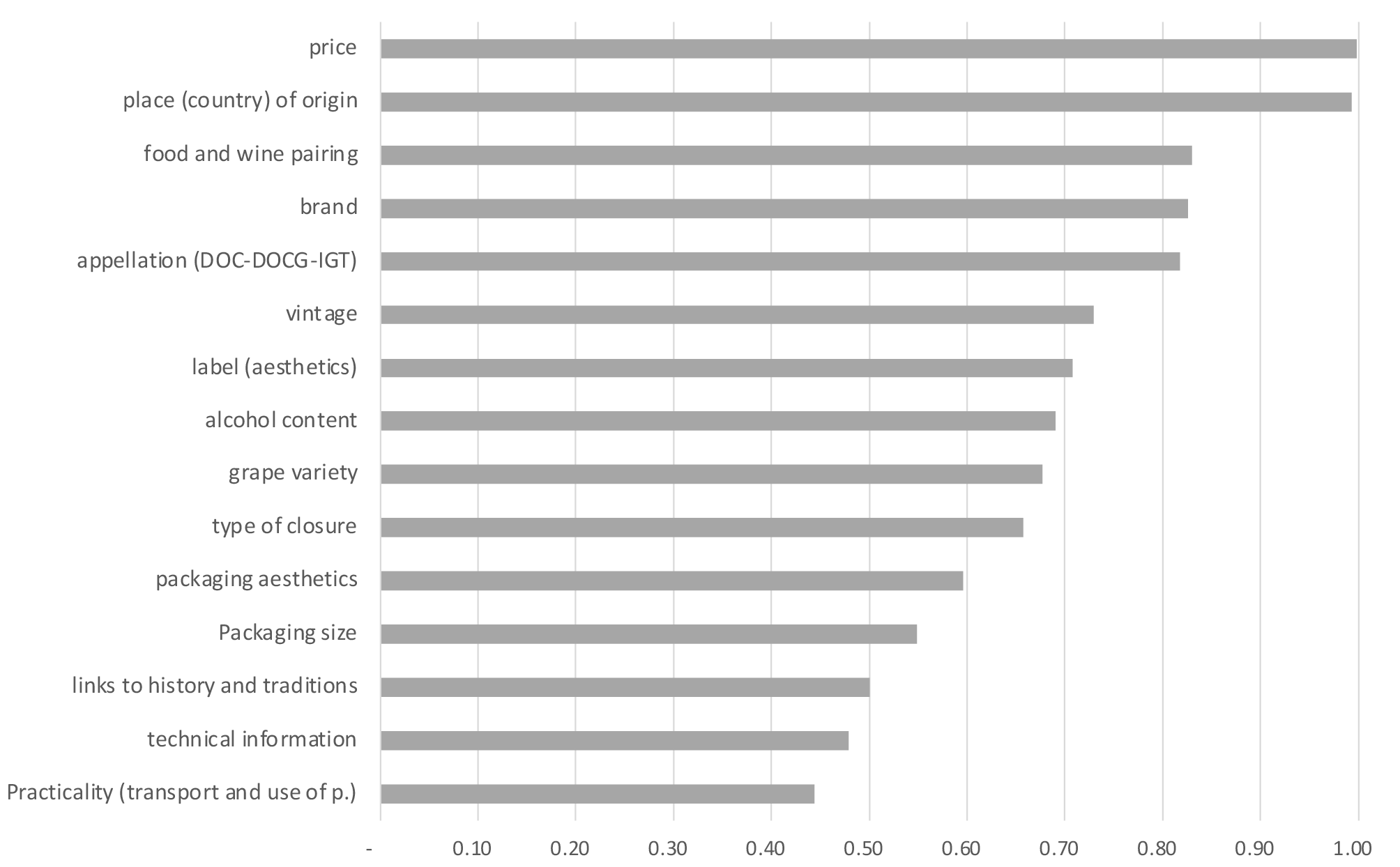
As shown in Fig. 1 the level of involvement is higher than the level of knowledge: this aspect highlights that even in mature wine markets, such as the one examined in this study, there is a substantial number of wine lovers with a strong attraction to wine but without equivalent levels of knowledge.
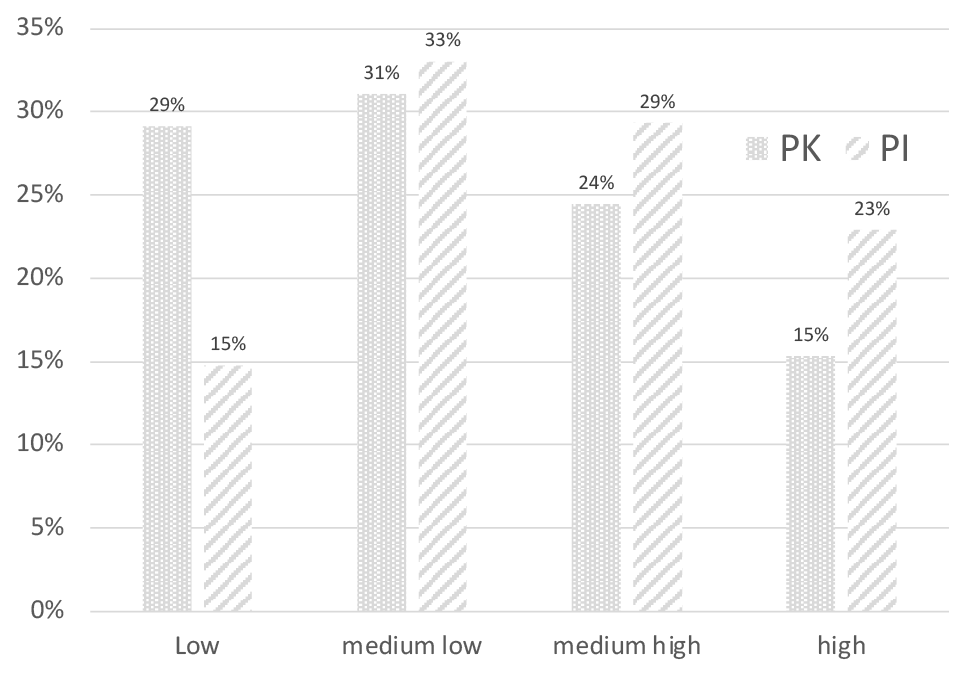
A first aspect that was examined among all sample subjects concerned the role of packaging when they have to choose a product to buy (Fig. 2). Looking at the top 15 attributes that most influence an individual when selecting a wine on a store shelf, it is possible to state that half of the attributes are related to packaging: aesthetics, size, portability and usability of the package are mentioned along with the label and type of closure as attributes consumers pay attention to. However, the choice is absolutely driven by price and place of origin, and secondarily by food pairing, brand awareness, and geographic indication.
4.2 Young generation vs Adult generation
Overall, the comparison between the younger and more mature generations (Table 3) shows differences that never reach particularly important levels. The exception is the consumption model, which, as mentioned earlier, in the younger generations gradually moves away from “Mediterranean-type” drinking habits of alcoholic beverages. This aspect may have multiple explanations, but it certainly should be associated mainly with the characteristics of the household to which the younger generation belongs, often single and without children [38].
From the results, statistical significance is primarily indicated by the p-value (p < 0.05), while Cohen’s d provides insight into the effect size, revealing the magnitude of these differences on the phenomenon under study. Variables that show statistically significant differences between Young and Adult generation are particularly informative, as they suggest distinct behavioral or attitudinal patterns. However, the corresponding Cohen’s d values must be interpreted to understand the real-world importance of these differences. For instance, variables where the p-value is significant but Cohen’s d is small indicate that while the groups differ statistically, the practical impact of this difference is minimal. Conversely, a large Cohen’s d suggests that the variable strongly differentiates the two groups, providing critical insights into the behavior of each demographic.
Looking at the data, it appears that all of the observed variables, with the exception of the Product Knowledge variable and the Packaging Loyalty variable, have p-values below the 0.05 threshold, indicating a different statistically significant distribution among the groups. Instead, examining the consistency of these differences between the groups through Cohen’s d, we find that only the consumption model variable has a medium-to-large consistency. Moderate values are recorded for the variables willingness to pay (WTP) and average consumption. Lower Cohen’s d values are observed for all other variables with significant p-values. However, it is important to consider that even variables with low levels of Cohen’s d can have some effect if they operate synergistically in the same direction as in this research.
Another element that most affects the different attitude to consume or not canned wine can be derived considering the consistency of the Cognitive Salience Index (CSI) in the two generations. (Fig. 3).
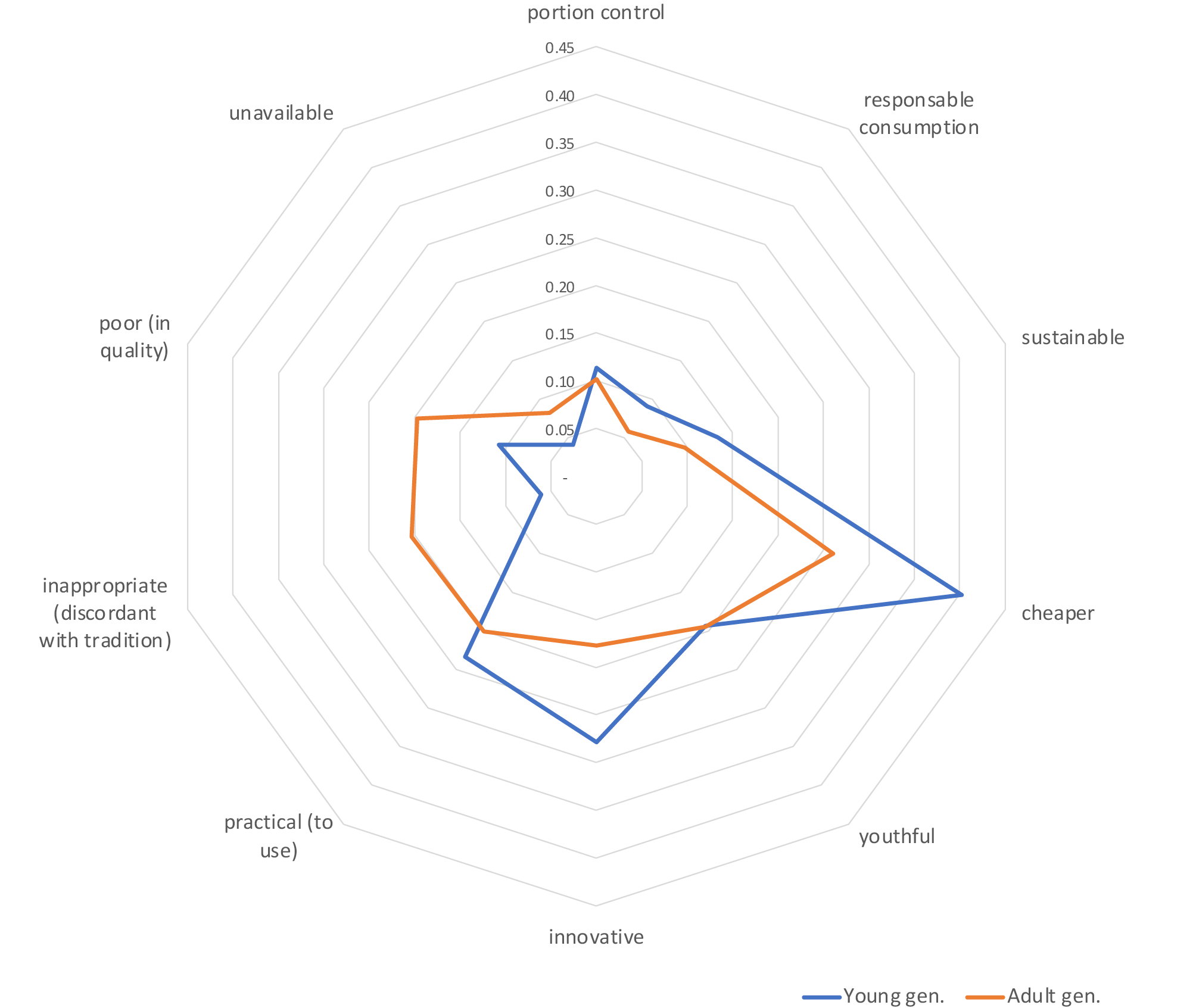
In Young generation, consumers in favor of wine in cans associate this format with an inexpensive, innovative, and practical product. For them, contrary to the findings of Adult generation, the can is not perceived as an inappropriate packaging. Therefore, the Young generation manifests the absence of prejudice for this format and, consequently, the willingness to purchase it.
The primary characteristic that Young and Adult generations absolutely associate with canned wine is that of a cheap product: this characteristic takes on negative connotations for the Adult generation, whereas it is distinctive but not negative for young consumers who favor buying a product in smaller and therefore also less expensive formats. Relevant is the consumers’ perception of the product as innovative, practical, particularly suited to youthful usage: all aspects that do not negatively qualify canned wine but tailor it primarily to a certain type of customer. However, the characteristics that identify canned wine as “poor” in quality and “inappropriate” are negative: for these individuals, it may absolutely clash with local traditions that accompany the history and culture of wine and represents an unacceptable alternative. Sustainability issues also emerge in the free listing analysis, with respondents frequently seeing the canned product as a solution capable of reducing the environmental impact generated by the traditional bottle. With the same frequency, the convenience that the canned product offers, associated with lower volumes than the classic 0.75 l bottle, emerges among respondents in terms of “portion control” and, consequently, more responsible consumption. The list concludes with the issue related to the non-availability of the product, which for many equates to a lack of knowledge about it.
4.3. The preferences of the Young generation for canned wine
What are the preferences of the Young generation regarding wine in a can that can guide an ideal marketing mix for a new line of canned wines?
The first aspect examined relates to the kind of wine these subjects mainly expect to find in a can. The values shown in Fig. 4 indicate the preference for the various types of wine expressed as the mean and normalized value (in the range from 0 to 1) of the scores stated by the various subjects belonging to the different segments invited to express themselves on a 5-point Likert scale.
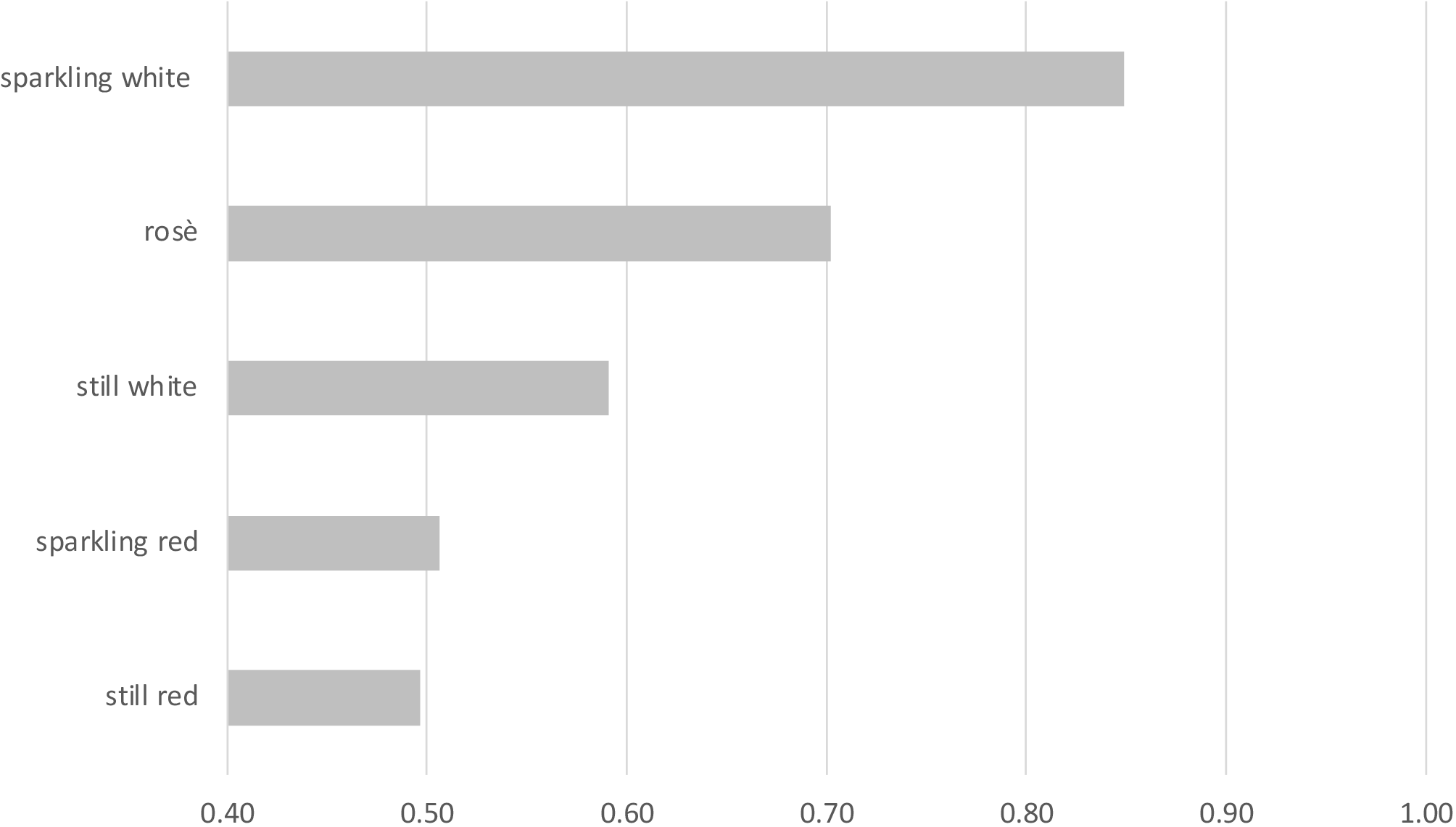
Regarding can content, the survey pointed out that the Young generation largely prefers sparkling white wine, followed by rosé and still white wines. These preferences clearly indicate how individuals in this group immediately associate the can with a form of consumption of a chilled beverage and, therefore, with types of wine more suited to being served cold. For this reason, the preference expressed for red wines, both still or sparkling, is significantly lower, although remaining relevant:
At the package size level, preference prevails by far for the intermediate can formats, 0.33 and 0.25 liters, with 50% of preferences for the former format and 30% for the latter.
Regarding price, although the can format is generally associated with lower quality content than a bottled wine, the target audience shows a willingness to pay for a 0.33 l can that is higher than that of a basic 0.75 l bottled wine (Fig. 5).
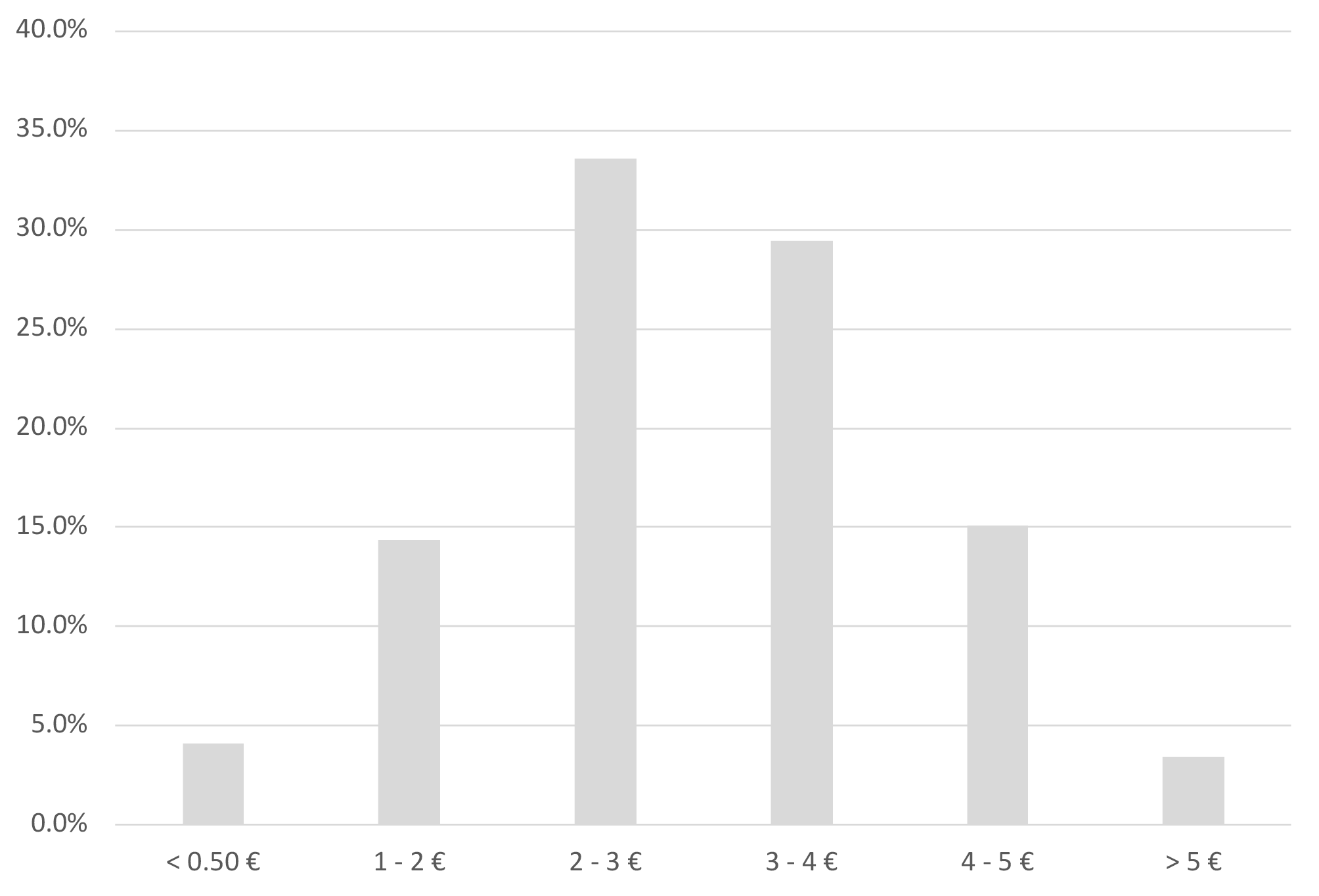
In fact, more than two-thirds of our target audience states a willingness to pay ranging from 2 to 4 euros per can, which means between 6 to 12 euros per liter of wine. This result apparently contradicts what emerged through the CSI, where the canned product is recurrently referred to as a “cheap” product. However, in this case the term “cheap” refers to the format, which, being smaller than a classic bottle, allows the product to be purchased at a lower unit price.
Regarding placement, it is interesting to consider that Yong generation, contrary to what might have been expected, does not associate canned wines with purchasing locations and consumption occasions other than those dedicated for the bottled product. This aspect suggests operating at the distribution level using the same channels through which the traditional product is conveyed. Still minimal are the preferences for forms of distribution that allow easy purchase and immediate use in non-domestic consumption. However, the placement of the product within special refrigerated spaces at the point of sale could be a useful element in encouraging demand growth. More modern forms of distribution and sales, e.g., non-store retail and delivery, are definitely to be favored, having become a permanent structural component, often associated with food sales.
5. Discussion and study limitations
Wine in can represents a product innovation that is already widespread in some less traditional markets, where it does not require overturning well-established consumption habits. However, this new packaging format also shows clear potential for growth in markets like Italy as well: the results of this study show that even in markets with strong traditions such as Tuscany, the proportion of respondents open to purchasing canned wine is already significant. This preference is more pronounced among younger generations and less so among older ones.
This figure takes on even greater importance if we consider that in the Italian market the canned product is still scarcely widespread, being poorly present in stores and scarcely known by consumers.
Analyses show that the positive propensity for the canned product is not a preference that exclusively belongs to a particular age group, although it still prevails in younger generations, exceeding 50% of respondents belonging to Generation Z and Millennials. The comparison between the Young and the Adult generation showed that this different propensity is mainly attributable to the “Nordic” consumption pattern of alcoholic beverages and the different psychological salience for wine in can. For these individuals, characterized by a more relevant propensity to consume wine outside meals, the can does not replace the traditional product, but represents a different consumption alternative.
In examining the results obtained, it is important to consider some of the limitations that the study presents if one intends to generalize the results by extending them to the entire population of wine consumers. The CAWI method adopted for data collection ends to favor younger generations, resulting in lower representation among older age groups. Consequently, the generational distribution in the sample is not representative of the overall population. For this reason, accurate interpretation of the results is only possible when considering each age group separately. The impact of this underrepresentation of older respondents was partially mitigated by grouping the generations into two broad categories (over 40 vs. under 40 years of age).
Furthermore, another aspect that should be considered in interpreting the data is that, since the product in question is still scarcely available on the market, the observed interest in canned wine likely reflects an idealized perception rather than actual experience. This introduces a potential bias, as the responses may be based more on opinion than on direct product use. A survey aiming to explore consumer preferences for a product that is not yet available on the market must carefully consider that the results may be significantly influenced by various cognitive biases, such as respondents’ tendency to express more favorable opinions due to social desirability, the inherent difficulty of evaluating a product without first-hand experience, the natural appeal of novelty, and the absence of a real experiential context that would enable more concrete and reliable judgments. For all these reasons, bias should be regarded as a significant structural limitation in studies of this kind, suggesting that the results obtained may substantially differ from the consumer behaviors that will emerge once the product is available on the market. Accordingly, this study should be seen as exploratory in nature and, as previously noted, aims to provide an initial point of reflection, while deferring to more in-depth research to be conducted when the product is effectively present on the market.
Technological innovations and the push toward increasingly sustainable solutions are reintroducing canning after this opportunity was explored in the past. These opportunities are particularly relevant for younger generations characterized by new attitudes that distinguish them from more mature generations and that can favor the spread of this new type of packaging. The most relevant attitude that can act in this sense is the growing preference that young people express for “light” wines, easy to drink, with low alcohol content, to be consumed fresh and increasingly often outside meals. These preferences respond to an important market trend: as awareness of health, well-being, social responsibility, and safety grows, consumers are increasingly looking for alternatives in tune with their values and lifestyles, becoming more aware of and receptive to options that match their beliefs [50]. Pushing young people towards the consumption of “light” wine in cans, in smaller packages and also at price that is not too low, could make the choice of such packaging more sustainable not only in environmental terms but also in social terms, acting in favor of a more responsible consumption. There is no doubt that the can, also because of the design that can be implemented on it, represents an ideal packaging for wines that have to meet such a demand, in contexts where sustainability, informality and practicality of the packaging are no longer secondary prerogatives but fundamental discriminating factors. However, as also confirmed by other studies [51], preferences for environmental and social factors are unlikely to outweigh, at least for now, traditional wine purchasing drivers such as price, brand, country of origin, and grape variety. This means that the launch of canned wines will have to penetrate the market with a timely choice of target audience, careful positioning, and an appropriate communication mix: these actions will have to be developed in a strategy that thinks of canned wine not as a simple packaging alternative but as a new product, intended for consumption and conviviality occasions different from those in which bottled wine will remain central.
The wine sold in cans represents a discontinuous innovation within the wine industry, analogous to the screw caps. This innovation disrupts traditional consumption patterns and challenges entrenched consumer perceptions tied to the ritualistic and cultural aspects of wine drinking [52]. Much like screw caps, wine in cans aim to offer practical advantages that appeal particularly to casual or on-the-go consumers. Drawing from the findings of previous studies [52], a critical barrier to the adoption of wine in cans would be overcoming “tradition barriers” and “image barriers,” as consumers often associate traditional packaging (e.g., glass bottles and corks) with quality and prestige. Successful spread of this innovation could leverage targeted educational campaigns that communicate the benefits of canned wine, such as freshness preservation, sustainability, practicality and affordability, while simultaneously reducing perceived risks or stigmas associated with non-traditional formats.
However, as mentioned in the Introduction and in the Discussion and study limitations sections, this study represents an initial exploratory investigation, driven by the need to assess the appeal of a product not yet available in the local market. The chosen methodological approach reflects this unique context, with the acknowledged bias being amplified by the mature nature of the local wine market.
Conceptualization: V.C., S.M.; Data curation: V.A.S., S.M.; Formal analysis: V.A.S., S.M.; Investigation: V.C., V.A.S, M.P., S.M.; Methodology; S.M., V.A.S.; Project administration: S.M.; Roles/Writing - original draft: V.C., V.A.S, M.P., S.M.; and Writing - review & editing: V.C., V.A.S, M.P., S.M.
[1] F. Alhamdi, 2020. Role of packaging in consumer buying behavior. Management Science Letters, 10(6), 1191-1196. https://doi.org/10.5267/j.msl.2019.11.040
[2] G. Ruggeri, C. Mazzocchi, S. Corsi, B. Ranzenigo, 2022. No more glass bottles? Canned wine and Italian consumers. Foods, 11(8), 1106. https://doi.org/10.3390/foods11081106
[3] M. Orlowski, S. Lefebvre, R.M. Back, 2022. Thinking outside the bottle: Effects of alternative wine packaging. Journal of Retailing and Consumer Services, 69, 103117. https://doi.org/10.1016/j.jretconser.2022.103117
[4] Growth of the wine-in-a-can market. Texas Tech University, College of Human Science, Texas Wine Marketing Research Institute. https://www.depts.ttu.edu/hs/texaswine/docs/Wine_in_Can_Industry_Report.pdf (access June 25, 2024)
[5] A. Versari, A. Ricci, C.P. Moreno, G.P. Parpinello, 2023. Packaging of Wine in Aluminum Cans–A Review. American Journal of Enology and Viticulture, 74(2). https://hdl.handle.net/11585/940739
[6] K.A. Thompson-Witrick, E.R. Pitts, J.L. Nemenyi, D. Budner, 2021. The impact packaging type has on the flavor of wine. Beverages, 7(2), 36. https://doi.org/10.3390/beverages7020036
[7] A. Montgomery, R.B Allison, J.M. Goddard, G.L. Sacks, 2023. Hydrogen sulfide formation in canned wines under long-term and accelerated conditions. American Journal of Enology and Viticulture, 74 (1). https://doi.org/10.5344/ajev.2022.22051
[8] R. Allison, G. Sacks, L. Maslov-Bandic, A. Montgomery, J. Goddard, 2020. The Chemistry of Canned Wines. Cornell Viticulture and Enology: Ithaca, NY, USA, 2020; pp. 1–8.
[9] G. Stokes, S. Barics, 2015. Packaging wine in aluminum containers. European Patent IN6155DEN2014A, 21 Aug 2015.
[10] J.R. Davis, 2001. Aluminum and aluminum alloys. In Alloying: Under-standing the Basics. Davis JR (ed.), pp. 351–416. ASM International, Materials Park, OH. https://doi.org/10.1361/autb2001p35
[11] P. Lopes, C. Saucier, P.L. Teissedre, Y. Glories. 2007. Main Routes of Oxygen Ingress through Different Closures into Wine Bottles. Journal of Agricultural and Food Chemistry, 55:5167-5170. https://doi.org/10.1021/jf0706023
[12] S.E. Duncan, J.B. Webster, 2009. Chapter 2 Sensory Impacts of Food–Packaging Interactions. In: Advances in Food and Nutrition Research; Academic Press: London, UK, pp. 17–64. https://doi.org/10.1016/S1043-4526(08)00602-5
[13] P. Kilmartin, 2010. Understanding and controlling non-enzymatic wine oxidation. Managing Wine Quality, 432–458. https://doi.org/10.1533/9781845699987.2.432
[14] A. Weed, 2019. Canned Wine Comes of Age; Wine Spectator: New York, NY, USA
[15] G. Cooper, G. Wine Boxes and Cans Come of Age. Available online: https://www.winespectator.com/articles/canned-wine-comes-of-age (accessed on 26 June 2024).
[16] The International Aluminium Institute (www.international-aluminium.org) A circularity case for Aluminum compared with Glass and plastic. https://international-aluminium.org/wp-content/uploads/2022/02/Aluminium-vs-glass-and-plastic-FINAL-Information-Sheet-1.pdf (accessed on 26 June 2024)
[17] Glass Packaging Institute. Glass Recycling Facts. Available online https://www.gpi.org/glass-recycling-facts (accessed on 26 June 2024)
[18] D. Amienyo, A. Azapagic, 2016. Life cycle environmental impacts and costs of beer production and consumption in the UK. The International Journal of Life Cycle Assessment, 21, 492-509. https://doi.org/10.1007/s11367-016-1028-6
[19] D. Landi, M. Germani, M. Marconi, 2019. Analyzing the environmental sustainability of glass bottles reuse in an Italian wine consortium. Procedia CIRP, 80, 399-404. https://doi.org/10.1016/j.procir.2019.01.054
[20] M. Malvoni, P.M. Congedo, D. Laforgia, 2017. Analysis of energy consumption: a case study of an Italian winery. Energy Procedia, 126, 227-233. https://doi.org/10.1016/j.egypro.2017.08.144
[21] N. Barber, 2010. “Green” wine packaging: targeting environmental consumers. International Journal of Wine Business Research, 22(4), 423-444. https://doi.org/10.1108/17511061011092447
[22] C.M. Almeida, A. Rodrigues, F. Agostinho, B.F. Giannetti, 2017. Material selection for environmental responsibility: the case of soft drinks packaging in Brazil. Journal of Cleaner Production, 142, 173-179. http://dx.doi.org/10.1016/j.jclepro.2016.04.130
[23] A. Allamani, F. Cipriani, F. Prina, (Eds.) 2006. I cambiamenti nei consumi di bevande alcoliche in Italia. Una stima esplorativa sul decremento dei consumi negli anni 1970–2000, Osservatorio Permanente sui Giovani e l’Alcol, Casa Editrice Litos, Roma.
[24] E. Scafato, C. Gandin, L. Di Pasquale , L. Galluzzo, S. Martire, S. Ghirini, 2016. Rapporti ISTISAN. Epidemiologia e monitoraggio alcol-correlato in Italia, Rapporto 2016, Istituto Superiore di Sanità. ISSN 1123-3117
[25] N. Marinelli, S. Fabbrizzi, V. A. Sottini, S. Sacchelli, I. Bernetti, S. Menghini, 2014. Generation Y, wine and alcohol. A semantic differential approach to consumption analysis in Tuscany. Appetite, 75, 117-127. https://doi.org/10.1016/j.appet.2013.12.013
[26] A. Marchini, L. Pieroni, 2009. Dinamiche intergenerazionali nei modelli di consumo alimentare. il caso della dieta mediterranea in Italia. Milano: XLIV Convegno Sidea, Franco Angeli.
[27] D.E. Smith, D.J. Mitry, 2007. Cultural convergence. Consumer behavioral changes in European markets. Journal of Wine Research, Vol 18, Issue 2, PP 107–112. https://doi.org/10.1080/09571260701660870
[28] J.A. Tur, D. Romaguera, A. Pons, 2004. Food consumption patterns in a Mediterranean region: does the Mediterranean diet still exist?. Annals of Nutrition and Metabolism, 48(3), 193-201.
[29] S. Menghini, N. Marinelli, S. Fabbrizzi, 2011. Il consumo responsabile di alcol dei giovani in Toscana. Analisi delle caratteristiche del consumatore e studio sulla fattibilità di una strategia di marketing sociale. In Marinelli, A. (Eds), Alcol e giovani. Disagio sociale, salute e competitività (pp. 105–170), Franco Angeli, Milano.
[30] F. Voller, C. Orsini, A. Berti, 2010. I consumi e le conseguenze dell’uso e abuso di alcol in cifre, ARS Toscana
[31] G. Fabris, 2003. Il nuovo consumatore: verso il postmoderno, Franco Angeli Ed., ISBN 9788846442383
[32] K. Kelley, J. Bruwer, J. Zelinskie, D. Gardner, R. Govindasamy, J. Hyde, B. Rickard, 2019. Wine consumers’ willingness to adopt environmentally friendly packaging practices at tasting rooms: An ECHAID analysis. British Food Journal, 122(1), 309-327. https://doi.org/10.1108/BFJ-04-2019-0229
[33] J. Mesidis, L. Lockshin, A.M. Corsi, B. Page, J. Cohen, 2023. Measuring the effect of product and environmental messaging attributes on alternative wine packaging choices. Journal of Cleaner Production, 431, 139502. https://doi.org/10.1016/j.jclepro.2023.139502
[34] C. Ferrara, V. Zigarelli, G. De Feo, 2020. Attitudes of a sample of consumers towards more sustainable wine packaging alternatives. Journal of Cleaner Production, 271, 122581. https://doi.org/10.1016/j.jclepro.2020.122581
[35] A. Chamorro, J.M. García-Gallego, H.D.C. Trindade-Carlos, 2021. Study on the importance of wine bottle design on consumer choices. British Food Journal, 123(2), 577-593. https://doi.org/10.1108/BFJ-03-2020-0244
[36] B. Piqueras-Fiszman, C. Spence, 2015. Sensory expectations based on product-extrinsic food cues: An interdisciplinary review of the empirical evidence and theoretical accounts. Food quality and preference, 40, 165-179. https://doi.org/10.1016/j.foodqual.2014.09.013
[37] P. Liang, S. Roy, M.L. Chen, G.H. Zhang, 2013. Visual influence of shapes and semantic familiarity on human sweet sensitivity. Behavioural Brain Research, 253, 42-47. https://doi.org/10.1016/j.bbr.2013.07.001
[38] J. Bruwer, A. Saliba, B. Miller, 2011. Consumer behaviour and sensory preference differences: implications for wine product marketing, Journal of Consumer Marketing, Vol. 28 No. 1, pp. 5-18. https://doi.org/10.1108/07363761111101903
[39] J.C. Nunally, I.H. Bernstein, 1978. Psychometric theory. New York: McGraw-Hill.
[40] J. F. Hair, W.C.Jr. Black, B.J. Babin, R.E. Anderson, 2006. Multivariate data analysis (6th edition) Upper Saddle River, NJ: Prentice Hall College Div.
[41] S. Stranieri, E.C. Ricci, A. Banterle, 2017. Convenience food with environmentally-sustainable attributes: A consumer perspective. Appetite. 1;116:11-20. Epub 2017 Apr 18. PMID: 28428152. https://doi.org/10.1016/j.appet.2017.04.015
[42] S. Fabbrizzi, V. Alampi Sottini, M. Cipollaro, S. Menghini, 2021. Sustainability and natural wines: An exploratory analysis on consumers. Sustainability, 13(14), 7645. https://doi.org/10.3390/su13147645
[43] S.R. Jaeger, P.Y. Lee, G. Ares, 2018. Product involvement and consumer food-elicited emotional associations: Insights from emoji questionnaires. Food Research International, 106, 999-1011. https://doi.org/10.1016/j.foodres.2018.01.024
[44] J.L. Zaichkowsky, 1985. Measuring the involvement construct. Journal of consumer research, 12(3), 341-352. https://doi.org/10.1086/208520
[45] L. Libertino, D. Ferraris, M.L. Osornio, G. Hough, 2012. Analysis of data from a free-listing study of menus by different income-level populations. Food Quality and Preference, 24(2), 269-275. https://doi.org/10.1016/j.foodqual.2011.11.003
[46] E. Ginon, G. Ares, S. Issanchou, L.H.E. dos Santos Laboissière, R. Deliza, 2014. Identifying motives underlying wine purchase decisions: Results from an exploratory free listing task with Burgundy wine consumers. Food Research International, 62, 860-867. https://doi.org/10.1016/j.foodres.2014.04.052
[47] B. Barone, R.M. Nogueira, J.H. Behrens, 2019. Sustainable diet from the urban Brazilian consumer perspective. Food research international, 124, 206-212. https://doi.org/10.1016/j.foodres.2018.05.027
[48] U. Sutrop, 2001. List task and a cognitive salience index. Field methods, 13(3), 263-276. https://doi.org/10.1177/1525822X0101300303
[49] G. Hough, D. Ferraris, 2010. Free listing: A method to gain initial insight of a food category. Food Quality and Preference, 21(3), 295-301. https://doi.org/10.1016/j.foodqual.2009.04.001
[50] S.M. Afonso, A. Inês, A. Vilela, 2024. Bio-Dealcoholization of Wines: Can Yeast Make Lighter Wines? Fermentation, 10, 36. https://doi.org/10.3390/fermentation10010036
[51] S. Ghvanidze, N. Velikova, T.H. Dodd, W. Oldewage-Theron, 2019. Are sustainable consumers health conscious? A segmentation study of wine consumers. Journal of Food Products Marketing, 25(6), 690-711. https://doi.org/10.1080/10454446.2019.1640160
[52] T. Atkin , R. Garcia, L. Lockshin, 2006. A Multinational Study of the Diffusion of a Discontinuous Innovation. Australasian Marketing Journal, 14(2), 17-33. https://doi.org/10.1016/S1441-3582(06)70058-1