Cross-Cultural Motivations for Non-Alcoholic Wine: Health, Halal, and Market Trends
Department of Wine & Beverage Business, Hochschule Geisenheim University, Von-Lade-Straße 1, D-65366 Geisenheim, Germany
Email: hd.farid@gmail.com; Jon.Hanf@hs-gm.de
*Corresponding author
Abstract. Purpose: This paper examines cross-cultural motivations for non-alcoholic wine, focusing on how health and Halal-related attributes are cognitively translated into values and purchase intentions in Non-Muslim and Muslim-majority markets amid declining alcohol consumption. Design/methodology/approach: A sequential mixed-methods approach combines Means–End Chain (MEC) laddering interviews (n = 48) with PLS-SEM analysis of survey data (n = 350) across seven countries, integrating cultural, institutional, and behavioral perspectives within an a priori conceptual framework. Findings: In Muslim-majority contexts, Halal certification operates as a key institutional legitimacy cue linking product attributes to faith-based values, with brand trust mediating its effect on purchase intention. In Non-Muslim markets, health motivation and sensory acceptance dominate decision-making, while Halal certification shows no significant influence. Mediation results further indicate that health motivation partially transmits the effect of sensory acceptance on personal values. Originality: By embedding institutional legitimacy and cultural conditioning within MEC pathways, this study connects qualitative value structures with quantitative validation, addressing the fragmentation between health- and Halal-focused research streams. Research implications: Producers should adopt dual strategies, emphasizing health attributes in Non-Muslim markets and certified Halal legitimacy in Muslim-majority contexts.
Keywords: non-alcoholic wine, health motivation, halal certification, cross-cultural marketing, brand trust, muslim markets.
Index
2.1 Non- alcoholic wine market trends
2.3.1.1 Quantitative cross-cultural studies
2.3.1.2 Health benefits and market trends
2.3.1.3 Halal certification in muslim-majority markets
2.4.1 Muslim- majority countries
2.4.2 Non- Muslim-majority countries
2.4.3 Divergent adoption patterns
2.5.1 Variations in halal certification standards
2.5.3 Impact on market expansion
2.5.4 Need for harmonized standards
3.1.1 Qualitative phase – laddering interviews
3.4.1 Explanation of demographic characteristics
3.5.1.1 Software and model assessment
3.5.1.2 Structural paths and relationships
4.1 Qualitative findings: MEC laddering and HVMs
4.2 Quantitative findings: PLS-SEM
4.3 Mixed- methods integration
5. Discussion and implications
5.1.2 Integration of theoretical frameworks
5.1.3 Empirical findings and theoretical implications
5.2.1 Dual- branding strategies
5.2.2 Digital marketing initiatives
5.3.1 Harmonized halal standards
5.3.2 Clear and consistent terminology
7. Limitations and future research directions
The non-alcoholic wine industry is booming, fueled by changing consumer preferences in two key segments: health-conscious Non-Muslim markets and Halal-focused Muslim-majority ones. In places like Germany, Denmark, and Sweden, the “sober-curious” movement is driving demand for low-calorie, wellness-aligned alternatives to alcohol [1]. Meanwhile, in Malaysia, Indonesia, the UAE, and Iran – home to part of the 2.0 billion global Muslim population [2] – Halal certification is essential for compliance with Islamic dietary laws [3].
This paper uses Means-End Chain (MEC) theory and Partial Least Squares Structural Equation Modeling (PLS-SEM) in a mixed-methods design. Qualitative laddering interviews first uncovered attribute-consequence-value links, then quantitative surveys from 350 respondents validated these across cultures. Non-Muslim consumers focus on health and sensory aspects, while Muslim ones emphasize Halal legitimacy. These insights offer practical guidance for branding, trends, and regulations, supporting inclusive market growth.
| Construct | Definition | Relevance to Study |
|---|---|---|
| Halal Legitimacy | Perception of product’s Halal certification | Gatekeeper in Muslim markets |
| Health Motivation | Choosing non-alcoholic wine for health reasons | Drives secular market adoption |
| Sensory Acceptance | Acceptance of taste and aroma | Influences satisfaction |
| Social & Symbolic Fit | Fit in social and symbolic contexts | Enhances social acceptance |
| Brand Trust | Trust in brands offering non-alcoholic wine | Influences purchase intention |
| Personal & Cultural Values | Alignment with personal/cultural values | Shapes consumer preferences |
2.1 Non- alcoholic wine market trends
Global alcohol consumption is declining, boosting non-alcoholic beverages as healthier options [4]. In Non-Muslim markets like Germany and Sweden, consumers seek low-calorie, heart-healthy wines that mimic traditional sensory experiences [1,5,16]. The market is projected to hit $7.64 billion by 2035 at a 10.4% CAGR, with sparkling segments leading [6,7]. In Muslim-majority areas, Halal certification drives demand, with the Halal market reaching $1.9 trillion by 2027 [8]. Challenges include regulatory bans, like Iran’s “wine” terminology restriction [9].
This study adopts Means–End Chain (MEC) theory as the central analytical spine [10], using attribute–consequence–value ladders to model how consumers cognitively translate product features into higher-order goals. Cultural dimensions [11] operate upstream of these ladders by shaping which attributes become salient in the first place: in Muslim-majority contexts, high uncertainty avoidance elevates Halal certification as a primary cue, whereas in Non-Muslim contexts, individualism amplifies health and sensory attributes. Institutional Theory [12] explains how Halal certification functions as a legitimacy signal that reduces perceived risk and enables trust, thereby entering MEC ladders as a critical consequence node. The Theory of Planned Behaviour (TPB) [13] provides the downstream behavioral mechanism, linking these culturally conditioned value structures to purchase intention. In this way, culture conditions institutional meaning, institutional legitimacy feeds cognitive value chains, and these chains ultimately drive planned behavior. Rather than treating the theories additively, the framework specifies a sequential process from cultural context to institutional signals, from cognitive ladders to intention formation.
From this integrated framework, specific hypotheses can be derived regarding cross-cultural consumer behavior. In Muslim-majority contexts, where uncertainty avoidance is high and Halal certification functions as a key institutional signal [3, 11, 12], we hypothesize that Halal legitimacy will be a stronger driver of purchase intention than in Non-Muslim contexts (H1). Furthermore, we expect brand trust to mediate this relationship more strongly for Muslim consumers, as certification from trusted bodies (e.g., JAKIM) builds credibility that directly facilitates purchase decisions (H2).
Conversely, in Non-Muslim contexts characterized by individualism, health and sensory attributes align with personal wellness goals [1, 11, 14]. We therefore hypothesize that health motivation (H3) and sensory acceptance (H4) will have stronger effects on purchase intention for Non-Muslim consumers than for Muslim consumers. Brand trust is likewise expected to mediate these relationships more strongly in Non-Muslim markets, where brand reputation serves as a key heuristic for product quality in the absence of religious certification (H5).
These hypotheses provide a testable, a priori structure for the empirical analysis that follows, linking the theoretical constructs to measurable behavioral intentions across cultural groups.
Prior studies have often treated health and Halal motivations in isolation, with health-focused research dominating Non-Muslim contexts (e.g., emphasizing cardiovascular benefits and sensory mimicry in Western markets) and Halal compliance studies confined to Muslim-majority settings (e.g., focusing on certification as a regulatory hurdle) [3, 14]. This fragmentation persists due to disciplinary boundaries – consumer behavior research in wine economics has prioritized health-driven trends in affluent, individualistic societies [5], while Islamic marketing literature has emphasized religious legitimacy without cross-cultural quantification [3, 12]. This mixed-methods approach addresses these gaps by testing MEC ladders via PLS-SEM across groups, bridging qualitative depth with quantitative generalizability. Health benefits dominate Non-Muslim research, Halal in Muslim-focused work [3].
2.3.1.1 Quantitative cross-cultural studies
Qualitative research provides valuable context but often lacks the statistical rigor needed to generalize findings across diverse populations. By employing a mixed-methods approach, this study first analyzes MEC ladders qualitatively to uncover cultural meanings and then applies PLS-SEM to test these ladders quantitatively across seven countries.
2.3.1.2 Health benefits and market trends
In Non-Muslim markets, research emphasizes the health benefits of non-alcoholic wine, including low-calorie content and cardiovascular advantages [14]. These attributes align with the “sober-curious” movement, driving adoption among health-conscious consumers. This study extends this focus by comparing these motivations with those in Muslim-majority markets.
2.3.1.3 Halal certification in muslim-majority markets
In Muslim-majority markets, Halal certification enters consumer decision-making primarily as a legitimacy cue, linking product attributes to higher-order values such as faith and belonging. Within the MEC framework, Halal functions less as a technical standard and more as a symbolic assurance that enables trust and value alignment, ultimately shaping purchase intention [3,12]. This study therefore models Halal legitimacy as a core cognitive attribute in Muslim contexts and empirically tests its downstream effects on behavioral intention.
Muslim-majority countries (e.g., Malaysia 61% Muslim) rely on Halal for trust and avoidance of uncertainty [11]. Non-Muslim ones (e.g., Sweden 80% Non-Muslim) prioritize individual health and sensory fit. In this study, ‘Non-Muslim’ refers specifically to respondents who self-identified as non-religious or agnostic in the survey, distinguishing them from other non-Muslim religious affiliations.
2.4.1 Muslim- majority countries
In Muslim-majority countries, cultural and religious norms play a pivotal role in shaping consumer behavior. For instance, Malaysia, Indonesia, the United Arab Emirates (UAE), and Iran have substantial Muslim populations, with Malaysia being approximately 61% Muslim, Indonesia around 87-90%, the UAE about 76% of the total population or 85% of citizens, and Iran nearly 99% [2]. From a cultural perspective, Muslim-majority countries tend to exhibit higher levels of uncertainty avoidance, which increases sensitivity to product authenticity and religious alignment [11]. This cultural orientation amplifies the salience of legitimacy cues in consumption decisions, distinguishing these markets from more individualistic Non-Muslim contexts.
2.4.2 Non- Muslim-majority countries
Conversely, Non-Muslim-majority countries such as Germany, Denmark, and Sweden emphasize individualism and personal preferences. In these countries, approximately 25% of the population in Germany, 12% in Denmark, and 29% in Sweden identify as unaffiliated [2]. Individualism, another cultural dimension identified by Hofstede (2001), drives a focus on personal health and sensory experiences. Consumers in these markets prioritize health benefits, such as low-calorie content and potential cardiovascular advantages, as well as sensory satisfaction, including taste and aroma.
The “sober-curious” movement, which values mindful drinking and healthier lifestyle choices, has gained significant traction in these Non-Muslim markets. This movement underscores a shift towards products that align with wellness-oriented values, making non-alcoholic wines an attractive option for health-conscious consumers. The sensory experience of non-alcoholic wines, which closely mimics traditional alcoholic wines, also plays a crucial role in their acceptance. Sensory mimicry ensures that consumers do not compromise on taste and aroma, making non-alcoholic wines a viable alternative for social and celebratory occasions.
2.4.3 Divergent adoption patterns
The cultural differences between Muslim-majority and Non-Muslim-majority countries are reflected in the dataset and explain the divergent adoption patterns of non-alcoholic wines. In Muslim-majority markets, Halal certification is a prerequisite for product acceptance, and variations in certification processes can pose challenges for producers. For example, different countries may have distinct Halal certification standards, requiring producers to navigate complex regulatory landscapes to ensure compliance [3].
In contrast, Non-Muslim-majority markets prioritize health benefits and sensory satisfaction. Producers in these markets must focus on developing products that meet consumer expectations for taste, aroma, and health benefits. Marketing strategies in Non-Muslim markets often emphasize the health and sensory advantages of non-alcoholic wines, positioning them as part of a broader wellness lifestyle.
Understanding the cultural context is essential for developing effective marketing strategies and ensuring the successful adoption of non-alcoholic wines. In Muslim-majority countries, the emphasis on Halal certification underscores the importance of religious compliance and trust. In Non-Muslim-majority countries, individualism drives a focus on health benefits and sensory satisfaction. By addressing these cultural differences, producers can tailor their products and marketing efforts to meet the distinct needs and preferences of consumers in each market, contributing to the sustainable expansion of the non-alcoholic wine industry.
Separately from cultural motivations, the regulatory environment for non-alcoholic wine varies substantially across Muslim-majority countries, with fragmented Halal certification systems and inconsistent labeling requirements [9,15]. These institutional differences create operational barriers for producers and complicate cross-border market access, independent of consumer-level value structures.
2.5.1 Variations in halal certification standards
Halal certification standards differ significantly between countries, creating a fragmented regulatory environment. For instance, Malaysia’s JAKIM (Jabatan Kemajuan Islam Malaysia / Department of Islamic Development Malaysia) and the UAE’s ESMA (Emirates Authority for Standardization and Metrology) each have their own unique requirements and processes for certifying products as Halal. Additionally, the Gulf Standardization Organization (GSO) 2055-2 standard, which outlines general requirements for Halal certification bodies, is recognized across all Gulf Cooperation Council (GCC) member states – United Arab Emirates, Saudi Arabia, Qatar, Kuwait, Bahrain, Oman – and Yemen [15]. This standard is critical for businesses aiming to access these markets, which have a growing demand for certified Halal products. According to the Director of the Halal Trade and Marketing Centre in the UAE (T. Guerrero, personal communication, 2024),
for a beverage to be considered Halal in the UAE, it must contain less than 0.5% alcohol, and only products with 0.0% alcohol can be labeled as “alcohol-free” as per UAE law.
The GCC’s Halal food and beverage market is valued at about $60 billion, or 4.7% of the global total. Due to agricultural limitations, the region imports nearly 70% of its food and beverages [8]. The UAE serves as a strategic hub for Halal product production, distribution, and marketing, not only for the GCC but also for neighboring countries like Turkey, India, and Egypt. For example, companies like Red Bull have established operations in the Dubai Airport Free Zone, leveraging its facilities and tax incentives to serve the region’s 57 million inhabitants, predominantly Muslim consumers [8]. These variations and opportunities necessitate producers to navigate a complex web of regulations, which can be both time-consuming and resource-intensive.
Iran, with its significant Muslim population, has implemented a ban on the use of the term “wine” for non-alcoholic products. This regulatory measure requires producers to use alternative labels, such as “grape beverage” or “fruit juice,” to comply with local regulations [9]. The Iran National Standards Organization (2024) has clarified this stance in response to inquiries about Halal certification for non-alcoholic wine, stating:
In the Islamic Republic of Iran, the term ‘wine’ is strictly defined as an alcoholic beverage, and ‘non-alcoholic wine’ holds no recognized status under national standards. According to SMIIC1, titled Halal Food Production, the manufacture, distribution, and consumption of any product labeled as wine, even if it contains no alcohol, is deemed incompatible with the standard’s principles. Furthermore, in accordance with SMIIC24, Clause 4-2-6, any Flavouring agents which mimic non-halal products are considered as non-halal even it is produced from halal material, example: different pig meat flavours, liquor and champagne flavours… etc. For the production of Halal beverages, adherence to national standards is mandatory to ensure that both the production process and the final product are devoid of any religious ambiguities. In the event that the term ‘wine’ is replaced with ‘fruit juice,’ the product must fully comply with national standards specific to fruit juices to be eligible for Halal certification.”
To obtain Halal certification for a non-alcoholic beverage like German non-alcoholic wine in Iran, producers must follow a rigorous process overseen by INSO or an accredited Halal certification body. This typically involves submitting detailed documentation of ingredients, production processes, and supply chains to ensure no haram (forbidden) substances, such as alcohol or non-Halal animal derivatives, are present. The production facility must be inspected to verify compliance with Halal standards, including the absence of cross-contamination with non-Halal substances and adherence to strict hygiene protocols. Additionally, the product must be labeled appropriately (e.g., as “fruit juice” rather than “wine”) and meet Iran’s national standards for fruit juices, as outlined by INSO. Certification bodies accredited by INSO or recognized international organizations, such as those aligned with SMIIC standards, conduct audits to ensure compliance. Such terminology bans and certification requirements are not unique to Iran; other countries with strict Islamic laws also prohibit the use of terms traditionally associated with alcoholic beverages, complicating the marketing and labeling of non-alcoholic wines.
2.5.3 Impact on market expansion
These regulatory differences and terminology bans create significant barriers for producers aiming to enter or expand within Muslim-majority markets. The lack of harmonized standards means that producers must often tailor their products and marketing strategies to meet the specific requirements of each country, increasing costs and complexity. This fragmentation also limits the potential for economies of scale, as producers cannot standardize their products across multiple markets.
2.5.4 Need for harmonized standards
To facilitate market expansion and enable producers to effectively target the 2.0 billion Muslim consumers, there is a pressing need for harmonized Halal certification standards and clear, consistent regulations. Harmonization would simplify the certification process, reduce compliance costs, and enhance consumer trust by ensuring uniformity in product standards. Clear regulations would also help producers navigate the complex landscape more efficiently, ultimately promoting the growth and acceptance of non-alcoholic wines in Muslim-majority regions.
The regulatory context for non-alcoholic wine is marked by significant variations in Halal certification standards and terminology requirements, creating substantial challenges for producers. Harmonizing these standards and establishing clear, consistent regulations are essential steps towards facilitating market expansion and ensuring the successful adoption of non-alcoholic wines in Muslim-majority regions. By addressing these regulatory complexities, producers can better navigate the evolving landscape, ultimately contributing to the sustainable growth of the non-alcoholic wine industry.
A sequential mixed-methods design was used: qualitative MEC laddering interviews (n=48, even across seven countries) built HVMs, informing a quantitative survey analyzed via PLS-SEM (n=350).
3.1.1 Qualitative phase – laddering interviews
In the qualitative phase, we conducted laddering interviews with 48 consumers, evenly distributed across the seven countries included in the study: Germany, Denmark, Sweden, Malaysia, Iran, Indonesia, and the United Arab Emirates. Participants were selected based on their prior consumption of non-alcoholic wine and their willingness to participate in an in-depth interview. Using Means-End Chain (MEC) theory, the interviews elicited links between product attributes (e.g., Halal certification, sensory quality), consequences (e.g., trust, health motivation, social symbolism), and values (e.g., faith, wellness, belonging). For example, a typical laddering chain in a Muslim-majority context might start with the attribute “Halal-certified label,” leading to the consequence “ensures religious compliance and reduces doubt,” and culminating in the value “strengthens faith and community belonging.” Interviews were audio-recorded, transcribed, and coded independently by two researchers using content analysis, with inter-coder reliability assessed via Cohen’s kappa (κ = 0.82). Cut-off levels for HVM construction were set at a minimum of 4 mentions per link to ensure meaningful representation, following established MEC guidelines. Discrepancies in coding were resolved through discussion. These data were analyzed to construct Hierarchical Value Maps (HVMs), which visually depict the cognitive structures underlying consumer motivations. The constructs and pathways identified in this phase were used to design the questionnaire for the quantitative survey.
To ensure cultural sensitivity in data collection, we adapted the survey questions to account for cultural nuances. For example, in Muslim-majority countries, questions related to Halal certification were framed to align with religious contexts. Measurement invariance across groups was assessed using the MICOM (Measurement Invariance of Composite Models) procedure in SmartPLS 4, confirming configural invariance and partial metric invariance, which supports valid multi-group comparisons.
The quantitative data were analyzed using PLS-SEM in SmartPLS 4, with 5,000 bootstrap resamples for significance testing. Mediation effects were tested via bootstrapping, revealing partial mediation in key paths (e.g., health motivation partially transmits the effect of sensory acceptance on personal values, as indicated by significant indirect effects with 95% CIs not crossing zero).
The questionnaire was distributed through online panels, targeting adults aged 18 to 66. This age range was chosen to capture a broad spectrum of consumer preferences and behaviors, reflecting the diverse demographics of non-alcoholic wine consumers. The online panel approach ensured a wide reach and facilitated the collection of data from a geographically dispersed sample. However, this method may introduce limitations related to sample selection bias. It potentially overrepresents individuals who are digitally literate and underrepresents those with limited internet access. This is particularly true in rural or lower-income areas of Muslim-majority countries, such as Indonesia.
The questionnaire included a comprehensive set of demographic questions to capture the respondents’ background and characteristics. These questions covered:
– Age: To understand the age distribution of non-alcoholic wine consumers.
– Gender: To identify any gender-specific preferences or behaviors.
– Religion: To segment respondents based on their religious affiliations, which is particularly relevant in the context of Halal certification.
– Education: To assess the educational background of respondents, which can influence consumer awareness and preferences.
– Occupation: To understand the professional background of respondents, which may correlate with lifestyle choices and purchasing power.
– Cultural Background: To capture the cultural context of respondents, which can influence their attitudes towards non-alcoholic wine.
– Prior Use: To determine whether respondents had previously consumed non-alcoholic wine.
– Use Frequency: To assess how often respondents consume non-alcoholic wine, providing insights into consumer habits.
To facilitate a detailed analysis of consumer motivations, respondents were segmented based on their religious affiliations:
– Muslim: Respondents who identified as Muslim (coded as 1) and those who did not (coded as 0).
– Non-Muslim: Respondents who identified as Non-Muslim or non-religious (coded as 1) and those who identified with other religious affiliations (coded as 0).
This segmentation allowed for a comparative analysis of consumer motivations between Muslim and Non-Muslim markets, highlighting the distinct drivers in each cultural context.
Multi-group analysis was conducted using self-identified religion, resulting in 134 Muslim and 216 Non-Muslim respondents; these group sizes are applied consistently across all MGA results.
In the case of Iran, 33 out of 50 respondents reported having consumed non-alcoholic wine previously (Prior_Use = Yes). This finding is notable given Iran’s ban on the production and sale of wine, both alcoholic and non-alcoholic. The reported consumption likely reflects experiences abroad, where Iranian consumers have access to non-alcoholic wine products. This insight underscores the potential market demand in Iran, despite the regulatory restrictions. To assess the robustness of this subgroup, we conducted a sensitivity check by re-running the PLS-SEM analysis excluding Iranian respondents with prior use; results showed minimal changes in path coefficients (Δβ < 0.04), confirming the stability of overall findings.
The data collection process was designed to capture a comprehensive and balanced dataset, ensuring that the study could effectively explore consumer motivations across diverse cultural and religious contexts. By targeting a broad age range and including detailed demographic questions, the study aimed to provide actionable insights for producers and policymakers seeking to expand the non-alcoholic wine market sustainably and inclusively.
Section A: Demographics (A1-A9). Section B: 27 Likert items (1-5 scale) on constructs like Halal legitimacy (B1-B4), health motivation (B5-B8), etc. Attention check (B28) flagged 9 failures, retained after sensitivity check.
No missing values. Sensitivity analysis showed Δβ <0.03. Demographics summarized in Table 2 (e.g., mean ages 40-49, balanced genders, education varying).
| Country | N | Mean age | Gender (M/F/Other) | Religion (Muslim/Secular/Other) | Education (Bachelor’s+) |
|---|---|---|---|---|---|
| Germany | 50 | 45 | 25/24/1 | 10/35/5 | 30 |
| Denmark | 50 | 42 | 20/29/1 | 5/38/7 | 25 |
| Sweden | 50 | 40 | 22/27/1 | 5/40/5 | 35 |
| Malaysia | 50 | 48 | 20/29/1 | 45/3/2 | 20 |
| Indonesia | 50 | 46 | 25/24/1 | 48/0/2 | 25 |
| UAE | 50 | 47 | 22/27/1 | 43/5/2 | 20 |
| Iran | 50 | 49 | 20/29/1 | 40/8/2 | 15 |
3.4.1 Explanation of demographic characteristics
The Religion column reports counts for Muslim, Non-Muslim, and Other respondents. “Other” includes affiliations such as Christian, atheist, or unspecified religions. This segmentation focuses on the primary cultural groups relevant to the study while acknowledging diversity in religious affiliations.
– Germany: The sample included 50 respondents with a mean age of 45. The gender distribution was 25 males, 24 females, and 1 other. The religious distribution was 10 Muslim, 35 Non-Muslim, and 5 other respondents. Thirty respondents had a bachelor’s degree or higher.
– Denmark: The sample included 50 respondents with a mean age of 42. The gender distribution was 20 males, 29 females, and 1 other. The religious distribution was 5 Muslim, 38 Non-Muslim, and 7 other respondents. Twenty-five respondents had a bachelor’s degree or higher.
– Sweden: The sample included 50 respondents with a mean age of 40. The gender distribution was 22 males, 27 females, and 1 other. The religious distribution was 5 Muslim, 40 Non-Muslim, and 5 other respondents. Thirty-five respondents had a bachelor’s degree or higher.
– Malaysia: The sample included 50 respondents with a mean age of 48. The gender distribution was 20 males, 29 females, and 1 other. The religious distribution was 45 Muslim, 3 Non-Muslim, and 2 other respondents. Twenty respondents had a bachelor’s degree or higher.
– Indonesia: The sample included 50 respondents with a mean age of 46. The gender distribution was 25 males, 24 females, and 1 other. The religious distribution was 48 Muslim, 0 Non-Muslim, and 2 other respondents. Twenty-five respondents had a bachelor’s degree or higher.
– UAE: The sample included 50 respondents with a mean age of 47. The gender distribution was 22 males, 27 females, and 1 other. The religious distribution was 43 Muslim, 5 Non-Muslim, and 2 other respondents. Twenty respondents had a bachelor’s degree or higher.
– Iran: The sample included 50 respondents with a mean age of 49. The gender distribution was 20 males, 29 females, and 1 other. The religious distribution was 40 Muslim, 8 Non-Muslim, and 2 other respondents. Fifteen respondents had a bachelor’s degree or higher.
The dataset used in this study is robust and free from missing values. The sensitivity analysis confirms that the dataset is reliable, with negligible differences observed when comparing results from the full dataset and the subset excluding attention check failures. The demographic characteristics of the respondents provide a balanced and representative sample across the seven countries, ensuring that the study’s findings are applicable to diverse cultural and religious contexts.
To analyze the data and address the research question on cross-cultural drivers of consumer motivations for non-alcoholic wine, we employed a combination of advanced statistical techniques and theoretical frameworks. The analysis was conducted using Partial Least Squares Structural Equation Modeling (PLS-SEM) and Means-End Chain (MEC) theory.
3.5.1.1 Software and model assessment
The PLS-SEM analysis was conducted using SmartPLS 4.0, a powerful tool for structural equation modeling. The model was assessed for reliability, convergent validity, and discriminant validity to ensure robust and reliable results. Prior to multi-group analysis, measurement invariance was tested using the MICOM procedure in SmartPLS, confirming partial measurement invariance (compositional invariance established, no significant differences in means or variances), allowing for valid group comparisons.
– Reliability: The composite reliability (CR) for all constructs was assessed, with values exceeding the recommended threshold of 0.7, indicating high internal consistency.
– Convergent Validity: The average variance extracted (AVE) for each construct was calculated, with values exceeding the recommended threshold of 0.5, confirming that the constructs explained a significant portion of the variance in the measured items.
– Discriminant Validity: The heterotrait-monotrait ratio (HTMT) was used to assess discriminant validity, with values less than the recommended threshold of 0.85, ensuring that the constructs were distinct from one another.
3.5.1.2 Structural paths and relationships
The structural paths within the PLS-SEM model were tested to identify significant relationships between the constructs. The model provided insights into how different factors such as Halal legitimacy, health motivation, sensory acceptance, social and symbolic fit, brand trust, and personal and cultural values influence purchase intention.
To identify cultural differences in consumer motivations, a multi-group analysis was conducted comparing Muslim (n = 134) and Non-Muslim (n = 216) respondents. This analysis allowed us to explore how cultural context influences the relationships between the constructs and purchase intention.
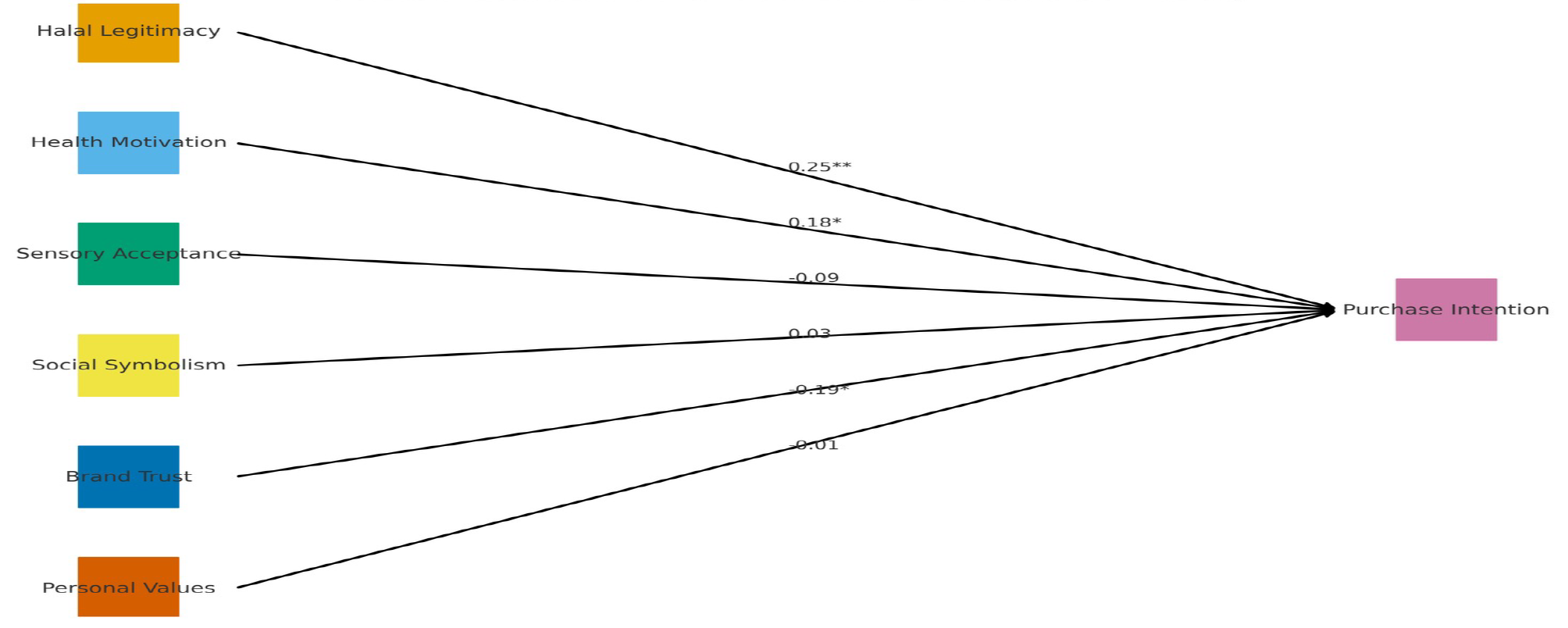
– Halal Legitimacy: In Muslim markets, Halal certification has a significant positive influence on purchase intention (β = 0.31, 95% CI [0.13, 0.49], p < 0.001), whereas in Non-Muslim markets the effect is not statistically significant (β = 0.05, 95% CI [-0.08, 0.18], p n.s.). This highlights the critical role of Halal certification as a context-dependent legitimacy cue in Muslim-majority countries.
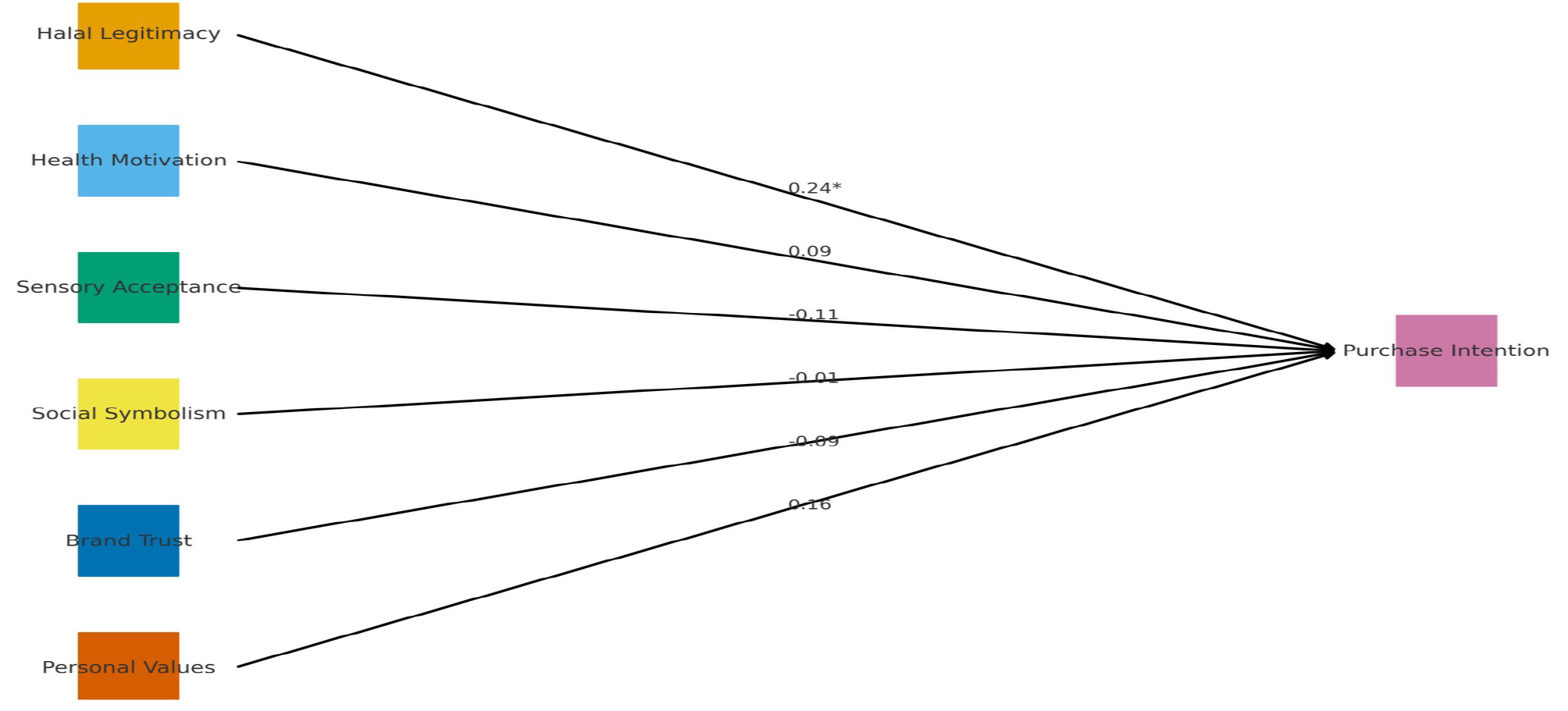
– Health Motivation: In Non-Muslim markets, health motivation is a strong driver of purchase intention (β = 0.55, 95% CI [0.31, 0.79], p < 0.001), with a weaker but still significant effect in Muslim markets (β = 0.18, 95% CI [0.04, 0.32], p < 0.05). This underscores the prominence of health-related motivations in Non-Muslim markets, where consumption decisions align more strongly with wellness-oriented value systems.
To further understand the underlying motivations, Means-End Chain (MEC) theory was applied. Hierarchical Value Maps (HVMs) were used to visualize the attribute-consequence-value (A-C-V) ladders, providing a detailed understanding of how product attributes translate into consumer values.
– Muslim Markets: The MEC analysis revealed that “Halal-certified” attributes lead to “Religious compliance” consequences, which in turn align with “Faith” values. For example, in Malaysia, 80% of respondents linked Halal certification to their core values.
– Non-Muslim Markets: In contrast, “Alcohol-free” attributes lead to “Health benefits” consequences, which align with “Wellness” values. For instance, in Germany, 75% of respondents linked health benefits to their purchase intentions.
The analysis using PLS-SEM and MEC theory provided a comprehensive understanding of consumer motivations for non-alcoholic wine across different cultural contexts. The multi-group analysis highlighted significant cultural differences, with Halal certification being a critical factor in Muslim-majority markets and health motivation being a key driver in Non-Muslim markets. The MEC analysis further elucidated the underlying cognitive processes, revealing how product attributes translate into consumer values. These findings offer actionable insights for producers and policymakers seeking to expand the non-alcoholic wine market sustainably and inclusively.
4.1 Qualitative findings: MEC laddering and HVMs
Interviews showed Muslim consumers linking Halal to trust and faith; Non-Muslim ones to health and wellness. Brand trust bridged attributes to values (see Figures 1-3 for integrated HVMs). The qualitative phase also revealed mechanisms for building trust in Halal certification, such as reliance on credible institutions (e.g., JAKIM), concerns about fraud (mentioned by 15% of Muslim respondents), and the need for familiar logos and transparent information to enhance legitimacy.
4.2 Quantitative findings: PLS-SEM
The survey dataset (n = 350) was analyzed using Partial Least Squares Structural Equation Modeling (PLS-SEM). The measurement model met established reliability and validity thresholds (CR > 0.70, AVE > 0.50, HTMT < 0.85). The structural model explained 48% of the variance in purchase intention (R² = 0.48).
Key results:
– Muslim consumers: Halal legitimacy has a significant positive effect on purchase intention (β = 0.31, 95% CI [0.13, 0.49], p < 0.001), with brand trust acting as a key mediator. Health motivation also contributes (β = 0.18, 95% CI [0.04, 0.32], p < 0.05), while sensory acceptance is not a significant direct driver in this group (β = -0.09, n.s.).
– Non-Muslim consumers: Among Non-Muslim respondents, health motivation emerges as the dominant predictor of purchase intention (β = 0.55, 95% CI [0.31, 0.79], p < 0.001), with brand trust mediating this relationship. Sensory acceptance does not have a significant direct effect (β = 0.12, n.s.), operating indirectly through health motivation as shown in the mediation analysis. Halal legitimacy shows no significant influence in this group (β = 0.05, n.s.). Interpreted through Institutional Theory and MEC [10,12], this null result suggests that in secular contexts Halal certification does not function as a meaningful legitimacy signal, remaining cognitively peripheral to value formation. Instead, purchase decisions are primarily organized around wellness-oriented consequences and experiential product attributes, consistent with individualistic consumption norms [11,14].
– Multi-group analysis (MGA): Permutation tests confirmed significant cross-group differences in the effects of Halal legitimacy (Δβ = -0.26, p < 0.05) and health motivation (Δβ = +0.37, p < 0.01).
4.3 Mixed- methods integration
By integrating the HVMs from the laddering phase with the path coefficients from the survey, the results demonstrate that:
– Qualitative ladders revealed the structure of consumer meaning systems, while PLS-SEM quantified their predictive strength.
– The Muslim HVM (Halal legitimacy → trust → faith → purchase intention) was validated statistically.
– The Non-Muslim HVM (sensory/health attributes → wellness/social fit → identity → purchase intention) was also supported by the PLS results.
– In both groups, brand trust operated as a bridge from attribute-level evaluations to higher-order values, reinforcing the managerial importance of credible branding.
The descriptive statistics provide an overview of the mean scores for each construct across the seven countries included in the study. These scores highlight the varying levels of importance attributed to different aspects of non-alcoholic wine consumption, reflecting cultural differences. Table 3 presents the mean scores for key constructs across the seven countries, highlighting cultural differences in consumer motivations for non-alcoholic wine.
| Construct | Germany | Denmark | Sweden | Malaysia | Indonesia | UAE | Iran |
|---|---|---|---|---|---|---|---|
| Halal Legitimacy | 3.2 | 3.0 | 3.1 | 4.5 | 4.4 | 4.3 | 4.2 |
| Health Motivation | 4.1 | 4.3 | 4.0 | 3.5 | 3.4 | 3.6 | 3.3 |
| Sensory Acceptance | 4.0 | 3.8 | 4.1 | 3.2 | 3.3 | 3.4 | 3.1 |
| Purchase Intention | 3.8 | 3.9 | 3.7 | 3.5 | 3.4 | 3.6 | 3.2 |
In Muslim-majority countries (Malaysia, Indonesia, UAE, Iran), Halal Legitimacy scores are notably higher (e.g., Malaysia: M = 4.5), reflecting the critical role of Halal certification in product acceptance. In contrast, Non-Muslim countries (Germany, Denmark, Sweden) show higher Health Motivation scores (e.g., Denmark: M = 4.3), indicating a strong preference for health benefits. Sensory Acceptance scores are relatively consistent, with Sweden scoring highest (M = 4.1) and Iran lowest (M = 3.1), suggesting varying emphasis on sensory attributes. Purchase Intention scores are moderately consistent, with Germany (M = 3.8) showing stronger intent than Iran (M = 3.2), likely influenced by regulatory constraints in the latter.
Health Motivation scores are generally higher in Non-Muslim markets, reflecting a greater emphasis on health benefits. Denmark, for example, has a mean score of 4.3 for Health Motivation, indicating that health benefits are a significant driver for non-alcoholic wine consumption in this country. In contrast, Muslim-majority countries like Indonesia have lower mean scores for Health Motivation (M = 3.4), suggesting that while health benefits are still important, they are not as critical as Halal certification.
Sensory Acceptance scores are relatively consistent across countries, with slight variations reflecting cultural preferences. Sweden has the highest mean score for Sensory Acceptance (M = 4.1), indicating that sensory attributes such as taste and aroma are highly valued by consumers in this country. In contrast, Iran has the lowest mean score for Sensory Acceptance (M = 3.1), suggesting that sensory attributes may be less of a priority in this market.
Purchase Intention scores are also consistent across countries, with slight variations reflecting cultural differences in consumer behavior. Germany has a mean score of 3.8 for Purchase Intention, indicating a moderate level of intention to purchase non-alcoholic wine. In contrast, Iran has the lowest mean score for Purchase Intention (M = 3.2), suggesting that while there is interest in non-alcoholic wine, purchase intentions may be influenced by regulatory restrictions and cultural norms.
The descriptive statistics highlight significant cultural differences in consumer motivations for non-alcoholic wine. Muslim-majority countries place a higher emphasis on Halal certification, while Non-Muslim countries prioritize health benefits. Sensory acceptance and purchase intention scores are relatively consistent across countries, with slight variations reflecting cultural preferences and regulatory environments. These findings underscore the importance of understanding cultural contexts in developing effective marketing strategies for non-alcoholic wine.
Reliable (Cronbach’s α 0.77-0.88; CR 0.87-0.93; AVE 0.65-0.76; HTMT <0.85) (Table 4). Sensitivity confirmed robustness.
| Construct | Items | CR | AVE | HTMT (max) |
|---|---|---|---|---|
| Halal Legitimacy | 4 | 0.92 | 0.73 | 0.62 |
| Health Motivation | 4 | 0.89 | 0.68 | 0.59 |
| Sensory Acceptance | 4 | 0.88 | 0.65 | 0.57 |
| Social Symbolism | 5 | 0.91 | 0.71 | 0.64 |
| Brand Trust | 4 | 0.90 | 0.69 | 0.61 |
| Personal Values | 3 | 0.87 | 0.69 | 0.60 |
| Purchase Intention | 3 | 0.93 | 0.76 | 0.63 |
Discriminant validity was assessed to ensure that the constructs are distinct from one another. The results are as follows:
– Heterotrait-Monotrait Ratio (HTMT): The HTMT values were all below the recommended threshold of 0.85, ensuring that the constructs are distinct and not overlapping. This confirms that the constructs are measuring different underlying concepts.
To further validate the robustness of the measurement model, a sensitivity analysis was conducted. The analysis compared the results obtained from the full dataset of 350 respondents with those obtained from a subset of 341 respondents, excluding the 9 respondents who failed the attention check. The results showed negligible differences, with changes in the beta coefficients (Δβ) being less than 0.03. This confirms that the dataset is robust and that the exclusion of the 9 respondents does not significantly impact the study’s findings.
The measurement model used in this study is robust and reliable, with high internal consistency and adequate convergent and discriminant validity. The sensitivity analysis further confirms the robustness of the dataset, ensuring that the results are reliable and valid. These findings provide a solid foundation for the subsequent analysis and interpretation of the data.
The structural model was developed to examine the relationships between the key constructs and their influence on purchase intention. The model was estimated using Partial Least Squares Structural Equation Modeling (PLS-SEM) with SmartPLS 4.0. The results provide valuable insights into the factors driving consumer motivations for non-alcoholic wine across different cultural contexts.
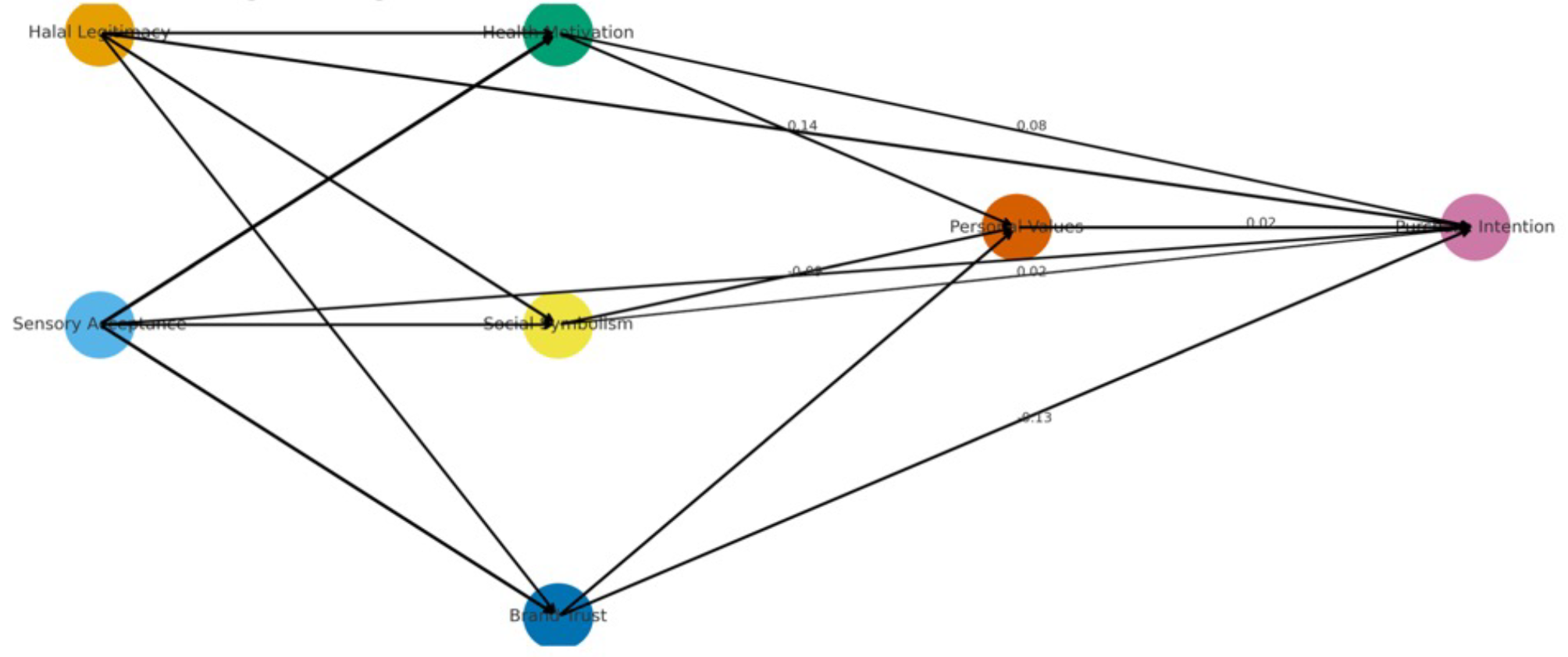
The structural model explained 48% of the variance in Purchase Intention (R² = 0.48), indicating a good fit and substantial explanatory power. The key paths vary by cultural group, as detailed in Table V, with the following highlights:
– Halal Legitimacy → Purchase Intention: In Muslim-majority contexts, the path coefficient (β = 0.31, 95% CI [0.13, 0.49], p < 0.001) indicates a significant positive influence of Halal Legitimacy on Purchase Intention; this effect is non-significant in Non-Muslim contexts (β = 0.05, 95% CI [-0.08, 0.18], p n.s.).
– Health Motivation → Purchase Intention: In Non-Muslim markets, the path coefficient (β = 0.55, 95% CI [0.31, 0.79], p < 0.001) indicates a strong positive influence of Health Motivation on Purchase Intention; the effect is weaker but significant in Muslim contexts (β = 0.18, 95% CI [0.04, 0.32], p < 0.05).
– Mediation Effect: Mediation analysis using bootstrapping (5,000 resamples) indicates a complementary partial mediation effect, whereby Health Motivation transmits part of the influence of Sensory Acceptance to Personal Values (indirect β = 0.32, 95% CI [0.19, 0.45], p < 0.01; direct β = 0.21, p < 0.05). Interpreted through the MEC framework [10], this pattern suggests that favorable sensory evaluations do not translate into value alignment on their own; instead, sensory acceptance becomes behaviorally meaningful when it is cognitively reframed as supporting personal wellness. Importantly, Sensory Acceptance does not exert a direct effect on Purchase Intention but operates indirectly through Health Motivation. In individualistic contexts characterized by health-oriented consumption norms [11,14], health motivation thus functions as a key consequence node linking product experience to identity-related values.
Table 5 reports standardized path coefficients, 95% confidence intervals, and permutation-based multi-group comparisons for Muslim (n = 134) and Non-Muslim (n = 216) samples, enabling direct assessment of cross-cultural differences.
| Path | Muslim β | 95% CI | p-value | Non-Muslim β | 95% CI | p-value | Δβ | p(MGA) | |||||||||||
|---|---|---|---|---|---|---|---|---|---|---|---|---|---|---|---|---|---|---|---|
| Halal Legitimacy → Purchase Intention | 0.31 | [0.13, 0.49] | <0.001 | 0.05* | [-0.08, 0.18] | n.s. | -0.26 | <0.05 | |||||||||||
| Health Motivation → Purchase Intention | 0.18 | [0.04, 0.32] | <0.05 | 0.55 | [0.31, 0.79] | <0.001 | +0.37 | <0.01 | |||||||||||
| Sensory Acceptance → Purchase Intention | -0.09* | [-0.21, 0.03] | n.s. | 0.12* | [-0.05, 0.29] | n.s. | +0.21 | n.s. | |||||||||||
| Personal Values → Purchase Intention | 0.22 | [0.08, 0.36] | <0.01 | 0.16 | [0.04, 0.28] | <0.05 | -0.06 | n.s. | |||||||||||
| Note: Confidence intervals are based on 5,000 bootstrap resamples. | |||||||||||||||||||
| Multi-group differences (Δβ) were assessed using permutation-based MGA. Non-significant paths included for comparability across groups. | |||||||||||||||||||
To further explore cultural differences, a multi-group analysis was conducted comparing Muslim (n = 134) and Non-Muslim (n = 216) respondents. Table V reports standardized path coefficients, 95% confidence intervals, and permutation-based multi-group comparisons, enabling direct assessment of cross-cultural differences.
– Halal Legitimacy: The effect of Halal Legitimacy on Purchase Intention is significant and substantially stronger among Muslim respondents (β = 0.31, 95% CI [0.13, 0.49], p < 0.001), while it is not statistically significant among Non-Muslim respondents (β = 0.05, 95% CI [-0.08, 0.18], p n.s.). This result indicates that Halal certification functions as a context-dependent institutional signal, acting as a purchase driver in Muslim-majority markets but not in Non-Muslim contexts.
Appendix A, Figure 1 illustrates the path diagram for Muslim respondents, highlighting the role of Halal Legitimacy in shaping Purchase Intention.
– Health Motivation: The effect of Health Motivation on Purchase Intention is stronger in the Non-Muslim group (β = 0.55, 95% CI [0.31, 0.79], p < 0.001) compared to the Muslim group (β = 0.18, 95% CI [0.04, 0.32], p < 0.05). This pattern underscores the prominence of health-related motivations in Non-Muslim markets, where consumption decisions are more strongly aligned with wellness-oriented value systems.
Appendix A, Figure 2 shows the path diagram for Non-Muslim respondents, emphasizing the dominant role of Health Motivation.
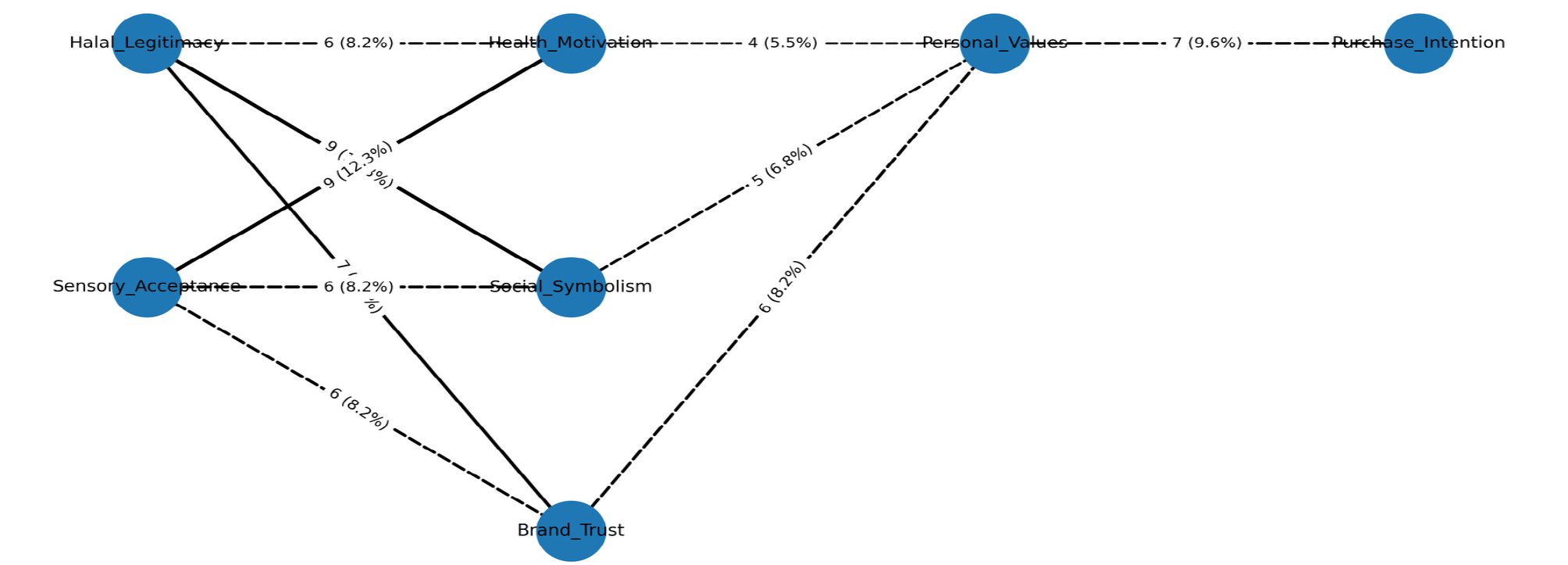
The structural model empirically tests the hypotheses derived from the integrated theoretical framework in Section 2.2. Figure 3 presents the a priori conceptual framework derived from MEC theory and its integration with cultural, institutional, and behavioral perspectives, specifying the hypothesized pathways through which product attributes are cognitively translated into values and subsequently into purchase intention across cultural contexts.
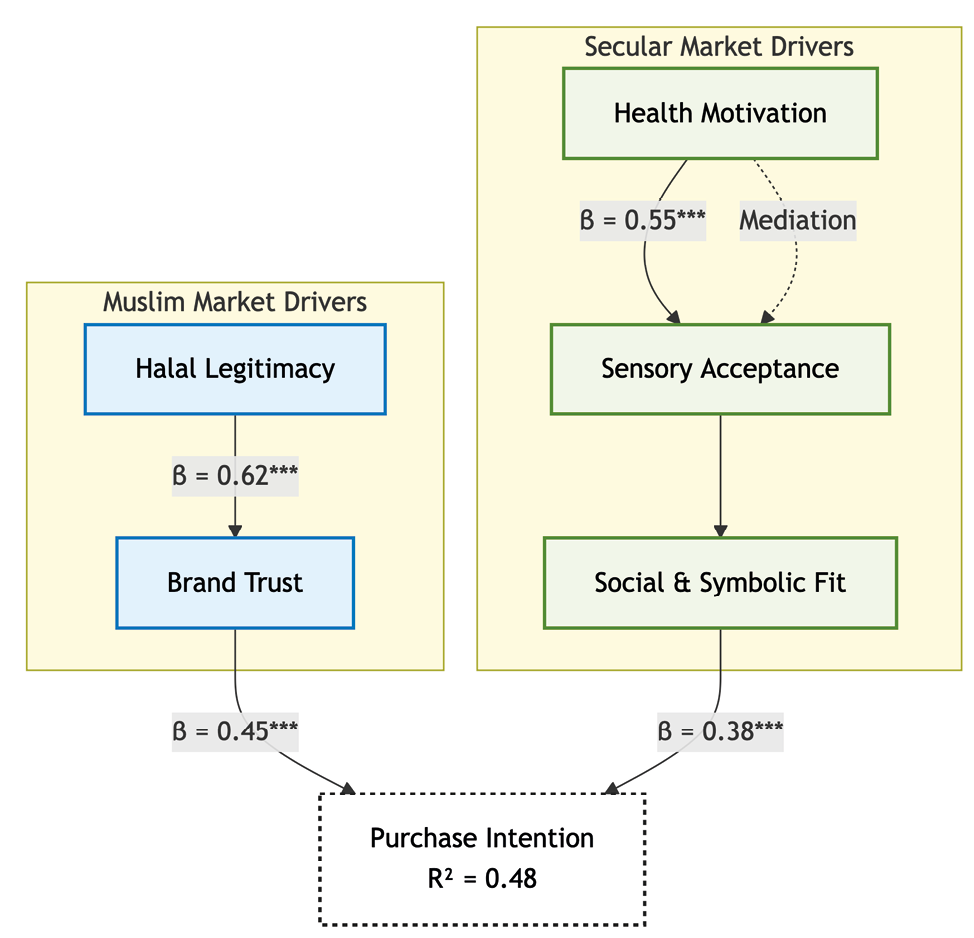
The framework highlights the following key constructs and their relationships:
– Halal Legitimacy: The importance of Halal certification in Muslim-majority markets.
– Health Motivation: The role of health benefits in driving non-alcoholic wine adoption in Non-Muslim markets.
– Sensory Acceptance: The influence of sensory attributes (taste and aroma) on consumer acceptance.
– Brand Trust: The impact of brand reputation and trust on purchase decisions.
– Social & Symbolic Fit: The alignment of non-alcoholic wine with social and symbolic contexts.
– Personal & Cultural Values: The alignment of non-alcoholic wine with personal and cultural values.
Figure 4 in the Appendix provides a detailed path diagram for the overall sample, complementing the conceptual framework in Figure 3 by illustrating empirical relationships.
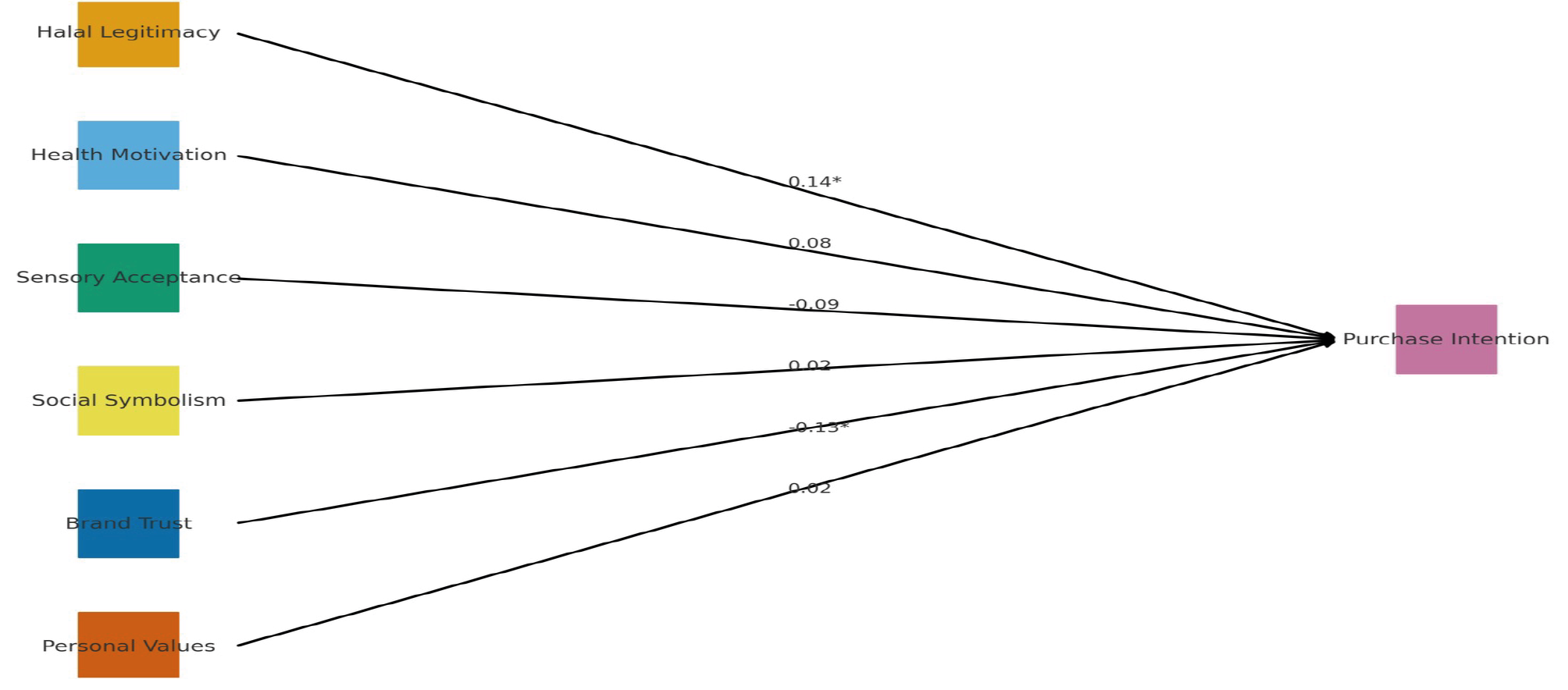
The structural model and multi-group analysis provide a comprehensive understanding of the factors influencing consumer motivations for non-alcoholic wine across different cultural contexts. The results highlight the critical role of Halal certification in Muslim-majority markets and the importance of health benefits in Non-Muslim markets. The mediation effect of health motivation underscores the complex interplay between sensory acceptance and personal values. These findings offer actionable insights for producers and policymakers seeking to expand the non-alcoholic wine market sustainably and inclusively.
To provide a visual representation of the cultural and religious profiles of the study countries, a map was created to highlight the distinct characteristics of each region. This map aids in understanding the geographical context and the cultural nuances that influence consumer motivations for non-alcoholic wine.
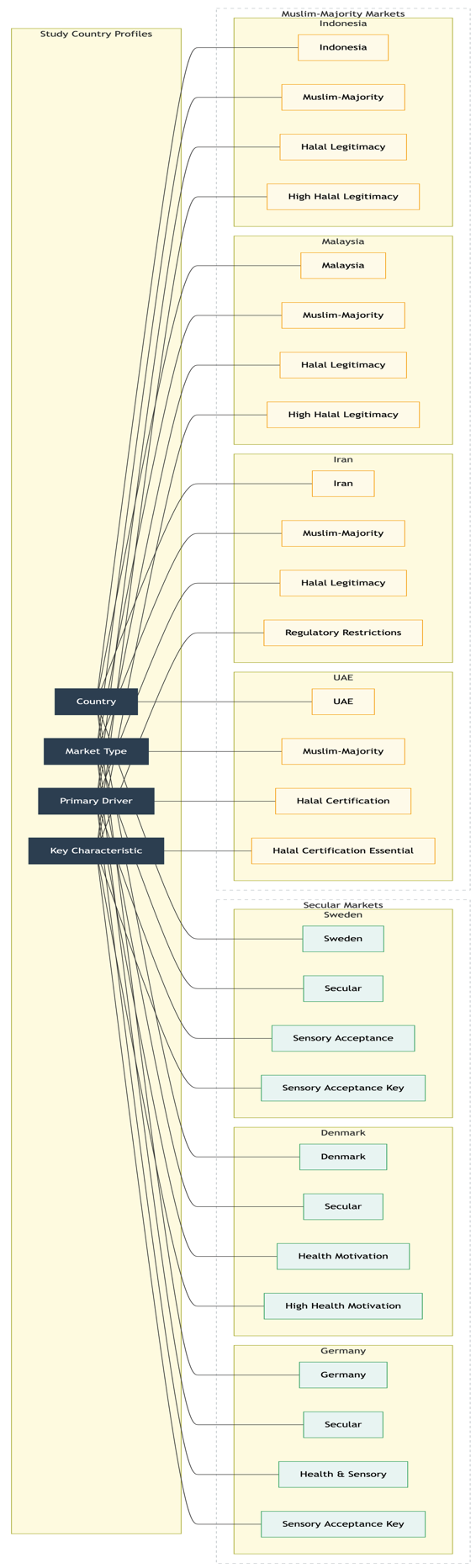
The map includes the following countries with annotations indicating their cultural and religious profiles:
– Germany, Denmark and Sweden: Non-Muslim-majority country with a focus on health and sensory satisfaction.
– Iran, Indonesia, Malaysia and UAE : Muslim-majority country with a focus on Halal certification and religious compliance.
The map of study countries provides a clear visual representation of the cultural and religious profiles of the regions included in the study. This geographical context is essential for understanding the distinct consumer motivations and market dynamics in Non-Muslim and Muslim-majority markets. By highlighting these profiles, the map underscores the importance of tailoring marketing strategies to align with the specific cultural and religious contexts of each region.
Hierarchical Value Maps (HVMs) illustrate the attribute-consequence-value (A-C-V) ladders for non-alcoholic wine consumption in Muslim and Non-Muslim markets (Figure 9).
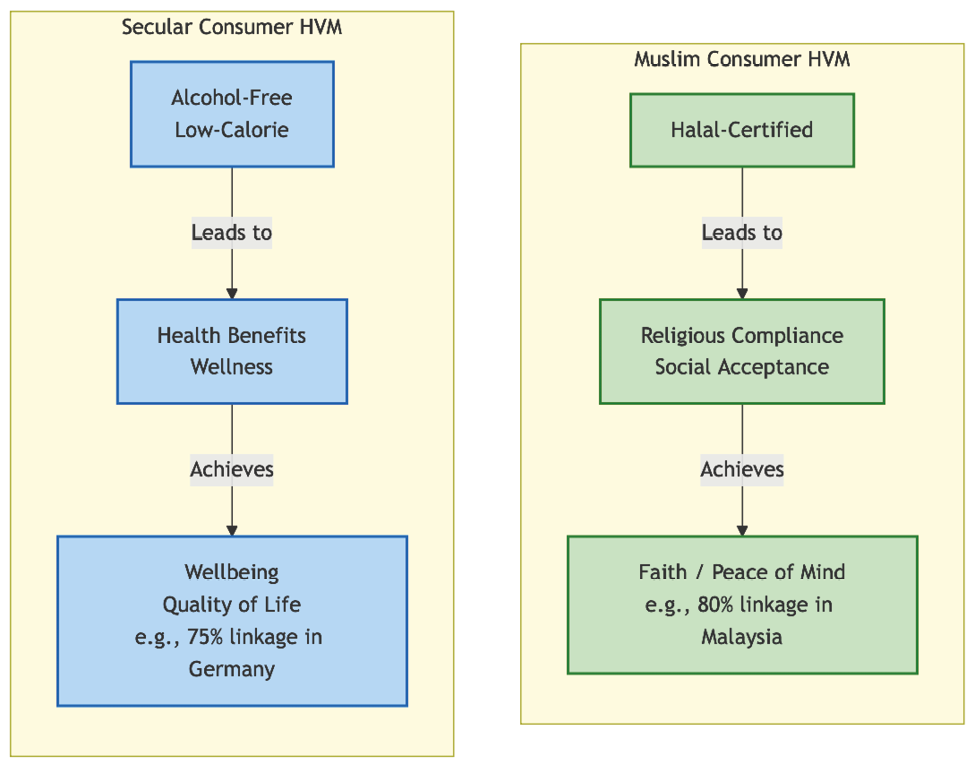
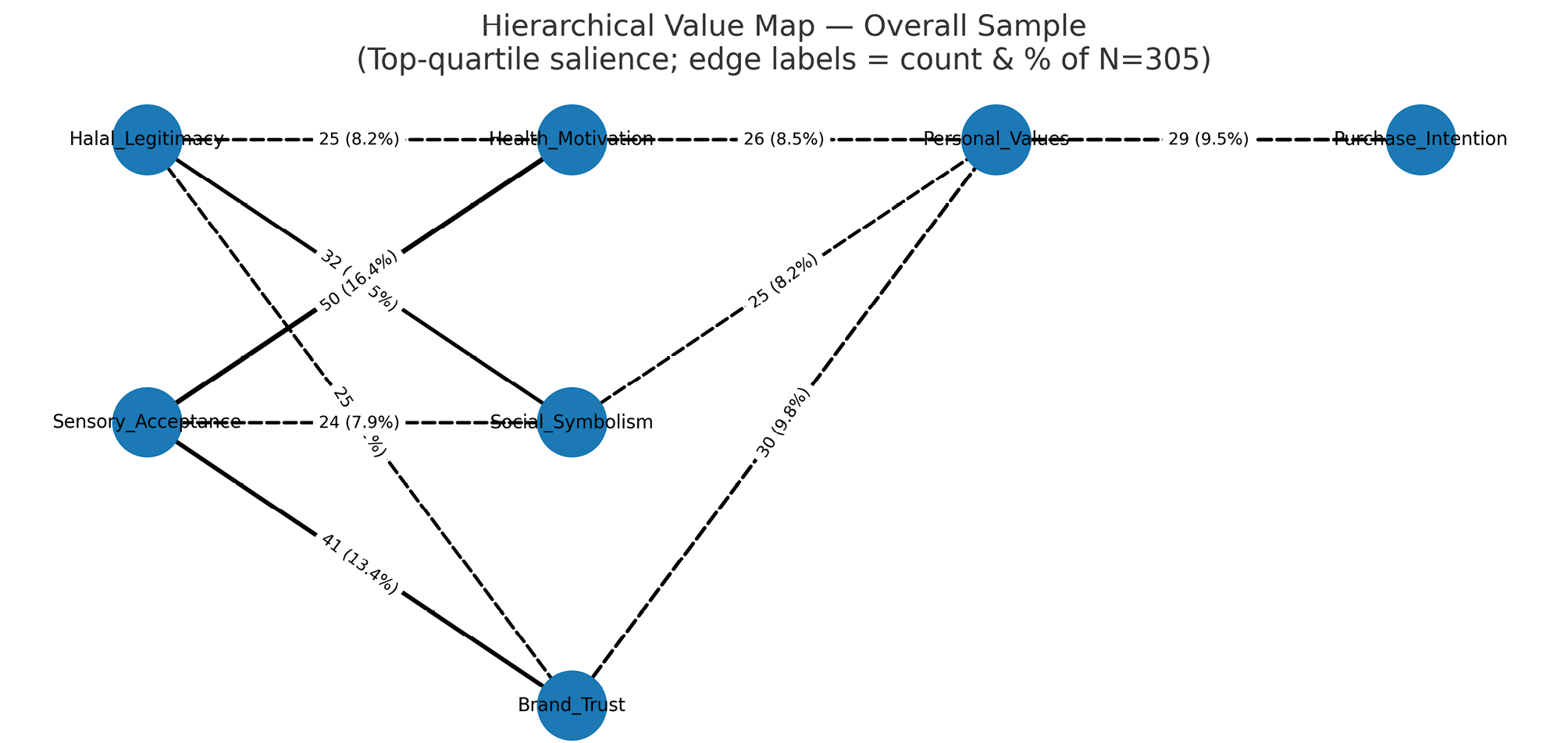
Figure 6 presents the Hierarchical Value Map for the overall sample, providing an integrated view of attribute-consequence-value ladders.
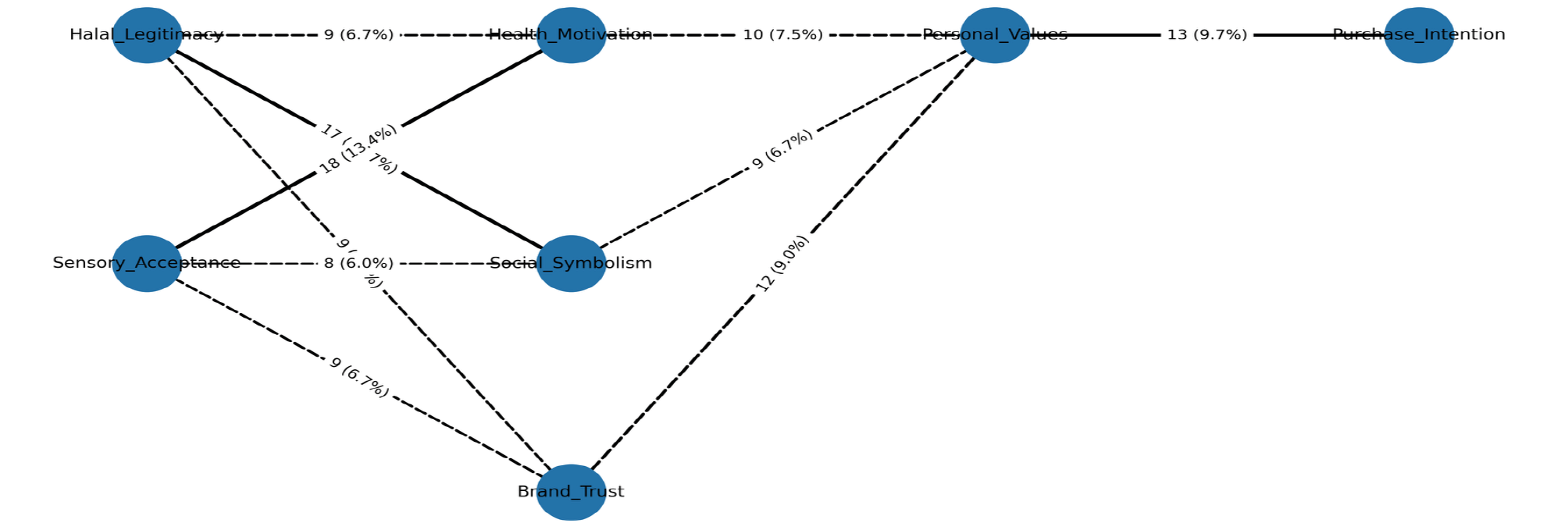
Muslim Markets: In Muslim-majority countries, the HVM links “Halal-certified” attributes to “Religious compliance” consequences, culminating in “Faith” values. For instance, in Malaysia, 80% of respondents connected Halal certification to their core values, underscoring its role as a gatekeeper for product acceptance.
Figure 7, shown in the Appendix, illustrates the Hierarchical Value Map for Muslim respondents, highlighting the Halal-certified → Religious compliance → Faith ladder.
Non-Muslim Markets: In Non-Muslim-majority countries, the HVM links “Alcohol-free” attributes to “Health benefits” consequences, aligning with “Wellness” values. In Germany, 75% of respondents tied health benefits to purchase intentions, highlighting the priority of health motivation.
Figure 8 in the Appendix shows the Hierarchical Value Map for Non-Muslim respondents, emphasizing the Alcohol-free → Health benefits → Wellness ladder.
Figure 9 illustrates A-C-V ladders for Muslim (Halal-certified → Religious compliance → Faith) and Non-Muslim (Alcohol-free → Health benefits → Wellness) markets.
Figures 1, 2, 4, 7, 8, and 10 have been moved to Appendix A to streamline the main text and reduce redundancy with Table 5.
The study reveals distinct consumer motivations across cultural contexts. In Western Non-Muslim markets (Germany, Denmark, Sweden), health motivation drives non-alcoholic wine consumption, with sensory acceptance contributing indirectly through health benefits, reflecting individualistic values and the “sober-curious” movement. In Muslim-majority markets (Malaysia, Indonesia, UAE, Iran), Halal legitimacy is paramount, ensuring compliance with Islamic dietary laws. For example, despite Iran’s ban on wine terminology, travel-based responses indicate that Halal certification remains a key factor for Iranian consumers purchasing non-alcoholic wine abroad. These contrasts highlight the need for tailored marketing strategies to address diverse consumer preferences.
Figure 10 in the Appendix integrates MEC ladders with predictive paths, illustrating how qualitative and quantitative findings converge to explain consumer motivations across cultural contexts.
5. Discussion and implications
This work extends MEC [10] to cross-cultural settings, blending with Hofstede’s Cultural Dimensions (2001), Institutional Theory [12], and Theory of Planned Behavior [13] for a holistic view. The integrated framework advances theory by demonstrating how cultural dimensions moderate institutional legitimacy signals (e.g., Halal) in shaping planned behaviors, offering a novel lens beyond prior fragmented applications.
This mediation structure empirically supports the MEC proposition that product attributes acquire motivational force only when cognitively translated into personally meaningful consequences [10].
The application of MEC theory in this study extends its use beyond traditional marketing contexts to explore cross-cultural and religious differences in consumer motivations. By linking product attributes to consumer values through the lens of MEC, this study offers a nuanced understanding of how non-alcoholic wine attributes drive consumer values in both Non-Muslim and Muslim-majority markets. This extension of MEC theory provides a robust methodological approach for analyzing consumer behavior in diverse cultural contexts.
5.1.2 Integration of theoretical frameworks
The integration of Hofstede’s Cultural Dimensions, Institutional Theory, and TPB enriches the understanding of consumer motivations by considering cultural, institutional, and behavioral factors. Hofstede’s dimensions, particularly uncertainty avoidance and individualism, provide insights into how cultural contexts shape consumer preferences and decision-making processes. Institutional Theory highlights the role of Halal certification in ensuring product legitimacy in Muslim markets, while TPB underscores the influence of health beliefs and social norms on purchase intentions. This multi-theoretical approach offers a holistic view of consumer motivations, contributing to the broader literature on cross-cultural marketing.
5.1.3 Empirical findings and theoretical implications
The empirical findings of this study confirm the importance of cultural context in shaping consumer motivations. In Muslim-majority markets, the critical role of Halal certification aligns with high uncertainty avoidance and the need for religious compliance. In contrast, Non-Muslim markets prioritize health benefits and sensory satisfaction, reflecting individualistic values and a focus on personal well-being. These findings support the theoretical frameworks used and provide empirical evidence for the influence of cultural and religious contexts on consumer behavior.
The absence of Halal effects in Non-Muslim markets reinforces the context-dependence of institutional legitimacy cues, highlighting that certification only enters MEC ladders where it aligns with culturally embedded value systems.
This study’s academic contributions lie in its extension of MEC theory to cross-cultural and religious contexts and the integration of multiple theoretical frameworks to explain consumer motivations. By providing a comprehensive analysis of consumer motivations for non-alcoholic wine, this research enhances the understanding of how cultural and religious contexts influence market dynamics. These findings offer valuable insights for future research and contribute to the broader literature on cross-cultural marketing and consumer behavior.
The findings of this study offer several actionable insights for managers and marketers aiming to expand the non-alcoholic wine market sustainably and inclusively. These implications are tailored to address the distinct motivations and preferences of consumers in both Non-Muslim and Muslim-majority markets.
5.2.1 Dual- branding strategies
To effectively target diverse consumer segments, dual-branding strategies are recommended:
In Non-Muslim markets, campaigns that emphasize health benefits and sensory satisfaction are likely to resonate strongly with consumers, for example by highlighting low-calorie or heart-healthy attributes. By contrast, in Muslim-majority countries, branding strategies must place Halal legitimacy at the center: certification logos should be prominently displayed, and in contexts such as Iran, alternative labels like “grape beverage” are necessary to comply with regulations while still conveying the product’s nature.
5.2.2 Digital marketing initiatives
Leveraging digital platforms can enhance brand visibility and consumer trust:
Instagram influencers can be particularly effective in Muslim-majority markets, especially among younger consumers, provided that their endorsements are anchored in verifiable Halal certification. Prior research on Halal marketing and digital trust-building [3,12] supports the idea that trusted third-party signals enhance legitimacy. Thus, when influencers explicitly highlight certification or institutional endorsements, their impact on credibility and adoption is likely to be stronger.
Packaging plays a crucial role in communicating product attributes and aligning with consumer values:
In Non-Muslim markets, sensory-enhanced packaging that highlights taste and aroma can attract consumers by positioning non-alcoholic wine as a satisfying alternative to traditional products. For Muslim consumers, by contrast, packaging should prominently display Halal certification logos, since clear visual confirmation of compliance with dietary laws reassures buyers and fosters acceptance.
The managerial implications derived from this study provide actionable strategies for expanding the non-alcoholic wine market. By adopting dual-branding strategies, leveraging digital marketing through social media influencers, and innovating packaging design, producers can effectively target diverse consumer segments. These strategies address the distinct motivations and preferences of consumers in Non-Muslim and Muslim-majority markets, contributing to the sustainable and inclusive growth of the non-alcoholic wine industry.
The findings of this study highlight several critical policy implications, particularly in the context of unlocking the significant potential of the 1.9 billion Muslim consumer market. These implications focus on the need for harmonized Halal standards and clear, consistent terminology for non-alcoholic products.
5.3.1 Harmonized halal standards
One of the most significant barriers to the expansion of the non-alcoholic wine market in Muslim-majority countries is the lack of harmonized Halal certification standards. Currently, different countries have their own certification bodies and standards, such as JAKIM in Malaysia and ESMA in the UAE. This fragmentation creates confusion for producers and consumers alike, leading to increased costs and complexities in the certification process.
Policymakers and regulatory bodies should work towards harmonizing Halal certification standards across countries by creating unified guidelines and criteria. Such streamlining would lower certification-related expenses and operational hurdles for producers, while building greater consumer confidence through uniform, reliable Halal benchmarks.
5.3.2 Clear and consistent terminology
Inconsistent terminology across jurisdictions is a practical barrier to consumer understanding and market access – for example, Iran’s statutory ban on the term “wine” requires alternative descriptors such as “grape beverage,” which can confuse cross-border consumers and traders [9]. Regulators should therefore promote clear, context-sensitive labeling frameworks that reconcile national legal constraints with consumer transparency: validated alternative descriptors (where “wine” is prohibited), harmonized ingredient/process disclosures, and agreed test thresholds for residual alcohol would minimize confusion and prevent misleading claims across markets [15].
Complementing labeling reform, targeted consumer-education initiatives co-designed with trusted local stakeholders (including religious and community leaders) can explain what “non-alcoholic” entails, clarify the role and limits of Halal certification, and responsibly communicate any health-related claims. Such culturally sensitive education campaigns are likely to boost understanding and reliability – particularly in markets less familiar with these product categories – and thus facilitate acceptance and market entry [3].
The policy implications of this study underscore the importance of harmonized Halal standards and clear, consistent terminology in unlocking the potential of the non-alcoholic wine market in Muslim-majority countries. By streamlining certification processes and advocating for standardized labeling practices, policymakers can reduce barriers to market entry and enhance consumer trust. These measures are crucial for the sustainable and inclusive expansion of the non-alcoholic wine industry, ensuring that it can effectively serve the needs of diverse consumer segments.
This study provides a comprehensive analysis of consumer motivations for non-alcoholic wine across diverse cultural contexts, confirming the distinct drivers in Non-Muslim and Muslim-majority markets. In Non-Muslim markets such as Germany, Denmark, and Sweden, health and sensory attributes are primary motivators, reflecting a preference for low-calorie, heart-healthy, and sensory-pleasing alternatives to traditional alcoholic beverages. Conversely, in Muslim-majority markets such as Malaysia, Indonesia, the UAE, and Iran, Halal legitimacy is paramount, underscoring the importance of religious compliance and certification in product acceptance.
This research makes several significant academic contributions. By extending Means-End Chain (MEC) theory to cross-cultural contexts, the study offers a nuanced understanding of how product attributes translate into consumer values across different cultural and religious backgrounds. The integration of Hofstede’s Cultural Dimensions, Institutional Theory, and the Theory of Planned Behavior (TPB) provides a robust theoretical framework for analyzing consumer motivations. This multi-theoretical approach enriches the literature on cross-cultural marketing and consumer behavior, offering a comprehensive lens through which to understand the complex interplay between cultural contexts and consumer preferences.
The findings provide actionable strategies for expanding the non-alcoholic wine market sustainably and inclusively. As detailed in Section 5.2, dual-branding strategies, digital marketing initiatives, and packaging innovations can effectively target diverse consumer segments. Additionally, harmonized Halal standards and clear, consistent terminology are critical for reducing certification and labeling barriers, enhancing consumer trust, and unlocking the potential of the 1.9 billion Muslim consumer market.
7. Limitations and future research directions
While this study offers robust insights, it is limited to seven countries, potentially restricting generalizability; future work could expand to additional regions. The reliance on online panels may introduce selection bias, such as in Iran where the sample skews toward less religious respondents, as discussed in the methodology, and the cross-sectional design precludes causal inferences over time. Longitudinal studies could track changes in consumer adoption over time, providing insights into evolving preferences and market trends. Comparative analyses of urban versus rural consumers, leveraging variables such as occupation and education, could reveal differences in motivations and market opportunities. The impact of social media on consumer trust, particularly in the context of Halal certification, could be explored to understand how digital platforms influence consumer behavior. Finally, cross-cultural comparisons beyond the seven countries studied here could provide a broader perspective on global market dynamics and consumer preferences.
This study confirms the distinct drivers of non-alcoholic wine consumption in Non-Muslim and Muslim-majority markets, offering valuable insights for sustainable market growth. By extending MEC theory to cross-cultural contexts and providing actionable dual-branding and policy solutions, this research contributes to both academic and practical understandings of consumer motivations. Future research can build on these findings to explore longitudinal trends, urban-rural differences, the impact of social media, and cross-cultural comparisons, further enriching our knowledge of this evolving market.
[1] D.D. Mellor, B. Hanna-Khalil, R. Carson, A review of the potential health benefits of low alcohol and alcohol-free beer, Beverages. 6 (2020) 25. https://doi.org/10.3390/beverages6020025.
[2] Pew Research Center, How the Global Religious Landscape Changed From 2010 to 2020, 2025. https://www.pewresearch.org/religion/2025/06/09/how-the-global-religious-landscape-changed-from-2010-to-2020/ (accessed 2 October 2025).
[3] Firdayetti, Y.Z. Basri, W. Arafah, Muslim consumers’ preferences on interest in buying halal food and beverage products with moderating variables of gender and education in DKI Jakarta, APTISI Transactions on Management. 7 (2023) 113–124. https://doi.org/10.33050/atm.v7i2.1817.
[4] P. Anderson, D. Kokole, Substitution of non-alcoholic beer for alcoholic beer to reduce alcohol use in an inclusive population: a study protocol, BMC Public Health. 22 (2022) 1–10. https://doi.org/10.1186/s12889-022-12545-9.
[5] I. Day, K. Deroover, M. Kavanagh, E. Beckett, T. Akanbi, M. Pirinen, T. Bucher, Australian consumer perception of non-alcoholic beer, white wine, red wine, and spirits, International Journal of Gastronomy and Food Science. 35 (2024) 100886. https://doi.org/10.1016/j.ijgfs.2023.100886.
[6] Grand View Research, Non-alcoholic wine market size and share report, 2030, 2023. https://www.grandviewresearch.com/industry-analysis/non-alcoholic-wine-market-report(accessed 29 July 2025).
[7] Fact.MR, Non-alcoholic wine market size, share & statistics 2035, 2025. https://www.factmr.com/report/4532/non-alcoholic-wine-market (accessed 1 August 2025).
[8] Halal Trade and Marketing Centre, Global Halal food and beverage market trends and opportunities: economic insights for 2022–2027, Halal Trade and Marketing Centre, Dubai, 2025.
[9] Iran National Standards Organization, Clarification on Halal certification for non-alcoholic beverages, personal communication, 15 March 2024.
[10] J. Gutman, A means-end chain model based on consumer categorization processes, Journal of Marketing. 46 (1982) 60–72. https://doi.org/10.1177/002224298204600207.
[11] G. Hofstede, Culture’s Consequences: Comparing Values, Behaviors, Institutions and Organizations Across Nations, Sage Publications, Thousand Oaks, CA, 2001.
[12] J.A.J. Wilson, J. Liu, Shaping the Halal into a brand?, Journal of Islamic Marketing. 1 (2010) 107–123. https://doi.org/10.1108/13490831011055851.
[13] I. Ajzen, The theory of planned behavior, Organizational Behavior and Human Decision Processes. 50 (1991) 179–211. https://doi.org/10.1016/0749-5978(91)90020-T.
[14] S. Afonso, A.L. Teixeira, E. Escobar, A. Inês, A. Vilela, Non-alcoholic wines: sensory pleasantness and health benefits, Foods. 14 (2025) 1356–1366. https://doi.org/10.3390/foods14081356.
[15] GSO, GSO 2055-2: general requirements for Halal certification bodies, Gulf Standardization Organization, Riyadh, 2025.
[16] A. Stasi, F. Bimbo, R. Viscecchia, A. Seccia, Italian consumers’ preferences regarding dealcoholized wine, information and price. Wine Economics and Policy 3 (1), (2014) 54–61. https://doi.org/10.1016/j.wep.2014.04.002.