Mind the Gap: Exploring Perceived Importance and Performance in Regional Wine and Food Tourism Experiences
South-West University “Neofit RIlski”, 60 Ivan Mihaylov Str., Blagoevgrad, Bulgaria
Email: lynnterziyska@gmail.com; kordopul_house@abv.bg
*Corresponding author
Abstract. This paper explores visitor perceptions of wine and food tourism in the Petrich–Sandanski region of Southwestern Bulgaria, an emblematic but underexplored area within the Struma Valley wine region. The aim is to identify key strengths and weaknesses of the regional offer and derive insights to support sustainable destination development and policy design. The study applies a combination of classic and diagonal Importance–Performance Analysis (IPA) to survey data from domestic tourists in Bulgaria (n = 177), comparing the importance assigned to specific attributes with their perceived performance. Findings indicate consistently high evaluations across most attributes, with wine and food quality, authenticity, and atmosphere emerging as core strengths. Value for money and interpretive quality (e.g., commentary and presentation), on the other hand, perform below expectations, suggesting areas for managerial intervention. Less central attributes, such as special diet options and culinary demonstrations, were rated lower in both importance and performance, confirming their peripheral role. The high importance of GI foods, coupled with absence of certified products in the region, points to untapped potential for linking gastronomy with food heritage. The study advances the literature by integrating an innovative dual-IPA framework with a focus on domestic tourist perspectives in an emerging wine tourism destination, offering actionable insights for policy and regional development strategies.
Keywords: wine tourism, food tourism, importance-performance analysis, Bulgaria.
Index
2.2 Applications of IPA in wine and food tourism studies
4.1 Wine tourism experiences: descriptive statistics and IPA results
4.1.1 Descriptive statistics of wine tourism attributes
4.1.2 Classic IPA (wine tourism)
4.1.3 Diagonal IPA (wine tourism)
4.1.4 Comparative interpretation of IPA approaches
4.2 Food tourism experiences: descriptive statistics and IPA results
4.2.1 Descriptive statistics of food tourism attributes
4.2.2 Classic IPA (food tourism)
4.2.3 Diagonal IPA (food tourism)
Appendix 1. Applications of Importance–Performance Analysis (IPA) in Wine Tourism (summary by study)
Appendix 2: Applications of Importance–Performance Analysis (IPA) in Food Tourism (summary by study)
In recent years, wine and culinary tourism have emerged as significant segments within the global tourism industry, offering travellers immersive experiences that combine cultural exploration with gastronomic indulgence [1–3]. These forms of niche tourism not only contribute to the economic vitality of rural regions but also play a pivotal role in preserving and promoting local heritage and traditions [4].
Understanding tourist perceptions and satisfaction levels is crucial for the sustainable development of wine and culinary destinations. Importance–Performance Analysis (IPA), introduced by Martilla and James [5], has been widely adopted in tourism research as a diagnostic tool to assess service quality by comparing the importance of specific attributes to their perceived performance. This method enables destination managers to identify areas requiring improvement and to allocate resources effectively [6].
In the context of wine tourism, IPA has been utilized to evaluate various aspects such as winery services, tasting experiences, and overall visitor satisfaction (Mitchell & Hall, 2006). Similarly, in culinary tourism, IPA has been applied to assess factors influencing visitor satisfaction at food festivals and gastronomic events, highlighting the importance of food quality, authenticity, and service [7]. However, the majority of IPA applications in this field focus on well-established destinations, leaving emerging regions underrepresented.
The Petrich–Sandanski region, with the Melnik area at its heart, constitutes the core of the Struma Valley wine region, widely regarded as one of Bulgaria’s most emblematic areas of viticulture. Its strengths lie in the concentration of wineries within a compact geographical area, enabling visitors to combine multiple cellar visits in a single trip, as well as in the diversity of establishments – from small, family-run wineries to luxury estates integrating hospitality services [8]. The region’s hallmark is the indigenous Broad-leaf Melnik Vine and its cultivated varieties (Melnik 55, Melnik 1300, Ruen), which are emblematic of the terroir and provide a unique competitive advantage [9]. Over the past decade, the calendar of events has expanded, with initiatives such as the Melnik Wineries Open Doors enhancing visibility, while award-winning wines and investments in infrastructure have further strengthened its positioning. Despite these advances, challenges remain, including limited international awareness of Bulgarian wines and fragmented cooperation among local stakeholders. Overall, the Struma Valley illustrates a dynamic stage of wine tourism development: moving beyond an emerging destination towards a competitive niche, yet still requiring coordinated marketing and strategic support to reach its full potential [8].
In contrast, the development of food tourism in the region remains at a more nascent stage. While the area is characterized by a rich culinary heritage rooted in Mediterranean and Balkan traditions, local gastronomy is not yet systematically integrated into the tourism product. Restaurants and small producers occasionally emphasize regional specialties, but there are no established food routes or consistent promotion of local products under Geographical Indication (GI) labels. As such, food-related experiences are more fragmented and opportunistic compared to the relatively structured wine tourism offer.
Against this background, the present study contributes in three important ways. First, it advances the application of IPA by focusing on wine and food tourism experiences in Southwestern Bulgaria, with particular emphasis on the destinations of Sandanski, Melnik, and Petrich. While this area represents the historical heart of Bulgarian viticulture and is increasingly recognized for its wine tourism potential, its culinary tourism offer remains fragmented and underdeveloped. By analysing both domains together, the study not only maps the current stage of tourism development in the Struma Valley but also identifies opportunities for integrated growth of wine and food experiences – a perspective rarely examined in previous research. Second, it reflects the perspective of domestic tourists, a group often overlooked in IPA-based studies that tend to privilege international visitor markets. Capturing domestic perceptions is particularly relevant in contexts where regional tourism relies heavily on local demand, and where domestic tourists may have different expectations and benchmarks of authenticity. Third, the study combines the classic and diagonal approaches to IPA, offering both a quadrant-based assessment of strategic priorities and a regression-based benchmark for identifying over- and under-performers. By integrating these perspectives, the analysis provides a more nuanced and robust diagnostic tool.
Food and wine tourism is frequently classified as a niche form of tourism, attracting travellers with specific cultural, gastronomic, or lifestyle interests [10–11]. From this perspective, it complements the broader tourism industry by diversifying rural economies, extending the tourism season, and valorising local heritage [12–13]. Niche positioning has been particularly relevant in the early stages of development, when such products primarily appealed to enthusiasts seeking specialized experiences such as wine tastings, vineyard tours, or regional food festivals [3–4].
At the same time, scholars increasingly highlight the expanding scope of food and wine tourism, especially in relation to wine. Sigala & Roninson [14] emphasize the growing role of wine tourism in regional development, innovation, and destination branding, arguing that its impact extends well beyond niche markets. This reflects the dual character of wine tourism: while it retains features of a specialized product, it also attracts general leisure travelers in search of authenticity, culture, and memorable place-based encounters.
Food tourism, by contrast, presents an even more complex case. As Richard [15] notes, eating is both a necessity and a universal cultural activity, meaning that food-related experiences occur during every journey, regardless of whether they are the primary motivation for travel. Culinary experiences can therefore be seen as both mainstream and niche: mainstream because food is an inseparable element of any trip, but niche when deliberately sought out in forms such as cooking classes, gourmet tours, or specialty festivals. This duality underscores the importance of understanding not only how tourists consume food and wine experiences, but also how destinations strategically position these offerings between specialized and mainstream markets.
Tourists engaging in food and wine experiences are often motivated by authenticity, sensory pleasure, and the desire to connect with local heritage [16]. Rather than treating authenticity as an objective feature, recent scholarship tends to conceptualize it as a perceived and relational quality of the tourist experience. In food tourism, this is evident in work linking authenticity to local food consumption, destination foodscapes, and tourists’ gastronomical quests [17–19]. In wine tourism, authenticity has similarly been associated with terroir-based meanings, local atmosphere, host sincerity, and interpretive engagement with wine and place [20]. Accordingly, this study adopts an experiential understanding of authenticity, viewing it as emerging from visitors’ encounters with local wines, foods, and traditions. Studies also suggest that food and wine are increasingly decisive factors in destination choice, particularly in regions that have developed strong culinary identities [15,21]. At the same time, the sector brings significant benefits to destinations, including the diversification of rural economies, the extension of tourist seasons, and the support of small and medium enterprises [22].
However, challenges persist. The rapid growth of food and wine tourism has raised concerns about carrying capacity, authenticity versus commercialization, and the environmental sustainability of wine production and gastronomic events [23–24]. These tensions are particularly evident in emerging destinations where infrastructure and service quality may lag behind growing tourist expectations.
2.2 Applications of IPA in wine and food tourism studies
The application of Importance–Performance Analysis (IPA) in wine tourism spans a period of nearly a quarter century, illustrating the method’s adaptability to evolving research questions and industry contexts. The earliest study [25] focused on cellar door service quality using the SERVQUAL model, marking IPA’s initial use in operational assessments within established wine regions. Subsequent studies in the early 2000s and 2010s expanded IPA’s application to include visitor segmentation [26], regional marketing alliances [27], and event experiences [28]. More recent contributions from 2016 onward reflect a shift toward strategic destination-level planning, the integration of advanced analytical frameworks (e.g., structural equation modeling, S-O-R, IPMA), and a focus on emerging markets and generational shifts [29–31]. This chronological trajectory highlights not only the growing methodological sophistication of IPA applications, but also the increasing emphasis on destination branding, visitor motivation, and experience personalization in wine tourism research.
In terms of geographic distribution, we can see a diverse range of regions, with research conducted across both mature wine tourism destinations and emerging regions. About half of the studies included in Appendix 1 are situated in internationally established wine regions such as Portugal, Australia, Canada, and the United States, where wine tourism infrastructures and branding strategies are well developed [25,29–30]. The other half focus on emerging wine tourism areas including Mexico, Greece, Croatia, and the Czech Republic, where wine tourism is still evolving as a strategic economic activity [28,32–34].
The studies encompass a wide range of wine tourism formats, reflecting the sector’s multi-dimensional character. Several focus on the winery experience, particularly cellar door service quality and the winescape, using IPA to evaluate tangible and intangible aspects of on-site visits [31,35]. Others examine wine-related events such as fairs and festivals, where the emphasis is on the overall visitor experience and event management [28]. At the regional or destination level, IPA is applied to explore broader themes such as destination image, visitor motivation, cooperative marketing, and intentions to visit [27,32]. A few studies also take a strategic or branding-oriented approach, investigating constructs like brand love, word-of-mouth intention, and critical success factors for regional competitiveness [29–30].
There are several conceptual frameworks used in conjunction with IPA to enhance analytical depth and managerial relevance. The SERVQUAL model remains foundational in assessing service quality at the micro (winery) level, particularly regarding staff behavior, reliability, and tangible service elements (O’Neill & Charters, 2000). At the destination scale, some studies apply the Stimulus–Organism–Response (S-O-R) model to examine how external cues (e.g., gastronomy, online reviews) influence internal states (e.g., identity) and ultimately affect tourism intention [32]. Others incorporate brand-oriented constructs such as brand love and word-of-mouth intention, often using structural equation modeling to identify key satisfaction drivers prior to mapping performance [29]. In one case, a neural network-based IPA model was used to combine stated and derived importance, providing a more nuanced analysis of event quality [28]. Additionally, studies focusing on generational cohorts or visitor segments use factor analysis and segmentation theory to structure IPA around relevant tourist profiles [26,34].
Studies applying Importance–Performance Analysis (IPA) in food tourism research appeared almost a decade later than in wine tourism and show a gradual but steady integration of the method into the evaluation of food-related tourism experiences. The earliest publications, such as Smith and Costello’s [7] study of a U.S. culinary event, focused primarily on operational aspects and event management, similar to early wine tourism studies centred on service quality at cellar doors [25]. Over time, food tourism research using IPA diversified both methodologically and thematically, paralleling developments in wine tourism. In the 2010s, studies in regions such as South Korea, Kenya, and Taiwan applied IPA to assess hygiene, service quality, and menu diversity in both festivals and accommodation contexts, emphasizing visitor satisfaction and foodservice delivery. In recent years, much like wine tourism research, food tourism studies have increasingly incorporated experiential, emotional, and identity-based dimensions, often combining IPA with methods such as structural equation modelling (SEM) or asymmetry analysis [36–37]. This evolution reflects a broader trend in both fields: a shift from basic performance diagnostics to more strategic and behaviour-oriented assessments, aligned with the growing recognition of food and wine as key components of destination image, branding, and visitor loyalty.
Unlike wine tourism research, the geographical distribution of IPA studies in food tourism reveals a strong emphasis on Asia, particularly East and Southeast Asia, with notable contributions from South Korea [38], [39], Thailand [36–37], Taiwan [40], and China [41]. These countries account for over half of the studies summarized in Appendix 2 and reflect the region’s proactive positioning of food as a core component of tourism development and cultural branding. In contrast to wine tourism, which features a more balanced representation between mature regions (e.g., USA, Portugal, Australia) and emerging destinations (e.g., Mexico, Croatia, Czech Republic), food tourism IPA research is more concentrated in emerging or rapidly developing tourism markets, where local cuisines are leveraged to enhance destination competitiveness. A smaller number of studies originate from Western contexts, such as the United States [7], or from non-Western destinations with growing food tourism sectors, such as Kenya [42] and Mediterranean countries like Turkey [43], where food tourism is increasingly integrated into the broader hospitality offer. Compared to wine tourism, which often focuses on internationally recognized regions, food tourism studies tend to spotlight regional or subnational destinations and urban gastronomic initiatives, such as Phuket’s designation as a Creative City of Gastronomy [37]. This highlights a strategic use of IPA to support culinary identity formation, infrastructure development, and service enhancement in diverse food tourism contexts, particularly in places seeking to consolidate their position on the global gastronomic map.
The reviewed IPA studies in food tourism reflect a diverse range of research foci, covering both micro-level experiences (e.g., restaurants, cooking classes, hotel dining) and macro-level food tourism settings (e.g., regional cuisine, food festivals, culinary identity). Several studies concentrate on food service quality in accommodation or restaurant contexts, examining tourists’ perceptions of hygiene, menu variety, service speed, and presentation [39–40,43]. Others explore culinary events and festivals, where IPA is used to assess visitor satisfaction with the overall experience, including access, pricing, and food diversity [7]. A notable trend in more recent research is the shift toward experiential and identity-based food tourism, as seen in studies of cooking classes in Thailand [36] and gourmet consumption in urban gastronomic destinations [37]. These studies move beyond functional attributes to assess authenticity, emotional connection, and cultural learning, echoing a similar shift observed in wine tourism research. Additionally, some studies adopt a comparative focus, such as Su’s [40] analysis of individual versus packaged tourists in Taiwan, reflecting interest in segmentation and personalized service in culinary experiences. Overall, the foci range from basic service evaluation to strategic experience design, underlining the versatility of IPA in capturing different layers of the food tourism experience.
While many food tourism IPA studies rely on the traditional importance–performance matrix, several incorporate theoretical frameworks and segmentation approaches to enhance analytical depth. Earlier studies tend to focus on basic service delivery models, analysing attributes such as sanitation, taste, and staff courtesy without explicit conceptual scaffolding [39,41]. However, more recent research demonstrates a stronger theoretical orientation. For instance, Kim and Lee [44] apply a typology based on four consumer attitude profiles – convenience-stable, value-oriented, adventurous-aggressive, and traditional-active – to interpret IPA clusters in regional food tourism. Pratt et al. [36] integrate IPA with Importance–Response Performance Analysis (IRPA) and Impact–Asymmetry Analysis (IAA) to identify not just priority areas but also asymmetric effects on satisfaction, while Sangkaew et al. [37] combine structural equation modelling (SEM) with IPA to link food-related perceptions to behavioural intentions. These hybrid methods mirror trends in wine tourism research, where models such as S-O-R (stimulus-organism-response) and brand love are increasingly used. Additionally, segmentation plays a prominent role, as in Su’s [40] study of tourist typologies and Obonyo et al.’s [42] analysis of hotel manager perspectives on food service attributes. This demonstrates a broader movement toward targeted, theory-informed applications of IPA, supporting more nuanced recommendations for experience design, destination marketing, and hospitality management.
The reviewed literature underscores the evolution and versatility of IPA as a tool for evaluating wine and food tourism experiences across a wide range of geographic and thematic contexts. Studies have moved from early assessments of service delivery and operational quality toward more complex applications that incorporate branding, motivation, and segmentation frameworks. However, several research gaps remain. First, few studies integrate both wine and food tourism experiences in a single IPA framework, despite the increasing interdependence of these domains in visitor experiences and regional branding strategies. Second, while destination-level studies are gaining momentum, there is limited research applying IPA in smaller, emerging wine and culinary regions – particularly in Eastern Europe. Most notably, Bulgaria remains underrepresented in this body of work, with no known IPA applications in the country’s wine or food tourism contexts. This is especially relevant in regions such as Sandanski and Petrich, where wine tourism is relatively well-developed, anchored by the emblematic town of Melnik, one of Bulgaria’s most recognized wine destinations. In contrast, gastronomic tourism in the region is still emerging, with untapped potential to contribute to regional identity and visitor experience. By applying IPA to explore visitor perceptions of both wine and food tourism offerings in this cross-border context, the current study addresses these gaps and supports more integrated, evidence-based destination development strategies.
This study employs a quantitative research design to assess visitor perceptions of wine and food tourism in the cross-border region of Sandanski and Petrich in Southwestern Bulgaria. The region was selected due to its prominence as a wine tourism destination, centred around the town of Melnik, one of Bulgaria’s most emblematic wine-producing areas, and its underdeveloped, yet promising, potential in gastronomic tourism. While wine-related experiences are well-structured and increasingly visible in national promotional efforts, food tourism remains fragmented, presenting opportunities for strategic development based on visitor feedback.
Importance–Performance Analysis (IPA) was employed to evaluate visitor perceptions of wine tasting experiences in the Petrich–Sandanski region. Widely applied in tourism and hospitality research [25,28,33], IPA serves as a diagnostic tool for identifying areas where performance aligns with, exceeds, or falls short of visitor expectations. By comparing the importance that tourists assign to different service attributes with their perceived performance, the method highlights both core strengths to preserve and weaknesses requiring managerial attention.
A structured questionnaire was developed based on previous IPA studies in food and wine tourism and adapted to the regional context. The present paper draws on the items relevant to wine and food experiences, which formed part of a larger study on regional tourism development. Respondents were asked to evaluate 11 attributes of the wine tasting experience, including wine quality, authenticity, variety, ambience, staff professionalism, accompanying food, and value for money. They also assessed 10 attributes of the culinary experience, such as the quality and presentation of food, authenticity of dishes, variety, atmosphere of the dining setting, professionalism of staff, opportunities to learn about local gastronomy, the use of local or seasonal products, availability of special diet options, value for money, and the possibility to pair food with regional wines. Each attribute was measured on two 5-point Likert scales:
– Importance (1 = “Not important at all” to 5 = “Extremely important”)
– Performance (1 = “Very poor” to 5 = “Excellent”)
Data were collected through an online survey conducted between April and May 2025. A snowball sampling method was used, with the questionnaire distributed via social media platforms and online travel and gastronomy forums. Participation was limited to Bulgarian visitors who had previously visited the region, verified by a screening question (“Have you visited the region before?”). A total of 202 questionnaire responses were collected. After data screening, 177 responses were retained as valid and included in the analysis. For the purposes of this study, only responses to the IPA-related questions were analysed.
The questionnaire included two sets of Importance–Performance Analysis (IPA) items: one focused on wine tourism experiences, the other on food tourism. These items were selected based on a comprehensive literature review of prior IPA applications in wine and food tourism [7], [25], [29], [37], and reflect key elements influencing visitor satisfaction and loyalty, such as product quality, authenticity, service, setting, and emotional engagement.
The analysis followed three steps:
1. Calculation of mean scores for each attribute (importance and performance).
2. Classic IPA (grand mean method): The overall mean of all importance and performance ratings was used as cross-hair values to form the four quadrants (Keep up the Good Work, Concentrate Here, Possible Overkill, Low Priority). Attributes were then positioned accordingly.
3. Diagonal IPA (regression-based method): To address the correlation between importance and performance, a regression line was estimated with importance as the predictor of performance. Residuals were calculated to assess whether each attribute was performing above or below expectations given its level of importance. Attributes with negative residuals were considered under-performers, and those with positive residuals over-performers.
The wine-tourism attributes were adapted from prior IPA studies in wine tourism and organized to reflect the principal domains that recur in the literature. Specifically, the final set includes: (1) core product attributes (quality of wines tasted, variety of wines), consistent with earlier emphasis on wine quality and offer composition [30,34]; (2) authenticity and territorial distinctiveness (unique/local grape varieties), in line with studies highlighting local atmosphere, destination identity, and place-based differentiation [26,29,32]; (3) interpretive and service-related attributes (professional commentary), consistent with prior attention to staff knowledge, professionalism, and learning about wine [25,28,33]; (4) experiential setting (atmosphere and setting), aligned with scenic beauty, destination image, and winescape attributes reported in earlier research [26], [30–31]; (5) complementary and social dimensions (accompanying food, opportunity for discussion, duration of tasting), which reflect the increasingly experiential and relational character of winery visits [28–29]; and (6) practical and evaluative dimensions (possibility to purchase, accessibility and signage, value for money), which correspond to infrastructure, convenience, and value considerations frequently included in destination-oriented IPA studies [30–31,33].
The selection of food-tourism attributes was likewise informed by earlier IPA research and structured around the key evaluative dimensions most frequently identified in the literature. The final set includes: (1) core product attributes (quality of food, variety of dishes), consistent with earlier emphasis on taste, freshness, food quality, and menu variety [38–40]; (2) authenticity and cultural distinctiveness (authenticity and traditional character), in line with studies highlighting authenticity, cultural connection, and local culinary identity [36–37,41]; (3) interpretive attributes (presentation and explanation), corresponding to educational value, food explanation, and menu presentation [36,43]; (4) experiential setting (atmosphere and setting), aligned with dining environment and aesthetic or environmental aspects of the experience [37,40,43]; (5) heritage-linked local product opportunities (GI food opportunities), reflecting the broader literature on local specialties and culturally distinctive foods [41,44]; (6) economic evaluation (value for money), consistent with prior attention to price and price fairness [7,37,39]; and (7) experience diversification attributes (special diet options, culinary demonstrations/classes), which reflect nutritional variety and the participatory turn in gastronomic tourism [36,39].
In the study, authenticity was operationalized as a visitor-perceived quality of the wine and food tourism experience, reflected in attributes associated with local distinctiveness, traditional character, and connection to place. This was captured through the items unique/local grape varieties in the wine-tourism scale and authenticity and traditional character and GI food opportunities in the food-tourism scale. This approach is consistent with prior research that conceptualizes authenticity in food and wine tourism through place-linked products, local culture, and experiential cues rather than as a fixed inherent property of the destination [17–18,20].
The questionnaire included parallel sets of attributes measuring both the importance and performance of wine and food tourism experiences. To assess the internal consistency of these scales, Cronbach’s alpha was calculated. The coefficients indicated excellent reliability: wine tourism (Performance α = 0.97; Importance α = 0.94) and food tourism (Performance α = 0.93; Importance α = 0.90), confirming that the attributes capture coherent dimensions of visitor perceptions and provide a reliable basis for subsequent IPA analysis.
The results indicated consistently high mean scores across attributes, ranging from 3.8 to 4.6. This “ceiling effect” is frequently observed in wine tourism research, where visitors generally report high levels of satisfaction. While such clustering suggests a strong baseline performance, it compresses the scale and makes absolute differences appear modest. The value of IPA in this context lies in revealing relative misalignments between importance and performance. Even small gaps are strategically relevant, as they indicate areas where expectations are not fully met. For example, “value for money” emerged as a critical under-performer despite receiving relatively high-performance scores, while more subtle discrepancies were identified in wine variety and professional commentary. To capture these nuances more effectively, the study applied both the classic IPA and the diagonal IPA approaches, ensuring a more robust and comprehensive interpretation of visitor perceptions.
The socio-demographic profile of the respondents offers background information for interpreting the survey results, though it should be noted that the sample is not representative of all wine/food tourists in the region. Most participants fell into the 45–64 age group (around 60%), followed by 26–44 years (27%), with smaller shares under 25 and over 65. Women accounted for 71% of respondents, while men and those preferring not to disclose their gender were less represented. In terms of education, the largest proportion reported higher education (bachelor’s or master’s degree), though respondents with secondary and doctoral qualifications were also present. Income levels were concentrated in the 1,600–2,500 BGN range (44%), with additional groups in both lower and higher income brackets.
Beyond the socio-demographic characteristics, the survey also explored respondents’ general attitudes toward wine and food tourism. Around 40% reported that they often or always include wine and culinary experiences in their travels, while another 35% indicated that they sometimes do so, suggesting that gastronomy is a recurring but not universal element of leisure activities. When asked to assess their own knowledge of wine and gastronomy, the majority positioned themselves at a moderate level (scores 3–4 on the five-point scale), with only a small minority declaring very high expertise. At the same time, the perceived role of food and wine in travel decisions was rated highly: nearly 70% considered such experiences important or very important in shaping their travel choices. These findings indicate that food and wine tourism hold a meaningful place in the preferences of the surveyed visitors, providing a relevant context for the subsequent Importance–Performance Analysis.
4.1 Wine tourism experiences: descriptive statistics and IPA results
4.1.1 Descriptive statistics of wine tourism attributes
To evaluate visitor perceptions of the wine tasting experience in the Petrich–Sandanski region, respondents rated 11 attributes on two dimensions: importance and performance. Table 1 presents the mean values for each attribute.
| Attribute | Importance (M) | Importance (SD) | Performance (M) | Performance (SD) |
|---|---|---|---|---|
| Quality of wines tasted | 4.55 | 0.88 | 4.28 | 0.96 |
| Variety of wines | 4.25 | 0.98 | 4.06 | 1.02 |
| Unique/local grape varieties | 4.45 | 0.95 | 4.28 | 0.96 |
| Professional commentary | 4.22 | 1 | 3.99 | 1.13 |
| Atmosphere and setting | 4.24 | 1 | 4.16 | 1.03 |
| Accompanying food | 4.19 | 1.01 | 3.84 | 1.16 |
| Opportunity for discussion | 3.9 | 1.19 | 4.01 | 1.13 |
| Duration of tasting | 4.12 | 0.97 | 3.89 | 1.12 |
| Possibility to purchase | 4.41 | 0.92 | 4.44 | 0.92 |
| Accessibility and signage | 4.21 | 1.03 | 4.22 | 0.99 |
| Value for money | 4.47 | 0.88 | 4.1 | 1.08 |
Overall, the results show that all attributes received relatively high scores, with mean values clustered between 3.8 and 4.6 on the five-point scale. This pattern reflects a generally positive evaluation of wine tourism in the region, with only subtle differences across attributes. In terms of importance, the highest ratings were given to: quality of wines (M=4.55), value for money (M=4.47), and uniqueness of local grape varieties (M=4.45), highlight particular emphasis on authenticity and product quality, along with the economic dimension of the experience.
On the performance side, the top-scoring attributes were: possibility to purchase wines on site (M=4.44), quality of wines (M=4.28), and uniqueness of local grape varieties (M=4.28). At the lower end of the spectrum, attributes such as opportunity for discussion with the wine guide and other participants (M=3.84 performance) and duration of the tasting (M=3.89 performance) received slightly lower ratings, though still above the scale midpoint. The findings suggest that wineries in the region are already performing strongly in areas central to the visitor experience. At the same time, there are areas with room for improvement, particularly in terms of interaction and experiential depth. Standard deviations were generally modest, indicating a relatively consistent pattern of responses across most attributes.
The results indicate that, while the region is perceived positively overall, subtle gaps between importance and performance exist. These will be further explored through the IPA quadrant analysis in the next section.
4.1.2 Classic IPA (wine tourism)
The classic IPA grid (Figure 1) distinguishes clearly between core strengths, one critical weakness, and several lower-priority attributes.
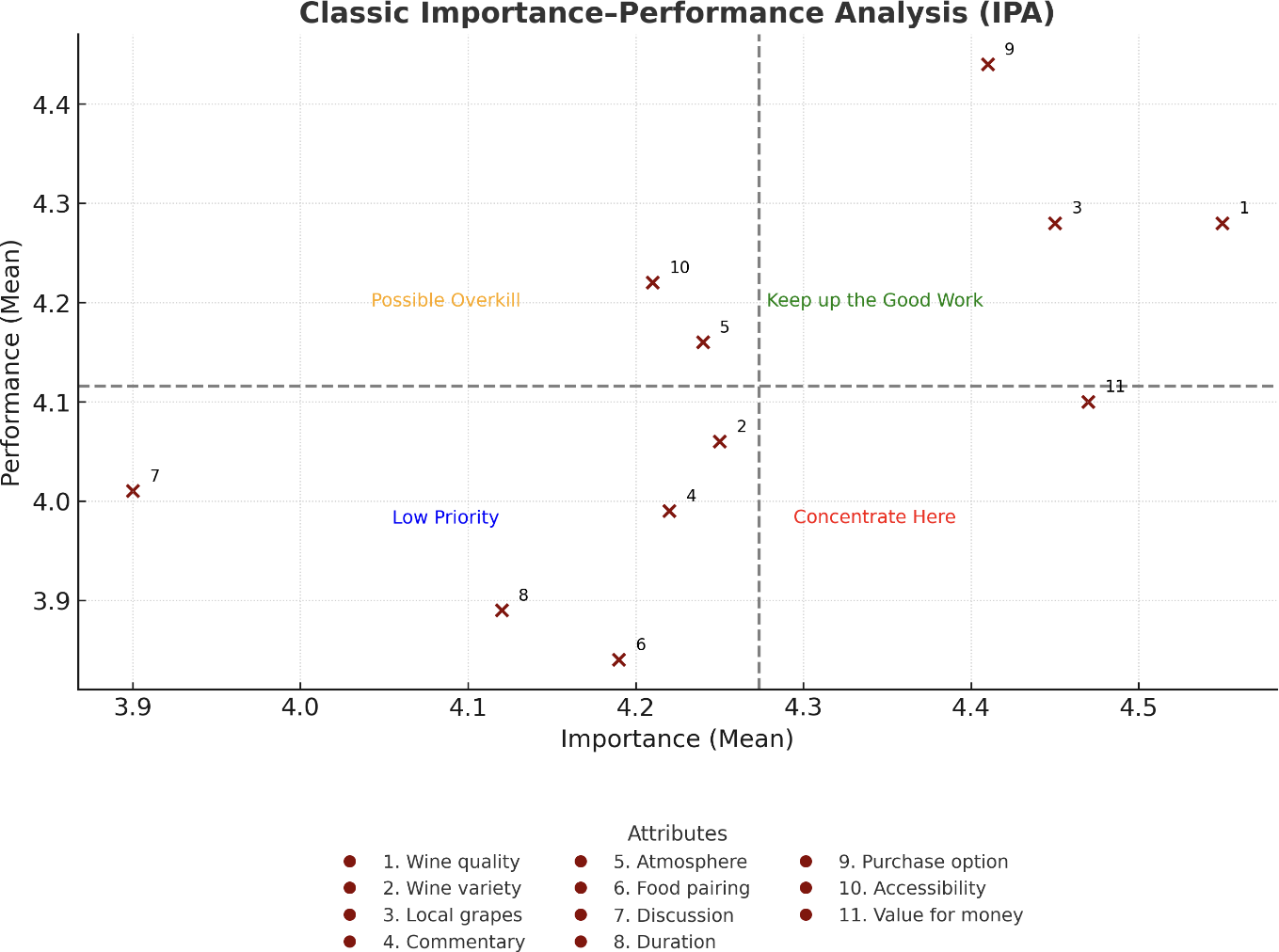
The “Keep up the Good Work” quadrant features three key strengths: wine quality, local grape varieties, and purchase options. These attributes score highly on both importance and performance, marking them as pillars of the regional wine experience. Maintaining excellence here is crucial, as they form the core of the destination’s competitive positioning and directly influence tourist satisfaction. These attributes combine product excellence, authenticity, and logistical convenience, and are already performing well in areas that visitors consider highly important. They should therefore remain central pillars of the regional wine tourism offering.
The “Concentrate Here”quadrant contains a single but critical weakness: value for money. Its very high importance combined with comparatively lower performance suggests a clear mismatch between visitor expectations and perceived benefits.
The “Possible Overkill” quadrant includes atmosphere and accessibility. Both attributes perform strongly but are of comparatively lower importance to visitors. This suggests that further investments in these areas may yield limited marginal benefits. Their current high performance already contributes to a pleasant and welcoming experience, but additional emphasis may not significantly enhance satisfaction relative to other areas that require more attention.
Finally, five attributes fall within the “Low Priority” quadrant: wine variety, professional commentary, food pairing, opportunity for discussion, and tasting duration. These attributes receive only moderate importance ratings and exhibit relatively modest performance levels. While they are not currently major drivers of visitor satisfaction, they nonetheless represent areas where incremental improvements could enrich the offer, especially if the region aims to attract more experienced wine tourists or strengthen its educational and interactive components. However, they do not require immediate resource allocation.
Overall, the classic IPA highlights a relatively balanced offering with strong performance in core product attributes. However, the perceived value-for-money gap stands out as a critical issue for destination managers to address.
4.1.3 Diagonal IPA (wine tourism)
To refine the analysis, a diagonal IPA approach was applied, using regression to model the relationship between importance and performance. This method evaluates whether each attribute performs above or below expectations given its importance level. The results presented in Figure 2 confirm several findings from the classic IPA while also revealing subtler performance gaps.
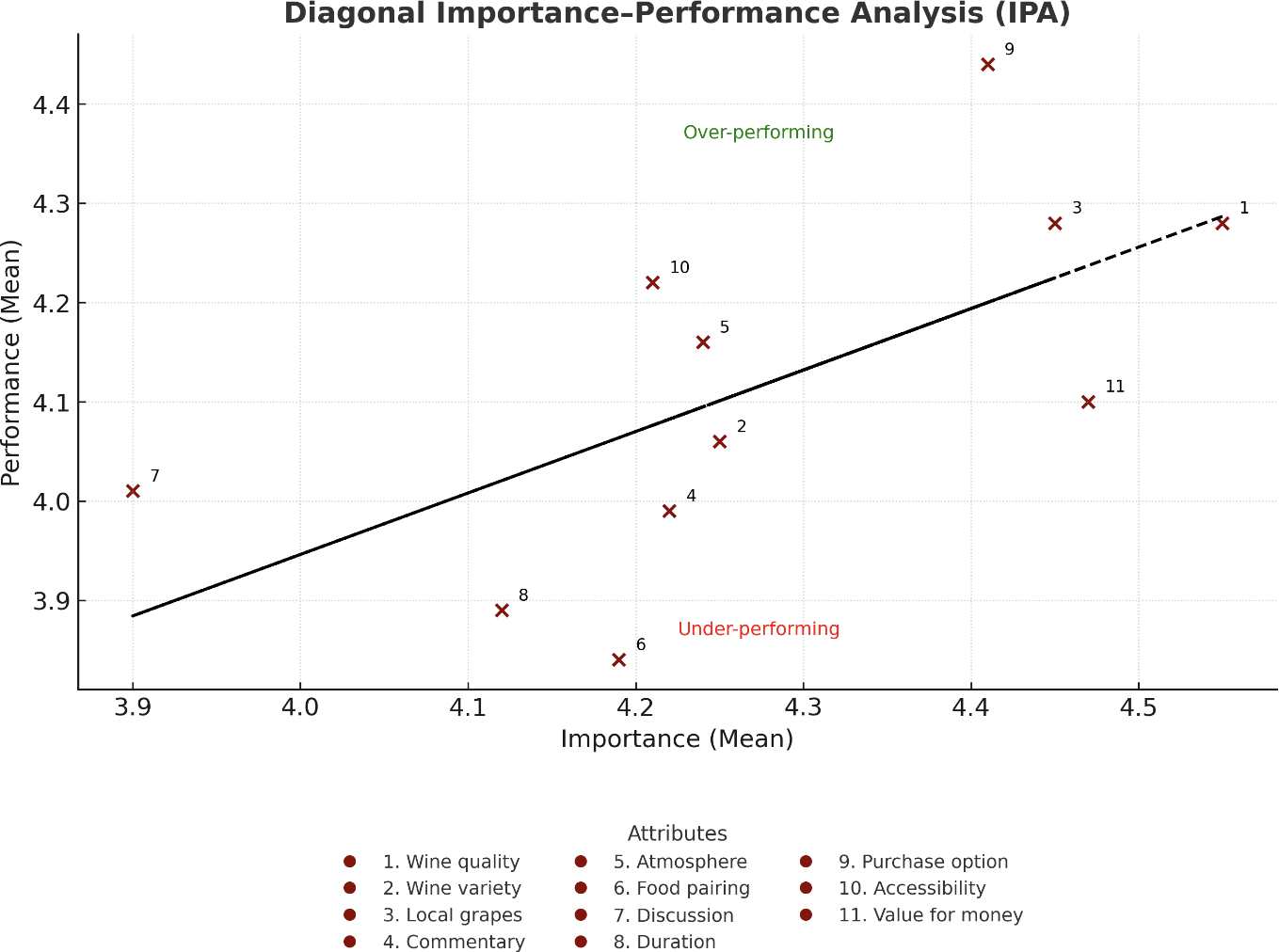
The regression line in the diagonal IPA represents the level of performance that would normally be expected for each importance rating. Attributes positioned above the line can be interpreted as over-performing, while those below the line indicate under-performance relative to visitor expectations.
Consistent with the classic IPA, value for money is one of the most expressed under-performers, confirming it as a pressing weakness in the regional wine tourism offer. The diagonal IPA, however, also identifies several additional attributes that fall below expected performance levels: wine variety, professional commentary, food and wine pairing, and tasting duration. Although some of these did not emerge as priorities in the classic analysis, their position below the regression line indicates that, given their importance, visitors expect higher performance than they currently receive. These represent hidden weaknesses that may subtly reduce the overall experiential quality, especially for more experienced or curiosity-driven wine tourists.
In contrast, wine quality, local grape varieties, atmosphere, purchase options, accessibility, and the opportunity to discuss appear above the regression line. This suggests that wineries are exceeding visitor expectations in these areas, which can be considered key differentiators and sources of competitive advantage. These strengths reinforce the region’s authentic character and contribute meaningfully to positive visitor impressions.
Overall, while the classic IPA highlights core strengths and the primary weakness of value for money, the diagonal IPA sharpens the diagnosis by revealing additional experience gaps in interpretation, pairing, and diversity of wines. Simultaneously, it underscores the importance of preserving the strong performance of attributes linked to authenticity, quality, and accessibility, which collectively define the region’s competitive position.
4.1.4 Comparative interpretation of IPA approaches
The application of both the classic and diagonal IPA approaches provides complementary insights into visitor perceptions of wine tourism in the Petrich–Sandanski region. Both methods converge in identifying value for money as the critical weakness, underlining its strategic importance for managers. This attribute combines very high importance with comparatively lower performance, and thus represents a clear area where improvements are needed to safeguard visitor satisfaction and loyalty.
The two methods also agree on the region’s core strengths. The quality of wines, authenticity through unique grape varieties, and the opportunity to purchase wines on-site are consistently positioned as strong performers in areas of high importance. These attributes form the backbone of the wine tourism experience and should be protected as central elements of destination branding and development. At the same time, the diagonal IPA reveals additional insights not evident in the classic grid. Specifically, variety of wines and professional commentary emerge as hidden under-performers. While their importance was rated moderately in the classic IPA, the regression-based approach shows that visitors expect more from these elements given their relevance to the overall tasting experience. Addressing these gaps could enhance the perceived sophistication and educational value of the offer.
4.2 Food tourism experiences: descriptive statistics and IPA results
4.2.1 Descriptive statistics of food tourism attributes
The descriptive results for food tourism indicate that respondents generally evaluated both the importance and performance of culinary experiences in the Petrich–Sandanski region highly, with mean values clustering around 4 and above (Table 2). Among the performance ratings, the highest scores were assigned to food quality (M = 4.40) and authenticity of dishes (M = 4.28), confirming that visitors strongly value the sensory and cultural dimensions of the regional cuisine. Atmosphere and setting (M = 4.18) and presentation and explanation of dishes (M = 4.05) also received favorable evaluations, suggesting that the experiential environment contributes positively to satisfaction. On the importance side, the strongest emphasis was placed on food quality (M = 4.65), authenticity (M = 4.55), and value for money (M = 4.52), highlighting that visitors expect local food to deliver both cultural distinctiveness and a fair balance between price and quality. In contrast, attributes such as special diet options (M = 3.25) and culinary demonstfigrations or classes (M = 3.65) were rated lower in both performance and importance, reflecting their peripheral role in shaping overall food tourism satisfaction in the region.
| Attribute | Importance (M) | Importance (SD) | Performance (M) | Performance (SD) |
|---|---|---|---|---|
| Quality of food | 4.63 | 0.77 | 4.23 | 0.91 |
| Authenticity and traditional character | 4.39 | 0.93 | 4.1 | 0.96 |
| Variety of dishes | 4.32 | 0.9 | 3.99 | 0.92 |
| Presentation and explanation | 4.04 | 1.1 | 3.41 | 1.25 |
| Atmosphere and setting | 4.46 | 0.86 | 4.02 | 1.03 |
| GI food opportunities | 3.99 | 1.13 | 3.41 | 1.27 |
| Value for money | 4.43 | 0.9 | 3.9 | 1.07 |
| Special diet options | 3.51 | 1.41 | 3.23 | 1.33 |
| Culinary demonstrations/classes | 3.44 | 1.34 | 3.08 | 1.36 |
4.2.2 Classic IPA (food tourism)
The results of the classic IPA grid provide a detailed view of how the different elements of the culinary experience align with visitor expectations (Figure 3).
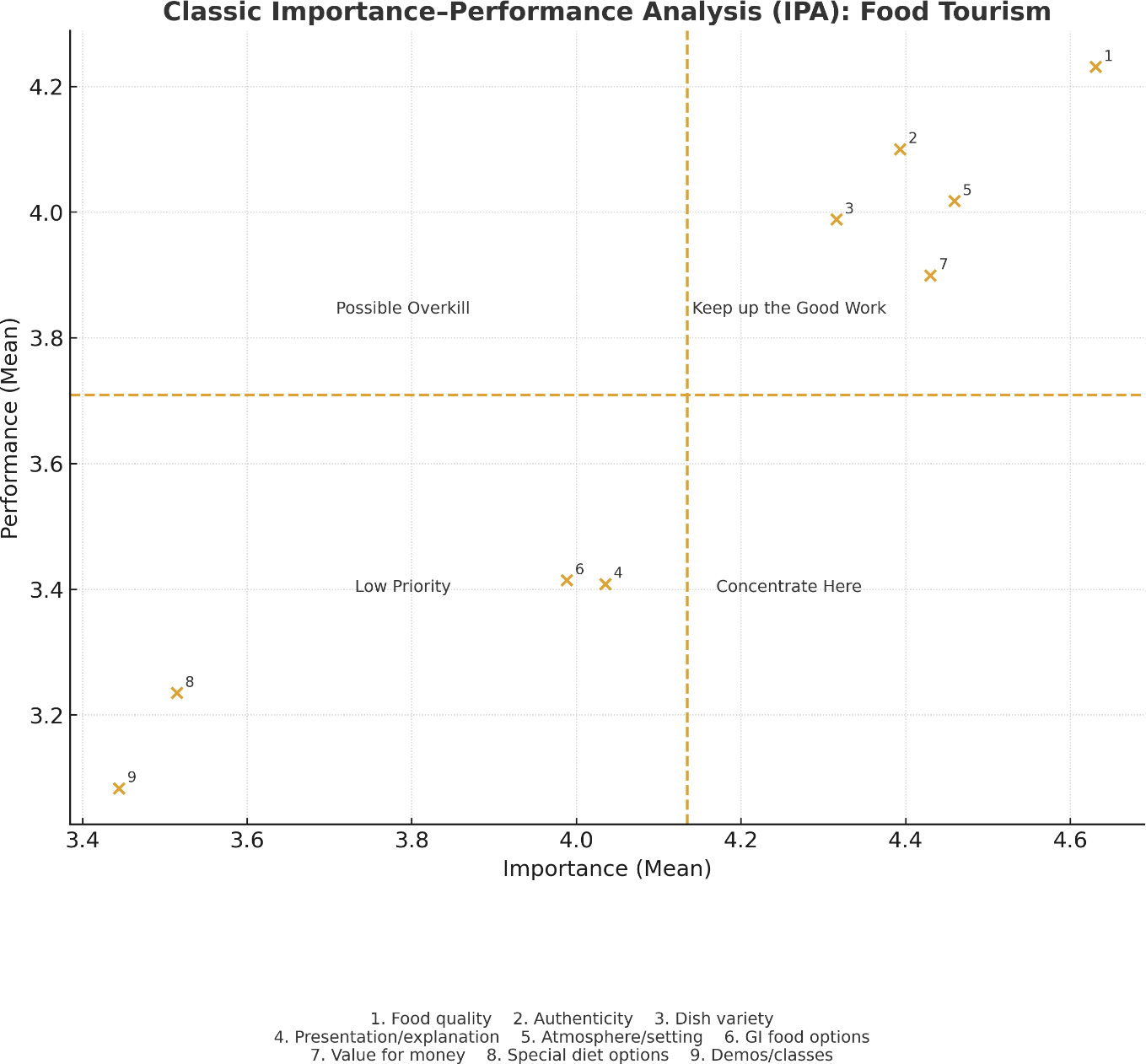
Attributes such as food quality, authenticity, and value for money are positioned in the “Keep up the Good Work” quadrant, confirming them as core strengths that strongly contribute to satisfaction and should be maintained as priorities. Atmosphere and setting also falls into this quadrant, underlining the importance of providing a pleasant and culturally coherent environment for dining and tasting experiences. In contrast, special diet options and culinary demonstrations or classes appear in the “Low Priority” quadrant, reflecting both limited importance and relatively modest performance; while these may enhance niche experiences, they are not critical for the majority of visitors. Interestingly, presentation and explanation of dishes occupies a position closer to the “Concentrate Here” quadrant, suggesting that while performance is acceptable, the importance attached by visitors warrants greater investment in staff training and storytelling to enrich the experiential and educational value of food tourism.
4.2.3 Diagonal IPA (food tourism)
The diagonal IPA also reveals important nuances in visitor perceptions (Figure 4). Attributes such as food quality and authenticity of dishes clearly over-perform, with satisfaction levels exceeding expectations. These findings reaffirm them as core strengths and distinctive anchors of the regional culinary experience. Atmosphere and setting fall into a borderline zone, suggesting the need for careful monitoring and potential improvement.
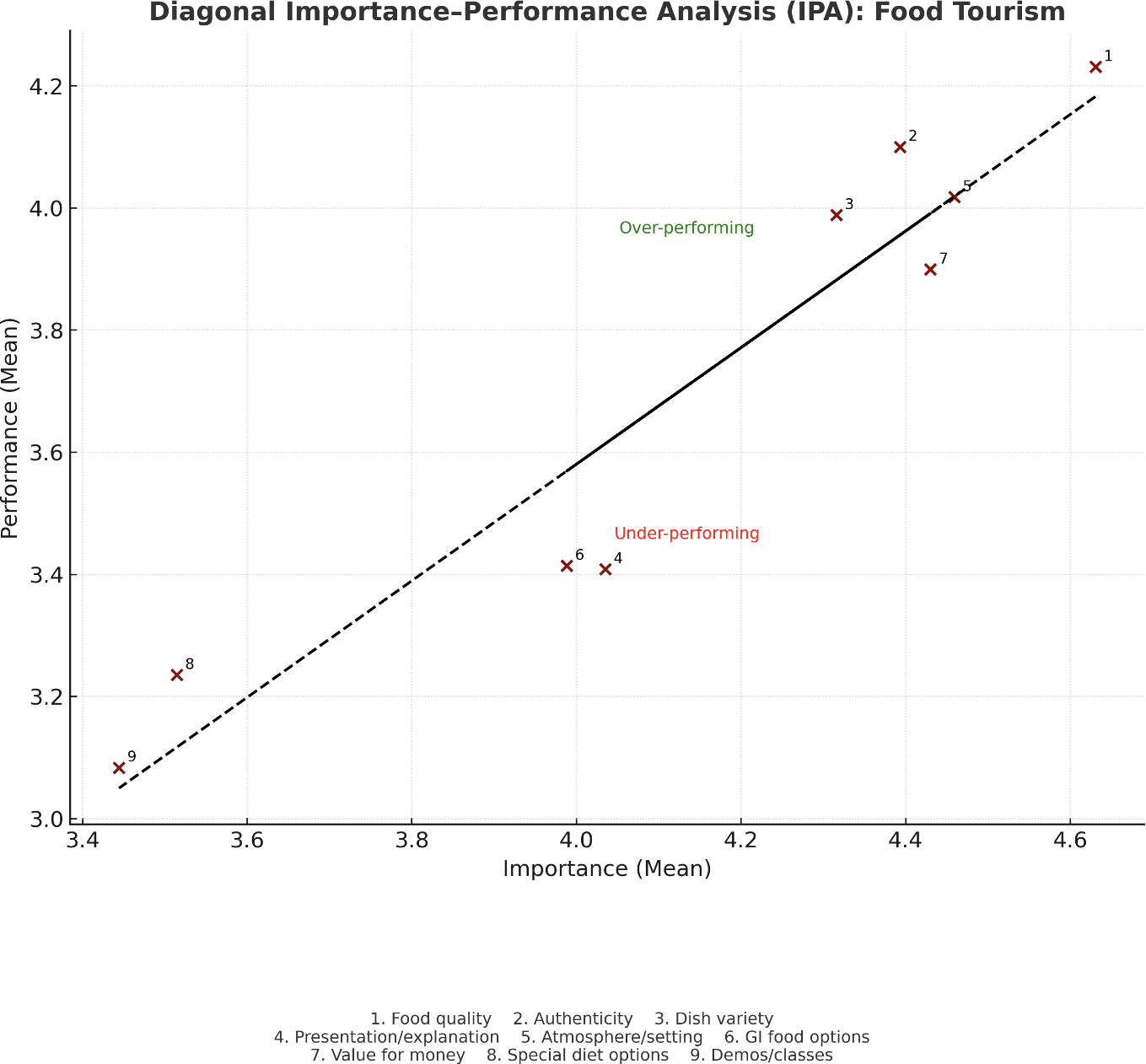
In contrast, several attributes fall below the diagonal, indicating relative under-performance. The opportunity to try foods with geographical indications (GI products), for example, performs below expectations, suggesting that visitors’ interest in certified local foods is not fully met. Given the limited presence of officially registered GI products in the Petrich–Sandanski region, this may reflect either visitors’ misperceptions about what constitutes GI food or the insufficient visibility of local specialties. This underscores the potential for developing and communicating authentic regional products under the GI framework. Presentation and explanation of dishes also remains an area of weakness, pointing to the need for stronger interpretive and storytelling skills among staff. Finally, value for money continues to underperform across both wine and food experiences, confirming a recurring challenge for the destination, while special diet options and culinary demonstrations or classes occupy a peripheral position with limited perceived importance.
Overall, the findings from both IPA approaches confirm that food tourism in the Petrich–Sandanski region is evaluated positively, with consistently high ratings for quality, authenticity, and atmosphere. The classic IPA highlights these attributes as core strengths that should be preserved, while the diagonal IPA confirms that their performance broadly matches visitor expectations.
A more nuanced picture emerges for value for money: although it appears in the “Keep up the Good Work” quadrant of the classic IPA, indicating solid absolute performance, it falls below the regression line in the diagonal analysis, signalling that performance is lower than expected given its high importance. This makes value for money a latent under-performer, deserving strategic attention even if not visibly problematic in the classic IPA.
The clearest and most consistent weakness across both approaches concerns the presentation and explanation of dishes, which underperforms relative to expectations and shows only moderate absolute performance. Improving the interpretive dimension of the culinary experience therefore offers the greatest potential for enhancing visitor satisfaction.
The position of GI foods differs somewhat across the two IPA approaches: in the classic IPA they fall within the “low priority” quadrant due to their lower overall importance, whereas the diagonal IPA reveals that, for the level of importance they do hold, performance is below the expected benchmark. This suggests that while GI foods are not yet decisive for the wider visitor base, there is a latent unmet expectation among those who value local or distinctive products, likely linked to misconceptions about GI certification or limited visibility of authentic regional specialties. This creates a strategic opportunity to strengthen the connection between gastronomy and local food heritage through clearer communication and potential product development. By contrast, special diet options and culinary demonstrations/classes remain peripheral, suggesting limited strategic relevance for the mainstream visitor market at present.
The combined IPA analyses of wine and food tourism in the Petrich–Sandanski region reveal a generally positive visitor perception, with both domains characterized by high performance and importance values. This confirms the region’s potential as an emerging wine-and-food destination but also exposes areas requiring managerial attention.
A key finding across the two domains concerns value for money, although its role differs in strength between wine and food tourism. In the wine tourism analysis, value for money emerges as the most pronounced weakness, under-performing in both the classic and diagonal IPA. This echoes earlier IPA-based studies in wine tourism, where pricing perceptions consistently appear as sources of dissatisfaction [28], [30], and aligns with research showing that the balance between cost and perceived benefit is a critical determinant of destination competitiveness [33]. In the food tourism analysis, value for money performs adequately in absolute terms but falls below the regression line in the diagonal IPA, suggesting that it does not fully meet expectations for an attribute of such high importance. These patterns indicate that improving value perception in the Petrich–Sandanski region will require not only transparent and consistent pricing but also a stronger communication of added experiential and cultural value.
The importance of authenticity emerges strongly in both wine and food tourism, echoing previous work that positions authenticity as a cornerstone of memorable visitor experiences [31], [45]. Although it does not require correction, it would benefit from strategic enhancement, particularly through improved storytelling, interpretation, and the development of clearly identifiable local products (e.g., potential GI items). Such efforts would help transform existing authentic elements into more explicit sources of competitive advantage. However, as Stergiou [34] notes, authenticity must be carefully managed to avoid commodification; in the studied region, this suggests building narratives around terroir, heritage, and tradition while retaining cultural integrity.
Another recurring weakness identified in both analyses relates to the interpretive dimension: the professional commentary during wine tastings and the presentation and explanation of dishes in gastronomy. Previous IPA studies in wine tourism underline the critical role of knowledgeable hosts in shaping satisfaction [25], [27]. Similarly, research on food and wine experiences stresses the importance of multisensory and educational components [46]. The Petrich–Sandanski findings thus confirm that strengthening interpretive and storytelling capacities among service providers is essential for transforming visits into learning-rich, emotionally engaging experiences.
The results concerning GI products deserve special attention. While respondents rated them positively, the region lacks officially recognized GI foods. This discrepancy may be explained by visitors’ general association of local specialties with authenticity rather than an understanding of formal certification. Comparable insights have been reported in the Italian and Portuguese contexts, where visitors often equate local provenance with quality regardless of official labelling [26], [47]. For Petrich–Sandanski, this indicates untapped potential in developing and promoting GI recognition for selected products, thereby strengthening links between gastronomy, heritage, and tourism.
The consistently lower ratings of peripheral attributes, such as special diet options and culinary demonstrations, suggest that these elements currently play a secondary role in shaping visitor satisfaction. While not immediate priorities for development, they may still enrich the offer for specific niche markets (e.g., health-conscious or experiential travellers) and provide opportunities for product diversification in the longer term.
These findings also resonate with recent qualitative research on the critical success factors of wine tourism in the Struma Valley [9]. That study identified satisfiers such as wine quality, the people dimension (hospitality and friendliness), and the winery tour experience, alongside dissatisfiers like accessibility and inadequate service. The convergence between the IPA results and qualitative insights strengthens confidence in the evidence base, showing that both methods highlight the same core strengths (wine quality, authenticity, atmosphere) and weaknesses (interpretive quality, value for money). Moreover, the qualitative perspective adds nuance by emphasizing emotional engagement and host–guest interaction, which in the IPA analysis scored lower in importance but remain central for long-term loyalty and regional reputation.
At the same time, several differences from previous research stand out. First, the overall performance values in Petrich–Sandanski are unusually high, with most attributes scoring close to or above 4, whereas earlier IPA studies [28], [30] often report a wider spread with some attributes rated much lower. This may reflect the domestic profile of respondents in the present study, who may be more positively predisposed toward local offerings. Second, while GI products are central in contexts such as Italy and Portugal [26], [47], in Petrich–Sandanski their high rating reflects perceived authenticity rather than actual GI-certified products – highlighting potential rather than established strengths. Third, whereas previous studies stress the importance of host–guest interaction [9], [25], [27], in this study attributes like discussion with the guide or explanation of dishes received relatively modest scores, suggesting that domestic visitors may prioritize product quality over interpersonal engagement. Finally, peripheral attributes such as special diet options and cooking classes, which are gaining importance in more mature destinations, remain clearly secondary in Petrich–Sandanski, confirming its status as an emerging destination still consolidating its core offer.
Overall, the comparison with earlier IPA studies and the integration of qualitative evidence demonstrate both convergence and divergence. The Petrich–Sandanski region shares common challenges with other emerging destinations, particularly regarding value for money and interpretive quality, but also shows unique opportunities rooted in authenticity, grape varieties, and the potential of GI-linked gastronomy. Strategically addressing these issues will be key for positioning the region as a sustainable wine-and-food tourism destination.
This study applied Importance–Performance Analysis (IPA) to evaluate visitor perceptions of wine and food tourism in the Petrich–Sandanski region of Southwestern Bulgaria, one of the country’s most emblematic yet underexplored destinations. Based on a survey of domestic tourists, both the classic and diagonal IPA approaches revealed consistently high ratings across most attributes, confirming the positive image of the region’s gastronomic and oenological offerings. Core strengths identified include the quality of wines and food, authenticity of local products and traditions, and the pleasant atmosphere of tasting environments. At the same time, value for money and interpretive dimensions (professional commentary, dish presentation) emerged as areas requiring attention. Attributes such as special diet options and culinary demonstrations/classes were rated less important and less influential, suggesting they currently play a marginal role in shaping visitor satisfaction.
The findings extend the literature on IPA applications in tourism by demonstrating its value in an emerging destination context where attributes are evaluated positively but important weaknesses remain. Unlike more established wine and food tourism regions, Petrich–Sandanski shows an unusual convergence of high-performance scores across most attributes, underlining the need to interpret IPA results within their contextual and cultural setting. The study also contributes by combining classic and diagonal IPA, showing how the two approaches complement one another: the former highlights strategic priorities, while the latter identifies hidden under- and over-performers. Integrating these methods strengthens diagnostic validity.
For practitioners, the results underscore the importance of maintaining the region’s core strengths – product quality, authenticity, and atmosphere – while addressing weaknesses that threaten long-term competitiveness. Improving perceptions of value for money requires not only pricing strategies but also the communication of experiential and cultural added value. Enhancing interpretive quality through staff training, storytelling, and visitor engagement will help transform good experiences into memorable ones. Although not central at present, diversifying the culinary offer through dietary options or experiential activities such as cooking classes may appeal to niche markets and broaden the region’s attractiveness. Finally, the paradoxical positive ratings for GI products highlight the potential for developing and promoting local specialties under official certification, thereby strengthening links between gastronomy, heritage, and sustainable tourism. From a policy perspective, the findings suggest a need for more proactive support for the integration of GI foods into the regional tourism offer. Local and regional authorities could contribute through targeted financial incentives, administrative and advisory assistance for producers involved in certification processes, and coordinated territorial marketing that more clearly links local gastronomy with regional identity. Such measures could improve both the visibility and the experiential incorporation of GI products, thereby helping to address the current gap between their recognized importance and their still limited presence within the destination experience.
Several limitations should be acknowledged. First, the sample was obtained through non-probability sampling and is skewed toward highly educated, domestic, and female respondents, with a marked concentration in the 45–64 age group. Accordingly, the findings are most representative of this particular visitor profile and should not be generalized uncritically to the wider tourist population, especially to international visitors, younger tourists, and more demographically diverse segments. In addition, these sample characteristics may have shaped the evaluation of certain attributes, particularly value for money, informational quality, and authenticity-related aspects, since middle-aged and highly educated respondents may differ in their expectations and evaluative criteria from other market segments. Second, the survey focused on a defined set of attributes derived from previous research. Although this ensured analytical consistency and comparability, it may have overlooked other potentially relevant dimensions of the visitor experience.
Future studies could build on these findings in several ways. Comparative research across domestic and international tourists would provide a fuller picture of visitor expectations and satisfaction. Longitudinal designs could assess whether perceptions shift as the region develops its wine and food tourism offer. Integrating IPA with qualitative approaches, such as in-depth interviews or netnography, would capture the emotional and narrative dimensions of experiences more fully. Finally, studies that link IPA results to behavioural outcomes such as loyalty, revisit intention, or spending would enhance the practical utility of the method for destination managers.
In sum, the study confirms the Petrich–Sandanski region’s potential to consolidate its position as a sustainable wine-and-food tourism destination. By leveraging authenticity, improving interpretive quality, and addressing value concerns, stakeholders can shape experiences that are both memorable for visitors and beneficial for the local community.
[1] S. Charters and J. Ali-Knight, “Who is the wine tourist?,” Tourism Management, vol. 23, no. 3, pp. 311–319, Jun. 2002, https://doi.org/10.1016/S0261-5177(01)00079-6.
[2] A. Ellis, E. Park, S. Kim, and I. Yeoman, “What is food tourism?,” Tourism Management, vol. 68, pp. 250–263, Oct. 2018, https://doi.org/10.1016/j.tourman.2018.03.025.
[3] P. D. Getz, Foodies and Food Tourism. Oxford: Goodfellow Publishers, 2014.
[4] C. M. Hall, L. Sharples, B. Cambourne, and N. Macionis, Wine Tourism Around the World. London: Routledge, 2009. https://doi.org/10.4324/9780080521145.
[5] J. A. Martilla and J. C. James, “Importance-Performance Analysis,” Journal of Marketing, vol. 41, no. 1, pp. 77–79, 1977, https://doi.org/10.2307/1250495.
[6] J. T. O’Leary and G. Lee, “Importance-Performance Analysis in Tourism,” in Encyclopedia of Tourism, J. Jafari and H. Xiao, Eds., Cham: Springer International Publishing, 2020, pp. 1–2. https://doi.org/10.1007/978-3-319-01669-6_371-2.
[7] S. Smith and C. Costello, “Culinary tourism: Satisfaction with a culinary event utilizing importance-performance grid analysis,” Journal of Vacation Marketing, vol. 15, no. 2, pp. 99–110, Apr. 2009, https://doi.org/10.1177/1356766708100818.
[8] I. Terziyska, Wine Tourism: Critical Success Factors for an Emerging Destination. Sofia: GeaLibris, 2020.
[9] I. Terziyska, “Exploring visitor perspectives on critical success factors for wine tourism: a qualitative approach,” Tourism Recreation Research, Aug. 2025, Accessed: Oct. 01, 2025. [Online]. Available: https://www.tandfonline.com/doi/abs/10.1080/02508281.2025.2533211.
[10] S. Everett, “Niche Tourism and the Growth of Food-Inspired Travel,” in Food and Drink Tourism: Principles and Practice, SAGE Publications Ltd, 2016, pp. 53–70.
[11] V. R. Santos, P. Ramos, and B. B. Sousa, “Is Wine Tourism a Niche Tourism? Antecedents and Consequences of Wine as a Niche Tourism, a Conceptual Model,” in Advances in Tourism, Technology and Systems, J. V. de Carvalho, Á. Rocha, P. Liberato, and A. Peña, Eds., Singapore: Springer, 2021, pp. 353–362. https://doi.org/10.1007/978-981-33-4256-9_32.
[12] S. Everett and S. L. Slocum, “Food and tourism: an effective partnership? A UK-based review,” Journal of Sustainable Tourism, vol. 21, no. 6, pp. 789–809, Jul. 2013, https://doi.org/10.1080/09669582.2012.741601.
[13] I. Frochot, “An Analysis of Regional Positioning and Its Associated Food Images in French Tourism Regional Brochures,” Journal of Travel & Tourism Marketing, vol. 14, no. 3–4, pp. 77–96, Nov. 2003, https://doi.org/10.1300/J073v14n03_05.
[14] M. Sigala and R. N. S. Robinson, “Introduction: The Evolution of Wine Tourism Business Management,” in Management and Marketing of Wine Tourism Business: Theory, Practice, and Cases, M. Sigala and R. N. S. Robinson, Eds., Cham: Springer International Publishing, 2019, pp. 1–21. https://doi.org/10.1007/978-3-319-75462-8_1.
[15] G. Richards, “Introduction,” in Tourism and Gastronomy, Routledge, 2011.
[16] P. Björk and H. Kauppinen-Räisänen, “Local food: a source for destination attraction,” International Journal of Contemporary Hospitality Management, vol. 28, no. 1, pp. 177–194, 2016, https://doi.org/10.1108/IJCHM-05-2014-0214.
[17] R. Sims, “Food, place and authenticity: local food and the sustainable tourism experience,” Journal of Sustainable Tourism, vol. 17, no. 3, pp. 321–336, May 2009, https://doi.org/10.1080/09669580802359293.
[18] B. Özdemir and F. Seyitoğlu, “A conceptual study of gastronomical quests of tourists: Authenticity or safety and comfort?,” Tourism Management Perspectives, vol. 23, pp. 1–7, Jul. 2017, https://doi.org/10.1016/j.tmp.2017.03.010.
[19] E. Park and A. Widyanta, “Food tourism experience and changing destination foodscape: An exploratory study of an emerging food destination,” Tourism Management Perspectives, vol. 42, p. 100964, Apr. 2022, https://doi.org/10.1016/j.tmp.2022.100964.
[20] H. Cifci, G. Kandemir Altunel, O. Taspinar, and I. Cifci, “Demystifying the authenticity experience of locally guided wine tours in the meal-sharing economy,” International Journal of Wine Business Research, vol. 35, no. 2, pp. 212–231, Oct. 2022, https://doi.org/10.1108/IJWBR-04-2022-0013.
[21] UNWTO, “Affiliate Members Global Report, Volume 16 – Second Global Report on Gastronomy Tourism | World Tourism Organization,” Default Book Series. Accessed: Sep. 26, 2025. [Online]. Available: https://www.e-unwto.org/doi/book/10.18111/9789284418701
[22] R. Sims, “Food, place and authenticity: Local food and the sustainable tourism experience,” Journal of Sustainable Tourism, vol. 17, no. 3, pp. 321–336, 2009, https://doi.org/10.1080/09669580802359293.
[23] A. Alonso, S. K. Kok, and S. O’Brien, “Sustainable wine tourism development through the lens of dynamic capabilities and entrepreneurial action: an exploratory four-region perspective,” Tourism Recreation Research, vol. 45, pp. 1–19, Apr. 2020, https://doi.org/10.1080/02508281.2020.1745000.
[24] G. Bagnato, M. Normando, and S. Escobar, Sustainable Innovation in wine tourism. 2024.
[25] M. O’Neill and S. Charters, “Service quality at the cellar door: Implications for Western Australia’s developing wine tourism industry,” Managing Service Quality: An International Journal, vol. 10, no. 2, pp. 112–122, 2000, https://doi.org/10.1108/09604520010318308.
[26] P. W. Williams and K. B. and Dossa, “Non-Resident Wine Tourist Markets,” Journal of Travel & Tourism Marketing, vol. 14, no. 3–4, pp. 1–34, Nov. 2003, https://doi.org/10.1300/J073v14n03_01.
[27] C. Randall and R. and Mitchell, “Wine Tourism Marketing Alliances Application of Importance – Performance Analysis,” Tourism Recreation Research, vol. 33, no. 3, pp. 289–302, Jan. 2008, https://doi.org/10.1080/02508281.2008.11081552.
[28] J. Mikulić, Paunović ,Zoran, and D. and Prebežac, “An Extended Neural Network-Based Importance-Performance Analysis for Enhancing Wine Fair Experience,” Journal of Travel & Tourism Marketing, vol. 29, no. 8, pp. 744–759, Nov. 2012, https://doi.org/10.1080/10548408.2012.730936.
[29] A. Dias, B. Sousa, V. Santos, P. Ramos, and A. Madeira, “Determinants of brand love in wine experiences,” Wine Economics and Policy, vol. 13, no. 1, Art. no. 1, Mar. 2024, https://doi.org/10.36253/wep-13855.
[30] N. Singh and Y. Hsiung, “Exploring critical success factors for Napa’s wine tourism industry from a demand perspective,” Anatolia, vol. 27, no. 4, pp. 433–443, Oct. 2016, https://doi.org/10.1080/13032917.2016.1160414.
[31] D. P. Stergiou, “An importance-performance analysis of young people’s response to a wine tourism situation in Greece,” Journal of Wine Research, vol. 29, no. 4, pp. 229–242, Oct. 2018, https://doi.org/10.1080/09571264.2018.1532878.
[32] S. N. Leyva-Hernández and A. Toledo-López, “Motivators of the Intention of Wine Tourism in Baja California, Mexico,” Foods, vol. 13, no. 22, Art. no. 22, Jan. 2024, https://doi.org/10.3390/foods13223651.
[33] I. Rašovská, M. Kubickova, and K. Ryglová, “Importance–performance analysis approach to destination management,” Tourism Economics, vol. 27, no. 4, pp. 777–794, Jun. 2021, https://doi.org/10.1177/1354816620903913.
[34] D. P. Stergiou, D. Airey, and A. Apostolakis, “The winery experience from the perspective of Generation Z,” International Journal of Wine Business Research, vol. 30, no. 2, pp. 169–184, Jan. 2018, https://doi.org/10.1108/IJWBR-03-2017-0018.
[35] M. A. O’Neill and A. Palmer, “Wine Production and Tourism: Adding Service to a Perfect Partnership,” Cornell Hotel and Restaurant Administration Quarterly, vol. 45, no. 3, pp. 269–284, Aug. 2004, https://doi.org/10.1177/0010880404263075.
[36] S. Pratt, W. Suntikul, and E. Agyeiwaah, “Determining the attributes of gastronomic tourism experience: Applying impact-range performance and asymmetry analyses,” International Journal of Tourism Research, vol. 22, no. 5, pp. 564–581, 2020, https://doi.org/10.1002/jtr.2356.
[37] N. Sangkaew, Nanthaamornphong ,Aziz, and C. and Phucharoen, “Understanding Tourists’ Perception Toward Local Gourmet Consumption in the Creative City of Gastronomy: Factors Influencing Consumer Satisfaction and Behavioral Intentions,” Journal of Quality Assurance in Hospitality & Tourism, vol. 26, no. 2, pp. 332–359, Mar. 2025, https://doi.org/10.1080/1528008X.2023.2247159.
[38] S.-Y. Hwang, “Study on the Importance and Performance of Food & Beverage Festival Attributes Using IPA,” The Journal of the Korea Contents Association, vol. 19, no. 6, pp. 368–378, 2019, https://doi.org/10.5392/JKCA.2019.19.06.368.
[39] H.-J. Kang and Y.-J. Lee, “A Study on Importance-Performance of Wellbeing Fusion Menu using IPA,” Culinary science and hospitality research, vol. 16, no. 2, pp. 77–95, 2010, Accessed: May 08, 2025. [Online]. Available: https://koreascience.kr/article/JAKO201019455946240.page.
[40] C.-S. Su, “An Importance-Performance Analysis of Dining Attributes: A Comparison of Individual and Packaged Tourists in Taiwan,” Asia Pacific Journal of Tourism Research, vol. 18, no. 6, pp. 573–597, Sep. 2013, https://doi.org/10.1080/10941665.2012.695281.
[41] Y. Zhao and J. Wang, “Research on Tourist Satisfaction of Local Cuisine Based on IPA Analysis Method – Case Study in Heilongjiang Province,” presented at the 4th International Conference on Economics and Management (ICEM 2017), Chongqing, China: DEStech Publications, 2017. https://doi.org/10.12783/dtem/icem2017/13192.
[42] G. O. Obonyo, M. A. Ayieko, and O. O. Kambona, “An importance-performance analysis of food service attributes in gastro-tourism development in Western Tourist Circuit, Kenya,” Tourism and Hospitality Research, vol. 12, no. 4, pp. 188–200, Oct. 2012, https://doi.org/10.1177/1467358413491132.
[43] G. Yurcu, Z. Akıncı, and C. Küçüker, “Tourist Perceptions About Food Service Characteristics in Accommodation Enterprises: An Importantance-performance Analysis,” MAKU IIBFD, vol. 7, no. 3, Art. no. 3, Nov. 2020, https://doi.org/10.30798/makuiibf.789941.
[44] E. H. Kim and M. A. Lee, “A Study on the Consumer Perception and Factor Analysis of Food Tourism,” Korean J Community Nutr, vol. 15, no. 1, pp. 83–93, 2010, Accessed: May 08, 2025. [Online]. Available: //www.kjcn.or.kr/journal/view.php?number=1351.
[45] J. Bruwer and M. House, “Has the Era of Regional Branding Arrived for the Australian Wine Industry? Some Perspectives,” Dec. 01, 2003, Social Science Research Network, Rochester, NY: 2224389. Accessed: Nov. 17, 2025. [Online]. Available: https://papers.ssrn.com/abstract=2224389.
[46] D. Quadri-Felitti and A. M. Fiore, “Experience economy constructs as a framework for understanding wine tourism,” Journal of Vacation Marketing, vol. 18, no. 1, pp. 3–15, Jan. 2012, https://doi.org/10.1177/1356766711432222.
[47] E. Barbierato, I. Bernetti, and I. Capecchi, “Analyzing TripAdvisor reviews of wine tours: an approach based on text mining and sentiment analysis,” International Journal of Wine Business Research, vol. ahead-of-print, no. ahead-of-print, Jan. 2021, https://doi.org/10.1108/IJWBR-04-2021-0025.
Appendix 1. Applications of Importance–Performance Analysis (IPA) in Wine Tourism (summary by study)
| Study | Wine Tourism Focus | Region | Methodology | IPA Elements |
|---|---|---|---|---|
| O’Neill & Charters (2000) | Winery (cellar door) | Australia (mature) | SERVQUAL + IPA | SERVQUAL-based service quality items: responsiveness, assurance, tangibles, empathy, and reliability – mean importance vs performance ratings |
| Williams & Dossa (2003) | Wine destination segmentation | Canada (mature) | Tourist segmentation + IPA | Experience elements segmented by tourist type: scenic beauty, friendliness, learning, recreation, and local atmosphere – mapped through IPA for generalists vs immersionists |
| Randall & Mitchell (2008) | Wine marketing alliance | Canada (mature) | Online survey + IPA (business partners) | Perceived benefits of a wine tourism marketing alliance: branding, visitor traffic, business image, and regional promotion – assessed through IPA |
| Mikulić et al. (2012) | Wine fair | Croatia (emerging) | Extended neural network-based IPA | Attributes rated by visitors and exhibitors at a wine fair, including service quality, professionalism, location, and event size – combined stated and derived importance using neural network IPA |
| Singh & Hsiung (2016) | Wine region experience | USA (mature) | CSFs + visitor survey + IPA | Critical success factors in wine destination: wine quality, destination image, food and lodging, infrastructure, activities, and value – ranked via IPA |
| Stergiou et al. (2018) | Single winery visit by Gen Z | Greece (emerging) | Factor analysis + traditional IPA grid on winescape attributes | Winescape factors: cost considerations, wine & entertainment, destination attributes, service staff, and learning about wine – identified via factor analysis and mapped via IPA |
| Rašovská et al. (2020) | Wine region vs others | Czech Republic (emerging) | Survey + MANOVA + IPA | 19 destination attributes such as cleanliness, staff knowledge, food quality, accessibility, and crowding – contrasted across wine and non-wine regions using IPA |
| Dias et al. (2023) | Wine regions and cellar visits | Portugal (mature) | PLS-SEM with IPMA; constructs include brand love, wine involvement, emotional & evaluative satisfaction, WOM intention | Emotional and evaluative satisfaction, brand love, wine involvement, and word-of-mouth intentions – mapped using Importance–Performance Matrix |
| Dias et al. (2024) | Winery visits / wine destination experience | Portugal (mature) | Structural equation modeling + IPA (brand love framework) | Factors contributing to brand love: active participation, place identity, place satisfaction, and relationship quality evaluated via IPA |
| Leyva-Hernández & Toledo-López (2024) | Wine region visitation intention | Mexico (emerging) | S-O-R model + IPMA | Constructs from S-O-R model: traditional gastronomy, electronic word-of-mouth (E-WOM), destination identity, intention to visit – evaluated through IPMA |
Appendix 2: Applications of Importance–Performance Analysis (IPA) in Food Tourism (summary by study)
| Study | Country/Region | Focus | Context | IPA Elements / Attributes | Methodology |
|---|---|---|---|---|---|
| Kim & Lee (2010) | South Korea (Sangju province) | Consumer perceptions of food tourism properties | Regional tourism (macro) | Attractive landscapes, accommodation price, food fame, local specialty shops, climate; Four factors identified: convenience-stable, value-oriented, adventurous-aggressive, traditional-active | Survey, factor analysis, IPA |
| Kang & Lee (2010) | South Korea | Wellbeing fusion menus in restaurants | Restaurant menu development (micro) | Taste, sanitation, freshness, cleanliness of dishes, diet/vegetable/nutritional variety, organic food, menu distinction, price | Survey, IPA grid analysis |
| Obonyo et al. (2013) | Kenya (Western Tourist Circuit) | Food service attributes in gastro-tourism development | Hotel-based food services (macro) | Grouped into three: food service output, input, and process; emphasis on service delivery and quality | Survey of hotel managers, factor analysis, IPA |
| Pratt et al. (2020) | Thailand (Chiang Mai) | Cooking class experiences as third-generation food tourism | Experiential food tourism (micro) | Attributes include authenticity, educational value, host interaction, kitchen cleanliness, sensory engagement; compared using traditional IPA, IRPA and asymmetry analysis | Survey, IPA, IRPA, IAA |
| Smith & Costello (2009) | USA (international culinary event) | Customer satisfaction at a culinary event | Culinary event (macro/micro) | 27 items including food/beverage price, event access, parking, food tasting; predictors of satisfaction | MANOVA, regression, IPA |
| Hwang (2019) | South Korea (Daegu Chimac Festival) | Festival attributes in a food & beverage event | Food festival (macro) | Hygienic environment, taste & variety, food quality & service, purchase convenience; mapped across 22 detailed attributes | Survey (n=322), factor analysis, IPA |
| Su (2013) | Taiwan | Dining attributes for individual vs packaged tourists | Tourist dining experience (macro) | Hygiene, service quality, food quality, restaurant cleanliness, dining environment; quadrant comparison for tourist types | Survey (n=435), t-tests, IPA |
| Yurcu et al. (2020) | Turkey (Alanya) | Food service characteristics in accommodation enterprises | Hotel dining services (macro) | Cleanliness, speed, staff courtesy, menu presentation, service equipment, music/image; grouped into maintain/improve/low-priority zones | Survey (n=382), IPA |
| Zhao & Wang (2017) | China (Heilongjiang Province) | Tourist satisfaction with local cuisine (Longjiang cuisine) | Local culinary identity (macro) | Taste, aroma, freshness, nutritional value, food explanation, utensils, cultural depth; grouped in dominant/maintain/repair/vulnerable zones | Survey (n=180), IPA with quadrant analysis |
| Sangkaew et al. (2023) | Thailand (Phuket, Creative City of Gastronomy) | Tourists’ perception of gourmet consumption | Urban culinary destination (macro) | Attributes include food authenticity, price fairness, cultural connection, aesthetic appeal, behavioral intentions | Survey, SEM + IPA |